Table of Contents
We’ve all been there: standing frozen in the cereal aisle, overwhelmed by 50 nearly identical boxes, or scrolling endlessly through streaming menus long after the kids are in bed. That mental gridlock—where too many choices paralyze action—isn’t just annoying; it’s a scientifically documented cognitive trap draining our time and energy. In our hyper-connected world, where every decision, big or small, feels amplified by endless options and instant feedback, decision paralysis has become a modern epidemic. It’s not merely about picking a breakfast cereal; it seeps into major life choices, work projects, and yes, even leisure activities like choosing what game to play with friends. The sheer volume of stimuli and alternatives fragments our focus, leaving us anxious and exhausted before we even begin.
What if the very thing causing the problem could also hold the solution? Enter the unexpected hero: cooperative strategy games. These aren’t just about friendly competition or solo puzzle-solving; they reframe decision-making as a shared journey. Instead of bearing the full cognitive load alone, players pool perspectives, distribute risk, and collectively navigate complexity. This collaborative approach doesn’t just make gameplay more engaging—it actively trains our brains to handle overload by modeling healthier decision-making processes. By shifting the focus from individual perfection to group progress, these games offer a practical, enjoyable laboratory for dismantling the walls of indecision, proving that sometimes, the best way to move forward is to move together.
Top 10 Cooperative Strategy Games
Detailed Product Reviews
1. Gamewright - Forbidden Island - Cooperative Strategy Survival Board Game, 2-4 Players
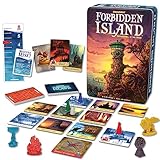
Overview: Forbidden Island is a cooperative strategy board game where players race against sinking tiles to retrieve four sacred treasures before the island disappears. Designed by Matt Leacock for ages 10+, it emphasizes teamwork over competition in a visually striking island setting.
What Makes It Stand Out: Its ingenious tile-based board physically sinks as the game progresses, creating tangible tension. The unique character roles with distinct abilities (like the Pilot who flies freely) encourage strategic planning and adaptability, while the shared win/lose condition fosters genuine collaboration.
Value for Money: Priced accessibly, it delivers exceptional replayability with variable island layouts and adjustable difficulty. It’s a superior entry point into cooperative gaming compared to pricier, more complex alternatives, offering robust family entertainment without overwhelming rules.
Strengths and Weaknesses: Strengths: Intuitive rules, stunning artwork, perfect blend of challenge and accessibility, promotes critical thinking. Weaknesses: High luck element in treasure card draws can frustrate strategic players; limited player count (max 4) may exclude larger groups.
Bottom Line: An essential, budget-friendly gateway cooperative game that masterfully balances tension and teamwork, ideal for family game nights seeking an engaging, non-competitive challenge. Highly recommended for newcomers to the genre.
2. Pandasaurus Cooperative Strategy Card Game - Fun Interactive Family Game for Ages 8+, 1-5 Players, 20 Minute Playtime
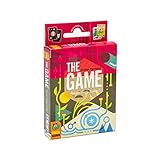
Overview: “The Game” is a minimalist, intensely cooperative card game where players silently work together to play descending and ascending number sequences from two shared decks before running out of cards. Its simplicity belies deep strategic tension for 1-5 players aged 8+.
What Makes It Stand Out: The absolute prohibition on verbal communication creates a uniquely nerve-wracking, almost telepathic teamwork experience. Its compact size, lightning-fast setup, and 20-minute playtime make it incredibly portable and perfect for quick, high-stakes sessions that test non-verbal coordination.
Value for Money: An outstanding investment; its award-winning design (including Spiel Des Jahres) offers immense replayability through sheer variability in card distributions. It outperforms similarly priced games by delivering profound depth from minimal components, justifying its cost for frequent game nights.
Strengths and Weaknesses: Strengths: Brilliantly simple yet deeply strategic, highly portable, scales perfectly for 1-5 players, exceptional replay value. Weaknesses: Communication restrictions can lead to frustration for new players; lack of theme may deter story-focused gamers; win rate heavily luck-dependent.
Bottom Line: A must-have for fans of pure, brain-burning cooperation. Its ingenious constraint-driven gameplay and portability make it a phenomenal value, though its abstract nature isn’t for everyone. Highly recommended for quick, intense group sessions.
3. Hasbro Gaming Dungeons & Dragons: Bedlam in Neverwinter Board Game, Escape Room, Cooperative Strategy Games for Ages 12+, 2-6 Players, 3 Acts Approx. 90 Mins Each (Amazon Exclusive)

Overview: Bedlam in Neverwinter is a cooperative escape-room-style board game set in the Dungeons & Dragons universe, unfolding across three distinct 90-minute acts. Players create D&D characters to solve puzzles, battle monsters, and uncover a mystery in the city of Neverwinter, targeting ages 12+.
What Makes It Stand Out: Its ambitious three-act narrative structure with a dynamically evolving gameboard offers unprecedented immersion for a standalone D&D experience. Integrating classic RPG elements—character creation, loot collection, and thematic puzzles—within an escape-room framework creates a uniquely rich, story-driven adventure.
Value for Money: The substantial 270-minute playtime spread over three sessions provides excellent depth per dollar, especially for D&D fans. While pricier than standard board games, the production quality, narrative scope, and replayability (via different character builds) justify the cost as a premium experience.
Strengths and Weaknesses: Strengths: Deep narrative integration, dynamic board that unlocks new areas, authentic D&D mechanics, supports up to 6 players. Weaknesses: Significant time commitment per act; complex setup; puzzle solutions can feel opaque without D&D lore knowledge.
Bottom Line: A thrilling, immersive D&D adventure that brilliantly adapts the RPG into cooperative escape-room gameplay. Best for dedicated D&D groups seeking a lengthy, story-rich challenge, though its complexity and time demands may overwhelm casual players.
4. Spin Master Games, SolidRoots Escaping Extinction, Cooperative Strategy Board Game from The Makers of Mind The Gap, for Kids & Family, 1-4 Players, for Ages 12 & Up

Overview: In Escaping Extinction, players cooperatively guide clever dinosaurs racing to build a 3D rocket before a meteor strikes. This tile-based strategy game tasks 1-4 players with navigating a shifting prehistoric landscape to collect rocket parts under escalating pressure.
What Makes It Stand Out: The innovative 3D rocket assembly and earthquake cards that dynamically alter the board mid-game create thrilling unpredictability. The tile-based layout ensures high replayability, while the dinosaur theme offers fresh, accessible fun distinct from typical cooperative fare.
Value for Money: Its strong replayability due to modular boards and variable objectives maximizes value. Priced competitively, it outshines many family games by offering strategic depth without excessive complexity, making it a smart addition for households seeking varied cooperative experiences.
Strengths and Weaknesses: Strengths: High replay value, engaging theme, dynamic board changes add excitement, manageable rules for ages 12+. Weaknesses: 3D rocket assembly can feel fiddly; limited player interaction beyond shared goals; theme may not resonate with all strategy purists.
Bottom Line: A creatively themed, highly replayable cooperative game perfect for family nights. Its dynamic board and accessible strategy make it a worthwhile investment, especially for groups wanting novelty and moderate challenge without overwhelming rules.
5. Asmodee Pandemic Board Game (Base Game) - A Cooperative Battle to Save Humanity, Strategy Game for Kids and Adults, Ages 8+, 2-4 Players, 45 Minute Playtime

Overview: Pandemic is the seminal cooperative strategy game where players assume specialized roles (like Medic or Scientist) racing to cure four deadly diseases before outbreaks overwhelm the world. Designed for ages 8+, it’s a cornerstone of modern board gaming with tight 45-minute sessions.
What Makes It Stand Out: Its perfect balance of accessible rules and profound strategic depth revolutionized cooperative play. The infection deck’s escalating tension and unique player roles demanding constant teamwork create an unparalleled “us vs. the game” experience that remains deeply influential.
Value for Money: An exceptional value; its iconic status, near-perfect design, and high replayability justify the price. It outperforms newer alternatives by offering a streamlined, intensely engaging experience that’s become the genre benchmark, making it essential for any collection.
Strengths and Weaknesses: Strengths: Masterful cooperative design, tense yet manageable difficulty, quick setup/playtime, promotes critical teamwork. Weaknesses: Can suffer from “alpha player” syndrome; luck in card draws occasionally dictates outcomes unfairly; base game lacks complexity for veterans.
Bottom Line: The definitive cooperative board game that every collection needs. Its flawless execution, accessibility, and enduring appeal make it an unbeatable value and a must-play for families and strategists alike. Highly recommended as a gateway and staple.
6. The Night Cage by Smirk and Dagger | Cooperative Candlelit Horror Strategy Game | Tile Laying Labyrinth Escape Adventure for 1 to 5 Players Ages 14 Plus

Overview: The Night Cage delivers a uniquely tense cooperative experience where players navigate a dynamically shifting labyrinth illuminated solely by a real candle. As the flame flickers, it dictates visibility, forcing teams to strategize under constant pressure while evading lurking Wax Eaters before the maze collapses. What Makes It Stand Out: Its innovative candle mechanic is revolutionary, physically linking game tension to the diminishing light source—paths vanish as wax drips, creating genuine urgency. Award-winning thematic integration, adjustable difficulty, and an Advanced Game mode with new threats significantly enhance replayability and strategic depth beyond typical tile-layers. Value for Money: Priced competitively for a premium, award-winning strategy game, it offers exceptional longevity through modular challenges and expansions. While niche, its immersive execution justifies the cost compared to static board games, providing hours of evolving, high-stakes teamwork. Strengths and Weaknesses: Strengths: Unmatched atmospheric tension; brilliant physical candle integration; highly replayable with scalable difficulty; fosters intense collaboration. Weaknesses: Candle dependency limits play environments (no breezes!); setup can be fiddly; horror theme may not suit all groups; limited player count flexibility beyond 4. Bottom Line: A must-try for cooperative strategy enthusiasts seeking unparalleled immersion. Its risky candle mechanic transforms tabletop play into a visceral, memorable event, though its niche demands careful group selection. Highly recommended for mature players craving innovation.
7. ito – Cooperative Strategy Card Game for Ages 8+ | 2–10 Players | Party Game with Secret Clues & Category Challenges | Family, Group & Game Night Fun

Overview: ito is a lightning-fast cooperative card game where players arrange secret number cards in sequence using only category-based clues—never stating numbers aloud. Designed for 2–10 players, it thrives as a dynamic party or family game night starter with minimal setup. What Makes It Stand Out: Its genius lies in the silent-number challenge using categories (e.g., “animals” for 3, “planets” for 8), fostering creative communication. Three distinct modes (Family, Everyone, Action) adapt to group energy, while 100 beautifully illustrated cards ensure endless thematic variety and accessibility. Value for Money: An outstanding budget-friendly option, ito punches above its weight with exceptional replayability from its card pool and rule variations. At its price point, it outshines many longer games as a reliable, inclusive icebreaker for diverse groups. Strengths and Weaknesses: Strengths: Incredibly easy to learn; scales perfectly from 2–10 players; quick 10-minute playtime; sparks laughter and teamwork; gorgeous art; highly adaptable difficulty. Weaknesses: Limited strategic depth for hardcore gamers; category clues can feel arbitrary; small cards may frustrate younger kids; minimal physical components beyond cards. Bottom Line: Ideal for casual gatherings or classrooms, ito delivers pure, accessible fun through clever communication mechanics. While not for strategy purists, its flexibility, speed, and charm make it a standout value for family and party game collections.
8. Ravensburger Horrified Games - Greek Monsters - Strategy Board Game - Boost Critical Thinking & Teamwork - Cooperative Gameplay - Unique Monster Challenges - 1 to 5 Players - Adults & Kids 10+

Overview: Horrified: Greek Monsters pits players as heroes defending Elysium against six iconic Greek mythological threats like Medusa and Cerberus. This cooperative strategy game challenges teams to use unique tactics to defeat each monster within 60 minutes, blending thematic storytelling with logical problem-solving. What Makes It Stand Out: Each monster features distinct, thematic victory conditions (e.g., petrifying Medusa’s gaze), creating wildly varied scenarios per playthrough. Stunning artwork and meticulously designed components immerse players in Greek horror, while the focus on critical thinking elevates it beyond simple dice-rolling. Value for Money: Offers robust replayability through six unique monsters and modular board setup. Its educational emphasis on teamwork and strategy justifies the cost for families, providing durable, high-quality components that withstand repeated use compared to cheaper, less thematic alternatives. Strengths and Weaknesses: Strengths: Exceptional theme integration; high replay value with diverse monsters; promotes critical thinking; beautiful miniatures and board; accessible rules for age 10+. Weaknesses: Some monster mechanics feel unbalanced; setup time increases with expansions; limited player agency in early games; storage solutions are minimal. Bottom Line: A superb family co-op game that successfully merges mythology with strategic depth. Its educational value and stunning presentation make it a worthwhile investment for parents and educators seeking engaging, non-competitive gameplay.
9. Ravensburger Alien: Fate of The Nostromo Board Game for Ages 10 & Up – A Cooperative Strategy Game of Suspense
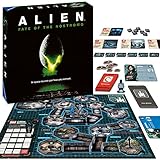
Overview: Alien: Fate of The Nostromo plunges players into the iconic sci-fi horror film, where they cooperatively navigate the Nostromo as crew members (Ripley, Dallas, etc.), gathering supplies while evading a relentless Xenomorph. Tension builds as morale drops and objectives shift toward a desperate escape. What Makes It Stand Out: Faithful recreation of the film’s atmosphere through detailed miniatures, cinematic artwork, and a dynamic “Alien Tracker” mechanic that heightens suspense. Modular objectives and five final missions ensure no two games play alike, while Ash adds brutal difficulty. Value for Money: Justifies its premium price with exceptional components (detailed miniatures, art-rich cards) and deep thematic immersion. Compared to other licensed games, it offers superior replayability through variable setups and missions, making it a standout for fans and strategy gamers. Strengths and Weaknesses: Strengths: Unbeatable Alien franchise authenticity; high-quality miniatures and art; strong replayability; intuitive rulebook with online support; tense, narrative-driven gameplay. Weaknesses: Alien AI can feel overly punishing; setup is time-consuming; limited strategic depth for hardcore gamers; requires significant table space. Bottom Line: An essential purchase for Alien fans and cooperative game enthusiasts seeking immersive horror. Its meticulous attention to the source material and gripping mechanics outweigh minor flaws, delivering a truly cinematic experience worth the investment.
10. Pressman The Oregon Trail Card Game - Cooperative Gameplay Based on The Classic Computer Game, Ages 12 and Up, 2-6 Players

Overview: This card game reimagines the beloved computer classic with cooperative survival mechanics. Players manage a wagon train across the frontier, battling dysentery, broken wheels, and river crossings using cheeky 8-bit art and dark humor to lighten the grim challenges of the trail. What Makes It Stand Out: Brilliantly captures the nostalgic absurdity of the original game through retro visuals and witty card effects (e.g., “You have died of dysentery… again!”). Its streamlined co-op design focuses on resource management and shared decision-making, transforming pixelated frustration into communal strategy. Value for Money: An affordable, accessible gateway to cooperative gaming. While lighter than strategy-heavy titles, its humor and nostalgia offer excellent value for casual groups, especially compared to pricier board games with similar player counts. Strengths and Weaknesses: Strengths: Hilarious, nostalgic theme; simple rules ideal for newcomers; strong replayability with variable events; perfect for 2–6 players; compact and portable. Weaknesses: Very light strategy; luck-dependent outcomes; art style won’t appeal to all; limited depth for experienced gamers; card quality is functional but thin. Bottom Line: A delightful, humorous homage perfect for fans of the original game or casual game nights. Its low barrier to entry and laugh-out-loud moments make it a worthwhile, budget-friendly addition despite lacking strategic heft.
Understanding Decision Paralysis in the Modern Context
The Cognitive Mechanics Behind Choice Overload
Decision paralysis occurs when the prefrontal cortex, our brain’s executive control center, becomes overwhelmed by too many variables or potential outcomes. Neurologically, each additional option increases cognitive load, depleting finite mental resources like willpower and attention. This isn’t laziness; it’s a biological response to perceived risk. When every choice feels high-stakes (even subconsciously), the brain defaults to inaction to avoid potential regret. In gaming, this manifests as endlessly comparing rule sets, mechanics, or player counts instead of simply starting to play.
How Modern Life Amplifies the Problem
Our digital landscape constantly bombards us with micro-decisions—from app notifications to infinite streaming options—creating a state of chronic low-grade decision fatigue. This constant “choice tax” leaves us mentally depleted for meaningful decisions later. Cooperative strategy games counteract this by providing structured environments with clear, shared goals. They force a reset: the game board becomes a contained universe where decisions have defined parameters and immediate, collaborative consequences, offering a mental sanctuary from real-world ambiguity.
Why Cooperative Strategy Games Are Uniquely Effective
Shared Cognitive Burden: The Power of Distributed Thinking
The core strength lies in distributing the mental workload. One player might excel at spatial reasoning for board placement, another at resource forecasting, while a third handles narrative interpretation. This leverages collective intelligence, where the group’s combined cognitive capacity far exceeds any single member’s. It transforms overwhelming solo analysis into manageable team dialogue, reducing the emotional weight of any single misstep since “we” own the outcome, not “I.”
Risk Mitigation Through Collective Ownership
In competitive games, every wrong move feels like a personal failure. Cooperative play reframes mistakes as shared learning opportunities. When the group fails together, the sting is lessened, and the focus shifts to problem-solving (“What can we adjust next time?”) rather than blame. This psychological safety net lowers the perceived stakes of each decision, making it easier to commit to actions without exhaustive second-guessing.
Structured Decision Pathways and Feedback Loops
Well-designed cooperative games embed natural decision frameworks. Phases like “planning,” “execution,” and “resolution” create rhythm, preventing chaotic, simultaneous choices. Immediate feedback—whether through game mechanics triggering consequences or teammates voicing reactions—provides clarity that real life often lacks. This tight loop helps players calibrate their judgment faster, building confidence in their ability to navigate uncertainty.
Key Features to Look for in Games That Combat Paralysis
Clear Phased Gameplay Structure
Opt for games that segment decision-making into distinct, manageable stages. Look for mechanics like dedicated planning rounds before action phases, or sequential player roles that dictate when specific choices happen. This prevents the overwhelming “everything at once” feeling, allowing focused attention on one type of decision at a time, mirroring effective real-world project management techniques.
Adjustable Difficulty and Scaling Complexity
The best tools offer tunable challenge levels. Seek games where difficulty isn’t just “easy/hard” but involves modular elements: adjustable timer lengths, variable threat levels, or optional rule layers. This lets groups start simple, building confidence with foundational decisions before layering in complexity. It respects that overcoming paralysis is a skill developed incrementally, not a switch flipped overnight.
Built-In Communication Constraints and Prompts
Paradoxically, limiting communication can enhance decision quality. Games that use coded signals, hidden information requiring deduction, or timed discussion phases force efficient, purposeful dialogue. Others provide structured prompts (“State your top priority for this round”) that cut through ambiguity. These mechanics train players to articulate needs clearly under constraints—a vital skill for real-world team decisions.
Tangible Resource Management Systems
Abstract choices are harder to evaluate. Games using physical tokens, cards, or boards for resources (time, energy, materials) make trade-offs visible and concrete. Seeing three wood tokens versus five makes the cost of building a structure instantly graspable, reducing the abstract anxiety of opportunity cost. This tangibility grounds decisions in reality, making comparisons less nebulous.
Progressive Revelation of Information
Games that unveil challenges gradually—through card draws, scenario expansions, or evolving board states—prevent initial overwhelm. Starting with limited information forces foundational decisions based on core principles, with complexity added only as the group demonstrates readiness. This mirrors real-life strategic thinking, where perfect information is rare, and action must begin with the data available now.
Building Your Decision-Making Toolkit Through Gameplay
Fostering Active Listening and Perspective-Taking
Cooperative strategy demands genuine engagement with others’ viewpoints. You must listen not just to respond, but to integrate diverse insights into a cohesive plan. This practice directly combats the tunnel vision that fuels paralysis, as players learn that their initial perspective is rarely the only valid one. The game becomes a safe space to practice holding multiple possibilities in mind simultaneously.
Developing Comfort with Imperfect Information
Real decisions are rarely made with 100% certainty. Games that incorporate hidden enemy movements, random events, or incomplete data trains players to act decisively despite uncertainty. The shared nature means the group collectively assesses acceptable risk levels (“Do we spend resources scouting, or commit based on probabilities?”), normalizing that “good enough now” often trumps “perfect later.”
Cultivating Iterative Problem-Solving Mindset
Success often hinges on adapting after initial plans fail. Games emphasizing scenario re-playability encourage analyzing why a strategy didn’t work and testing alternatives. This shifts focus from avoiding mistakes to learning from them rapidly. Players internalize that decisions aren’t final endpoints but steps in a process, reducing the pressure for infallibility that causes paralysis.
Practicing Time-Bound Decision Execution
Many modern cooperative games incorporate timers (sand, digital, or turn-based). This simulates real-world deadlines, forcing prioritization and preventing infinite analysis. Learning to make the “best possible call within 90 seconds” builds crucial muscles for workplace or personal decisions where delay has tangible costs, proving action now is often better than perfect action later.
Integrating Game Principles into Daily Life
Creating Your Own “Decision Phases”
Adopt the game structure in real scenarios. Break big decisions into distinct steps: 1) Gather core facts only, 2) Identify 2-3 key options, 3) Assign pros/cons with time limits, 4) Make a call. Mimicking the phased approach of gameplay creates psychological boundaries that prevent spiraling into irrelevant details.
Implementing the “Resource Token” Method
Visualize abstract choices as tangible resources. For a career decision, assign “energy tokens” (high/medium/low) to each option. For household choices, use “time tokens.” Making trade-offs physical clarifies opportunity costs instantly, cutting through the fog of hypotheticals that paralyze analytical thinking.
Establishing Pre-Commitment Rules
Like game mechanics that lock in actions after discussion, set personal rules: “I will decide on dinner within 10 minutes using only these three criteria.” Pre-defining decision boundaries (time, criteria, information sources) removes the need to negotiate the process itself, freeing mental energy for the content of the choice.
Running “Post-Mortems” on Small Decisions
After minor choices (e.g., which route to drive), briefly discuss (even solo) what worked and what didn’t, just like after a game scenario. This builds a habit of iterative learning without the emotional weight of major decisions, normalizing that evaluation is part of the process, not a judgment of failure.
Sustaining Progress Beyond the Game Table
Recognizing Cognitive Depletion Signals
Learn to spot when decision fatigue is setting in—irritability, procrastination, or obsessing over trivial details. Just as cooperative games have natural breaks between rounds, schedule intentional pauses in your day. Step away from the “board” (work desk, shopping app) when overwhelmed; a five-minute walk resets cognitive capacity better than forced pushing.
Curating Your Decision Environment
Reduce pre-game paralysis by limiting initial options. Instead of browsing all available games, have a shortlist vetted for specific group needs (e.g., “games under 60 minutes for 4 players”). Apply this to life: unsubscribe from marketing emails, use browser blockers for distracting sites, or keep only essential pantry staples visible. Fewer initial choices prevent overload before the real decision even begins.
Frequently Asked Questions
How is decision paralysis different from simple indecision?
Decision paralysis involves a complete inability to choose due to overwhelming anxiety about potential outcomes, often leading to avoidance. Simple indecision is a normal, temporary state where weighing options is part of a healthy process; paralysis stalls action entirely.
Can cooperative games really help with serious life decisions?
While not a direct substitute for professional advice, they build foundational cognitive skills: clearer communication, risk assessment, and iterative thinking. These transferable skills make approaching complex real-world choices less emotionally charged and more structured.
What if my group argues constantly during cooperative games?
Frequent conflict often stems from unclear roles or lack of communication norms. Start with games enforcing structured discussion phases. Establish ground rules like “one speaker at a time” or “critique ideas, not people” to transform arguments into productive problem-solving.
How long does it take to see improvements in decision-making?
Noticeable shifts can occur within 3-5 game sessions as new neural pathways form. Consistent play over weeks builds stronger habits. Focus on the process (“We communicated better this round”) rather than immediate real-world results for sustainable change.
Are digital cooperative games as effective as physical board games?
Digital versions offer convenience and automated rules, but physical games often enhance spatial reasoning and non-verbal communication (like pointing to a board). For combating paralysis, the tactile, face-to-face interaction of physical games generally provides richer cognitive training.
What if I’m playing with people who dominate decisions?
Look for games with mechanics ensuring equal input, like simultaneous planning or anonymous voting. Assign rotating facilitator roles. Frame it positively: “Your strategic insight is great! Let’s hear [Other Player]’s initial take this round to balance our approach.”
Can these games help children with decision-making?
Absolutely. Age-appropriate cooperative games teach kids to voice opinions, consider others’ views, and accept that mistakes are part of learning. Start with simple choices and clear cause-effect, building confidence long before they face complex adult decisions.
How do I choose the right game complexity for my group’s paralysis level?
Begin with games featuring very limited choices per turn and short playtimes. If initial decisions still cause stress, opt for games with strong theme immersion (e.g., escaping a story-based scenario) where narrative drives choices, reducing over-analysis.
Is decision paralysis linked to anxiety disorders?
Chronic, severe paralysis can be a symptom of anxiety disorders. While cooperative games offer practical coping strategies, persistent impairment in daily functioning warrants consultation with a mental health professional for comprehensive support.
Do solo cooperative games provide similar benefits?
Solo cooperative variants can build individual decision frameworks, but they lack the crucial element of shared cognitive load and perspective-taking. For directly combating paralysis rooted in social or collaborative contexts, group play is significantly more effective.
See Also
- The 10 Most Revolutionary Cooperative Strategy Games of 2026
- How to Solve Game Night Conflicts with the 10 Best Cooperative Board Games in 2026
- How to Choose the 10 Best Cooperative Strategy Games for Your Group in 2026
- How to Choose the 10 Best Strategy Cooperative Board Games for Game Nights in 2026
- How to Solve Boring Game Nights with the 10 Best Cooperative Party Games in 2026