Table of Contents
Game nights should be the highlight of your week—the chance to unplug, laugh until your sides hurt, and create memories that last. Yet, too often, they devolve into the same predictable cycle: pulling out that dusty Monopoly box everyone secretly dreads, enduring hours of tedious property trading, or worse, watching half the group scroll endlessly on their phones while waiting for their turn. Sound familiar? That initial spark of excitement fizzles faster than a dropped sparkler, leaving you wondering if ordering pizza and watching a movie might actually be more fun. The real issue isn’t the group—it’s the mismatch between your desire for genuine connection and the lackluster tools you’re using to achieve it.
Breaking free from boring game nights isn’t about finding a magical single solution; it’s about shifting your mindset and understanding what truly makes gameplay engaging. Forget the outdated notion that board games are just for rainy days or young children. The modern landscape of strategic and mind-engaging board games is booming, offering incredibly diverse experiences designed to spark conversation, challenge your thinking, and foster real interaction. These aren’t just games; they’re catalysts for deeper connection, friendly competition, and mental stimulation that leaves everyone feeling energized, not exhausted. Let’s explore how to transform your next gathering from a chore into an eagerly anticipated event.
Top 10 Mind Game Board Games
Detailed Product Reviews
1. Pandasaurus Games The Mind - Family-Friendly Board Games - Game Night - Card Games for Adults, Teens & Kids (2-4 Players)

Overview: The Mind is a minimalist cooperative card game where players silently work together to play numbered cards in ascending order across 12 increasingly difficult levels. Designed for 2-4 players, it replaces verbal communication with pure intuition and non-verbal synchronicity, creating a uniquely tense and bonding experience ideal for game nights. What Makes It Stand Out: Its genius lies in enforced silence—players cannot speak, gesture, or signal, forcing reliance on subtle cues, shared breathing, or imagined rhythms. This transforms simple card play into a profound test of group telepathy, fostering remarkable player connection and making each successful level feel like a shared triumph. Value for Money: At its price point, The Mind offers exceptional replayability through its escalating difficulty and rule variations. While lacking components of heavier games, its focused, meditative gameplay provides hours of engaging sessions unmatched by many pricier alternatives focused on complexity over pure social interaction. Strengths and Weaknesses: Strengths: Incredibly easy to learn, deeply immersive non-verbal teamwork, scalable difficulty, compact and portable. Weaknesses: Can cause frustration if group synergy fails, minimal player count flexibility (struggles beyond 4), lacks thematic depth for strategy gamers. Bottom Line: A must-have for groups seeking a novel, cooperative challenge that transcends traditional gaming. Its unique silent communication mechanic delivers unforgettable moments, making it a worthy investment for game nights prioritizing connection over competition.
2. CMYK Wavelength: The Mind Reading Party Game

Overview: Wavelength is a telepathic party game where teams guess where a hidden spectrum (e.g., “Hot to Cold”) falls based on a clue from their teammate. Designed for 2-12+ players, it combines psychology, creativity, and hilarious miscommunication in quick, accessible rounds perfect for diverse gatherings. What Makes It Stand Out: The rotating spectrum wheel creates infinite interpretive possibilities—clues like “Wizard or…not a wizard?” spark laughter and debate. Its genius is in facilitating “aha!” moments when teams align mentally. Setup and rules take under a minute, yet gameplay remains deeply engaging across large groups. Value for Money: An outstanding value for its versatility. Replacing multiple niche party games, it accommodates massive groups without added cost. High-quality components and endless replayability through subjective interpretation justify its price, outperforming many single-mechanic alternatives. Strengths and Weaknesses: Strengths: Effortless setup/learning, scales brilliantly for big groups, encourages creative thinking, highly replayable due to subjective clues. Weaknesses: Performance relies heavily on group chemistry, spectrum wheel mechanism can feel gimmicky to some, less strategic depth for hardcore gamers. Bottom Line: An essential party game that consistently delivers joy and connection. Its universal appeal, quick playtime, and ability to unite large crowds make it a top-tier recommendation for any social setting.
3. Spin Master Games, Mind The Gap Deluxe Trivia Game, A Board Game for All Generations, Play on Thanksgiving, Friendsgiving, Birthdays & Family Nights, 2-12 Players, for Ages 10 & Up

Overview: Mind The Gap Deluxe is a generational trivia game challenging players to answer culture-based questions spanning Boomers to Gen Z. With head-to-head challenge cards and team play, it targets multi-age families during holidays or gatherings, aiming to bridge knowledge divides through lighthearted competition. What Makes It Stand Out: Its focus on intergenerational trivia—comparing events, slang, and pop culture across eras—creates natural storytelling and nostalgia. The Deluxe edition’s 25 new challenge cards (e.g., “Boomer vs. Gen Z dance-off”) add physical humor, making it more dynamic than standard trivia. Value for Money: Good value for family collections, especially with the expanded Deluxe content. While question depth varies, the 2,000+ trivia prompts and replayable team dynamics offer solid entertainment. Comparable trivia games often lack its specific generational angle, justifying the premium. Strengths and Weaknesses: Strengths: Promotes family bonding through shared history, accessible for mixed ages, energetic challenge cards. Weaknesses: Trivia accuracy can be inconsistent, Gen Z/Millennial bias may frustrate older players, setup cluttered with multiple card types. Bottom Line: A fun, conversation-sparking choice for multi-generational households, though trivia purists may prefer deeper content. Best for holiday gatherings where laughter matters more than academic rigor.
4. Spin Master Games, SolidRoots Mind The Gap Ultimate Connections, Amazon Exclusive, Trivia for Generations, Family Game Night, 4+ Players, Stocking Stuffer Gift Ideas for Ages 8 & Up

Overview: This Amazon-exclusive edition of Mind The Gap expands the trivia concept with Gen Alpha questions and customizable gameplay. Players roll to navigate a color-coded board answering 2,000+ questions across TV, music, and headlines, working together or competing to prove their generation’s dominance. What Makes It Stand Out: Inclusion of Gen Alpha content future-proofs the trivia, while the modular board lets players focus on specific generations or topics. The “Ultimate Connections” mechanic—linking answers across eras—adds strategic depth absent in standard trivia, enhancing replayability. Value for Money: Excellent value as an Amazon-exclusive bundle. The Gen Alpha integration and board customization justify a slight price bump over older editions. Expansion packs (sold separately) extend longevity, though core content suffices for regular family play. Strengths and Weaknesses: Strengths: Truly inclusive generational coverage, adaptable gameplay for group size/skill, vibrant components. Weaknesses: Customization adds complexity for young kids, some Gen Alpha questions feel speculative, expansions increase long-term cost. Bottom Line: The definitive generational trivia game for modern families. Its thoughtful updates and flexibility make it a superior gift choice over standard editions, especially for households with young children.
5. Mind MGMT: The Psychic Espionage Game - Strategic Deduction Board Game for 2-5 Players - Hidden Movement & Cooperative Play - Ages 14+

Overview: Mind MGMT casts one player as the enigmatic “Mind MGMT” organization hunting rogue agents controlled by others. Using psychic abilities and hidden movement on a dry-erase board, agents must deduce and disrupt the organization’s plans in this asymmetric, narrative-driven deduction game. What Makes It Stand Out: Its innovative hidden-movement mechanic—where the “Mind MGMT” player draws secret paths on erasable boards—creates thrilling cat-and-mouse tension. The psychic power system and evolving narrative, inspired by the comic series, deliver unparalleled immersion in psychic espionage. Value for Money: Premium-priced but justified by high-quality components (dry-erase boards, art-heavy cards) and award-winning design. Offers 60-90 minute sessions packed with strategic depth, outlasting many cheaper games through its unique replayability and narrative richness. Strengths and Weaknesses: Strengths: Brilliant asymmetric gameplay, stunning artwork, deep strategic choices, strong narrative cohesion. Weaknesses: Steeper learning curve, “Mind MGMT” role requires experience, component upkeep (dry-erase smudging). Bottom Line: A masterclass in thematic board gaming. Despite complexity, its gripping espionage narrative and innovative mechanics make it essential for strategy enthusiasts seeking immersive cooperative play.
6. Lucky Duck Games Unconscious Mind | Euro-Style Sigmund Freud Strategy Game | 1-4 Players, Ages 12+ | 60-120 Minute Playtime

Overview: Unconscious Mind immerses players in early 1900s Vienna as followers of Sigmund Freud, using worker placement and engine-building mechanics to explore psychoanalysis. Players deploy “Ideas” on a central Meeting Table to draft cards, expand their player boards, and navigate Vienna, aiming to influence the nascent psychoanalytic movement through strategic action selection and cascading effects over 60-120 minutes.
What Makes It Stand Out: The game uniquely blends historical theme with intricate euro mechanics, featuring multiple interconnected rondels that create dynamic, puzzle-like decision-making. The thematic integration of Freudian concepts—like dream interpretation and unconscious drives—into engine-building actions sets it apart, offering deep strategic layers without overwhelming randomness.
Value for Money: Priced competitively for a medium-weight strategy game, it delivers exceptional replayability through variable player powers, modular boards, and evolving strategies. While the component quality is solid, the depth of gameplay justifies its cost better than lighter alternatives, though it may stretch budgets for casual players seeking quicker sessions.
Strengths and Weaknesses: Strengths: Exceptional thematic-mechanical synergy; high strategic depth with meaningful choices; scalable well for 1-4 players. Weaknesses: Steep learning curve for new eurogame players; lengthy playtime may deter some; setup can feel fiddly with multiple rondels and tokens.
Bottom Line: Unconscious Mind is a must-try for eurogame enthusiasts seeking rich thematic integration and cerebral challenges, though its complexity and duration make it less ideal for casual or time-constrained groups.
7. Unconscious Mind - Nightmares Expansion

Overview: This expansion for Unconscious Mind intensifies gameplay by introducing “Nightmares,” disruptive elements that challenge players’ carefully built engines. Designed for ages 12+, it adds narrative tension and mechanical hurdles to the base game’s psychoanalytic theme, requiring players to confront psychological obstacles during their strategic maneuvers in Vienna.
What Makes It Stand Out: Nightmares uniquely inject thematic conflict through persistent, evolving threats that force adaptive strategies. New mechanics like nightmare tokens and specialized cards create cascading pressure, transforming serene engine-building into a dynamic battle against psychological turmoil while maintaining the original’s euro-style precision.
Value for Money: A cost-effective enhancement for existing owners, it significantly deepens replayability without bloating runtime. The minimal component count (cards/tokens) keeps the price low, but its dependency on the base game limits standalone value—ideal only for dedicated fans craving more complexity.
Strengths and Weaknesses: Strengths: Seamlessly integrates with base game; elevates strategic depth with meaningful disruptions; compact and easy to store. Weaknesses: Adds complexity that may overwhelm new players; minimal physical components for the price; offers no standalone functionality.
Bottom Line: Highly recommended for Unconscious Mind veterans seeking heightened challenge and thematic richness, but avoid if you’re not fully committed to mastering the base game first.
8. Pandasaurus Games The Mind: Soulmates Card Game - Cooperative Team Play with Seer Role, Silent Communication & Hidden Clues, Family Fun for Kids & Adults, Ages 8+, 2-5 Players, 20 Minute Playtime

Overview: Soulmates revitalizes the award-winning The Mind formula with a cooperative twist: one player becomes the “Seer,” silently guiding teammates to play numbered cards in ascending order. Designed for 2-5 players aged 8+, this 20-minute game emphasizes nonverbal intuition and timing, blending tension with accessible family-friendly fun.
What Makes It Stand Out: The innovative Seer role—offering subtle, nonverbal hints about future cards—adds cooperative deduction to the original’s silent-play foundation. This creates dynamic social tension, as teams must interpret fleeting cues while resisting the urge to speak, making each round feel fresh and deeply engaging.
Value for Money: Priced accessibly, it offers immense replayability through variable Seer assignments and quick sessions. The inclusion of all necessary components (50+ cards, markers) surpasses expectations for a niche card game, outperforming similar party games in longevity per dollar spent.
Strengths and Weaknesses: Strengths: Brilliant Seer mechanic enhances teamwork; ultra-quick setup/teach time; perfect for casual and experienced gamers; scales elegantly for 2-5 players. Weaknesses: Limited strategic depth for hardcore gamers; Seer role can cause analysis paralysis; minimal component variety beyond cards.
Bottom Line: An essential addition to any game library for its unique blend of silent cooperation and intuitive play—a perfect 20-minute icebreaker or family night staple.
9. Ravensburger Minecraft Heroes of The Village | Cooperative Board Game | Exciting & Unpredictable | Perfect for Families and Minecraft Enthusiasts | Suitable for Kids & Adults
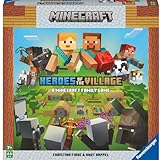
Overview: Ravensburger brings Minecraft’s blocky charm to the tabletop in this cooperative adventure where 2-4 players (ages 7+) defend a village from mobs. Using wooden blocks and modular tiles, teams strategize together to build defenses and gather resources, with gameplay reshaped each session by a dynamically changing map.
What Makes It Stand Out: The ever-evolving village map ensures no two games play alike, while authentic Minecraft elements—like crafting, mobs, and resource management—create genuine immersion. True cooperation is mandatory, as players share resources and coordinate actions to survive escalating threats, fostering genuine teamwork.
Value for Money: Ravensburger’s quality components (25 wooden blocks, detailed tiles) justify the price, especially for Minecraft fans. Its high replayability and age-appropriate challenge outshine cheaper, flimsier alternatives, though non-fans might question the premium for thematic elements alone.
Strengths and Weaknesses: Strengths: Authentic Minecraft integration; excellent replayability via modular setup; sturdy, kid-friendly components; promotes collaborative problem-solving. Weaknesses: Luck-dependent mob spawns can frustrate; strategy depth limited for older players; setup time increases with tile variety.
Bottom Line: A delightful, accessible gateway for Minecraft-loving families seeking cooperative fun, though seasoned board gamers may find it too simplistic.
10. Mind Space Board Game - Polyomino Roll & Write - 1 to 5 Players - 30 Minute Play Time (Mind Space Base Game)

Overview: Mind Space challenges 1-5 players (ages 11+) to fill a brain-shaped grid using polyomino shapes determined by dice rolls. Each round, players assign colors to five shapes via dice, then strategically draw one onto their personal board, aiming to complete sections and score points through organizational goals in this compact 30-minute roll-and-write.
What Makes It Stand Out: The “brain board” scoring system—rewarding both filled sections and color-based organizational criteria—creates a unique spatial puzzle. Its blend of polyomino placement with rapid decision-making (choosing shapes amid limited options) delivers surprising depth within a tiny footprint and lightning-fast playtime.
Value for Money: An outstanding value as a small-box game: minimal components (pads, dice) enable endless replayability at a low cost. It outperforms pricier roll-and-writes in efficiency, though players seeking tactile components may prefer boxed alternatives.
Strengths and Weaknesses: Strengths: Incredibly quick to learn and play; deep spatial strategy in short sessions; scales perfectly for solitaire to 5 players; highly portable. Weaknesses: Paper-based (consumable pads); limited player interaction; visual strain from dense grids during scoring.
Bottom Line: A near-perfect roll-and-write for puzzle lovers, offering exceptional strategic bite-sized sessions—ideal for travelers or as a warm-up game.
Understanding the Boredom Trap in Game Nights
Why Traditional Games Fall Short
Many classic board games rely heavily on luck-based mechanics like dice rolls or card draws, minimizing meaningful player agency. When outcomes feel arbitrary, frustration builds, especially among competitive players. Furthermore, long periods of downtime between turns—common in games requiring individual calculations or complex setup—lead to disengagement. Players check phones, step away, or simply lose interest, breaking the social flow essential for a vibrant game night. Games lacking clear, evolving objectives often fail to sustain attention beyond the first few rounds.
The Social Disconnect Factor
Boring game nights frequently stem from a mismatch between the game’s demands and the group’s social energy. Games requiring intense, silent concentration for extended periods stifle conversation and laughter, turning a social event into a quiet, isolating activity. Conversely, games overly reliant on pure luck or chaotic randomness can feel meaningless, failing to provide the satisfying mental challenge that fosters shared accomplishment or playful debate. When the game doesn’t actively encourage interaction beyond taking turns, the social glue holding the group together weakens.
The Power of Mind Games for Revitalizing Gatherings
Defining the Mind Game Advantage
Mind games prioritize cognitive engagement over chance. They challenge players through deduction, pattern recognition, spatial reasoning, strategic planning, or collaborative problem-solving. The core appeal lies in the active mental workout they provide—each turn requires thoughtful decisions with tangible consequences, keeping players intellectually invested throughout. This constant engagement minimizes downtime and maximizes the feeling of participation, directly combating the apathy that kills game nights.
Cognitive Benefits That Enhance Social Bonds
Engaging in mentally stimulating gameplay does more than pass the time; it actively strengthens group dynamics. Collaborative puzzle-solving or strategic negotiation fosters communication, empathy, and shared purpose. Successfully navigating a complex deduction challenge together creates powerful bonding moments. Even competitive mind games encourage respectful debate and analysis, turning disagreements into intellectually stimulating exchanges rather than sources of conflict. The mental effort involved makes the shared experience more memorable and satisfying.
Key Features to Prioritize When Choosing
Player Count and Group Dynamics Fit
The ideal mind game seamlessly accommodates your typical group size without significant rule adjustments. Consider whether your group thrives on direct competition, enjoys cooperative challenges, or prefers a mix (like team-based play). A game forcing cutthroat competition might flop with a group valuing harmony, while a purely cooperative puzzle could frustrate highly competitive players. Honestly assess your group’s preferred interaction style before selecting mechanics.
Complexity and Learning Curve Balance
Striking the right complexity balance is crucial. Games significantly above your group’s experience level lead to frustration and rulebook paralysis. Conversely, overly simplistic games bore experienced players. Look for games with “elegant complexity”—easy-to-grasp core rules that unfold deeper strategic layers with repeated plays. A well-designed teach time (under 10-15 minutes for the basics) ensures you spend more time playing and less time deciphering instructions. Prioritize intuitive rulebooks and player aids.
Replay Value Through Design
True replayability is the antidote to one-time novelty. Seek games incorporating variable setups (different maps, objectives, or starting conditions), asymmetric player roles, or emergent narratives where player choices significantly alter each session. Games relying solely on memory of previous plays quickly become stale. Modular components, legacy elements (used thoughtfully), or robust solo/co-op modes can dramatically extend a game’s lifespan and keep your group coming back.
Essential Mind Game Mechanics to Explore
Deduction and Bluffing Dynamics
Games built around uncovering hidden information or deceiving opponents create intense, interactive experiences. Players must carefully observe others’ actions, interpret subtle clues, manage their own tells, and construct logical arguments. The inherent uncertainty keeps everyone actively engaged, analyzing every move for hidden meaning. Mastering the art of reading the table and projecting confidence (or doubt) becomes as important as the game’s core mechanics.
Spatial Reasoning and Pattern Challenges
These games engage the visual-spatial parts of the brain, requiring players to manipulate pieces, recognize evolving patterns, or plan movements within constrained spaces. The tangible, often physical nature of manipulating components provides satisfying sensory feedback. Success hinges on visualizing possibilities several steps ahead, translating abstract strategy into concrete actions on the board, which creates a unique “aha!” moment when solutions click.
Cooperative Problem Solving Under Pressure
Collaborative mind games pit the group against the game system itself, fostering teamwork and shared investment. Time pressure, limited communication rules, or escalating challenges force players to pool knowledge, delegate tasks, and make collective decisions under stress. Overcoming a tough cooperative puzzle together generates immense group satisfaction and highlights individual strengths within the team dynamic, strengthening bonds far more than passive competition.
Matching Games to Your Unique Group
Assessing Player Preferences Honestly
Before purchasing, have a candid conversation (or informal poll) about what your group genuinely enjoys. Do they relish intense mental sparring, or prefer lighter, conversation-driven experiences? Are they patient with complex rules, or do they prioritize quick setup and fast turns? Ignoring these preferences guarantees disengagement. Consider personality types: introverts might shine in thoughtful strategy games, while extroverts may prefer highly interactive negotiation styles.
Considering Physical and Cognitive Accessibility
Ensure chosen games accommodate all participants. Evaluate physical requirements: fine motor skills for intricate setups, visibility of small text or components, and space needed on the table. For cognitive accessibility, consider colorblind-friendly designs, clear iconography, and optional rule simplifications. Games offering adjustable difficulty levels or alternative play modes ensure everyone can participate meaningfully, preventing frustration and exclusion.
Optimizing Setup and Flow for Maximum Fun
Streamlining the Pre-Game Ritual
Lengthy, fiddly setups are a major enthusiasm killer. Prioritize games with intuitive organization—compartments, sorted decks, or clear setup diagrams. Invest in storage solutions like sorter trays for frequent players. Establish a routine: one person handles setup while others grab snacks/drinks. A smooth, under-5-minute setup signals that the fun is about to begin immediately, setting a positive tone and reducing early-game grumbling.
Managing Pacing and Player Engagement
Combat downtime by choosing games with simultaneous action selection, planning phases, or active player roles that keep others involved. Encourage positive table talk during others’ turns—discussing strategies (without giving away secrets in competitive games) or offering light-hearted commentary maintains energy. For longer games, build in natural break points. A smoothly flowing game where everyone feels constantly part of the action is inherently more enjoyable than one with long silences.
Building Long-Term Game Night Success
Cultivating a Diverse Game Library
Relying on one or two games leads to staleness. Gradually build a curated collection spanning different mind game mechanics (deduction, spatial, cooperative) and complexities. Include a mix of quick 20-minute fillers for warming up or wrapping up, and deeper 60-90 minute strategic experiences for dedicated sessions. A diverse library ensures you always have the perfect tool for your group’s mood and available time, keeping game nights perpetually fresh.
Fostering a Growth Mindset Culture
Encourage your group to view learning new games as part of the fun, not a chore. Normalize mistakes as learning opportunities during initial plays. Designate a “teaching” role to the most experienced player for new titles. Celebrate clever plays and strategic insights from all players, not just winners. This positive, supportive environment makes trying challenging new mind games exciting rather than intimidating, ensuring continuous evolution of your game nights.
Beyond the Box: Enhancing the Experience
Creating the Ideal Physical Environment
Ambiance matters. Ensure adequate lighting focused on the play area (harsh overhead lights can strain eyes), comfortable seating, and a table large enough to avoid component crowding. Minimize distractions: silence phones, choose a room away from TVs. Background music at low volume can enhance mood, but avoid anything too lyrical or loud that hinders conversation. A dedicated, welcoming space signals that game night is a special event.
Integrating Mind Games into Social Rituals
Elevate game night beyond just playing. Pair it with a signature snack or drink tradition. Start with a quick icebreaker question unrelated to the game. Dedicate the first 10 minutes purely to socializing before diving in. Consider short post-game discussions about favorite moments or strategies. These rituals frame the mind game as the centerpiece of a cherished social experience, deepening its significance and anticipation.
Frequently Asked Questions
How much time should I realistically allocate for a mind game session?
Aim for 60-90 minutes for most strategic mind games, including a 10-15 minute teach time for new players. Always factor in buffer time for setup, breaks, and post-game discussion. Starting slightly later than advertised (e.g., “games start at 7:15” if you say 7:00) accounts for late arrivals without pressuring the group.
Can mind games work well with more than six players?
Yes, but carefully select games designed for larger groups, often featuring team play, modular boards, or simultaneous action phases. Avoid games where individual turns become excessively long. Cooperative games frequently scale better to larger numbers than highly competitive ones, as the shared goal unites the group.
Are there mind games suitable for including younger players?
Absolutely. Look for games with adjustable difficulty, visual-based mechanics, or cooperative elements where adults can subtly guide younger participants. Games emphasizing pattern recognition or simple deduction often work well. Avoid overly complex rule sets or themes that might not resonate with children.
Do mind games replace video games for group interaction?
They serve a different, complementary purpose. Mind games offer tangible, screen-free interaction fostering face-to-face communication and physical presence. While video games have their place, strategic board games uniquely build the kind of deep, undistracted social connection that digital play often lacks, making them invaluable for balanced socializing.
What’s a good budget-friendly approach to starting a mind game collection?
Focus on one high-quality, versatile title within your budget rather than multiple cheaper, lower-quality games. Prioritize games with exceptional replay value. Check local libraries for loanable copies, attend board game cafe nights to test games, or join a gaming group to experience titles before purchasing. Quality over quantity ensures lasting value.
How do I handle a player who gets overly frustrated during competitive mind games?
Establish ground rules for respectful play before starting. Choose games with lower direct conflict or incorporate cooperative elements. Encourage positive reinforcement for good plays, not just winning. For highly competitive individuals, suggest taking a short break if frustration mounts. Frame the goal as collective enjoyment, not just individual victory.
Can I effectively learn these games solo before teaching others?
Many modern strategic games include robust solo modes specifically designed for learning and practice. Use these to grasp core mechanics and flow. Watch detailed, rule-explanation videos from trusted sources (focusing on gameplay, not reviews). Solo practice significantly boosts confidence when teaching the group, leading to a smoother, more enjoyable first play.
What cognitive skills do these games actually improve?
Regular play can enhance working memory (tracking game states), logical reasoning (planning moves), problem-solving (overcoming obstacles), spatial visualization (managing boards/pieces), and even emotional regulation (handling setbacks). The collaborative nature also boosts communication and perspective-taking skills through negotiation and teamwork.
How do I prevent arguments over rules interpretations?
Thoroughly read the rulebook before the game night. Print a concise “cheat sheet” with key rules and turn order. Designate one person as the initial rules arbiter (rotating this role is fair). For ambiguous situations, agree on a quick, temporary ruling to keep play moving, then research the official ruling afterward. Prioritize fun and flow over absolute rule purity in casual settings.
Where can I discover new mind games without getting overwhelmed?
Visit a local game store with knowledgeable staff who can recommend based on your group’s preferences. Attend open gaming nights to try before you buy. Follow reputable board game podcasts or YouTube channels focused on mechanics and design rather than just reviews. Start with curated lists based on specific mechanics you enjoy (e.g., “best deduction games”) rather than broad “top 10” lists.
See Also
- Stop Boring Game Nights with the 10 Best Timer-Based Board Games in 2026
- Stop Boring Game Nights with the 10 Best Modern Board Games This Year
- 2026’s Top 10 Mind Game Board Games for Adults Seeking Challenge
- We Tested 50 Card Board Games - Here are the 10 Best for Game Nights
- How to Solve Screen Time Overload with the 10 Best Interactive Board Games for Kids in 2026