Table of Contents
There’s something electric about that final moment in an escape room—the ticking clock, the scattered clues, and the sudden click of a lock opening just seconds before time runs out. That adrenaline rush has sparked a revolution in tabletop gaming, transforming living rooms into puzzle-packed adventures where friends and family become teams of detectives, archaeologists, and codebreakers. As we look toward 2026, the genre has evolved far beyond simple card-and-paper puzzles into sophisticated experiences that rival their physical counterparts in complexity and immersion.
Whether you’re a seasoned escape room veteran looking to recreate that thrill at home, or a board game enthusiast eager to dive into narrative-driven challenges, understanding what makes these games tick will transform your purchasing decisions. The market now offers everything from compact, travel-friendly mystery boxes to sprawling campaign games that unfold across multiple sessions. This guide will walk you through the essential features, mechanics, and considerations that separate truly memorable puzzle board games from the ones that’ll collect dust on your shelf.
Top 10 Puzzle Board Games for Escape Room
Detailed Product Reviews
1. Escape Room: Puzzle Adventures - Secret of The Scientist Jigsaw Puzzle & Escape Room Board | 1-2 Players - Games for Family Game Night | for Kids and Adults Ages 16+ | English Version

Overview: The Escape Room: Puzzle Adventures – Secret of the Scientist fuses jigsaw assembly with escape‑room riddles. Designed for 1–2 players ages 16+, the game arrives in an advent‑calendar‑style box containing five separate puzzles that together form a mansion. The story unfolds through a series of cryptic riddles that tie each room together. Solving intriguing riddles earns you new pieces, driving the narrative toward a tense final escape.
What Makes It Stand Out: This hybrid format delivers a tactile twist on traditional escape rooms. Instead of paper clues, you physically build a jigsaw that evolves as you unlock rooms. The calendar‑style packaging adds anticipation, and the optional timer lets you tailor the intensity.
Value for Money: Priced like premium jigsaws and mid‑range board games, it offers a two‑in‑one experience: a replayable puzzle after the escape. Standalone escape‑room kits at the same price lack the hands‑on component, giving this an edge for tactile enthusiasts.
Strengths and Weaknesses:
- Strengths: Unique jigsaw‑escape blend; thick, high‑quality pieces; flexible pacing; immersive story; works solo or as a pair.
- Weaknesses: Limited to 1–2 players; once riddles are solved, the escape element is spent; the 16+ age rating may exclude younger teens.
Bottom Line: Perfect for puzzle lovers who enjoy a narrative layer. Best as a cozy, contemplative challenge for a duo or solo player ready to piece together a mysterious mansion.
2. Escape From the Museum Escape Room Game

Overview: Escape From the Museum is a compact, self‑contained escape room experience that drops 1–4 players into a locked museum after hours. The goal is to decipher a series of clues and puzzles scattered throughout the exhibits to find the key to freedom. The game includes a collection of brain‑bending challenges that test logic, observation, and deductive reasoning.
What Makes It Stand Out: The “mini” format makes it an ideal quick‑play option for game nights or spontaneous sessions. Unlike larger box sets, it sets up in minutes and still delivers a satisfying narrative arc. The puzzles are designed to be approachable yet challenging, making it accessible for newcomers while still engaging seasoned puzzlers.
Value for Money: Positioned as an entry‑level escape room kit, it costs less than many full‑scale board games. For the price, you get a solid hour of collaborative problem‑solving, comparable to a single session of a larger escape‑room series. It’s a budget‑friendly way to dip your toes into the genre without sacrificing quality.
Strengths and Weaknesses:
- Strengths: Quick setup; scalable difficulty; works well for 1–4 players; compact storage; clear, well‑illustrated instructions.
- Weaknesses: Limited replayability once puzzles are solved; some clues may feel too linear for advanced players; the museum theme, while fun, lacks the immersive props of higher‑end kits.
Bottom Line: A great starter escape room for families or casual gamers. If you want a low‑commitment, high‑fun puzzle fix that fits on a coffee table, Escape From the Museum delivers.
3. Escape Room The Game, Version 2 - with 4 Thrilling Escape Rooms | Solve The Mystery Board Game for Adults and Teens
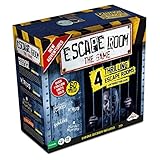
Overview: Escape Room The Game, Version 2, transforms your living room into a high‑stakes escape room with four distinct adventures. The set includes a Chrono Decoder that counts down 60 minutes, sound effects, and a companion app that adds a cinematic soundtrack. Players must work together, solving three‑part puzzles in each scenario to enter the correct keys and escape before time runs out.
What Makes It Stand Out: The integrated Chrono Decoder and app create an immersive atmosphere that rivals real‑world escape rooms. Each of the four adventures ramps up in difficulty, offering a clear progression for groups. The optional expansion packs extend the life of the kit, making it a long‑term investment for puzzle fans.
Value for Money: While the initial price is higher than entry‑level kits, you get four complete escape rooms in one box. Compared to purchasing four separate games, the cost per adventure is significantly lower. The reusable decoder and app add ongoing value, especially if you invest in expansions.
Strengths and Weaknesses:
- Strengths: Authentic countdown timer; atmospheric sound effects; scalable difficulty across four adventures; companion app enhances immersion; expansion packs available.
- Weaknesses: Requires a smartphone or tablet for the app; some puzzles may feel repetitive after multiple plays; the 16+ age rating limits younger family members; setup can be lengthy for first‑time users.
Bottom Line: Ideal for dedicated escape‑room enthusiasts who want a reusable, high‑quality kit. If you enjoy tech‑enhanced puzzles and plan to explore expansions, this version delivers a premium experience.
4. Clue Escape: The Midnight Hotel Board Game, Clue Escape Room Game, 1-Time Solve Mystery Games, Family Games for Ages 10+, 1-6 Players, 90 Mins. Avg.

Overview: Clue Escape: The Midnight Hotel reimagines the classic whodunit as a cooperative escape‑room board game. Set after Mr. Boddy’s murder, players must work together to decode puzzles, unlock new rooms, and uncover who attempted to steal Boddy’s blackmail files. The dynamic 3D board literally builds up as you progress, adding a visual layer of suspense.
What Makes It Stand Out: The fusion of Clue’s deductive gameplay with escape‑room puzzle mechanics creates a fresh, story‑driven experience. The board’s 3D innovation—rooms popping up as puzzles are solved—adds tangible excitement. Because it’s a one‑time solve, the narrative feels like a cinematic event, perfect for a special game night.
Value for Money: As a single‑play game, the price is on par with a movie ticket or a paperback novel. For groups of up to six, the per‑player cost is low, and the high‑quality components and unique 3D board justify the investment. Compared to other one‑time escape rooms, the added Clue branding and replayable board make it a worthwhile splurge.
Strengths and Weaknesses:
- Strengths: Engaging narrative that continues the classic Clue story; innovative 3D board that evolves; cooperative play for 1–6 players; clear clue tracking system; suitable for ages 10+.
- Weaknesses: Once solved, the mystery is revealed, limiting replay; some puzzles may feel easy for veteran escape‑room fans; the 90‑minute runtime can feel long for younger players; component storage can be tricky after assembly.
Bottom Line: A must‑have for Clue fans and escape‑room newcomers alike. If you’re looking for a story‑rich, visually dynamic puzzle night that accommodates a wide age range, The Midnight Hotel checks all the boxes.
5. Professor Puzzle: Escape from The Aquarium - Escape Room Game, 11 Logic-Number-Observational Puzzles, Co-Op Underwater Adventure, Kids 8+, 1-6 Players

Overview: Professor Puzzle’s Escape from the Aquarium invites young players into an underwater world where they’ve been magically turned into fish. To break the spell, teams of 1–6 players must solve 11 varied puzzles spanning logic, numbers, and observation. The game blends education with entertainment, making it a suitable classroom tool or family night activity.
What Makes It Stand Out: The kid‑friendly theme and colorful illustrations capture children’s imaginations while still offering genuine challenge. The mix of puzzle types ensures that different skills are tested, and the cooperative format encourages communication and teamwork. The 60‑minute runtime keeps the experience fast‑paced and engaging for short attention spans.
Value for Money: As a family‑focused escape room, it’s priced competitively with other children’s board games. Given the 11 puzzles and replayable nature of the components, the cost per play is low. It also doubles as an educational resource, adding extra value for parents and teachers.
Strengths and Weaknesses:
- Strengths: Age‑appropriate theme; diverse puzzle types (logic, numbers, observation); promotes teamwork; colorful, durable components; 60‑minute play fits young attention spans.
- Weaknesses: Older children or adults may find puzzles too easy; limited narrative depth compared to adult escape rooms; once solved, replay value diminishes; requires adult guidance for younger kids.
Bottom Line: A delightful introduction to escape rooms for kids. If you’re seeking a fun, educational group activity that gets children thinking and collaborating, Escape from the Aquarium is a splash‑hit.
6. Escape Room The Game Puzzle Adventures: The Baron, The Witch and The Thief | Jigsaw Puzzle and Escape Room in One for Adults and Teens (English Version)

Overview: This innovative hybrid merges traditional jigsaw puzzling with escape room mechanics, creating a multi-layered challenge. The Baron, The Witch and The Thief presents a narrative-driven mystery where solving riddles earns you puzzle pieces that gradually reveal five interconnected rooms. Housed in clever advent-calendar-style packaging, the game unfolds methodically as players work through the prison setting, making it ideal for methodical thinkers who enjoy tactile progression.
What Makes It Stand Out: The dual-mechanism design sets this apart from standard escape room games. The physical act of building puzzles while simultaneously solving narrative riddles creates satisfying momentum. The advent calendar structure provides natural pacing breaks, and the option to play with or without time pressure accommodates different skill levels and social settings. This flexibility makes it more accessible than timer-heavy alternatives.
Value for Money: At typical retail prices, this offers solid value compared to buying a 500-piece puzzle and separate escape room kit. The reusable puzzle components extend its lifespan beyond the initial solve, though the riddles themselves are single-use. For puzzle enthusiasts seeking narrative depth, the hybrid approach justifies the premium over standalone options.
Strengths and Weaknesses: Strengths include the unique jigsaw integration, adjustable difficulty through pacing, and high-quality components. The story-driven design maintains engagement throughout. Weaknesses are the 16+ age restriction, which limits family play, and that puzzle-savvy players might find the riddles less challenging than dedicated escape room games. The physical footprint is also substantial.
Bottom Line: Perfect for puzzle lovers wanting narrative depth, this hybrid delivers a fresh take on both genres. Recommended for couples or small groups who appreciate methodical, visual problem-solving over high-intensity challenges.
7. Exit: The Abandoned Cabin - Kennerspiel Des Jahres Winner, Card-Based Family Escape Room Game for 1-4 Players, Ages 12+, Blue

Overview: As a Kennerspiel des Jahres winner, Exit: The Abandoned Cabin represents the gold standard for at-home escape room experiences. This card-driven adventure traps 1-4 players in a mysterious cabin, tasking them with solving a series of interconnected puzzles to secure their freedom. The design emphasizes logical deduction and creative thinking within a compact, accessible framework that typically runs 60-90 minutes.
What Makes It Stand Out: The award pedigree guarantees refined puzzle design and intuitive gameplay flow. Its destruction mechanic—folding, marking, and tearing components—creates genuine tension and memorable moments. The straightforward setup and clear iconography make it approachable for newcomers while remaining satisfying for veterans. The compact box belies the depth of challenge within.
Value for Money: Positioned at the entry-level price point for escape room games, it delivers excellent value for a single-session experience. While permanently altering components prevents replay, the quality of puzzles and the satisfaction of solving justify the cost. Comparable to a movie ticket but with active engagement, it’s a fair entertainment investment.
Strengths and Weaknesses: Strengths include award-winning design, accessible 12+ age rating, and scalable difficulty through hint system. The one-and-done nature ensures no spoilers. Weaknesses are the single-use limitation for budget-conscious buyers and less immersive theming compared to narrative-heavy alternatives. Some puzzles may feel abstract without physical props.
Bottom Line: An essential starting point for escape room enthusiasts. Its proven design and accessible challenge make it ideal for families and casual gamers seeking a reliable, satisfying puzzle experience.
8. EXIT: The Professor’s Last Riddle | Escape Room| Brainteasers | Mystery Solving | Treasure Hunt | Kosmos Game | at-Home Escape Room

Overview: EXIT: The Professor’s Last Riddle sends players on a globe-trotting treasure hunt following an archaeologist’s cryptic legacy. This installment in the Exit series spans iconic cities like Paris and New York, blending escape room puzzles with an international adventure narrative. Designed for 1+ players, it maintains the series’ signature destructive gameplay while expanding the thematic scope beyond a single location.
What Makes It Stand Out: The travel narrative provides refreshing variety, preventing the claustrophobic feel of single-room escape games. The treasure hunt framework adds purpose beyond mere escape, appealing to adventure seekers. Multiple city settings allow for diverse puzzle types and cultural references, keeping the experience visually and mentally stimulating throughout the 1-2 hour runtime.
Value for Money: Priced similarly to other Exit titles, the global theme adds perceived value through variety. While still single-use, the sense of journey and discovery enhances replay justification. For fans of travel and adventure, it offers more narrative depth than basic escape room formats, making it a worthwhile addition to a game collection.
Strengths and Weaknesses: Strengths include engaging travel theme, varied puzzle design across locations, and strong narrative hook. The series’ reliable quality shines through. Weaknesses remain the single-use nature and potential familiarity for Exit veterans. The broader theme may dilute tension compared to more focused scenarios. Some city transitions feel abrupt.
Bottom Line: A strong choice for adventure lovers seeking puzzle variety. The travel theme breathes fresh life into the Exit formula, making it ideal for players who’ve enjoyed previous titles and want expanded horizons.
9. Clue Escape: The Illusionist’s Club Board Game | Escape Room Family Game | 1-Time Solve Mystery | Ages 10+ | 1-6 Players | Difficulty 4 | 90-120 Mins. (Amazon Exclusive)

Overview: Clue Escape: The Illusionist’s Club reimagines the classic deduction franchise as a cinematic escape room experience. This Amazon exclusive casts 1-6 players as investigators unraveling a magician’s disappearance within a shape-shifting club. The dynamic gameboard physically transforms to reveal new rooms and secrets, creating a tangible sense of discovery across its 90-120 minute playtime.
What Makes It Stand Out: The evolving gameboard mechanic distinguishes this from static escape room competitors. Magic-themed puzzles, enhanced by a secret “magical” tool, provide thematic cohesion and clever misdirection. The Clue brand integration offers familiar character archetypes while the escape room format provides fresh gameplay. The 10+ age rating makes it more family-friendly than many alternatives.
Value for Money: As a branded exclusive with proprietary components, it commands a slight premium over generic escape games. The dynamic board and higher player count (up to 6) improve cost-per-player value. For families and Clue fans, the brand recognition and unique mechanics justify the price, though puzzle purists may find it less challenging than dedicated escape titles.
Strengths and Weaknesses: Strengths include innovative transforming board, accessible difficulty, strong theme integration, and scalable player count. The magic puzzles are genuinely clever. Weaknesses involve the Clue branding potentially limiting appeal, and some puzzles feeling slightly derivative. The component quality doesn’t always match the premium price.
Bottom Line: An excellent family gateway game that merges classic brand appeal with modern escape room innovation. Best for groups seeking thematic fun over extreme challenge.
10. Nutty Orange: Without Trace - Escape Room Strategy Puzzle Board Game. Immersive Detective Investigation Murder Mystery True Crime Challenge for Adults Teens Couples Date Nights or Solo. 1-4 Players.

Overview: Nutty Orange: Without Trace delivers a gritty detective experience wrapped in puzzle-solving mechanics. Players investigate Sophie Scott’s disappearance by analyzing evidence sheets, timelines, maps, and conflicting statements. This 1-4 player game targets true crime enthusiasts with its realistic approach, offering 1-2 hours of methodical investigation that rewards attention to detail and logical synthesis over flashier escape room theatrics.
What Makes It Stand Out: The authentic detective procedural focus creates immersion for true crime fans. Evidence-based gameplay—examining reports, photos, and statements—feels substantive compared to abstract puzzles. The narrative’s complexity, featuring red herrings and conflicting accounts, mirrors real investigations. This appeals to players wanting mental challenge grounded in reality rather than fantasy scenarios.
Value for Money: Positioned competitively with other narrative puzzle games, it offers good value for its depth. The 18 evidence pieces and 30 answer cards provide substantial content. While single-use, the satisfaction of piecing together a realistic mystery justifies the cost for genre fans. It’s priced appropriately for its target niche.
Strengths and Weaknesses: Strengths include compelling true crime narrative, realistic evidence analysis, and strong cooperative engagement. The hint system prevents frustration. Weaknesses are the 14+ age rating and darker theme, which may not suit all groups. The lack of physical props makes it less tactile than some escape games. Puzzle density may overwhelm casual players.
Bottom Line: Ideal for true crime aficionados seeking cerebral challenge. Its realistic approach and strong storytelling make it a standout choice for mature groups who prefer investigation over escape.
Understanding the Escape Room Board Game Genre
What Defines This Unique Category
Escape room board games occupy a fascinating intersection between traditional puzzle solving and immersive storytelling. Unlike standard board games that rely on competitive scoring or resource management, these titles prioritize collective problem-solving within a thematic framework. The core identity revolves around creating that same sense of urgency and discovery you feel when stepping into a physical escape room, but adapted for a tabletop environment where the kitchen table becomes your investigation headquarters.
The genre typically features a strong narrative hook that justifies why you’re solving puzzles in the first place. Maybe you’re defusing a bomb, uncovering an ancient curse, or breaking into a high-security vault. This narrative backbone distinguishes them from abstract puzzle collections, creating emotional stakes that make each solved riddle feel like genuine progress rather than just checking boxes.
The Evolution from Physical Rooms to Tabletop
The earliest escape room board games were essentially linear puzzle chains—solve puzzle A to get the code for puzzle B, then use that solution to unlock puzzle C. Today’s offerings have grown exponentially more sophisticated. Many now incorporate branching narratives where your decisions affect which puzzles you encounter. Some integrate companion apps that handle timing, sound effects, and even augmented reality elements that bring static components to life.
Physical components have also advanced dramatically. Where early games might have used simple cards and paper, modern titles feature destructible elements you’re meant to cut, fold, or draw on, creating a tactile experience that mirrors the hands-on nature of real escape rooms. Others include 3D constructs, UV-reactive inks, or cleverly designed locks and boxes that provide satisfying physical feedback when solved.
Key Mechanics That Capture the Escape Room Magic
Cooperative Gameplay Dynamics
True escape room experiences live or die on their cooperative elements. The best puzzle board games force communication and division of labor without letting one dominant player take over. This is often achieved through information asymmetry—different players might have access to different clues, or puzzles might require simultaneous actions that need coordination.
Look for games that include mechanics like limited communication rules, where players must describe what they see without showing their cards directly. Others implement a “consultation” system where hints cost the team time or points, creating strategic decisions about when to ask for help. The most elegant designs make cooperation feel natural rather than forced, with puzzles that genuinely require multiple perspectives to crack.
Time Pressure Elements
That relentless countdown is the heartbeat of any escape room experience, and tabletop versions recreate it in various ways. Traditional sand timers provide visual tension, while digital apps offer customizable countdowns with escalating music and sound effects. Some games use a “move limit” system where each action consumes a resource, creating pressure through scarcity rather than literal time.
The key is how time pressure integrates with puzzle design. Simply adding a timer to easy puzzles creates anxiety without satisfaction. The best games calibrate difficulty so that skilled teams will finish with minutes to spare, while newer groups might need every second. Progressive hint systems tied to remaining time also help balance the experience, ensuring groups don’t get permanently stuck and frustrated.
Narrative Immersion Techniques
A puzzle without context is just homework. The games that stick with you weave puzzles directly into the story, where each solution reveals plot points, character motivations, or world-building details. This might mean that decoding a message doesn’t just give you a number, but actually reveals a confession letter that changes how you view other clues.
Environmental storytelling through components matters tremendously. Games that provide newspapers with fake articles, hand-written letters with coffee stains, or photographs with cryptic annotations on the back create a rich sensory world. The most immersive titles treat the box itself as part of the experience, with packaging that transforms into game boards or hidden compartments that reveal themselves during play.
Puzzle Variety and Integration
The hallmark of a well-designed escape room board game is puzzle diversity that prevents mental fatigue. A good mix includes logic grids, spatial reasoning challenges, wordplay ciphers, pattern recognition, and mechanical manipulation puzzles. But variety alone isn’t enough—how these puzzles connect determines the game’s flow.
Superior integration means puzzles build on each other thematically and mechanically. Solving a substitution cipher might give you coordinates that lead to a map puzzle, which then reveals a sequence for a lock mechanism. This chain reaction creates momentum, where each “aha!” moment propels you forward. Games that simply present disconnected puzzles feel more like puzzle anthologies than cohesive escape experiences.
Types of Puzzle Board Games for Different Preferences
Linear Story-Driven Adventures
These games function like interactive novels where each puzzle solved turns the page. They typically feature a fixed sequence of challenges that tell a complete story from start to finish. The advantage is tightly controlled pacing and narrative coherence—you’re guaranteed a beginning, middle, and satisfying conclusion. The trade-off is limited replayability; once you know the solutions, the mystery is gone.
For collectors, this category offers the most cinematic experiences. They often include the highest production values, with rich artwork, elaborate story booklets, and sometimes voice-acted companion apps. They’re perfect for game nights where you want a complete, self-contained adventure that feels like playing through a mystery movie.
Modular Campaign Systems
Campaign-style games break the story into episodes or cases, each playable in a single sitting but connected by an overarching narrative. Your team might carry discoveries forward from one session to the next, with persistent elements like upgraded abilities or relationships that evolve based on your choices. This format solves the replayability issue while maintaining strong storytelling.
These systems excel for regular game groups who meet weekly. Each session provides closure while leaving you eager for the next installment. The modular nature also allows designers to introduce new mechanics gradually, starting simple and adding complexity as players become more invested. Look for campaigns that offer 5-10 interconnected episodes for the sweet spot between depth and commitment.
One-Shot Mystery Boxes
Compact and often portable, one-shot mystery boxes pack an entire escape room experience into a small package. They typically focus on a single, contained scenario with a clear objective and streamlined rules. The appeal lies in their accessibility—lower price points, shorter playtimes (usually 60-90 minutes), and minimal setup.
These are ideal for introducing newcomers to the genre or for experienced players wanting a quick puzzle fix without a multi-hour commitment. Many use clever packaging where the box itself becomes part of the puzzle, with hidden compartments or transforming components. While simpler than their bigger siblings, the best ones still deliver satisfying “wow” moments through ingenious puzzle design.
Replayable Puzzle Collections
For those who value longevity over narrative, replayable puzzle collections offer randomized or variable setups that keep the experience fresh. They might use scenario books with multiple difficulty levels, interchangeable puzzle modules, or app-generated content that changes each playthrough. The focus shifts from story to pure puzzle-solving craftsmanship.
These games often include scoring systems or efficiency challenges that encourage replaying to improve your performance. They might track your best times or fewest moves, turning each session into a chance to beat your personal record. While they sacrifice some narrative immersion, they provide exceptional value for money and are perfect for puzzle enthusiasts who want to test their skills repeatedly.
Competitive Escape Experiences
Not all escape room games are cooperative. Competitive variants pit teams or individuals against each other in a race to solve puzzles first. These might involve identical puzzle sets where players compete for the fastest time, or asymmetric designs where players have different information and must decide when to share and when to hoard clues.
This category works brilliantly for larger gatherings where you want to split into teams. The social dynamics shift from pure collaboration to strategic negotiation and bluffing. Some games include “sabotage” elements where you can hinder opponents, adding a layer of direct interaction that cooperative games lack. They’re excellent for game nights where you want high energy and friendly rivalry.
Solo-Mode Capabilities
The best puzzle board games recognize that sometimes you want to tackle challenges alone. Solo modes might use simplified rules, adjusted puzzle sequences, or companion apps that act as artificial teammates. The key is maintaining the sense of discovery and achievement without the social element.
Look for games that don’t just “support” solo play but are genuinely designed for it. This means puzzles scaled to single-person solving speeds and narratives that work with a lone protagonist. Many solo-optimized games include hint systems tailored for individual players and scoring benchmarks that let you compare your performance against other solo puzzlers worldwide through online leaderboards.
Essential Features to Evaluate Before Buying
Complexity and Difficulty Scaling
A game’s difficulty should match your group’s experience level and patience. Entry-level games feature straightforward puzzles with clear instructions and generous hint systems. Intermediate titles introduce more abstract thinking and multi-step solutions. Expert-level games might have no hints at all and require lateral thinking that challenges even veteran puzzlers.
Crucially, look for games that offer adjustable difficulty. This might come through optional “challenge” puzzles, modular rule sets, or difficulty selectors in companion apps. Games that scale well grow with your group, providing value as your skills improve. Check estimated completion times too—a 30-minute game feels different from a 3-hour epic, and both have their place depending on your available time.
Component Quality and Durability
Physical production values significantly impact immersion. Thick, linen-finished cards feel substantial and handle well. Sturdy cardboard components that lock together precisely make manipulation puzzles satisfying. UV-reactive inks, metal tokens, or wooden pieces add tactile pleasure and thematic authenticity.
Consider whether components are meant to be destroyed. Some games require cutting, folding, or writing on pieces, which creates an exciting one-time experience but limits resale or replay. Others use dry-erase surfaces or reusable components that maintain value. For collectors, non-destructive games offer better long-term value, while thrill-seekers might prefer the anything-goes approach of single-use experiences.
Digital Integration and App Support
Companion apps have become standard, but their quality varies dramatically. The best apps handle timing, soundscapes, and hint delivery seamlessly without becoming a distraction. They might include atmospheric background music that intensifies as time runs low, or voice-acted narrations that bring characters to life.
Advanced integration includes AR features where you point your phone at components to reveal hidden layers, or input verification systems that instantly check your solutions without spoiling the answer. Be wary of apps that require constant internet connectivity or that feel like afterthoughts. The technology should enhance, not replace, the tactile board game experience.
Player Count Flexibility
Games optimized for 4-6 players often feel empty with 2 or chaotic with 7. Look for titles that specify ideal ranges and explain how mechanics adapt to different group sizes. Some include “player roles” that give everyone unique responsibilities, ensuring engagement even in larger groups.
The best designs scale elegantly, perhaps by dealing more clue cards with fewer players or introducing communication restrictions with more. Consider your regular gaming group size when choosing. If you typically play with just one partner, prioritize two-player excellence over theoretical higher capacities that don’t work well in practice.
Expansion and Legacy Potential
For campaign-style games, investigate whether the base game feels complete or like a mere introduction. Some franchises release regular expansions that add new scenarios, while others are self-contained. Legacy games, where you permanently alter components through play, offer unique experiences but zero replayability.
Check if expansions require the base game or stand alone. Modular expansions that add new puzzle types or story branches provide better long-term value than simple scenario packs. For legacy games, ensure the journey justifies the one-time nature—players should feel they’re creating a unique story, not just destroying expensive components.
Setup and Teardown Time
Nothing kills pre-game excitement like 45 minutes of organizing pieces and reading rules. Premium games include organized inserts that make setup intuitive, with labeled compartments and quick-start guides. Some use “learn as you play” tutorials that get you started in minutes.
Consider storage solutions too. Games with many small pieces need baggies or organizers to prevent frustration later. Some companies sell custom inserts, but these add to the total cost. A well-designed game respects your time both during and between sessions, making it easy to return for another adventure without dreading the prep work.
Setting Up Your First Game Night
Creating the Right Atmosphere
Transform your space to match the game’s theme. Dim lighting, thematic background music, and perhaps a themed snack can elevate the experience from game night to event. Some groups dress in character or decorate their play area with relevant props. The goal is signaling that this isn’t just another board game—it’s an immersive experience.
Consider physical comfort too. These games often require 90+ minutes of intense focus. Ensure everyone has adequate table space, comfortable seating, and good lighting for reading small text. Have scratch paper, pens, and scissors handy—many games benefit from note-taking and component manipulation. A separate side table for reference materials keeps the main play area uncluttered.
Managing Group Dynamics
Before starting, establish ground rules. Decide how you’ll handle hints—will one person be the hint-master, or will the group vote? Set expectations about phone use (keep them for the app only). If you have new players, emphasize that struggling is part of the fun; experienced groups should avoid spoilers or backseat solving.
During play, watch for engagement levels. If someone seems lost, assign them a specific puzzle or role. Rotate who reads aloud and who handles components to ensure everyone participates. Take brief breaks if frustration builds—sometimes stepping away for two minutes provides the fresh perspective needed to crack a stubborn code.
Advanced Strategies for Seasoned Players
Optimizing Your Puzzle-Solving Approach
Experienced teams develop efficient workflows. Designate roles based on strengths—one person might handle spatial puzzles, another word ciphers, a third logic grids. Create a central “clue board” where you post all discovered information, allowing the team to spot connections between seemingly unrelated puzzles.
Learn to recognize common puzzle archetypes. Substitution ciphers, Caesar shifts, pigpen codes, and semaphore appear frequently. Building familiarity with these patterns lets you identify puzzle types quickly rather than reinventing the wheel. However, the best games subvert expectations, so stay flexible and don’t assume every grid is a sudoku.
Modifying Games for Increased Challenge
Once you’ve mastered the base experience, create your own difficulty modifiers. Play without hints entirely, or impose a stricter time limit. Some groups ban talking for the first five minutes, forcing silent observation and independent analysis before collaboration begins. Others use “hardcore mode” where wrong answers incur time penalties.
For replayable games, try “speedrunning”—attempting to beat your previous best time. Or play with reduced player counts to increase individual workload. You can also create your own post-game challenges, like writing a fictional case report or drawing a map of the game’s puzzle flow. These meta-activities deepen engagement and extend value.
Building Your Collection Over Time
Starting with Gateway Games
If you’re new to the genre, begin with entry-level titles that teach core concepts without overwhelming complexity. These games typically feature clear iconography, tutorial scenarios, and forgiving hint systems. They let you learn whether your group prefers narrative depth, puzzle variety, or competitive elements before investing heavily.
Gateway games also help you identify play style preferences. Does your group enjoy horror themes, sci-fi mysteries, or historical adventures? Do they prefer quick one-shots or sprawling campaigns? These early experiences inform smarter purchasing decisions later, preventing expensive mistakes on games that don’t match your group’s temperament.
Diversifying Mechanics and Themes
Once you have a foundation, expand strategically. If your first game was narrative-heavy, try a pure puzzle collection next. If you started with cooperative play, experiment with competitive titles. This diversification prevents burnout and develops different problem-solving skills.
Thematic variety matters too. A collection with multiple horror games feels repetitive even if the puzzles differ. Mix genres—detective noir, ancient mythology, cyberpunk thriller, archaeological adventure. This keeps each session feeling fresh and attracts different players to your game nights. Consider also mixing production styles, balancing lavish big-box productions with quick-playing card games.
The Future of Puzzle Board Games in 2026 and Beyond
Emerging Technologies
The next generation of puzzle board games is embracing mixed reality, where physical components interact with digital environments in real-time. Imagine placing a puzzle piece on your table and seeing it animate through your AR glasses, or using your phone to scan a room and reveal hidden messages on walls. These technologies promise to blur the line between physical and digital even further.
Voice recognition is another frontier, allowing you to literally “talk” to in-game characters or dictate solutions naturally. AI-driven hint systems that adapt to your group’s skill level in real-time could provide perfectly calibrated assistance—challenging enough to be satisfying, but never so obscure that frustration sets in. Blockchain technology might even enable truly unique puzzle experiences where solutions are verified and tracked across a global community.
Sustainability in Game Production
Environmental consciousness is reshaping manufacturing. Companies are moving away from destructive single-use components toward reusable, recyclable materials. Soy-based inks, FSC-certified paper, and plastic-free packaging are becoming standard rather than premium features. This shift benefits both the planet and players, as reusable games offer better value.
Digital companions also reduce physical waste, allowing puzzles to exist partially in the app rather than on disposable paper. Some innovative designers are creating “print-and-play” expansions that supplement physical base games, letting you refresh content without shipping new boxes. As consumers become more eco-aware, these sustainable practices will increasingly influence purchasing decisions.
Frequently Asked Questions
How long should a typical puzzle board game session last?
Most quality escape room board games run between 60 and 120 minutes, though campaign episodes might take 2-3 hours. Entry-level one-shots often clock in at 45-60 minutes. The sweet spot is usually 90 minutes—long enough for complexity and immersion, short enough to maintain energy and schedule easily. Always check the estimated playtime on the box, but remember that first sessions typically take 30-50% longer as you learn the system.
Can escape room board games be replayed after solving them?
It depends entirely on the design. Linear narrative games with fixed puzzles generally have no replay value once solved, much like reading a mystery novel twice. However, many modern titles offer replayable mechanisms through randomized setups, multiple difficulty paths, or scenario generators. Some players enjoy replaying narrative games after a year or two when memories fade, or using them to introduce new players to the hobby. Replayable collections provide better long-term value if you plan to play frequently.
What group size works best for these games?
While many games advertise 1-6 players, the optimal experience usually falls between 3-4 participants. With two players, you lack the diversity of perspectives that makes collaboration magical. With five or more, some people inevitably become passive observers. Three players allows constant interaction without overwhelming noise, while four provides backup if someone gets stuck on a particular puzzle type. Always check if the game includes “ghost player” mechanics that keep everyone engaged at higher counts.
Are digital apps required to play modern puzzle board games?
Not all, but increasingly many titles offer companion apps that enhance the experience. These apps typically handle timing, atmospheric audio, hint delivery, and solution verification. Some games are playable without the app but lose significant features; others are entirely dependent on digital integration. Purely analog games still exist and appeal to players wanting to disconnect from screens. When choosing, consider your group’s comfort with technology and whether you want the enhanced features apps provide.
How do I know if a game’s difficulty matches my group’s skill level?
Check reviews for “difficulty ratings” on a 1-10 scale, and read specifically about puzzle types. If your group struggles with spatial reasoning, avoid games heavy on 3D manipulation puzzles. If wordplay isn’t your strength, skip titles featuring complex ciphers. Many games include a “tutorial” or “introductory” scenario that lets you test the waters. Start there, and if you solve it easily with time to spare, you’re ready for intermediate challenges. If you needed maximum hints and still barely finished, stick with entry-level titles for a while.
What’s the difference between legacy and campaign puzzle games?
Legacy games feature permanent, irreversible changes—stickers placed on boards, cards torn up, components destroyed. This creates a unique, personalized story but means the game is consumable. Campaign games have connected scenarios but remain replayable; you might track progress between sessions but don’t permanently alter components. Legacy offers unmatched narrative stakes, while campaigns provide better value and can be reset for new groups. Choose based on whether you prioritize a singular epic experience or long-term flexibility.
Can children enjoy escape room board games, or are they strictly for adults?
Many titles are family-friendly, with some specifically designed for ages 8 and up. These feature less complex puzzles, no mature themes, and often include educational elements like math or logic practice. However, adult-oriented games may contain horror elements, complex narratives, or frustratingly difficult puzzles that would bore or upset younger players. Check age recommendations carefully, and consider starting with family-branded titles even for adult groups wanting a lighter experience.
How much table space do these games typically require?
Space needs vary dramatically. Compact card-based games might fit on a coffee table, while sprawling campaign games with dozens of components can devour a full dining table. Most fall into the “medium footprint” category—roughly the size of a standard board game like Catan. Always check component lists and photos to gauge spread. You’ll also want extra space for note-taking, reference sheets, and the inevitable moment when you need to lay out all clues to see connections.
Should I take notes while playing, and if so, what’s the best approach?
Absolutely—note-taking is essential for complex games. Keep a central pad for group discoveries, but encourage individual scratch paper for working through personal puzzles. Use different colors to categorize information (red for unsolved codes, green for confirmed solutions, blue for narrative clues). Sketch diagrams, write out alphabet shifts, and track which puzzles connect to which clues. Some groups create a “clue wall” by taping paper to a nearby surface. The act of writing often triggers new insights, making note-taking both practical and strategically valuable.
What should I do with games after we’ve completed them?
For non-destructive games, consider the secondary market—many players buy used titles at a discount, especially for out-of-print campaigns. You can also gift solved games to friends who haven’t played them, creating a pay-it-forward puzzle community. For destructive single-use games, recycle components where possible and keep any particularly clever puzzles as mementos. Some creative players repurpose components for craft projects or use them as inspiration for designing their own homebrew escape rooms. The puzzle gaming community is generally generous about passing on experiences rather than hoarding solved games.
See Also
- 10 Must-Have Themed Board Games for Escape Room Lovers in 2026
- The 10 Ultimate Best Adventure Board Games for Escape Room Lovers in 2026
- The 10 Ultimate Best Escape Room Board Games for Intense Puzzle Solving in 2026
- How to Choose the 10 Best Strategy Board Games for Escape Room Lovers in 2026
- 10 Top-Rated Escape Room Board Games According to Experts in 2026