Table of Contents
The tabletop roleplaying landscape has undergone a remarkable transformation as we move through 2026, with Dungeons & Dragons experiencing a renaissance that blends traditional dice-and-paper gameplay with cutting-edge innovation. What once required nothing more than rulebooks, character sheets, and imagination now embraces artificial intelligence, immersive technologies, and unprecedented community collaboration. This evolution isn’t replacing the core magic that makes D&D special—it’s amplifying it, creating experiences that adapt to your group’s unique playstyle while removing barriers that have historically made the hobby intimidating for newcomers.
Understanding what makes these new iterations truly revolutionary requires looking beyond flashy tech buzzwords and focusing on how they enhance storytelling, accessibility, and player agency. Whether you’re a veteran dungeon master with decades of campaigns under your belt or someone who’s never rolled a d20, the current generation of D&D offerings introduces features that fundamentally change how stories unfold at your table. From AI assistants that help craft compelling narratives to tactile digital interfaces that preserve the satisfying feel of physical dice, these innovations are reshaping expectations while honoring the game’s rich heritage.
Top 10 Dungeons & Dragons Games
Detailed Product Reviews
1. Dungeons & Dragons - Starter Set: Heroes of The Borderlands

Overview: The Dungeons & Dragons Starter Set: Heroes of the Borderlands reimagines the entry point into tabletop roleplaying for modern audiences. This set strips away the intimidation factor, offering a streamlined introduction where new players can create characters and embark on quests within minutes. Designed specifically for time-conscious groups, it packages the classic D&D experience into digestible, hour-long sessions that fit neatly into family game nights or casual gatherings.
What Makes It Stand Out: Unlike traditional starter sets that demand multi-hour commitments, this edition’s bite-sized session structure is revolutionary. The three included adventure booklets provide dozens of encounters covering combat, social interaction, and exploration, while the learn-as-you-play components eliminate the need to digest rulebooks before starting. The “choose your approach” philosophy—fight, negotiate, or sneak—teaches core D&D principles organically.
Value for Money: At its price point, this offers exceptional entry-level value. You’re getting three complete adventures, quick-start materials, and the foundational D&D experience without investing in the full Player’s Handbook or Dungeon Master’s Guide. For families testing the RPG waters, it’s significantly cheaper than digital alternatives or piecemeal purchases.
Strengths and Weaknesses: Strengths include rapid setup, family-friendly content, and flexible scheduling. The hour-long format removes the biggest barrier to entry: time. However, experienced players will find the simplified rules limiting, and the content scope can’t match full campaign books. The streamlined nature may feel restrictive for those wanting deeper character customization.
Bottom Line: This is the perfect gateway drug for D&D newcomers. If you’ve been curious about tabletop roleplaying but felt overwhelmed, Heroes of the Borderlands delivers the essence of D&D in a manageable, inviting package that respects your schedule.
2. Dungeons & Dragons Stranger Things: Welcome to The Hellfire Club Adventure Game

Overview: The Dungeons & Dragons Stranger Things: Welcome to The Hellfire Club Adventure Game merges the Upside Down with the tabletop realm, completing Eddie Munson’s unfinished campaign. This collaborative 3-5 player game transports participants to 1980s Hawkins, where they’ll confront Demogorgons and Demodogs through four interconnected adventures. It’s a time capsule that captures both D&D’s essence and Stranger Things’ nostalgic heart.
What Makes It Stand Out: The 80’s-themed components—retro cards, vibrant character sheets, and a thematic DM screen—create immersive period authenticity. Eddie Munson’s narrative perspective and tips provide unique meta-commentary, while the four adventures offer escalating challenges from eerie dockside murders to the treacherous Vale of Shadows. The game brilliantly translates Stranger Things’ supernatural horror into D&D mechanics.
Value for Money: For fans of both franchises, this is a collector’s item disguised as a game. The crossover appeal justifies the premium, offering exclusive content unavailable elsewhere. However, pure D&D players might find the theming superfluous compared to standard starter sets at similar prices.
Strengths and Weaknesses: Strengths include thematic depth, quality components, and accessible design for all skill levels. The quick-start guide lowers barriers effectively. Weaknesses: the experience is enhanced by Stranger Things knowledge; without it, some narrative resonance is lost. The campaign’s linear nature may limit replayability once completed.
Bottom Line: A must-own for Stranger Things enthusiasts seeking to honor Eddie’s legacy. While it stands alone as a solid D&D introduction, its true magic ignites when players embrace the 80’s nostalgia and collaborative storytelling that defined the Hellfire Club’s spirit.
3. Ravensburger Horrified Games – Dungeons & Dragons – Strategy Board Game – Boost Critical Thinking & Teamwork – Cooperative Gameplay – Unique Monster Challenges – 1 to 5 Players – Adults & Kids 10+

Overview: Ravensburger’s Horrified Games adaptation brings Dungeons & Dragons to the strategy board game arena, tasking 1-5 players with defending Waterdeep and Undermountain from four legendary monsters. This cooperative experience distills D&D’s tactical essence into 60-minute sessions, emphasizing critical thinking and teamwork over traditional roleplaying. It’s D&D reimagined as a puzzle-solving board game.
What Makes It Stand Out: The fusion of Horrified’s proven cooperative mechanics with iconic D&D foes—Beholder, Displacer Beast, Mimic, and Red Dragon—creates unique tactical challenges. Each monster requires distinct strategies, delivering genuine replayability. The sculpted miniatures and richly illustrated board provide premium tactile immersion, while the custom d20 maintains D&D authenticity within a board game framework.
Value for Money: As a licensed product with high-quality components, it competes favorably with premium board games. The replayability through varied monster combinations and scalable difficulty offers strong long-term value, though it lacks the infinite expandability of true D&D.
Strengths and Weaknesses: Strengths include strategic depth, beautiful production values, and flexible player counts including solo play. It teaches cooperative problem-solving effectively. Weaknesses: D&D purists may balk at the absence of character progression and narrative freedom. The limited four-monster roster could feel repetitive after extensive play compared to the RPG’s infinite possibilities.
Bottom Line: Ideal for board gamers curious about D&D or families wanting strategic depth without RPG complexity. It captures D&D’s combat puzzle spirit while delivering a polished, self-contained experience that shines on game night.
4. Hasbro Gaming Dungeons & Dragons Adventure Begins, Cooperative Fantasy Board Game, Fast Entry to The World of D&D, Family Game for 2-4 Players, 10 and Up

Overview: Hasbro’s Dungeons & Dragons Adventure Begins positions itself as the fastest gateway into the D&D universe, offering a cooperative board game experience for 2-4 players. This streamlined adaptation lets participants choose heroes, battle classic monsters, and confront one of four bosses—Felbris, Orn, Deathsleep, or The Kraken—through modular journeys in Neverwinter. It’s D&D condensed to its heroic core.
What Makes It Stand Out: The “choose your journey” system allows groups to select their path and final boss, providing modularity rarely seen in introductory games. The four plastic mini figures add tangible appeal, while the quick-setup design ensures you’re playing within minutes. It abstracts complex RPG mechanics into accessible board game conventions without losing D&D’s adventurous soul.
Value for Money: This is among the most affordable official D&D-branded board games, making it low-risk for families. However, experienced gamers will quickly exhaust its content, making it a temporary stepping stone rather than a lasting investment compared to expandable RPG materials.
Strengths and Weaknesses: Strengths include rapid deployment, family-friendly design, and decent component quality for the price. The cooperative nature fosters teamwork. Weaknesses: oversimplified mechanics lack D&D’s depth; character customization is minimal, and the narrative scope feels constrained. It functions as a demo rather than a full experience.
Bottom Line: A solid entry point for absolute beginners, particularly younger players. While it successfully demystifies D&D, its simplicity becomes a ceiling. Treat it as a tutorial before graduating to proper D&D rather than a permanent replacement.
5. The Game Master’s Book of Random Encounters: 500+ customizable maps, tables and story hooks to create 5th edition adventures on demand (The Game Master Series)

Overview: The Game Master’s Book of Random Encounters is an indispensable toolkit for Dungeon Masters running 5th Edition campaigns, offering over 500 maps, tables, and story hooks designed for on-demand adventure creation. This resource addresses the universal DM challenge: unprepared sessions and creative burnout. It transforms improvisation from panic into performance, providing structured inspiration for any scenario.
What Makes It Stand Out: The sheer volume and customization options set it apart. Unlike single-purpose supplements, this covers every terrain and situation with modular components that DMs can adapt. The maps provide visual grounding while tables inject unpredictable elements, and story hooks offer narrative launching points. It’s a content multiplier that turns minimal prep into rich sessions.
Value for Money: For busy DMs, this pays for itself in saved preparation hours. Comparable to multiple specialized supplements combined, it offers unmatched utility-per-dollar. While digital random generators exist, this physical reference provides curated quality and reliability during sessions without screen distractions.
Strengths and Weaknesses: Strengths include massive content variety, organizational utility, and spark for creativity. It rescues faltering sessions instantly. Weaknesses: quality inevitably varies across 500 entries; some may require significant adaptation. It’s a reference, not a standalone game, demanding DM skill to implement effectively. Physical format lacks digital searchability.
Bottom Line: An essential addition to any DM’s library. Whether running homebrew campaigns or needing quick side quests for official modules, this book delivers creative insurance. It’s the difference between a good DM and a prepared one.
6. Dungeons & Dragons 2024 Dungeon Master’s Guide (D&D Core Rulebook)

Overview: The 2024 Dungeon Master’s Guide represents Wizards of the Coast’s refined vision for fifth edition, serving as an indispensable toolkit for both novice and veteran DMs. This revision streamlines campaign management while introducing fresh mechanics that breathe new life into tabletop sessions without overhauling the system’s foundation.
What Makes It Stand Out: The book’s crown jewel is its expansive collection of over 400 magic items, including 18 brand-new additions that spark creative storytelling. The innovative bastion system empowers players to construct and manage strongholds between adventures, creating persistent campaign elements. The inclusion of the Greyhawk setting as a customizable framework provides instant playability, while the Lore Glossary and practical handouts demonstrate thoughtful design for real-world table use.
Value for Money: Priced comparably to previous core rulebooks, this guide justifies its cost through substantial content updates and quality-of-life improvements. For DMs still using the 2014 edition, the enhancements in organization and new subsystems offer compelling reasons to upgrade, though it’s not mandatory for existing campaigns.
Strengths and Weaknesses: Strengths include stunning artwork, intuitive layout, and genuinely useful DM tools that address common pain points. The bastion system adds meaningful downtime gameplay. However, the book assumes ownership of the 2024 Player’s Handbook for full compatibility, and some content overlaps with existing DM resources. Veteran DMs may find certain sections cover familiar ground.
Bottom Line: An essential purchase for new DMs and a worthwhile upgrade for dedicated fans, though casual players can wait for a sale. It successfully modernizes the DM experience without alienating the 5E foundation.
7. Dungeons & Dragons 2024 Monster Manual (D&D Core Rulebook)
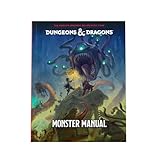
Overview: The 2024 Monster Manual delivers the most comprehensive collection of D&D creatures ever assembled, featuring over 500 stat blocks that range from classic favorites to terrifying new horrors. This revision prioritizes usability while expanding the boundaries of fifth-edition encounter design with clearer organization and refreshed content.
What Makes It Stand Out: With more than 75 brand-new monsters, including the devastating arch-hag and blob of annihilation for high-level play, this manual dramatically expands your encounter possibilities. The chromatic and metallic dragons receive stunning redesigns that reinvigorate these iconic foes. Over 40 humanoid stat blocks enable rich NPC interactions beyond simple combat, while reorganized creature types and streamlined stat blocks make mid-session referencing effortless.
Value for Money: As a DM’s primary creature resource, this manual offers exceptional value through sheer volume and visual quality. The extensive artwork alone justifies the investment, though groups primarily using digital tools may find less immediate utility. It’s a cornerstone book that pays dividends across countless campaigns.
Strengths and Weaknesses: Strengths include breathtaking art for nearly every entry, logical creature categorization, and stat blocks designed for quick comprehension. The new high-level threats fill a previous content gap. On the downside, some classic monsters saw minimal changes, and the price point stings for DMs who own the 2014 version. Digital-exclusive groups might underutilize the physical book.
Bottom Line: A must-have for DMs running physical games and those seeking fresh challenges. Existing 5E DMs should evaluate their need for new content before purchasing.
8. Dungeons & Dragons Mad Libs: World’s Greatest Word Game

Overview: Dungeons & Dragons Mad Libs transforms the classic word game into a fantastical adventure generator, offering lighthearted fun for players of all ages. This accessible supplement provides creative prompts that blend D&D themes with unpredictable humor, making it perfect for family game nights or session breaks without any rules overhead.
What Makes It Stand Out: Unlike traditional D&D products, this Mad Libs edition requires no rules mastery or character sheets—just imagination and a willingness to laugh. The prompts cleverly incorporate D&D classes, monsters, and settings, creating instant inside jokes for veteran players while remaining approachable for newcomers. Its portable format makes it ideal for travel or casual gatherings between campaign sessions.
Value for Money: As one of the most affordable D&D-branded products, it delivers exceptional entertainment per dollar. The replayability factor is high since different word choices yield wildly different stories, though the core prompts remain static. It’s an impulse purchase that actually justifies its minimal cost through genuine entertainment value.
Strengths and Weaknesses: Strengths include universal accessibility, genuine humor potential, and zero learning curve. It serves as a fantastic icebreaker or palate cleanser between serious sessions. However, it offers no mechanical benefits for actual gameplay, and the novelty may wear thin after repeated use with the same group. Some D&D purists might dismiss it as frivolous merchandise.
Bottom Line: An excellent stocking stuffer or gift for D&D fans who appreciate whimsy. Don’t expect campaign material, but embrace it for pure, rules-free fun that captures the spirit of collaborative storytelling.
9. Hasbro Gaming Dungeons & Dragons: Bedlam in Neverwinter Board Game, Escape Room, Cooperative Strategy Games for Ages 12+, 2-6 Players, 3 Acts Approx. 90 Mins Each (Amazon Exclusive)

Overview: Bedlam in Neverwinter distills the D&D experience into a cooperative board game escape room hybrid, guiding 2-6 players through a three-act mystery campaign. Each approximately 90-minute session combines puzzle-solving with tactical combat as players investigate disappearances in the iconic Forgotten Realms city without requiring a DM.
What Makes It Stand Out: The dynamic gameboard physically evolves as players solve multi-layered puzzles, revealing new locations and clues in a tangible way that digital alternatives can’t replicate. The three-act structure creates genuine narrative progression, while puzzle variety—including visual riddles and wordplay—engages different player strengths. Character creation with race, class, and loot collection maintains D&D’s core appeal in a streamlined package.
Value for Money: Offering roughly four and a half hours of structured gameplay, the value depends on replayability. While the mystery loses surprise on subsequent playthroughs, the puzzle quality and component durability justify the cost for groups seeking a one-shot D&D experience without preparation time or rules mastery.
Strengths and Weaknesses: Strengths include immersive puzzle design, quality miniatures and components, and authentic D&D flavor without complexity. The cooperative mystery format appeals to broader audiences than traditional RPGs. Weaknesses center on limited replay value once solved and a time commitment that may deter casual players. The narrative, while engaging, lacks the open-ended freedom of tabletop RPGs.
Bottom Line: Perfect for board game groups curious about D&D or veteran players wanting a low-prep adventure. Treat it as a premium one-shot experience rather than a repeatable campaign foundation.
10. The Young Adventurer’s Collection Box Set 1 [Dungeons & Dragons 4 Books]: Monsters & Creatures, Warriors & Weapons, Dungeons & Tombs, and Wizards & … & Dragons Young Adventurer’s Guides)
![The Young Adventurer's Collection Box Set 1 [Dungeons & Dragons 4 Books]: Monsters & Creatures, Warriors & Weapons, Dungeons & Tombs, and Wizards & ... & Dragons Young Adventurer's Guides)](https://m.media-amazon.com/images/I/41A0YrQYoQL._SL160_.jpg)
Overview: This four-book box set introduces children to the D&D universe through beautifully illustrated hardcovers: Monsters & Creatures, Warriors & Weapons, Dungeons & Tombs, and Wizards & Spells. Designed for ages 8-12, it distills complex fantasy concepts into digestible, kid-friendly content that inspires imagination without overwhelming young readers.
What Makes It Stand Out: Rather than focusing on rules, these guides emphasize rich lore, vibrant artwork, and simplified explanations that function as both primers for future players and standalone fantasy encyclopedias. The box set presentation creates a gift-worthy package that builds excitement, while the content encourages reading and creative thinking. It brilliantly bridges the gap between storybooks and rulebooks, planting seeds for future D&D interest.
Value for Money: Purchasing the set offers significant savings over individual titles, making it economical for parents or educators. The hardcover durability ensures these books withstand heavy use, and the educational value—enhancing vocabulary, creativity, and critical thinking—extends beyond pure entertainment into developmental benefits.
Strengths and Weaknesses: Strengths include age-appropriate writing, stunning visuals, and successful worldbuilding that captivates young minds. It serves families perfectly. However, it contains no actual game mechanics, which may disappoint children ready to play immediately. Older kids might find content too simplistic, and parents seeking a complete starter set must purchase additional materials like the Essentials Kit.
Bottom Line: An ideal gift for introducing children to fantasy roleplaying. It cultivates imagination and lays groundwork for future D&D interest, though it’s a supplement, not a replacement, for the full game experience.
The Evolution of Tabletop Roleplaying in 2026
The Shift from Traditional to Hybrid Gameplay
The line between physical and digital tabletop experiences has blurred considerably, creating hybrid ecosystems where both mediums complement rather than compete with each other. Modern systems allow you to maintain the tangible satisfaction of hand-painted miniatures and physical terrain while digital overlays automatically track conditions, ranges, and environmental effects in real-time. This integration means you no longer need to choose between the social warmth of in-person sessions and the convenience of digital automation. The most revolutionary approaches preserve the tactile elements that make tabletop gaming special while eliminating tedious bookkeeping that often slows down exciting moments.
How Technology is Reshaping the Dungeon Master Experience
Dungeon masters have gained powerful allies in managing the complex web of storytelling, rules adjudication, and player engagement. Next-generation DM tools can now generate nuanced NPC personalities with coherent motivations, suggest plot twists that align with your established narrative threads, and even adjust encounter difficulty based on real-time analysis of party performance. These systems don’t replace human creativity—they serve as collaborative partners that handle the mechanical heavy lifting, freeing you to focus on performance, pacing, and player interaction. The result is less prep time and more improvisational confidence, even when players inevitably veer off your carefully planned path.
Key Features Defining Revolutionary D&D Games
Adaptive AI Storytelling Engines
The most significant breakthrough in 2026’s D&D landscape involves AI systems that learn your group’s storytelling preferences and adapt accordingly. These sophisticated engines analyze your party’s decision patterns, preferred combat-to-roleplay ratios, and thematic interests to generate content that feels personally crafted. Unlike earlier procedural generation tools that produced generic encounters, modern systems maintain narrative continuity across sessions, remember character backstory details, and weave them into emerging plotlines organically. The technology understands context, tone, and character development arcs, ensuring that generated content enhances rather than disrupts your campaign’s cohesion.
Seamless Physical-Digital Integration
Revolutionary platforms have solved the long-standing problem of clunky digital interfaces interrupting gameplay flow. Smart game mats with embedded sensors automatically detect miniature placement and movement, updating digital battlemaps without requiring manual input. Digital character sheets now sync instantly with physical dice rolls through Bluetooth-enabled rollers, applying modifiers automatically while still preserving the ritualistic excitement of rolling. This synchronization extends to shared audio environments that adjust based on in-game locations, dynamic lighting systems that respond to character actions, and inventory management that updates across all devices when a player trades items at the table.
Cross-Platform Compatibility Standards
The days of fragmented gaming ecosystems are fading as industry-wide standards emerge for content sharing and cross-platform play. Modern D&D systems allow you to start a session on your home gaming table, continue it on a tablet during your commute, and finish on a friend’s virtual reality setup without losing progress or functionality. This interoperability extends to content creation—modules you purchase or create in one ecosystem now work seamlessly across competing platforms thanks to universal file formats and API agreements. For players, this means freedom from vendor lock-in and the ability to choose tools based on preference rather than compatibility constraints.
Immersive Technologies Transforming Your Table
Virtual Reality Encounter Spaces
Virtual reality has matured from a gimmicky distraction into a legitimate storytelling tool that enhances rather than replaces traditional gameplay. VR encounter spaces allow remote players to feel physically present at your table, with full body tracking that captures gestures and expressions. These environments enable impossible visual spectacles—flying through a dragon’s lair, exploring massive dungeon complexes at 1:1 scale, or witnessing spell effects with cinematic grandeur. Importantly, the best implementations remain optional; players without VR headsets participate fully through traditional interfaces while still benefiting from the enhanced visualization.
Augmented Reality Character Sheets
Augmented reality technology has revolutionized character management by overlaying dynamic information onto physical sheets without requiring screens at the table. Point your device at your character sheet and watch as spell slot trackers fill and empty, hit points update in real-time, and condition effects animate around your stats. This technology extends to rule references—hover over a complex ability name and see a contextual explanation appear, eliminating rulebook flipping. The most advanced systems even project 3D visualizations of your character’s appearance, equipment loadouts, and current status effects into your physical space, creating a living document that evolves with your adventure.
Haptic Feedback Dice Systems
The emotional connection between player and dice remains sacred, and revolutionary haptic feedback systems enhance rather than replace this relationship. Smart dice now provide tactile feedback that communicates information through vibration patterns—different rhythms indicate critical hits, fumbles, or trigger special ability activations. Weighted cores adjust dynamically to simulate different dice materials and craftsmanship, while embedded displays show roll results on the die itself, visible to all players. These systems maintain the superstition and personality of favorite dice while adding layers of information that previously required digital screens.
Accessibility and Inclusivity Innovations
Visual and Hearing Impairment Accommodations
Revolutionary D&D platforms have made inclusivity a core feature rather than an afterthought. For visually impaired players, tactile display tablets render braille character sheets that update dynamically, while AI narrators describe visual elements with contextual awareness that avoids disrupting gameplay flow. Hearing-impaired players benefit from real-time speech-to-text transcription that identifies speakers and conveys tone, plus visual effect representations that communicate auditory information through light and vibration. These accommodations integrate seamlessly into the standard experience, ensuring disabled players participate fully without requiring special sessions or modified rules.
Cognitive Accessibility Features
Cognitive load management has become a priority in modern D&D design, with features that help players with ADHD, autism, and other neurodiverse conditions engage more comfortably. Customizable interface complexity allows individuals to choose how much information displays at once, while executive function assistants provide gentle prompts for turn-taking and rule reminders without patronizing. Memory aids automatically track ongoing effects and narrative threads, reducing the mental burden of continuity. These tools adapt to each player’s needs, creating an environment where cognitive differences become strengths rather than barriers to participation.
Language and Translation Tools
Real-time translation technology has broken down language barriers that previously limited international play groups. Modern systems translate spoken and written content instantly while preserving idiomatic expressions and cultural context that make roleplaying rich. Voice modulation maintains character personality across languages, and cultural sensitivity filters help avoid unintentional offense when playing across different cultural backgrounds. This technology extends to sign language recognition and generation, making the hobby accessible to deaf players regardless of their spoken language proficiency.
Community-Driven Content Ecosystems
Player-Created Module Marketplaces
The barrier between player and publisher has dissolved as community marketplaces flourish alongside official content. These platforms use blockchain-inspired verification systems to ensure quality and originality while allowing creators to monetize their work fairly. AI-assisted playtesting tools help creators balance encounters and identify narrative inconsistencies before publication. The most revolutionary aspect involves revenue sharing models that compensate not just primary creators but also contributors whose ideas influenced the work, creating a sustainable ecosystem where hobbyists can transition to professional design.
Shared World-Building Platforms
Collaborative world-building has reached new heights through persistent shared universes where multiple groups’ actions impact a common setting. Your party’s decision to broker peace between warring factions might create trade opportunities for another group’s merchant campaign, while their failure to stop a necromancer could raise undead threats in your region. These platforms track causality across thousands of concurrent campaigns, creating living worlds that evolve through collective storytelling. Participation remains optional—groups can engage with the shared universe as much or as little as they prefer, dipping in for special events or remaining isolated in their private corners of the setting.
What to Consider When Choosing Your Next Game
Evaluating Your Group’s Experience Level
Selecting the right revolutionary features depends heavily on your players’ familiarity with traditional D&D. Groups new to tabletop roleplaying might find fully integrated digital systems overwhelming, while veterans may crave advanced simulation capabilities. Consider starting with modular implementations—perhaps using AI for encounter building while maintaining traditional dice rolling, or implementing AR character sheets without adding VR combat visualization. The key is matching technological complexity to your group’s comfort zone while leaving room for organic expansion as everyone becomes more familiar with new capabilities.
Balancing Digital Dependency
The most successful modern D&D experiences maintain a healthy relationship with technology without becoming entirely dependent on it. Evaluate whether a system’s core gameplay functions continue smoothly during internet outages or hardware failures. Revolutionary platforms should enhance the human elements of storytelling and social interaction rather than replacing them. Consider how the technology handles off-script moments—the true test of a great system is whether it gracefully accommodates players doing the unexpected or if it breaks down when deviating from programmed paths.
Budget Considerations for 2026
The cost of entry for cutting-edge D&D experiences varies dramatically, with subscription models, hardware requirements, and content purchases adding up quickly. Assess the total cost of ownership beyond initial purchase price—some systems require ongoing subscriptions for AI features, cloud storage for campaign data, or premium marketplaces for quality content. Consider scalable options that allow you to invest gradually, starting with core features and expanding as your budget allows. Many revolutionary platforms offer free tiers with substantial functionality, letting you evaluate their value before committing financially.
Advanced Mechanics for Veteran Players
Dynamic World Simulation Systems
For experienced groups seeking deeper immersion, advanced simulation engines model complex ecological, economic, and political systems that react autonomously to player actions. These systems track resource scarcity, population migrations, and faction relationships across hundreds of variables, creating emergent narratives that surprise even the dungeon master. Your decision to flood a mine doesn’t just eliminate one encounter—it affects local economies, triggers refugee movements, and alters regional power balances in ways that generate new adventures organically. This level of simulation transforms campaigns into truly living worlds where consequences ripple realistically through interconnected systems.
Complex Character Progression Paths
Veteran players tired of linear class progression now have access to revolutionary advancement systems that reflect personal character development rather than predetermined level tracks. These platforms use narrative analysis to suggest custom abilities based on how you’ve actually played your character—perhaps granting a stealth bonus not because you leveled up, but because you’ve consistently solved problems through clever infiltration. Multi-classing has evolved into fluid skill blending where abilities emerge from story moments rather than mechanical prerequisites, creating characters that feel genuinely shaped by their adventures rather than built from optimization guides.
Getting Started with Modern D&D Games
Essential Components for Beginners
Starting with revolutionary D&D systems doesn’t require purchasing every available technology. Focus on core elements that provide the most immediate value: a reliable digital character sheet system, basic encounter management tools, and a communication platform that supports your group’s play style. Many successful new players begin with just a smartphone app that handles rule lookups and character tracking while using traditional dice and paper. The key is choosing tools that solve actual problems you encounter rather than adopting technology for its own sake. Let your natural gameplay friction points guide your technology investments.
Setting Up Your First Revolutionary Session
Launching your inaugural session with modern tools requires different preparation than traditional campaigns. Start with a technology rehearsal where players familiarize themselves with interfaces without the pressure of active gameplay. Establish clear protocols for when to use digital aids versus when to maintain pure roleplay moments. Create backup plans for inevitable tech hiccups—perhaps keeping physical character sheets as a safety net. Most importantly, maintain the ritual elements that make D&D special: the pre-game gathering, the ceremonial first roll, and the shared snacks that transform a gaming session into a social event. Technology should fade into the background, supporting these moments rather than dominating them.
Frequently Asked Questions
What makes a D&D game “revolutionary” in 2026?
Revolutionary D&D games are defined by how seamlessly they integrate emerging technologies while preserving the core social storytelling experience. Key innovations include AI that learns your group’s preferences, physical-digital hybrid components that maintain tactile satisfaction, and accessibility features that make the hobby inclusive for players with disabilities. The revolution isn’t about replacing human creativity but augmenting it with tools that handle tedious tasks, enhance immersion, and remove barriers to participation.
Do I need expensive hardware to enjoy modern D&D games?
Absolutely not. While premium hardware enhances certain aspects, most revolutionary features are available through smartphones, tablets, and web browsers you already own. Many platforms operate on freemium models where core functionality costs nothing. Start with free tools and invest in hardware only after identifying specific features that would meaningfully improve your experience. The most important component remains the same as always: a group of people excited to tell stories together.
Will AI dungeon masters replace human DMs?
No—AI functions as a collaborative tool that handles mechanical complexity and generates content suggestions, but human DMs remain essential for reading player emotions, adapting to unexpected choices, and providing the personal touch that makes campaigns memorable. Think of AI as an extremely knowledgeable co-DM who never gets tired of calculating damage modifiers or generating NPC names, freeing you to focus on performance and player engagement.
How do I introduce revolutionary features to traditional players resistant to change?
Introduce new tools gradually, starting with features that solve specific frustrations they already experience. Perhaps begin with automated character sheet math before adding AR visualizations. Frame technology as enhancing beloved traditions rather than replacing them. Many resistant players become advocates after experiencing how much time saved on bookkeeping translates to more actual roleplaying and story development.
Are digital dice rolls as random as physical dice?
Modern digital random number generators use sophisticated algorithms that are statistically more random than most mass-produced physical dice, which often have microscopic imperfections affecting roll distribution. However, the psychological satisfaction of physical dice remains important to many players. Revolutionary systems offer both options, often syncing physical dice rolls to digital platforms for the best of both worlds.
How do accessibility features affect gameplay for non-disabled players?
Accessibility improvements universally enhance the experience for everyone. Captioning helps in noisy environments, simplified interfaces reduce cognitive load during long sessions, and flexible input methods accommodate different learning styles. These features create more comfortable gaming spaces that allow all participants to focus on fun rather than struggling with unnecessary barriers.
Can I use revolutionary D&D tools for other tabletop roleplaying systems?
Most modern platforms are designed with system-agnostic architecture, allowing you to adapt their features to any tabletop RPG. AI storytelling engines, AR character sheets, and accessibility tools typically work across different rule sets with minimal configuration. This flexibility means your investment in revolutionary tools pays dividends across your entire hobby collection, not just D&D campaigns.
What happens to my campaign data if a platform shuts down?
Reputable platforms now offer open data export standards that let you download complete campaign information in universal formats. Before committing to any system, verify their data portability policies and regularly back up your content. The best practice is treating cloud platforms as collaboration tools while maintaining local copies of your creative work, ensuring your stories survive regardless of corporate decisions.
How do I balance screen time with in-person social interaction?
Establish clear “tech-free” moments during sessions, such as during important roleplay scenes or when players are deliberating plans. Use technology that fades into the background rather than demanding constant attention. Many groups find success with a “DM screen” model where only the dungeon master uses advanced tools while players maintain traditional paper sheets, creating a natural balance between digital efficiency and personal interaction.
Are revolutionary D&D games suitable for children and families?
Many modern systems include robust parental controls, content filtering, and simplified rule sets specifically designed for younger players. AI assistants can adapt complex rules to age-appropriate levels, while visual aids help children engage with abstract concepts. The key is selecting platforms with family-friendly modes and actively participating in your children’s gaming experiences to ensure safe, positive interactions.
See Also
- How to Choose the 10 Best Dungeons & Dragons Games for Your Group in 2026
- 2026’s Top 10 Adventure Modules for One-Shot Dungeons & Dragons Games
- The 10 Most Revolutionary Role-Playing Board Games of 2026
- The 10 Most Revolutionary Miniature Figures for Role-Playing Games of 2026
- The 10 Ultimate Best Dungeon Crawler Board Games for RPG Fans in 2026