Table of Contents
Imagine the scene: your living room buzzing with energy, friends leaning forward in shared concentration, a complex board spread between you. Instead of cutthroat competition, there’s collaborative problem-solving, whispered strategies, and collective groans or cheers as you navigate a challenging scenario together. This is the magic of modern cooperative strategy board games – transforming game night from a series of individual victories into a unified journey where everyone wins or loses as one team. In an era increasingly dominated by digital isolation, these games offer a uniquely powerful antidote: genuine connection forged through shared intellectual challenge and mutual reliance. They demand communication, foster empathy, and create memories far deeper than simply claiming victory points.
As we look ahead to 2026, the landscape of cooperative strategy gaming continues to evolve rapidly. Game designers are pushing boundaries with innovative mechanics, deeper narrative integration, and smarter difficulty scaling, making the selection process more exciting – and potentially overwhelming – than ever before. Choosing the right cooperative strategy game isn’t just about picking something popular; it’s about finding a perfect synergy between your group’s dynamics, your collective appetite for challenge, and the specific experience you want to cultivate. This guide cuts through the noise, focusing on timeless principles and forward-looking considerations to ensure your 2026 game nights are not just fun, but truly transformative experiences built on teamwork and strategic depth.
Top 10 Strategy Cooperative Board Games
Detailed Product Reviews
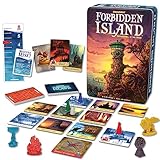
1. Gamewright - Forbidden Island - Cooperative Strategy Survival Board Game, 2-4 Players
Overview:
Forbidden Island, designed by Matt Leacock, is a cooperative board game where 2-4 players race against time to retrieve four sacred treasures from a sinking island before it vanishes. Players assume unique roles with special abilities, working together to collect artifacts while the island tiles progressively sink into the ocean.
What Makes It Stand Out:
Its innovative cooperative mechanics eliminate player competition, fostering genuine teamwork. The dynamic island layout—where tiles sink after exploration—creates escalating tension. Stunning artwork immerses players in a perilous paradise, while the 10+ age rating and 30-minute playtime make it ideal for family game nights focused on strategy and communication.
Value for Money:
Priced competitively for a premium board game, it offers exceptional replayability through variable island setups and role combinations. Compared to similar strategy games, its compact size, durable components, and educational focus on problem-solving deliver strong value for families seeking screen-free engagement.
Strengths and Weaknesses:
Strengths: Intuitive rules, high replay value, excellent teamwork emphasis, beautiful visuals, and skill-building for critical thinking. Weaknesses: Limited player count (max 4), difficulty scaling for younger children under 10, and occasional frustration from unavoidable sinking mechanics in early plays.
Bottom Line:
A must-have for families and strategy enthusiasts, Forbidden Island masterfully blends tension, cooperation, and accessibility. Its thoughtful design justifies the price, making it a standout choice for game nights that build teamwork without sacrificing excitement.
2. Happy Camper - The Four Doors | Cooperative Game by Pandemic and Forbidden Island Creator | Perfect for Solo Play, Two Players, and Small Groups | Portable Adventure Game
Overview:
The Four Doors, co-designed by Matt Leacock (Pandemic), is a portable cooperative adventure where 1-5 players explore a mystical light tower to recover four sacred treasures before sinister shadows seal the doors. With a 30-minute playtime and compact design, it caters to solo gamers and small groups.
What Makes It Stand Out:
Its seamless solo-play mode is exceptionally rare for Leacock-designed games, eliminating the need for rule modifications. The portable size suits travel, while the “shadow swarm” mechanic creates relentless pressure. The thematic integration—uniting treasures to ignite a beacon—delivers narrative cohesion absent in many pocket games.
Value for Money:
Though slightly pricier than micro-games, its versatility (solo to 5 players) and Leacock’s signature depth justify the cost. It outperforms similar portable titles by offering full cooperative complexity without sacrificing convenience, making it ideal for commuters or casual gamers.
Strengths and Weaknesses:
Strengths: Flawless solo implementation, ultra-portable, quick setup, engaging theme, and scalable difficulty. Weaknesses: Less component variety than legacy games, limited long-term replayability after mastering strategies, and minimal player interaction in solo mode.
Bottom Line:
An indispensable travel companion for cooperative game fans, The Four Doors excels as a compact, thoughtfully crafted experience. Its solo-play innovation and portability earn high marks, though it’s best for those prioritizing convenience over elaborate components.
3. Scorpion Masqué Sky Team | Voted Game of The Year 2024 | Best 2 Player Game | Work Together to Land The Plane | Ages 14+ | 20 Minutes

Overview:
Sky Team is an award-winning 2-player cooperative game where partners assume pilot and co-pilot roles to land a plane safely. With 20-minute sessions, players manage speed, altitude, and emergencies using dice and cockpit-themed components, aiming to touch down before fuel runs out.
What Makes It Stand Out:
Its intense communication demands—players strategize between rounds but execute actions silently—create unique tension. The 20 global airport scenarios and optional modules (e.g., ice on tarmac) exponentially boost replayability. Immersive cockpit components and coffee-brewing “focus” mechanic deepen engagement.
Value for Money:
As a specialized 2-player game, its $25-$30 price point is fair given the Game of the Year 2024 accolade and modular expansions. It outshines cheaper duos with unparalleled depth, though couples seeking longer sessions may desire more base content.
Strengths and Weaknesses:
Strengths: Exceptional teamwork pressure, high replayability via scenarios, innovative silent-execution phase, and tactile components. Weaknesses: Steep learning curve for non-gamers, limited to two players, and scenario balance issues in advanced modes.
Bottom Line:
A masterpiece of cooperative design, Sky Team earns its awards with nail-biting synergy and endless challenges. Highly recommended for couples or partners craving intense, focused gameplay, despite its niche player count.
4. Pandasaurus Cooperative Strategy Card Game - Fun Interactive Family Game for Ages 8+, 1-5 Players, 20 Minute Playtime
Overview:
“The Game” is a minimalist cooperative card game where 1-5 players collaboratively play descending and ascending number sequences from two decks. The twist: you can’t discuss strategies, forcing players to intuitively anticipate teammates’ moves within a 20-minute session.
What Makes It Stand Out:
Its elegant “silent teamwork” mechanic—where communication is forbidden—creates thrilling psychological dynamics. With 1.3 million copies sold and a Spiel Des Jahres nomination, it stands out for universal accessibility. The 8+ age rating and quick playtime suit families, while depth appeals to hardcore gamers.
Value for Money:
Priced under $15, it’s a steal for its replayability and award pedigree. Unlike bulkier games, its small box delivers endless sessions through emergent strategies, outperforming similarly priced abstract games in social engagement.
Strengths and Weaknesses:
Strengths: Brilliant silent-cooperation concept, ultra-portable, fast setup, family-friendly, and infinitely replayable. Weaknesses: Limited physical components (just cards), potential frustration from miscommunication, and minimal theme immersion.
Bottom Line:
A phenomenal value for fostering nonverbal teamwork, “The Game” is perfect for quick, brain-teasing sessions. Its simplicity and depth make it an essential, affordable addition to any game library despite sparse components.
5. Asmodee Pandemic Board Game (Base Game) - A Cooperative Battle to Save Humanity, Strategy Game for Kids and Adults, Ages 8+, 2-4 Players, 45 Minute Playtime

Overview:
Pandemic revolutionized cooperative gaming by tasking 2-4 players with curing four global diseases before outbreaks spiral. Each player assumes a unique role (e.g., Medic, Scientist), combining special abilities to treat infections and discover cures across a world map.
What Makes It Stand Out:
As the genre-defining cooperative game, it pioneered “win-or-lose-together” mechanics. Its tense epidemic cards and role synergy create emergent narratives, while the 45-minute runtime balances depth with accessibility. The base game remains the gold standard for strategic teamwork.
Value for Money:
At $40-$50, it’s competitively priced against complex strategy games. With 15+ expansions available, the base game serves as a long-term investment. It surpasses cheaper alternatives through unparalleled design depth and durability, justifying its status as a modern classic.
Strengths and Weaknesses:
Strengths: Perfect role interdependence, high replayability via variable setups, intense but fair difficulty, and exceptional educational value for planning/coordination. Weaknesses: Can overwhelm new players, “alpha player” risk if one dominates strategy, and component wear after heavy use.
Bottom Line:
An essential purchase for strategy fans, Pandemic’s brilliant design and enduring appeal make it worth every penny. Despite minor flaws, it remains the ultimate cooperative experience for families and gamers seeking meaningful teamwork challenges.
6. Spin Master Games, SolidRoots Escaping Extinction, Cooperative Strategy Board Game from The Makers of Mind The Gap, Easter Gift, 1-4 Players, for Ages 12 & Up

Overview: SolidRoots Escaping Extinction casts players as clever dinosaurs racing to assemble a 3D rocket before an extinction-level meteor strikes. This cooperative strategy game tasks teams with exploring a dynamic tile-based prehistoric world to locate rocket components while navigating earthquakes and environmental hazards. Designed for family game nights, it emphasizes teamwork under time pressure. What Makes It Stand Out: The game’s standout feature is its modular board, ensuring a unique layout every playthrough, combined with disruptive “earthquake cards” that reshuffle terrain mid-game. The physical 3D rocket assembly adds tangible satisfaction, while the dinosaur theme offers a fresh narrative twist on cooperative survival mechanics compared to typical apocalyptic scenarios. Value for Money: Priced competitively for a modern board game, it delivers strong replayability through variable setups and strategic depth. While lacking the component quality of premium titles, it justifies its cost as a durable, engaging group experience that avoids disposable holiday-gift pitfalls, especially for families already enjoying Spin Master’s catalog. Strengths and Weaknesses: Strengths: High replayability via modular boards; intuitive cooperative mechanics; thematic 3D rocket assembly; accessible for teens. Weaknesses: Artwork feels generic; rocket construction can frustrate younger players; limited strategic depth for hardcore gamers; earthquake mechanics occasionally feel punitive. Bottom Line: A solid, theme-driven cooperative game perfect for family nights seeking moderate challenge and novelty. Recommended for ages 12+ groups wanting accessible strategy without overwhelming complexity, though veterans may crave deeper mechanics.
7. Funforge Runemasters Fantasy Cooperative Board Game - Strategy, Dice Adventure for Adults & Families - 1-4 Players, Ages 8+, 45 Min Playtime

Overview: Runemasters plunges players into a dark fantasy tower defense scenario where guardians must repel waves of evil forces assaulting a sacred temple until dawn breaks. This streamlined cooperative game uses dice-driven mechanics to balance defense, resource management, and character abilities across short, intense sessions ideal for casual and family play. What Makes It Stand Out: Its elegance lies in adjustable difficulty scaling—perfect for introducing younger players (ages 8+) to strategy games—and seamless solo playability where one person controls multiple guardians. The dice-chaining system creates meaningful tension, as rerolling for better results risks triggering enemy advances, fostering constant risk-reward decisions. Value for Money: At its price point, Runemasters offers exceptional value through high replayability and versatility. The compact box delivers a complete experience without bloat, outperforming many entry-level games in strategic substance. It’s a smarter investment than disposable party games, especially for families seeking accessible fantasy depth. Strengths and Weaknesses: Strengths: Effortless solo/co-op transition; clever dice mechanics; scalable difficulty; quick setup/playtime; family-friendly depth. Weaknesses: Minimal theme integration; limited character differentiation; repetitive after extended plays; component quality is functional but unremarkable. Bottom Line: An outstanding gateway cooperative game that excels in simplicity and replayability. Highly recommended for families, casual gamers, or solo players wanting a tight, thematic strategy fix without complexity overload.
8. Flow: The Official Cooperative Board Game | Strategy Game for 1–4 Players Ages 8+ | Based on The Award-Winning Animated Film | Family & Solo Play | Survive The Flood, Rescue Allies
Overview: Flow translates the emotional depth of its animated film inspiration into a real-time cooperative survival game. Players navigate a modular, flooding landscape to rescue allies and reach safety, with rising water levels dynamically reshaping the board. Designed for 1–6 players, it emphasizes urgent teamwork against an ever-encroaching tide. What Makes It Stand Out: The ingenious “rising water” mechanic forces constant adaptation as pathways disappear, creating genuine tension. Real-time decision-making—where players act simultaneously under pressure—sets it apart from turn-based competitors. The modular board and 11 scenario cards ensure near-infinite replayability while honoring the film’s poignant narrative. Value for Money: Priced fairly for its component quality and innovative mechanics, Flow surpasses expectations for a licensed game. Its solo-to-six-player flexibility and deep scenario variety offer more longevity than most family games, making it a worthwhile upgrade from basic cooperative titles despite the premium brand association. Strengths and Weaknesses: Strengths: Unique real-time cooperation; deeply engaging flood mechanic; exceptional replayability; faithful film adaptation; scales perfectly for any group size. Weaknesses: Real-time play can overwhelm younger children; scenario setup complexity varies; limited strategic depth for veteran gamers; component storage is awkward. Bottom Line: A masterclass in thematic cooperative design that captures its source material’s heart. Essential for film fans and highly recommended for groups seeking immersive, dynamic gameplay, though less ideal for very young or strictly competitive players.
9. Hasbro Gaming Dungeons & Dragons: Bedlam in Neverwinter Board Game, Escape Room, Cooperative Strategy Games for Ages 12+, 2-6 Players, 3 Acts Approx. 90 Mins Each (Amazon Exclusive)

Overview: Bedlam in Neverwinter delivers a D&D-themed escape room experience split into three cinematic acts. Players create characters, explore a modular Neverwinter board, battle monsters, and solve multi-layered puzzles to uncover a sinister cult’s plot across a 3-4 hour epic. This Amazon-exclusive title merges RPG storytelling with puzzle-solving immersion. What Makes It Stand Out: The three-act structure with evolving board states creates unparalleled narrative momentum, while authentic D&D elements—like character classes, loot, and monster battles—elevate it beyond standard escape games. Multi-card visual riddles and location-unlocking mechanics foster genuine “aha!” moments rarely seen in board game adaptations. Value for Money: Justifying its premium price through sheer scope, it offers 3-4 hours of content rivaling commercial escape rooms. Though Amazon-exclusive availability is a drawback, the physical components and puzzle variety provide better longevity than disposable escape kits, especially for D&D devotees. Strengths and Weaknesses: Strengths: Rich D&D integration; compelling multi-act narrative; inventive puzzles; high production value; excellent group engagement. Weaknesses: Amazon exclusivity limits access; lengthy playtime demands commitment; puzzle difficulty spikes unevenly; minimal replayability post-solution. Bottom Line: A triumphant D&D escape room hybrid perfect for dedicated fans and puzzle lovers. Recommended for immersive group sessions, though casual players may prefer shorter, more replayable alternatives.
10. AEG & Flatout Games | Cascadia - Award-Winning Board Game Set in the Pacific Northwest | Easy to Learn | Quick to Play | Ages 10+

Overview: Cascadia, winner of the 2022 Spiel des Jahres, challenges players to build evolving wildlife habitats across the Pacific Northwest. Using elegantly simple tile-drafting and placement mechanics, this solo-to-four-player game tasks you with creating connected ecosystems where animal tokens score points based on habitat continuity and species grouping. What Makes It Stand Out: Its brilliance lies in marrying accessibility with strategic depth: teachable in two minutes yet offering nuanced spatial puzzles. The “light strategy” gameplay shines through multiple scoring avenues—balancing habitat corridors with animal placements—while beautiful nature-themed art creates a calming, meditative experience uncommon in competitive games. Value for Money: As a Spiel des Jahres winner, Cascadia delivers exceptional value. Its high-quality components, family-friendly mode, and 15-30 minute playtime justify the cost, outperforming pricier strategy games in replayability. Frequent sales make it a steal for households seeking approachable, thoughtful gaming. Strengths and Weaknesses: Strengths: Effortless learning curve; stunning artwork; deep spatial strategy; perfect playtime; true solo compatibility; award-winning design. Weaknesses: Minimal player interaction reduces tension; scoring nuances may confuse absolute beginners; expansions necessary for advanced depth. Bottom Line: A near-perfect gateway strategy game that’s essential for families and casual gamers. Highly recommended as a first “serious” board game—its beauty, simplicity, and depth make it a modern classic worth owning.
Understanding the Core Appeal of Cooperative Strategy
Defining the Cooperative Strategy Experience
True cooperative strategy games eliminate player-versus-player conflict entirely. Victory or defeat hinges solely on the group’s collective ability to overcome the game’s systems, puzzles, or adversarial mechanisms. This shifts the focus from outmaneuvering opponents to optimizing team communication, resource allocation, and long-term planning under pressure. It’s less about individual brilliance and more about synergistic problem-solving, where diverse perspectives become essential assets rather than obstacles.
Why Strategy Elevates Cooperation
While simple cooperative games exist, adding a robust strategic layer transforms the experience. It introduces meaningful decisions with significant consequences, requiring players to weigh risks, manage limited resources, anticipate future challenges, and adapt plans dynamically. This depth prevents the “alpha gamer” problem (where one person dictates all moves) by demanding diverse input and specialized roles, making the victory feel genuinely earned through collective intellectual effort rather than luck or a single leader.
The Social Dynamics Shift
Moving from competitive to cooperative strategy fundamentally alters group interaction. Instead of guarded secrecy and hidden motives, the table thrives on open discussion, debate, and shared vulnerability. Players feel psychologically safer to propose unconventional ideas, knowing the goal is collective success, not individual dominance. This fosters stronger bonds, improves communication skills, and creates a uniquely positive, supportive social environment that competitive games often struggle to replicate consistently.
Key Criteria for Selecting the Ideal Game
Assessing Complexity and Learning Curve
Honesty about your group’s collective patience and experience is crucial. Games range from elegantly simple with intuitive core loops to sprawling epics requiring significant rulebook immersion. Consider the teachable complexity: how easily can the core concepts be explained in 10-15 minutes? Prioritize games where the initial session focuses on grasping the immediate challenge, with deeper strategic layers unfolding over subsequent plays, rather than overwhelming newcomers immediately.
Evaluating Replay Value and Variable Setup
A hallmark of great cooperative strategy is near-infinite replayability. Look for systems that generate unique scenarios through modular boards, shuffled decks of challenges, variable player powers, or asymmetric starting conditions. Games incorporating legacy elements (permanent changes over a campaign) or robust scenario packs offer extended engagement, but ensure the core non-legacy experience remains compelling for groups who prefer standalone sessions. Randomized elements should feel meaningful, not arbitrary.
Balancing Challenge and Accessibility
The ideal difficulty curve is steep but navigable. The game should present a genuine threat of failure, creating tension and excitement, without feeling insurmountable or reliant on perfect play from the first attempt. Seek games with adjustable difficulty sliders – not just simple “easy/medium/hard” settings, but mechanics that naturally scale challenge based on player count, scenario choices, or optional rules. The sweet spot is where victory feels earned after several tense, close calls, not handed to you or snatched away by opaque mechanics.
Matching the Game to Your Group Dynamics
Group Size and Player Count Optimization
Cooperative games often have a “sweet spot” player count where the experience shines brightest. A game designed for 3-4 players might feel sluggish with 2 or chaotic with 5. Pay close attention to the manufacturer’s recommended range and, crucially, why that range exists. Does it rely on specific role interactions that break down outside the intended count? Does communication become impossible with more players? Choose a game whose optimal count aligns with your typical group size for the most satisfying experience.
Managing Diverse Skill Levels and Engagement
The ideal cooperative game accommodates both seasoned strategists and newer players without frustrating either. Look for roles or phases where less experienced players have clear, impactful actions that don’t require deep meta-knowledge. Games with simultaneous planning phases or distinct player turns can help prevent analysis paralysis from slowing the whole group. Ensure all players feel consistently involved; avoid games where one person manages a complex subsystem while others twiddle thumbs for long stretches.
Navigating the Alpha Gamer Challenge
This is a common pitfall. Select games with mechanics that inherently distribute decision-making: hidden information requiring player input, simultaneous action selection, or roles with specialized knowledge no single player possesses. Games where discussion is required to solve puzzles or interpret clues naturally mitigate alpha dominance. Establish group norms before playing – agree that all ideas should be heard, and consider using a “no quarterbacking” rule where only the active player makes final decisions for their turn.
Future-Proofing Your Choice for 2026 and Beyond
Considering Physical and Digital Integration
The line between physical and digital board gaming continues to blur. Evaluate how optional apps or companion tools enhance (or hinder) the experience. Do they streamline setup, track complex state changes, provide immersive narrative, or introduce dynamic scenarios? Ensure any digital component is genuinely additive – solving a real problem like tedious bookkeeping – rather than a gimmick requiring constant device handling that disrupts table focus. Prioritize games where the core experience remains fully functional without tech.
Evaluating Long-Term Support and Community
While avoiding specific titles, consider the designer/publisher’s track record. Do they actively support their games with free scenario updates, community-driven content hubs, or organized play events? A vibrant player community often extends a game’s lifespan significantly through fan-made scenarios, variant rules, and strategic discussions. Check forums and social media before purchasing to gauge ongoing engagement – a sign the game will feel fresh and supported well into 2026.
Sustainability and Component Longevity
Look beyond the initial unboxing. Are rulebooks well-organized and indexed for quick reference during play? Are components made from durable materials that will withstand repeated plays (thick cardboard, sturdy miniatures)? Consider storage solutions – does the box have adequate space, or will you need third-party inserts? Games designed with modularity and robust parts offer better value over time, reducing frustration from broken pieces or constantly referencing confusing rules.
Deep Dive into Strategic Mechanics
Resource Management Systems
How a game handles scarcity is pivotal. Effective cooperative strategy often revolves around managing limited actions, time, health, or thematic resources (like energy, morale, or supplies). Evaluate if the resource system creates meaningful tension and strategic trade-offs. Does hoarding feel punishing? Do shortages force creative problem-solving? Avoid systems where resource generation feels arbitrary or where critical resources are so scarce that failure is inevitable without perfect luck.
Player Roles and Asymmetry
Asymmetric roles, where each player has unique abilities or starting conditions, are common in co-ops. This can greatly enhance replayability and strategic depth. However, assess if the asymmetry feels balanced and necessary. Do roles create truly distinct playstyles that require coordination, or do they just offer minor stat variations? Ensure no role feels consistently underpowered or like a “support” role with minimal agency. The best asymmetric co-ops make each player feel indispensable in different ways.
Threat Escalation and Pacing
The game’s pacing is often dictated by how threats escalate. Does the difficulty ramp up smoothly, creating rising tension? Or does it feature sudden, punishing spikes that feel unfair? Look for escalation mechanisms tied to player actions or clear, visible timers (like a doom track or advancing enemy wave) that allow the group to anticipate and plan for increasing pressure. Sudden, opaque difficulty jumps often lead to frustration rather than satisfying challenge.
Puzzle Integration vs. Strategic Depth
Many co-ops incorporate puzzle elements. The key distinction is whether solving the puzzle is the strategy, or if the puzzle is just one component within a broader strategic framework. Games where the solution is largely predetermined (solve the puzzle, win) can suffer from low replayability once the solution is known. Prioritize games where puzzle elements interact dynamically with ongoing strategic decisions – where the “solution” changes based on player choices, resource availability, or random elements, ensuring each playthrough demands fresh strategic adaptation.
Practical Considerations for Game Night Success
Session Time Commitment Realities
Be brutally realistic about your group’s available time. Cooperative strategy games can range from 30-minute lightning sessions to 3+ hour epics. Factor in setup, teardown, and inevitable discussion time – a game listed as “60-90 minutes” might easily run 120 minutes with a new group. Choose games whose actual playtime aligns with your typical schedule to avoid the frustration of constantly abandoning games mid-session. Shorter, focused strategic co-ops are often more reliably played than marathon sessions.
Physical Space and Setup Requirements
Cooperative games, especially those with large maps or many components, can devour table space. Measure your available area and compare it to game requirements (don’t forget space for player mats, card hands, and reference sheets!). Consider setup complexity: games requiring intricate tile placement or sorting numerous decks can eat into precious playtime. Games with streamlined setup processes or integrated storage solutions significantly lower the barrier to getting the game to the table regularly.
Storage and Organization Solutions
Frustration often stems from chaotic setup and teardown. Investigate if the game’s box includes functional organizers or if the community has developed popular third-party solutions. Games designed with component trays or logical sorting in mind make the entire experience smoother. For 2026, prioritize titles where organization is part of the design philosophy, reducing the “hassle factor” that can kill replayability, especially for groups with limited storage space between game nights.
Frequently Asked Questions
Frequently Asked Questions
How can we prevent one person from dominating all the decisions? Choose games with mechanics that force distributed decision-making, like simultaneous action selection, hidden information only one player sees, or distinct phases where different players lead. Establish group norms early: use a timer for discussions, implement a “no quarterbacking” rule where only the active player decides their move, and encourage quieter members by directly asking for their input.
Are cooperative games suitable for mixed experience levels? Absolutely, but game selection is key. Prioritize titles with a gentle learning curve, clear role differentiation where newer players have manageable responsibilities, and adjustable difficulty. Avoid games with extremely high complexity ceilings or where deep meta-knowledge is required to avoid failure. Games with a strong “teachability” factor work best.
What if our group consistently loses? Is the game too hard? First, ensure you’re playing with the correct difficulty setting for your group’s experience. Many games have hidden scaling options. Analyze why you’re losing: are you misunderstanding a rule, making consistent strategic errors, or is the randomness overwhelming you? Check strategy forums (without spoilers!) for common pitfalls. If losses feel consistently unfair due to opaque mechanics or excessive luck, the game might not be the right fit.
Do cooperative games work well with only two players? Some excel with two, many are designed for 3-4, and some struggle. Look for games explicitly noting strong two-player experiences. Often, two-player modes involve each player controlling multiple roles or feature specific adaptations. Avoid games heavily reliant on player count for mechanism activation (e.g., needing 3+ players for certain actions). Test the two-player variant if possible.
How important are components like miniatures versus tokens? It depends on your group’s priorities. Miniatures enhance immersion but increase cost, storage needs, and setup time. High-quality tokens can be equally functional and more space-efficient. Prioritize clear iconography and ease of use over pure aesthetics. Consider if the component quality aligns with how often you’ll play – a game played weekly justifies sturdier parts.
Can cooperative strategy games become stale after multiple plays? Only if they lack replayability. Focus on games with high variability: modular boards, shuffled challenge decks, diverse player powers, or legacy/campaign systems. Games where optimal strategies shift significantly based on setup or random elements stay fresh. If a game feels solved after a few wins, it likely lacks the strategic depth you seek for long-term engagement.
What’s the biggest mistake new cooperative game groups make? Underestimating the importance of communication norms. Jumping straight into complex games without establishing how the group will discuss strategy often leads to alpha gamer issues or frustration. Start with a simpler co-op to practice collaborative decision-making before tackling heavy strategy titles. Also, misjudging the actual playtime needed is a common pitfall.
How do I know if a game has good replay value without playing it? Research deeply before buying. Look for reviews discussing setup variability, the presence of multiple scenarios or difficulty levels, and community discussions about long-term engagement. Avoid games where walkthroughs or “optimal strategies” are easily found online after one play; this often indicates low replayability. Games with legacy elements or robust expansion ecosystems inherently promise more longevity.
Are app-driven cooperative games worth the potential hassle? It depends on the implementation. Apps that handle tedious bookkeeping, provide immersive audio/narrative, or dynamically adjust scenarios based on play can significantly enhance the experience. However, avoid apps that are buggy, require constant phone/tablet handling distracting from the table, or are essential for understanding core mechanics. Read recent reviews specifically about the app’s reliability and value-add.
What should we do if we get stuck and can’t progress in a scenario? First, meticulously re-read the scenario rules and any referenced core rules – misunderstandings are common. Check the official FAQ or designer notes online for clarifications. If truly stuck, consider a controlled hint system (like many puzzle rooms use) agreed upon beforehand. For persistent issues, the scenario might be poorly designed; don’t be afraid to modify a rule slightly to keep the game enjoyable, prioritizing fun over strict adherence.
See Also
- How to Choose the 10 Best Cooperative Card Games for 2026 Game Nights
- How to Choose the Best Family Cooperative Board Games for Game Night in 2026
- How to Solve Game Night Conflicts with the 10 Best Cooperative Board Games in 2026
- How to Choose the 10 Best Cooperative Strategy Games for Your Group in 2026
- Stop Boring Game Nights with the 10 Best Horror Cooperative Board Games This Year