Table of Contents
Imagine the scene: friends gathered, snacks ready, but the usual competitive board games are sparking more arguments than laughter. Someone’s sulking after losing Monopoly again, while another player dominates chess and checks their phone mid-game. Sound familiar? Cooperative board games offer the perfect antidote to this all-too-common party problem. Instead of pitting players against each other, these games unite everyone around a shared mission, fostering teamwork, communication, and genuine camaraderie. It’s not about who wins individually—it’s about whether the group triumphs together, turning potential friction into collective triumph and creating memories that last long after the pieces are packed away.
The magic of cooperative play lies in its ability to dissolve the “us versus them” tension inherent in competitive games, especially in casual social settings. When everyone shares the same goal—whether it’s escaping a haunted mansion, curing diseases, or building a thriving civilization—the focus shifts from personal victory to collaborative problem-solving. This dynamic is ideal for parties where players have varying experience levels; newcomers feel supported, not intimidated, while seasoned gamers enjoy the fresh challenge of strategizing as a team. In 2026, with social connection more valued than ever, choosing the right cooperative game isn’t just about entertainment—it’s about crafting an experience where every guest feels included, engaged, and essential to the outcome. Let’s explore how to pick the perfect game to transform your next gathering.
Top 10 Cooperative Board Games
Detailed Product Reviews
1. Gamewright - Forbidden Island - Cooperative Strategy Survival Board Game, 2-4 Players
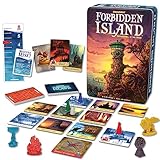
Overview: Forbidden Island, designed by Matt Leacock, is a foundational cooperative board game where players race against time to collect four sacred treasures from a sinking island before it vanishes. Geared toward ages 10+, it supports 2-4 players in intense, team-focused sessions lasting 30 minutes.
What Makes It Stand Out: Its innovative “sinking tile” mechanic creates escalating tension as the island physically shrinks during play, demanding constant strategic adaptation. Stunning artwork immerses players in a perilous paradise, while the purely cooperative structure fosters genuine teamwork—no player elimination ensures everyone stays engaged until the end.
Value for Money: Priced accessibly under $20, it offers exceptional replayability through variable difficulty levels and randomized island layouts. Compared to similar strategy games, its durable components and timeless design provide more longevity per dollar than many pricier alternatives.
Strengths and Weaknesses:
Strengths: Intuitive rules, perfect balance of challenge and approachability, promotes critical thinking, and scales well for families or casual gamers.
Weaknesses: Limited player count (max 4), and the board can become chaotic with younger children.
Bottom Line: A must-have introductory cooperative game that masterfully blends strategy, suspense, and teamwork. Highly recommended for family game nights seeking accessible, replayable fun.
2. Spin Master Games, SolidRoots Escaping Extinction, Cooperative Strategy Board Game from The Makers of Mind The Gap, Easter Gift, 1-4 Players, for Ages 12 & Up

Overview: Escaping Extinction casts players as dinosaurs racing to build a 3D rocket to flee an impending meteor strike. This cooperative adventure for ages 12+ (1-4 players) merges prehistoric survival with spatial puzzle-solving in 45-60 minute sessions.
What Makes It Stand Out: The dynamic tile-based board reshapes with “earthquake cards,” ensuring no two games play alike, while assembling the physical 3D rocket adds tactile excitement. The unique dino-to-rocket narrative and survival urgency differentiate it from typical strategy games.
Value for Money: At $25-$30, it delivers strong replay value through variable setups and high engagement. Though pricier than entry-level games, the innovative 3D component and Spin Master’s quality justify the cost compared to static-board alternatives.
Strengths and Weaknesses:
Strengths: Exceptional replayability, creative theme execution, and earthquake mechanics deepen strategy.
Weaknesses: Rocket assembly can frustrate younger players; setup time is longer than simpler games.
Bottom Line: A thrilling, inventive cooperative experience that excels in dynamic gameplay and thematic immersion. Ideal for families wanting strategic depth with a playful twist.
3. Flow: The Official Cooperative Board Game | Strategy Game for 1–4 Players Ages 8+ | Based on The Award-Winning Animated Film | Family & Solo Play | Survive The Flood, Rescue Allies
Overview: Flow adapts the beloved animated film into a real-time cooperative game where players navigate a modular, flooding world to rescue allies and survive rising waters. Designed for ages 8+ (1-4 players), it blends emotional storytelling with urgent decision-making in 30-45 minute plays.
What Makes It Stand Out: The real-time “rising water” mechanic forces quick, synchronized actions under pressure, while the modular board and 11 scenario cards ensure endless variety. Its solo-play compatibility and film-accurate art deepen immersion beyond typical family games.
Value for Money: Priced around $35, it offers premium replayability for its cost. The solo mode and scenario diversity provide more value than comparable cooperative games lacking narrative depth or solo support.
Strengths and Weaknesses:
Strengths: Gripping real-time tension, superb solo adaptation, and high thematic cohesion.
Weaknesses: Real-time pressure may overwhelm young children; component storage is less travel-friendly.
Bottom Line: A beautifully crafted, emotionally resonant game that excels in replayability and accessibility. Highly recommended for film fans and families seeking dynamic, cooperative challenges.
4. Pandasaurus Cooperative Strategy Card Game - Fun Interactive Family Game for Ages 8+, 1-5 Players, 20 Minute Playtime
Overview: Pandasaurus’s “The Game” is a globally acclaimed cooperative card game challenging 1-5 players to play all cards from two shared decks in ascending/descending order with minimal communication. Its 20-minute runtime targets ages 8+ with addictive, brain-teasing simplicity.
What Makes It Stand Out: The ingenious communication constraints—players can only state card values above/below 50—create intense teamwork under pressure. With 1.3 million copies sold and a Spiel Des Jahres award, its minimalist design hides profound strategic depth.
Value for Money: At $15, it’s a steal for an award-winning, portable game offering near-infinite replayability. It outperforms similarly priced games in depth and re-play frequency, making it ideal for game-night staples.
Strengths and Weaknesses:
Strengths: Lightning-fast setup, exceptional portability, and masterful balance of simplicity and challenge.
Weaknesses: Communication rules feel restrictive to new players; lacks thematic elements.
Bottom Line: A near-perfect pocket-sized strategy game that delivers immense fun and mental agility. Essential for any collection seeking quick, rewarding cooperative play.
5. Happy Camper - The Four Doors | Cooperative Game by Pandemic and Forbidden Island Creator | Super Portable | Great for Solo Play, Two Players, and Groups
Overview: Created by Matt Leacock (Pandemic), Happy Camper: The Four Doors challenges 1-5 players to recover sacred treasures behind mystical doors before shadows seal them forever. This 30-minute game for ages 10+ emphasizes portability and flexible player counts.
What Makes It Stand Out: Its ultra-compact design fits in a small box yet packs strategic depth via door-exploration mechanics and shadow threats. Leacock’s signature cooperative tension shines, with seamless scaling from solo to group play—a rarity in portable games.
Value for Money: Priced at $20, its travel-ready size and robust solo/co-op functionality offer superior value. It outperforms bulkier games in convenience while retaining Leacock’s acclaimed design quality.
Strengths and Weaknesses:
Strengths: Unbeatable portability, elegant solo mode, and quick, satisfying sessions.
Weaknesses: Lighter strategy than Leacock’s heavier titles; treasure mechanics may feel repetitive after many plays.
Bottom Line: The ultimate travel-friendly cooperative game that proves depth doesn’t require bulk. A top pick for commuters, couples, and families needing strategic fun on the go.
6. Ravensburger Horrified Games - Greek Monsters - Strategy Board Game - Boost Critical Thinking & Teamwork - Cooperative Gameplay - Unique Monster Challenges - 1 to 5 Players - Adults & Kids 10+

Overview:
Ravensburger’s Horrified: Greek Monsters immerses players in a cooperative strategy adventure where 1–5 heroes defend Elysium against six iconic mythical threats like Medusa and Cerberus. Designed for ages 10+, it blends thematic storytelling with tactical problem-solving across 60-minute sessions, requiring teamwork to survive unique monster challenges.
What Makes It Stand Out:
The game shines through its six distinct monsters, each with bespoke mechanics that redefine gameplay every session. Exquisite Greek-myth-inspired artwork and thematic components (labyrinth tiles, Underworld Door) deepen immersion. Unlike typical competitive games, its cooperative structure—where players collectively strategize to outsmart evolving threats—fosters critical thinking and seamless teamwork without player elimination.
Value for Money:
Priced competitively for its component richness (board, 6 monster figures, tokens, stands), it offers exceptional replayability through modular monster setups. While niche compared to mass-market board games, its 60-minute playtime and family-friendly depth justify the cost, surpassing simpler kids’ games and rivaling premium strategy titles in longevity.
Strengths and Weaknesses:
Strengths: Highly replayable due to variable monsters; intuitive rules for ages 10+; stunning visual design; promotes non-competitive collaboration.
Weaknesses: Limited player count scalability (below 3 players reduces tension); niche theme may not appeal to all; storage organization could be improved.
Bottom Line:
An outstanding cooperative experience that transforms Greek mythology into dynamic, brain-teasing fun. Ideal for families and strategy fans seeking thematic depth and replay value, it earns a strong recommendation for game nights craving teamwork over take-that mechanics.
7. Castle Panic 2nd Edition | Cooperative Board Game for Adults and Family | Ages 8+ | for 1 to 6 Players | Average Playtime 45 Minutes | Made by Fireside Games

Overview:
Castle Panic 2nd Edition pits 1–6 players against hordes of monsters besieging Castle Bravehold. This accessible cooperative tower-defense game tasks teams with strategically placing cards to protect 3D towers, blending suspenseful decision-making with accessible rules for ages 8+ in tight 45-minute sessions.
What Makes It Stand Out:
Its four distinct modes (Co-op, Solo, Master Slayer, Overlord) drastically alter replay dynamics—especially the Overlord mode, where one player commands monsters. Vibrant artwork, sturdy 3D towers, and disruptive elements like boss monsters create constant tension. The seamless integration of teamwork (card trading, coordinated planning) makes victories deeply satisfying.
Value for Money:
With high-quality components (illustrated board, monster tokens) and extensive replayability across modes, it offers robust value. Priced fairly against entry-level strategy games, its 45-minute runtime and 1–6 player flexibility make it a versatile staple—outperforming simpler family games while avoiding the complexity premium of heavier strategy titles.
Strengths and Weaknesses:
Strengths: Excellent player-count flexibility; easy to learn but strategically rich; multiple game modes enhance longevity; fosters genuine teamwork.
Weaknesses: Artwork may feel dated to some; repetitive outcomes in basic Co-op mode; minimal strategic depth for hardcore gamers.
Bottom Line:
A near-perfect gateway cooperative game that excels in accessibility, tension, and versatility. Highly recommended for families and casual gamers seeking an engaging, replayable team challenge without overwhelming rules—ideal for consistent game-night rotation.
8. The Lord of The Rings: Adventure to Mount Doom | Family Game | Cooperative Game | Strategy Game

Overview:
This cooperative strategy game challenges 1–4 players to guide Frodo across Middle-earth to destroy the One Ring. Featuring dice rolls and card draws to evade Ringwraiths, it condenses Tolkien’s epic into a 50-minute family adventure focused on shared decision-making and thematic immersion.
What Makes It Stand Out:
The Tolkien license delivers authentic atmosphere, leveraging iconic locations and foes to create emotional stakes. Its simplicity—rolling dice, drawing encounter cards—makes it uniquely approachable for younger fans (ages 8+), while cooperative mechanics ensure no player is sidelined. The solo mode extends accessibility beyond group play.
Value for Money:
As a licensed family game, its component quality is modest but serviceable. While lacking the strategic depth of premium titles, its niche appeal to LOTR fans and 50-minute playtime justify the price for targeted audiences. It undercuts complex strategy games but offers less replayability than genre leaders like Forbidden Island.
Strengths and Weaknesses:
Strengths: Strong thematic immersion for Tolkien fans; effortless rules; great solo/co-op flexibility; perfect for introducing kids to strategy games.
Weaknesses: Shallow mechanics limit replay value; minimal strategic depth; component quality feels basic; highly dependent on franchise appeal.
Bottom Line:
A charming, accessible entry for LOTR enthusiasts and families seeking light cooperative play. Recommended primarily for Tolkien devotees, but less compelling for strategy-focused gamers wanting deeper mechanics or longevity.
9. Gamewright - Forbidden Jungle - Cooperative Board Game

Overview:
Forbidden Jungle drops 2–5 players into a dense rainforest where teams collaborate to recover ancient artifacts before the jungle collapses. Designed by Matt Leacock (Pandemic), this 30–45 minute adventure emphasizes communication and tactical planning for ages 10+, featuring stunning visuals and streamlined cooperative mechanics.
What Makes It Stand Out:
Leacock’s signature “cooperative puzzle” design shines through intuitive role-based abilities and escalating environmental tension. The vibrant artwork and thematic miniatures create immediate immersion, while the compact playtime ensures high replayability. Unlike heavier strategy games, it balances accessibility with meaningful decisions—perfect for casual and experienced groups alike.
Value for Money:
Priced accessibly, it includes 47 miniatures, 44 cards, and durable components rivaling premium games. Its 30–45 minute runtime and family-friendly depth offer exceptional replay value per dollar, outperforming many mid-tier board games in longevity and component quality for the cost.
Strengths and Weaknesses:
Strengths: Gorgeous, thematic artwork; quick to learn yet strategically engaging; high replayability; excellent component quality; ideal for mixed-skill groups.
Weaknesses: Limited player interaction beyond communication; artifact retrieval can feel repetitive; shorter runtime may disappoint players seeking epic sessions.
Bottom Line:
A masterclass in accessible cooperative design that captivates with beauty and tension. Highly recommended for families and game-night regulars wanting a visually stunning, replayable adventure that never outstays its welcome.
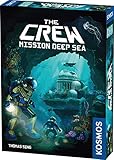
10. The Crew - Mission Deep Sea | Card Game | Cooperative | 2 to 5 Players | Ages 10+ | Trick-Taking | 32 Levels of Difficulty | Endless Replayability
Overview:
The Crew: Mission Deep Sea reimagines classic trick-taking as a cooperative underwater adventure for 2–5 players. With 32 escalating missions, players must win specific tricks using limited communication—melding strategic card play with creative teamwork in compact 20-minute sessions for ages 10+.
What Makes It Stand Out:
Its ingenious “no free talk” communication constraint forces players to innovate with subtle signals, transforming traditional trick-taking into a dynamic puzzle. The mission-based progression (32 difficulty tiers) ensures constant challenge, while the aquatic theme adds playful cohesion. Unlike competitive card games, victory hinges entirely on collective precision.
Value for Money:
For its slim box and low price, the 32 missions deliver extraordinary replay value—effectively offering 32 unique games. It surpasses standard trick-taking decks in longevity and justifies its cost as a portable, endlessly replayable social puzzle, outperforming similarly priced standalone card games.
Strengths and Weaknesses:
Strengths: Brilliant cooperative twist on trick-taking; massive replayability via missions; portable and quick; scales perfectly for 2–5 players; highly accessible rules.
Weaknesses: Communication restrictions frustrate some players; minimal component quality (standard cards); lacks physical immersion of board games.
Bottom Line:
A revolutionary, ultra-replayable card game that redefines cooperative play. Essential for trick-taking fans and casual groups seeking clever, portable fun—highly recommended despite its minimalist presentation.
Understanding Your Group Dynamics
Assessing Player Experience Levels
Not every guest arrives with a shelf full of strategy games. Before selecting a title, consider the mix of newcomers and veterans in your group. Games with intuitive, teachable-in-minutes mechanics ensure beginners aren’t overwhelmed, while layered strategic depth keeps experienced players invested. Look for systems where rules unfold organically during play—like simple action choices that gradually introduce complexity—so no one feels left behind or bored. The sweet spot is a game where explaining the basics takes less time than pouring the first round of drinks.
Determining Optimal Group Size
Cooperative games often specify ideal player counts, but these ranges can be misleading for parties. A game claiming “1-5 players” might bog down with five indecisive friends, while one designed for “4-6” could feel sparse with only three. Prioritize titles explicitly built for flexibility—those with adjustable difficulty or modular setups that scale seamlessly from intimate groups to larger crowds. Test how the game handles “plus one” scenarios; if adding a seventh player requires house rules, it’s likely not party-proof. Remember, true party scalability means smooth integration whether you have four or ten enthusiastic participants.
Gauging Attention Spans and Energy
Parties buzz with conversation and movement—your game shouldn’t demand laser focus for two hours. Evaluate potential titles through the lens of natural breaks and engagement cycles. Games with distinct, short phases (e.g., 10-minute rounds) allow players to step away for snacks without derailing progress. Avoid mechanics requiring intense solo planning; instead, seek constant table-wide interaction where everyone contributes meaningfully each turn. High-energy groups thrive with physical components or timed challenges, while relaxed gatherings might prefer thoughtful, discussion-heavy puzzles where pausing won’t kill momentum.
Decoding Complexity and Accessibility
The Simplicity Sweet Spot
In a party environment, intricate rulebooks are instant mood-killers. Target games where core mechanics can be demonstrated in under five minutes using just the starting setup. Key indicators include visual aids on components (like icon-based action cards), minimal setup steps, and clear immediate objectives (“Stop the villain from reaching here!”). Avoid games where explaining exceptions takes longer than the first playthrough—your guests’ eyes will glaze over faster than a stale donut. Simplicity here isn’t about dumbing down; it’s about intuitive design that lets fun emerge immediately.
Managing Cognitive Load
Even “simple” games can overwhelm if they demand excessive memory or calculation. Watch for mechanics that externalize information—like visible threat trackers or shared play mats—so players aren’t burdened with mental math. Games where failure states are incremental (e.g., losing one resource at a time) rather than sudden “game over” moments prevent frustration. Crucially, ensure no single player dominates decision-making; distributed roles or simultaneous action selection keep cognitive load shared, preventing one person from becoming the overworked “quarterback” while others check out.
Theme as an Onboarding Tool
A compelling theme isn’t just window dressing—it’s a cognitive shortcut. Games where mechanics feel like the story (e.g., placing medical stations to stop disease spread in a pandemic scenario) make rules intuitive. For parties, prioritize themes with universal appeal: escaping disasters, solving mysteries, or building communities resonate more broadly than niche historical simulations. Avoid overly grim or complex narratives that require extensive lore knowledge; lighthearted or familiar settings (like a bakery rush or space rescue) lower the barrier to entry and spark immediate engagement.
Navigating Playtime and Pacing
Realistic Duration Expectations
Party schedules are fluid—games promising “30-45 minutes” often run longer with social groups. Prioritize titles with built-in pacing tools: visible progress trackers (like a countdown clock on the board), adjustable difficulty sliders to shorten/lengthen play, or natural stopping points every 15-20 minutes. Test how the game handles distraction; if pausing mid-session causes confusion, it’s poorly suited for parties. Always budget 20% extra time for laughter, debate, and snack breaks—games that gracefully accommodate these interruptions are keepers.
Phasing Out Downtime
Nothing kills party energy like long waits between turns. Favor games with parallel play: simultaneous action selection, shared planning phases, or player roles that stay active even when it’s not their “turn.” Mechanics like real-time timers (sand clocks for challenges) or cooperative dice-rolling create constant table buzz. Crucially, ensure every player has meaningful input during each round—no one should feel like a spectator for multiple cycles. The best party co-ops make waiting your turn feel like part of the collaborative strategy, not a penalty.
Handling Analysis Paralysis
In group decisions, overthinking is the enemy of fun. Games that mitigate “analysis paralysis” often use hidden information (so not everyone sees all options), time pressure for critical choices, or structured discussion rules (“You have 60 seconds to agree!”). Look for systems where suboptimal choices aren’t catastrophic—forgiving mechanics encourage bold moves over cautious group-stalling. Some titles even include “leader” roles with final say during debates, preventing endless circular arguments. Your goal: keep the energy high and the game moving without sacrificing meaningful collaboration.
Evaluating Replayability and Engagement
Modular Setup Variability
True replay value for parties comes from setups that feel fresh each time without requiring rule mastery. Prioritize games with randomized elements that significantly alter gameplay: modular board tiles creating new layouts, variable player powers that shift strategies, or scenario decks introducing unique objectives. Avoid randomness that merely changes aesthetics (like different room art) without impacting tactics. The gold standard? A game where no two plays unfold identically, encouraging guests to return thinking, “Last time we barely survived the volcano—what disaster will hit us tonight?”
Difficulty Calibration for Groups
A party game that’s too easy becomes boring; one that’s too hard leads to groans. Seek titles with seamless difficulty scaling—ideally through adjustable parameters that don’t require rule changes (e.g., adding/removing threat tokens or modifying win conditions). The best systems let the group self-adjust mid-game: “We’re crushing this—add another challenge!” Look for clear visual cues showing progress toward win/loss, so players intuitively understand if they need to ramp up effort. This keeps tension high without frustrating beginners.
Player Agency and Meaningful Choices
Replayability dies if choices feel inconsequential. Ensure the game offers diverse paths to victory (e.g., curing diseases through science or diplomacy) and meaningful trade-offs (“Do we save the city now or gather more resources?”). For parties, prioritize choices that spark discussion but aren’t overly punishing—mistakes should create dramatic tension, not hopelessness. Games where every player’s unique role directly impacts outcomes (like combining special abilities for critical actions) foster investment across multiple plays, as groups experiment with new team synergies.
Practical Party Considerations
Physical Space and Setup Requirements
Party spaces vary wildly—from cramped apartments to sprawling backyards. Assess how much table real estate a game demands: sprawling boards with dozens of miniatures might not fit your coffee table, while card-only games travel easily. Consider storage mid-game; can components stay organized if someone knocks the board? Games with compartmentalized trays or zip-lock bag setups save precious pre-game minutes. Also, evaluate noise levels—games requiring quiet concentration clash with lively parties, while those embracing shouting over timed challenges enhance the vibe.
Component Durability and Handling
Party environments are component killers. Prioritize games with thick, laminated cards; chunky wooden tokens that won’t vanish under couches; and boards resistant to drink spills. Avoid delicate miniatures or tiny pieces that’ll get lost in snack crumbs. Test how easily the game withstands clumsy handling—can cards withstand being passed around greasy fingers? Games with fewer small parts not only survive parties better but also reset faster, letting you jump into game two before the pizza cools.
Cost and Accessibility Factors
For group gatherings, cost per player matters. Games under $50 often provide better value for parties than $80 “premium” boxes, especially if they accommodate 6+ players without expansions. Check if the game is widely available locally or through rental services—relying on a hard-to-find title risks last-minute cancellations. Also, consider digital aids; some co-ops offer free companion apps that streamline setup or track complex rules, making them more approachable for mixed-skill groups without inflating the price tag.
Frequently Asked Questions
Frequently Asked Questions
How many players is ideal for cooperative party games?
Most party-focused co-ops shine with 4-8 players, as this range balances engagement without excessive downtime. Always check the “sweet spot” noted in rules—some games feel empty with fewer than 5 or chaotic beyond 7.
Can cooperative games work for very large groups (10+ people)?
Yes, but they require specific design: real-time elements, team-based play, or observer roles. Avoid traditional turn-based co-ops for big crowds, as wait times become unbearable. Look for games explicitly supporting 10+ players through parallel actions.
What if someone dominates decision-making in cooperative games?
Choose games with distributed authority—like secret roles requiring individual choices or simultaneous action selection. Establish ground rules pre-game (“Each person suggests one idea before debating”) to ensure all voices are heard.
Are cooperative games suitable for mixed-age groups (kids and adults)?
Absolutely, if complexity aligns with the youngest player’s age. Prioritize games with cooperative storytelling, physical dexterity, or visual puzzles over text-heavy strategy. Many modern co-ops offer “family mode” difficulty settings.
How do I handle players who refuse to engage strategically?
Select games where passive play inherently hurts the group (e.g., everyone shares resources), creating natural incentives to participate. Avoid titles where one player can carry the team—shared consequences foster collective buy-in.
Do cooperative games take longer to play than competitive ones?
Not necessarily. Well-designed party co-ops often have tighter runtimes (30-60 mins) than competitive games due to reduced downtime and streamlined turns. Always verify real-world playtimes from multiple sources, not just box claims.
Can cooperative games cause arguments like competitive ones?
They can, if win/loss conditions feel unfair or if analysis paralysis leads to frustration. Mitigate this by choosing games with transparent mechanics, adjustable difficulty, and incremental failure states that allow course correction.
What’s the biggest mistake when choosing a party co-op?
Overestimating your group’s patience for complex rules. Prioritize “learn while playing” designs over those requiring lengthy tutorials. If setup takes 15 minutes, you’ve already lost half your audience.
How important is theme versus mechanics for party appeal?
Theme is crucial for initial buy-in—guests connect faster to relatable scenarios (saving a town) than abstract mechanics. However, mechanics must deliver on the theme’s promise; a weak system undermines even the coolest premise.
Are expansions necessary for long-term party use?
Rarely for casual groups. Focus on base games with high inherent replayability through variability. Expansions often cater to hardcore fans with added complexity that can overwhelm party newcomers.
See Also
- We Tested 50 Cooperative Board Games - Here are the 10 Best for Party Play in 2026
- How to Choose the 10 Best Cooperative Board Games for Group Play in 2026
- The 10 Ultimate Best Thematic Cooperative Board Games for Immersive Play in 2026
- How to Choose the 10 Best Strategy Cooperative Board Games for Game Nights in 2026
- 10 Must-Have Thematic Cooperative Board Games for Immersive Play in 2026