Table of Contents
The escape room phenomenon has evolved far beyond its physical-location origins, transforming into a sophisticated tabletop experience that continues to captivate puzzle enthusiasts worldwide. As we move through 2026, the market has exploded with innovative designs that blur the line between traditional board gaming and immersive, narrative-driven challenges. Whether you’re a curious newcomer or a seasoned puzzle-solver with dozens of virtual escapes under your belt, understanding how to match these complex games to your actual skill level has become more critical than ever.
Selecting the perfect escape room board game isn’t just about avoiding frustration—it’s about maximizing that magical moment when everything clicks into place. The right challenge level creates flow, engagement, and satisfaction, while the wrong one leads to either boredom or overwhelming defeat. This comprehensive guide will walk you through the essential factors for evaluating difficulty, understanding modern game mechanics, and making informed decisions that respect both your abilities and your group’s collective problem-solving style.
Top 10 Escape Room Board Games
Detailed Product Reviews
1. Exit: The Abandoned Cabin - Kennerspiel Des Jahres Winner, Card-Based Family Escape Room Game for 1-4 Players, Ages 12+, Blue

Overview: This award-winning escape room game brings the thrill of a physical escape room to your tabletop. Designed for 1-4 players ages 12 and up, The Abandoned Cabin delivers a 1-2 hour immersive puzzle-solving experience that challenges your observational skills and logical thinking through a clever card-based system.
What Makes It Stand Out: As a Kennerspiel des Jahres winner, this game boasts exceptional puzzle design that feels genuinely innovative. The narrative tension builds masterfully, and the tactile nature of manipulating physical components creates an authentic escape room atmosphere that digital alternatives simply cannot replicate.
Value for Money: Typically retailing around $15-20, this single-use experience offers solid entertainment value for a small group. While the one-and-done nature may seem limiting, the quality of puzzles and the memorable “aha!” moments justify the cost, comparable to a movie ticket but with active participation.
Strengths and Weaknesses: Pros include award-winning puzzle design, strong thematic immersion, and a satisfying difficulty curve. The clue system prevents complete frustration. Cons are its single-use limitation—you’ll literally destroy components—and the restricted player count may exclude larger groups. Some puzzles may feel obscure without careful reading.
Bottom Line: Perfect for puzzle enthusiasts and families seeking a challenging cooperative experience. Despite being single-use, the craftsmanship and memorable journey make it a worthwhile investment for a special game night. Ideal for those who value quality over replayability.
2. Clue Escape: The Midnight Hotel Board Game, Clue Escape Room Game, 1-Time Solve Mystery Games, Family Games for Ages 10+, 1-6 Players, 90 Mins. Avg.

Overview: This innovative fusion transforms the classic Clue mystery into a cooperative escape room experience. Continuing the Boddy mansion story, 1-6 players work together to solve puzzles and identify who stole the blackmail files. The game unfolds over approximately 90 minutes with a dynamic, evolving gameboard.
What Makes It Stand Out: The 3D board that physically builds up as you progress is genuinely inventive, creating tangible suspense. Leveraging the beloved Clue cast adds narrative familiarity while the escape room format provides fresh gameplay. The cooperative twist on a traditionally competitive franchise feels refreshing and modern.
Value for Money: Priced around $20-25, it accommodates more players than most escape room games, spreading the cost effectively. While still single-use, the extended player count and unique 3D components offer reasonable value, especially for families already invested in the Clue universe.
Strengths and Weaknesses: Strengths include the dynamic board construction, accessible difficulty for ages 10+, and strong thematic connection to Clue lore. The cooperative nature encourages teamwork. Weaknesses include reliance on prior Clue knowledge for full appreciation and puzzles that may feel less challenging for seasoned escape room enthusiasts.
Bottom Line: An excellent gateway game bridging traditional board gaming and escape rooms. Best suited for families and Clue fans, it delivers a satisfying mystery experience. While not the most complex puzzler, its innovative board and familiar characters create an engaging 90-minute adventure worth the one-time play.
3. Escape Room The Game, Version 2 - with 4 Thrilling Escape Rooms | Solve The Mystery Board Game for Adults and Teens
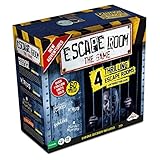
Overview: This comprehensive kit delivers four distinct escape room adventures in one box, complete with a Chrono Decoder device and app integration. Designed for 3-5 players ages 16+, each scenario offers three parts with a 60-minute countdown, creating an authentic, pressure-filled escape room atmosphere at home.
What Makes It Stand Out: The electronic Chrono Decoder with sound effects and the companion app with thematic soundtracks elevate immersion dramatically. The inclusion of four escalating difficulties provides genuine replayability within the base set, while expansion packs offer extended longevity beyond typical single-use games.
Value for Money: At $30-40, it’s pricier upfront but includes four complete games, making it $7-10 per experience. The reusable decoder and potential for expansions creates better long-term value than single-use alternatives, especially for groups seeking repeated entertainment.
Strengths and Weaknesses: Major strengths include the tech integration, four distinct scenarios, progressive difficulty, and expansion potential. The 16+ age rating ensures sophisticated puzzles. Weaknesses involve complex setup, app dependency, and a higher cost barrier. The 3-5 player range may not suit all groups.
Bottom Line: The premier choice for serious escape room fans wanting multiple experiences. The technological integration and four included adventures justify the investment. While requiring more setup and cost, it delivers the most authentic at-home escape room experience with genuine replay value.
4. Thames & Kosmos EXIT: The Enchanted Forest| A Kosmos Escape Room Game in a Box| Family Friendly, Card-Based at-Home Escape Room Experience for 1 to 4 Players, Ages 12+ , Black

Overview: Part of the acclaimed EXIT series, The Enchanted Forest plunges players into a mysterious woodland encounter with fairy tale creatures. This card-based escape room accommodates 1-4 players ages 12+ and delivers a 1-2 hour experience where finding your way home requires solving clever, interconnected puzzles.
What Makes It Stand Out: The integrated clue card system prevents the frustration of getting completely stuck, making it more accessible than competitors. Its fairytale theme offers a whimsical alternative to darker escape room narratives, while maintaining the series’ reputation for clever, logic-driven challenges that reward creative thinking.
Value for Money: Positioned around $15-20, it matches its EXIT series siblings in price. The single-use design is offset by the quality of puzzle craftsmanship and the satisfaction of completion. For families or couples, it represents a cost-effective alternative to an actual escape room outing.
Strengths and Weaknesses: Strengths include the helpful hint system, charming theme, consistent puzzle quality, and manageable difficulty. The compact design makes it portable. Weaknesses mirror the series: single-use components limit replayability, and the 1-4 player cap restricts larger gatherings. Expert puzzlers might find it moderately challenging at best.
Bottom Line: A dependable, family-friendly entry in the EXIT lineup. The Enchanted Forest strikes an excellent balance between accessibility and challenge. While not revolutionary, it’s a solid choice for those seeking a whimsical puzzle adventure with a safety net for frustration-free play.
5. ThinkFun Escape The Room Stargazer’s Manor - A Thrilling Escape Room Game in a Box for Ages 10 and Up | Enhances Logical Reasoning | Perfect for Family Game Night | Ideal Gift for Puzzle Lovers

Overview: From the trusted ThinkFun brand, Stargazer’s Manor invites 3-8 players ages 10+ to unravel a celestial mystery. This escape room game emphasizes logical reasoning through a series of sealed envelopes and puzzles. The experience typically runs 60-90 minutes, making it ideal for larger gatherings and family events.
What Makes It Stand Out: The generous 3-8 player capacity significantly exceeds most competitors, making it uniquely suited for parties and classrooms. ThinkFun’s educational pedigree shines through puzzles designed to develop critical thinking skills, while the comprehensive instruction manual ensures smooth gameplay for newcomers to the genre.
Value for Money: At approximately $20-25, its higher player count offers exceptional per-person value. The quality components and ThinkFun’s reputation for durable, well-designed games justify the investment. While single-use, the experience scales well across different group sizes without feeling diluted.
Strengths and Weaknesses: Strengths include the flexible player count, clear instructions, educational value, and brand reliability. The puzzles are methodical and logic-focused. Weaknesses include less atmospheric immersion compared to tech-enhanced rivals, and the narrative may feel less compelling. Some puzzles might feel linear for advanced players.
Bottom Line: The top choice for larger groups and educational settings. Stargazer’s Manor prioritizes accessibility and logical reasoning over atmospheric intensity. While it may lack the immersive bells and whistles of competitors, its scalability and educational merit make it an excellent value for families and classroom use.
6. EXIT: The Game - Adventures on Catan | Interactive Escape Room Experience| Cooperative | 1-4 Players | 10+ | Kosmos | Game for Kids and Adults

Overview: EXIT: The Game - Adventures on Catan merges the beloved settlement-building franchise with Kosmos’ acclaimed escape room series. Players abandon their mundane village existence to forge a new life on the mysterious island of Catan, solving a series of interconnected puzzles using components that cleverly integrate resource management and trading mechanics. Designed for 1-4 participants ages ten and up, this cooperative experience delivers 1-2 hours of immersive gameplay.
What Makes It Stand Out: This crossover brilliantly weaves Catan’s iconic hexagonal landscape and resource gathering into traditional escape room puzzling. Players physically construct the island while discovering how settlement placement and trading unlock narrative progression. The integration of familiar Catan elements—wood, brick, ore—into cryptographic challenges creates a nostalgic yet fresh experience that distinguishes it from generic escape room titles.
Value for Money: Priced comparably to other EXIT titles ($15-20), you’re paying for innovative design rather than replayability. Like all EXIT games, components are destroyed during play, limiting reuse. However, the unique Catan theming adds premium value for fans of both franchises, offering a novel experience that standalone EXIT games cannot replicate.
Strengths and Weaknesses: Strengths include seamless franchise integration, satisfying puzzle difficulty curve, and high-quality components. The cooperative nature encourages genuine teamwork. Weaknesses center on its single-use format and potential disappointment for Catan purists expecting traditional board gameplay. The 1-2 hour runtime may feel brief for the investment.
Bottom Line: A must-have for Catan enthusiasts seeking narrative depth and puzzle fans wanting thematic richness. While the one-time play limits longevity, the innovative crossover design justifies the purchase for a memorable game night experience.
7. Clue Escape: The Illusionist’s Club Board Game | Escape Room Family Game | 1-Time Solve Mystery | Ages 10+ | 1-6 Players | Difficulty 4 | 90-120 Mins. (Amazon Exclusive)

Overview: Clue Escape: The Illusionist’s Club reimagines the classic deduction franchise as a cinematic escape room experience. Players enter a magic club where a famous magician has been sabotaged, working cooperatively to escape the venue and solve the crime. This single-play mystery accommodates 1-6 players, ages ten and up, with a 90-120 minute runtime and moderate difficulty.
What Makes It Stand Out: The dynamic gameboard physically transforms as you progress, revealing hidden rooms and secrets that mirror the theatrical nature of magic. A secret “magical” tool decodes specialized puzzles, creating tactile engagement beyond standard card-and-dice mechanics. This innovative board evolution distinguishes it from static escape room games.
Value for Money: As an Amazon exclusive priced around $25-30, it sits in the mid-range for one-time experiences. The high-quality components, unique transforming board, and integrated secret tool justify the premium over basic EXIT games. While you can’t replay the main mystery, the mechanical ingenuity provides strong entertainment value for groups.
Strengths and Weaknesses: Strengths include the immersive magic theme, scalable player count, and cinematic storytelling. The puzzle variety leverages classic magic tricks cleverly. Weaknesses include the irreversible one-time nature and potential component fragility during board transformation. Some puzzles may feel slightly linear, limiting true open investigation.
Bottom Line: Ideal for Clue devotees and escape room fans seeking theatrical flair. The innovative board mechanics and magic-themed puzzles deliver a memorable, if fleeting, group experience that successfully modernizes the Clue formula.
8. Hunt A Killer: Death At The Dive Bar, Solve a Murder at Old Scratch Tavern, Immersive Murder Mystery Game, Play Detective in Unsolved Mysteries, Great Gift For True Crime Fans, Designed for Ages 14+

Overview: Hunt A Killer: Death at the Dive Bar immerses players in a gritty true crime investigation at Old Scratch Tavern, where bar owner Nick Webster’s fatal fall may be murder. Designed for ages 14+, this beginner-level mystery offers 45-60 minutes of gameplay for solo or group investigation, emphasizing realistic detective work over fantastical puzzles.
What Makes It Stand Out: Unlike family-friendly escape rooms, this delivers authentic true crime atmosphere through forensic documents, witness statements, and evidence that feels plucked from a real cold case. The 1/5 difficulty rating makes it accessible, while the mature narrative depth appeals to serious crime podcast enthusiasts seeking hands-on investigation.
Value for Money: At $25-30, the shorter runtime initially seems pricey, but the production quality and narrative density compensate. Compared to Hunt A Killer’s subscription service, this standalone entry offers a low-commitment trial. The realistic evidence kit aesthetic provides tangible value beyond disposable puzzle cards.
Strengths and Weaknesses: Strengths include immersive storytelling, high-quality replica documents, and perfect entry point for the true crime genre. The single-session design suits busy schedules. Weaknesses include simplistic puzzles for experienced gamers and limited replayability. The mature theme may exclude younger families, and the brief runtime leaves some wanting more depth.
Bottom Line: A compelling choice for true crime fanatics and mystery newcomers. While veteran puzzlers may find it elementary, the atmospheric investigation and accessible design make it an excellent gateway into immersive murder mystery experiences.
9. Escape From the Museum Escape Room Game

Overview: Escape From the Museum from Professor Puzzle’s Escape Room Collection traps players in a museum after hours, challenging them to decipher clues and solve brain-busting puzzles to secure freedom. This compact escape room accommodates 1-4 players, focusing on pure deductive reasoning and problem-solving without complex narrative baggage.
What Makes It Stand Out: The streamlined design prioritizes puzzle density over elaborate storytelling, making it ideal for purists who value mental gymnastics above theatrical immersion. As part of a respected collection, it delivers consistent quality with clever mechanisms that exercise core logic skills rather than relying on thematic gimmicks or flashy components.
Value for Money: Priced affordably at $15-20, it offers strong value for puzzle enthusiasts. While single-use like most escape room games, the concentrated challenge provides satisfactory entertainment per dollar. The compact packaging makes it more accessible than bulky alternatives, though component durability remains average for the category.
Strengths and Weaknesses: Strengths include focused puzzle design, accessible difficulty curve, and portable format perfect for travel game nights. The clear objective suits new escape room players. Weaknesses include minimal narrative engagement and generic museum theme that lacks memorable flavor. Experienced players may complete it too quickly, and the component quality doesn’t match premium competitors.
Bottom Line: A solid, no-frills entry-level escape room experience. It won’t dazzle with innovation, but delivers reliable puzzle-solving satisfaction at a fair price, making it perfect for casual gamers or families introducing children to the genre.
10. Clue Escape: The World’s Fair Board Game | Escape Room 1-Time Solve Mystery Games | Ages 10+ | 1 to 6 Players | 90 - 120 Mins.| Family Games

Overview: Clue Escape: The World’s Fair transports players to a 19th-century exhibition where a brilliant scientist has been murdered. This sixth installment in the Clue Escape series tasks 1-6 players with escaping the fairgrounds while identifying the killer, location, and weapon through cooperative deduction and puzzle-solving across 90-120 minutes.
What Makes It Stand Out: The World’s Fair setting provides rich historical atmosphere, while the dynamic board builds progressively as puzzles unlock new exhibit halls. A secret tool unique to this edition helps collect evidence, creating tactile engagement. The integration of classic Clue’s “who/where/what” structure with escape room mechanics remains innovative.
Value for Money: At $25-30, it mirrors its Clue Escape siblings in pricing. The high production values, evolving board, and specialized evidence tool justify the cost for a one-time experience. While you can’t replay the core mystery, the mechanical sophistication and narrative depth deliver comparable value to other premium escape room titles.
Strengths and Weaknesses: Strengths include the compelling scientific theme, scalable difficulty for varied ages, and seamless blend of Clue deduction with escape puzzles. The cooperative design encourages shared discovery. Weaknesses include the familiar one-time limitation and potential similarity to previous Clue Escape entries. Some puzzle components feel derivative if you’ve played multiple series titles.
Bottom Line: Another strong entry for Clue Escape devotees. The World’s Fair theme offers fresh flavor, though it doesn’t revolutionize the formula. Worthwhile for series fans and newcomers alike, delivering a polished, cinematic mystery experience.
Understanding Escape Room Board Game Mechanics
Before diving into skill assessment, you need to understand what separates genuine escape room experiences from standard puzzle games. The landscape in 2026 includes hybrid digital-physical systems, app-driven narratives, and traditional card-based deduction challenges—all marketed under the “escape room” umbrella.
What Defines an Escape Room Board Game
True escape room board games simulate the time-pressured, multi-puzzle environment of physical escape rooms. They typically feature interconnected challenges where solutions unlock new components, story beats, or puzzle layers. Unlike standalone logic puzzles, these games create a cumulative experience where each solved clue builds momentum toward a final objective. Look for titles that emphasize discovery, sequential unlocking, and narrative progression rather than isolated brain teasers.
Core Gameplay Elements to Evaluate
When examining potential purchases, focus on how the game structures its challenge delivery. Does it use a deck of cards with branching paths? Are there physical components like locks, keys, or modular boards? Modern designs might incorporate augmented reality triggers, QR codes linking to audio clues, or destructible elements you physically alter during play. The mechanism for hint delivery is equally important—automatic hint systems that progressively reveal clues without spoiling the solution represent the gold standard for 2026 designs.
The Evolution of Puzzle Design Through 2026
This year’s most innovative games have moved beyond simple cipher decoding and pattern recognition. Expect to encounter meta-puzzles that require you to manipulate the rulebook itself, environmental puzzles where the box becomes part of the challenge, and asynchronous multiplayer elements where players work on different puzzles simultaneously before merging solutions. Understanding these advancements helps you gauge whether a game’s complexity matches your comfort with non-traditional puzzle formats.
Assessing Your Skill Level Honestly
Accurate self-assessment forms the foundation of smart game selection. The escape room board game community has developed clear markers for different experience tiers, and recognizing where you fit prevents costly mismatches.
Beginner Indicators
You’re likely a beginner if you’ve completed fewer than five escape room board games or physical escape rooms. Beginners often struggle with lateral thinking puzzles and benefit from games that explicitly teach puzzle conventions as they progress. If your group frequently needs maximum-level hints or abandons games midway, you’re definitely in this category—and that’s perfectly fine. The key is choosing games designed with structured learning curves rather than punishing difficulty spikes.
Intermediate Characteristics
Intermediate players have internalized common escape room tropes: ciphers, blacklight reveals, directional locks, and index-based puzzles. You can tackle games with minimal hints (perhaps 1-2 per session) and enjoy puzzles that require connecting disparate pieces of information across multiple components. At this level, you should seek games that offer branching difficulty paths or optional expert-level challenges within the same box.
Advanced Player Traits
Advanced enthusiasts have mastered pattern recognition across dozens of games and can often anticipate puzzle designers’ intentions. You thrive on games featuring red herrings, multi-layered meta-puzzles, and time pressure that demands rapid context-switching. For 2026, advanced players should look for titles advertising “legacy-style” consequences, community-driven content updates, or asymmetric puzzle designs where different players receive incomplete information.
The Importance of Group Dynamics
Your individual skill level matters less than your group’s collective ability. A team of four intermediate players can tackle advanced games through distributed problem-solving, while a mixed group with one beginner might struggle with even intermediate challenges. Always calibrate to your least experienced consistent player, and consider games with scalable hint systems or designated “assistant” roles that let newer participants contribute meaningfully without solving the hardest puzzles alone.
Key Features That Indicate Difficulty
Manufacturers have become more transparent about difficulty, but you need to know which specification details actually correlate with challenge level versus marketing fluff.
Puzzle Complexity Markers
Scan product descriptions for specific terminology. “Linear puzzle chains” indicate beginner-friendly experiences where you solve one puzzle at a time in sequence. “Non-linear” or “parallel puzzles” suggest intermediate to advanced games requiring simultaneous progress on multiple fronts. “Meta-puzzle integration” signals advanced designs where individual solutions feed into an overarching challenge. Also note the number of distinct puzzle types—beginner games typically feature 3-5 varieties, while advanced titles might incorporate 10+ different mechanics.
Time Pressure Mechanisms
Estimated playtime reveals more than just session length. Games advertising 30-45 minutes usually offer streamlined, beginner-friendly experiences with generous hint timers. 60-90 minute titles represent the sweet spot for most intermediate players, providing depth without exhaustion. Anything exceeding 120 minutes likely targets advanced groups comfortable with sustained concentration and complex note-taking. Be wary of games with “unlimited time” options—these often compensate for poor puzzle clarity rather than offering true flexibility.
Component Quality and Clue Systems
The physical nature of components directly impacts difficulty. Beginner games often feature larger, clearly labeled pieces and color-coded organization systems. Advanced games might include ambiguous components with multiple potential uses, requiring you to deduce function through trial and error. In 2026, examine whether the game uses a companion app—well-designed apps can provide adaptive hinting that adjusts to your struggle patterns, while poorly implemented ones add technical friction that artificially inflates difficulty.
Replayability vs. One-Time Experience
This distinction critically affects value and difficulty assessment. One-time-use games (often called “destructible” or “legacy” style) can pack more intense, story-driven puzzles since they don’t need to preserve components. However, they offer no practice opportunity. Replayable games with resettable components typically feature modular puzzle systems where difficulty scales through randomization or expansion packs. Beginners should prioritize replayable titles to build skills across multiple sessions, while advanced players might prefer the narrative depth of single-use experiences.
Matching Games to Your Experience Level
Now that you understand the markers, here’s how to apply that knowledge to find appropriately challenging experiences for your specific tier.
What Beginners Should Prioritize
Focus on games with integrated tutorial puzzles that teach conventions organically. Look for products emphasizing “family-friendly” or “gateway” experiences—these terms reliably indicate lower complexity. Prioritize games with visual hint systems using diagrams or progressive disclosure rather than text-only solutions. Avoid anything advertising “expert mode” or “unlockable challenges” as these features often mean the base game assumes prior knowledge. Instead, seek titles with clear difficulty ratings (preferably numerical scales like 1-5) and community reviews specifically mentioning “first-timer friendly.”
Intermediate Player Considerations
At this level, you want games offering “advanced rules” or “expert variants” that let you scale up after mastering the base experience. Look for titles with expansion content or community-created puzzle modules—these indicate robust systems designed for repeated engagement. Intermediate players should embrace games with light app integration that tracks progress and offers dynamic hinting, as these tools help you identify knowledge gaps without full spoilers. Consider player count carefully; intermediate games often shine with 3-4 players, allowing puzzle distribution without communication chaos.
Advanced Gamer Expectations
Seek games that explicitly mention “no hand-holding,” “minimal guidance,” or “designed for experienced enthusiasts.” Advanced 2026 titles often feature ARG (alternate reality game) elements extending beyond the box, requiring internet research or community collaboration. Look for asymmetric gameplay where players have unique roles or hidden information, creating organic difficulty through communication barriers. Advanced games should also offer meaningful failure consequences—where losing actually affects future playthroughs or narrative outcomes—rather than simply resetting puzzles.
2026 Trends Shaping Your Selection
The escape room board game market continues evolving rapidly. Staying current with trends ensures you don’t invest in outdated designs or miss innovations perfect for your skill level.
Digital Integration Advances
By 2026, the best games leverage apps not just for hints but for dynamic puzzle generation, audio atmosphere, and even AR component scanning. However, this creates a new difficulty axis: technical complexity. Beginners should favor games with offline modes or simple QR code scanning, while advanced players might enjoy titles requiring multi-device synchronization or real-time app updates that change puzzles mid-game. Always check app store reviews for stability—nothing derails an escape room experience like a crashing companion app.
Narrative Depth and Theming
Modern games have elevated storytelling from window dressing to core mechanics. Beginner-friendly titles use narrative as motivation, keeping puzzles straightforward but embedding them in compelling stories. Advanced games integrate story directly into puzzle logic—requiring you to understand character motivations or plot twists to solve challenges. When evaluating difficulty, consider whether the theme adds enjoyable context or becomes an additional information layer you must decode. Horror or mystery themes often signal higher complexity due to atmospheric red herrings.
Community and Expansion Content
The longevity of escape room games increasingly depends on post-release support. Check whether publishers offer official expansion packs, downloadable bonus puzzles, or community forums where players share custom scenarios. For beginners, active communities provide valuable strategy discussions without spoilers. Advanced players benefit from user-generated content that extends replayability beyond the base game’s finite puzzles. A strong 2026 indicator is whether the game supports “creator tools” letting players design and share their own puzzles.
Avoiding Common Selection Mistakes
Even experienced buyers fall into predictable traps when choosing escape room board games. Recognizing these pitfalls saves money and frustration.
Overestimating Your Group’s Abilities
The most frequent error involves aspirational purchasing—buying an “expert” level game hoping your group will “rise to the challenge.” This almost always ends in abandonment and discouragement. Instead, purchase one difficulty tier below your perceived level. A moderately challenging game you complete with minimal hints provides more satisfaction than an impossible one you shelve after two hours. Remember that advertised difficulty often assumes optimal conditions: experienced players, quiet environment, and full concentration—conditions rare in casual home settings.
Ignoring Player Count Recommendations
Escape room games are meticulously balanced for specific player counts. Adding extra participants beyond the maximum often dilutes engagement, as puzzles can’t support parallel solving. Conversely, playing below the minimum can make certain puzzles unsolvable that require simultaneous input from multiple players. In 2026, many games offer “solo mode” variants, but these fundamentally change the experience—often increasing difficulty through information overload rather than puzzle complexity. Always verify that your regular group size falls within the game’s sweet spot.
The Price-Difficulty Misconception
Price rarely correlates directly with difficulty. Expensive games might charge premiums for elaborate components or licensed IP rather than puzzle sophistication. Budget-friendly options sometimes pack incredible challenge density into simple card systems. Instead of using price as a proxy, examine component lists and puzzle counts. A $20 game with 50 puzzles might offer more appropriate difficulty progression than a $60 game with only 10 elaborate set pieces. Focus on puzzles-per-dollar ratio and whether expansions can add value later.
Frequently Asked Questions
How many escape room board games should I complete before moving from beginner to intermediate level?
Most enthusiasts find that completing 5-7 distinct games with minimal hint reliance indicates readiness for intermediate challenges. Quality matters more than quantity—finishing three games where you understood every puzzle solution beats ten games where you needed maximum hints throughout.
Can I play advanced-level escape room board games solo if I’m experienced?
While many advanced games offer solo variants, the experience differs significantly. Solo play often increases difficulty artificially by removing collaborative brainstorming. Advanced puzzles designed for information sharing become exponentially harder alone. Consider solo-specific titles if you primarily play by yourself.
What should I do if my group has mixed skill levels?
Purchase for the least experienced regular player and designate experienced members as “hint managers” who can nudge without solving. Some 2026 games include “assistant” roles specifically for this scenario, letting veterans handle complexity while newcomers focus on accessible sub-puzzles.
Are app-integrated escape room board games harder than traditional analog ones?
Not inherently. App integration often makes games easier through adaptive hinting and error checking. However, technical issues can create artificial difficulty. Pure analog games require more self-policing and note-taking, which some find harder. Choose based on your technical comfort, not assumed difficulty.
How important is theme when selecting for difficulty?
Theme significantly impacts perceived difficulty. Horror or mystery themes often include atmospheric distractions and red herrings that increase challenge. Family-friendly adventure themes typically keep puzzles mechanically pure. Match theme complexity to your group’s ability to separate narrative flavor from puzzle logic.
Should I buy expansion packs for a game I haven’t opened yet?
No. Play the base game first to confirm it matches your skill level and group preferences. Expansions usually increase difficulty or add complexity. Only invest after successfully completing the core experience and identifying specific elements you want more of.
What’s the average success rate for escape room board games in 2026?
Most quality games design for 60-70% success rate without hints, rising to 85-90% with progressive hint systems. If a game’s community reports success rates below 50%, it’s likely mislabeled or targets ultra-niche expert audiences. Check forums for honest completion statistics before purchasing.
How do I judge difficulty from online reviews without getting spoiled?
Search for reviews mentioning “hint usage,” “playtime,” and “frustration level” rather than puzzle specifics. Filter reviews by skill level tags if available. Many 2026 review sites offer spoiler-free difficulty assessments that rate mechanical complexity separately from narrative satisfaction.
Are legacy-style one-time games worth it for beginners?
Generally, no. Beginners benefit from replayable games that let them practice fundamental skills. One-time legacy games offer incredible experiences but provide no opportunity to apply learned concepts. Wait until you’ve mastered 3-4 replayable titles before investing in a premium single-use narrative adventure.
What red flags indicate a game might be artificially difficult rather than well-designed?
Beware games with vague puzzle instructions, requiring external knowledge not provided in the box, or with solutions that feel arbitrary rather than logical. Excessive red herrings, tiny fonts requiring magnification, or components that physically degrade during normal use all signal poor design masquerading as challenge. Quality games make you feel clever upon solving, not cheated.
See Also
- How to Choose the 10 Best Strategy Board Games for Escape Room Lovers in 2026
- 10 Must-Have Themed Board Games for Escape Room Lovers in 2026
- 10 Top-Rated Escape Room Board Games According to Experts in 2026
- The 10 Ultimate Best Adventure Board Games for Escape Room Lovers in 2026
- How to Solve Difficulty Confusion with the 10 Best Escape Room Board Games in 2026