Table of Contents
If you’ve ever felt that rush of adrenaline when the final lock clicks open right before the timer hits zero, you already understand the magic of deduction. Escape room enthusiasts don’t just solve puzzles—they thrive on connecting disparate clues, managing incomplete information, and experiencing that brilliant “aha!” moment when everything clicks into place. The good news? That same cognitive thrill awaits you on your tabletop, no locked door required. As we move into 2026, the world of deduction board games has evolved into something that speaks directly to the escape room player’s soul.
These aren’t your grandfather’s whodunit mysteries anymore. Modern deduction games capture the essence of what makes escape rooms so compelling: immersive narratives, tactile puzzle-solving, progressive revelation of information, and that satisfying sense of collaborative (or competitive) breakthrough. Whether you’re looking to sharpen your skills between escape room visits, recreate that experience at home, or simply expand your puzzle-solving horizons, understanding what makes these games tick will transform your game nights into something extraordinary.
Top 10 Deduction Board Games for Escape Room
Detailed Product Reviews
1. Sneaky Sabotage Party Game - A Team-Puzzle Solving Game with a Traitor | Escape Room and Social Deduction-Style Board Game for Adults and Families by Finders Seekers Mystery
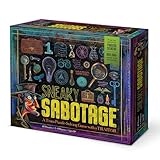
Overview: Sneaky Sabotage merges escape room puzzles with social deduction, creating a tense team experience where one player secretly works against the group. From Finders Seekers Mystery, this game tasks 3-8 players with solving 24 different challenges while identifying the hidden traitor. Each round delivers spy-thriller atmosphere through hidden roles, secret intel, and bluffing mechanics that keep everyone guessing until the final reveal.
What Makes It Stand Out: The traitor mechanic distinguishes this from standard puzzle games, adding psychological warfare to code-breaking and clue deciphering. With 24 unique challenges, it offers exceptional replayability rarely seen in puzzle-focused games. The included dramatic soundtrack and puzzle timer enhance the covert operation vibe, while the detective kit provides tangible tools for investigation. Finders Seekers’ pedigree—800,000+ games sold—ensures quality puzzle design that balances accessibility with depth.
Value for Money: At its price point, Sneaky Sabotage delivers multiple game nights in one box. Unlike single-use escape room games, the 24 scenarios provide months of entertainment. The components are durable enough for repeated play, and the ever-changing traitor dynamic means no two sessions feel identical. Compared to purchasing separate social deduction and puzzle games, this hybrid offers compelling two-in-one value.
Strengths and Weaknesses: Strengths include high replayability, the innovative traitor twist, and quick 30-minute playtime that fits any game night. The spy theme is consistently executed through puzzles and components. Weaknesses: the traitor mechanic may frustrate pure puzzle enthusiasts, and smaller groups (3-4 players) experience less paranoia. Some challenges may feel familiar after multiple plays.
Bottom Line: Sneaky Sabotage excels for groups craving psychological intrigue alongside brain-teasers. It’s a versatile staple that merges the best of social deduction and escape room genres, making it ideal for adult game nights and families with teens who enjoy strategic deception.
2. Escape Room The Game, Version 2 - with 4 Thrilling Escape Rooms | Solve The Mystery Board Game for Adults and Teens
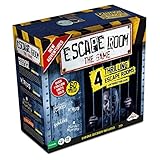
Overview: This home escape room kit delivers an authentic experience through its electronic Chrono Decoder and four distinct scenarios. Designed for 3-5 players ages 16+, each adventure presents three parts that must be solved within 60 minutes. The kit includes physical clues, keys, and puzzles that progressively increase in difficulty, creating a true race against time that demands teamwork, creativity, and sharp attention to detail.
What Makes It Stand Out: The Chrono Decoder device provides tangible immersion with its countdown timer, sound effects, and key validation system. Integration with the companion app adds atmospheric soundtracks tailored to each scenario. The four included adventures—each with unique themes and escalating difficulty—offer substantial content. The system’s expandability through separately sold packs extends its lifespan beyond the initial scenarios, making it a platform rather than a disposable experience.
Value for Money: Four complete escape rooms in one package represent significant savings compared to commercial escape room visits. The reusable decoder and key system justify the initial investment, especially for groups planning to purchase expansion packs. While single-use paper components limit replayability, the 3-5 hour total playtime across all scenarios provides solid entertainment value for the price point.
Strengths and Weaknesses: Strengths include the immersive tech components, authentic escape room feel, and well-paced difficulty curve. The decoder provides immediate feedback, enhancing tension. Weaknesses: the 16+ age rating excludes younger family members, and the app dependency may frustrate tech-averse players. Some paper components are delicate and require careful handling to preserve for resale or gifting.
Bottom Line: For serious puzzle enthusiasts seeking the closest thing to a professional escape room at home, this delivers. The technology integration and expansion potential make it a worthwhile investment for adult and teen groups ready for intense, collaborative challenges.
3. Clue Escape: The Illusionist’s Club Board Game | Escape Room Family Game | 1-Time Solve Mystery | Ages 10+ | 1-6 Players | Difficulty 4 | 90-120 Mins. (Amazon Exclusive)

Overview: This Amazon-exclusive merges classic Clue deduction with escape room mechanics in a cooperative, single-play experience. Players investigate a sabotaged magician by exploring a dynamic club environment that reveals new rooms and secrets as puzzles are solved. Designed for 1-6 players ages 10+, the 90-120 minute game uses magic-themed puzzles and a secret “magical” tool to unlock clues, culminating in a final WHO-WHERE-WHAT deduction.
What Makes It Stand Out: The dynamic gameboard physically transforms during play, creating a sense of discovery absent in static puzzle games. Integrating the familiar Clue cast adds narrative depth for franchise fans. The magic-themed puzzles—requiring a special decoder tool—feel thematically coherent rather than tacked-on. Offering solo play alongside cooperative mode provides rare flexibility for escape room games, making it accessible when group coordination proves difficult.
Value for Money: As a one-time solve game, value hinges on experience quality. The 90-120 minute runtime matches a film or commercial escape room visit at a fraction of the cost. The transforming board and specialized tools create memorable moments that justify the single-use design. While not replayable, the comprehensive experience and solo option extend its utility compared to purely group-dependent games.
Strengths and Weaknesses: Strengths include the innovative dynamic board, strong thematic integration, and flexible player count including solo mode. The Clue branding adds narrative appeal. Weaknesses: single-use nature limits long-term value, and difficulty rating 4 may challenge younger players despite the 10+ age rating. Some puzzle solutions feel obscure without hints, potentially causing frustration.
Bottom Line: Perfect for Clue enthusiasts and families wanting a story-driven puzzle experience. The dynamic board and magic theme create a memorable evening, though puzzle veterans should seek greater challenges elsewhere.
4. Clue Escape: The Midnight Hotel Board Game, Clue Escape Room Game, 1-Time Solve Mystery Games, Family Games for Ages 10+, 1-6 Players, 90 Mins. Avg.

Overview: Continuing the Clue escape room series, Midnight Hotel picks up after Mr. Boddy’s murder as players work to recover stolen blackmail files. This cooperative, single-play mystery accommodates 1-6 players ages 10+ across approximately 90 minutes. The game distinguishes itself through a 3D board-building mechanic that physically constructs the hotel as puzzles are solved, creating escalating visual tension that mirrors the narrative’s rising stakes.
What Makes It Stand Out: The 3D board construction is genuinely innovative—players literally build the hotel upward, revealing new rooms and clues in three dimensions. This tactile progression creates unparalleled engagement compared to flat puzzle mats. The storyline directly connects to classic Clue lore, rewarding franchise fans with narrative continuity. Puzzles unlock both physical board sections and story revelations, tightly integrating mechanics and theme in ways single-layer escape games cannot match.
Value for Money: The 3D components add manufacturing value that justifies the price tag for a one-time experience. While still disposable, the physical transformation provides a spectacle worth witnessing. The 90-minute runtime is densely packed, eliminating filler. For groups seeking a premium, memorable single-session game, the unique board mechanic offers justification over simpler, replayable alternatives that may feel repetitive.
Strengths and Weaknesses: Strengths include the groundbreaking 3D board, strong narrative connection to Clue, and smooth scaling from solo to six players. The building process creates natural dramatic pacing. Weaknesses: single-use design limits replayability, and delicate 3D pieces require careful handling. Some groups may finish faster than the 90-minute average, reducing value perception. The story assumes familiarity with Clue characters.
Bottom Line: An excellent choice for puzzle fans seeking tactile innovation and Clue devotees wanting narrative expansion. The 3D board mechanic alone makes this memorable, though value-conscious buyers should weigh the single-use nature against the unique experience.
5. Identity Games [www.identity games.com] Escape Room The Game, New Family Edition - with 2 New Exciting Escape Rooms | Solve The Mystery Board Game for Family, Kids & Teens (English Version)
![Identity Games [www.identity games.com] Escape Room The Game, New Family Edition - with 2 New Exciting Escape Rooms | Solve The Mystery Board Game for Family, Kids & Teens (English Version)](https://m.media-amazon.com/images/I/61ACHnIffvL._SL160_.jpg)
Overview: This family-oriented adaptation of the popular Escape Room The Game system includes two scenarios—Candy Factory and Super Heroes—specifically designed for younger players while retaining the signature Chrono Decoder mechanic. The cooperative game supports flexible player counts and emphasizes teamwork over individual brilliance. With a 60-minute timer and hint system, it delivers an accessible introduction to escape room gameplay for families with children and teens.
What Makes It Stand Out: The family edition maintains the electronic Chrono Decoder that makes the original immersive, but tailors puzzle complexity for mixed-age groups. The two included adventures offer distinct themes that appeal to kids without condescending to adults. The hint decoder system provides graduated assistance, preventing younger players from hitting dead ends. By focusing on collective problem-solving rather than competitive elements, it creates positive family bonding experiences around shared victories.
Value for Money: While containing only two scenarios compared to the standard edition’s four, the family-focused design justifies the price for households with children. The reusable Chrono Decoder retains value for potential future family editions or expansions. The puzzles’ accessibility means families can successfully complete both scenarios without external help, maximizing satisfaction. For adult-only groups, however, the value proposition weakens compared to more challenging alternatives.
Strengths and Weaknesses: Strengths include the kid-friendly puzzle design, same quality components as the adult version, and excellent teamwork emphasis. The Chrono Decoder adds excitement for younger players. Weaknesses: only two scenarios limit long-term value, and experienced puzzlers will find it too easy. The hint system, while helpful, may feel like handholding for some. No explicit age range is provided, creating uncertainty for buyers.
Bottom Line: Ideal for families seeking their first escape room experience together. The family edition successfully lowers the barrier to entry while maintaining the core excitement, though puzzle veterans should look elsewhere for meaningful challenge.
6. ThinkFun Escape The Room Stargazer’s Manor - A Thrilling Escape Room Game in a Box for Ages 10 and Up | Enhances Logical Reasoning | Perfect for Family Game Night | Ideal Gift for Puzzle Lovers

Overview: ThinkFun’s Stargazer’s Manor brings the escape room experience home with a celestial mystery designed for 3-8 players aged 10 and up. As part of a trusted brand with 50 million games sold, this kit includes a scenic card, five sealed envelopes, a solution wheel, and comprehensive instructions. Players collaborate to solve puzzles and unravel a narrative about a missing astronomer, making it ideal for family gatherings or parties.
What Makes It Stand Out: The generous player count (3-8) sets this apart from most at-home escape games that max out at 4-6 participants. The solution wheel offers a tactile, non-destructive answer verification system, preserving components for potential resetting. ThinkFun explicitly designs puzzles to build critical reasoning and logical deduction skills, making it subtly educational without sacrificing entertainment value.
Value for Money: Priced competitively with other premium escape room games, Stargazer’s Manor delivers strong value through its reusable components and high-quality materials. While real escape rooms cost $25-30 per person, this one-time purchase serves multiple players across several sessions if carefully reset. The educational component adds intangible value for parents seeking developmental benefits.
Strengths and Weaknesses: Strengths include excellent scalability for larger groups, high production quality, and puzzles that genuinely challenge without frustrating younger players. The non-destructive format allows careful preservation for future use. Weaknesses: experienced puzzlers may find the difficulty moderate at best, and resetting requires meticulous organization. The narrative, while engaging, lacks the depth ofEXIT’s more complex storylines.
Bottom Line: Perfect for families and casual puzzle enthusiasts, Stargazer’s Manor balances accessibility with challenge. Its larger player capacity makes it a versatile choice for game nights, though hardcore escape room fans should seek more demanding alternatives.
7. Exit: The Abandoned Cabin - Kennerspiel Des Jahres Winner, Card-Based Family Escape Room Game for 1-4 Players, Ages 12+, Blue

Overview: This award-winning entry in the EXIT series transforms a simple cabin mystery into an intense mental challenge. Designed for 1-4 players aged 12+, The Abandoned Cabin delivers a 1-2 hour experience that requires players to mark, fold, and tear components to progress. As a Kennerspiel des Jahres winner, it represents the pinnacle of at-home escape room design from Kosmos.
What Makes It Stand Out: The Kennerspiel des Jahres seal signals exceptional game design and puzzle innovation. EXIT’s signature destructive gameplay creates an authentic sense of urgency and discovery unavailable in reusable games. The card-based system is remarkably compact yet delivers complex, multi-layered puzzles that require genuine lateral thinking and careful observation.
Value for Money: While single-use games inherently offer less replay value, the $15-20 price point translates to $3.75-5 per player—far cheaper than physical escape rooms. The award-winning pedigree justifies the premium over lesser escape room kits. For puzzle enthusiasts, the experience quality outweighs the disposable nature.
Strengths and Weaknesses: Strengths include brilliantly integrated puzzles that utilize every component creatively, scalable difficulty for different group sizes, and a satisfying narrative arc. The destruction mechanic heightens immersion. Weaknesses: the one-time-play limitation frustrates budget-conscious buyers, and some puzzles require precise cutting that can’t be undone. The 12+ rating may challenge younger family members.
Bottom Line: A must-have for serious puzzle fans, The Abandoned Cabin delivers a premium experience that justifies its disposable design. Best for adult groups or families with teens who appreciate sophisticated brainteasers and don’t mind the single-use constraint.
8. Clue Escape: The World’s Fair Board Game | Escape Room 1-Time Solve Mystery Games | Ages 10+ | 1 to 6 Players | 90 - 120 Mins.| Family Games

Overview: Hasbro merges classic Clue with escape room mechanics in this cooperative murder mystery set at the 1893 World’s Fair. For 1-6 players aged 10+, this hybrid tasks players with solving a scientist’s murder while escaping the fairgrounds. The dynamic board evolves as puzzles unlock new exhibit halls, blending deduction with spatial puzzle-solving across 90-120 minutes.
What Makes It Stand Out: The Clue brand integration provides familiar characters and deductive elements while the escape room format adds urgency. The secret evidence-collection tool is a novel physical component that tracks discoveries. The modular board system creates a sense of exploration absent in static card-based games, making each solved puzzle visually rewarding.
Value for Money: At a similar price point to EXIT and ThinkFun games, the Clue license adds brand value while the 1-6 player range increases utility. The 90-120 minute runtime offers substantial content. However, as a single-use game, the cost-per-play ratio favors groups over solo players. Competing directly with established escape room brands, it holds its own through IP recognition.
Strengths and Weaknesses: Strengths include the beloved Clue theme, innovative board-building mechanic, and accessible puzzles suitable for families. The secret tool adds tactile engagement. Weaknesses: the hybrid design sometimes feels compromised—neither a pure deduction game nor a hardcore escape room. Experienced puzzlers may find it linear, and the single-use limitation applies despite the premium IP.
Bottom Line: Ideal for Clue fans seeking a fresh take on the franchise, this game successfully blends murder mystery with escape room tension. Best for families and casual gamers; hardcore escape enthusiasts should expect moderate challenge rather than brutal difficulty.
9. Escape From the Museum Escape Room Game

Overview: From Professor Puzzle’s Escape Room Collection, this compact kit traps 1-4 players in a museum after hours. Players must decipher clues and solve brain-busting puzzles to secure their freedom. As a mini escape room game, it promises an immersive experience in a smaller package, making it an accessible entry point for casual game nights or puzzle-curious households.
What Makes It Stand Out: The “mini” designation suggests a streamlined experience perfect for shorter game nights (likely 45-60 minutes). Professor Puzzle’s collection approach means consistent quality across multiple themed games. The museum setting offers rich thematic potential with artifacts and exhibits serving as puzzle inspiration. Its compact size makes it travel-friendly and less intimidating than bulkier kits.
Value for Money: Typically priced 20-30% below premium EXIT games, this offers solid value for smaller groups. The reduced cost reflects the shorter playtime and fewer components. For families testing the escape room genre, it’s a low-risk investment. However, puzzle-per-dollar ratio may be lower than longer, more complex alternatives.
Strengths and Weaknesses: Strengths include approachable difficulty, quick setup, and manageable playtime for weeknight entertainment. The museum theme is universally appealing. Weaknesses: limited content may disappoint experienced solvers, and the 1-4 player range lacks scalability for larger parties. Component quality may not match premium competitors. The “mini” format could feel abbreviated compared to fuller experiences.
Bottom Line: A solid starter escape room game for casual players and smaller groups. While it won’t satisfy hardcore enthusiasts, its accessibility and lower price point make it perfect for families wanting to dip their toes into the genre without committing to longer, more expensive titles.
10. EXIT: The Game - Family - 2 Escape Adventures, at-Home Escape Room, Co-Operative Game, Family Activity, Brainteasers, 2-4 Players

Overview: EXIT’s Family series offers two complete adventures—The Mystery at Meanstone Manor and The Caper at Candy Castle—in one box. Tailored for 2-4 players, these cooperative games bridge the gap between EXIT Kids and the main series. Players must rip, fold, and manipulate components to solve mysteries, with silly themes designed to engage younger participants while retaining puzzle sophistication.
What Makes It Stand Out: The two-in-one package doubles the content at a modest price increase over single EXIT titles. Family-friendly themes (missing animals, candy conspiracy) avoid darker narratives while maintaining puzzle quality. The cooperative design ensures all ages contribute, with hints and difficulty scaling built into the system. This is EXIT’s deliberate attempt to capture the family market without dumbing down mechanics.
Value for Money: Exceptional value—two games for roughly 1.5x the price of one standard EXIT game. Each adventure provides 60-90 minutes of play, yielding 2-3 hours total content. Compared to buying two separate games, this saves 25-30%. For families, the kid-appropriate themes maximize usage across age ranges, increasing return on investment versus adult-oriented escape games.
Strengths and Weaknesses: Strengths include double content, age-appropriate theming, and EXIT’s proven puzzle design pedigree. The destructive mechanics remain engaging without being too complex. Weaknesses: experienced adult players will find these noticeably easier than standard EXIT games. The 2-4 player limit excludes larger families, and the single-use nature still applies despite the dual offering. Some puzzles may feel too guided for purists.
Bottom Line: Outstanding value for families with children aged 8-12. These adventures deliver authentic EXIT gameplay in accessible packages. While veteran puzzlers should look elsewhere, this collection is perfect for introducing kids to escape rooms and provides two complete experiences that justify the purchase despite the single-use design.
What Makes a Great Deduction Game for Escape Room Fans?
The intersection between escape rooms and deduction board games runs deeper than you might think. Both experiences demand pattern recognition, logical reasoning, and the ability to hold multiple hypotheses in your mind simultaneously. The best games for escape room players go beyond simple guesswork, creating systems where every decision matters and information is a precious resource.
Puzzle Integration vs Pure Logic
When evaluating deduction games, consider how they blend traditional puzzle elements with logical reasoning. Escape room fans typically gravitate toward titles that incorporate physical puzzles—pattern matching, sequence deciphering, or spatial reasoning—rather than those relying solely on abstract logic. Look for games where the deduction feels earned through tangible interaction rather than just mental elimination. The tactile nature of manipulating cards, tiles, or other components mirrors the hands-on experience of escape rooms and keeps engagement high throughout the session.
Narrative-Driven Mystery
The story matters more than you might initially think. While pure logic puzzles have their place, escape room enthusiasts understand that narrative context transforms problem-solving from an academic exercise into an immersive adventure. Seek out games where the deduction serves a larger story, where each solved puzzle reveals more about the world and its characters. The best experiences make you feel like you’re uncovering a genuine mystery rather than just optimizing a mathematical solution.
Time Pressure Mechanics
Not all deduction games incorporate timers, but those that do often resonate strongly with escape room veterans. Time pressure creates urgency and forces players to prioritize information and make decisions with incomplete data. Some games use sand timers, others use app-based countdowns, and some create pressure through escalating game mechanics. Consider whether you want the anxiety-inducing thrill of a clock or prefer to savor your deduction at a more deliberate pace.
Core Mechanics That Mirror Escape Room Experiences
Understanding the mechanical DNA of deduction games helps you choose experiences that will satisfy your escape room cravings. The best titles don’t just ask you to guess—they create systems that reward systematic thinking and punish sloppy logic.
Hidden Information Management
Escape rooms excel at doling out information in carefully measured doses, and the best deduction games replicate this cadence. Look for mechanics where information is revealed progressively through your actions rather than all at once. This might involve drawing cards from multiple decks, revealing tiles that unlock new areas, or receiving clues only after meeting certain conditions. The key is that you’re constantly evaluating what you know, what you suspect, and what remains unknown.
Clue Sequencing and Timing
The order in which you discover information dramatically affects the deduction experience. Some games front-load clues, giving you most of what you need early but requiring you to sort the relevant from the irrelevant. Others build momentum, where early puzzles seem impossible until mid-game revelations provide the context you need. Consider which pacing style matches your group’s preferences and patience levels.
Code-Breaking Elements
Many escape room players have a particular fondness for ciphers, patterns, and encoded messages. Deduction games that incorporate literal code-breaking mechanics—where you’re translating symbols, deciphering alphabets, or cracking numeric sequences—often provide the most direct translation of escape room skills. These elements add a layer of thematic authenticity that pure logic puzzles sometimes lack.
Key Features to Consider When Choosing Your Next Game
Beyond core mechanics, several practical features determine whether a deduction game will hit your table repeatedly or gather dust on your shelf. Smart buyers evaluate these elements before making a purchase.
Component Quality and Durability
Escape rooms rely heavily on tactile immersion, and your board games should too. Examine the quality of cards, tiles, and boards in your potential purchases. Thick cardstock, linen finishes, and sturdy cardboard contribute to a premium feel that enhances the experience. Consider whether components will hold up to repeated plays and whether the game includes any unique physical elements that elevate it beyond standard cardboard fare.
Rulebook Clarity and Learning Curve
Nothing kills the mood faster than a confusing rulebook. Look for games with well-organized instructions, clear examples, and perhaps most importantly, tutorial scenarios that ease you into complex systems. Many modern deduction games include “learn as you play” booklets or companion apps that guide your first game—a feature that escape room fans appreciate since it mirrors the intuitive learning that happens in physical rooms.
Digital Companion Apps
Speaking of apps, the integration of digital components has become increasingly sophisticated. Some apps provide atmospheric soundtracks and voice acting, others manage complex logic behind the scenes to prevent human error, and some offer randomized scenarios for endless replayability. Consider whether your group embraces technology at the table or prefers purely analog experiences. Apps can streamline setup and administration but may become obsolete if not maintained by publishers.
Difficulty Levels and How to Choose Wisely
Not all deduction games are created equal when it comes to mental demands. Matching the challenge level to your group’s experience and patience ensures everyone stays engaged rather than frustrated.
Entry-Level Gateway Games
If you’re new to deduction board games or regularly play with casual gamers, look for titles with gentle learning curves and forgiving mechanics. These games typically feature limited information sets, obvious starting points, and multiple ways to arrive at solutions. They might include hint systems or allow you to verify hypotheses without severe penalties. The goal is building confidence and teaching deduction thinking patterns without overwhelming players.
Intermediate Challenge
For groups with some deduction experience, intermediate games introduce more variables and require holding larger information sets in working memory. These titles often feature branching logic paths where early decisions impact later possibilities. They reward systematic note-taking and methodical elimination while still providing enough structure that players rarely feel completely lost. This sweet spot works well for most escape room enthusiasts.
Expert-Level Brain Burners
Veteran escape room players who finish most rooms with time to spare might crave truly demanding deduction experiences. Expert-level games can feature dozens of variables, interconnected logic puzzles, and the need to track multiple simultaneous hypotheses. These titles often require extensive note-taking and can take several hours to complete. They provide immense satisfaction when solved but demand patience and mental stamina from all participants.
Player Count Considerations
The social dynamics of deduction games vary dramatically based on player count, and understanding these differences helps you select games that fit your regular group size.
Optimal Player Count Ranges
Most deduction games list a player count range, but the actual optimal experience often sits in a narrower window. Two-player deduction tends to be head-to-head and highly strategic, while three to four players introduces more social dynamics and discussion. Five or more players often require teamwork mechanisms to keep everyone engaged. Consider your most frequent player count when evaluating purchases.
Scalability and Player Engagement
How well does the game scale across its listed player range? Some titles add players by simply dividing responsibilities, keeping everyone involved throughout. Others create downtime issues where players wait for their turn to contribute. Look for games that maintain tension and participation regardless of player count, perhaps through simultaneous action selection or real-time elements that prevent analysis paralysis.
Game Duration and Session Planning
Escape rooms offer a predictable time commitment, and your board games should ideally fit into your gaming schedule just as neatly. Mismatched expectations about playtime create disappointment.
Short Session Fillers vs Marathon Games
Deduction games can run anywhere from 15 minutes to 3+ hours. Consider your typical game night structure. Do you prefer one deep experience or several shorter games? Quick deduction fillers work well as appetizers or palate cleansers, while epic mystery games can serve as the main event. Many escape room fans appreciate games that offer modular scenarios—individual cases that take 30-60 minutes, allowing you to play multiple mysteries in one evening or stop after a single satisfying solve.
Theme Immersion and Narrative Depth
The best escape rooms transport you to another world, and your deduction games should strive for the same effect. Theme isn’t just window dressing—it fundamentally shapes how you experience the puzzles.
Atmospheric Art and Design
Visual design contributes enormously to immersion. Games with cohesive art styles, evocative illustrations, and thematic graphic design draw you into their worlds more effectively. Consider whether the aesthetic appeals to your group’s tastes and whether the visual language supports the deduction process or creates confusion. Some games use realistic evidence files and documents that feel like actual case files—an approach that resonates strongly with escape room enthusiasts.
Replayability Factors
A great deduction game offers fresh challenges even after you’ve solved its initial scenarios. Understanding how games achieve replayability helps you maximize your investment.
The most replayable deduction games use randomized setups, modular components, or procedural generation to create unique puzzles each time. Some include multiple distinct cases in the base box, while others rely on community-created content or expansion packs. Consider whether you prefer a game you can play indefinitely or a curated experience with a set number of scenarios. Both approaches have merit—the former offers endless value, while the latter often provides more tightly crafted, memorable moments.
Physical Components and Table Presence
Escape rooms are physical spaces, and many players appreciate when board games create a similar sense of tangible interaction. The components should invite touch and manipulation.
Tactile Puzzle Pieces
Look for games that include unusual components—locking mechanisms, 3D puzzles, hidden compartments, or layered boards that reveal information as you play. These tactile elements create memorable moments and provide the satisfaction of physically unlocking secrets. The more the game components feel like puzzle tools rather than just cards and tokens, the more they capture that escape room magic.
Solo Play Options for Practice
Sometimes you want to scratch that puzzle itch alone, and many modern deduction games accommodate solo play beautifully. This feature also lets you practice deduction techniques that transfer directly to escape rooms.
Games that work well solo typically include dedicated single-player rules or scenarios where you compete against an automated opponent or try to beat a target score. Solo play lets you explore strategies at your own pace, take extensive notes without slowing others down, and replay scenarios to optimize your performance. For escape room enthusiasts, solo practice can sharpen pattern recognition and systematic thinking that pays dividends in team-based escape attempts.
Cooperative vs Competitive Deduction
Escape rooms are fundamentally cooperative, but deduction board games offer both collaborative and competitive experiences. Understanding the differences helps you diversify your collection.
Cooperative deduction games have everyone working toward a shared solution, discussing theories and pooling information. These most directly replicate the escape room dynamic. Competitive games, however, create tension as players race to solve mysteries first or deduce hidden information about opponents’ goals. Both styles develop useful skills—cooperation teaches communication and information sharing, while competition hones individual speed and accuracy.
Expansions and Legacy Elements
Some deduction games offer ongoing campaigns where decisions carry forward between sessions, similar to multi-room escape experiences. These legacy-style games can provide months of entertainment but require consistent groups.
When considering games with legacy elements, evaluate whether your group can commit to regular sessions and whether everyone is comfortable with permanent, irreversible changes to game components. For more flexible options, look for games with optional expansions that add content without altering the base experience. This approach lets you refresh the game when needed while preserving its replayability.
Storage and Organization Solutions
Deduction games often involve numerous cards, tokens, and reference materials. Smart storage solutions keep your games playable and protect your investment.
Consider whether the game box includes adequate organization—molded inserts, baggies, or dedicated spaces for each component. Poor organization leads to longer setup times and increases the risk of lost pieces. Some dedicated players create custom storage solutions using plano boxes or foam core inserts. The easier a game is to set up and put away, the more likely it is to hit your table regularly.
Building Your Deduction Game Collection
Rather than buying randomly, approach your collection strategically. Think of it as curating a toolkit of experiences for different moods, group sizes, and skill levels.
Start with one versatile game that plays well at your most common player count and difficulty preference. From there, branch into complementary experiences—perhaps a quick filler for when time is short, a heavy brain-burner for dedicated puzzle nights, and a thematically distinct option for variety. Pay attention to mechanical diversity too; collecting games that all use similar logic systems limits your growth as a puzzle-solver.
Integrating These Games Into Your Escape Room Routine
The ultimate goal is using these games to enhance your actual escape room performance. Regular deduction game play develops pattern recognition, systematic note-taking, and collaborative problem-solving that transfer directly to physical rooms.
Consider keeping a deduction journal where you track the types of logic puzzles you encounter and strategies that worked. Some escape room teams even use board game nights as team-building exercises, analyzing how they communicate under pressure and identifying each member’s strengths. The best deduction games don’t just entertain—they train your brain to see connections faster and more accurately.
Frequently Asked Questions
What makes deduction board games different from strategy games?
Deduction games focus on uncovering hidden information through logic and clue interpretation, while strategy games typically involve open information and long-term planning. In deduction games, the primary challenge is figuring out what you don’t know rather than optimizing known resources.
How many deduction games should I own as an escape room enthusiast?
Start with two or three complementary titles that offer different difficulty levels, playtimes, or themes. This gives you variety without overwhelming your collection. You can always expand based on which mechanics resonate most with your group.
Can playing deduction board games actually improve my escape room skills?
Absolutely. Regular play enhances pattern recognition, systematic thinking, and collaborative problem-solving. You’ll develop better note-taking habits and learn to identify common puzzle structures that appear frequently in both formats.
Are app-based deduction games worth considering?
Digital companion apps can add atmosphere, manage complex logic, and provide randomized scenarios. However, consider whether the app requires ongoing publisher support and whether your group enjoys tech at the table. Purely analog games never become obsolete.
What’s the ideal player count for deduction games?
Most deduction games work best with 3-4 players. This size allows rich discussion without excessive downtime. Two-player games tend to be more strategic and intense, while five or more players often require specific mechanisms to keep everyone engaged.
How do I introduce deduction games to friends who only play party games?
Start with gateway titles that have strong themes, simple initial setups, and forgiving mechanics. Frame it as an interactive mystery rather than a “board game,” and emphasize the collaborative storytelling aspect. Play the first game openly, discussing your reasoning to teach the thought process.
Should I take notes while playing deduction board games?
Yes, systematic note-taking is a hallmark of skilled deduction players. Keep track of eliminated possibilities, confirmed facts, and working theories. Many games include note pads, but experienced players often develop their own shorthand systems for efficiency.
What’s the difference between cooperative and competitive deduction?
Cooperative deduction has all players working toward a shared solution, discussing theories and pooling information. Competitive deduction pits players against each other, either racing to solve first or trying to deduce opponents’ secret information. Both develop useful but different skills.
How long should a good deduction game session last?
This depends on your preferences, but most groups find 60-90 minutes ideal for a satisfying deduction experience. This provides enough depth for complex puzzles without causing mental fatigue. Shorter 20-30 minute games work well for multiple plays in one evening.
Are legacy deduction games a good investment?
Legacy games offer incredible value if you have a consistent group that can meet regularly. They provide ongoing narratives and evolving mechanics. However, they require commitment and result in a permanently altered game. For more flexibility, consider games with optional expansions instead.
See Also
- 10 Essential Hidden Object Board Games Every Escape Room Player Needs in 2026
- The 10 Best Escape Room Board Games Every New Player Needs This Year
- Top 10 Best Escape Room Board Games for Family Game Night in 2026
- 10 Must-Have Themed Board Games for Escape Room Lovers in 2026
- 10 Essential Sci-Fi Cooperative Board Games Every Nerd Needs in 2026