Table of Contents
Gather ‘round the table, dim the lights, and silence those buzzing phones for a moment. In 2026, where digital connections often feel fleeting and superficial, there’s a powerful resurgence happening in living rooms, community centers, and even virtual spaces: the magic of shared, face-to-face (or screen-to-screen) play. Game nights aren’t just a nostalgic pastime anymore; they’ve evolved into vital rituals for building genuine connection, sparking laughter that echoes off the walls, and creating memories that linger long after the final card is played. It’s about putting collective joy and teamwork squarely at the center of the experience, moving beyond the sting of individual victory or defeat.
This shift towards cooperation isn’t accidental. As we navigate increasingly complex social landscapes, the simple act of working together towards a common goal – whether it’s defusing a ticking bomb in a virtual lab or rebuilding a fantastical kingdom – offers something deeply needed: shared purpose and mutual support. Cooperative party games transform the dynamic from “me versus you” to “us versus the challenge,” fostering empathy, communication, and that incredible rush of collective triumph. For the host, this means less refereeing rivalries and more facilitating moments where the whole group genuinely celebrates together. Ready to discover how to make your next gathering truly unforgettable? Let’s dive into the essential elements that define the cooperative party games every host should embrace this year.
Top 10 Cooperative Party Games
Detailed Product Reviews
1. Asmodee So Clover! Party Game - Cooperative Word Association Board Game for Ages 10+, 3-6 Players, 30 Min Playtime
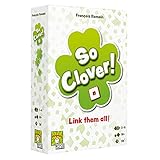
Overview: So Clover! is a cooperative word association game where players secretly link keywords via shared features on individual clover-shaped boards, then collaborate to decipher each other’s clues. Designed for 3-6 players aged 10+, it promises 30-minute sessions of mental gymnastics and teamwork. What Makes It Stand Out: Its unique dual-layer mechanic—first crafting subtle associations, then collectively decoding them—creates a satisfying “aha!” moment absent in typical guessing games. The 880 password combinations ensure near-limitless replayability, while the cooperative scoring (tracking high scores in a “Record of Legends”) incentivizes repeated plays without direct competition. Value for Money: Priced competitively for a high-quality board game, it justifies cost through exceptional replay value and family-friendly engagement. Compared to trivia-heavy alternatives, its focus on creative wordplay offers a fresher, less knowledge-dependent experience ideal for diverse groups. Strengths and Weaknesses: Strengths: Highly replayable, fosters creative thinking, genuinely cooperative, easy to learn but mentally stimulating. Weaknesses: Can feel slow with fewer players, younger teens may struggle with abstract associations, limited physical components beyond clover boards and cards. Bottom Line: An ingenious, replayable gem that transforms word association into collaborative detective work. Highly recommended for families and friend groups seeking a mentally engaging, non-competitive game night staple.
2. Asmodee Just One Party Game (2025 Refresh) - Cooperative Mystery Word Guessing Fun for Family & Friends, Kids & Adults, Ages 8+, 3-7 Players, 15 Minute Playtime

Overview: Just One challenges 3-7 players to cooperatively guess mystery words using single-word clues. Its twist? Duplicate clues cancel out, forcing players to communicate strategically within a tight 15-minute timeframe suitable for ages 8+. What Makes It Stand Out: The brilliant clue-cancellation mechanic generates spontaneous laughter and tension as players frantically avoid repeating words. The 2025 refresh enhances accessibility, while the ultra-fast pace and minimal setup make it ideal for filling short gaps or energizing larger gatherings. Value for Money: Exceptional value given its compact size, broad age appeal, and sheer replayability. With thousands of word combinations, it outlasts pricier games. It’s a budget-friendly essential for frequent game nights, surpassing similar party games in elegance and ease. Strengths and Weaknesses: Strengths: Hilarious group dynamics, incredibly quick to teach/play, scales perfectly from 3-7 players, zero setup time, highly inclusive. Weaknesses: Limited depth for strategy seekers, clue overlaps can frustrate in larger groups, minimal physical components. Bottom Line: A near-perfect party game that turns simple word guessing into uproarious teamwork. Its simplicity, speed, and universal charm make it a must-own for casual and frequent gamers alike.
3. ito – Cooperative Strategy Card Game for Ages 8+ | 2–10 Players | Party Game with Secret Clues & Category Challenges | Family, Group & Game Night Fun

Overview: ito is a lightning-fast cooperative card game where players arrange secret number cards in order using only category-based clues—never stating numbers. For 2-10 players aged 8+, it delivers intense rounds in under 10 minutes. What Makes It Stand Out: Its remarkable scalability (2-10 players!) and three thematic categories (Family, Everyone, Action) allow customization for any group’s vibe. The “no numbers” rule forces creative clue-giving, while beautifully illustrated cards and physical gestures in Action mode boost engagement uniquely. Value for Money: Outstanding for the price, offering immense flexibility. Unlike games capped at 6 players, ito handles classrooms or large parties effortlessly. The 100 unique cards and thematic variety provide far more longevity than comparable quick-play games. Strengths and Weaknesses: Strengths: Unmatched player count flexibility, rapid gameplay, engaging category variations, high replayability, intuitive rules. Weaknesses: Very shallow strategy, Action mode may feel forced in quiet settings, number-ordering logic can confuse younger kids. Bottom Line: A versatile, energetic icebreaker that excels in diverse group sizes. Its speed and adaptability make it an indispensable addition to any game library, especially for educators or social hosts.
4. That Escalated Quickly by Exploding Kittens, 2-8 Players - Ages 10+ - 15 Minutes to Play - Hilarious Cooperative Card Game for Family Game Night, Party, Adult and Teen

Overview: Players cooperatively rank humorous scenarios by intensity (1-10) using secret number cards. Reading absurd question cards like “How awkward is it to run into your ex at a funeral?”, the group debates order to win collectively in 15 minutes for 2-8 players aged 10+. What Makes It Stand Out: The intensity-scaling mechanic sparks uproarious debates and reveals group dynamics. Exploding Kittens’ signature irreverent humor shines through 150 question cards, while the simple ranking system creates organic, memorable conversations rarely seen in party games. Value for Money: Excellent value given the laugh-per-minute ratio and portability. It outperforms trivia games by fostering interaction over knowledge, and its compact kit (10 number cards, 150 questions) justifies cost for consistent group entertainment. Strengths and Weaknesses: Strengths: Hilariously relatable questions, effortless setup, sparks genuine group discussion, highly inclusive, compact. Weaknesses: Humor may not land with all groups, limited strategic depth, repetitive after extended play. Bottom Line: A brilliantly chaotic conversation starter that turns absurdity into cooperative fun. Perfect for teens and adults seeking lighthearted, discussion-driven game nights—just ensure your group shares its edgy humor.
5. Fun Facts Party Game - Learn Surprising Facts About Friends and Family! Engaging Cooperative Game for Kids & Adults, Ages 8+, 4-8 Players, 30 Minute Playtime, Made by Repos Production

Overview: Fun Facts fosters connection by having players guess personal trivia about each other. Using arrows to rank predicted answers to prompts like “Who has the most siblings?”, it creates cooperative revelations in 30-minute sessions for 4-8 players aged 8+. What Makes It Stand Out: Unlike abstract word games, it leverages players’ real lives to build camaraderie. The cooperative ranking mechanic—arranging arrows based on guessed responses—turns self-disclosure into a shared puzzle, making it ideal for strengthening relationships. Value for Money: Strong value for relationship-focused groups. High-quality components and endless re-playability (as facts change over time) surpass generic trivia games. It’s an investment in social bonding, especially valuable for families or teams. Strengths and Weaknesses: Strengths: Deepens interpersonal connections, inclusive for mixed ages, vibrant components, sparks authentic laughter, no winner/loser stress. Weaknesses: Less engaging with strangers, setup requires knowing players moderately well, slower pace than other party games. Bottom Line: A heartfelt, engaging tool for bonding that transforms game night into meaningful connection. Highly recommended for established groups seeking to laugh and learn together—less ideal for casual acquaintances.
6. Priorities Game | A Party Game of Absurd Choices | Hilarious Card Games for Adults and Teens | Ages 14+ | 2+ Players | 30 Mins.

Overview:
The Priorities Game is a lighthearted, cooperative party game centered around ranking absurdly opinion-splitting everyday items (like Hawaiian pizza or drama) from “love” to “loathe.” Players secretly order their cards, and the group collaboratively guesses each other’s rankings to win cards—making it a social icebreaker rather than a competitive showdown.
What Makes It Stand Out:
Its genius lies in fostering group laughter through extreme honesty and low-pressure cooperation. The 2-minute learning curve and 30-minute playtime ensure instant engagement, while the “you vs. the game” dynamic eliminates winner-takes-all tension. Rankable items spark hilarious debates that reveal surprising truths about friends.
Value for Money:
Priced competitively for party games, it delivers exceptional replayability with no setup fuss. Unlike trivia-heavy alternatives, it leverages universal experiences (selfies, hugs), making it more inclusive and consistently funny across diverse groups—justifying its cost for frequent social gatherings.
Strengths and Weaknesses:
Strengths: Effortless setup; sparks genuine conversation; scales perfectly for 2–10+ players; zero competitive stress.
Weaknesses: Limited strategic depth may disappoint hardcore gamers; repetitive after many rounds if group dynamics lack variety.
Bottom Line:
An ideal, affordable icebreaker for casual game nights—guaranteeing laughter without complexity. Highly recommended for groups seeking connection over competition.
7. Asmodee Mysterium Board Game - Enigmatic Cooperative Mystery Game with Ghostly Intrigue, Family Fun for Kids & Adults, Ages 10+, 2-7 Players, 42 Minute Playtime

Overview:
Mysterium immerses players in a 1920s séance where psychics collaborate to solve a ghost’s murder. One player acts as the silent ghost, providing abstract visual clues to guide psychics through suspects, locations, and weapons—blending cooperative deduction with rich storytelling.
What Makes It Stand Out:
The ghost’s wordless clue-giving via surreal, painterly artwork creates a uniquely atmospheric puzzle. Adjustable difficulty (via clue complexity) and multiple ending variations ensure accessibility for families while challenging veteran players. The stunning art isn’t just decorative—it’s core to gameplay.
Value for Money:
Despite a mid-range price, its high-quality components and near-infinite replayability (from thousands of clue/suspect combinations) outshine cheaper deduction games. It’s a premium experience that justifies cost through sheer longevity and visual splendor.
Strengths and Weaknesses:
Strengths: Breathtaking artwork; seamless cooperative mechanics; scalable difficulty; exceptional theme integration.
Weaknesses: Ghost player can feel underutilized after initial clues; setup takes longer than entry-level party games.
Bottom Line:
A masterpiece of cooperative storytelling and deduction. Essential for families and mystery lovers seeking depth, beauty, and replayability.
8. Stellar Factory Ravine: A Crafty and Cooperative Card Game

Overview:
Ravine is a streamlined cooperative card game where 3–6 players (ages 12+) collectively navigate challenges using a deck of 193 casino-grade cards and thematic wooden tokens. Players must strategize together to overcome shared obstacles, emphasizing teamwork over individual wins.
What Makes It Stand Out:
Its minimalist “crafty” design shines through tactile components—screen-printed wood health tokens and a standout fire token add immersive texture. The rules prioritize quick entry (no complex manuals), enabling groups to dive into cooperative problem-solving within minutes.
Value for Money:
The inclusion of durable wood tokens alongside a substantial card deck offers solid physical value. While niche in theme, it competes well against pricier cooperative games by focusing purely on accessible, component-driven play without app dependencies.
Strengths and Weaknesses:
Strengths: High-quality, tactile components; effortless setup; pure cooperative focus; ideal for small groups.
Weaknesses: Vague theme description may confuse buyers; limited strategic depth compared to narrative-heavy alternatives.
Bottom Line:
A component-rich, no-frills cooperative game perfect for quick sessions. Recommended for tactile learners and groups prioritizing simplicity over story.
9. Pressman The Oregon Trail Card Game - Cooperative Gameplay Based on The Classic Computer Game, Ages 12 and Up, 2-6 Players

Overview:
This card game reimagines the iconic computer adventure as a cooperative survival challenge. Players guide a wagon party along the Oregon Trail, battling dysentery and river crossings through hand management—all wrapped in nostalgic 8-bit pixel art.
What Makes It Stand Out:
It masterfully translates the computer game’s grim humor into card form, making “dying of dysentery” absurdly fun. The cooperative mechanics force tough group decisions (e.g., sacrificing supplies for safety), while retro art evokes instant nostalgia without relying on digital devices.
Value for Money:
An affordable homage that captures the original’s spirit far better than most licensed games. At its price point, it outperforms generic card games by delivering targeted nostalgia and replayable chaos—especially for millennials introducing kids to the franchise.
Strengths and Weaknesses:
Strengths: Brilliant thematic execution; cheeky humor; strong cooperative tension; compact and portable.
Weaknesses: Luck-heavy mechanics may frustrate strategy-focused players; limited depth beyond initial novelty.
Bottom Line:
A charming, must-have for Oregon Trail fans and casual groups. It turns historical hardship into joyful, bite-sized chaos—highly recommended.
10. Gamewright - Party to Go - Cahoots Cooperative Hint and Sync Card Game

Overview:
Cahoots is a portable cooperative game where 3–8 players secretly hold cards and must play matching colors/numbers in sequence to achieve shared goals—without revealing their hands. It’s a race against time to “sync” silently through strategic hinting.
What Makes It Stand Out:
The innovative “non-communication” challenge creates thrilling tension as players interpret subtle clues. Its compact size and vibrant card design make it perfect for travel, while the 10-minute rounds fit seamlessly into parties or coffee breaks.
Value for Money:
As a pocket-sized game with high replayability, it surpasses similarly priced party games. The focus on nonverbal teamwork builds social bonds better than trivia games, offering cognitive benefits that justify its affordability for frequent group use.
Strengths and Weaknesses:
Strengths: Ultra-portable; brilliant for building nonverbal communication; scales flawlessly for 3–8 players; quick setup.
Weaknesses: Can frustrate players who dislike ambiguity; limited strategic depth beyond initial plays.
Bottom Line:
An exceptional travel-friendly game that turns silent cooperation into pure fun. Ideal for families and teams—highly recommended for on-the-go connection.
Why Cooperative Games Are the Heart of Modern Game Nights
The landscape of social gaming has fundamentally shifted. While competitive play has its place, cooperative experiences now form the bedrock of truly inclusive and engaging gatherings. They eliminate the frustration of lopsided wins and the awkwardness of direct confrontation, making the table a welcoming space for players of vastly different experience levels and personalities. Everyone, from the seasoned strategist to the casual player joining their first game night, feels immediately valuable to the team effort. This inclusivity is non-negotiable for the modern host aiming for a night where everyone leaves smiling.
Beyond just being fun, cooperative games actively cultivate skills that resonate far beyond the game board. They demand clear communication under pressure, active listening as players share critical information, and creative problem-solving when the group hits a snag. Navigating a shared challenge together builds trust organically – you learn to rely on your friends’ strengths and support their weaknesses. In a world often characterized by division, these games offer a tangible, joyful reminder of what we can achieve when we work as one. They transform a simple evening into a meaningful social exercise.
Fostering Inclusivity and Reducing Social Friction
One of the most powerful advantages of cooperative play is its inherent ability to level the playing field. When the group wins or loses together, the focus shifts from individual performance to collective strategy. This is crucial for integrating newcomers or less experienced players who might feel intimidated by highly competitive environments. There’s no “sitting out” feeling; every contribution, big or small, directly impacts the group’s chance of success. The social pressure to “win” individually evaporates, replaced by the supportive atmosphere of “let’s figure this out together.”
This dynamic significantly reduces common game night pitfalls. Arguments over rules interpretations become collaborative problem-solving sessions. Mistakes made by one player aren’t met with groans but with offers of help from teammates. The shared goal creates a natural buffer against ego clashes, fostering a more relaxed and genuinely enjoyable environment for all participants. For the host, this translates to less mediation and more pure enjoyment of the gathering.
Building Essential Real-World Skills Through Play
Don’t underestimate the subtle power of cooperative games as training grounds for life. The time pressure inherent in many designs forces players to prioritize information, articulate ideas concisely, and delegate tasks effectively – mirroring real-world project management scenarios. Learning to interpret clues given by others, often under stress, hones active listening and empathy. Players must constantly consider not just their own actions, but how those actions fit into the larger team strategy and support their teammates’ roles.
This collaborative problem-solving directly translates to improved group dynamics in professional and personal settings. The experience of overcoming a challenging scenario together builds camaraderie and mutual respect that strengthens any social group. It’s play with purpose, developing soft skills in a context that feels engaging and rewarding, not like a forced workshop. The host becomes a facilitator of genuine personal growth disguised as fun.
Key Features Every Host Should Prioritize
Selecting the right cooperative game isn’t just about picking something popular; it’s about understanding the dynamics of your group and the specific experience you want to create. The best choices seamlessly integrate mechanics that support collaboration without causing confusion or frustration. Prioritizing certain core features ensures the game enhances your gathering rather than derailing it. Think of these features as your checklist for a smooth, engaging, and truly cooperative experience that leaves everyone wanting more.
The right game should feel like a catalyst for connection, not a barrier. It needs to strike a delicate balance between challenge and accessibility, ensuring the puzzle or objective is engaging enough to hold interest but not so opaque that players feel lost or powerless. Attention to these critical elements – from player count flexibility to the clarity of the shared goal – is what separates a game night that fizzles out from one that becomes legendary.
Optimal Player Count and Group Dynamics
Never assume a game scales perfectly from 3 to 8 players. The ideal cooperative experience often has a very specific sweet spot. Games designed primarily for 4-6 players can become chaotic and slow with 8, while a game built for larger groups might feel sparse and lack tension with only 3. Carefully check the recommended range and read reviews noting how the experience changes at different counts. Consider your typical group size – do you often have stragglers? Choose games with flexible player counts or modular scaling.
Also, assess your group’s communication style. Do they thrive under intense time pressure, or do they prefer a more contemplative pace? Some games shine with loud, brainstorming groups, while others suit quieter, more analytical teams. Matching the game’s required communication style to your group’s natural dynamic is crucial for avoiding frustration. A game demanding rapid-fire discussion will flop with a reserved crowd, just as a slow-burn strategy game might bore a group craving constant action.
Clear, Compelling Shared Objectives
The core of any cooperative game is the goal the group must achieve together. This objective must be immediately understandable to everyone at the table from the very first turn. Ambiguity here is the fastest route to confusion and disengagement. Is the goal to escape a location before time runs out? Solve a series of interconnected puzzles? Defend a position against escalating threats? The win condition should be visually represented and constantly reinforced through the game state.
Equally important is the stakes. Why should the players care about this shared objective? A strong theme woven into the mechanics (like racing against a spreading infection or deciphering ancient runes to prevent disaster) provides context and emotional investment. The challenge should feel meaningful, creating genuine tension and making the eventual victory (or valiant loss) feel earned. A weak or confusing objective turns cooperation into a chore.
Manageable Complexity and Intuitive Rules
First impressions are everything. A cooperative game with a 20-minute rule explanation is doomed for most casual game nights. Prioritize games where the core concept and first few turns can be grasped quickly, allowing players to learn by doing. The best cooperative designs have simple core mechanics that layer in complexity as the game progresses, often driven by the evolving challenge itself rather than convoluted rules exceptions.
Look for games that minimize “analysis paralysis.” When every player needs to consider dozens of options on their turn, the game grinds to a halt, killing momentum and engagement. Mechanics that encourage discussion but provide clear constraints or time limits (like real-time elements or limited action points) keep the energy high. Remember, the host shouldn’t need to be a walking rulebook; the game should guide the group intuitively.
Effective Communication Mechanics
Cooperative games live or die by how they handle communication – or deliberately restrict it. Some games thrive on open discussion, encouraging players to brainstorm solutions freely. Others introduce fascinating tension by limiting what or how players can share information (e.g., only describing cards you can’t see, or communicating solely through gestures under time pressure). Both approaches can work brilliantly, but it’s vital to know which type suits your group.
Consider whether the communication mechanic enhances the challenge meaningfully or just creates artificial frustration. Restrictions should feel like an integral, thematic part of the puzzle (like interpreting garbled radio signals) rather than a cheap trick. For new groups, starting with open-communication games is often wise to build confidence before introducing more complex communication barriers. The key is that communication feels like a tool for success, not a source of constant stumbling blocks.
Replayability Through Variable Setups
Playing the exact same scenario repeatedly gets stale fast, especially with cooperative games where players learn the optimal path. High replay value is essential for a game to earn a permanent spot in your collection. The best designs incorporate significant variability: modular boards that change the layout, randomized card decks that alter objectives and threats, or adjustable difficulty levels that scale the challenge.
Look for games where the core puzzle or challenge manifests differently each time. This could mean different starting conditions, varying win/loss conditions based on setup, or emergent narratives driven by player choices and random elements. Games that offer distinct “scenarios” or narrative branches further extend their lifespan. Avoid games where solving it once means you’ve essentially “beaten” it forever; the magic lies in facing a fresh challenge with the same group.
Minimal Setup and Takedown Time
Game night energy is precious. A game that requires 15 minutes of meticulous component sorting before play begins eats into valuable social time and dampens enthusiasm. Prioritize cooperative games with streamlined setups: clear organization in the box, minimal shuffling (or pre-sorted decks), and intuitive board assembly. Games that use a single central board or rely primarily on cards often set up faster than those with complex multi-level terrain.
Similarly, takedown should be a breeze. Components that fit neatly back into trays, color-coded sorting, and minimal loose bits make cleanup quick, encouraging players to help and ensuring the game gets put away properly. A game that’s a hassle to set up or put away is less likely to get played repeatedly, no matter how good the gameplay is. Respect your guests’ time and your own hosting effort.
Balanced Challenge Curve and Adjustable Difficulty
The perfect cooperative game provides a “Goldilocks zone” of challenge: not so easy that victory is guaranteed and boring, but not so hard that failure feels inevitable or frustrating. The difficulty should ramp up meaningfully as the game progresses, creating rising tension. Early turns might feel manageable, lulling the group into confidence before the real pressure hits.
Crucially, look for games that offer meaningful difficulty adjustments. This shouldn’t just be “add more threat cards.” True adjustability might involve changing starting resources, altering win conditions, introducing specific rule variants, or having modular threat decks. The ability to tailor the challenge to your group’s skill level (e.g., easier for mixed-experience groups, harder for veterans) is invaluable for ensuring long-term enjoyment and preventing the game from being shelved after a single tough loss.
Strong Thematic Integration
Theme isn’t just window dressing; it’s the engine that drives engagement and makes the cooperation feel meaningful. The best cooperative games weave the narrative seamlessly into the mechanics. If you’re defusing bombs, the actions you take should feel like defusing bombs (cutting wires, solving electrical puzzles). If you’re exploring a haunted mansion, the mechanics should evoke tension, discovery, and shared vulnerability.
A strong theme provides context for the rules, making them easier to remember and understand. It transforms abstract actions (“move the meeple”) into meaningful narrative moments (“we’re cautiously descending the creaky staircase into the cellar”). This immersion is what makes victories feel triumphant and losses feel like part of an exciting story, rather than just a failed game session. Avoid games where the theme feels tacked-on or disconnected from the core gameplay loop.
Physical and Mental Accessibility
A great host considers all potential players. Evaluate the physical demands: Does the game require fine dexterity, rapid hand-eye coordination, or the ability to see small text/icons clearly? Are components easy to handle? Games relying heavily on speed or precise manipulation can exclude players with certain physical conditions.
Also consider cognitive load. How much information must players track simultaneously? Are there complex memory elements or intense real-time pressure that could overwhelm some participants? Look for games offering simpler roles or adjustable cognitive demands. Clear iconography, color contrast, and optional rule simplifications can make a game accessible to a much wider audience, ensuring no one feels left out of the fun. True inclusivity is key.
Real-Time vs. Turn-Based Dynamics
The pacing of a cooperative game dramatically shapes the experience. Real-time games (where a timer, sand, or app creates constant pressure) generate incredible energy, urgency, and often hilarious moments of chaos as players scramble to communicate and act. They excel at creating shared adrenaline rushes and preventing downtime.
Turn-based cooperative games, conversely, allow for deeper strategic discussion, careful planning, and thoughtful decision-making. They suit groups who prefer a more relaxed, cerebral challenge and can handle slightly longer playtimes. Neither is inherently better; it depends entirely on your group’s preferences. Some groups love the controlled chaos of real-time, while others find it stressful and prefer the deliberation of turns. Know your audience and choose accordingly.
Creating the Perfect Cooperative Atmosphere
Selecting the right game is only half the battle; how you frame and facilitate the experience is equally critical. The host sets the tone, transforming a simple game session into a memorable event. This starts long before the first card is drawn. Thoughtful preparation – ensuring the space is comfortable, the rules are understood, and the group feels psychologically safe to engage and potentially fail – lays the foundation for genuine cooperation to flourish. It’s about cultivating an environment where the focus is squarely on the shared journey, not just the destination.
Your role shifts from referee to experience curator. This means actively encouraging positive communication, gently steering discussions back on track if they stall, and most importantly, celebrating the process as much as the outcome. Highlight clever team plays, inventive solutions born from group discussion, and moments of supportive interaction. When the group loses (and they will, eventually!), frame it as a learning opportunity for next time, emphasizing how close they came together. This mindset ensures that whether the timer runs out or the final puzzle clicks into place, the sense of camaraderie remains the night’s true victory.
Pre-Game Preparation and Setting Expectations
Never underestimate the power of a clear, concise pre-game briefing. Before diving in, take two minutes to articulate the spirit of the game: “We’re all on the same team here, working against the game itself. There’s no shame in asking for help or suggesting an idea!” Briefly outline the core win/loss conditions and the primary way players interact (e.g., “We’ll be sharing clues about what’s on our secret cards”). Manage expectations about difficulty – “This one can be tricky, especially the first time, but that’s part of the fun!”
Ensure everyone understands the basic flow before setup is complete. A quick visual demo of a core action using a prototype card or token helps immensely. Crucially, establish communication norms: is open discussion allowed? Are there any restrictions? This preemptive clarity prevents mid-game arguments and ensures everyone feels comfortable participating from the very first turn. Setting the cooperative tone upfront is non-negotiable.
Facilitating Play Without Taking Over
Your goal as host is to enable the group’s collaboration, not to dictate it. Resist the urge to become the de facto team leader or constant rule enforcer. Start by letting the group navigate the early turns organically. Only step in to clarify rules when confusion arises or to gently point out a missed rule after a player has acted. Ask open-ended questions to prompt group discussion: “What do you all think is the biggest threat right now?” or “How can we best use Sarah’s special ability this round?”
If discussion stalls or becomes unproductive, offer a neutral nudge: “We have about 2 minutes left on this phase – what’s our top priority?” Avoid giving direct solutions; instead, reframe the problem. The magic happens when the group arrives at solutions collectively. Your subtle guidance keeps the train on the tracks without hijacking the journey.
Embracing Loss as Part of the Cooperative Journey
In cooperative games, losing isn’t failure; it’s often the most memorable and bonding part of the experience. How you react to a loss sets the tone for the group. Immediately acknowledge the effort: “Wow, that was intense! We really pushed it to the wire that time.” Highlight specific moments of great teamwork or clever plays that nearly secured victory. Avoid placing blame (“If only you had done X…”) – focus on the collective challenge the game presented.
Use losses as fuel for the next attempt: “Okay, we know the infection spreads fast in Phase 3 now – let’s adjust our strategy!” This reframing turns setbacks into exciting learning opportunities and builds anticipation for the next game. It reinforces that the value is in the shared struggle and the laughter along the way, making the eventual win (when it comes) feel even sweeter. Celebrate the valiant effort as much as the victory.
Future-Proofing Your Game Collection
The world of tabletop gaming evolves rapidly, and staying relevant means being intentional about how you curate your library. Don’t just chase every new release; focus on acquiring games that offer lasting value through robust design, strong community support, and adaptability. Prioritize titles known for frequent scenario updates, expansion potential, or mechanics that feel fresh years after release. A game that sparks conversation and demands multiple plays to master is a far better investment than a flashy one-hit wonder.
Consider the longevity of the physical components too. Games with high-quality, durable parts and clear, well-organized storage stand the test of time and repeated plays. Look for publishers with a track record of excellent customer support and reprints, ensuring you can replace lost bits years later. Building a collection focused on depth, replayability, and resilience ensures your game shelf remains a vibrant hub for connection, ready to welcome friends new and old for countless nights to come.
Evaluating Long-Term Value Beyond the Hype
New game announcements generate buzz, but savvy hosts look beyond the initial excitement. Scrutinize the core design: Does it rely on a single gimmick, or does it have deep, re-playable mechanics? Read reviews focusing on games played 10+ times, not just first impressions. Consider the publisher’s history – do they support their games with free printable scenarios, community challenges, or meaningful expansions that add rather than just extend?
Ask: Will this still feel fresh and engaging six months from now with my regular group? Games that foster emergent storytelling, offer significant strategic depth, or have high variability in setup tend to have far greater staying power than those with linear, solvable puzzles. Investing in substance over fleeting novelty ensures your collection remains dynamic and exciting year after year.
Building a Diverse Cooperative Toolkit
No single cooperative game suits every mood or group composition. A well-rounded host cultivates a collection that offers varied experiences. Have a quick, real-time game for warming up or playing with larger crowds. Include a deeper strategic game for your core group on dedicated game nights. Don’t forget lighter, more whimsical options perfect for mixed-age gatherings or when energy is low. Diversity in theme (adventure, deduction, narrative, abstract) and mechanics (real-time, turn-based, app-assisted) ensures you always have the right tool for the social job.
This toolkit approach makes you a more versatile host. Facing a group of 8 newbies? Pull out the accessible, high-energy game. Only 3 hardcore gamers showing up? Dive into the complex strategic challenge. Having family over? Choose the lighthearted, universally appealing title. A diverse collection means you’re always prepared to create the perfect cooperative experience, no matter who walks through the door.
Frequently Asked Questions
Frequently Asked Questions
What’s the biggest mistake new cooperative game hosts make?
Overcomplicating the first game. Starting with a title that has lengthy setup, complex rules, or extreme difficulty can overwhelm guests. Always begin with something accessible, quick to learn, and forgiving to build confidence and excitement for future plays.
How do I handle a player who tries to “quarterback” the game?
Gently but firmly reinforce that all players should make their own decisions. Phrase it positively: “Thanks for the suggestion, Alex! Maya, what are you thinking of doing with your turn?” or “Let’s hear what others see before we decide.” Remind the group the fun comes from everyone contributing ideas.
Can cooperative games work well with kids?
Absolutely! Look for games specifically designed for family play with simpler rules, brighter components, and themes kids connect with. Assign younger players specific, manageable roles (“You’re in charge of the timer!”) and adjust difficulty downward. The shared goal is perfect for fostering teamwork across generations.
What if my group loses the same game repeatedly?
This is common and actually great! Analyze why you’re losing together after a session. Did you misprioritize threats? Run out of a key resource? Adjust your strategy next time. Many games have official difficulty tweaks – try an easier setting initially. Remember, the journey matters more than the win.
Are app-assisted cooperative games worth the investment?
They can be fantastic, offering dynamic scenarios, immersive sound, and managing complex rules. However, ensure your group is comfortable using devices at the table. Prioritize games with reliable apps and consider battery life/group phone access. They add great value but aren’t essential for a strong collection.
How important is theme versus mechanics for cooperation?
Both are vital, but mechanics are foundational. A weak theme with strong cooperative mechanics can still shine, but great cooperative mechanics wrapped in a compelling theme create magic. Prioritize smooth, intuitive teamwork mechanics first; a strong theme then makes those mechanics memorable and engaging.
What’s a good player count range for most versatile cooperative games?
Aim for games that play well with 3-5 players. This covers most typical game night sizes. Games scaling perfectly from 2 to 8 are rare unicorns; most have a clear sweet spot (e.g., 4-6). Check specific game recommendations for their optimal range, not just the box minimum/maximum.
How can I encourage quieter players to participate more?
Assign them specific, crucial roles within the game (“You’re our only medic this round!”). Ask direct, open-ended questions: “Priya, your character sees the back of the map – what threats do you notice?” Create a safe space where all ideas are welcomed without immediate judgment.
Do cooperative games take longer than competitive ones?
Not necessarily. Many modern cooperative designs are tightly paced, especially real-time games. Turn-based cooperative games can suffer from “analysis paralysis” if the group over-discusses, but good facilitation keeps things moving. Often, the shared focus speeds up decision-making compared to competitive downtime.
Is it okay to modify rules to fit my group?
Absolutely, and often encouraged! House rules are common in cooperative play. If a rule causes consistent frustration or imbalance, tweak it. Many games even suggest variants. Just ensure everyone agrees to the change beforehand. The goal is shared fun, not rigid rule adherence.
See Also
- 10 Essential Cooperative Strategy Games Every Board Game Group Needs in 2026
- 10 Essential Horror Cooperative Board Games Every Night of the Living Dead Fan Needs in 2026
- 10 Essential Cooperative Dexterity Games Every Board Game Lover Needs in 2026
- 10 Essential Cooperative Dexterity Games Every Board Game Group Needs in 2026
- 10 Essential Sci-Fi Cooperative Board Games Every Nerd Needs in 2026