Table of Contents
Escape room board games have exploded from niche curiosity to mainstream phenomenon, transforming living rooms into mysterious laboratories, ancient temples, and high-stakes heist scenarios. But seasoned enthusiasts know the bitter truth: that thrilling sense of discovery often fades after a single playthrough. Once you’ve solved the puzzles and uncovered the secrets, many games become beautiful but static paperweights gathering dust on your shelf. This single-use nature has frustrated board game collectors who crave both the cerebral challenge of escape rooms and the lasting value of traditional tabletop games.
The landscape is dramatically shifting as innovative designers crack the replayability code. Modern escape room games in 2026 employ clever mechanical twists, modular puzzle systems, and hybrid digital integration that keep mysteries fresh across multiple sessions. Whether you’re a casual player seeking weekend entertainment or a dedicated puzzler building a permanent collection, understanding these evolving features helps you invest wisely in games that deliver ongoing value rather than one-night wonders. Let’s explore what makes certain escape room board games truly replayable and how to identify them before adding to your cart.
Top 10 Escape Room Board Games
Detailed Product Reviews
1. Exit: The Abandoned Cabin - Kennerspiel Des Jahres Winner, Card-Based Family Escape Room Game for 1-4 Players, Ages 12+, Blue

Overview: Exit: The Abandoned Cabin delivers a tightly designed, award-winning escape room experience that condenses the thrill of a physical escape room into a compact card-based format. Designed for 1-4 players and lasting 1-2 hours, this Kennerspiel des Jahres winner tasks you with solving puzzles to escape a mysterious cabin after your car breaks down in the woods. The game’s single-use nature means you’ll physically alter components, creating a genuinely immersive experience.
What Makes It Stand Out: This game’s pedigree sets it apart—winning Germany’s prestigious “Expert Game of the Year” award guarantees exceptional puzzle design. The progressive difficulty curve ensures accessibility while maintaining challenge for veterans. Unlike digital alternatives, the tangible manipulation of cards, folding, and marking creates satisfying “aha” moments that feel earned and memorable.
Value for Money: Typically retailing around $15-20, it offers excellent value compared to a $25-30 per person physical escape room. While single-use nature might seem limiting, the 90-120 minute experience delivers comparable entertainment value to a movie night with far more engagement. Alternative replayable games cost $40-60 but rarely match this puzzle quality.
Strengths and Weaknesses: Strengths include award-winning puzzle design, perfect difficulty scaling, manageable time commitment, and high-quality components. Weaknesses are its single-use limitation, restricted 4-player maximum, and potential for groups to occasionally hit dead ends without hints.
Bottom Line: Ideal for puzzle enthusiasts and families seeking a premium at-home escape room. The single-use design is a fair trade for the immersive, tangible puzzle-solving experience. Highly recommended for those who value quality over quantity.
2. Clue Escape: The Midnight Hotel Board Game, Clue Escape Room Game, 1-Time Solve Mystery Games, Family Games for Ages 10+, 1-6 Players, 90 Mins. Avg.

Overview: Clue Escape: The Midnight Hotel extends the classic murder mystery franchise into cooperative escape room territory. Supporting 1-6 players across 90 minutes, this narrative-driven game answers the question: what happened after Boddy’s murder? Players must crack puzzles to identify who attempted to steal blackmail files while escaping a mysterious hotel.
What Makes It Stand Out: The innovative 3D gameboard literally builds upward as you progress, revealing new rooms and details—a tactile evolution that mirrors rising suspense. This dynamic component transforms the flat board game experience into something spatially engaging. The fusion of classic Clue deduction mechanics with escape room puzzling creates a unique hybrid that leverages familiar characters in fresh ways.
Value for Money: Priced around $20-25, it sits slightly above basic EXIT games but offers unique 3D components and brand recognition. The 90-minute runtime and 6-player capacity improve cost-per-person value significantly. While still single-use, the narrative depth and physical innovation justify the modest premium over simpler card-only alternatives.
Strengths and Weaknesses: Strengths include the evolving 3D board, strong narrative continuity with the Clue universe, higher player count, and cooperative teamwork emphasis. Weaknesses involve its single-use nature, potential disappointment for purists wanting traditional escape room puzzles, and a somewhat linear story that may feel restrictive.
Bottom Line: Perfect for Clue fans and groups wanting narrative depth alongside puzzles. The 3D board innovation makes it visually impressive, though puzzle purists might prefer less thematic hand-holding. A solid choice for family game nights.
3. Escape Room The Game, Version 2 - with 4 Thrilling Escape Rooms | Solve The Mystery Board Game for Adults and Teens
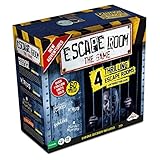
Overview: Escape Room The Game, Version 2 delivers a comprehensive package with four distinct scenarios—each escalating in difficulty and lasting exactly 60 minutes. The included Chrono Decoder device creates authentic pressure, while the companion app provides thematic soundtracks. Designed for 3-5 players ages 16+, it’s the most sophisticated kit in this category.
What Makes It Stand Out: The electronic Chrono Decoder is a game-changer, providing haptic feedback and digital countdown that paper timers can’t match. The app’s immersive soundtracks adapt to your progress. With four adventures included and expansion packs sold separately, this system offers genuine longevity rare in this category, transforming it into a reusable platform.
Value for Money: At $40-50, the upfront cost exceeds single-experience games, but you’re getting four distinct escape rooms—effectively $10-12 per session. The reusable decoder and app infrastructure support expansion packs, making it a genuine platform rather than disposable entertainment. This transforms it from a product into a hobby investment.
Strengths and Weaknesses: Strengths include the pressure-inducing decoder, atmospheric app integration, multiple scenarios, and expansion potential. Weaknesses are the higher price, restrictive 16+ age rating, occasional frustrating puzzle logic, and dependency on technology that could become outdated.
Bottom Line: The best choice for dedicated enthusiasts seeking multiple experiences. The electronic components and expansion ecosystem justify the premium price. Ideal for adult friend groups ready to invest in a reusable escape room platform.
4. Thames & Kosmos EXIT: The Enchanted Forest| A Kosmos Escape Room Game in a Box| Family Friendly, Card-Based at-Home Escape Room Experience for 1 to 4 Players, Ages 12+ , Black

Overview: EXIT: The Enchanted Forest offers a whimsical twist on the award-winning EXIT series, transporting 1-4 players into a fairy tale woodland where strange creatures block your path home. As part of the Kennerspiel des Jahres-winning franchise, it maintains high puzzle standards while embracing a more fantastical, family-friendly theme suitable for ages 12+.
What Makes It Stand Out: The integrated clue card system is exceptionally well-designed, offering graduated hints that prevent frustration without spoiling solutions—a standout feature for family play. The fairy tale theme distinguishes it from the series’ more horror-tinged entries, making it accessible to younger teens. The puzzle variety leverages the magical setting with creative, narrative-driven challenges.
Value for Money: Positioned around $15, it matches other EXIT titles for price-per-experience value. While single-use, the 60-90 minute playtime and family-friendly design make it ideal for introducing escape rooms to newcomers. Compared to family entertainment options, it offers superior engagement and educational value for the investment.
Strengths and Weaknesses: Strengths include the excellent hint system, charming fairy tale theme, consistent puzzle quality, and compact packaging. Weaknesses involve the single-use limitation, 4-player cap, niche theme appeal, and relatively short duration compared to some competitors.
Bottom Line: An outstanding entry point for families with younger teens or fantasy enthusiasts. The clue system prevents the frustration that can derail family game nights. While theme-specific, it’s among the most accessible EXIT titles. Perfect for introducing puzzle-solving to new players.
5. ThinkFun Escape The Room Stargazer’s Manor - A Thrilling Escape Room Game in a Box for Ages 10 and Up | Enhances Logical Reasoning | Perfect for Family Game Night | Ideal Gift for Puzzle Lovers

Overview: ThinkFun’s Escape The Room: Stargazer’s Manor leverages the brand’s educational expertise to create an escape room experience emphasizing logical reasoning development. Supporting 3-8 players ages 10+, it’s the most accommodating for larger groups. The package includes sealed envelopes, a solution wheel, and a scenic card to set the mood for this astronomical mystery.
What Makes It Stand Out: ThinkFun’s reputation for brain-building games shines through in puzzles designed to teach deductive reasoning. The 8-player capacity is unmatched, making it perfect for parties or classrooms. The reusable solution wheel and clear instruction manual lower the barrier for puzzle novices, prioritizing learning over pure difficulty.
Value for Money: At roughly $20-22, it offers strong value for larger groups—costing as little as $2.50 per person at maximum capacity. While single-use, the educational focus and reusable solution wheel provide lingering value. ThinkFun’s quality assurance justifies the modest premium over generic alternatives.
Strengths and Weaknesses: Strengths include the exceptional player range, educational design, trusted brand quality, clear instructions, and accessible difficulty. Weaknesses are less atmospheric immersion than competitors, potentially straightforward puzzles for veterans, and a narrative that feels secondary to the exercises.
Bottom Line: The top choice for educators, large families, or puzzle beginners. ThinkFun balances entertainment with skill development brilliantly. While not the most challenging, its accessibility and capacity make it uniquely versatile. Ideal for groups prioritizing learning and teamwork over intense difficulty.
6. EXIT: The Game - Adventures on Catan | Interactive Escape Room Experience| Cooperative | 1-4 Players | 10+ | Kosmos | Game for Kids and Adults

Overview: EXIT: The Game - Adventures on Catan merges the beloved board game universe with escape room mechanics, creating a unique hybrid experience. Players leave their village to explore Catan, solving puzzles while managing resources and trading with island residents. This cooperative adventure accommodates 1-4 players and runs 1-2 hours, making it ideal for family game nights.
What Makes It Stand Out: The integration of Catan’s trading and resource collection mechanics sets this apart from typical escape room games. You’re not just solving puzzles—you’re building the island, gathering resources, and negotiating with NPCs. The thematic connection to Catan is genuine rather than superficial branding, creating an immersive experience for fans of the original board game.
Value for Money: Priced similarly to other EXIT titles, this offers solid value for puzzle enthusiasts and Catan fans alike. While it’s a single-use game like all EXIT products, the 1-2 hour runtime and cooperative nature provide entertainment comparable to a real escape room at a fraction of the cost. Catan devotees get extra mileage from the thematic elements.
Strengths and Weaknesses: Strengths include clever Catan integration, quality components, and scalable difficulty suitable for ages 10+. The cooperative design encourages teamwork without alpha-player issues. Weaknesses: it’s single-use, experienced puzzlers may find it moderately challenging at best, and optimal enjoyment requires familiarity with Catan’s world. Some puzzles feel derivative of previous EXIT entries.
Bottom Line: Perfect for families who own Catan and want to try escape rooms, or puzzle fans seeking a thematic twist. Not revolutionary for EXIT veterans, but the Catan flavor makes it worthwhile for fans of both franchises.
7. Escape From the Museum Escape Room Game

Overview: Escape From the Museum delivers a compact escape room experience where players find themselves locked in after hours, deciphering clues to freedom. This Professor Puzzle entry supports 1-4 players and offers a streamlined puzzle-solving session perfect for game nights. The museum setting provides a classic backdrop for code-breaking and deductive challenges.
What Makes It Stand Out: Its accessibility shines—this is designed as an entry-level escape room game with straightforward mechanics that don’t overwhelm newcomers. The compact format makes it less intimidating than sprawling escape room titles, while still delivering satisfying “aha!” moments. The museum theme is universally understood, requiring no complex lore or rule memorization.
Value for Money: As a budget-friendly option in the escape room market, it provides 45-90 minutes of gameplay for roughly half the price of premium titles. While components are simpler and the experience less elaborate, it serves as an excellent gateway game. The lower price point reduces risk for families unsure about the genre.
Strengths and Weaknesses: Strengths include low cost, quick setup, and gentle learning curve ideal for ages 12+. Puzzles are logical without being frustrating. Weaknesses: it’s single-use with limited replay value, experienced players will find it too easy, and component quality is basic compared to deluxe escape room games. The narrative is thin, focusing purely on puzzles.
Bottom Line: An ideal starter escape room game for families and casual gamers. Veterans should skip it, but newcomers get a taste of the genre without financial commitment. Great for a quick puzzle fix.
8. Clue Escape: The Illusionist’s Club Board Game | Escape Room Family Game | 1-Time Solve Mystery | Ages 10+ | 1-6 Players | Difficulty 4 | 90-120 Mins. (Amazon Exclusive)

Overview: Clue Escape: The Illusionist’s Club reimagines the classic deduction franchise as a cooperative escape room experience. Players investigate a sabotaged magician by exploring a dynamic club that reveals new rooms and secrets as they progress. Supporting 1-6 players with a 90-120 minute runtime, this Amazon-exclusive title blends Clue’s whodunit heritage with modern puzzle-solving mechanics for ages 10+.
What Makes It Stand Out: The evolving gameboard mechanic distinguishes this from static escape room games. As you solve magic-themed puzzles using a secret “magical” tool, the board physically transforms, creating genuine discovery moments. The Clue branding isn’t just cosmetic—you’re still deducing WHO, WHERE, and WHAT, but through escape room methodology rather than dice rolling, creating a fresh take on a classic formula.
Value for Money: Positioned at a mid-range price point, it offers strong value for 6 players compared to per-person escape room costs. The 90-120 minute length feels substantial, and the transforming board adds tangible novelty. However, as a one-time experience, the value depends entirely on your group size—smaller groups get less economic benefit, making it ideal for larger gatherings.
Strengths and Weaknesses: Strengths: innovative board mechanics, strong thematic integration with magic tricks, scalable 1-6 player count, and satisfying narrative arc. The secret tool adds tactile engagement. Weaknesses: single-use limitation, difficulty rating of 4 may frustrate younger players, and some puzzle instructions are ambiguous. Experienced escapists might find it moderately challenging rather than truly difficult.
Bottom Line: Excellent for Clue fans and escape room enthusiasts seeking a fresh twist. Best value with 4-6 players. The dynamic board justifies the purchase despite the one-time nature, making it a memorable group activity.
9. Hunt A Killer: Death At The Dive Bar, Solve a Murder at Old Scratch Tavern, Immersive Murder Mystery Game, Play Detective in Unsolved Mysteries, Great Gift For True Crime Fans, Designed for Ages 14+

Overview: Hunt A Killer: Death at the Dive Bar delivers a true crime murder mystery experience where players investigate the suspicious death of bar owner Nick Webster. Designed as an entry-level case with 1/5 difficulty, this immersive investigation takes 45-60 minutes and works for both solo detectives and small teams, making it accessible for ages 14+ who enjoy realistic mysteries.
What Makes It Stand Out: The true crime authenticity sets this apart from fictional escape room games. Players examine realistic forensic files, autopsy reports, and witness statements, creating a genuine detective experience. The narrative feels grounded in reality, appealing to true crime podcast fans and mystery lovers who prefer deduction over abstract puzzles. The self-contained single-case format requires no subscription commitment, unlike other Hunt A Killer products.
Value for Money: At a moderate price point for a 60-minute experience, value hinges on your interest in true crime. For fans of the genre, the realistic evidence and satisfying conclusion justify the cost. Casual puzzle solvers might find it pricey for a one-time game, but it’s cheaper than most true crime entertainment experiences and comparable to a premium board game, especially for solo play.
Strengths and Weaknesses: Strengths: compelling realistic narrative, high-quality evidence reproduction, accessible difficulty for beginners, and excellent solo play viability. The 14+ rating ensures mature themes are handled appropriately. Weaknesses: extremely easy for experienced investigators, limited replayability, and the short runtime feels brief compared to other escape room games. Some clues are overly obvious, reducing challenge.
Bottom Line: Perfect for true crime newcomers and fans seeking a quick, realistic case. Experienced mystery solvers should seek more challenging Hunt A Killer cases. Ideal solo activity or date night game for crime story enthusiasts wanting an immersive but manageable investigation.
10. EXIT: The Game - Family - 2 Escape Adventures, at-Home Escape Room, Co-Operative Game, Family Activity, Brainteasers, 2-4 Players

Overview: EXIT: The Game - Family - 2 Escape Adventures delivers two complete at-home escape room experiences in one package, specifically designed for younger players and families. Search for missing animals in The Mystery at Meanstone Manor and solve candy-themed puzzles in The Caper at Candy Castle. This cooperative game for 2-4 players bridges the gap between EXIT Kids and standard EXIT titles with accessible, family-friendly themes that avoid dark elements.
What Makes It Stand Out: Getting two full adventures in one box represents exceptional value in the single-use escape room market. The silly, lighthearted themes avoid dark or scary elements while maintaining puzzle quality that satisfies both kids and adults. The “rip, fold, and discover” mechanics are specifically tailored to be engaging for children without sacrificing the intellectual satisfaction that adult players expect from the EXIT series, creating true intergenerational appeal.
Value for Money: This is arguably the best value in the EXIT lineup. Two complete games for roughly the price of one standard EXIT title means you’re paying half the per-game cost. Each adventure runs 60-90 minutes, providing 2-3 hours of total gameplay. For families with children aged 8-12, this offers affordable repeated entertainment compared to buying two separate titles, making it a budget-friendly gateway to escape room gaming.
Strengths and Weaknesses: Strengths: two distinct adventures, age-appropriate difficulty, cooperative focus, and exceptional cost-effectiveness. The thematic integration is playful and accessible for all ages. Weaknesses: experienced adult players will find puzzles too simple, the childish themes may not appeal to teens seeking mature challenges, and both games are still single-use. The component quality is standard EXIT fare—functional but not luxurious.
Bottom Line: Essential purchase for families with elementary to middle-school children. Adult-only groups should skip this for more challenging EXIT titles. Perfect introduction to escape room games for the next generation of puzzle solvers, offering great value and appropriate difficulty for family bonding.
Understanding the Replayability Challenge
The fundamental tension in escape room games lies between narrative surprise and mechanical reuse. Traditional designs prioritize a tightly woven story where each puzzle piece clicks into place exactly once, creating an unforgettable but consumable experience. This approach mirrors real-life escape rooms but clashes with board gaming’s expectation of repeated play.
The Single-Use Puzzle Dilemma
Most early escape room games operated like interactive novels—once you know the plot twist, the magic vanishes. Players would methodically work through sealed envelopes, destructible components, and linear puzzle chains that left no room for variation. The satisfaction came from progression, not competition or mastery, making second playthroughs feel like retracing solved crossword puzzles.
Why Replayability Matters for Value
With premium escape room games retailing between $25 and $60, the cost-per-play ratio becomes stark. A $50 game played once costs more per hour than many forms of entertainment. Savvy buyers now measure value in sessions rather than components, seeking designs that offer 5-10 meaningful replays minimum. This shift has pressured publishers to innovate beyond the disposable model.
Key Features That Solve Replayability Issues
Modern escape room games incorporate specific mechanical elements that reset the experience for return visits. These aren’t just gimmicks—they’re fundamental redesigns of how puzzles function and narratives unfold.
Modular Puzzle Systems
Look for games where puzzles exist as interchangeable modules rather than fixed sequences. These designs use puzzle tiles, cipher wheels, or scenario books that can be rearranged into new configurations. The core mechanisms remain consistent, but the specific solutions change based on setup, creating fresh mental challenges even for experienced players.
Non-Destructive Component Design
Replayable games avoid “destroy this card” mechanics or single-use stickers. Instead, they utilize dry-erase surfaces, reusable clue books, or digital apps that track progress without permanently altering physical pieces. This preservation mindset ensures every component stays intact for future groups or your own replay months later.
Branching Narrative Paths
Advanced games feature decision points that dramatically alter the story and puzzles ahead. Choosing different doors to explore, suspects to investigate, or tools to use creates distinct playthroughs with unique challenges. These branching paths mean solving one route leaves entirely different puzzles untouched for your next attempt.
Different Game Structures to Consider
Not all replayable escape room games follow the same blueprint. Understanding structural variations helps match a game to your group’s preferences and play style.
Campaign-Based Progression
Some games function as episodic series where each session builds on previous ones without repeating content. New scenarios unlock fresh puzzles while maintaining a cohesive storyline. These work best for regular gaming groups committed to weekly or monthly sessions, offering 10-15 hours of unique content.
Sandbox Puzzle Boxes
Sandbox designs provide a contained environment—like a mysterious mansion or space station—populated with puzzles that can be tackled in any order. Randomized setup ensures different puzzles appear in different locations each playthrough, creating emergent gameplay that feels distinct despite using familiar components.
Competitive vs. Cooperative Modes
Games offering both cooperative puzzle-solving and competitive head-to-head modes effectively double their replay value. You might first experience a scenario as a team, then replay it competitively racing to solve puzzles faster than opponents, transforming the same content into a completely different dynamic.
Evaluating Content Volume and Expansion Potential
Replayability often correlates directly with the sheer amount of content packed into the box. But quantity alone doesn’t guarantee quality—distribution matters equally.
Scenario Count and Variety
A truly replayable game should advertise multiple distinct scenarios in the base box, not just one long adventure. Look for products promising at least three separate missions with different themes, difficulty levels, and puzzle types. This variety prevents mechanical fatigue and lets you match scenarios to player experience.
Official Expansion Pipelines
Investigate whether publishers support their games with regular expansions. A healthy expansion ecosystem indicates the base game was engineered for longevity. Check if expansions add new puzzle mechanisms rather than just more of the same, and whether they integrate seamlessly without requiring component replacement.
Community Content Support
Forward-thinking publishers provide tools for players to create and share custom scenarios. This might include puzzle creation guides, blank component templates, or digital platforms where fans upload their designs. User-generated content can exponentially extend a game’s lifespan beyond anything the publisher originally included.
Component Quality and Durability Factors
Physical durability directly impacts replayability. Flimsy pieces that wear out after two sessions undermine even the most brilliant puzzle design.
Material Resilience
Examine product descriptions for mentions of linen-finished cards, thick cardboard stock, or wooden components. These materials withstand repeated shuffling, handling, and occasional spills. Avoid games with thin paper envelopes or fragile 3D constructions that won’t survive multiple assemblies and disassemblies.
Organizational Systems
Replayable games demand excellent storage solutions. Look for boxes with molded trays, labeled baggies, or integrated sorting systems that make setup and teardown efficient. Poor organization adds friction that discourages replay, while thoughtful design invites you to return again and again.
Art and Graphic Design Longevity
Beautiful artwork enhances immersion but shouldn’t give away solutions through subtle wear patterns. Quality games use iconography and graphic design that remains clear after repeated use without revealing which components have been “used” versus “unused” through fading or markings.
Digital Integration and App Support
The marriage of physical components with digital apps has revolutionized replayability, offering dynamic content that static pieces alone cannot achieve.
App-Driven Puzzle Randomization
Modern apps can generate infinite variations of cipher puzzles, logic grids, or pattern challenges based on seed numbers or QR codes. This means the physical components stay the same, but the digital layer presents new problems each session. The app tracks your progress, provides hints, and ensures no two playthroughs feature identical solutions.
Narrative Updates and Patches
Unlike static board games, app-supported titles receive regular content updates. Publishers can push new scenarios, seasonal events, or difficulty tweaks directly to your device. This ongoing support keeps the game fresh long after purchase, effectively providing free additional content that extends replayability.
Digital-Only Hint Systems
Comprehensive hint systems built into apps preserve puzzle integrity while reducing frustration. Instead of flipping to a solution page and accidentally seeing the next puzzle’s answer, apps provide graduated hints that reveal information progressively. This encourages replay because players can attempt harder difficulties without spoiling entire puzzles when they get stuck.
Player Count Flexibility
A game’s ability to accommodate different group sizes dramatically affects how often it hits your table. Single-player-only games see limited use compared to versatile options.
True Solo Playability
Many games claim solo suitability but feel hollow or impossible without multiple minds. Look for designs specifically engineered for single-player experiences with scaled puzzle complexity and narrative perspectives that work for one person. True solo modes mean you can enjoy the game even when your group isn’t available.
Large Group Scaling
Conversely, games that flex to accommodate 6-8 players maximize social replayability. These designs often include parallel puzzle tracks or team-based challenges that prevent overcrowding around a single puzzle. Large-group capability transforms the game into a party centerpiece rather than a niche activity.
Dynamic Difficulty Adjustment
The best replayable games adjust puzzle complexity based on player count or experience level. This might mean fewer clues for veterans, timed challenges for large groups, or simplified logic for newcomers. Dynamic scaling ensures the game remains engaging whether you’re teaching first-timers or challenging expert puzzlers.
Difficulty Scaling and Accessibility
Replayability suffers when a game is either too easy (boring on return) or too hard (frustrating to complete even once). Balanced difficulty curves encourage multiple attempts.
Multiple Difficulty Settings
Seek games offering explicit difficulty modes—easy, medium, hard—controlled through component selection or app settings. Easy modes let newcomers enjoy the story, while hard modes provide genuine challenges for veterans replaying familiar scenarios. This tiered approach ensures the game grows with your group’s skill.
Puzzle Type Variety
Games mixing cipher decoding, spatial reasoning, wordplay, and logical deduction cater to different cognitive strengths. This variety means players who struggled with one puzzle type might excel at others, and replaying allows you to experience the full spectrum. It also prevents mental fatigue from repetitive challenge styles.
Accessibility Features
Truly replayable games consider diverse abilities. Look for color-blind friendly design, puzzles that don’t rely solely on visual perception, and options for players with different processing speeds. Accessible games see more table time because they can include everyone in your social circle, not just puzzle enthusiasts.
Theme Variety and Immersion
A compelling theme draws players back, but only if it offers depth beyond surface-level aesthetics. Replayable games embed narrative richness that reveals itself gradually.
Interconnected Story Universes
Some games create narrative universes where each scenario adds lore and world-building. This encourages replay because solving one mystery raises questions about the broader setting. Players return not just for puzzles but to uncover the overarching story, similar to binge-watching a complex TV series.
Thematic Puzzle Integration
In superior designs, puzzles feel organically connected to the theme rather than generic brain teasers with thematic wallpaper. A haunted mansion scenario might use ghostly whispers as audio clues; a spy thriller could involve intercepted messages and code names. This integration makes replaying feel like revisiting a beloved story world rather than just solving abstract problems.
Atmospheric Components
High-quality props, detailed maps, and immersive soundscapes (via apps or included audio files) deepen engagement. These atmospheric elements remain enjoyable on repeat plays because they set a mood that puzzles alone cannot create. The sensory experience becomes part of what you return for, not just the mental challenge.
Community and User-Generated Content
The most replayable games extend beyond the box, fostering communities that create ongoing value.
Official Puzzle Creation Contests
Some publishers host regular contests where fans design puzzles that get officially integrated into the game. Buying into such an ecosystem means you’re purchasing access to a stream of community-vetted content. These contests often produce more creative and diverse puzzles than internal teams could generate alone.
Online Scenario Databases
Active communities maintain databases of user-created scenarios with ratings, difficulty tags, and playtime estimates. These platforms function like recipe websites for puzzles, offering endless variety. Before buying, search for active forums or Discord servers dedicated to the game—vibrant communities indicate strong replayability potential.
Convention and Event Support
Games that feature at conventions with new demo scenarios or tournament modes demonstrate publisher commitment to longevity. Event-driven content creates FOMO that keeps communities engaged, and these special scenarios often get released digitally for home play later, extending your game’s lifespan.
Storage and Organization Solutions
Practical considerations heavily influence whether a game gets replayed. Cumbersome setup or fear of losing pieces creates psychological barriers.
Resettable Component Design
Games engineered for replay include clear reset instructions, component checklists, and foolproof organization. Some even provide “reset packs” with fresh envelopes or stickers for those who want to gift or resell the game after playing. This resettability makes lending the game to friends feel seamless, indirectly increasing your own replay opportunities when they return the favor.
Space Efficiency
Consider your storage constraints. Bulky 3D constructions might look impressive but require dedicated shelf space and careful handling. Flat-packed or book-style games store easily and travel well, making them more likely to come on vacation or to game nights. Portability directly correlates with replay frequency.
Expansion Compatibility
If you plan to invest in expansions, ensure the base box can store them. Some games include empty slots or sell storage solutions that accommodate add-ons. Nothing kills replayability like having to manage multiple boxes or risk losing expansion pieces because they don’t fit in the original organized insert.
Price vs. Value Analysis
Replayability fundamentally changes value calculations. A $60 game playable 10 times delivers better value than a $20 single-use experience.
Cost Per Play Calculations
When evaluating games, divide the price by estimated plays. A $40 game with five quality scenarios you might replay twice each equals 10 sessions—$4 per play. Compare this to entertainment alternatives like escape rooms ($30+ per person) or movies ($15+ per ticket). This math justifies premium prices for genuinely replayable designs.
Bundled Content Value
Some publishers offer “complete editions” with base game plus first expansion at a discount. These bundles signal confidence in the game’s replayability and provide immediate extended content. However, ensure the base game itself is replayable without expansions—bundles shouldn’t be a workaround for a thin core experience.
Resale Market Considerations
Replayable games with intact components maintain higher resale value. If you eventually exhaust content, a resettable game in good condition can recoup 50-70% of its cost. Single-use games have minimal resale value, making them true sunk costs. Factor this into long-term value assessments.
Making Your Final Decision
With so many factors influencing replayability, creating a personal checklist helps narrow options to games that fit your specific situation.
Assessing Your Play Group
Honestly evaluate who will play. A group of casual friends needs different features than a dedicated puzzle club. Consider meeting frequency, experience levels, and interest in digital integration. A mismatch between game complexity and group preference guarantees low replay regardless of design quality.
Defining Your Replay Goals
Are you seeking a game to play monthly with the same group, or a title you can lend to different friends repeatedly? Campaign games suit regular groups; modular, resettable designs work better for varied audiences. Clarify your primary use case before reading reviews or browsing stores.
Trial and Rental Options
Some board game cafes or subscription services let you test games before buying. Take advantage of these to experience replayability features firsthand. A 30-minute demo reveals more about component quality and puzzle variety than any written review. If a game feels fiddly or thin during a trial, it won’t improve with ownership.
Getting the Most Out of Your Purchase
Once you’ve selected a replayable escape room game, certain practices maximize its lifespan and your enjoyment.
Documenting Your Sessions
Keep a simple log of which scenarios you’ve played, difficulty levels attempted, and completion times. This prevents accidentally replaying identical content and helps you track which puzzle types you enjoy most. Many apps include built-in tracking, but a notebook works for physical-only games.
Rotating Player Roles
On replays, assign different roles—note-taker, puzzle-solver, clue-reader—to each player. New perspectives reveal details missed previously and create fresh social dynamics. This rotation makes familiar scenarios feel new and helps everyone appreciate different aspects of the design.
Hosting Themed Game Nights
Elevate replay sessions with thematic snacks, music, and lighting that match the game’s setting. This atmospheric investment transforms puzzle-solving into an event, making repeat plays feel special rather than repetitive. Themed nights also attract curious friends who might become regular players.
Frequently Asked Questions
How many times can a truly replayable escape room game be played before feeling stale?
Quality replayable designs offer 5-10 distinct sessions out of the box, with expansions extending this to 20+ plays. The key is varied puzzle types and branching paths that create genuinely different experiences rather than slight variations on the same solution.
Do digitally integrated games require constant internet connectivity?
Most hybrid games download scenarios locally and only need intermittent connectivity for updates or hint systems. However, verify offline functionality in product descriptions, especially if you plan to play in areas with spotty Wi-Fi like cabins or basements.
Can replayable escape room games be played solo without diminishing the experience?
Many modern designs include dedicated solo modes with adjusted puzzle complexity and narrative perspectives. These often provide the same satisfaction as group play, though the social discovery element is naturally reduced. Check for “true solo” mentions rather than just “playable with 1 player.”
What’s the difference between a campaign game and a replayable modular game?
Campaign games offer sequential, unique scenarios that form a continuous story—great for regular groups but consumable. Modular games use randomized setups to create new puzzles from the same components, offering infinite combinations but potentially less narrative depth.
How do I verify a game’s replayability claims before purchasing?
Read detailed reviews focusing on component count, scenario variety, and community activity. Search for user-created content and expansion release schedules. Be wary of vague claims like “hours of gameplay” without specifying distinct sessions.
Are expansion packs necessary for replayability, or should the base game stand alone?
The base game should absolutely provide meaningful replayability without expansions. Expansions should enhance and extend, not fix a thin core experience. A game requiring immediate expansion purchases indicates poor base design.
What’s the ideal player count for maximizing replayability?
Games flexible enough for 2-6 players offer maximum replay potential because they adapt to different social situations. Fixed player counts (e.g., exactly 4 players) severely limit how often you can gather the right number of people.
How important is component quality for replayability?
Critical. Flimsy cards that fray, stickers that lose adhesion, or 3D pieces that break after two assemblies destroy replay value. Durable components justify higher prices because they physically survive multiple sessions and maintain resale value.
Can I create my own puzzles for these games?
Some publishers actively encourage this by providing blank templates, puzzle design guides, and community sharing platforms. Check for “user-generated content” support in product descriptions. Games with active Discord communities often have robust fan-created scenario libraries.
Do replayable escape room games work for family game nights with children?
Many include family-friendly difficulty settings and non-violent themes. Look for age recommendations and puzzle type variety that includes visual and spatial challenges accessible to younger players. Some even offer separate “kids mode” apps or rulebooks that simplify complexity while preserving the fun.
See Also
- 10 Best Value Escape Room Board Games for Replayability in 2026
- How to Solve Difficulty Confusion with the 10 Best Escape Room Board Games in 2026
- How to Solve Lack of Tension with the 10 Best Escape Room Board Games in 2026
- 10 Escape Room Board Games That Solve the ‘No Real Escape Rooms Nearby’ Problem in 2026
- Top 10 Best Escape Room Board Games for Family Game Night in 2026