Table of Contents
Gathering around the table for a lively game night can transform ordinary evenings into cherished family memories. Trivia games, in particular, offer a magical blend of laughter, learning, and friendly competition that bridges generational gaps. They spark curiosity, ignite conversations that might never happen otherwise, and create those “remember when” moments parents and kids alike will recall fondly years later. Forget passive screen time; trivia pulls everyone into the same room, connecting over shared knowledge and playful challenges that make learning feel like pure fun.
Choosing the right trivia experience, however, is about far more than just grabbing the shiniest box off the shelf. The perfect game for a family with young children differs vastly from one suited for teens and grandparents. It’s about understanding your unique group dynamics, learning what truly matters in gameplay beyond just the questions, and ensuring the experience fosters connection rather than frustration. This guide dives deep into the essential considerations for selecting trivia games that genuinely work for your family, focusing on features, adaptability, and the intangible magic that turns a simple game into a beloved tradition. Let’s unlock the secrets to trivia nights everyone will beg to play.
Top 10 Family Trivia Games
Detailed Product Reviews
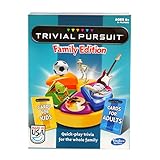
1. Hasbro Gaming Trivial Pursuit Game: Family Edition Board Game, Family Trivia Games for Adults and Kids, 2+ Players, Ages 8+ (Amazon Exclusive)
Overview:
This Amazon-exclusive Family Edition revitalizes the classic Trivial Pursuit format specifically for mixed-age households. Designed for 2+ players aged 8 and up, it features dual-difficulty trivia cards to bridge the knowledge gap between kids and adults, aiming to create inclusive, competitive fun during family game nights.
What Makes It Stand Out:
Its standout feature is the 1,200 curated questions split evenly between kid-friendly yellow cards and adult-oriented blue cards, ensuring engagement across generations. The streamlined board design allows wedge collection on any colored space, significantly shortening gameplay compared to the traditional version—ideal for maintaining children’s attention spans while keeping adults invested.
Value for Money:
Priced competitively for a dedicated family board game, it offers exceptional replayability with its dual-card system and faster pace. While similar trivia games exist, the Hasbro brand reliability, physical board quality, and sheer volume of age-appropriate questions justify the cost, especially against digital alternatives lacking tactile interaction.
Strengths and Weaknesses:
Strengths: Intelligently balanced difficulty levels; quick setup and gameplay (30-45 mins); durable components; fosters healthy competition and learning.
Weaknesses: Some adult questions may still challenge younger kids despite the “family” label; board storage for wedges/cards feels slightly cramped; limited strategic depth compared to the original.
Bottom Line:
An excellent, accessible gateway into trivia for families, effectively minimizing frustration while maximizing fun. Highly recommended for regular game nights where inclusivity and pace are priorities over hardcore trivia depth.
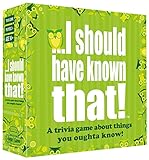
2. I should have known that! - A Trivia Game About Things You Oughta Know, Green
Overview:
Targeting teens and adults (14+), this compact trivia game challenges players with “common knowledge” questions spanning practical facts, cultural touchstones, and everyday wisdom. Packaged in a small 6x6x2 inch box, it emphasizes portability and quick social gameplay for 2+ participants.
What Makes It Stand Out:
The unique hook is its focus on universally expected knowledge—questions like “How do you unclog a sink?” or “What year did [iconic event] happen?"—designed to spark humorous “I should’ve known that!” moments. Its minimalist design (cards only, no board) and ultra-portable size make it ideal for spontaneous play anywhere, distinguishing it from bulkier trivia sets.
Value for Money:
As a niche, conversation-driven party game, its value lies in the quality of its curated questions rather than component quantity. While the card count isn’t specified, the focus on relatable, slightly embarrassing trivia offers strong entertainment-per-dollar for casual gatherings, outperforming generic trivia decks at similar price points.
Strengths and Weaknesses:
Strengths: Brilliantly executed concept for ice-breaking and laughter; incredibly portable; encourages lighthearted humility; quick rounds sustain energy.
Weaknesses: Question depth may feel superficial for trivia enthusiasts; lacks replayability due to finite card pool; no rules for team play limit group scalability.
Bottom Line:
A superb choice for parties or travel where quick, laugh-out-loud interaction trumps deep strategy. Best suited for social settings—skip if seeking comprehensive trivia challenges.
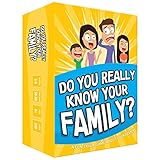
3. Do You Really Know Your Family? A Fun Family Game Filled with Conversation Starters and Challenges - Great for Kids, Teens and Adults
Overview:
This innovative card game shifts focus from factual trivia to personal connection, prompting families to share stories and tackle lighthearted challenges. Geared toward players 8+, it transforms game night into a bonding experience through reflective questions and playful activities rather than knowledge testing.
What Makes It Stand Out:
Unlike traditional trivia, it uses open-ended prompts (“What’s your funniest family memory?”) and silly dares (“Do your best impression of Mom cooking”) to uncover hidden dynamics and create new memories. Its true strength is fostering meaningful conversations while maintaining accessibility for young kids, teens, and grandparents alike.
Value for Money:
Priced as a specialty relationship-builder, it delivers unique value by addressing a common family pain point—superficial interactions. While lacking trivia replayability, its ability to strengthen familial bonds through structured fun justifies the cost, especially compared to generic board games that rarely achieve this depth.
Strengths and Weaknesses:
Strengths: Exceptional for sparking genuine dialogue and laughter; zero preparation needed; inclusive for all ages; builds emotional connection.
Weaknesses: Limited competitive element may disappoint trivia purists; questions can feel repetitive after multiple plays; physical challenges might embarrass shy players.
Bottom Line:
An essential investment for families seeking deeper connections. Highly recommended for game nights prioritizing shared joy and understanding over scoring points.
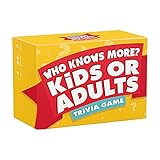
4. Who Knows More? Kids or Adults, The Ultimate Trivia Game for Kids, Teens and Adults - A Fun Family Party Game
Overview:
This game ignites intergenerational rivalry by pitting kids against adults in a straightforward trivia battle. Designed for teams of 2+ players (ages 8+), it uses age-neutral questions across diverse categories like pop culture and science, with the first team to 20 points claiming victory.
What Makes It Stand Out:
The core appeal is the deliberate team split—kids versus adults—creating hilarious role reversals where children often dominate pop culture or tech questions. Its simplicity (no board, just cards) and fast scoring (first to 20 points) ensure high energy and frequent “I knew that!” triumphs, making knowledge feel empowering for younger players.
Value for Money:
As a dedicated rivalry-focused game, it offers strong value through targeted question design that genuinely balances difficulty. Cheaper than multi-game bundles, it excels at its singular purpose: creating memorable generational showdowns without complex rules or components.
Strengths and Weaknesses:
Strengths: Perfectly structured for kid-adult competition; universally relatable categories; rapid gameplay maintains excitement; empowers children intellectually.
Weaknesses: Single-mechanic design lacks depth for frequent replay; team dependency may frustrate solo players; some questions skew heavily toward recent pop culture.
Bottom Line:
An outstanding pick for families wanting playful, confidence-boosting competition. Ideal for game nights where laughter and light-hearted bragging rights matter most.
5. Hasbro Games Trivial Pursuit Mini Packs Multipack, Fun Trivia Questions for Adults and Teens Ages 16+, Includes 4 Game Featuring 4 Decades

Overview:
This compact multipack delivers nostalgia-driven trivia through four decade-specific card decks (80s, 90s, 2000s, 2010s), targeting teens and adults 16+. Designed purely for card play, it eliminates boards for ultimate portability while testing pop-culture recall across four pivotal cultural eras.
What Makes It Stand Out:
The standout feature is its hyper-focused nostalgia: each deck’s 240 questions dive deep into era-specific music, movies, and trends (e.g., “What was the top song in 1999?”). The card-only format enables play anywhere—road trips, bars, picnics—and the “5 cards to win” rule ensures lightning-fast rounds, contrasting with traditional Trivial Pursuit’s marathon sessions.
Value for Money:
Priced as a specialty nostalgia bundle, it offers remarkable value with 960 questions across four distinct themes. Compared to full board games, the portability and thematic depth justify the cost, especially for pop-culture fans who’ll replay decade decks selectively. Beats single-decade alternatives on quantity.
Strengths and Weaknesses:
Strengths: Unmatched decade-specific trivia depth; incredibly portable; quick setup/play; high replayability per era; sparks vivid generational discussions.
Weaknesses: No physical board diminishes classic Trivial Pursuit’s tactile satisfaction; teens may lack context for pre-2000s trivia; limited to pop culture (no geography/science).
Bottom Line:
A must-have for nostalgia lovers and on-the-go trivia fans. Perfect for parties or trips where quick, theme-rich fun trumps traditional gameplay—just ensure your group shares era-specific memories.
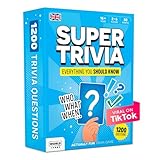
6. Super Trivia Game for Adults with 1200 Questions - Fun Board Game for Adults - Family Road Trip Travel Game for The Pursuit of Trivial Knowledge
Overview:
Super Trivia delivers a robust general knowledge experience with 1,200 thoughtfully curated questions spanning culture, history, science, and geography. Designed for adults and teens (16+), it emphasizes accessibility—questions avoid extremes of difficulty—and packs into a compact, travel-friendly box ideal for road trips or game nights. The inclusion of 200 picture-based questions and estimation challenges (e.g., “Earth to Moon distance?”) sets it apart from standard trivia formats.
What Makes It Stand Out:
Its unique blend of estimation tasks and visual questions creates dynamic, interactive gameplay rarely seen in trivia sets. The travel-sized box and dice-based question selection ensure portability and ease of use, while the 1,200-question count promises significant replay value without overwhelming complexity.
Value for Money:
Priced competitively against similar kits, the sheer volume of content (202 cards) and specialized question types justify the cost. It outperforms cheaper alternatives with shallow question pools, though families with younger children may find the 16+ age limit restrictive.
Strengths and Weaknesses:
Strengths: High replayability; engaging estimation/picture mechanics; exceptionally portable; questions balanced for broad accessibility.
Weaknesses: Age restriction excludes younger teens; no team-play rules; picture questions may frustrate players preferring pure knowledge challenges.
Bottom Line:
An excellent investment for adult-focused trivia nights or travel, offering smartly designed, varied questions. Ideal for players seeking depth without excessive difficulty, though not suited for mixed-age families with children under 16.
7. QUOKKA Trivia Games for Adults with 500 Questions - Fun Adult Board Game Trivia Cards for Teens, and Families – Trivia Cards with Answers – Great Board Games Trivia for Family Party and Game Night

Overview:
QUOKKA Trivia streamlines classic trivia into a compact card-based system with 500 questions across diverse categories. Each card features five questions with immediate answers, supporting flexible playstyles—from one-on-one duels to team challenges—and catering to all knowledge levels. Its minimalist design focuses on quick setup and adaptable social interaction for parties or family gatherings.
What Makes It Stand Out:
The card-centric format eliminates boards or dice, prioritizing speed and versatility. Gameplay modes (timed rounds, card-collecting wins) and the instant-answer layout encourage inclusive, low-pressure fun, making it ideal for casual players or large groups seeking spontaneous engagement.
Value for Money:
While the 500-question count is modest compared to bulkier kits, QUOKKA excels in usability and replay flexibility. It’s a cost-effective choice for frequent, short-duration play sessions, though trivia enthusiasts might crave more content long-term.
Strengths and Weaknesses:
Strengths: Ultra-portable; intuitive answer verification; highly adaptable for groups; sparks lively conversation; accessible for mixed-age families.
Weaknesses: Limited question volume may lead to repetition; lacks thematic depth; no physical components beyond cards reduce tactile engagement.
Bottom Line:
A superb pick for on-the-go trivia or casual game nights where simplicity and social dynamics matter most. Best for players prioritizing ease and adaptability over expansive content, though dedicated trivia fans may outgrow it quickly.
8. The Magical World of Disney Trivia Games – Board Games for Family Night, Multi-Player Board Game, Family Board Game, Travel Games, Disney Toys, Ages 6+

Overview:
This Disney-themed trivia game immerses fans in 1,250 questions covering classics like Steamboat Willie to modern hits like Encanto. Featuring dual-difficulty cards (kids’ cards with character visuals), it enables cooperative play for ages 6+, alongside vibrant components like Mickey-shaped tokens and character pawns (Mickey, Elsa, Stitch).
What Makes It Stand Out:
The seamless integration of Disney’s legacy—through era-spanning questions, thematic tokens, and age-tiered cards—creates unmatched appeal for fans. The kid-friendly visuals ensure younger players aren’t sidelined, turning trivia into a truly inclusive family experience.
Value for Money:
At a mid-range price, it delivers exceptional thematic value with high-quality components rarely matched in generic trivia games. For Disney households, it’s a worthy investment, though non-fans will find it niche and overpriced.
Strengths and Weaknesses:
Strengths: Authentic Disney immersion; perfect age inclusivity; visually engaging components; massive question variety; ideal for gifting.
Weaknesses: Narrow appeal outside Disney fandom; board design limits portability; younger players may rely heavily on visuals.
Bottom Line:
An essential addition to any Disney-loving family’s game shelf, masterfully blending education and nostalgia. Highly recommended for themed game nights, but irrelevant for households without Disney enthusiasts.
9. University Games, Smart Ass Trivia The Ultimate Who, What, Where Party Game , for Families and Adults Ages 12 and Up and 2 to 6 Players

Overview:
Smart Ass revolutionizes trivia with its “shout-first” mechanic: players yell answers as soon as they know them, even mid-clue. Targeted at ages 12+, it uses 411 cards with “Who/What/Where Am I?” questions, rewarding quick thinkers with fast-paced, chaotic fun for 2–6 players.
What Makes It Stand Out:
The permission to interrupt and shout answers creates unmatched energy, transforming trivia into a lively, pressure-cooker experience. New content in this edition refreshes the classic formula, emphasizing speed over turn-taking for maximum engagement.
Value for Money:
With 411 cards (1,233 clues), it offers strong replayability at a fair price. The physical components (jumbo dice, character pawns) enhance durability, though the niche shouting mechanic may not suit all groups.
Strengths and Weaknesses:
Strengths: Electrifying gameplay; inclusive for varied knowledge levels; encourages rapid recall; excellent for parties; high-quality components.
Weaknesses: Shouting may overwhelm quiet players; limited strategic depth; younger teens might struggle with question difficulty.
Bottom Line:
A must-try for lively social gatherings where laughter and speed trump decorum. Perfect for extroverted groups seeking adrenaline-fueled fun, but avoid if your household prefers structured, polite gameplay.
10. 21st Century Trivia Game - Party Game - Family Game - Travel Game - Fun and Easy to Play - 1200 Trivia Questions - for 2 or More Players - Ages 12+

Overview:
Focusing exclusively on post-2000 pop culture, this game tests knowledge of modern headlines, tech, sports, and entertainment via 1,200 questions. Designed for ages 12+, it bridges generational gaps with accessible rules and a pocket-sized format, making it ideal for travel or family game nights.
What Makes It Stand Out:
Its contemporary focus—covering trends Gen Z knows instinctively but older players may find challenging—creates unique intergenerational dynamics. The compact box (fits in a purse) and four-category-per-card structure prioritize convenience without sacrificing content depth.
Value for Money:
Competitively priced, the 1,200 questions deliver exceptional volume for modern trivia. It outshines broader games for recent-history relevance, though history buffs might miss pre-2000 context.
Strengths and Weaknesses:
Strengths: Highly relevant modern content; superb portability; easy rules for all ages; fosters family bonding; minimal setup.
Weaknesses: Narrow historical scope; teens may dominate questions; no team-play variants.
Bottom Line:
The definitive choice for families wanting trivia that resonates with today’s world. A stellar travel companion and conversation starter, though supplement with broader games for historical depth.
Understanding Your Family’s Trivia Needs
Assessing Age Ranges and Developmental Stages
Consider the youngest and oldest players regularly involved. Games for early elementary kids need vastly different question complexity and mechanics than those engaging teenagers or adults. Look for titles offering multiple difficulty tiers or adjustable rules to accommodate different reading levels and knowledge bases within one session. Avoid games relying heavily on abstract reasoning for young children or overly juvenile themes that might alienate older participants.
Evaluating Group Size and Dynamics
Think about your typical game night crew. Does your family often host cousins or neighbors, swelling the group to eight or more? Some trivia formats shine with large teams, while others become unwieldy. Conversely, intimate family units of three or four need games designed for smaller numbers to maintain engagement. Consider competitive versus cooperative styles – highly competitive families might enjoy head-to-head challenges, while others benefit from collaborative formats that reduce friction.
Identifying Core Interests and Knowledge Gaps
What topics genuinely spark excitement around your dinner table? Passion for space exploration, a love of classic cartoons, or budding interest in world geography can guide your selection. Choosing themes aligned with existing family interests lowers the barrier to entry and boosts enthusiasm. Also, consider if you want to gently fill knowledge gaps – perhaps introducing historical events or scientific concepts in an accessible way – without making it feel like homework.
Key Gameplay Mechanics to Prioritize
Question Format Variety is Crucial
Monotonous multiple-choice rounds can lose steam quickly. Seek games incorporating diverse question types: picture identification, audio clips, fill-in-the-blank, true/false with explanations, or even physical challenges related to the theme. This variety caters to different learning styles (visual, auditory, kinesthetic) and keeps the pace dynamic, preventing any single player from dominating solely based on one strength.
Scoring Systems That Foster Fun, Not Frustration
Complex point calculations or systems where early leads become insurmountable can dampen spirits, especially for younger players. Prioritize games with simple, transparent scoring that allows for comebacks. Bonus systems for creative answers or team collaboration often work better than pure speed-based scoring for family harmony. The goal is sustained engagement, not mathematical precision.
Turn Structure and Pacing Control
Games requiring players to wait through long individual turns often lead to disengagement, particularly for kids with shorter attention spans. Look for mechanics ensuring frequent participation – simultaneous answering, team huddles, or rotating roles. Adjustable timers are a huge plus; being able to extend thinking time for younger players or speed up rounds with seasoned trivia buffs makes the game infinitely more flexible for mixed-age groups.
Replayability Through Design
Avoid games where memorizing answers after one play ruins the experience. Prioritize titles with massive question banks, modular components (like interchangeable category cards), or systems generating unique questions each time. Games encouraging player-created questions or incorporating house rules also significantly extend their lifespan beyond the initial novelty.
Educational Value Beyond Just Facts
Integrating Learning Seamlessly
The best family trivia games make knowledge acquisition feel incidental to the fun. Look for titles that provide concise, interesting explanations with answers – turning a simple correct/incorrect moment into a mini-lesson. Games focusing on critical thinking (e.g., “What year did this happen?” prompting logical deduction from other historical events) offer deeper cognitive benefits than pure rote memorization.
Encouraging Research and Curiosity
Some games cleverly incentivize looking up answers players don’t know, transforming the game into a springboard for further exploration. This could be built into the rules (earning bonus points for verified researched answers later) or simply inspire natural post-game “Googling.” Fostering this intrinsic curiosity is a priceless long-term benefit.
Building Soft Skills Through Play
Truly effective trivia nights develop more than just factual knowledge. They naturally cultivate active listening as players hear teammates’ reasoning, encourage respectful debate when answers are contested, and build communication skills through team strategy discussions. Observing how your family navigates disagreements over answers provides valuable, low-stakes lessons in diplomacy and evidence-based argument.
Accessibility and Inclusivity Considerations
Accommodating Different Learning Styles
Ensure the game offers multiple pathways to engage. Visual learners benefit from picture rounds, auditory learners from sound bites, and kinesthetic learners from any physical elements (like drawing or acting clues, if applicable). Avoid games relying solely on rapid reading of dense text if dyslexia or varying reading speeds are factors in your family.
Navigating Physical and Cognitive Needs
Consider players with mobility challenges – does the game require frantic buzzer pressing or moving around the table? Look for alternatives using quieter response methods. For players with attention differences, shorter rounds, clear visual cues, and the ability to pause for breaks are essential features. The game should adapt to the players, not vice versa.
Creating a Welcoming Atmosphere for All Knowledge Levels
The game shouldn’t penalize curiosity or reward only encyclopedic recall. Features like “lifelines” (ask a teammate, skip a question), difficulty sliders per round, or categories spanning pop culture to science help ensure novices don’t feel overwhelmed while experts stay challenged. The vibe should celebrate “I learned something new!” moments equally with correct answers.
Practical Logistics for Family Game Nights
Time Commitment Realities
Be brutally honest about your family’s available attention spans. Games promising “30-minute fun” that actually take 90 minutes due to complex setup or scoring cause frustration. Prioritize titles with clear, realistic playtime estimates matching your typical window – often 20-45 minutes for families with younger children. Quick setup and tear-down are non-negotiable for frequent play.
Component Durability and Storage
Family games face rough handling! Prioritize sturdy boxes, thick cardstock cards, and well-made components that survive drops, spills, and eager little hands. Consider storage – games with neatly contained pieces (no tiny tokens lost under the couch) and organized compartments get played more often. Magnetic boards or app integration can sometimes solve storage woes but add tech dependency.
Cost vs. Long-Term Value Assessment
While budget matters, view trivia games as long-term family investments. A slightly more expensive game offering years of adaptable play through expansions, app updates, or inherent replayability often provides better value per play than a cheap game abandoned after three sessions. Factor in potential expansion packs when evaluating initial cost.
Mastering the Family Game Night Experience
Setting the Stage for Success
Don’t underestimate the power of ambiance. Dim harsh lights, clear a comfortable space, and maybe even have themed snacks. Frame the night positively: “We’re playing to have fun together and learn cool stuff,” not “We’re testing who knows the most.” Manage expectations upfront about rules and the spirit of play.
Facilitating Fair and Fun Play
An engaged adult often needs to act as a neutral moderator, especially with mixed ages. This means gently enforcing turn-taking, ensuring quieter voices are heard, interpreting rules consistently, and diffusing heated moments with humor. Your role is referee and cheerleader, not another competitor (unless the game mechanics specifically allow it fairly).
Adapting Rules Creatively
Don’t be a slave to the rulebook! If a rule consistently causes arguments or excludes someone, tweak it. Allow younger players extra time, implement team huddles for every question, or create a “family lifeline” where the whole group can collaborate on one tough question per round. The printed rules are a starting point, not gospel.
Frequently Asked Questions
How do I keep younger children engaged when trivia questions are too hard for them?
Focus on games with dedicated junior cards or adjustable difficulty. Actively involve them as team “researchers” (holding hint cards), encourage wild-but-plausible guesses, and celebrate their participation equally with correct answers. Shorten rounds specifically for them.
What’s the best way to handle overly competitive family members?
Choose cooperative or team-based games first. Establish clear “spirit of the game” expectations upfront. Use scoring systems with built-in catch-up mechanics. The moderator should gently redirect focus to fun and learning: “Great try! What cool thing did we learn from that question?”
Can trivia games really be educational without feeling like school?
Absolutely. The key is seamless integration. Games providing fascinating “did you know?” facts with answers, sparking post-game discussions or research, or using themes that naturally connect to real-world interests make learning organic and exciting, not forced.
How important is physical setup and component quality?
Critically important for longevity and frequency of play. Flimsy cards tear, tiny pieces get lost, and confusing layouts lead to frustration. Invest in games with durable, well-organized components – it directly impacts how often the box gets opened.
Are app-connected trivia games worth considering for families?
They can offer massive question libraries and auto-scoring, but weigh the cons: screen dependency, potential glitches, needing compatible devices, and less tangible interaction. They work best as supplements if your family is already tech-comfortable and values the convenience over pure analog play.
What trivia categories work best for truly mixed-age groups?
Look for games blending universal themes: basic science (weather, animals), geography (countries, landmarks), everyday life (food, transportation), and accessible pop culture (classic cartoons, famous songs). Avoid overly niche topics or very recent trends that exclude generations.
How can I extend the life of a trivia game we’ve played several times?
Implement house rules: reverse scoring (lowest score wins!), focus only on “picture rounds” for a session, have players create their own questions, or combine categories from different games you own. The goal is shifting the gameplay experience.
My family gets frustrated with obscure questions. How can we avoid this?
Prioritize games known for balanced difficulty and relevant topics. Agree beforehand on a “pass” rule or use the “50/50” lifeline if available. Remember, the goal is shared enjoyment – if a question consistently causes groans, skip it and move on; don’t let one question derail the night.
Is there an ideal number of players for most family trivia games?
Most shine with 4-6 players, often best in teams. For very small families (2-3), seek games specifically designed for 2 players or embrace the team format internally. For large groups (7+), cooperative games or those with team buzzers work best to maintain energy.
How do I introduce trivia to family members who think it’s “boring”?
Start with highly visual or physical trivia formats (like picture-heavy games or those involving drawing/acting clues). Keep the first session very short (15 mins), focus on hilarious wrong answers, and choose a theme you know they love. Show, don’t tell, how fun it can be.
See Also
- The 10 Ultimate Best Trivia Games for Family Quiz Nights in 2026
- The Ultimate Guide to Family Board Games in 2026: Best Picks for All Ages
- 10 Game-Changing Trivia Games for Family Game Nights in 2026
- Top 10 Best Trivia Games for Family Game Night in 2026
- How to Choose the 10 Best Family Board Games for Your Kids’ Ages in 2026