Table of Contents
Watching your six-year-old lean over the table, eyes wide with concentration as they carefully place their next piece, is pure magic. This age marks a sweet spot where children are bursting with imagination yet finally ready to grasp simple rules and take turns meaningfully. Finding the right board game isn’t just about passing time; it’s about unlocking shared laughter, building crucial early skills, and creating those warm, connected family moments that stick long after the pieces are put away. The challenge? Navigating a sea of options to find games that genuinely engage a six-year-old’s short attention span while keeping older siblings or adults from checking their phones.
Forget the frustration of games that are either too babyish or impossibly complex. The perfect family board game for this age acts as a bridge – simple enough for a first-grader to feel confident, but layered with enough charm and gentle challenge to hold everyone’s interest. It’s less about finding the “coolest” game and more about understanding what truly clicks developmentally right now. Think cooperative adventures instead of cutthroat competition, vibrant visuals that tell a story, and components sturdy enough to survive enthusiastic play. When you get it right, the result is pure family gold: giggles echoing through the house, proud declarations of “I did it!”, and the quiet satisfaction of everyone being genuinely present together.
Top 10 Family Board Games for 6-Year-Olds
Detailed Product Reviews
1. Hasbro Gaming Trouble Board Game for Kids Ages 5 and Up 2-4 Players

Overview:
This classic board game reintroduces the nostalgic Pop-o-Matic bubble mechanic to a new generation. Designed for 2-4 players aged 5+, it centers on racing game pieces around a board, with the first to finish winning. Setup is near-instant, making it ideal for quick family sessions.
What Makes It Stand Out:
The iconic Pop-o-Matic die roller is the star—kids adore pressing the bubble to roll, eliminating lost dice and adding tactile fun. Power Up Spaces offer optional strategic depth, letting families customize gameplay from simple racing to a more challenging experience without complicating rules.
Value for Money:
Priced competitively for a durable, mass-market game, it outshines digital alternatives by fostering face-to-face interaction. While simpler than modern strategy games, its replayability and universal appeal justify the cost for families seeking low-hassle, screen-free entertainment.
Strengths and Weaknesses:
Strengths: Effortless setup/learning; engaging physical die mechanic; adaptable difficulty; promotes turn-taking. Weaknesses: Heavy reliance on luck; limited strategy may bore older kids; board art feels dated compared to newer titles.
Bottom Line:
A reliable, joyful entry point for young gamers that delivers exactly what it promises: quick, laughter-filled races. Highly recommended for preschoolers and early elementary families prioritizing simplicity and nostalgia.
2. Spin Master Games, Hedbanz 2023 Edition with New Cards, Picture Guessing Board Game, for Family & Kids, 2-6 Players, for Ages 6 & Up

Overview:
This refreshed edition of the beloved guessing game challenges players to identify the card on their forehead using only yes/no questions. Updated with six new animal-themed headbands (dino, robot, etc.), it accommodates 2-6 players aged 6+ and thrives on rapid-fire interaction.
What Makes It Stand Out:
The 2023 edition’s fresh illustrations and quirky new characters (narwhal, brain) revitalize the core concept. Its brilliance lies in simplicity—no boards or dice—just pure deduction and hilarious miscommunication that sparks nonstop laughter across ages.
Value for Money:
Excellent for group play, the compact box offers immense replayability at a mid-range price. New cards extend longevity over older versions, and its versatility (travel, parties, classrooms) makes it a smarter investment than single-use party games.
Strengths and Weaknesses:
Strengths: Instant fun with minimal rules; highly inclusive for mixed ages; new artwork enhances engagement; portable. Weaknesses: Questioning can become repetitive; adults may find depth lacking after multiple plays; card durability concerns with heavy use.
Bottom Line:
A near-perfect party and family staple that’s both accessible and endlessly entertaining. The 2023 updates solidify its must-have status for game nights—buy it for quick, laughter-packed connection.
3. Sorry! Board Game for Kids Ages 6 and Up; Classic Hasbro Board Game; Each Player Gets 4 Pawns; Family Game
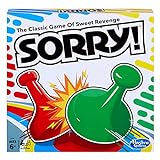
Overview:
Reviving the timeless “sweet revenge” theme, this edition tasks players with racing four pawns home while sabotaging opponents. For 2-4 players aged 6+, it blends luck and light strategy through card draws that enable sliding, collisions, and dramatic comebacks.
What Makes It Stand Out:
The cathartic thrill of sending rivals’ pawns backward defines its appeal. Unlike roll-and-move clones, Sorry! injects high drama through card-driven actions—sliding into safety or stealing spaces—creating unforgettable “gotcha!” moments that keep kids glued.
Value for Money:
As a heritage game, it’s priced affordably for its durability and intergenerational charm. While newer games offer deeper strategy, Sorry!’s emotional highs and simplicity provide unmatched value for families prioritizing spirited, accessible competition.
Strengths and Weaknesses:
Strengths: High replayability with intense player interaction; easy to grasp; nostalgic for adults; robust components. Weaknesses: Luck-heavy outcomes can frustrate strategic thinkers; setup takes slightly longer than minimalist games; younger kids may struggle with card rules.
Bottom Line:
A cornerstone of family game nights that delivers chaos, laughter, and shared memories. Ideal for teaching sportsmanship—highly recommended despite its reliance on chance.
4. Hasbro Gaming Scrabble Junior Board Game | 2-4 Players | Family Educational Word Games for Kids | Back to School Gifts for Classroom | Ages 5+
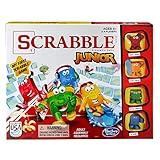
Overview:
Tailored for early learners (ages 5+), this two-sided game simplifies Scrabble by starting with letter-matching on pre-set words, progressing to independent word creation. Its colorful character tokens and dual-difficulty design make spelling approachable for preschoolers.
What Makes It Stand Out:
The seamless transition from matching to free-form word building is genius—kids grow with the game. Adorable animal scorekeepers replace abstract tiles, turning scoring into engaging storytelling that masks the educational intent.
Value for Money:
A strong classroom or gift investment, it bridges play and literacy development better than flashcards. Though pricier than basic puzzles, its adaptability (ages 5-8) and reusability justify cost for parents/teachers focused on foundational skills.
Strengths and Weaknesses:
Strengths: Clever scaffolding for skill progression; visually appealing for young kids; promotes letter recognition and vocabulary; durable tokens. Weaknesses: Advanced side lacks depth for older children; limited replay once words are mastered; no digital component for modern learners.
Bottom Line:
An outstanding primer for budding readers that makes spelling practice feel like play. Best for ages 5-7—skip if kids already build 3+ letter words confidently.
5. Yeti in My Spaghetti Board Game – Kids Games, Family Game, Multi-Player, Board Games for Family Night, Preschool Toys, Hand-Eye-Coordination Game, Don’t Drop Yeti, Ages 4+

Overview:
This suspenseful dexterity game has players carefully pluck plastic noodles from a bowl while balancing a grinning Yeti on top. For 2+ players aged 4+, the goal is simple: avoid collapsing the pile. Setup takes seconds, and rounds last under 5 minutes.
What Makes It Stand Out:
The brilliant tension of “will it fall?” creates universal giggles. Unlike passive games, it demands focused motor control, turning quiet concentration into explosive group reactions when the Yeti inevitably tumbles—perfect for energetic kids.
Value for Money:
An exceptional buy for developmental play. Its sturdy, travel-sized components outlast flimsier toys, and the blend of skill-building (hand-eye coordination, patience) with pure fun offers more bang for buck than screen-based alternatives.
Strengths and Weaknesses:
Strengths: Instant engagement for all ages; stealthily develops fine motor skills; ultra-portable; minimal rules. Weaknesses: Short play sessions may frustrate seekers of longer games; Yeti’s stability can feel inconsistent; limited strategic depth.
Bottom Line:
A must-have preschooler game that transforms focus into hilarity. Ideal for classrooms, travel, or quick family breaks—unreservedly recommended for fostering calm concentration through playful chaos.
6. Number Hunter Math Board Game – Addition & Subtraction Adventure for Kids Ages 4-8 – Fun Educational STEM Game for Kindergarten, 1st-3rd Grade, Homeschool & Family Game Night

Overview:
Number Hunter transforms foundational math practice into an engaging board game adventure for children ages 4-8. Designed for kindergarten through 3rd grade, it replaces traditional worksheets with hands-on gameplay focused on addition, subtraction, and number recognition during family game nights or classroom activities.
What Makes It Stand Out:
Its seamless blend of curriculum-aligned math challenges and adventure-themed racing mechanics sets it apart. The dice-rolling problem-solving format actively builds confidence without screen time, while durable, non-toxic components ensure safety and longevity. The inclusion of homeschool-friendly rules makes it versatile across learning environments.
Value for Money:
Priced competitively against single-concept learning tools, it offers exceptional value by covering multiple grade levels and math skills in one set. It eliminates the need for repetitive worksheets, providing sustained educational engagement that justifies its cost compared to flashcards or basic apps.
Strengths and Weaknesses:
Strengths: Effectively disguises learning as play; intuitive rules for young kids; high-quality, safe materials; ideal for social skill development. Weaknesses: Limited challenge for advanced 3rd graders; game duration may test shorter attention spans; minimal replay variety after mastering core math.
Bottom Line:
Highly recommended for parents and teachers seeking a screen-free, joyful way to build early math fluency. Its educational depth and durability make it a worthwhile investment for foundational skill development in children aged 4-8.
7. Hasbro Gaming Connect 4 Classic Grid,4 in a Row Game,Strategy Board Games for Kids,2 Player .for Family and Kids,Ages 6 and Up
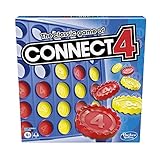
Overview:
This refreshed Connect 4 Classic Grid modernizes the iconic strategy game for contemporary families. Targeted at ages 6+, it challenges two players to strategically drop colored discs into a vertical grid, aiming to align four in a row while blocking opponents—a perfect blend of simplicity and tactical thinking.
What Makes It Stand Out:
The standout feature is its three distinct gameplay modes: traditional 4-in-a-row, high-speed Connect 4 Frenzy, and the strategic Pop-Out variant. Combined with sleek, vibrant design and durable construction, it elevates the classic experience with fresh competitive layers while maintaining universal accessibility.
Value for Money:
As an affordable staple in the board game market, it delivers remarkable longevity through replayability and multi-mode options. It surpasses cheaper knockoffs in material quality and outperforms single-mode games by offering evolving challenges, making it a budget-friendly family essential.
Strengths and Weaknesses:
Strengths: Instant setup; rules easy for young children; compact storage; Pop-Out mode adds strategic depth; visually appealing modern grid. Weaknesses: Primarily two-player only; disc storage can be fiddly; Pop-Out feature occasionally jams; limited appeal for solo play.
Bottom Line:
An essential, well-executed update to a timeless classic. Its strategic versatility and robust build ensure hours of screen-free fun, making it a top pick for families seeking affordable, engaging two-player competition.
8. Regal Games Card Games for Kids - Go Fish, Crazy 8’s, Old Maid, Slap Jack, Garbage Monster, War - Simple & Fun Classic Family Table Games - Games May Vary (6 Set)

Overview:
This versatile 6-deck set delivers six beloved card games—Go Fish, Crazy 8s, Old Maid, Slap Jack, War, and Silly Monster Memory—in one portable package. Designed for 2-6 players aged 4+, it offers accessible, screen-free entertainment for travel, classrooms, or family gatherings.
What Makes It Stand Out:
The inclusion of extra-large, child-friendly cards with bright, clear imagery is revolutionary for small hands and developing eyes. Each deck subtly reinforces cognitive skills like color/number recognition and memory, transforming classic play into stealthy educational tool without sacrificing fun.
Value for Money:
Priced like a single standard card deck, it provides exceptional variety—replacing six separate purchases. The durability of the oversized cards and broad age appeal (4+) ensure years of use, far exceeding the value of flimsy alternatives or digital games requiring devices.
Strengths and Weaknesses:
Strengths: Cards easy for kids to handle; diverse skill-building games; ultra-portable; vibrant, non-distracting art; ideal for mixed-age groups. Weaknesses: “Garbage Monster” rules may confuse beginners; minimal strategy depth in some games; card stock, while sturdy, isn’t waterproof.
Bottom Line:
A must-have for families prioritizing portable, educational play. Its thoughtful design and multi-game versatility offer unbeatable value for fostering social interaction and foundational skills in young children.
9. Hasbro Gaming Don’t Step in It! Preschool Game I Blindfolded, Poop Party Game | Spinner with 8 Fun Animal Moves | Ages 4+| 1+ Players I Funny Kids Board Games

Overview:
Don’t Step in It! is a hilariously chaotic preschool game where blindfolded players waddle, stomp, or tiptoe across a floor mat littered with squishy “poop piles.” Designed for ages 4+, it encourages physical play and sensory engagement with a delightfully silly premise.
What Makes It Stand Out:
The game’s genius lies in its tactile, active gameplay: molding soft clay “poop” with included molds, then navigating the mat using animal-themed spinner challenges (e.g., penguin waddle). This multi-sensory approach—combining crafting, movement, and laughter—creates unforgettable, giggly moments rare in board games.
Value for Money:
While niche, it justifies its price through high engagement and reusability of the clay compound and durable mat. Compared to passive screen time or single-use party favors, it delivers unique physical comedy value that captivates kids (and adults!) repeatedly.
Strengths and Weaknesses:
Strengths: Unmatched laughter potential; develops balance and imaginative play; easy setup; clay is non-toxic and moldable; inclusive for 1+ players. Weaknesses: “Poop” theme may not suit all families; clay requires storage to prevent drying; mat cleaning can be tedious after heavy use.
Bottom Line:
Highly recommended for parents embracing messy, active play. If the theme aligns with your child’s humor, it’s a riotous investment in physical activity and family bonding that outshines quieter alternatives.
10. Mattel KerPlunk Kids Game, Easy-to-Learn Family Game for 2 to 4 Players, Don’t Let The Marbles Fall

Overview:
KerPlunk revives the nostalgic 1960s marble-dropping challenge with a modern translucent tube design. Players carefully extract sticks from a suspended lattice, racing to avoid causing marbles to plummet—a tension-filled game for 2-4 players aged 5+ that blends luck and dexterity.
What Makes It Stand Out:
The game’s enduring appeal stems from its nerve-wracking simplicity: the visual drama of marbles teetering mid-air creates universal excitement. The updated see-through tube enhances suspense, while quick rounds (under 10 minutes) cater perfectly to short attention spans without complex rules.
Value for Money:
As a timeless, durable game, it offers decades of replayability at a modest price point. It outperforms digital distractions by fostering in-person interaction and provides more sustained engagement than cheaper plastic mini-games, making it a smart heirloom-quality purchase.
Strengths and Weaknesses:
Strengths: Effortless to learn; thrilling suspense; compact storage; encourages patience and fine motor skills; cross-generational appeal. Weaknesses: Limited player count (max 4); marbles can scatter if tube tips; minimal strategic depth; stick removal may frustrate very young children.
Bottom Line:
A brilliantly simple classic that deserves a spot in every family game closet. Its tactile tension and quick gameplay make it an enduring, budget-friendly choice for fostering focused fun in young children.
Understanding the Six-Year-Old Gamer
At six years old, children are rapidly developing cognitively and socially, but their world is still very concrete and play-based. Grasping the specific developmental stage is paramount for choosing games that resonate and avoid frustration. Their attention spans, while improving, are still relatively short – typically 10-15 minutes per activity, though highly engaging games can stretch this. Abstract thinking is limited; they thrive on tangible actions, clear cause-and-effect, and themes they recognize from daily life or stories. Emotionally, they are learning to manage big feelings, especially around winning and losing, making the game environment crucial.
Cognitive Development and Game Mechanics
Six-year-olds are mastering basic counting, color and shape recognition, and simple pattern matching. Games leveraging these foundational skills feel achievable and build confidence. They are beginning to understand sequential steps (like taking turns) but struggle with complex multi-step rules or strategies requiring long-term planning. Mechanics should be immediate: roll, move, do something visible. Abstract concepts like resource management or hidden information are usually too advanced. Focus on games where the action is direct and the outcome is instantly understandable – placing a tile to complete a picture, matching symbols, or moving a piece along a clear path. Memory games with a small number of pairs are often ideal.
Social and Emotional Considerations
This age is a critical time for learning social rules like taking turns, sharing, and handling disappointment. Competitive games can quickly escalate into tears if not carefully chosen. Cooperative play, where players work together against the game itself, is often a golden standard. It removes the sting of losing to a sibling and fosters teamwork and shared problem-solving. Games should minimize direct player elimination – being “out” for too long is devastating. Clear, positive reinforcement within the game mechanics (earning a token, helping a character) is more motivating than purely avoiding penalties. The game should feel like a shared adventure, not a battleground.
Attention Span and Pacing
Respecting the limited attention span is non-negotiable. Games with lengthy setup, complex initial explanations, or turns that drag on while others wait are likely to fail. Look for games that get started quickly (under 2 minutes setup) and have turns that are snappy – ideally 15-30 seconds per turn. Visual timers or sand timers within the game can help manage expectations. Games with variable length (ending when a clear, visible goal is met) are often better than those with fixed, long playtimes. The physical components themselves should be engaging enough to hold interest – chunky pieces, interesting textures, or bright colors can make the difference between engagement and distraction.
Essential Features for Family Success
Not all board games are created equal when it comes to captivating a six-year-old and keeping the whole family involved. Certain features consistently elevate the experience from a chore to a cherished ritual. Prioritizing these elements ensures the game becomes a welcome addition to your family game shelf, not just another box gathering dust in the closet. It’s about creating an environment where everyone, regardless of age, feels capable and excited to participate.
Simplicity of Rules (Without Simplicity of Fun)
The rulebook should be concise – ideally explainable in under 2 minutes. Complex rulebooks are a family game’s kryptonite at this age. However, simplicity of rules does not mean the game itself is boring. The magic lies in simple mechanics that create emergent fun and replayability. Think dice rolling that leads to exciting, unpredictable outcomes, or card draws that spark imagination. The core action loop (roll/move/resolve) should be intuitive. Avoid games requiring constant reference to rule sheets or complex scoring. The fun should come from the interaction and the theme, not from mastering intricate systems.
Engaging and Age-Appropriate Theme
The theme isn’t just decoration; it’s the engine of engagement for a young child. Six-year-olds connect deeply with familiar, positive, and often whimsical concepts: friendly animals, colorful adventures, helping characters, simple quests (find the treasure, build the bridge, rescue the friend). Themes involving scary monsters, intense conflict, or overly mature concepts are generally best avoided. The theme should be visually supported by the artwork and components, making the abstract rules feel concrete and exciting. A game about matching fruits is fine, but a game about delivering delicious pies to hungry, smiling animals is infinitely more compelling.
High-Quality, Durable Components
Little hands are not gentle. Flimsy cards, tiny pieces, or thin cardboard boards won’t survive repeated play. Prioritize games with:
- Chunky, easy-to-grasp pieces: Perfect for small motor skills still developing.
- Thick, laminated cards: Resistant to bending, spills, and enthusiastic shuffling.
- Sturdy game boards: That won’t easily crease or tear.
- Non-toxic finishes: Always a safety priority. Durability isn’t just about longevity; it’s about the sensory experience. Pieces that feel good to hold and manipulate add to the enjoyment and reduce frustration during play. Well-made components signal that the game is worth caring for and respecting.
Maximizing Engagement for All Ages
The true test of a family game is whether it holds the interest of both the six-year-old and the adults or older siblings playing along. Games that only appeal to the youngest quickly become a chore for others, undermining the family bonding goal. Success lies in designing experiences where everyone has a meaningful role and finds their own level of enjoyment within the shared activity.
Cooperative Play: The Great Equalizer
As mentioned earlier, cooperative games are often the secret sauce for multi-generational fun. When the family works together towards a common goal – escaping a friendly dragon, building a rainbow bridge, collecting all the magical gems – the dynamic shifts positively. There’s no “you beat me” resentment. Instead, there’s shared strategy (“What should we do next?”), collective celebration (“We did it!”), and natural support (“Let me help you figure out your turn”). This structure allows adults to subtly guide younger players without dominating, and older kids can feel helpful. The tension comes from the game’s challenge, not interpersonal competition, making losses (if the game is lost) easier to accept as a team.
Meaningful Roles and Player Agency
Even within cooperative games, or in light competitive ones, ensuring each player feels like they contribute is vital. Avoid games where one player (often the adult) makes all the decisions. Look for mechanics that give every participant, including the youngest, a clear, active choice on their turn. This could be as simple as choosing which path to take, which card to play from a small hand, or where to place a piece. The choice doesn’t need to be strategically deep for a six-year-old; it just needs to feel like their decision that matters to the group’s progress. This fosters confidence and keeps them invested.
Visual Appeal and Tactile Interaction
Six-year-olds are highly visual and kinesthetic learners. Games that engage multiple senses win. Vibrant, clear, and appealing artwork on the board, cards, and pieces draws them in immediately. But beyond sight, the feel of playing matters immensely. Games incorporating physical dexterity (carefully stacking pieces, flicking a disc), manipulating unique components (scoop-and-serves, magnetic fishing), or even simple movement (standing up to act out a card) break the monotony of just moving a token. This tactile element keeps energetic kids focused and makes the experience more dynamic and memorable for everyone.
Practical Buying Guide and Implementation Tips
Choosing the right game is half the battle; setting the stage for success ensures those game nights become beloved traditions, not sources of stress. Smart purchasing decisions and thoughtful setup can transform a potentially chaotic session into smooth, joyful family time. It’s about anticipating the realities of playing with young children and structuring the experience for maximum fun and minimum meltdown.
Assessing Your Family’s Specific Needs
Before browsing shelves or websites, take a quick family inventory:
- Typical Group Size: Do you usually play with just parent and child, or include older siblings (and how much older)? Games scale differently.
- Space Constraints: Do you have a dedicated game table, or do you play on the floor or a small kitchen table? Consider board size and component sprawl.
- Storage: Where will it live? Compact games or those with excellent organizers are a plus for busy households.
- Current Interests: What themes is your child obsessed with right now (dinosaurs, space, princesses, construction)? Leaning into current passions boosts initial buy-in.
- Tolerance for Chaos: How loud/active is your playstyle? Some games thrive on energetic interaction, others require quiet focus.
Reading Beyond the Age Range on the Box
While the “Ages 6+” label is a starting point, it can be misleading. Manufacturers sometimes inflate age ranges. Here’s how to dig deeper:
- Look for Playtime: Under 15 minutes is ideal for true six-year-old engagement. Over 30 minutes often signals potential trouble unless it’s highly dynamic.
- Analyze the Core Mechanic: Is it roll-and-move? Memory? Simple set collection? Cooperative tile placement? Does that mechanic align with your child’s current abilities (see earlier sections)?
- Check Component Descriptions: Mentions of “chunky pawns,” “thick cards,” or “large tiles” are good signs. References to complex scoring or small tokens are red flags.
- Seek Out Real Parent Reviews: Filter reviews for mentions of actual six-year-olds. Look for comments on setup time, rule explanation ease, and attention span during play.
Setting the Stage for Success
Even the best game can flop with poor execution. Maximize your chances:
- First Play is Crucial: Play with just the youngest and one adult first, away from pressure. Keep it short and positive. Let them win the first few times if it helps build confidence.
- Simplify Ruthlessly: Don’t feel bound by every rule. Skip advanced rules or scoring initially. Focus on the core action. Add complexity only when the basics are mastered and desired.
- Embrace the Chaos (Gently): Expect rules to be bent, pieces to be knocked over, and imaginative interpretations. Correct only major deviations that break the game; otherwise, roll with the fun. “Oh, you want the dragon to breathe glitter? Okay, that’s even better!”
- Keep it Positive: Focus on effort and participation, not just winning. Celebrate small successes. If frustration mounts, stop gracefully. “Wow, we built half the castle! Let’s finish saving the princess tomorrow!”
Building Lifelong Family Traditions
The impact of regular, joyful family game time extends far beyond the living room floor. It’s a powerful, low-key tool for nurturing essential life skills and strengthening the family fabric in ways few other activities can match. When chosen and played thoughtfully, these simple board games become more than entertainment; they become foundational experiences that shape how your child interacts with the world and the people in it.
Fostering Critical Developmental Skills
Every roll of the dice, every turn taken, and every cooperative decision is subtly building crucial abilities:
- Executive Function: Taking turns, waiting, remembering rules, and planning the next move all exercise working memory, self-control, and flexible thinking.
- Social-Emotional Learning: Navigating wins and losses (even small ones), cooperating, communicating ideas, and managing frustration in a safe, structured environment are invaluable lessons.
- Foundational Academics: Counting spaces, recognizing patterns, matching colors/shapes, understanding spatial relationships, and following sequences all reinforce early math and logic concepts naturally.
- Language and Communication: Explaining turns, discussing strategies (even simple ones), and engaging with the game’s theme expand vocabulary and conversational skills.
Creating Connection in a Digital World
In an era saturated with screens demanding individual attention, family board games offer a rare, screen-free space for genuine connection. There are no notifications, no algorithms, just faces around a table, sharing a common goal and immediate feedback. This undivided attention builds trust and security. The laughter, the shared groans at a bad dice roll, the whispered planning – these micro-moments forge strong emotional bonds. It teaches children that connection happens through presence and interaction, not just passive consumption. These positive associations with family time become ingrained, fostering a sense of belonging that lasts.
Planting Seeds for Future Game Lovers
Positive early experiences with board games lay the groundwork for a lifelong appreciation of analog play. When games are associated with warmth, connection, and fun (not frustration or boredom), children are far more likely to seek them out as they grow older. They develop an understanding of rules, strategy, and social dynamics in a playful context, making the transition to more complex games smoother. More importantly, they internalize the value of shared, interactive leisure – a counterbalance to the isolating nature of much modern entertainment. You’re not just playing a game tonight; you’re potentially nurturing a hobby that will bring joy and connection for decades to come.
Frequently Asked Questions
How short should a game really be for a six-year-old to stay interested?
Aim for games with a potential playtime of 10-20 minutes. The key is snappy turns (15-30 seconds each) and a clear, visible end condition. If turns drag or setup is long, even a “15-minute” game can feel endless. Watch your child’s focus – if they start fidgeting after 10 minutes, the game might be too slow-paced, regardless of the box claim.
Are cooperative games always better than competitive ones for this age?
Cooperative games are often the safest bet to avoid tears and ensure everyone feels included, especially with mixed ages. However, very light competitive games (like simple matching or roll-and-move races with no elimination) can work well if the theme is strong and the focus is on the fun action, not the win/loss. Avoid games where winning heavily depends on luck and losers are out early.
My child gets upset when they don’t win. How can games help with this?
Start with cooperative games where “winning” is a team effort – there’s no individual loser. When playing light competitive games, emphasize effort and participation (“Great job remembering to take turns!”) over the outcome. Keep games very short initially so the sting of “losing” fades quickly. Most importantly, model graciousness yourself – your reaction to losing sets the tone.
What if my six-year-old doesn’t seem interested in the rules at all?
Don’t force strict rule adherence initially. Let them engage with the components – move pieces, look at cards, tell stories about the theme. Play alongside them, narrating your own turn simply (“I rolled a 3, so I move my bear 3 steps!”). Focus on the sensory and imaginative aspects first; the rule-following will develop gradually with positive exposure.
Are expensive games always better quality for young kids?
Not necessarily. Price often reflects complexity or niche appeal, not durability for young children. Look for specific indicators of quality: thick cardboard, laminated cards, oversized or chunky pieces. Many excellent, durable games for this age are mid-priced. Read reviews specifically mentioning component durability with young children.
Can I adapt a game meant for older kids for my six-year-old?
Absolutely, and it’s often essential! Simplify by removing complex rules, advanced scoring, or challenging elements. Focus on the core action. Use only part of the board or deck. Allow more help or hints. The goal is engagement and fun, not strict adherence to the publisher’s rules. Adapt as needed and add complexity back only when they’re ready.
How do I store small game pieces safely with little kids around?
Prioritize games with built-in organizers or storage trays within the box. For games with tiny pieces, use dedicated small containers (like pill organizers or tiny ziplock bags) stored out of reach when not in use. Always do a meticulous piece count with your child before putting the game away – making it a routine helps prevent loss and teaches responsibility.
Is it okay to let my child win all the time?
In the very beginning stages, letting them win frequently builds crucial confidence. However, as they grasp the game, introduce gentle, realistic challenges. Let them win roughly 70-80% of the time, but occasionally have a close game they narrowly lose, or a cooperative game that the team narrowly loses. Focus on the fun of playing, not the win. Always avoid making wins feel undeserved.
My older kids (8-10) think games for six-year-olds are “babyish.” How do I get them to join?
Seek out games with genuinely appealing themes and mechanics that also offer subtle depth for older players. Cooperative games are excellent here – older kids enjoy strategizing and helping. Games with variable player powers (even simple ones) or a touch of light strategy within the simple framework can engage them. Frame it as “helping teach the little one” or emphasize the shared family fun aspect.
How often should we aim for family game night with a six-year-old?
Consistency matters more than frequency. Even 10-15 minutes of game play 2-3 times a week is more valuable than a single long, stressful session. Follow your child’s lead – if they beg to play, great! If they’re resistant, don’t force it. Keep it positive and voluntary whenever possible. The goal is to build a positive association, not create a chore.
See Also
- 10 Best Family Board Games After 6 Months of Testing in 2026
- Top 10 Best Family Board Games for Game Night with Kids in 2026
- The 10 Ultimate Best Party Board Games for Family Gatherings in 2026
- How to Choose the 10 Best Family Board Games for Holiday Gatherings in 2026
- Top 10 Best Board Games for Family Game Night in 2026