Table of Contents
There’s something almost magical about the moment a new board game box lands on the table. The crisp sound of cardboard pieces being sorted, the vibrant artwork catching the light, the shared anticipation as everyone leans in to learn the rules. In our increasingly digital world, this tangible, face-to-face connection feels more valuable than ever. Board games offer a unique escape – not into a screen, but into shared laughter, friendly competition, and collaborative problem-solving right there in your living room. For beginners, stepping into this world can seem daunting with the sheer variety available, but the rewards of finding that perfect first game are immense: forging deeper bonds, sparking creativity, and creating memories that outlast any high score.
The landscape of tabletop gaming is constantly evolving, making 2026 an incredibly exciting time to dive in. Designers are prioritizing accessibility and inclusivity like never before, crafting experiences that welcome players of all backgrounds and experience levels. Forget the stereotype of impenetrable rulebooks and hours-long commitments; modern beginner-friendly games are designed with intuitive mechanics, shorter playtimes, and clear visual storytelling. Whether you’re looking to reconnect with family, build camaraderie with friends, or simply unplug for an evening, understanding how to choose the right game is far more valuable than any specific title. This guide cuts through the noise, focusing on the essential features and considerations that will lead you to your own perfect gateway game experience.
Top 10 Board Games for Beginners
Detailed Product Reviews
1. HUES and CUES - Vibrant Color Guessing Board Game for 3-10 Players Ages 8+, Connect Clues and Guess from 480 Color Squares

Overview: HUES and CUES is a dynamic color-association party game where players give one- or two-word clues to guide teammates toward selecting the correct hue from a 480-color grid. Designed for 3-10 players aged 8+, it transforms abstract color perception into a collaborative, laughter-filled challenge perfect for family nights or social gatherings. The game’s simplicity belies its depth, requiring creative communication and visual acuity.
What Makes It Stand Out: Its standout feature is the innovative 480-color spectrum grid, ensuring no two games feel repetitive. The constraint of ultra-brief clues sparks remarkable creativity and non-verbal thinking, fostering genuine interaction. Unlike trivia-heavy games, it’s universally accessible—no prior knowledge needed—and the vibrant, high-quality components create immediate visual appeal.
Value for Money: Priced competitively within the party game market, it offers exceptional replayability thanks to the vast color library and variable clue strategies. Compared to similar social deduction or charades-style games, it delivers more unique rounds per dollar and accommodates larger groups without complexity spikes, making it ideal for diverse group sizes.
Strengths and Weaknesses: Strengths: Highly inclusive for all ages; encourages creativity and observation; quick setup (under 5 minutes); durable, visually stunning components. Weaknesses: Younger players (under 10) may struggle with abstract color descriptions; limited strategic depth for hardcore gamers; storage of the large grid could be cumbersome.
Bottom Line: HUES and CUES is a brilliantly executed, refreshing take on party games that excels in fostering connection through visual communication. Its blend of simplicity, replayability, and vibrant design makes it a must-have for casual gamers and families seeking engaging, screen-free fun. Highly recommended.
2. Hasbro Gaming Trouble Board Game for Kids Ages 5 and Up 2-4 Players

Overview: Hasbro’s Trouble revives the classic dice-rolling race game where players move pawns around a board, aiming to be the first to reach “home.” Its iconic Pop-o-Matic die roller—a transparent dome players press to roll—defines the experience for 2-4 kids aged 5+. Simple rules make it an accessible entry point for young children into structured board gaming.
What Makes It Stand Out: The Pop-o-Matic bubble is the game’s genius innovation: it prevents dice loss, adds satisfying tactile feedback, and creates universal excitement with every press. The optional “Power Up Spaces” variant introduces mild strategy, extending its lifespan beyond pure luck-based play while retaining nostalgic charm for parents introducing it to new generations.
Value for Money: As an entry-level family game, Trouble offers strong value. Its durable plastic construction withstands rough handling, and the straightforward gameplay ensures immediate engagement without lengthy instruction. While deeper strategy games cost similarly, Trouble’s unique physical interaction and multi-generational appeal justify its price for households with young children.
Strengths and Weaknesses: Strengths: Effortless setup and rules; Pop-o-Matic provides endless tactile fun; ideal for teaching turn-taking; compact storage. Weaknesses: Highly luck-dependent (minimal strategy); replay value diminishes for older kids; bubble mechanism can occasionally jam with heavy use.
Bottom Line: Trouble remains a timeless, joyful introduction to board gaming for preschoolers and early elementary kids. Its physical interactivity and nostalgic resonance make it a worthwhile investment for family game nights focused on simple, inclusive fun—despite its strategic simplicity.
3. The Chameleon: Award-Winning Bluffing Board Game for Family, Adults & Friends | Includes 80 Extra Secret Words | Who is The Imposter?

Overview: The Chameleon is a fast-paced social deduction game where one player secretly holds the “chameleon” card (ignorant of the round’s secret word), while others use coded one-word clues to identify the imposter. For 3-8 players aged 14+, it creates tense, hilarious moments of suspicion in quick 15-minute rounds.
What Makes It Stand Out: Its brilliance lies in the hidden word mechanic: all players except the chameleon know the secret term (e.g., “apple”), forcing the chameleon to bluff using contextual clues. This generates organic paranoia and clever misdirection. The included 80 extra words vastly expand replayability beyond the base 200, catering to frequent players.
Value for Money: Excelling in its niche, The Chameleon delivers disproportionate value. At its price point, it outperforms many party games with its tight gameplay loop, high re-playability (thanks to 280+ words), and capacity to handle larger groups. Compared to similar bluffing games like Codenames: Duet, it offers more direct player interaction per minute.
Strengths and Weaknesses: Strengths: Incredibly quick to learn; generates explosive group dynamics; minimal components needed; scales perfectly for 4-8 players. Weaknesses: Less engaging with only 3 players; relies heavily on group chemistry; secret word list may require vetting for sensitive audiences.
Bottom Line: The Chameleon is a near-perfect party game, masterfully blending simplicity with psychological depth. Its award-winning status is well-earned, making it an essential pick for adults and teens seeking thrilling, bite-sized social deduction—ideal for game nights prioritizing laughter and intrigue.
4. Hasbro Gaming Candy Land Kingdom of Sweet Adventures Board Game for Kids, Ages 3 & Up (Amazon Exclusive)

Overview: This Amazon-exclusive Candy Land edition reimagines the classic race-to-the-castle game for preschoolers. Players draw colored cards to advance gingerbread pawns along a sugary path past landmarks like Gumdrop Mountain, requiring zero reading skills. Targeted at ages 3+, it’s a gentle introduction to turn-based board gaming.
Value for Money: As a starter game for toddlers, its value is solid. The vibrant, candy-themed artwork captivates young children, and the durable board withstands repeated play. While lacking strategic depth, its focus on color recognition and counting basics justifies the cost as a foundational educational tool—especially given its no-reading requirement.
Strengths and Weaknesses: Strengths: Perfect for pre-readers; teaches color matching and turn-taking; short playtime (10-15 mins) suits short attention spans; visually enchanting for kids. Weaknesses: Entirely luck-based (no decisions); minimal replay novelty; components feel less substantial than premium preschool games.
Bottom Line: Candy Land remains a charming, stress-free gateway game for the youngest players. While simplistic for older children, its ability to engage 3-5-year-olds in cooperative play makes it a worthwhile addition to any family’s early-learning collection—especially for nostalgic parents.
5. Sorry! Board Game for Kids Ages 6 and Up; Classic Hasbro Board Game; Each Player Gets 4 Pawns; Family Game
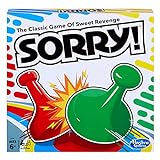
Overview: Sorry! is the quintessential “take-that” race game where 2-4 players move four pawns from start to home, using cards to slide, swap, or send opponents backward. For ages 6+, it combines luck with light strategy, delivering chaotic fun as players vie to be the first with all pawns home while sabotaging rivals.
What Makes It Stand Out: Its enduring appeal lies in the high-stakes player interaction: the thrill of drawing a “Sorry!” card to bump an opponent’s pawn back to start creates unforgettable moments of playful revenge. The inclusion of slides (safe zones) adds tactical depth absent in pure luck games like Candy Land, rewarding card management.
Value for Money: Priced affordably, Sorry! offers exceptional longevity. Its sturdy board and card stock ensure years of use, and the blend of luck and strategy keeps it engaging longer than simpler race games. Compared to modern strategy titles, it’s a budget-friendly anchor for family game nights focused on active rivalry.
Strengths and Weaknesses: Strengths: High replayability through variable card draws; exciting player elimination mechanics; quick to learn but offers tactical choices; scales well for 2-4 players. Weaknesses: Can feel punishingly random for young kids; setup takes slightly longer than minimalistic games; limited appeal for strategy-focused gamers.
Bottom Line: Sorry! remains a cornerstone of family gaming, delivering timeless, competitive fun through its perfect balance of simplicity and disruptive strategy. An excellent choice for fostering lighthearted rivalry among kids and adults—highly recommended for multi-gen households.
6. Hasbro Gaming Chutes and Ladders Board Game | 2 to 4 Players | Back to School Gifts for Kids | Preschool Classroom Games | Ages 3+ (Amazon Exclusive)

Overview:
This updated version of the beloved Chutes and Ladders introduces preschoolers to classic board game mechanics. Designed for 2-4 players aged 3+, it requires no reading skills, making it ideal for early learners. Players spin a spinner, move pawns up ladders for good deeds, and slide down chutes for missteps, racing to reach the top of the board first while practicing counting and number recognition.
What Makes It Stand Out:
Its zero-literacy barrier is a major strength, allowing pre-readers to grasp rules independently. The vibrant, child-friendly board visually reinforces counting skills as kids move spaces sequentially. Unlike many modern games, it emphasizes pure luck and patience—teaching emotional resilience when landing on chutes—without complex strategy that might frustrate young players.
Value for Money:
Priced affordably as an Amazon exclusive, it outperforms generic alternatives with durable construction and Hasbro’s trusted design. While simpler than strategy-based games, its replayability for ages 3-5 justifies the cost as a foundational tool for classroom or home use, especially compared to pricier “educational” kits with similar developmental benefits.
Strengths and Weaknesses:
Strengths: Effortless setup for toddlers; builds number familiarity; fosters turn-taking; compact for travel.
Weaknesses: Pure luck-based gameplay may bore older kids; spinner can snag; limited strategic depth beyond age 5.
Bottom Line:
An essential, no-fuss starter game for preschoolers that delivers nostalgic fun while subtly teaching early math concepts. Highly recommended for parents seeking screen-free, age-appropriate entertainment.
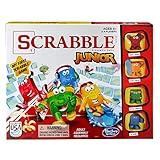
7. Hasbro Gaming Scrabble Junior Board Game | 2-4 Players | Family Educational Word Games for Kids | Back to School Gifts for Classroom | Ages 5+
Overview:
Scrabble Junior adapts the classic word game for young children (ages 5+), offering two-tiered play: matching letters to pre-printed words for beginners, then creating independent words on a simplified grid. With cute animal-themed score tokens and colorful boards, it supports 2-4 players in building literacy skills through accessible, engaging gameplay.
What Makes It Stand Out:
The dual-difficulty design uniquely bridges early learning and budding independence—kids start by tracing words before advancing to free-form spelling. The charming character tokens replace abstract scoring, making point-tracking intuitive. Unlike most phonics games, it directly scaffolds toward mastering the full Scrabble experience.
Value for Money:
At a mid-range price point, it surpasses single-level competitors by growing with the child. The included themed boards and durable tiles offer years of use, outperforming cheaper flashcards or apps that lack tangible interaction. Ideal as a classroom staple or gift, it pays dividends in foundational literacy.
Strengths and Weaknesses:
Strengths: Seamless skill progression; visually stimulating; encourages vocabulary expansion; high replay value.
Weaknesses: Advanced mode still limited for strong spellers; small pieces risk loss; less strategic than adult Scrabble.
Bottom Line:
A brilliantly designed stepping stone to word mastery that balances education with genuine fun. Perfect for kindergarteners ready to explore spelling confidently.
8. Hasbro Gaming Cootie Mixing and Matching Bug-Building Game | 2-4 Players | Easy Preschool Board Games | Back to School Gifts for Kids | Ages 3+

Overview:
Cootie revives the whimsical bug-assembly classic for preschoolers (ages 3+), where players race to build a complete bug by spinning for body parts like legs, eyes, and antennae. This updated edition retains the original’s tactile charm while adding modern color schemes and flexible play options for 2-4 competitors.
What Makes It Stand Out:
The game’s open-ended creativity sets it apart—kids mix mismatched parts (e.g., six legs on a butterfly) without penalty, celebrating imaginative play over rigid rules. The chunky, durable plastic pieces are easy for small hands, and variants like “Switcheroo” encourage adaptability. It uniquely blends fine motor practice with joyful silliness.
Value for Money:
Budget-friendly yet sturdier than dollar-store alternatives, its plastic components withstand rough play. While simpler than STEM-focused kits, Cootie’s pure fun factor and longevity (thanks to interchangeable parts) make it a standout for group play in classrooms or playdates.
Strengths and Weaknesses:
Strengths: Sparks creativity; develops dexterity; quick setup/rules; inclusive for varying skill levels.
Weaknesses: Randomness dominates strategy; small parts require supervision; novelty may wear thin for older kids.
Bottom Line:
A delightfully chaotic preschool essential that transforms bug-building into laughter-filled learning. Best for fostering imagination and sharing in early childhood settings.
9. Spin Master Games, Cardinal Classics Chess Teacher, Learn to Play Strategy Board Games for Beginners, Chess Sets for Adults, 2 Players, for Ages 8 & Up

Overview:
The Chess Teacher set demystifies chess for novices (ages 8+) with uniquely labeled pieces indicating movement rules—e.g., a knight shows “L-shape, 2+1.” Designed for two players, this set includes a textured board, wooden pieces, and clear instructions, bridging the gap between absolute beginner and standard gameplay.
What Makes It Stand Out:
The engraved directional guides on each piece eliminate guesswork, allowing self-paced learning without constant reference to manuals. Unlike apps or videos, it offers tactile, screen-free practice. The oversized notation ensures readability, making it equally effective for kids, adults, or seniors tackling chess for the first time.
Value for Money:
Priced slightly above basic sets, it justifies cost through its patented teaching aid—no need for separate tutorials. While not for advanced players, its durability and focus on foundational skills outvalue cheap plastic sets that lack educational scaffolding, especially for family instruction.
Strengths and Weaknesses:
Strengths: Intuitive learning tool; premium wooden components; reduces frustration for beginners; portable.
Weaknesses: Labels may wear over time; not tournament-legal; limited appeal beyond novice stage.
Bottom Line:
The ultimate starter chess set for aspiring strategists. A wise investment for families wanting to instill critical thinking through timeless gameplay.
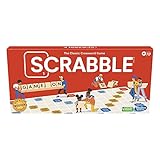
10. Hasbro Gaming Scrabble Board Game, Classic Word Games for Kids Ages 8 and Up, Fun Family Game for 2-4 Players, The Classic Crossword Game
Overview:
This definitive Scrabble edition delivers the iconic word-building experience for 2-4 players (ages 8+), featuring 100 wooden tiles, textured board, and wooden racks. Players craft high-scoring words across premium squares, blending vocabulary, strategy, and luck in a timeless contest that bridges generations.
What Makes It Stand Out:
The premium wooden components elevate it above flimsy alternatives, with a grippy board preventing tile slips. Strategic depth shines through double/triple letter scores and 2-letter word tactics, while the included guide offers variants like team play. It uniquely balances accessibility for kids with sophistication for adults.
Value for Money:
Competitively priced for its heirloom-quality materials, it outlasts disposable games. Compared to digital versions, the physical set fosters face-to-face interaction and tactile engagement—critical for family bonding. The enduring appeal ensures decades of replayability, surpassing trend-driven alternatives.
Strengths and Weaknesses:
Strengths: Builds advanced vocabulary; encourages strategic thinking; durable construction; inclusive for mixed ages.
Weaknesses: Can frustrate early spellers; lengthy games test patience; tile-drawing luck affects outcomes.
Bottom Line:
A must-have cornerstone for any game shelf—a richly rewarding classic that sharpens minds and connects families through the joy of words.
Why Board Games Are Thriving in 2026
The resurgence of board gaming isn’t a fleeting trend; it’s a powerful counter-movement to digital saturation. People are actively seeking meaningful, screen-free interactions that foster genuine connection and presence. Board games provide a structured yet flexible environment for conversation, negotiation, and shared storytelling that video calls and social media scrolling simply cannot replicate. This desire for authentic human connection is a primary driver behind the current golden age of tabletop.
Furthermore, game design itself has undergone a revolution. Contemporary designers are masters at distilling complex strategic concepts into approachable, visually intuitive experiences. Mechanics are often taught through elegant gameplay rather than dense text, leveraging color coding, iconography, and step-by-step progression. This evolution ensures that the barrier to entry is lower than ever, making the rich world of board gaming genuinely accessible to complete newcomers eager for their first foray.
Core Selection Framework for New Players
Choosing your first (or next) board game shouldn’t feel overwhelming. A structured approach focusing on key experiential factors will steer you towards a satisfying experience. Forget trying to decipher complex genre labels immediately; start by understanding what kind of feeling you want the game to evoke during your play session. This foundational step aligns expectations and significantly increases the likelihood of enjoyment.
Defining Your Desired Experience
Begin by discussing with your potential gaming group: Do you crave lighthearted laughter and quick decisions, or are you seeking deeper strategic engagement that unfolds over time? Is cooperative problem-solving where you win or lose together more appealing than direct competition? Clarifying whether the priority is pure fun, mental challenge, narrative immersion, or social interaction provides an essential compass for your search.
Evaluating Complexity Appropriately
Complexity is often misunderstood. It’s not solely about rulebook thickness; it’s about cognitive load and decision density. For beginners, look for games emphasizing “learn as you play” mechanics. These introduce concepts incrementally during the first few turns, preventing information overload. Prioritize games where the core loop (the repeated action players take) is immediately graspable, even if deeper strategic layers emerge with repeated plays.
Assessing Time Investment Realistically
Honesty about available time is crucial. Many excellent beginner games now fit comfortably within 30-45 minutes, making them perfect for weeknights or fitting into busy schedules. Avoid the trap of thinking longer games are inherently “better.” A concise, well-paced experience that ends on a high note is far more likely to leave everyone wanting more than a marathon session that drags. Check the publisher’s estimated playtime, but be aware it often assumes experienced players; add 15-20 minutes for a first playthrough.
Navigating the Learning Curve Smoothly
The initial hurdle for most beginners isn’t playing the game, but learning it. A smooth onboarding experience is paramount for enjoyment and encourages repeat plays. Fortunately, modern game design heavily emphasizes teachability, making the learning process part of the fun rather than a chore.
Rulebook Clarity and Structure
A well-written rulebook is a game’s lifeline for new players. Look for clear, concise language, logical organization (often mirroring the teaching sequence), and abundant visual examples. Step-by-step tutorials integrated into the rulebook or quick-reference guides are invaluable. Diagrams showing setup and examples of turns in progress significantly reduce confusion. Poorly structured rules are a major reason promising games gather dust.
The Teachability Factor
Consider how easily you can explain the game to others. Games with a strong “hook” – a simple, relatable core concept (“You’re running a sushi restaurant!”) – are much easier to teach. Mechanics that mirror real-world actions (placing tiles to build a landscape, drafting cards like picking menu items) create intuitive understanding. Avoid games requiring significant upfront explanation of exceptions or edge cases; the best beginner games let players grasp the basics in under 5 minutes.
First-Play Experience Predictors
Pay attention to reviews or descriptions mentioning the “first-play experience.” Does it highlight how the game unfolds naturally, revealing depth gradually? Games that avoid “analysis paralysis” (where players freeze trying to make the perfect move) early on are ideal. Look for mechanics that encourage player interaction from the start, preventing downtime and keeping everyone engaged while they learn.
Understanding Group Dynamics and Player Count
Not all games shine with the same number of people. Matching the game to your typical group size is critical for a harmonious experience. A game designed for 4 players might feel sluggish with 2 or chaotic with 6, fundamentally altering the intended gameplay.
Ideal Player Count Nuances
Publisher-suggested player counts are a starting point, but delve deeper. Some games have distinct “sweet spots” (e.g., fantastic at 3 or 4, mediocre at 2 or 5). Consider how player count affects interaction: negotiation-heavy games need enough players for meaningful deals, while dexterity games might become too crowded. Solo modes are increasingly common and excellent for learning a game before playing with others, but ensure the core experience suits your primary group.
Balancing Competition and Cooperation
The group’s tolerance for direct conflict versus collaborative spirit is vital. Highly competitive games with significant “take-that” mechanics (where players directly hinder each other) can frustrate newcomers expecting pure fun. Conversely, cooperative games remove player elimination but require strong group communication. Assess whether your group enjoys light-hearted rivalry, strategic blocking, or working together towards a common goal – the wrong fit here can sour the entire experience.
Managing Downtime and Engagement
Downtime (waiting for your turn) is the enemy of engagement, especially for beginners. Games with simultaneous actions (everyone does something at once) or minimal downtime between turns keep energy high. Long turns with complex calculations can lead to disengagement and forgotten rules. Prioritize games where players remain involved and interested even when it’s not their immediate turn, perhaps through anticipation or light negotiation.
Embracing Modern Design Trends for Accessibility
The board game industry has made significant strides in inclusivity and accessibility, recognizing that players have diverse needs. These advancements benefit all beginners by creating clearer, more intuitive experiences.
Visual Design and Component Clarity
High-contrast colors, distinct iconography, and thoughtful layout reduce cognitive load. Games utilizing colorblind-friendly palettes and clear, non-repetitive symbols ensure everyone can participate fully. Physical components should be easy to handle; oversized cards or chunky, distinct tokens are easier to manage than tiny, fiddly pieces, especially under varied lighting conditions.
Physical and Cognitive Accessibility Features
Look for games offering rule variants for different cognitive loads or physical abilities. Components that are easy to shuffle and manipulate, clear separation of player areas, and rules that minimize excessive memory requirements (like tracking numerous hidden points) make games more welcoming. Publishers are increasingly providing detailed accessibility guides online, a strong signal of their commitment.
Digital Integration as a Tool, Not a Crutch
Many modern games offer optional companion apps for setup, rule clarification, or even enhancing narrative elements. Used judiciously, these can smooth the learning curve by handling complex setup or providing gentle reminders. However, the core experience should remain fully playable without any digital device – true accessibility means the game stands strong on its own physical components and rules.
Beyond the Box: Building Sustainable Gaming Habits
Choosing the right game is just the beginning. Cultivating habits that make board gaming a regular, enjoyable part of your life ensures the hobby sticks and continues to bring joy.
Setting Realistic Expectations for Progression
Don’t expect to master complex strategy on the first play. Embrace the learning journey. Most great games reveal deeper layers over multiple sessions. Focus initially on understanding the flow and having fun, rather than optimizing every move. Celebrate small victories and funny moments – these build positive associations far more than winning does for newcomers.
Creating the Right Environment
Dedicate a consistent time and space for gaming. A clutter-free table, adequate lighting, and comfortable seating make a huge difference. Minimize distractions – put phones away! Consider the atmosphere; background music at low volume can enhance mood, but avoid anything too loud or distracting. A relaxed, pressure-free environment is key for beginners to feel comfortable making mistakes.
Fostering a Positive Group Culture
The attitude of the group is paramount. Encourage patience, helpfulness, and a focus on shared enjoyment over cutthroat competition, especially during initial plays. Designate a patient “teacher” for new games. Normalize asking questions and laughing off rule misunderstandings. A group that prioritizes fun and inclusion will naturally retain new players and encourage exploration of more complex games over time.
Frequently Asked Questions
Frequently Asked Questions
How long should I expect to spend learning a beginner-friendly game? Most well-designed modern beginner games can be taught in 5-15 minutes, with the first playthrough taking the estimated time (often 30-60 mins) plus a little extra for clarifications. The key is the game’s ability to teach concepts during play.
Are cooperative games better for absolute beginners than competitive ones? Cooperative games can be excellent as they remove player elimination and foster teamwork, reducing pressure. However, some beginners enjoy light competition. The best choice depends entirely on your group’s preferences; both styles have superb beginner options.
What’s the biggest mistake beginners make when choosing their first game? Overestimating how much complexity they can handle initially. Starting with a game perceived as “too easy” is far better than one that feels overwhelming. Simplicity allows focus on learning the social and strategic process of gaming.
How important is the physical quality of the components for a beginner? While nice components enhance the experience, they are secondary to clear rules and intuitive gameplay for beginners. Focus on mechanics and play experience first; component quality becomes more significant as you explore the hobby further.
Can I learn board games effectively just from YouTube videos instead of reading rules? Video tutorials are incredibly valuable supplements, especially for visual learners, and are highly recommended. However, always have the physical rulebook handy for quick reference during your first play, as videos might skip nuances.
Is player count flexibility crucial for a beginner’s first game? It’s very helpful but not absolute. A game perfect for your most common group size (e.g., consistently 3 players) is better than a mediocre game that works for 2-5. Prioritize fit for your typical scenario.
How do I know if a game’s theme is just “fluff” or actually integrated into gameplay? Integrated themes make the mechanics feel logical and intuitive (e.g., moving a pawn along a path to reach a destination). If the theme feels randomly pasted on top of abstract mechanics with no connection, it might be harder to grasp initially. Look for reviews mentioning “theme integration.”
Should beginners avoid games with any element of luck? No. Luck (like dice rolling or card drawing) is common and actually beneficial for beginners as it reduces pressure, keeps games unpredictable, and allows newer players to compete with more experienced ones. Avoid games where luck completely overshadows skill.
What’s a “gateway game” and do I need one? A gateway game is specifically designed to bridge the gap between simple party games and complex strategy games, often featuring accessible mechanics with surprising depth. While not strictly necessary, they are highly recommended as they provide the smoothest, most rewarding introduction to modern board gaming.
How can I find local groups to play with if I don’t have friends who game? Check local game stores for open gaming nights or “learn-to-play” events. Libraries and community centers increasingly host board game groups. Online platforms often have local meetup groups focused on welcoming new players – a great way to experience different games safely.