Table of Contents
There’s something deeply satisfying about watching a friend triumphantly place a word you’ve never seen before, or that moment when a random collection of letters suddenly reveals a perfect seven-letter gem. For adults who cherish language, vocabulary board games offer more than just entertainment—they’re mental workouts, social catalysts, and celebrations of the words that shape our thoughts. Unlike the simple spelling games of childhood, modern language games for grown-ups layer strategy, psychology, and sophisticated linguistic concepts into experiences that reward both breadth of knowledge and clever tactical thinking.
As we move through 2026, the landscape of tabletop gaming continues to evolve with innovative mechanics that challenge how we interact with words. Whether you’re a logophile looking to expand your lexicon, a teacher seeking engaging tools for advanced learners, or simply someone who loves the thrill of a well-played “Q” without a “U,” understanding what makes these games compelling helps you choose experiences that match your group’s personality and skill level. The best games balance accessibility with depth, offering moments of revelation that keep players returning to the table week after week.
Top 10 Vocabulary Board Games for Adults
Detailed Product Reviews
1. Clarendon Games Wordsmithery Game - Party Quiz Word Definition Game - 2 Players

Overview: Clarendon Games Wordsmithery challenges players to define obscure words like “egregious” and “phalanx” in this portable definition quiz. The game includes 600 adult-level words plus 100 simplified entries for ages 7-13, making it genuinely family-friendly. Designed for 2+ players (or solo play), it eliminates downtime with a clever dual-scoring mechanism: earn maximum points by defining a word cold, or select from three multiple-choice options for partial credit. The London-based publisher emphasizes minimalist design—no tiny pieces, just cards and rules—making it travel-ready for holidays or home use.
What Makes It Stand Out: The game’s flexible scoring system rewards both confident linguists and cautious guessers, preventing anyone from feeling left out. Its intergenerational design is rare in word games; most competitors either target adults exclusively or oversimplify for children. The 700-word database provides substantial replay value, while the absence of fiddly components makes it ideal for airplanes or restaurants. Unlike definition games that require a moderator, the self-contained format lets anyone deal and play immediately.
Value for Money: At its typical price point, Wordsmithery delivers exceptional value. Comparable trivia games offer fewer cards and lack the dual-difficulty system. The durable packaging and high-quality cardstock justify the investment, especially for families seeking educational entertainment that grows with children from elementary school through adulthood.
Strengths and Weaknesses: Strengths include versatile player counts (1-10+), true portability, and genuine learning outcomes. Weaknesses: advanced players may exhaust the adult word bank over time, and some definitions feel artificially simplified. The two-player experience, while functional, lacks the lively debate of larger groups.
Bottom Line: Wordsmithery excels as a travel-friendly, family-oriented vocabulary builder. It’s perfect for casual word lovers and intergenerational play, though hardcore lexicographers might crave more complexity. Highly recommended for families prioritizing education and portability.
2. Semper Smart Games VOCABULICIOUS! The Vocabulary, Word and Conversation Game That Makes Mealtime More Meaningful.

Overview: VOCABULICIOUS! transforms dinner tables into vocabulary workshops with its restaurant-themed approach. The game features over 200 word cards tiered as Appetizer (easy), Entrée (medium), and Dessert (challenging), plus 12 menu cards offering 48 conversation topics. Players weave vocabulary words into discussions about their day, creating contextual learning opportunities. The quick-start instructions promise gameplay in under a minute, targeting families seeking meaningful mealtime engagement beyond screens.
What Makes It Stand Out: This is the only word game explicitly designed for mealtimes, turning a daily routine into educational ritual. The conversation-prompt system is innovative—rather than isolated definitions, players actively use words in relevant dialogue. The three-tier difficulty system accommodates mixed-age families better than single-level games, and the restaurant theme adds thematic cohesion rarely seen in educational products.
Value for Money: While priced similarly to standard card games, VOCABULICIOUS! offers niche value through its specialized design. However, its 200-word count pales beside competitors offering 500+ cards, and once families exhaust the conversation prompts, replayability diminishes. It justifies its cost if used regularly at meals, but offers less value as a standalone game night option.
Strengths and Weaknesses: Strengths include unique mealtime integration, contextual learning focus, and graduated difficulty. Weaknesses are limited word count, narrow use case (requires mealtime setting), and potential for repetitive conversations. The game lacks competitive scoring, which may disappoint players seeking traditional gameplay.
Bottom Line: VOCABULICIOUS! shines for families committed to dinner table learning. It’s less a game than a conversation enhancement tool—ideal for its specific purpose but limited as a general party game. Purchase if you want structured mealtime talks; skip for competitive game nights.
3. Winning Moves Yahtzee Words Games USA, Family Word Game Version for 2 or More Players, Ages 8+

Overview: Yahtzee Words revives the 1980s classic by replacing number dice with seven letter dice. Players roll to create 2-6 letter words while pursuing familiar Yahtzee scoring categories: Upper Section (letter frequency) and Lower Section (special combinations). The game retains the original’s bonus structure and forced-scoring mechanism, adding word-specific challenges like “All Consonants” and the elusive 7-letter “Yahtzee.” Designed for ages 8+ and 2+ players, it bridges traditional dice gaming with vocabulary building.
What Makes It Stand Out: The genius lies in leveraging beloved Yahtzee mechanics that millions already understand, eliminating learning curve friction. The scoring sheet’s hybrid design—combining letter frequency with creative challenges like “Multiple Words”—offers strategic depth beyond simple anagramming. The nostalgia factor appeals to parents while introducing children to word gaming through a trusted framework.
Value for Money: As an affordable licensed product, it delivers strong value for families seeking gateway word games. The dice and scorepads are durable, and the familiar brand ensures immediate comprehension. However, dedicated word gamers may find limited depth compared to premium options like Quiddler or Paperback.
Strengths and Weaknesses: Strengths include zero learning curve for Yahtzee fans, quick gameplay (30 minutes), and clever adaptation of classic mechanics. Weaknesses: high randomness frustrates purists, limited word length caps strategic complexity, and scorepad reliance creates ongoing supply costs. Two-player games can feel repetitive.
Bottom Line: Yahtzee Words is the perfect bridge game for families wanting gentle vocabulary practice without intimidating rules. It won’t satisfy hardcore wordsmiths but excels as an accessible, nostalgic introduction to letter-based gaming. Recommended for casual family play and Yahtzee enthusiasts.
4. ? WORD TEASERS SAT Vocabulary - Vocabulary Builder for Kids, Teens & Adults - Fun Family Conversation Starter & Vocabulary Game - SAT Word Game - 150 SAT Vocabulary Flash Cards

Overview: WORD TEASERS SAT Vocabulary targets test preparation through 150 flashcards featuring words likely to appear on the PSAT, SAT, and ACT. Each card presents a conversation-starting question using the vocabulary word on its front, with pronunciation, definition, and part of speech on the reverse. Marketed as both study tool and family game, the portable deck enables contextual learning through discussion rather than rote memorization, targeting high schoolers but usable by adults and advanced younger students.
What Makes It Stand Out: Unlike generic vocabulary games, this offers laser-focused SAT prep with research-based word selection. The conversation-prompt format is psychologically astute—using words in dialogue cements retention better than flashcard drills. Its true portability (toss in a backpack) and dual functionality (solo study or group discussion) create versatility that pure games or pure study aids lack.
Value for Money: For students actively preparing for college entrance exams, this is exceptional value—cheaper than tutoring apps and more engaging than traditional flashcards. For casual family fun, however, the narrow academic focus limits appeal. The 150-card count is modest, but the strategic selection maximizes test impact per card.
Strengths and Weaknesses: Strengths include targeted SAT relevance, contextual learning approach, and true portability. Weaknesses: limited game-like qualities (no scoring, competition), narrow scope excludes non-SAT words, and may feel like assigned homework to reluctant students. Not ideal for younger children.
Bottom Line: This is a study aid first, game second. For SAT/ACT students, it’s an indispensable, engaging review tool. For families seeking pure entertainment, look elsewhere. Highly recommended for college-bound students wanting social study options, but not as a general party game.
5. Educational Insights Blurt! The Think Fast, Shout-it-Out Party Game - Family Games for Kids and Adults, Board Games for Family Night, Fun Word Game for Ages 7+

Overview: Blurt! energizes game nights with a high-speed word race format. Players roll a die, listen to a clue, and shout the answer to advance on the board. With 200 clue cards providing 1,200 clues across two difficulty levels, it accommodates 3-12 players ages 7-107. The game explicitly targets vocabulary development, auditory comprehension, and rapid word recall through competitive, uproarious gameplay that rewards quick thinking over deep knowledge.
What Makes It Stand Out: The sheer volume of content (1,200 clues) ensures exceptional replayability, while the massive player capacity (3-12) makes it rare among word games. The dual difficulty levels genuinely scale—adults won’t dominate Junior clues, and kids can compete on Advanced clues. The physical board adds tangible progression absent from pure card games, and the “shout-it-out” mechanic creates infectious energy that quieter word games lack.
Value for Money: Blurt! offers outstanding value for party settings. The clue database rivals premium trivia games, and the durable components withstand repeated use. At its price point, it outperforms many party games with less content. The only cost concern is the 3-player minimum, making it unsuitable for couples or solo play.
Strengths and Weaknesses: Strengths include high energy, scalable difficulty, massive replay value, and broad player range. Weaknesses: requires minimum 3 players, loud gameplay unsuitable for quiet environments, and some clues are ambiguous or dated. The board design is functional but uninspired.
Bottom Line: Blurt! dominates as a party word game for groups of 3+. Its energy and content volume make it ideal for family gatherings, classrooms, or game nights. Skip if you primarily need two-player options; otherwise, it’s an essential addition to any social game collection. Highly recommended for high-energy groups.
6. Dabble® Word Game | Fast-Paced Family Board Game | Enhances Spelling and Vocabulary for All Ages | Spell The First Five Words | Award-Winning and Educational Learning Game | Great Game for All Ages

Overview: Dabble is a rapid-fire word game that challenges 2-4 players to create five words from 20 letter tiles faster than their opponents. Combining elements of speed, strategy, and vocabulary building, this award-winning game transforms traditional spelling drills into an exhilarating race against time and fellow players. Each round delivers a fresh linguistic puzzle that engages both children and adults.
What Makes It Stand Out: The game’s signature time-pressured format creates genuine excitement, while its bilingual capabilities (English and Spanish tiles) significantly broaden its educational value. Unlike methodical word games, Dabble’s competitive edge encourages quick thinking and pattern recognition. The inclusion of a 2-minute timer and simple rules makes it immediately accessible, while the award-winning design validates its pedagogical effectiveness for family learning.
Value for Money: Positioned competitively against games like Boggle and Bananagrams, Dabble offers exceptional replay value through its 148 letter tiles and dual-language support. The robust components withstand frequent play, making it a sound investment for families prioritizing educational entertainment. For under $25, you’re getting a classroom-tested tool disguised as entertainment.
Strengths and Weaknesses: Strengths include fast-paced engagement, genuine educational benefits, and multi-age accessibility. The quick setup and clear rules enable instant play. However, the timer may stress younger or slower players, and the four-player maximum limits larger groups. Advanced wordsmiths might find the five-word constraint less challenging over time.
Bottom Line: Dabble brilliantly balances learning with adrenaline, making it ideal for families seeking quick, brain-building entertainment. While not for those averse to time pressure, it’s a top-tier choice for educational game nights.
7. Boardle – Wordle-Inspired Word Game Board for Adults, Families & Couples | 2-Player Word Puzzle Board Game, Educational Vocabulary Challenge, Fun for Family Game Night
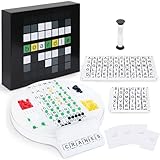
Overview: Boardle successfully transcribes the digital Wordle phenomenon into a tangible, head-to-head board game experience. Designed for two players or teams, it captures the essence of the viral word puzzle through physical letter tiles and color-coded clue pegs, eliminating screen dependency while preserving the strategic deduction gameplay that made Wordle addictive.
What Makes It Stand Out: The game brilliantly translates Wordle’s mechanics into a social format, using premium wooden components and a sand timer for optional speed rounds. Its head-to-head structure creates palpable tension as players simultaneously guess and defend their secret five-letter words. The quality construction and thoughtful design demonstrate serious craftsmanship, elevating it beyond typical licensed adaptations.
Value for Money: While priced slightly higher than basic card games, Boardle’s durable board, solid letter tiles, and color-coded pegs justify the cost. For Wordle enthusiasts, it offers unlimited offline play without subscriptions or ads. Compared to other two-player strategy games, it provides excellent replayability and makes a sophisticated gift for puzzle lovers.
Strengths and Weaknesses: Strengths include authentic Wordle gameplay, high-quality materials, and perfect portability for couples or close friends. The screen-free design promotes face-to-face interaction. However, the strict two-player focus limits flexibility, and gameplay can feel repetitive after extensive sessions. The 14+ age recommendation suggests complexity that may exclude younger family members.
Bottom Line: Boardle is a must-have for Wordle addicts seeking tangible competition. Its premium build and faithful adaptation make it perfect for couples and close friends, though larger groups will need alternative entertainment.
8. Limited Vocabulary – Hilarious Creative Word Game of Prompts, Replies, And Inside Jokes - Adult Party Game For Clever Minds And Word Nerds - Great For Family And Friends - Ages 15+, 3-8 Players

Overview: Limited Vocabulary flips traditional word games on their head by restricting rather than expanding your lexicon. This creative party game tasks 3-8 players with crafting hilarious responses to personalized prompts using only their dealt vocabulary cards. The result is a raucous, imagination-fueled experience that rewards wit over vocabulary breadth.
What Makes It Stand Out: The game’s genius lies in its constraint-based creativity, forcing players into unexpected linguistic contortions that generate genuine humor. Customizable prompts allow groups to inject personal references, creating unique inside jokes instantly. With over 200 cards and thousands of combinations, it avoids the repetition that plagues many party games, while staying mostly SFW with just enough edge for adult audiences.
Value for Money: Competing in the party game segment, Limited Vocabulary offers superior replayability to many titles in its price range. The card quality and thoughtful prompt design provide lasting entertainment value. For groups who enjoy games like Apples to Apples but crave more creative agency, it delivers exceptional bang for your buck.
Strengths and Weaknesses: Strengths include limitless creative potential, personalized gameplay, and perfect scaling for medium-sized groups. The mostly SFW content makes it versatile for mixed company. However, the 15+ age rating is warranted—humor can become suggestive. The game’s success heavily depends on group chemistry and willingness to embrace absurdity, which may not suit all players.
Bottom Line: A brilliant choice for clever, quick-witted groups who relish creative challenges. Limited Vocabulary transforms constraints into comedy gold, though it’s best suited for confident, imaginative players comfortable with adult humor.
9. Play On Words Card Game - Extra-Creative Word Making Fun for All Ages - A Parents’ Choice Award Winner - Family/Kid-Friendly Word Game

Overview: Play On Words is an award-winning card game that champions creativity over competition, allowing 1-4 players to build words through strategic card play. The 80-card deck includes flip, combo, and wild cards that introduce tactical depth while remaining accessible to ages eight and up. Its no-rush format fosters collaborative thinking and conversation.
What Makes It Stand Out: The Parents’ Choice Silver Honor Award validates its educational merit and family-friendly design. Unlike speed-based word games, its relaxed pacing accommodates different skill levels, making it genuinely inclusive. The solitaire mode adds value for single-player enjoyment, while the compact size enables true portability. Recent enhancements have streamlined setup and smoothed gameplay significantly.
Value for Money: As an award-winning game under $15, it represents exceptional value. The enhanced card quality and refined ruleset demonstrate ongoing product development. Compared to bulkier board games, its small footprint and versatility (solo to 4 players) maximize utility per dollar spent, especially for families seeking educational travel games.
Strengths and Weaknesses: Strengths include broad age accessibility, award-winning educational design, flexible player counts, and genuine portability. The pressure-free environment encourages learning. However, the gentler pace may frustrate competitive gamers seeking high-stakes challenge. With only 80 cards, dedicated players might eventually exhaust strategic variations despite the game’s creative potential.
Bottom Line: Play On Words excels as a thoughtful, pressure-free word game perfect for family learning and travel. While not for adrenaline seekers, its award-winning design and inclusive mechanics make it a smart investment for quality screen-free time.
10. Hasbro Gaming Scrabble Board Game, Classic Word Games for Kids Ages 8 and Up, Fun Family Game for 2-4 Players, The Classic Crossword Game
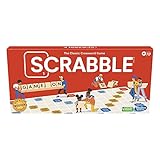
Overview: Scrabble remains the quintessential word game, challenging 2-4 players to build interlocking words on a premium board for maximum points. This edition features 100 wooden letter tiles and textured racks, preserving the tactile satisfaction that has defined the brand for decades. The strategic placement of tiles on double and triple score squares creates layers of tactical depth.
What Makes It Stand Out: No other word game matches Scrabble’s legacy and strategic complexity. The wooden components provide satisfying heft and durability absent in plastic versions. Its universal recognition means instant understanding across generations, while the official dictionary integration allows for serious tournament-style play. The game rewards both vocabulary breadth and spatial strategy uniquely.
Value for Money: As a classic that lasts decades, Scrabble offers unparalleled return on investment. This standard edition delivers essential quality at an accessible price point, while premium versions exist for enthusiasts. Compared to trendy games with limited lifespans, Scrabble’s endless replayability and cultural staying power justify every penny.
Strengths and Weaknesses: Strengths include timeless gameplay, exceptional educational value, true cross-generational appeal, and infinite strategic depth. The wooden tiles elevate the experience. However, game length can exceed two hours, testing younger attention spans. The steep learning curve for optimal play may intimidate novices, and the slow pace contrasts sharply with modern fast-paced alternatives.
Bottom Line: Scrabble is non-negotiable for any serious game collection. While not suited for those seeking quick entertainment, its unmatched depth, quality, and legacy make it the ultimate word game investment for families committed to strategic play.
Why Vocabulary Games Resonate with Adult Learners
Cognitive Benefits Beyond Simple Recall
Vocabulary games for adults activate multiple neural pathways simultaneously. You’re not just remembering words—you’re analyzing letter patterns, calculating point potentials, recognizing morphological structures, and sometimes even bluffing your opponents. This multi-layered engagement strengthens working memory and enhances cognitive flexibility. Studies show that active wordplay helps maintain mental sharpness, particularly when games incorporate elements of strategy rather than pure memorization.
The Social Psychology of Linguistic Competition
What separates adult vocabulary games from children’s versions is the rich social dimension. Adults bring years of reading, professional jargon, and cultural references to the table. Games become venues for subtle psychological warfare: Do you challenge that obscure word? Should you play defensively or aim for high-risk, high-reward combinations? The best designs create conversation starters, where players discuss etymologies, debate meanings, and share stories about words from their lives.
Nostalgia Reimagined with Sophisticated Mechanics
Many adults approach vocabulary games with memories of family game nights, but modern iterations add layers that reward strategic thinking. Variable scoring systems, asymmetric player powers, and dynamic board states transform familiar concepts into fresh challenges. This evolution respects players’ intelligence while maintaining the joyful core of playing with language.
Key Game Mechanics That Build Language Skills
Tile Placement Strategies
Games featuring physical letter tiles offer tactile satisfaction while demanding spatial reasoning. The grid-based format encourages you to see words as interconnected networks rather than isolated units. Advanced designs incorporate premium squares that shift in value, double-sided tiles with multiple options, or modular boards that change shape during play. These elements force you to think several moves ahead, considering not just your current word but potential future placements.
Deck Building with Word Components
Some innovative games use deck-building mechanics where you acquire prefixes, suffixes, or root words throughout play. This approach mirrors how we actually learn language—by assembling meaningful parts into larger structures. The strategy lies in curating a personal collection of morphemes that work synergistically, teaching morphology while creating competitive depth. You’re essentially crafting a linguistic toolkit tailored to your play style.
Deduction and Definition Challenges
Not all vocabulary games require spelling. Deduction-based designs challenge players to identify words based on limited information: definitions, letter counts, or semantic clues. These formats reward depth of vocabulary knowledge rather than anagram skills. They create dramatic moments of revelation and often level the playing field between players with different strengths—some might excel at spelling while others dominate at parsing meanings.
Speed vs. Turn-Based Contemplation
The tension between rapid-fire word finding and deliberate, chess-like consideration defines a game’s personality. Real-time mechanics with sand timers create adrenaline-fueled sessions where quick thinking triumphs. Conversely, turn-based games allow for deeper analysis, letting you explore multiple word possibilities and strategic implications. Hybrid models might use simultaneous play phases followed by resolution rounds, blending both experiences.
Cooperative Language Building
Cooperative games shift the focus from beating opponents to achieving shared linguistic goals. Players might work together to construct a massive crossword, decode a complex message, or prevent a “language” from deteriorating. These designs foster collaboration and often include scaling difficulty, making them ideal for mixed-experience groups or educational settings where the goal is collective growth.
Features to Consider When Choosing Your Game
Complexity Level and Learning Curve
A game’s rulebook should challenge your vocabulary, not your patience. Look for designs that offer immediate playability with strategic depth that emerges over multiple sessions. The best adult games include “advanced” variants or modular rules you can add once basics are mastered. Consider whether your group prefers a 5-minute rules explanation or enjoys spending 20 minutes understanding intricate scoring systems.
Player Count Flexibility
Some vocabulary games shine with exactly two players but feel chaotic with five. Others require larger groups to create interesting word pools. Assess your typical gaming situation: Do you need something that scales elegantly from solo to six players? Does the game maintain its essence across different player counts, or does it require significant rule adjustments? The most versatile designs use mechanisms like team play or neutral “dummy” players to fill gaps.
Play Time and Session Length
Adult schedules demand flexibility. A game that promises 30 minutes of engaging play might hit the table weekly, while a 2-hour epic becomes a special occasion event. Consider setup and teardown time too—games with numerous small components or complex board layouts can eat into precious playing time. Some designs offer “lightning round” variants for shorter sessions, perfect for weeknight gaming.
Portability and Component Quality
The physical experience matters. Thick cardboard tiles with satisfying weight, linen-finished cards, and sturdy boxes designed for travel all enhance long-term enjoyment. For vocabulary games specifically, clear, readable fonts are crucial—avoid games with overly decorative typefaces that make letters ambiguous. Magnetic closures or compact designs make games more likely to accompany you to coffee shops or vacation rentals.
Expansion Possibilities and Replay Value
The best vocabulary games grow with you. Expansions might add new letter distributions, specialized subject categories (like scientific or literary terms), or alternative scoring conditions. Look for games with modular components that create different setups each play. Some include “legacy” elements where your group’s decisions permanently alter the game, creating a personalized linguistic artifact.
Advanced Linguistic Concepts in Modern Games
Etymology and Word Origins
Sophisticated games reward knowledge of language history. You might score bonus points for identifying Greek roots, Latin derivatives, or words borrowed from specific languages. This mechanic transforms gameplay into an etymology lesson, encouraging players to think about why words look and sound the way they do. It particularly appeals to polyglots and history buffs who appreciate the stories behind our lexicon.
Morphology and Prefix/Suffix Manipulation
Games focusing on morphemes teach you to see words as flexible systems. By physically combining “un-” with various roots or adding “-ology” to unexpected stems, you internalize productive word-formation processes. This approach builds vocabulary more effectively than memorization because you learn patterns applicable to thousands of words. The strategic layer comes from recognizing which affixes offer the most versatility.
Homophones and Ambiguous Meanings
Some clever designs exploit English’s abundant homophones and heteronyms (words spelled the same but pronounced differently). You might need to clue “bass” (the fish) versus “bass” (the instrument), or navigate sentences where meaning hinges on stress patterns. These games heighten awareness of language’s quirks and create hilarious moments of miscommunication that become inside jokes for your group.
Synonym Chains and Semantic Networks
Rather than building words letter-by-letter, some games have you create networks of meaning. You might connect “hot” to “scorching” to “blistering,” scoring for chain length or semantic subtlety. This approach maps how our brains actually store vocabulary—in interconnected webs rather than alphabetical lists. It encourages precision in language use and rewards players who understand nuance and connotation.
Obscure Vocabulary vs. Common Usage
Game designers must balance rewarding rare words against frustrating players with overly specialized vocabulary. The sweet spot includes mechanics that make unusual words valuable but not mandatory. Perhaps esoteric terms grant special abilities but score similarly to common words, or they unlock “challenge” mechanics where opponents can risk points to dispute validity. This creates drama without alienating casual wordsmiths.
Social Dynamics and Player Interaction
Competitive Word Duels
Head-to-head vocabulary games create intense personal rivalries. Direct confrontation mechanics—like stealing opponents’ words, blocking their key letters, or racing to claim definition cards—make every choice feel personal. These designs work best with two players or teams, fostering rematches and ongoing grudge matches. The psychological element extends beyond words into mind games about when to play your best tiles versus holding them for future opportunities.
Team-Based Language Challenges
Dividing players into teams transforms vocabulary games into collaborative battles. Teammates must communicate efficiently, often with restrictions that prevent simply spelling out answers. This structure helps mixed-level groups, where experienced players can mentor newcomers without condescension. The team dynamic also reduces individual pressure, making risky plays feel more acceptable.
Solitaire Modes for Quiet Study
Many modern games include solo variants that turn competitive mechanics into puzzle-like challenges. You might race against a “clock” of automated opponent moves or try to beat your previous high score under increasingly difficult conditions. These modes make vocabulary games valuable tools for deliberate practice, allowing you to explore word combinations without time pressure or audience.
Party Game Atmosphere vs. Serious Strategy
The tone of a vocabulary game dramatically affects who will enjoy it. Party-style games emphasize laughter, creative clues, and social bonding, often at the expense of pure linguistic rigor. Strategic games demand focus, accept silence during deep thinking, and reward careful planning. Neither is superior—choose based on whether your group wants a lively social lubricant or a serious mental challenge.
House Rules and Customization
The best games invite you to modify them. Perhaps you introduce a “word of the night” that scores triple, or create personal challenge cards based on your group’s inside jokes. Some designs explicitly include blank cards or tiles for customization. This flexibility means the game evolves with your relationships and linguistic interests, preventing it from growing stale after repeated plays.
Integrating Games Into Your Language Learning Routine
Weekly Game Night Structures
Consistency builds vocabulary faster than sporadic marathon sessions. Establishing a regular game night creates accountability and allows you to track progress. Consider rotating between different game types—perhaps a speed game one week and a strategic deduction game the next—to exercise different linguistic muscles. Keeping a shared journal of interesting words discovered during play transforms entertainment into active learning.
Combining Digital and Physical Play
Many vocabulary games now offer companion apps or digital implementations. These tools provide built-in dictionaries, track statistics, or enable asynchronous play. Using digital versions for solo practice can prepare you for live sessions, while physical games maintain the irreplaceable social dimension. Some groups use apps to resolve disputes quickly, keeping the game flowing while ensuring accuracy.
Tracking Progress and Vocabulary Growth
Create a personal lexicon from words encountered during gameplay. Note not just definitions but also contexts where you first saw them. Some competitive groups maintain leaderboards for longest words, highest-scoring plays, or most creative uses of obscure terms. This gamification of learning reinforces retention and gives you tangible evidence of expanding vocabulary.
Creating Thematic Game Sessions
Elevate game night by introducing themes: “Shakespearean Insults,” “Scientific Terminology,” or “Loanwords from Other Languages.” Thematic play encourages research beforehand and deepens engagement. You might pair games with relevant reading materials or follow up with discussions about language families. This approach transforms casual gaming into curated educational experiences.
Frequently Asked Questions
What makes a vocabulary game truly suitable for adults rather than children?
Adult-oriented games incorporate strategic depth, nuanced scoring, and linguistic concepts like etymology or morphology that require mature reading experience. They often include ambiguous situations requiring judgment calls and feature vocabulary that challenges college-educated players without becoming impenetrable.
How do I choose between a speed-based game and a turn-based one?
Consider your group’s energy levels and competitive dynamics. Speed games work for high-energy gatherings and players who think quickly under pressure. Turn-based games suit thoughtful groups who enjoy analyzing possibilities and socializing between moves. Many games offer both modes, letting you adjust based on the evening’s mood.
Can vocabulary board games actually improve my professional communication skills?
Absolutely. Regular play enhances pattern recognition in spelling, deepens your understanding of word roots (helpful for deciphering technical jargon), and builds confidence in using precise terminology. The strategic thinking required also translates to clearer, more deliberate communication choices.
What’s the ideal player count for most adult vocabulary games?
Many excel with 3-4 players, offering enough interaction without excessive downtime. However, the best games include scaling mechanisms: two-player variants that maintain tension, and 5-6 player rules that prevent boredom. Check if the game uses simultaneous play or team formats to keep everyone engaged at higher counts.
How important is an official dictionary or word list?
Critical for resolving disputes, but the source matters. Games using standard collegiate dictionaries feel more authoritative than proprietary lists. Some include digital verification tools. Consider whether the game penalizes challenges (discouraging frivolous disputes) and how it handles regional spelling variations.
Are there vocabulary games that work well for players with different skill levels?
Yes, cooperative games and team-based formats naturally accommodate skill gaps. Some competitive designs use handicap systems or “catch-up” mechanics where trailing players get advantages. Look for games where knowledge breadth matters more than speed, allowing newer players time to think.
What’s the difference between a word game and a vocabulary game?
Word games focus on letter manipulation and anagram skills (finding any valid word). Vocabulary games emphasize meaning, usage, and linguistic relationships. The latter builds deeper language understanding, while the former primarily tests pattern recognition. The best adult games blend both approaches.
How can I prevent vocabulary games from becoming too cutthroat?
Establish house rules that reward creativity over pure scoring. Celebrate “word of the night” regardless of points, or create side challenges for most thematic play. Cooperative variants or team structures also reduce individual aggression. Remember to prioritize fun and learning over winning.
Should I look for games with solo modes if I primarily play socially?
Surprisingly, yes. Solo modes let you practice and discover word combinations without pressure, making you a more confident social player. They also increase a game’s value—you’ll play it more often. Many groups use solo variants to resolve ties or as warm-up activities while waiting for all players to arrive.
How do I know if a vocabulary game has lasting replay value?
Check for variable setups, modular components, and expansion potential. Games where the “board” or available words change each session prevent repetitive strategies. Those incorporating player creativity (like clue-giving or storytelling) inherently offer infinite variety. Online communities and user-generated content also extend a game’s lifespan significantly.
See Also
- The 10 Best Vocabulary Board Games for Adults Who Love a Challenge in 2026
- 10 Best Trivia Games for Adults Who Love Challenging Questions in 2026
- 10 Best Trivia Games for Adults Who Love a Challenge in 2026
- We Tested 50 Vocabulary Board Games - Here are the 10 Best for Adults in 2026
- 10 Game-Changing Word Board Games for Language Lovers in 2026