Table of Contents
There’s something magical about gathering around a table, diving into a world where every decision carries weight and the story unfolds through your choices. Thematic strategy board games transport you beyond mere cardboard and tokens—they immerse you in rich narratives where you’re not just moving pieces, but commanding armies, building civilizations, or unraveling mysteries. Yet, with so many options flooding the market, it’s easy to feel overwhelmed. How do you find games that deliver that spine-tingling blend of deep strategy and captivating theme without breaking the bank? After all, the true joy isn’t in the initial purchase but in the countless hours of replayable, meaningful engagement that follows.
Value in board gaming isn’t just about the lowest price tag—it’s about the longevity, emotional resonance, and sheer satisfaction you get from each session. A truly valuable game feels like a hidden treasure: it seamlessly weaves its theme into every mechanic, making you forget you’re “playing” and instead feel like you’re living the story. But with budgets tightening and shelf space limited, how can you avoid shiny-object syndrome and invest in experiences that stand the test of time? This guide cuts through the noise, focusing on the unsung heroes of thematic strategy—games that maximize impact without demanding a premium. We’ll explore what makes a game worth every penny, so you can build a collection that thrills, challenges, and endures.
Top 10 Strategy Board Games
Detailed Product Reviews
1. CATAN Board Game (6th Edition) Trade, Build & Settle in The Classic Strategy Game for Family, Kids & Adults, Ages 10+, 3-4 Players, 60-90 Min Playtime

Overview: CATAN 6th Edition is a seminal strategy board game where 3-4 players compete to settle an uncharted island. Players gather resources like wood and wheat to build roads, settlements, and cities, aiming for 10 victory points through expansion and development, all while navigating dynamic resource scarcity and the disruptive robber.
What Makes It Stand Out: Its modular hexagonal board ensures no two games play alike, fostering immense replayability. The core innovation lies in player-driven trading; negotiating resource swaps is essential and creates engaging social dynamics absent in many strategy games. The blend of luck mitigation, strategic placement, and constant interaction sets a high bar for modern board games.
Value for Money: Priced competitively for a premium strategy game, CATAN offers exceptional longevity. The components are durable, and the deep, variable gameplay justifies the cost far better than many simpler or less replayable alternatives in the family strategy space. It’s an investment in countless game nights.
Strengths and Weaknesses: Strengths: Highly replayable modular board; deeply engaging player negotiation; perfect blend of strategy and accessibility for ages 10+; excellent component quality. Weaknesses: Luck-dependent early game due to dice rolls; can feel cutthroat with aggressive trading; rule complexity might overwhelm very young children initially; limited to 3-4 players without expansions.
Bottom Line: CATAN remains a cornerstone of modern board gaming. Its strategic depth, social interaction, and endless variability make it an essential purchase for families and strategy enthusiasts seeking a rewarding, replayable experience that truly earns its classic status.
2. Hasbro Gaming Connect 4 Classic Grid,4 in a Row Game,Strategy Board Games for Kids,2 Player .for Family and Kids,Ages 6 and Up
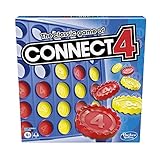
Overview: This refreshed Connect 4 Classic Grid offers the timeless two-player “four-in-a-row” challenge. Players take turns dropping colored discs into a vertical grid, aiming to align four of their color horizontally, vertically, or diagonally while blocking their opponent, providing quick, accessible fun for ages 6 and up.
What Makes It Stand Out: The modernized design features sleeker aesthetics and vibrant colors, making it visually appealing. Crucially, it includes three distinct gameplay modes: the standard game, the faster-paced Connect 4 Frenzy, and the strategic Pop-Out variant where players can eject discs from the bottom, significantly enhancing replay value beyond the basic concept.
Value for Money: As an entry-level strategy game, it delivers excellent value. The durable plastic grid and discs withstand years of play, and the inclusion of multiple game modes justifies its modest price point compared to basic single-mode versions. It’s a cost-effective staple for family game collections.
Strengths and Weaknesses: Strengths: Extremely easy to learn and set up; fast-paced gameplay ideal for short attention spans; multiple modes add strategic depth; durable construction; perfect for young children developing spatial reasoning. Weaknesses: Limited strategic complexity compared to deeper board games; two-player only restricts group play; the grid can become slightly sticky with heavy use over time.
Bottom Line: Hasbro’s Connect 4 Classic Grid is a superbly executed update of a beloved classic. Its simplicity, speed, and added game variations make it a highly recommended, budget-friendly gateway into strategic thinking for kids and a reliable choice for quick family fun.
3. SEQUENCE- Original SEQUENCE Game with Folding Board, Cards and Chips by Jax ( Packaging may Vary ) White, 10.3" x 8.1" x 2.31"
Overview: SEQUENCE is a unique hybrid card-and-board game where players match cards from their hand to corresponding spaces on the board, placing chips to form a line of five. The goal is to be the first to complete the required number of five-in-a-row sequences, blending luck and strategy for 2-12 players.
What Makes It Stand Out: Its ingenious fusion of standard playing cards with a large game board creates a distinctive experience. The folding board and included chips offer portability and tactile engagement. The game scales remarkably well for large groups (up to 12 players in teams), a rarity for strategic card/board hybrids, while remaining accessible to children.
Value for Money: The comprehensive set—including a sturdy folding board, two card decks, and 135 chips—provides exceptional value. It withstands heavy use and accommodates vastly different group sizes, making it far more versatile and durable per dollar than many party or family games with narrower player ranges.
Strengths and Weaknesses: Strengths: Highly scalable for large groups; easy rules for kids yet strategically engaging for adults; durable components; promotes STEM skills like pattern recognition; compact storage. Weaknesses: Can involve significant downtime with maximum players; luck of the draw influences outcomes; the board surface can snag chips if not handled carefully; limited player interaction beyond blocking.
Bottom Line: SEQUENCE is a brilliantly versatile and enduring game. Its unique mechanics, group scalability, and family-friendly accessibility make it a highly worthwhile investment for game nights seeking inclusive, strategic fun suitable for a wide age range.
4. Gamewright - Forbidden Island - Cooperative Strategy Survival Board Game, 2-4 Players
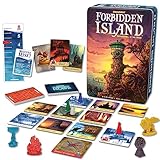
Overview: Forbidden Island casts players as adventurers cooperating to retrieve four sacred treasures from a sinking island before it vanishes. Working as a team, players use unique character abilities to shore up tiles, pass items, and navigate flooded paths in this tense, collaborative race against time for ages 10+.
What Makes It Stand Out: As a pioneering cooperative game, it eliminates player conflict, fostering genuine teamwork and shared decision-making. The innovative tile-based board physically sinks as the game progresses, creating dynamic, high-stakes tension. Rich thematic artwork immerses players in the perilous island setting, enhancing the narrative drive.
Value for Money: Priced accessibly, it offers outstanding value through its unique cooperative mechanic and high replayability. Variable island layouts, different character roles, and adjustable difficulty ensure no two expeditions feel identical, providing far more strategic depth and longevity than many competitive games at this price point.
Strengths and Weaknesses: Strengths: Truly cooperative gameplay builds teamwork; innovative sinking board mechanic; adjustable difficulty; stunning thematic art; quick to learn; excellent for developing strategic planning. Weaknesses: Can suffer from “alpha player” syndrome where one dominates decisions; theme might feel too intense for very young children; component durability (tiles) is merely adequate.
Bottom Line: Forbidden Island is a landmark cooperative game that excels as a family experience. Its engaging theme, teamwork focus, and strategic depth make it an essential, highly recommended addition to any game collection seeking collaborative adventure.
5. AEG & Flatout Games | Cascadia - Award-Winning Board Game Set in the Pacific Northwest | Easy to Learn | Quick to Play | Ages 10+

Overview: Cascadia challenges 1-4 players to build evolving ecosystems across the Pacific Northwest. Using a clever draft-and-place system, players simultaneously select habitat tokens and wildlife cards to create connected corridors where animals like bears and salmon thrive, scoring points through strategic spatial arrangements.
What Makes It Stand Out: Winning the prestigious Spiel des Jahres, its brilliance lies in the seamless spatial puzzle. The drafting mechanism is lightning-fast, and the dual focus—building contiguous habitat zones while optimally placing wildlife for specific scoring conditions—creates satisfying, scalable depth. Its serene theme and elegant mechanics are perfectly intertwined.
Value for Money: As a light-to-midweight strategy game, it offers remarkable value. High-quality components, immense replayability due to variable scoring objectives, and a playtime of only 15-30 minutes per game mean exceptional cost-per-play. It outperforms many heavier, pricier games in pure enjoyment density.
Strengths and Weaknesses: Strengths: Award-winning, elegant design; incredibly quick to teach and play; deep spatial puzzle with high replayability; beautiful nature-themed art; scales perfectly for 1-4 players; minimal downtime. Weaknesses: Limited direct player interaction; solo mode lacks the drafting tension of multiplayer; scoring nuances can feel opaque on the first play; smaller player count (max 4) than some family games.
Bottom Line: Cascadia is a masterclass in accessible, engaging strategy. Its serene beauty, clever mechanics, and perfect blend of simplicity and depth make it an unreservedly recommended gem for both newcomers and seasoned gamers seeking a quick, rewarding puzzle.
6. Azul Asmodee Azul Board Game - Award-Winning Tile-Placement Strategy Game, Beautiful Mosaic Art, Family Fun for Kids & Adults, Ages 8+, 2-4 Players, 30-45 Minute Playtime
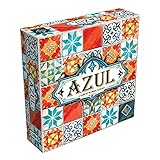
Overview:
Azul is an abstract strategy game where players draft vibrantly colored tiles to create mosaic patterns on their boards. Its minimalist rules and stunning Portuguese-inspired artwork make it a visually captivating experience for families and casual gamers.
What Makes It Stand Out:
The game’s brilliance lies in its elegant simplicity paired with deep tactical decisions. The tactile, high-quality resin tiles and the satisfying “clack” as they’re placed create instant immersion. Its universal accessibility—easy for an 8-year-old to grasp yet offering nuanced scoring strategies—sets it apart from heavier board games.
Value for Money:
Priced moderately for its component quality, Azul delivers exceptional longevity. Unlike cheaper abstract games, its endless replayability (no two games play alike) and broad appeal justify the cost, especially compared to niche strategy titles requiring expansions for depth.
Strengths and Weaknesses:
Strengths: Intuitive rules, stunning components, quick setup, perfect player interaction balance, and high replay value. Weaknesses: Limited player count (max 4), minimal theme integration, and potential analysis paralysis with competitive players.
Bottom Line:
A near-perfect gateway game that bridges casual and strategic play. Highly recommended for family game nights or as a coffee-table centerpiece—it earns its awards through sheer design elegance and universal charm.
7. Stonemaier Games: Wingspan (Base Game) by Elizabeth Hargrave | A Relaxing, Award-Winning Strategy Board Game About Collecting Birds for Adults and Family | 1-5 Players, 70 Mins

Overview:
Wingspan immerses players in ornithology, tasking them with building ecosystems across forest, grassland, and wetland habitats using 170+ unique bird cards. This engine-building game blends strategy with natural science education.
What Makes It Stand Out:
Its groundbreaking theme transforms birdwatching into compelling gameplay. The custom dice tower feeder, egg miniatures, and scientifically accurate bird illustrations create a tactile, serene experience. Solo mode and variable player powers ensure adaptability for any group size.
Value for Money:
At its price point, Wingspan offers phenomenal depth with near-flawless components. The 170 bird cards and modular goals provide years of replayability, outshining similarly priced Eurogames that require expansions to match its scope.
Strengths and Weaknesses:
Strengths: Educational value, exceptional solo play, beautiful art, smooth engine-building, and high replayability. Weaknesses: Steep initial learning curve, potential “analysis paralysis,” and theme may not resonate with non-nature lovers.
Bottom Line:
A masterpiece that redefined thematic strategy games. Ideal for families, educators, or solo players seeking thoughtful engagement—its Kennerspiel des Jahres win is thoroughly deserved.
8. Unstable Games Twisted Cryptids Board Game - Strategy Card Game for Adults and Kids - Family Board Games for 2-4 Players, Ages 12 and Up - from The Creators of Unstable Unicorns and Here to Slay

Overview:
Twisted Cryptids is a lighthearted “take-that” card game where players collect cryptid-themed cards (Bigfoot, Chupacabra) while sabotaging opponents with action cards. It’s designed for quick, chaotic fun with a supernatural twist.
What Makes It Stand Out:
The game’s highlight is its interactive chaos—hidden trait cards and “take-that” mechanics fuel hilarious betrayals. Spooky lenticular box art and thematic Cryptid meeples enhance shelf appeal, while expansions like “Ness is More” extend longevity.
Value for Money:
Priced accessibly for its card quality and components, it competes well against casual card games. Though lighter than strategy-heavy titles, its replayability through expansions and group dynamics offers solid value for parties or casual gamers.
Strengths and Weaknesses:
Strengths: Engaging player interaction, thematic art, quick setup, and family-friendly humor. Weaknesses: High luck dependency, potential for kingmaking, and limited strategic depth for hardcore gamers.
Bottom Line:
A riotous addition to game nights craving playful competition. Best for groups who enjoy Unstable Unicorns-style chaos—skip if you prefer pure strategy over luck-driven fun.
9. The Night Cage by Smirk and Dagger | Cooperative Candlelit Horror Strategy Game | Tile Laying Labyrinth Escape Adventure for 1 to 5 Players Ages 14 Plus

Overview:
The Night Cage is a cooperative horror game where players navigate a candlelit maze, racing to escape before Wax Eaters consume the light. Darkness dynamically reshapes the board, creating palpable tension.
What Makes It Stand Out:
The physical candle mechanic is revolutionary—real-time light decay forces urgent teamwork. Award-winning atmosphere blends tactile tile-laying with psychological dread, while adjustable difficulty accommodates both newcomers and horror veterans.
Value for Money:
Premium components (custom tiles, candle) justify its niche price. Unlike digital horror experiences, its physicality enhances immersion, and advanced modes with new monsters ensure lasting value beyond typical co-op games.
Strengths and Weaknesses:
Strengths: Innovative candle system, gripping tension, scalable difficulty, and true cooperation. Weaknesses: Candle replacement costs, potential fire-safety concerns, and limited replayability without expansions.
Bottom Line:
A genre-defining horror experience that demands group presence. Essential for co-op fans seeking visceral thrills—just keep water nearby.
10. Renegade Game Studios Axis & Allies: 1941 - A WWII Strategy Board Game, Renegade Game Studios, Epic War Game Set in 1941, Struggle for Supremacy, Ages 12+, 2-5 Players, 1-3 Hour Playing Time

Overview:
Axis & Allies: 1941 condenses WWII grand strategy into a streamlined board game where players control Allied or Axis powers battling for global dominance through territory control and tactical combat.
What Makes It Stand Out:
The 160 detailed plastic miniatures and updated rulebook modernize this classic franchise. Its focus on historical accuracy—balanced with accessible mechanics—makes it a strong entry point into wargaming without overwhelming new players.
Value for Money:
Component quality (resin miniatures, sturdy board) exceeds expectations for its price, though it sits at the higher end for introductory wargames. Lacks the depth of complex war simulations but offers better value than pricier niche titles.
Strengths and Weaknesses:
Strengths: High-quality miniatures, historical immersion, clear rules, and strong 2-5 player flexibility. Weaknesses: Simplified strategy may disappoint hardcore wargamers, and setup time can exceed 10 minutes.
Bottom Line:
An excellent primer for WWII strategy enthusiasts. Prioritize it over deeper war games if you seek approachable historical conflict with impressive physical presence.
Defining True Value in Thematic Strategy Games
Beyond the Sticker Price: What “Value” Really Means
Value extends far beyond the initial cost—it’s about how consistently a game delivers joy, challenge, and novelty over dozens of plays. A high-value thematic strategy game offers evolving complexity, where new strategies emerge with each session, preventing stagnation. It’s not just about affordability; it’s ensuring your investment pays dividends in memorable moments, whether through emergent storytelling or satisfying tactical depth.
The Replayability Factor: Why Some Games Never Get Old
Replayability is the heartbeat of value in thematic strategy. Look for games with modular boards, variable player powers, or dynamic scenarios that reshape the experience every time. When theme and mechanics interact unpredictably—like resource scarcity altering political alliances in a historical setting—the game feels fresh long after the first playthrough, eliminating the “one-and-done” disappointment.
Component Quality as a Value Multiplier
Durable components aren’t just about longevity; they deepen immersion and justify cost. Think thick, illustrated tiles that withstand heavy use or custom miniatures that make your faction feel alive. When materials enhance the theme—like textured resource tokens mimicking in-world materials—they transform gameplay from abstract to visceral, ensuring you’ll cherish the game for years.
How Theme Elevates Strategic Depth
Synergy Over Aesthetics: When Theme Drives Mechanics
The most valuable games avoid “theme dressing”—where lore is slapped onto generic mechanics. Instead, theme should dictate strategy. For instance, a game set in a volcanic landscape might force players to manage unpredictable eruptions that reshape the board, making risk assessment core to victory. This integration ensures every decision feels narratively meaningful, not just mathematically optimal.
Avoiding Thematic Dissonance: A Silent Value Killer
Thematic dissonance occurs when mechanics clash with the story, like using identical worker tokens in a game about distinct cultural factions. This breaks immersion and reduces replay appeal. High-value games maintain consistency—such as unique action icons reflecting each faction’s lore—so strategy feels organically tied to the world, keeping players emotionally invested.
Narrative Emergence: Letting Players Craft Their Own Stories
The best thematic strategy games don’t dictate a single story; they create frameworks for emergent narratives. When random events or player interactions generate unexpected plot twists—like a trade dispute sparking a war—the theme becomes a dynamic playground. This organic storytelling boosts replayability and personal connection, making each session uniquely valuable.
Evaluating Core Features for Long-Term Enjoyment
Depth vs. Complexity: Striking the Perfect Balance
A valuable game offers strategic depth without overwhelming complexity. It should have easy-to-learn rules that unfold layers of tactics over time, like a simple action system that reveals intricate combo potential. Avoid games where convoluted rules overshadow theme—true value lies in accessibility that rewards mastery, not memorization.
Player Count Flexibility: Maximizing Your Investment
Games that shine across 2–5 players offer exceptional value by accommodating different group sizes. A two-player duel should feel tense and personal, while larger groups introduce diplomatic chaos that amplifies the theme. Check for adjustable scaling—such as variable player powers or modular boards—to ensure no session feels unbalanced or tedious.
Playtime Efficiency: Quality Over Quantity
Long playtimes aren’t inherently valuable; what matters is how every minute engages you. Top-tier thematic strategy games maintain momentum with intuitive turns and meaningful choices, avoiding downtime. Aim for experiences where 60–90 minutes feel packed with narrative beats and strategic pivots, ensuring busy players get maximum immersion without burnout.
Assessing Longevity and Expandability
Future-Proofing with Modular Expansions
Value-conscious players should prioritize games designed for thoughtful expansions. Modular add-ons—like new scenarios or factions that integrate seamlessly—renew interest without overhauling core rules. This prevents obsolescence and extends lifespan, turning a single purchase into years of evolving gameplay that respects your original investment.
Community Vitality: Why Player Support Matters
A thriving player community signals long-term value. Check forums and social media for active discussions, fan-made scenarios, or organized events. Games with strong community support often see unofficial variants that refresh the theme, while official updates fix imbalances—ensuring your game stays relevant and engaging.
Solo Play Integration: Value for Independent Strategists
Robust solo modes aren’t an afterthought; they’re a value multiplier. The best implementations use AI systems that mimic human unpredictability, adapting to your strategies within the game’s narrative. This lets you explore the theme deeply when others aren’t available, effectively doubling your play opportunities without extra cost.
Smart Acquisition Strategies
Timing Your Purchase: Sales and Secondary Markets
Patience pays off. Wait for seasonal sales or monitor secondary markets for gently used copies—especially for games with durable components. However, avoid damaged items that break immersion, like warped boards. A well-timed purchase can slash costs while preserving the thematic experience, but never sacrifice core functionality for a bargain.
Decoding Marketing Hype: What Descriptions Reveal
Read between the lines in product blurbs. Vague terms like “immersive world” often mask shallow theme integration, while specifics—“variable setup based on historical events”—signal genuine synergy. Watch for red flags like “rules-light” in complex strategy games; true value lies in honest communication about depth and learning curves.
Leveraging Free Resources: Rules Videos and Print-and-Play Demos
Before buying, explore free rules explanations or print-and-play prototypes. These reveal how smoothly theme and mechanics mesh in practice. A polished demo that makes you eager to dive deeper is a strong value indicator, while confusing tutorials hint at underlying design flaws that could drain long-term enjoyment.
Building a Sustainable Collection
Prioritizing Core Mechanics Over Novelty
Focus on foundational mechanics that align with your strategic preferences—like area control or engine building—rather than chasing every thematic trend. Games where mechanics serve the narrative (e.g., hand management reflecting resource scarcity in a post-apocalyptic world) offer deeper value than those relying on superficial gimmicks.
The Swap Economy: Refreshing Your Library Cost-Effectively
Trading games with local groups or online communities breathes new life into your collection without spending a dime. Target swaps for titles that complement your interests—like exchanging a civilization-builder for a narrative-driven campaign game—to maintain thematic diversity while maximizing the utility of every dollar you’ve invested.
Knowing When to Splurge Versus Save
Reserve premium purchases for games with proven longevity and exceptional theme-mechanic fusion. For experimental themes, start with lower-cost options. If a game’s core loop feels innovative but its components are flimsy, wait for a revised edition. Strategic splurging ensures your collection stays lean, high-impact, and endlessly replayable.
Frequently Asked Questions
How do I determine if a game’s theme is genuinely integrated with strategy?
Look for mechanics that directly reference the narrative—like special actions only possible in certain in-world locations. If removing the theme would break the rules, it’s deeply integrated; if the game works with generic labels, it’s likely superficial.
Can a game be valuable if it’s expensive upfront?
Absolutely—if its replayability, component durability, and community support ensure hundreds of hours of engagement. Calculate cost per play: a $70 game played 50 times is far more valuable than a $40 game played twice.
What red flags indicate poor long-term value?
Watch for rigid setups that create identical sessions, rules requiring constant reference, or themes that feel tacked-on (e.g., fantasy art on a stock-market game). These often lead to quick burnout.
How important are physical components for thematic immersion?
Critical—they transform abstract choices into tangible experiences. Flimsy cards or generic tokens break immersion, while thematic art and sturdy materials make the world feel alive, justifying higher costs if done well.
Do solo modes significantly impact a game’s value?
Yes, especially for strategic depth. A well-designed solo mode with adaptive AI preserves the theme’s tension and allows mastery without relying on others, effectively doubling your play opportunities.
Should I prioritize newer releases or proven classics for value?
Classics often offer better value due to refined rules and proven staying power. New releases carry risk—wait for community feedback to confirm if the theme-mechanic synergy holds up beyond initial hype.
How do player counts affect thematic strategy value?
Games that balance well across counts maximize versatility. A 3-player experience should feel distinct from 4-player diplomacy—avoid titles where certain counts lead to kingmaking or downtime, which dilute thematic tension.
Can expansions truly enhance value, or are they cash grabs?
Only if they deepen theme integration. Quality expansions add meaningful narrative layers (e.g., new factions with lore-driven abilities), while cash grabs rehash mechanics with thin thematic justification. Research before investing.
What role does setup time play in perceived value?
Excessive setup erodes value by delaying immersion. Top-tier games streamline setup with intuitive organization—like compartmentalized trays—that preserve the theme’s atmosphere from the first minute.
How do I assess replayability before purchasing?
Study session reports for emergent stories and strategic variety. If players describe wildly different outcomes based on choices (not just randomness), the game likely offers high replay value through meaningful theme-driven decisions.
See Also
- 10 Best Value Strategy Board Games for Deep Gameplay in 2026
- How to Choose the 10 Best Strategy Board Games for Thematic Depth in 2026
- 10 Best Value Family Strategy Board Games for Game Night in 2026
- 10 Best Strategy Board Games for Deep Gameplay Lovers in 2026
- How to Solve Boring Game Nights with the 10 Best Strategy Board Games in 2026