Table of Contents
There’s something magical about the energy of a family game night—the laughter over unexpected answers, the friendly rivalries that spark across the table, and those rare moments when everyone, from the youngest to the oldest, is equally invested in the outcome. Trivia games, with their perfect blend of knowledge, luck, and lively discussion, often sit at the heart of these cherished gatherings. But let’s be honest: not all trivia experiences are created equal. We’ve all been there—staring at a stack of cards with questions that either fly over kids’ heads or leave adults yawning, turning what should be fun into a lesson in frustration. The right trivia game can bridge generations, spark curiosity, and create inside jokes that last years, while the wrong one can send players reaching for their phones before the second round ends.
Choosing the ideal trivia game isn’t just about who knows the most obscure facts; it’s about understanding your unique family dynamic and what makes your group lean in, laugh, and genuinely connect. With so many options flooding the market, promising endless fun but sometimes delivering confusion or disengagement, the process can feel overwhelming. Is it better to prioritize simple, fast-paced rounds for younger players, or dive into deeper categories that challenge teenagers and adults? How do you balance educational value with pure entertainment? This guide cuts through the noise, focusing on the essential features and considerations that transform trivia from a mere time-filler into the highlight of your family’s routine. Let’s unpack what truly matters when selecting a game that resonates with your crew.
Top 10 Trivia Games for Family
Detailed Product Reviews
1. Hasbro Gaming Trivial Pursuit Game: Family Edition Board Game, Family Trivia Games for Adults and Kids, 2+ Players, Ages 8+ (Amazon Exclusive)
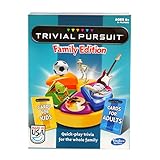
Overview: Hasbro’s Family Edition Trivial Pursuit revitalizes the classic trivia experience specifically for mixed-age groups, featuring tailored questions and streamlined gameplay ideal for family game nights.
What Makes It Stand Out: Its standout feature is the dual-card system—100 adult-focused blue cards and 100 kid-friendly yellow cards—ensuring age-appropriate challenges. The modified board allows wedge collection on any colored space, significantly shortening playtime compared to the original while retaining the core six-wedge victory condition.
Value for Money: Priced competitively, the 1,200 questions provide exceptional replay value. It outperforms generic trivia sets by thoughtfully balancing difficulty, making it a smarter investment than single-audience games that quickly become obsolete as kids age.
Strengths and Weaknesses: Strengths: Inclusive design for all ages; faster gameplay; durable components; excellent team-play flexibility. Weaknesses: Some adult questions may still challenge younger players; limited category depth compared to expert editions; physical board requires storage space.
Bottom Line: A near-perfect family trivia solution that bridges generational knowledge gaps. Highly recommended for regular game nights, offering educational fun without overwhelming complexity for younger participants.
2. I should have known that! - A Trivia Game About Things You Oughta Know, Green
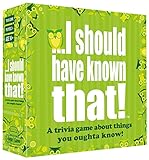
Overview: This compact trivia game challenges players with “common knowledge” questions spanning general culture, history, and everyday facts, targeting teens and adults seeking lighthearted competition.
What Makes It Stand Out: Its unique hook is the focus on universally expected knowledge—questions framed as “you oughta know this”—creating humorous moments of realization. The ultra-portable 6x6x2-inch box makes it ideal for travel or casual gatherings where space is limited.
Value for Money: While affordable, the lack of specified question count or card details raises concerns about content depth. It offers decent value for impromptu play but likely falls short for trivia enthusiasts compared to larger sets with documented question volumes.
Strengths and Weaknesses: Strengths: Extremely portable; simple concept sparks engaging debates; accessible for ages 14+; low price point. Weaknesses: Vague feature description suggests limited replayability; no category specifics provided; likely fewer questions than competitors; minimal component details imply basic production.
Bottom Line: A convenient pocket-sized option for quick trivia fixes, but insufficient documentation and unconfirmed content depth make it a secondary choice versus more transparent, feature-rich alternatives.
3. Who Knows More? Kids or Adults, The Ultimate Trivia Game for Kids, Teens and Adults - A Fun Family Party Game
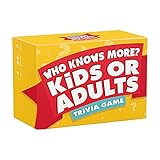
Overview: Designed explicitly for intergenerational rivalry, this game pits kids against adults in a points-based trivia battle covering diverse topics suitable for ages 8 and up.
What Makes It Stand Out: The team-based “kids vs. adults” structure fosters playful competition and bonding, while its simplified 20-point win condition ensures rapid, energetic rounds. Categories cleverly blend history, pop culture, and science to engage multiple age groups simultaneously.
Value for Money: With inclusive age targeting and effortless gameplay, it justifies its cost by replacing multiple single-audience games. Families gain long-term utility as children grow, outperforming age-restricted trivia sets that become irrelevant quickly.
Strengths and Weaknesses: Strengths: Exciting team dynamic; broad topic range; quick setup/rules; durable for frequent use; encourages family interaction. Weaknesses: Point-based system may feel less strategic than classic trivia; lacks physical components like boards; question depth might not satisfy hardcore trivia fans.
Bottom Line: An outstanding choice for family game nights seeking lively, accessible competition. Its focus on shared laughter and learning makes it a top recommendation for households with school-aged children.
4. Super Trivia Game for Adults with 1200 Questions - Fun Board Game for Adults - Family Road Trip Travel Game for The Pursuit of Trivial Knowledge
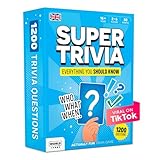
Overview: A travel-optimized trivia game emphasizing estimation and visual challenges, targeting adults and older teens with 1,200 carefully calibrated questions across diverse knowledge domains.
What Makes It Stand Out: It innovates with six question types, including 200 picture-based prompts and estimation challenges (e.g., “What’s Earth’s distance from the Moon?”). The travel-sized box and dice-driven selection enhance portability and replay variety beyond standard trivia formats.
Value for Money: The robust 1,200-question count and unique estimation mechanics deliver strong value, especially for road trips. It competes well against pricier board-heavy sets by prioritizing content over components, though teens under 16 may find questions too advanced.
Strengths and Weaknesses: Strengths: High-quality, varied question types; exceptional portability; estimation rounds add fresh challenge; durable travel box. Weaknesses: Strict 16+ age limit excludes younger players; no physical board reduces engagement for some; picture cards may lack clarity in low light.
Bottom Line: A superb, portable trivia experience for adults and mature teens seeking intellectual variety. Ideal for travel or game nights prioritizing content depth over traditional board gameplay.
5. Do You Really Know Your Family? A Fun Family Game Filled with Conversation Starters and Challenges - Great for Kids, Teens and Adults
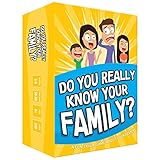
Overview: This interactive card game replaces traditional trivia with personalized questions and challenges designed to deepen family connections through shared stories and lighthearted activities.
What Makes It Stand Out: Instead of factual knowledge, it focuses on interpersonal discovery with prompts like “What’s Mom’s favorite childhood memory?” and silly challenges (e.g., “Do your best impression”). This fosters genuine conversation and inside jokes, transforming game night into meaningful bonding.
Value for Money: While lacking numerical question counts, its emphasis on reusable, customizable interactions provides enduring value. It surpasses fact-based trivia for relationship-building, justifying cost through emotional ROI rather than replayable quizzes.
Strengths and Weaknesses: Strengths: Uniquely strengthens family bonds; sparks laughter and vulnerability; extremely easy rules; inclusive for ages 8+; creates lasting memories. Weaknesses: Not a trivia game—misleading for knowledge seekers; minimal strategic depth; replay value depends on family dynamics.
Bottom Line: An essential pick for families prioritizing connection over competition. Ditch this if you want quizzes, but embrace it for transformative, laughter-filled nights that reveal hidden family layers.
6. Hasbro Games Trivial Pursuit Mini Packs Multipack, Fun Trivia Questions for Adults and Teens Ages 16+, Includes 4 Game Featuring 4 Decades

Overview: This multipack delivers portable, nostalgia-driven trivia with four distinct decade-themed sets (80s, 90s, 2000s, 2010s), each containing 80 cards (240 questions total). Designed for teens and adults 16+, it eliminates the traditional board for pure card-based play, focusing on pop culture, events, and trends. What Makes It Stand Out: The decade-specific focus is its core strength, offering targeted nostalgia that resonates deeply with players who lived through these eras. The ultra-portable, table-free design makes it ideal for travel, parties, or impromptu gatherings. The simple “5 correct answers to win” rule ensures rapid, accessible gameplay suitable for casual players. Value for Money: Priced competitively for a 4-pack, it offers significant replayability across different social settings. While the question depth per decade is lighter than full board games, the convenience and thematic variety provide excellent value for group entertainment, outperforming single-decade alternatives. Strengths and Weaknesses: Strengths: Highly portable; strong nostalgic appeal; easy to learn; great for mixed-age groups familiar with the decades. Weaknesses: Shallow question coverage per decade (only 60 unique questions per era); lacks strategic depth of the classic Trivial Pursuit board; may exclude younger players less familiar with pre-2000s culture. Bottom Line: An ideal, compact trivia solution for pop-culture enthusiasts seeking quick, engaging fun centered on specific decades. Highly recommended for road trips, parties, or casual game nights where portability and nostalgia matter most, despite limited question depth.
7. Outset Media American Trivia Game (Amazon Exclusive) – 5 Categories to Choose from and 1,000 Questions – for Ages 14 and up

Overview: This Amazon-exclusive trivia game dives deep into U.S. culture and knowledge, featuring 1,000 questions across five categories (Geography, History, Pop Culture, Sports, General) via 100 double-sided cards. Aimed at ages 14+, it blends education with entertainment for family or party settings. What Makes It Stand Out: The extensive 1,000-question bank covering diverse American topics provides exceptional longevity. The five distinct categories allow players to tailor gameplay to interests, while the inclusion of a score pad and pencil adds convenience. Its strong educational angle sets it apart as a “learn while having fun” experience. Value for Money: Excellent value given the sheer volume of content and durable components. It surpasses many competitors in question count and category depth at a mid-range price point, making it a worthy investment for families or trivia fans seeking substantial U.S.-centric content without premium cost. Strengths and Weaknesses: Strengths: Massive question variety; well-structured categories; strong educational benefit; high replayability; includes scoring tools. Weaknesses: U.S. focus may limit appeal for international players; lacks physical board for progression; some questions might be too niche for casual players. Bottom Line: A top choice for educators, families, or U.S. history buffs wanting a substantial, category-driven trivia experience. Its depth, educational merit, and completeness make it highly recommended for group learning and entertainment, despite its geographically specific content.
8. QUOKKA Trivia Games for Adults with 500 Questions - Fun Adult Board Game Trivia Cards for Teens, and Families – Trivia Cards with Answers – Great Board Games Trivia for Family Party and Game Night

Overview: QUOKKA offers a streamlined trivia experience with 500 questions presented on compact cards, each featuring 5 Q&As. Designed for families, teens, and adults, it emphasizes flexible, accessible gameplay for parties, game nights, or travel without requiring a board. What Makes It Stand Out: The unique “5 questions per card” format enables rapid-fire challenges and easy answer verification. Versatile play modes (duels, teams, timed rounds) and adjustable win conditions (3 or 5 cards) cater to diverse group dynamics and knowledge levels, enhancing replayability and inclusivity. Value for Money: Solid value for its portability and adaptability. While the 500-question count is lower than some competitors, the multi-question cards and flexible rules maximize utility. It’s a cost-effective option for families wanting a durable, travel-friendly trivia set that bridges generational knowledge gaps. Strengths and Weaknesses: Strengths: Highly portable; adaptable gameplay for all ages; quick setup; encourages group interaction; durable cards. Weaknesses: Fewer total unique questions than larger sets; 5-question format can slow pace during verification; lacks thematic depth for niche trivia enthusiasts. Bottom Line: A versatile, family-friendly trivia staple perfect for on-the-go fun or casual gatherings. Recommended for households seeking an inclusive, easy-to-learn game that accommodates mixed ages and skill levels, though hardcore trivia fans may desire more questions.
9. University Games, Smart Ass Trivia The Ultimate Who, What, Where Party Game , for Families and Adults Ages 12 and Up and 2 to 6 Players

Overview: Smart Ass revolutionizes trivia with its chaotic, shout-out style gameplay. Players race to blurt out answers to “Who/What/Where Am I?” clues without waiting for turns. This edition features 411 new cards (1,233 questions) for 2-6 players aged 12+, emphasizing speed and confidence over turn-taking. What Makes It Stand Out: The permission to yell answers creates unmatched energy and laughter, distinguishing it from traditional trivia. The rapid-fire pace and pressure-cooker atmosphere make it a standout party game, while the board and dual dice add light strategy to the frantic Q&A. Value for Money: Good value for groups prioritizing high-energy interaction over question volume. The physical components (board, pieces, dice) justify its price for dedicated game nights, though the question count per card is lower than pure card-based sets. Ideal as a centerpiece for lively social events. Strengths and Weaknesses: Strengths: Uniquely engaging, fast-paced gameplay; fosters hilarious group dynamics; inclusive for varied knowledge levels; durable components. Weaknesses: Chaos may overwhelm quiet players; board setup required; question depth sacrificed for speed; less educational focus. Bottom Line: A must-have for parties where laughter and speed trump structured play. Highly recommended for groups seeking an uproarious, interactive experience, though not suited for quiet or highly competitive trivia purists.
10. Outset Media Movies Trivia Game - Party Game - Family Game - Travel Game - Fun and Easy to Play - 880 Trivia Questions - for 2 or More Players - Ages 12+

Overview: Tailored for cinephiles, this compact game tests knowledge across comedy, action, animation, drama, and more with 880 questions (4 per card) on 110 double-sided cards. Designed for ages 12+ and 2+ players, it blends portability with deep movie lore. What Makes It Stand Out: Its laser focus on film genres provides niche appeal for movie buffs, while the pocket-sized design ensures travel readiness. The four-category-per-card format encourages broad cinematic knowledge, and the simple rules make it instantly accessible for family game nights. Value for Money: Exceptional value for movie lovers, offering more questions than many genre-specific rivals at an affordable price. The portability and ease of play enhance its utility, making it a smart purchase for frequent travelers or families wanting quick, engaging entertainment. Strengths and Weaknesses: Strengths: Extensive movie coverage; ultra-portable; easy to learn; great for film enthusiasts; sparks nostalgic conversations. Weaknesses: Niche focus may alienate non-movie fans; limited educational scope beyond cinema; no physical components beyond cards. Bottom Line: The definitive trivia choice for families or groups passionate about films. Highly recommended for travel or movie-themed gatherings, though general trivia fans might prefer broader-topic alternatives.
Understanding Your Family’s Trivia Needs
Before diving into box art or rulebooks, take a moment to reflect on who will actually be playing. Every family has its own rhythm, attention spans, and collective knowledge base. Recognizing these dynamics is the first step toward avoiding mismatched expectations and ensuring everyone feels included. A game perfect for a household of history buffs might fall flat with tweens craving pop culture references, while overly simplistic questions can alienate older relatives eager for a mental challenge. Honesty about your group’s strengths and limitations prevents disappointment and sets the stage for genuine enjoyment.
Assessing Age Ranges and Interests
The age spread around your table is arguably the most critical factor. Games designed for broad age ranges typically feature tiered difficulty levels or multiple question categories, allowing a 10-year-old to compete fairly alongside a grandparent. Look for mechanics that let players choose their challenge level per turn, or games that incorporate visual, audio, or physical elements to engage non-readers or those less confident in pure recall. Consider dominant interests too—does your family geek out over movies, science, sports, or world geography? Aligning with shared passions keeps energy high and minimizes groans when niche topics dominate.
Evaluating Group Size and Flexibility
Not all trivia formats handle fluctuating player counts gracefully. Some games require strict team setups that become unwieldy with odd numbers, while others shine with solo play or large groups. If your family game nights often include last-minute additions or vary in size, prioritize titles with scalable rules—those allowing seamless transitions between 2 players and 8+, or offering both competitive and cooperative modes. Games with modular components or adjustable round lengths help accommodate shorter attention spans or sudden schedule changes without abandoning the session entirely.
Considering Attention Spans and Pacing
The dreaded “downtime” can kill trivia momentum, especially with younger players. Games where only one person answers at a time often lead to disengagement for others waiting their turn. Seek out formats that keep everyone actively participating throughout each round—whether through simultaneous answering, betting mechanics, or collaborative challenges. Shorter overall playtimes (under 30 minutes) or clearly segmented rounds also help maintain focus, preventing fatigue from setting in before the final score is tallied.
Key Features That Make Trivia Games Shine
Beyond the trivia questions themselves, the structure and presentation of a game dramatically impact its replayability and family appeal. The best trivia experiences feel dynamic and interactive, not like a pop quiz. Thoughtful design choices transform static question-and-answer sessions into engaging social events where the journey to the answer is as fun as the knowledge itself. Paying attention to these often-overlooked elements ensures your game remains a staple on the shelf, not buried in the closet after two plays.
Question Variety and Depth
A rich mix of categories prevents any single player from dominating and exposes everyone to new topics. Look for games offering more than just “name this movie” or “who said this quote.” The most engaging titles weave in visual puzzles, audio clips, true/false dilemmas, or “connect the dots” style questions that require lateral thinking. Crucially, questions should avoid being overly obscure or reliant on hyper-specific knowledge—focus on concepts that spark “aha!” moments or lively debate rather than immediate resignation. Games with regularly updated question pools (via apps or expansion packs) also combat staleness.
Answering Mechanics That Engage Everyone
How players respond to questions is where trivia games truly differentiate themselves. Physical buzzers add thrilling urgency but can become chaotic with young children. Digital apps offer slick interfaces but risk screen distraction. Consider low-tech alternatives like sliding answer boards, multiple-choice cards held up simultaneously, or even drawing/pantomime elements that get everyone involved. Mechanics where players wager points, steal answers, or collaborate on tough questions foster strategic thinking and reduce the sting of getting an answer wrong. The goal is to minimize passive observation and maximize active participation for every round.
Replayability Through Smart Design
Nothing kills a game faster than repeating the same 200 questions ad nauseam. High-replay-value trivia games incorporate elements like randomized question decks, variable setup conditions, or branching paths that change the flow of play. Some use modular boards where category locations shift each game, while others employ “event” cards that introduce sudden twists or bonus challenges. Games that allow you to curate categories before starting—skipping disliked topics or doubling down on favorites—also enhance longevity by putting control in your hands. Essentially, the game should feel fresh even after multiple plays.
Physical Components and Durability
Since these games live on family tables and get handled by small hands, component quality matters immensely. Sturdy cardstock that withstands shuffling, non-toxic inks, and well-constructed boards or spinners prevent mid-game breakdowns. Consider storage solutions too—games with compartments, tuck boxes, or organized sleeves make setup and cleanup smoother, encouraging more frequent plays. For families with sensory sensitivities, check for loud noise-makers or small, choking-hazard pieces. A game that’s a pain to set up or falls apart quickly won’t survive past the honeymoon phase.
Navigating Age-Appropriate Complexity
Striking the right balance between challenge and accessibility is where many trivia games stumble. Questions too easy for older players feel patronizing, while those too hard for younger ones breed frustration. The sweet spot lies in adaptable difficulty that grows with your family or offers clear pathways for different skill levels. This isn’t about “dumbing down” content but presenting knowledge in ways that resonate across generations, turning potential frustration into shared discovery.
Tailoring for Younger Players (Ages 6-10)
For early elementary players, prioritize games emphasizing visual recognition, basic facts, and playful interaction over rote memorization. Picture-based questions, simple true/false formats, or identifying objects from partial clues work wonders. Avoid heavy reading loads—opt for games where a reader (parent or older sibling) can easily facilitate without spoilers. Points systems should feel rewarding even with missed answers; partial credit for close guesses or team-based scoring keeps morale high. Bright colors, familiar themes (animals, weather, simple science), and quick rounds are essential to match shorter attention spans.
Engaging Tweens and Teens (Ages 11-17)
This age group craves relevance and a sense of competence. Pop culture, technology, social trends, and slightly edgier historical/scientific facts resonate more than vintage movie trivia. Games incorporating current events (updated via apps or expansions) or allowing player-submitted questions can boost investment. Competitive elements like wagering or head-to-head challenges become more appealing, but ensure questions test critical thinking (“Which invention came first?”) rather than just recall. Avoid anything that feels “babyish”—sleek components and faster pacing signal respect for their maturity.
Catering to Multi-Generational Play
When grandparents, parents, and kids play together, the magic happens through shared learning moments. Games featuring “family feud” style answers (e.g., “Name something found in a kitchen”) let all ages contribute based on lived experience. Consider titles with “all-play” rounds where everyone answers simultaneously, then discusses differing perspectives—this turns generational knowledge gaps into conversation starters, not barriers. Look for categories spanning decades (e.g., “1980s music” alongside “Trending TikTok sounds”) that give each generation moments to shine and learn from each other.
Gameplay Flow and Social Dynamics
Trivia isn’t just a test of knowledge; it’s a social engine. The most memorable game nights emerge when the mechanics spark interaction beyond the question itself—encouraging teamwork, playful debate, and spontaneous storytelling. Pay attention to how a game structures turns, handles disagreements, and fosters connection, as these elements often matter more than the questions’ factual accuracy in creating lasting fun.
Encouraging Collaboration Over Competition
While head-to-head rivalry has its place, family trivia often thrives when competition takes a backseat to collective problem-solving. Games with team-based scoring, shared “lifelines,” or cooperative objectives (e.g., reaching a group point goal before time runs out) reduce pressure on individuals and build camaraderie. Mechanics where players must justify their answers or vote on disputed responses naturally spark discussion, turning isolated guesses into group deliberations. This approach ensures quieter or less confident players stay engaged without fear of “losing” for the team.
Managing Disagreements and Keeping It Light
Even with the best intentions, trivia can ignite surprisingly passionate debates over answers. Games that include clear, authoritative reference materials (like detailed explanation booklets) or digital verification tools minimize arguments. More importantly, look for titles that build in humor or absurdity—questions with intentionally funny wrong answers, or categories like “Misheard Lyrics” where getting it wrong is part of the fun. A game that laughs with players when obscure facts stump everyone (“Okay, who actually knew that?”) maintains a joyful vibe even during tough rounds.
Pacing and Round Structure
The rhythm of play makes or breaks engagement. Games with rigid, turn-based structures often leave players checked out during others’ turns. Seek out formats with overlapping phases—like writing answers while others debate, or having bonus mini-challenges during scoring—that keep hands and minds busy. Adjustable round lengths (e.g., “play until someone reaches 10 points” vs. “play 5 fixed rounds”) accommodate varying energy levels. Crucially, the game should have natural pause points, allowing for bathroom breaks or snack refills without disrupting momentum.
Practical Considerations for Family Life
Amidst the excitement of new game night potential, it’s easy to overlook the nitty-gritty realities of family logistics. How much space does it take? Can you set it up in five minutes flat after a long day? Will it survive being shoved back in the box by an overeager child? Addressing these practical hurdles upfront ensures your trivia game becomes a go-to favorite, not a dust-collecting burden.
Setup and Cleanup Efficiency
After a long week, the last thing families need is a 10-minute puzzle just to start playing. Prioritize games with intuitive setup—minimal sorting, clear labeling, and components that stay organized between plays. Look for trays, color-coded decks, or nested storage that lets you dump everything out and be ready in under a minute. Similarly, cleanup should be brainless: games where cards fit neatly into sleeves, boards fold flat, or pieces snap into a single container encourage putting it away properly, preventing lost pieces and future frustration.
Space Requirements and Portability
Not every family has a dedicated game room. Consider your typical play environment: Does the game sprawl across a large table, or can it fit on a coffee table? Compact designs with smaller cards or foldable boards work better in cramped spaces. If you travel for holidays or visit relatives, portability matters—lightweight boxes, durable tuck boxes (not flimsy sleeves), and components that won’t rattle loose are key. Avoid games with delicate miniatures or complex 3D structures if your storage space is a crowded closet shelf.
Long-Term Value and Expandability
With family budgets stretched thin, maximizing value per dollar is crucial. Games offering modular expansions—additional question decks, new categories, or variant rule booklets—provide fresh content without buying a whole new system. Check if the publisher has a history of supporting their titles with free printable content or affordable digital updates. Also, consider if core mechanics could adapt to homemade questions; games with blank cards or app-based custom quizzes let families inject personal inside jokes or curriculum-aligned topics, extending relevance for years.
Frequently Asked Questions
Frequently Asked Questions
How do I know if a trivia game is suitable for mixed ages? Look for games explicitly stating a wide age range (e.g., 8+) and featuring adjustable difficulty—either through tiered questions, optional hints, or mechanics where players choose their challenge level. Avoid titles with heavy reading loads for young kids or overly juvenile themes for teens.
Can trivia games actually be educational without feeling like homework? Absolutely. The best ones integrate learning seamlessly through curiosity-sparking questions, visual aids, and discussion prompts. Focus on games emphasizing “why” behind answers, covering diverse topics from nature to culture, and avoiding rote memorization. The key is fun-first design where learning happens naturally.
What’s the ideal number of players for family trivia? Most games work best with 3-6 players, but flexibility is key. Seek titles offering team play for larger groups or solo/co-op modes for smaller ones. Games with simultaneous answering mechanics scale more smoothly than strict turn-based formats.
How important is question accuracy in family trivia? While factual correctness matters, absolute precision is less critical than for academic settings. Prioritize games with well-researched questions but understand minor discrepancies happen. More vital is having clear reference materials to resolve disputes quickly and keep the mood light.
Are digital trivia apps better than physical board games for families? Apps offer convenience and fresh content but risk screen distraction and unequal access. Physical games foster face-to-face interaction and tactile engagement. Many families prefer hybrid models: physical components with optional app support for scoring or audio clips.
How can I prevent trivia from becoming too competitive or stressful? Choose games with collaborative elements, team scoring, or humor woven into questions. Set ground rules upfront (“no groaning at wrong answers”), use gentle time limits, and emphasize fun over winning. Games with “pass” options or bonus points for creative reasoning help reduce pressure.
What’s the best way to handle disputed answers during gameplay? Select games that include detailed answer explanations in the rules or a dedicated reference book. If a dispute arises, pause briefly to consult the source—this builds trust in the game’s fairness. For homegrown rules, appoint a neutral “judge” (like a parent) whose decision is final to keep play moving.
How often should I expect to replace a trivia game’s question content? Depends on play frequency. If played weekly, core question decks may feel stale in 6-12 months. Look for games with expansion packs, online updates, or DIY question options. Games emphasizing variable gameplay (like category selection) stay fresher longer than fixed-deck formats.
Can trivia games work for virtual family game nights? Yes, but choose titles designed for digital play or easily adaptable formats. Apps with real-time multiplayer features work well, or use physical games where a host shares their screen to display questions. Avoid games relying heavily on hidden cards or physical components that don’t translate online.
How do I get reluctant learners interested in trivia? Start with highly visual or pop-culture-focused games relevant to their interests. Incorporate movement (standing up for correct answers), keep rounds short, and celebrate “learning moments” over correct answers. Letting kids pick categories or submit their own questions boosts investment.
See Also
- Top 10 Best Family Board Games for Game Night with Kids in 2026
- Top 10 Best Board Games for Family Game Night in 2026
- 10 Essential Tips for Choosing the Best Family Board Games for Game Night in 2026
- 10 Game-Changing Trivia Games for Family Game Nights in 2026
- How to Solve Game Night Conflicts with the 10 Best Family Board Games in 2026