Table of Contents
Gathering the family around the table for game night can feel like an uphill battle when teens are involved. Between academic pressures, social media distractions, and rapidly evolving interests, getting them to put down their devices and engage requires something truly special. Thematic board games offer a powerful antidote to digital isolation, creating shared experiences that spark conversation, build teamwork, and forge memories far richer than any screen can provide. The right game becomes more than entertainment; it’s a bridge connecting generations through collaborative storytelling and strategic challenges.
Let’s be real: teens possess a finely tuned radar for anything that feels childish or forced. They crave depth, agency, and themes that resonate with their expanding worldview—exploration, consequence, identity, and complex social dynamics. A successful family game night hinges on selecting titles that respect their growing maturity while remaining accessible enough for younger siblings or less experienced players. It’s not about finding the “coolest” game on the market, but identifying experiences that naturally foster connection, spark genuine laughter, and leave everyone, especially the teens, genuinely looking forward to the next round. This guide cuts through the noise to focus on the essential features that make thematic games stick for families navigating the teen years.
Top 10 Thematic Board Games for Families
Detailed Product Reviews
1. The Chameleon: Award-Winning Bluffing Board Game for Family, Adults & Friends | Includes 80 Extra Secret Words | Who is The Imposter?

Overview:
The Chameleon is a rapid-fire bluffing game where players race to identify the hidden “Chameleon” player who doesn’t know the secret word shared by everyone else. Designed for 3–8 players aged 14+, it thrives on deception, quick thinking, and social deduction in short 15-minute rounds.
What Makes It Stand Out:
Its genius lies in simplicity and tension: one player unknowingly holds the Chameleon card, forcing others to subtly hint at the secret word without exposing it. The included 80 extra words and multi-award-winning status (including “Best Party Game” at UK Games Expo) ensure high replayability and polished mechanics.
Value for Money:
Priced competitively for a party game, it outshines alternatives with its brevity and adaptability—no complex rules or lengthy setup. The extra word cards justify the cost by extending gameplay far beyond typical bluffing games.
Strengths and Weaknesses:
Strengths: Incredibly easy to learn; perfect for mixing large groups; fosters hilarious social dynamics. Weaknesses: Limited depth for strategy-focused gamers; the Chameleon’s role can feel frustrating if exposed too early.
Bottom Line:
An essential, crowd-pleasing party game that delivers non-stop laughs and suspense. Highly recommended for game nights seeking quick, engaging fun without overwhelming complexity.
2. Cape May Board Game | Manage The Historic Seaside Resort Town | Strategy Resource Management Set Collection | 60-90 Minutes Thematic Family Board Game for 1-4 Players Ages 14+ by Thunderworks Games

Overview:
Cape May immerses players in managing the historic seaside town of Cape May, blending resource management, set collection, and historical events. For 1–4 players aged 14+, it tasks you with developing attractions, navigating hardships, and birdwatching to earn points over 60–90 minutes.
What Makes It Stand Out:
The game’s rich theme stands out—historical 1900s events (like storms) dynamically impact gameplay, while birdwatching adds a strategic layer. The stunning components, including 85 miniatures and 150+ illustrated cards, create a tactile, visually engaging experience.
Value for Money:
With premium components and deep strategy, it offers excellent value for medium-weight gamers. Though pricier than light family games, its replayability (via variable events and strategies) justifies the cost compared to similar strategy titles.
Strengths and Weaknesses:
Strengths: Beautiful production; thematic depth; satisfying balance of luck and planning. Weaknesses: Steeper learning curve for casual players; solo mode may lack challenge for veterans.
Bottom Line:
A beautifully crafted strategy gem that educates and entertains. Ideal for history buffs and families wanting substantive gameplay—worth the investment for thematic depth.
3. Herd Mentality: Udderly Funny Family Board Game | Easy & Fun for Big Groups of 4-20 Players | Includes 20 Extra Exclusive Questions

Overview:
Herd Mentality is a laugh-out-loud party game where players guess the most popular answers to quirky questions. Designed for massive groups (4–20 players) aged 10+, it uses majority voting to award cows—or the dreaded “pink cow of doom”—for outlier responses.
What Makes It Stand Out:
Its scalability for huge groups is unmatched, and the included 20 extra questions boost replay value. The “majority wins” mechanic sparks hilarious debates as players try to herd opinions, making it perfect for holidays or reunions.
Value for Money:
Exceptional for large gatherings where few games accommodate 15+ players. The added questions enhance longevity, offering more bang for buck than niche party games with smaller player counts.
Strengths and Weaknesses:
Strengths: Effortless setup; inclusive for all ages; generates genuine laughter. Weaknesses: Humor relies heavily on group chemistry; minimal strategy may bore hardcore gamers.
Bottom Line:
A must-have for chaotic, laughter-filled game nights with extended families or parties. Its simplicity and scalability make it a top-tier choice for stress-free fun.
4. USAOPOLY The Original TAPPLE, The Fast-Paced Family Board Game,Choose a Category & Race Against The Timer to be The Last Player,Learning Word Game for Ages 8 & Up, 2-8 Players, 15-20 Minute Play Time

Overview:
TAPPLE is a rapid word-recall game where players race against a timer to name items in a category starting with a specific letter. For 2–8 players aged 8+, it combines vocabulary skills with heart-pounding urgency in 15–20 minute bursts.
What Makes It Stand Out:
The tactile “Tapple wheel” with letter tabs and built-in timer creates addictive physical engagement. Its portability (cards store inside the wheel) and educational angle—boosting vocabulary under pressure—set it apart from static trivia games.
Value for Money:
Affordable and durable, it outperforms digital word games with its hands-on excitement. The 144 categories ensure lasting value, making it a smarter investment than single-use party games.
Strengths and Weaknesses:
Strengths: Thrilling pace; great for learning; highly portable. Weaknesses: Timer can feel punishing for younger kids; limited depth for adults seeking strategy.
Bottom Line:
A brilliantly simple, adrenaline-fueled word game that’s perfect for classrooms or family nights. Highly recommended for quick, brain-boosting fun.
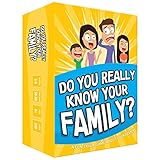
5. Do You Really Know Your Family? A Fun Family Game Filled with Conversation Starters and Challenges - Great for Kids, Teens and Adults
Overview:
This card game uses prompts and dares to spark conversations and reveal family secrets. Aimed at all ages (8+), it encourages players to answer personal questions or complete lighthearted challenges, fostering connection during game nights.
What Makes It Stand Out:
Unlike competitive games, it prioritizes bonding through vulnerability and humor. The mix of trivia (“What’s Mom’s favorite childhood song?”) and physical dares creates organic, memorable moments without complex rules.
Value for Money:
Budget-friendly and infinitely replayable since family dynamics evolve. It’s cheaper than therapy for improving communication—ideal for households seeking meaningful interaction over wins.
Strengths and Weaknesses:
Strengths: Builds empathy; effortless to play; inclusive for all ages. Weaknesses: Lacks structured gameplay; sensitive topics may unsettle some families.
Bottom Line:
A heartfelt tool for strengthening family ties—best for groups valuing connection over competition. An excellent choice for holidays or reconnecting.
6. EXIT: The Game - Family - 2 Escape Adventures, at-Home Escape Room, Co-Operative Game, Family Activity, Brainteasers, 2-4 Players

Overview:
This family-focused escape room game delivers two distinct, self-contained mysteries in one box, designed specifically for younger players and families seeking collaborative puzzle-solving without the complexity of standard EXIT titles.
What Makes It Stand Out:
The seamless integration of tactile elements—ripping, folding, and discovering hidden components—within two whimsical themes (Meanstone Manor and Candy Castle) creates immersive, story-driven engagement. Its tailored difficulty bridges the gap between kids’ and adult escape games, ensuring accessibility while maintaining genuine challenge.
Value for Money:
Priced competitively for two full adventures, it offers exceptional replayability for its niche. While single-use per puzzle, the 60-90 minute experiences per story provide more collaborative depth than many comparable family games, justifying the cost for regular game nights.
Strengths and Weaknesses:
Strengths: Perfectly scaled puzzles for families; cooperative design fosters teamwork; high-quality thematic components; two diverse adventures maximize value.
Weaknesses: One-time play per mystery limits longevity; younger kids may need adult guidance; component destruction prevents reuse.
Bottom Line:
An outstanding entry point into escape rooms for families, offering clever, cooperative fun that bridges age gaps—highly recommended for parents seeking screen-free bonding with elementary to middle-schoolers.
7. Telestrations 8 Player 2nd Edition Board Game, Award Winning Hilarious and Unpredictable Must Have Party Game with a New Look, Sketch What Your Read Then Guess What You Saw, 4-8 Players, Ages 10+

Overview:
Telestrations transforms the classic “Telephone” game into a riotous sketch-and-guess experience where players alternately draw phrases and interpret others’ illustrations, creating chain reactions of hilarious miscommunication.
What Makes It Stand Out:
The game’s genius lies in celebrating bad artistry—crude drawings amplify the chaos. With 2,000+ prompts (including fresh 2nd Edition phrases) and seamless 4-8 player support, each round delivers unpredictable, laugh-out-loud moments as phrases mutate beyond recognition.
Value for Money:
The 8-player edition justifies its price with expanded capacity and new content over older versions. Minimal setup, endless replayability, and universal appeal make it a cost-effective party staple that outlasts trendier games.
Strengths and Weaknesses:
Strengths: Incredibly easy to learn; thrives on player creativity (or lack thereof); scales perfectly for groups; high replay value with vast prompt library.
Weaknesses: Can feel repetitive with small groups; limited strategic depth; younger players (ages 10+) might miss some humor.
Bottom Line:
A must-have for gatherings, Telestrations guarantees uproarious fun through joyful chaos—ideal for parties, family nights, or ice-breaking, with zero artistic skill required.
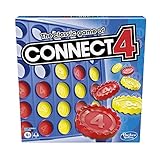
8. Hasbro Gaming Connect 4 Classic Grid,4 in a Row Game,Strategy Board Games for Kids,2 Player .for Family and Kids,Ages 6 and Up
Overview:
This refreshed version of the iconic vertical-checkers game challenges two players to strategically drop colored discs into a grid, aiming to align four while blocking opponents—a timeless test of foresight and tactics.
What Makes It Stand Out:
Beyond the classic “4 in a row” mode, it introduces three gameplay variants: the frantic Connect 4 Frenzy and the tactical Pop-Out (ejecting bottom discs). Its modern, vibrant grid design and smooth disc mechanics enhance the tactile experience without complicating rules.
Value for Money:
As an affordable staple, it delivers remarkable longevity for its price. The triple-game flexibility extends replayability far beyond basic editions, making it a smarter investment than cheaper, single-mode alternatives.
Strengths and Weaknesses:
Strengths: Instant setup and intuitive rules; strategic depth suitable for ages 6+; durable construction; multiple modes prevent staleness.
Weaknesses: Strictly two-player limits group play; Pop-Out variant requires careful grid handling; modern aesthetic may not suit traditionalists.
Bottom Line:
A brilliantly executed evolution of a classic, offering accessible strategy and fresh twists—perfect for budding tacticians and family duels, though best for consistent pairs.
9. Outsmarted Ultimate Edition - 10 Exciting Bonus Categories | Kids, Teens & Adults | Next-Level Game Night for Family & Friends | 2–24 Players | Age 8+ | 10,000+ Questions | 2026 Edition

Overview:
Outsmarted revolutionizes trivia with an app-driven format that auto-adjusts question difficulty by age, transforming living rooms into a dynamic TV quiz show experience for 2–24 players.
What Makes It Stand Out:
Its adaptive AI levels the playing field between kids and adults, while 10,000+ multimedia questions (including audio/video clips and Breaking News) ensure freshness. Remote play and Smart TV casting enable global participation, and the Ultimate Edition’s 10 bonus categories (e.g., Movie Music, Logo Quiz) add immense variety.
Value for Money:
The app’s free core functionality and device compatibility (iOS/Android/Windows) maximize accessibility. With 10,000+ questions and 80+ purchasable categories, it offers unparalleled depth—far exceeding physical trivia games’ longevity at a mid-range price.
Strengths and Weaknesses:
Strengths: Truly inclusive for all ages; vast, updatable content; seamless remote play; engaging multimedia elements.
Weaknesses: Requires stable tech setup; premium categories cost extra; less tactile than traditional board games.
Bottom Line:
A future-proof trivia powerhouse that masterfully blends app convenience with family competition—essential for modern game nights, provided you embrace digital integration.
10. Moose Master - Laugh Until You Cry Fun - Your Cheeks Will Hurt from Smiling and Laughing so Hard - for Fun People Looking for A Hilarious Night in a Box

Overview:
Moose Master is a rapid-fire party card game where players compete in absurd, laugh-driven challenges (e.g., “Most likely to wrestle a moose”) using 110 prompt cards to spark unscripted humor and friendly rivalry.
What Makes It Stand Out:
Its relentless focus on spontaneous, inclusive comedy—where the silliest answers win—creates instant joy. Setup takes seconds, rules fit on one card, and the moose-themed whimsy (“cheeks will hurt from smiling”) delivers on its promise of pure, chaotic fun.
Value for Money:
At a modest price, it outperforms many complex party games through sheer replayability and accessibility. The compact box packs 30-minute sessions of guaranteed laughter for 3–10 players, making it ideal for frequent use or as a giftable icebreaker.
Strengths and Weaknesses:
Strengths: Effortless setup/learning; thrives on player personality; highly portable; inclusive for mixed groups.
Weaknesses: Humor is subjective (may flop with reserved crowds); minimal strategic depth; niche “moose” theme feels arbitrary.
Bottom Line:
A brilliantly simple, laughter-packed essential for social gatherings—perfect for teens and adults who prioritize giggles over strategy, though best paired with outgoing players.
Understanding the Teenage Player Mindset
Why Theme Matters More Than Mechanics for Teens
For teenagers, the narrative hook is often the gateway to engagement. A compelling theme—whether rebuilding a post-apocalyptic society, navigating intricate political intrigue, or exploring uncharted alien worlds—provides immediate context and emotional investment. Teens are developing their sense of identity and place in the world; games offering meaningful choices within a rich setting allow them to experiment with consequences and strategies in a safe, low-stakes environment. A shallow theme feels dismissive, while a resonant one validates their desire for experiences that feel substantial and relevant to their evolving perspectives.
Balancing Complexity and Accessibility
Teens can handle intricate rules, but frustration arises when setup eats into playtime or core mechanics feel unintuitive. The sweet spot lies in games where the core loop is graspable within the first few turns, even if strategic depth unfolds over multiple plays. Look for titles with elegant rulebooks, clear iconography, and intuitive player aids. Complexity should stem from meaningful player decisions and emergent storytelling, not convoluted procedures or excessive bookkeeping. The goal is for the rules to fade into the background, leaving the thematic experience and social interaction front and center.
The Critical Role of Player Agency
Nothing disengages a teen faster than feeling powerless or like a passive observer. Games where every player has significant, impactful decisions on their turn foster investment. This means avoiding kingmaker scenarios or games where early misfortune dictates the entire outcome. Mechanics that allow for meaningful catch-up, varied strategies to victory, and the ability to directly influence the game state (through negotiation, resource management, or tactical positioning) keep teens actively participating and invested in the unfolding narrative, rather than checking their phones.
Essential Features for Family-Themed Game Success
Optimal Playtime for Teen Attention Spans
Respect the clock. Games significantly exceeding 90 minutes often test the patience of even the most engaged teen, especially when balancing homework or other commitments. The ideal sweet spot typically lies between 45-75 minutes. This duration allows for a complete, satisfying narrative arc and strategic development without dragging into fatigue or restlessness. Games offering variable setup for shorter or longer experiences provide valuable flexibility, letting families adjust based on the evening’s energy level and schedule.
Player Count Flexibility for Real Families
Family sizes vary, and reliably getting everyone to the table is half the battle. Prioritize games that scale exceptionally well across their intended player range (e.g., 2-4, 3-5, 2-6). Crucially, the experience shouldn’t feel fundamentally different or unbalanced at the minimum or maximum counts. Games that incorporate solo modes (for when a teen wants a quick play alone) or robust two-player variants add significant longevity and adaptability for households where gathering the full group is challenging.
Minimizing Downtime Between Turns
Teens, like most players, dislike long stretches of inactivity. Games with simultaneous action selection, worker placement phases, or phases where players can plan their next move while others act drastically reduce idle time. Even in turn-based games, mechanics that allow players to react or influence others’ turns (within reason) help maintain engagement. Constantly checking the time or phone during downtime is a sure sign the game’s pacing isn’t right for the group.
Building Meaningful Family Interaction
Cooperative and Semi-Cooperative Dynamics
Games where players work together towards a common goal, or where cooperation is necessary but individual victory is still possible, are often golden for family dynamics with teens. These mechanics naturally foster communication, shared problem-solving, and reduce the sting of direct competition that can sometimes flare between siblings. They shift the focus from “beating” family members to overcoming the game’s challenges as a unit, creating a more positive, collaborative atmosphere where teens feel like valued contributors to a team effort.
Encouraging Strategic Conversation and Negotiation
The most memorable game nights spark genuine discussion. Look for games where negotiation, trade, or alliance-forming are core mechanics, but framed within the theme (e.g., trading resources for survival, forming political pacts). This encourages teens to articulate their strategies, justify their decisions, and practice persuasive communication in a fun, low-pressure setting. It transforms the game from a silent puzzle into a dynamic social event where the conversation is part of the fun.
Managing Healthy Competition and Reducing Player Elimination
Direct competition isn’t inherently bad, but it needs careful handling. Games where players can be eliminated early are generally toxic for family harmony, especially with teens who may already feel sensitive about losing. Prioritize games with continuous engagement for all players until the very end, even if they are trailing. Mechanics that focus on personal victory point tracks rather than direct “take that” attacks help keep competition healthy. The goal should be spirited rivalry, not resentment, ensuring everyone wants to play again.
Practical Considerations for Family Integration
Setup and Cleanup Efficiency
A game that takes 15 minutes to set up and another 10 to pack away drastically reduces the likelihood of it being chosen spontaneously. Teens, often tasked with cleanup, appreciate games with intuitive organization, minimal fiddly components, and clear storage solutions (like integrated trays). Games that can be set up in under 5 minutes and packed away just as quickly remove a major barrier to actually playing, making game night feel like a realistic and appealing option on a busy evening.
Component Quality and Longevity
Teens aren’t always gentle, and family games take a beating. Durable components – thick cardboard tokens, sturdy boards, and cards with a good finish – withstand repeated plays and occasional rough handling. While beautiful art enhances immersion, flimsy parts that bend, tear, or get lost easily create frustration. Investing in games known for solid production values ensures the experience remains enjoyable over dozens of plays, providing genuine long-term value for the family.
Theme Appropriateness and Maturity Resonance
While avoiding overly childish themes is key, it’s equally important to steer clear of excessively violent, overly complex adult themes, or content that might make younger family members uncomfortable. Look for themes that offer depth and intrigue suitable for a broad age range – think strategic exploration, clever heists, historical adventures, or sci-fi problem-solving – that teens find compelling without alienating others. The theme should feel mature and engaging for the teen, not like a watered-down version of an adult game.
Replayability Through Variable Setup and Scenarios
Teens quickly master games and lose interest if every play feels identical. High replay value is non-negotiable. This comes from modular boards, randomized objectives, multiple unique player roles with distinct abilities, scenario expansions, or legacy elements that change the game over time. Knowing that each session offers a genuinely new challenge or narrative path keeps teens invested and prevents the game from gathering dust after three plays. Variety is the spice that keeps family game nights exciting.
Learning Curve and Teaching Friendliness
The person teaching the game (often a parent) shouldn’t need a PhD in rules-lawyering. Games with intuitive core concepts, well-structured rulebooks that teach step-by-step, and clear reference sheets make the initial learning process smoother and less intimidating. A game that can be effectively taught in 10-15 minutes, with nuances discovered during play, is vastly more likely to be embraced by a family, especially when teens are involved. Avoid games where the teach time rivals the playtime.
Storage and Space Requirements
Be realistic about your family’s space. Games with massive boxes that won’t fit on standard shelves or require clearing the entire dining table are impractical for regular play. Consider the footprint needed during gameplay and where the box will live when not in use. Compact games, or those with efficient internal storage, are more likely to stay accessible and get pulled out on a whim, rather than being relegated to the closet due to sheer bulk.
Making the Most of Your Thematic Game Nights
Setting the Stage for Success
Don’t underestimate the power of ambiance. Simple touches like dimming harsh lights, putting phones in a basket (yes, even the adults!), and having snacks readily available signal that this time is special and screen-free. Frame game night as a shared activity, not a chore. Let teens have input on the game choice sometimes – feeling heard increases buy-in. Starting with a quick, lighter game can warm up the group before diving into something meatier.
Facilitating Inclusive Play
Actively encourage participation from quieter members, including teens who might be observing initially. Gently draw them into discussions: “What’s your take on this trade offer?” or “How do you think we should tackle this challenge?” Avoid letting one dominant player (adult or teen) take over decision-making. The goal is shared ownership of the experience. If competitiveness flares, gently steer the focus back to the fun of the shared story and problem-solving.
Embracing the Journey, Not Just the Win
Shift the family mindset away from pure victory. Celebrate clever plays, hilarious thematic moments (“Great, now we’ve accidentally summoned the space kraken!”), and creative solutions, regardless of who ultimately scores the most points. Ask reflective questions at the end: “What was the most surprising twist?” or “What strategy would you try differently next time?” This emphasizes the shared experience and learning, making the game about connection rather than just the final tally, which is crucial for maintaining positive feelings, especially after a loss.
Frequently Asked Questions
How do I get my reluctant teen to even try a board game? Start with a game known for strong theme and minimal rules overhead. Frame it as a short, low-stakes activity (“Just 30 minutes, see if this story hooks you?”). Let them choose from a pre-vetted shortlist. Avoid forcing prolonged sessions; a positive first experience is key.
What if the game is too hard for my younger kids but my teen wants depth? Look for games with official “family” or “simplified” rules variants that reduce complexity for younger players while preserving the core theme and engagement for the teen. Cooperative games are often excellent here, as adults can subtly assist younger players without taking over.
How can we handle it when competition gets too heated with teens? Address it calmly during the game: “Whoa, let’s remember we’re all on team Family tonight.” Focus on the fun of the challenge, not just winning. If tempers flare, pause the game, take a break, and reset. Choose games with less direct conflict initially.
Are expensive games worth it for families with teens? Focus on replayability and component quality. A $70 game played 50 times offers great value; a $40 game played twice does not. Prioritize durability and depth over sheer quantity. Check local libraries or game stores for demos before investing.
My teen says board games are “for little kids.” How do I counter that? Highlight the strategic depth, mature themes (e.g., diplomacy, resource scarcity, ethical dilemmas), and social dynamics in modern thematic games. Show examples of complex narratives or strategic puzzles. Appeal to their desire for meaningful engagement beyond screens.
How long should our first game session be? Aim for 60-75 minutes max for the first playthrough, including teach time. Stop while everyone is still having fun, even if the game isn’t finished. Ending on a high note makes them want to continue next time.
What if we get stuck on a rule during the game? Agree on a quick, common-sense ruling to keep play moving (“We’ll assume this means X for now”), note it, and look up the official rule afterward. Don’t let rules disputes derail the entire evening. Many publishers have clear FAQs online.
How often should we aim for family game night? Consistency matters more than frequency. One reliable, enjoyable session every two weeks is better than sporadic, forced marathons. Let teens help choose the regular slot that works for them.
Can thematic games actually help with teen social skills? Absolutely. Negotiation, active listening, reading social cues during bluffing or alliances, managing disappointment gracefully, and collaborative problem-solving are all naturally exercised in quality thematic games within a safe, structured environment.
What’s the biggest mistake families make with teen board gamers? Forcing games that are clearly too juvenile or simplistic, or conversely, overwhelming them with excessive complexity right out of the gate. Misjudging the theme’s relevance and failing to actively foster an inclusive, low-pressure atmosphere are also common pitfalls. Listen to their feedback.
See Also
- 10 Best Thematic Board Games for Teens in 2026
- 10 Thematic Board Games Recommendations for Date Nights in 2026
- 10 Thematic Board Games That Solve Lack of Engagement in 2026
- 10 Best Thematic Board Games for Solving Common Boredom Problems in 2026
- 10 Thematic Board Games That Solve the ‘Nothing to Play’ Problem in 2026