Table of Contents
Let’s be honest: if you’ve ever tried to get a group of teenagers to sit down for a traditional board game night, you’ve probably been met with eye rolls, sighs, and the immediate pull-out of phones. For many teens, the word “board game” conjures images of slow-paced turns, complicated rulebooks, and childhood nostalgia they’ve long outgrown. They associate the activity with forced family fun or outdated mechanics that feel more like homework than entertainment. In a world of instant digital gratification and fast-paced social media, the idea of moving plastic tokens around a board can seem painfully irrelevant. It’s not that teens don’t want to connect or have fun together—they absolutely do—it’s that the format often feels wrong for their energy and social rhythm.
The good news? The board game world has undergone a quiet revolution, specifically catering to exactly this kind of skepticism. Forget everything you think you know about board games. Modern party games are designed with reluctant players in mind, prioritizing lightning-fast setup, minimal downtime, physical interaction, hilarious unpredictability, and zero pressure to be a strategic mastermind. These aren’t your grandma’s card games; they’re social catalysts disguised as quick-play experiences, built to spark genuine laughter, spontaneous moments, and the kind of organic connection that puts phones down (at least for a little while). Finding the right game isn’t about convincing teens to tolerate board games—it’s about discovering an activity that feels like hanging out, just with a cleverly designed structure to kick things off.
Top 10 Party Board Games for Teenagers
Detailed Product Reviews
1. DSS Games You Laugh You’re Out Game | Family Card Game for Adults, Kids & Teens | 125 Prompt Fun Cards for Game Nights & Parties Ages 14+
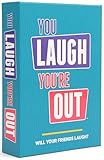
Overview: This party game challenges players to maintain a straight face while others act out absurd prompts. Designed for ages 14+, it centers on the Joker trying to make others laugh within 30 seconds using 125 included prompt cards, with laughter resulting in lost laugh tokens. What Makes It Stand Out: Its simplicity and universal appeal shine—no setup is needed, and the “Joker” role rotates dynamically. The curated prompts (#39 “Dances like pants are on fire”) encourage spontaneous, physical comedy, while the token system ensures players stay engaged even after slipping up. Being from the creators of “Who’s Most Likely To” adds credibility. Value for Money: Priced competitively against similar games, the robust components (125 cards, 36 tokens, timer) offer replayability without hidden costs. It undercuts premium party games while delivering equal entertainment, especially for mixed-age groups seeking lighthearted interaction. Strengths and Weaknesses: Strengths: Effortless rules, inclusive for teens/adults, compact travel size. Weaknesses: Limited depth for strategy lovers; younger kids (under 14) may struggle with prompts; token count feels tight for 8+ players. Bottom Line: An excellent, accessible game for stress-free laughter at gatherings. Ideal for families with older kids or adult parties seeking quick, hilarious fun—just don’t expect strategic depth.
2. Super Skills - Action Game for Competitive People - Beat Your Friends at 120 Challenges - Fun Group Activity for Family Night or Party with Kids, Teen

Overview: Super Skills delivers fast-paced physical challenges where players race to complete 10 tasks first. It includes 120 challenge cards and diverse accessories (cups, blindfolds, chopsticks) for indoor/outdoor play, targeting ages 8+. What Makes It Stand Out: The variety of skill tests—like blindfolded cup stacking or bounce-catching—caters to different abilities. Four flexible play modes (solo, teams, head-to-head) and its award-winning status highlight versatility. The dry-erase scoreboard tracks progress cleanly. Value for Money: The extensive accessory kit (10 cups, 5 balls, etc.) justifies the price, eliminating the need for household substitutions. It outperforms cheaper rivals by offering structured, replayable challenges suitable for both kids’ parties and corporate team-building. Strengths and Weaknesses: Strengths: Highly adaptable for groups; durable components; encourages physical activity. Weaknesses: Some challenges (e.g., dice balancing) feel fiddly; blindfold quality is average; storage for small parts isn’t optimized. Bottom Line: A top pick for active, competitive groups wanting dynamic fun. Worthwhile for families, schools, or workplaces—though patience is needed for trickier tasks.
3. The Chameleon: Award-Winning Bluffing Board Game for Family, Adults & Friends | Includes 80 Extra Secret Words | Who is The Imposter?

Overview: This deduction game tasks players with identifying the “Chameleon”—the only one unaware of the secret word—who must blend in using subtle clues. For 3-8 players aged 14+, it uses coded communication to create tense, social deduction. What Makes It Stand Out: Its 15-minute runtime and instant setup (2 minutes to learn) make it perfect for quick sessions. The hidden-word mechanic fosters clever wordplay and bluffing, while 80 extra words extend longevity. Multi-award wins (e.g., UK Games Expo’s “Best Party Game”) validate its appeal. Value for Money: The compact box packs high replay value with minimal components. Compared to longer deduction games, it offers more rounds per dollar and suits larger groups without complexity bloat. Strengths and Weaknesses: Strengths: Brilliant for social dynamics; quick yet strategic; scales well for 8 players. Weaknesses: Less engaging with 3-4 players; relies heavily on group charisma; word list may feel repetitive over time. Bottom Line: A stellar, swift party game for bluffing enthusiasts. Highly recommended for groups craving wit-driven interaction—skip only if you prefer physical or cooperative play.
4. BRAVEBUG You Laugh You Lose Game - Funny Charades Kids Games - Board Games for Kids & Teens - Try Not to Laugh Challenge - Sleepover Party Supplies for Girls, Birthday Game for Family, Kids & Girls

Overview: BRAVEBUG’s iteration of the “don’t laugh” concept uses 150 prompt cards where players act out challenges while others resist giggling. Aimed at ages 8+, it replaces tokens with penalty cards, eliminating players at 5 strikes. What Makes It Stand Out: The higher card count (150 vs. competitors) and penalty-card system create faster-paced elimination. Its portability and focus on charades-style acting—paired with broad age inclusivity (kids to adults)—make it ideal for sleepovers or casual gatherings. Value for Money: Slightly more cards than rivals at a similar price point enhance value, especially for frequent players. The inclusion of a sand timer and simple rules maximize out-of-box usability without premium pricing. Strengths and Weaknesses: Strengths: Accessible for younger kids (age 8+); travel-friendly; versatile for parties or quiet nights. Weaknesses: Penalty mechanics feel harsher than token systems; prompts occasionally overlap with similar games; sand timer quality is basic. Bottom Line: A solid, family-friendly choice for giggly group fun. Best for younger teens or mixed-age groups—opt for DSS Games if preferring a more forgiving token system.
5. Challenge Champs Action Party Game – 200 Skill Challenges for Team Building, Family Game Night | Complete Set for Adults, Teens, Kids 8+ with 10+ Accessories | Competitive Group Activity
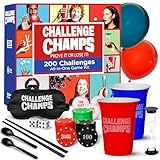
Overview: Challenge Champs offers 200 physical challenges using 10+ included accessories (ping pong balls, blindfolds, etc.) for competitive play. It targets ages 8+ and emphasizes team-building for families, schools, or corporate events. What Makes It Stand Out: The sheer volume of challenges (200) and premium accessories—like reusable chalk markers and durable cups—set it apart. Its focus on four challenge types (speed, balance, tricks, team) ensures variety, while corporate-friendly marketing highlights real-world utility. Value for Money: The comprehensive kit justifies a higher price by eliminating the need for DIY supplies. For groups needing reliable, reusable components—especially in professional settings—it outperforms fragmented alternatives. Strengths and Weaknesses: Strengths: Exceptional for team cohesion; scalable for 2-12 players; high-quality, plentiful accessories. Weaknesses: Storage is bulky; some challenges require space; overkill for small, casual groups. Bottom Line: The ultimate investment for active, large-group entertainment. Perfect for schools or offices—but casual families may prefer leaner options like Super Skills.
6. USAOPOLY The Original TAPPLE, The Fast-Paced Family Board Game,Choose a Category & Race Against The Timer to be The Last Player,Learning Word Game for Ages 8 & Up, 2-8 Players, 15-20 Minute Play Time

Overview:
TAPPLE delivers lightning-fast wordplay for families, challenging players to race against a built-in timer. Select a category card, press the timer, and shout out words starting with a specific letter before time runs out, then flip the corresponding tab. Designed for 2-8 players aged 8+, it packs intense 15-20 minute rounds ideal for game nights.
What Makes It Stand Out:
The ingenious Tapple wheel integrates the timer, category storage, and letter tabs into one portable unit, eliminating setup hassles. Its relentless pace creates addictive tension, while the 144 categories ensure near-endless replayability. Unlike slower word games, TAPPLE’s physical interaction (pressing tabs) and strict time limits keep all players engaged continuously.
Value for Money:
Priced competitively for its component quality and portability, TAPPLE outshines cheaper alternatives with its durable wheel mechanism and substantial card count. It justifies its cost by replacing multiple category-based games while fitting easily in a bag for travel—making it a smarter investment than disposable party games.
Strengths and Weaknesses:
Strengths: Exceptionally portable; intuitive rules; accommodates large groups; sharpens vocabulary under pressure. Weaknesses: Timer mechanism may frustrate younger players; category depth varies; limited strategic depth beyond quick recall.
Bottom Line:
A must-have for families seeking energetic, educational fun. Its flawless execution of fast-paced gameplay and portability make it worth every penny—highly recommended for shaking up game night.
7. WHAT DO YOU MEME? Incohearent, The Guess The Gibberish Party Game by Relatable, A Funny Card Game for Adults, Great for Bachelorette Party Games or Game Night Games, Includes 300 Cards

Overview:
Incohearent capitalizes on its viral TikTok fame (750M+ views) as a raucous adult party game where players decode nonsensical “gibberish” phrases within a time limit. Designed for 3-8 players aged 17+, it thrives on miscommunication and laughter, with 300 cards spanning Party, Spicy, and Pop Culture themes.
What Makes It Stand Out:
The game’s brilliance lies in its simplicity: hold up a card showing only garbled text, and teammates race to shout the actual phrase (e.g., “Couch potato” as “Kawch potayto”). Its social-media-driven popularity ensures immediate recognition, while the spicy-themed cards add cheeky fun perfect for bachelorette parties or casual hangs.
Value for Money:
With 300 high-quality cards and broad appeal, Incohearent offers exceptional value for adult gatherings. It surpasses similar word games by focusing purely on chaotic decoding—no extra components needed. At its price point, it’s cheaper than most meme-based alternatives yet delivers more consistent laughs.
Strengths and Weaknesses:
Strengths: Hilariously accessible; leverages internet culture; minimal setup; great icebreaker. Weaknesses: Age-restricted (17+); repetitive after extended play; pop culture reliance may date content.
Bottom Line:
A near-perfect pick for adult game nights craving effortless, uproarious fun. Grab it for birthdays or gatherings—you’ll quickly see why it went viral.
8. Speed Charades Party Game - Charades Board Game - Includes 1400 Charades - Perfect for Groups and Family Game Nights

Overview:
Speed Charades revolutionizes the classic by pitting teams against each other in simultaneous guessing sprints. With 1,400 words across 280 cards, players race to act out five words per round—the first team to guess four wins the point. Built for 2+ players of all ages, it delivers 25-30 minutes of nonstop energy.
What Makes It Stand Out:
The head-to-head simultaneous play eliminates downtime, ensuring constant involvement. Unlike traditional charades, everyone participates every round, creating infectious adrenaline. Its scalability (from families to large parties) and 1,400 diverse words—from kid-friendly to teen-appropriate—make it uniquely inclusive.
Value for Money:
The sheer volume of content (1,400 words) dwarfs competitors at similar prices. Durable cards and a reusable scorepad enhance longevity, while the 2-minute learn time maximizes play value. For group versatility, it outperforms pricier charades kits with fewer words.
Strengths and Weaknesses:
Strengths: Zero downtime; universally engaging; massive word variety; portable. Weaknesses: Requires ample space to act; less strategic for quiet players; scorepad feels flimsy.
Bottom Line:
The definitive charades upgrade for lively groups. If your game nights need high-energy interaction, this is an unbeatable investment.
9. I should have known that! - A Trivia Game About Things You Oughta Know, Green
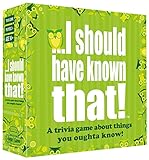
Overview:
“I Should Have Known That!” targets players 14+ with trivia focused on “common knowledge” gaps. Packaged in a compact 6x6x2-inch box (Polish origin), it challenges 2+ players to answer deceptively simple questions that often stump adults, testing everyday awareness over niche expertise.
What Makes It Stand Out:
Its clever premise—humbling players with questions they assume they know—creates instant engagement. Unlike history-heavy trivia, it covers practical life knowledge (e.g., “What does ‘RSVP’ stand for?”), making it relatable and conversation-sparking. The small footprint aids portability for travel or casual settings.
Value for Money:
While specifics are sparse, the niche focus justifies its likely modest price. It fills a unique gap between pub trivia and family games, offering replayability through shared “aha!” moments. However, the lack of card count or theme details slightly undermines perceived value versus content-rich alternatives.
Strengths and Weaknesses:
Strengths: Humorous, accessible questions; great for mixed-age groups; highly portable. Weaknesses: Unclear scope/depth; minimal component info; risks feeling gimmicky long-term.
Bottom Line:
A fun, compact trivia twist for casual play—best as a supplementary game. Worth trying if you love lighthearted, ego-checking challenges.
10. Hasbro Gaming Taboo Classic Game, Party Word Guessing Game for Adults and Teens, Board Game for 4+ Players Ages 13 and Up

Overview:
Hasbro’s Taboo revives the iconic word-guessing game with modern flair, challenging teams to describe “Guess words” while avoiding five forbidden “Taboo” terms. Designed for 4+ players aged 13+, it includes 212 cards (848 words), a sand timer, and digital tools for 30-minute bursts of competitive fun.
What Makes It Stand Out:
The updated pop-culture-infused cards feel fresh yet familiar, while the optional app integration (timer/buzzer/scorepad) caters to tech-savvy players. Its brilliance lies in verbal creativity under pressure—forcing clever circumlocution when key words are banned. Portability shines for brunches or road trips.
Value for Money:
A robust offering with high replay value from 848 words. The digital tools add modern convenience without compromising the classic experience. Priced fairly against newer party games, it’s a safer bet than trend-driven alternatives with shorter lifespans.
Strengths and Weaknesses:
Strengths: Timeless gameplay; excellent for large groups; seamless digital/physical hybrid; pop-culture relevance. Weaknesses: Sand timer feels outdated; “Spicy” cards absent vs. competitors; app reliance optional but encouraged.
Bottom Line:
The gold standard for word-guessing games. If your group loves communication challenges, Taboo remains essential—and this refreshed edition nails the balance.
Understanding Why Teens Resist Traditional Board Games
The Perception Problem: Childhood Baggage
Many teens mentally file board games under “kids’ stuff,” associating them with younger siblings or mandatory family activities that felt more like obligation than fun. Overcoming this requires games that feel undeniably adult in their humor, pacing, and social dynamics, even if the rules are simple. The aesthetic and theme need to resonate with their current interests and sense of humor, not evoke memories of simpler childhood play.
Downtime is the Enemy of Engagement
Teens thrive on constant interaction and quick feedback loops. Games where players sit idle for minutes waiting for their turn are a recipe for disengagement. Phones will inevitably come out, conversations will drift, and the game loses momentum. The most successful options eliminate waiting, ensuring everyone is actively involved or reacting during nearly every moment of play.
Complexity Kills the Vibe
Dense rulebooks, intricate setups, and layers of strategy are instant turn-offs. Teens want to jump in and have fun now, not spend the first 20 minutes deciphering how to play. Games that can be explained in under two minutes, with intuitive actions that make sense immediately, are crucial for winning over skeptical players. Simplicity isn’t a flaw here; it’s the essential feature.
Essential Features for Winning Over Reluctant Teen Players
Blazing-Fast Setup and Rules Explanation
The barrier to entry must be incredibly low. Games that require minimal physical setup (think empty the box, deal some cards) and rules that can be grasped in 60 seconds or less are non-negotiable. If explaining the game takes longer than making a cup of instant noodles, it’s already lost the battle for attention. Look for the “teach-as-you-go” principle built-in.
Constant Player Interaction and Involvement
The magic happens when no one is ever truly “out” or waiting. Mechanics that involve simultaneous play, rapid-fire reactions, constant passing of components, or requiring everyone to respond to each prompt keep energy high and phones in pockets. Every player should feel like they’re part of the action, not just an audience member for others’ turns.
Humor and Absurdity as Core Mechanics
Forced seriousness is a buzzkill. Games that lean into the ridiculous, encourage playful deception, or generate unexpected, laugh-out-loud moments through their structure are gold. The humor should feel organic to the gameplay, not forced, arising naturally from player choices and the game’s inherent chaos. Awkwardness and silliness should be celebrated, not avoided.
Short, Manageable Rounds and Total Playtime
The dread of a “game night” that lasts all evening is real. Successful games offer tight, self-contained rounds (think 2-5 minutes each) and a total playtime under 30 minutes for a full session. This creates a low-pressure commitment: “Just one quick round?” is an easy sell. The ability to stop cleanly after any round without ruining the experience is vital.
Physicality and Movement Break the Screen Stare
Games that get players out of their chairs, using gestures, drawing, charades, or even just passing things around the table combat the static, screen-focused posture of modern teen life. Incorporating light physical elements (no strenuous activity needed!) adds energy and breaks the monotony of sitting still, making the experience feel more dynamic and less like “sitting down to play a game.”
Game Mechanics That Resonate with Teen Energy
Cooperative Chaos Over Cutthroat Competition
While some friendly rivalry can be fun, pure competitive games where one person “wins” and others “lose” can create disengagement for those not in the lead. Cooperative or team-based games, or those with “every player for themselves but the focus is on the fun, not the score” mechanics, foster a more inclusive, less stressful atmosphere where the collective experience matters more than individual victory.
Bluffing and Social Deduction (The Light Touch)
Games that tap into reading people and playful deception can be incredibly engaging, but the key for reluctant players is accessibility. Avoid complex hidden roles with intricate win conditions. Instead, favor quick, intuitive bluffing where the fun comes from the immediate social read and the hilarious moments of accusation or denial, not mastering a convoluted system.
Creative Expression Within Constraints
Giving teens a simple framework to be silly or creative – like finishing absurd prompts, drawing under time pressure, or inventing ridiculous explanations – taps into their natural desire for self-expression. The constraints (time limits, specific prompts) spark creativity rather than stifle it, leading to unexpected and memorable moments that feel uniquely theirs.
Rapid-Fire Reaction and Dexterity (Minimal Skill Required)
Games demanding split-second timing or simple physical dexterity (like stacking, flicking, or quick grabbing) provide an immediate adrenaline rush and visceral fun. Crucially, the skill ceiling should be low; success should feel achievable for anyone with basic coordination, not require practiced expertise. The focus is on the shared laughter at near-misses and sudden victories.
Practical Considerations for Successful Game Nights
Group Size Flexibility is Key
Teen gatherings are notoriously fluid – numbers can change last minute. Games that scale smoothly from 4 to 8 (or even 10+) players without needing significant rule adjustments are essential. Avoid games that only work with a very specific number, as this creates immediate friction when someone unexpected shows up or has to leave.
Portability and Storage for Casual Hangouts
Teens rarely host formal game nights at home. Games need to be easy to toss in a backpack for a sleepover, bring to a park hangout, or quickly set up in a dorm room. Compact boxes, durable components that don’t get lost easily, and minimal setup time make the game a practical choice for spontaneous fun, not just a planned event.
Minimal “Table Real Estate” Required
Not every teen has a dedicated game table. Games that play well on a slightly messy coffee table, a corner of a bed, or even while sitting on the floor are far more likely to get played. Avoid games requiring vast amounts of space or intricate board setups that get knocked over easily in a casual environment.
Re-playability Through Randomness and Player Creativity
Teens won’t play the same game 20 times unless it offers endless variety. High replay value comes from inherent randomness (shuffled decks, dice rolls), the unpredictable nature of player interactions, and mechanics that generate unique outcomes every single time based on who is playing and their choices. No two rounds should feel identical.
Accessibility for Mixed Skill Levels
In any teen group, you’ll have varying levels of game experience and confidence. The ideal game allows the total newbie to jump in and have fun immediately alongside someone who’s played a bit more, without the newbie feeling lost or slowing things down. The learning curve should be practically non-existent.
Creating the Right Atmosphere for Success
Set Expectations: It’s Not “Board Game Night”
Ditch the label. Call it “Quick Chaos Hour,” “Silly Prompt Challenge,” or just “Let’s do this weird thing for 10 minutes.” Framing it as a low-stakes, short activity focused on the immediate fun, rather than a traditional “game,” lowers resistance. The goal isn’t to play a board game; it’s to have a quick laugh together.
Lead by Example: Embrace the Silly
The person introducing the game needs to model the desired energy. Be the first to be ridiculous, laugh at your own mistakes, and fully commit to the absurdity. If you’re hesitant or taking it too seriously, teens will mirror that. Show them it’s okay (and fun!) to be goofy within the game’s structure.
Keep it Moving: Facilitate, Don’t Dominate
Once the basic rules are set, the facilitator’s job is to keep the pace snappy, gently nudge things along if conversation lags, and ensure everyone gets a turn to participate. Avoid getting bogged down in rule minutiae – house rules for speed are encouraged! The focus is on the flow of fun, not perfect adherence.
Frequently Asked Questions
What if my friends say “Board games are boring” before we even start?
Reframe it immediately: “It’s not a board game, it’s a 5-minute challenge where we make fun of each other with prompts.” Focus on the specific, quick, and funny action (“We’re just gonna shout answers to dumb questions for a bit”), not the category. Start playing before they can overthink it.
How do I explain the rules super fast without losing them?
Use the “One Sentence + One Example” method. “You draw a card, read the weird question, everyone writes an answer secretly, then we mix them up and guess who wrote what – like that time you pretended to be a potato for drama class.” Keep it concrete and relatable.
Are these games actually short, or will we be stuck for hours?
Look for games explicitly stating “15-20 minute playtime” on the box. The best ones for teens have rounds you can stop after anytime – often 3-5 minute bursts. If it feels like it’s dragging past 25 minutes total, just stop! The point is the quick hit of fun, not finishing.
What if someone is really shy or not into being the center of attention?
Choose games with simultaneous play (everyone acts at once) or written responses instead of speaking. Cooperative games or team play also reduce individual spotlight pressure. The shy player can often contribute creatively without performing solo.
Do we need a big table to play these?
Not at all! The best modern party games are designed for cramped couches, dorm rooms, or even sitting on the floor. They use small card decks, fit in your lap, or involve standing up and moving around. Portability is key.
Are these games expensive? I don’t want to spend a fortune.
Great options exist across price points, but focus on games with high replay value (you’ll play them constantly). Many core party games offer incredible value per play session compared to a movie ticket. Look for compact games using cards/dice instead of huge boards.
Can we play with 3 people, or do we need a huge group?
Many top choices work surprisingly well with just 3-4 players, which is often more realistic for casual hangs. Check the box – look for “3+” players. Some even have specific small-group variants. Don’t assume you need 6+.
What if we try one and it just doesn’t click?
That’s totally normal! Not every game fits every group. The beauty of short playtimes is you only “waste” 15 minutes. Laugh it off, try a different quick game next time, or scrap the idea entirely that night – no pressure. Low commitment is part of the appeal.
Will these actually make my phone stay in my pocket?
For the duration of the game, absolutely – if it’s the right game. The constant interaction and quick pace create natural phone-free zones. The goal isn’t eternal phone abandonment, but creating genuine moments of connection that feel more rewarding in that moment than scrolling.
How do I find games that match my friend group’s sense of humor?
Read descriptions for keywords like “absurd,” “sarcastic,” “witty,” or “goofy.” Avoid overly childish or overly serious themes. Watch short “how to play” videos (not reviews) to gauge the actual vibe and energy level – does it look like your friends laughing? Trust your gut on the humor fit.
See Also
- 10 Best Budget Party Board Games Under $30 for Casual Players in 2026
- 10 Tips for Finding the Perfect Party Board Games in 2026
- 10 Affordable Party Board Games That Don’t Sacrifice Fun in 2026
- 10 Best Value Party Board Games for College Dorms in 2026
- How to Solve Boring Game Nights with the 10 Best Party Board Games in 2026