Table of Contents
Gathering friends for an evening of laughter and connection has never been more important, and nothing breaks the ice quite like the right party board game. Whether you’re hosting a dinner party that needs a spark, looking for alternatives to the usual bar scene, or simply want to create memorable experiences with your favorite people, adult party games offer the perfect blend of entertainment and social interaction that digital entertainment simply can’t replicate.
The modern landscape of adult board gaming has exploded beyond traditional trivia and charades into a sophisticated world of strategic deception, creative storytelling, and hilarious challenges that cater to every personality type. But with countless options flooding the market, understanding what makes a game truly shine for your specific friend group, space constraints, and social vibe becomes essential. This comprehensive guide will walk you through everything you need to know about selecting, hosting, and maximizing fun with party board games designed specifically for adult gatherings.
Top 10 Party Board Games for Adults
Detailed Product Reviews
1. USAOPOLY BLANK SLATE, Where Great Minds Think Alike, Fun Family-Friendly Board Game, Word Association Party Game, Easy to Learn, Fun to Play Family Game Night, 3-8 Players, Ages 8+
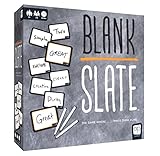
Overview: USAOPOLY BLANK SLATE taps into the universal joy of synchronicity, challenging 3-8 players to predict how others will complete word phrases. This family-friendly party game distributes dry-erase slates to each participant, who secretly write their answer to prompts like “sugar ______.” The magic happens when minds align without any communication.
What Makes It Stand Out: The game’s brilliance lies in its elegant simplicity—no elaborate rules or complex scoring. The dry-erase slates create a satisfying tactile experience, while the 250 double-sided cue cards offer substantial replay value. It transforms passive entertainment into active mind-reading, rewarding intuitive connections rather than trivia knowledge or artistic skill. The scoring system cleverly incentivizes matching with just one other player, creating perfect dramatic reveals.
Value for Money: At its typical price point, BLANK SLATE delivers exceptional value. Comparable party games often cost more while offering fewer components. The inclusion of eight reusable slates eliminates ongoing supply costs, and 500 total prompts ensures dozens of game nights before repetition. It’s an investment in social connection that scales from intimate family gatherings to boisterous parties.
Strengths and Weaknesses: Strengths include immediate learnability, broad age appeal (8+), and scalable player count. The game fosters genuine connection and laughter across generations. Weaknesses emerge with competitive gamers who may find the lightweight strategy unsatisfying. Some cue cards can feel dated, and after extensive play, creative answers might begin to repeat. The scoreboard, while functional, feels flimsy compared to the quality slates.
Bottom Line: BLANK SLATE earns its place as a staple for family game collections. It bridges generational gaps effortlessly and creates genuine moments of delighted surprise when minds unexpectedly align. Perfect for casual gatherings and guaranteed to produce memorable “great minds think alike” moments.
2. I should have known that! - A Trivia Game About Things You Oughta Know, Green
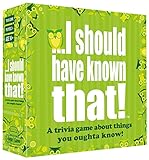
Overview: “I should have known that!” delivers a humbling trivia experience focused on knowledge so basic it hurts when you miss it. Designed for ages 14+ with two or more players, this compact Polish-made game asks questions about geography, history, and everyday facts that most people “oughta know” but frequently don’t. The minimalist design prioritizes content over flashy components.
What Makes It Stand Out: Unlike traditional trivia games that reward obscure knowledge, this one targets your blind spots about common information. The 6x6x2 inch package makes it exceptionally portable for travel or casual play. Its self-deprecating premise immediately lightens the mood—players expect to fail spectacularly, which paradoxically reduces competitive pressure and increases laughter when someone inevitably confuses their continents.
Value for Money: This game typically retails at a budget-friendly price point that undercuts most trivia competitors. The small form factor and simple components keep costs down while delivering hundreds of questions. For players seeking pure content without expensive bells and whistles, it represents smart spending. However, the lack of detailed component information suggests a no-frills approach that may disappoint those expecting elaborate production values.
Strengths and Weaknesses: Strengths include portability, universal question accessibility, and the psychological trick of making wrong answers entertaining. The age 14+ rating appropriately targets teens and adults. Weaknesses include sparse product information, potentially limited replayability if question pool is shallow, and the Polish manufacturing origin may concern buyers preferring domestic production. The minimalist packaging lacks the visual appeal of flashier alternatives.
Bottom Line: Ideal for trivia purists who value substance over style. “I should have known that!” serves as a perfect icebreaker or travel companion, though its longevity depends on a sufficiently deep question bank that isn’t fully disclosed in the product details.
3. Fofeadm Drinking Board Games for Adults, Rubber Mat Drinking Board Game, Funny Party Interactive Drinking Games for Game Night, Birthday, Family Play or Any Occasion, Age 21+, 2-8 Players

Overview: Fofeadm transforms traditional board gaming into a liquid-fueled social experience with its rubber mat drinking game. Designed for ages 21+ and accommodating 2-8 players, this party starter combines dice-rolling movement with beverage-centric challenges. The 15x11 inch mat serves as your battlefield where game pieces advance through prompts that demand sips, confessions, or dares.
What Makes It Stand Out: The rollable rubber mat distinguishes this from cardboard-based drinking games, offering superior portability and spill resistance—essential for any alcohol-adjacent activity. Its simplicity is its superpower: no complex rules to remember after a few rounds. The game adapts seamlessly across occasions, from bachelorette parties to low-key apartment gatherings, making it a versatile social lubricant rather than a rigid competition.
Value for Money: This drinking game typically costs less than a round of cocktails, positioning it as an accessible party investment. Compared to elaborate drinking game sets with cards and multiple components, the mat-and-dice approach keeps manufacturing costs low while delivering the core experience. However, the minimalist component list (mat, 8 pieces, 2 dice) suggests you’ll eventually create house rules to maintain freshness, which some may view as either a feature or a limitation.
Strengths and Weaknesses: Strengths include immediate setup, easy cleanup, and genuine durability for rowdy environments. The 2-8 player range covers most gatherings. Weaknesses include the relatively small mat size that can feel cramped with eight players, lack of detailed challenge examples in the product description, and generic design that doesn’t stand out visually. The reliance on player creativity for long-term engagement may disappoint those wanting structured variety.
Bottom Line: A functional, affordable drinking game accessory that gets the job done without pretension. Perfect for hosts wanting a reusable, wipeable party tool, though you’ll likely supplement it with your own challenges to maximize longevity.
4. What Do You Meme? After Hours by Relatable, The Explicit Expansion Pack for Game Night, Board Games, Adult Games, and Party Games, Includes 100 Caption Cards to Play with Full-Sized Game

Overview: What Do You Meme? After Hours injects pure adult-rated fuel into the already-popular meme creation game. This explicit expansion pack delivers 100 caption cards designed to push boundaries into decidedly NSFW territory. As a strict add-on requiring the core game, it transforms family-friendly meme nights into uncensored comedy sessions for players 18+.
What Makes It Stand Out: The expansion’s unapologetic raunchiness targets mature audiences seeking shock value beyond the base game’s milder content. These cards dive into controversial, topical, and sexually explicit humor that would make Grandma blush. The curated collection reflects current cultural taboos and edgy internet humor, ensuring the content feels fresh rather than generically dirty. It’s specifically engineered for 21st birthdays and bachelorette parties where decorum is already abandoned.
Value for Money: As an expansion, its value hinges entirely on your investment in the core game. The 100-card count aligns with standard expansion pricing, offering substantial content injection at roughly 3-4 cards per dollar. Compared to buying a whole new adult party game, this cost-effective refresh extends your existing game’s lifespan. However, the requirement of owning the base set doubles the true cost for newcomers, making it a poor standalone purchase.
Strengths and Weaknesses: Strengths include genuinely hilarious, boundary-pushing content that reignites interest in a familiar game and perfect targeting for adult party scenarios. The card quality matches the original’s durable construction. Weaknesses include extreme narrowness of appeal—this will offend many sensibilities—and complete dependency on the base game. The topical nature risks rapid dating, and the lack of photo cards limits the expansion’s scope.
Bottom Line: Essential for What Do You Meme? enthusiasts who’ve exhausted family-friendly options and crave adult-oriented chaos. Purchase only if your friend group embraces raunchy humor and you already own the core game; otherwise, consider standalone adult party games for better value.
5. WHAT DO YOU MEME? Incohearent, The Guess The Gibberish Party Game by Relatable, A Funny Card Game for Adults, Great for Bachelorette Party Games or Game Night Games, Includes 300 Cards

Overview: Incohearent capitalizes on its TikTok virality to deliver a phonetic puzzle party game where 3-8 players aged 17+ decode gibberish phrases like “fur ree sight ted” into “forsighted.” With 300 cards spanning Party, Spicy, and Pop Culture categories, this standalone game transforms awkward pronunciation into competitive hilarity. The timer adds pressure to what would otherwise be simple sound-alike puzzles.
What Makes It Stand Out: The game’s social media pedigree ensures culturally relevant, shareable moments that resonate with internet-savvy players. Unlike visual meme games, Incohearent engages auditory processing and speech, creating a different flavor of party chaos. The three distinct card categories allow hosts to tailor the experience—keep it clean with Party, spice it up, or test pop culture knowledge. This adaptability makes it appropriate for diverse groups while maintaining core gameplay.
Value for Money: As a complete game with 300 cards, Incohearent offers solid value comparable to other premium party games. The TikTok fame effectively guarantees thoroughly tested, genuinely funny content rather than filler. At typical pricing, you’re paying roughly 3-4 cards per dollar—a standard rate for quality adult party games. The standalone nature means no hidden additional purchases, making it a transparent, one-time investment for endless replayability.
Strengths and Weaknesses: Strengths include the unique audio-based mechanic, massive social proof of hilarity, and category customization. The 17+ rating appropriately targets college students and young adults. Weaknesses include potential frustration for players with hearing difficulties or non-native English speakers who may struggle with phonetic tricks. The timer can feel rushed for some groups, and pop culture cards may date quickly. Over-familiarity with viral content could spoil some reveals.
Bottom Line: A must-have for meme-loving party hosts seeking something beyond visual humor. Incohearent delivers consistent laughs and works brilliantly as both a main event and icebreaker, though its appeal diminishes with groups outside its target demographic.
6. Horrible Therapist: Extra Horrible Edition by Exploding Kittens - A Card Game for 3-8 Players, Ages 17+ - Adult Party Game for Family Night

Overview: Horrible Therapist is a darkly comedic adult card game from the creators of Exploding Kittens. Players construct three-panel therapy comics using Question, Answer, and Treatment cards, competing to create the most hilariously unhinged therapeutic scenarios. Designed for 3-8 players ages 17 and up, the first to earn three points by winning rounds wins the game.
What Makes It Stand Out: The therapy theme offers a fresh twist on adult party games, distilling psychological humor into a simple three-card mechanic. The Oatmeal’s signature artwork elevates every card into a miniature comic masterpiece. With 438 total cards across three decks, combinations feel virtually limitless. The game’s pedigree from the most-backed Kickstarter campaign ever adds credibility.
Value for Money: Priced competitively with other adult party games, the extensive card count and premium artwork justify the cost. The replayability factor is exceptionally high—438 cards create thousands of unique combinations. Compared to standard card games, you’re getting significantly more content and the assurance of Exploding Kittens’ quality standards.
Strengths and Weaknesses: Strengths: Hilarious, unique therapy theme; signature Oatmeal artwork; simple, quick-to-learn rules; massive replayability; excellent icebreaker potential. Weaknesses: 17+ age restriction limits audience; therapy humor may offend some; dark comedy isn’t for everyone; requires like-minded group for maximum enjoyment.
Bottom Line: Horrible Therapist is a must-have for fans of Exploding Kittens and anyone who appreciates dark, psychological humor at adult game nights. The unique theme and exceptional artwork distinguish it from countless other adult party games, though its niche humor requires the right audience.
7. USAOPOLY The Original TAPPLE, The Fast-Paced Family Board Game,Choose a Category & Race Against The Timer to be The Last Player,Learning Word Game for Ages 8 & Up, 2-8 Players, 15-20 Minute Play Time

Overview: TAPPLE is the original rapid-fire word game that challenges players to think quickly under pressure. After selecting a category, players tap a letter tab and shout a matching word before the ten-second timer expires. The last player remaining after others eliminate letters wins. Accommodating 2-8 players ages 8+, games last 15-20 minutes.
What Makes It Stand Out: The physical letter-tab mechanism creates satisfying tactile feedback that digital alternatives can’t replicate. The built-in timer and self-contained storage make it genuinely portable. With 144 categories across 36 cards, variety is substantial. Its award-winning status confirms the design’s excellence and broad appeal across generations.
Value for Money: The durable plastic wheel construction ensures longevity, making it a better investment than purely card-based word games. Comparable to Scattergories but with more dynamic gameplay, TAPPLE offers strong replay value at a reasonable price point for a component-heavy game.
Strengths and Weaknesses: Strengths: Fast-paced and exciting; educational vocabulary building; truly portable design; works for wide age range; simple rules; promotes quick thinking. Weaknesses: Excludes difficult letters (Q, U, V, X, Y, Z); timer creates intense pressure; some categories may frustrate younger players; limited to 20 letters only.
Bottom Line: TAPPLE delivers exceptional family-friendly entertainment that balances education with excitement. While the pressure-cooker timer isn’t for everyone, it’s perfect for families and groups seeking an energetic, portable word game that rewards quick thinking and broad vocabulary.
8. Ransom Notes - The Ridiculous Word Magnet Party Game, 3+ Players

Overview: Ransom Notes transforms refrigerator poetry into a competitive party game where players craft absurd sentences from limited word magnets to match outrageous prompts. Each round, participants draw random magnets and must respond to scenarios like confessing to clogging a toilet using only their available vocabulary. Designed for 3-6+ players with 30-90 minute playtime.
What Makes It Stand Out: The physical magnet mechanic creates hilarious constraints that force genuinely creative problem-solving. With 840 magnets and 250 prompt cards, combinations feel infinite. The ability to filter out 15-30% of adult content makes it versatile for different audiences. The submission cards add a professional presentation element to the silliness.
Value for Money: The sheer volume of 840 high-quality magnets represents excellent component value. Compared to standard card games, the unique format and infinite replayability justify a premium price. It’s essentially multiple games in one, adaptable from raucous adult parties to family gatherings.
Strengths and Weaknesses: Strengths: Highly creative and hilarious; infinite replayability; flexible player count; fresh gameplay every session; excellent gift potential; adaptable for families. Weaknesses: Requires significant table space; magnets can be lost; playtime can run long; not all cards family-friendly; setup involves sorting magnets.
Bottom Line: Ransom Notes is a brilliant creative party game that turns linguistic limitations into comedy gold. While it demands space and careful component management, it’s perfect for groups who enjoy improvisational humor and want a game that feels completely different from anything else in their collection.
9. OFF TOPIC Party Game for Adults - Fun Adult Board Games for Groups of 2-8 Players - Hilarious Game Night Card Game for Friends, Family & More

Overview: OFF TOPIC is a creative thinking game for adults that merges word association with improvisational debate. Players draw topic cards, roll a 20-sided die to determine starting letters, then race a two-minute timer to write answers on personal whiteboards. The twist: players must defend their answers, turning wordplay into performance. Designed for 2-8 players ages 17+.
What Makes It Stand Out: The 20-sided die provides true randomization for starting letters, eliminating the repetitive feel of fixed alphabets. Individual dry-erase whiteboards for each player are premium components rarely seen in party games. The defense mechanic transforms a simple word game into a hilarious debate platform where persuasion matters as much as creativity.
Value for Money: Including eight whiteboards and ten markers represents significant component value. The reusable nature of these materials ensures long-term playability without replacement costs. Competitively priced against other adult party games, it offers more interactive elements than standard card-based alternatives.
Strengths and Weaknesses: Strengths: Encourages creativity and quick thinking; excellent debate opportunities; reusable components; flexible round timing; wide player range; great for breaking ice. Weaknesses: 17+ restriction limits audience; markers may dry out; requires some setup; defense rounds can extend playtime; some topics lean adult.
Bottom Line: OFF TOPIC excels for creative adults who enjoy wordplay mixed with performance. The reusable whiteboards and debate element create memorable moments, though it’s best suited for outgoing groups comfortable thinking on their feet and defending questionable answers with conviction.
10. Herd Mentality: Udderly Funny Family Board Game | Easy & Fun for Big Groups of 4-20 Players | Includes 20 Extra Exclusive Questions

Overview: Herd Mentality is a delightfully simple party game where thinking like everyone else is the path to victory. Players answer questions, hoping their response matches the majority to win cows. The solitary player with the outlier answer receives the dreaded Pink Cow of Doom, blocking them from winning until someone else becomes the odd one out. Supports massive groups of 4-20 players ages 10+.
What Makes It Stand Out: The enormous 4-20 player capacity makes it ideal for large gatherings where most games fail. The Pink Cow mechanic brilliantly punishes individualism while creating hilarious social dynamics. This version includes 20 exclusive questions, adding value. The “think alike” premise is instantly understandable, requiring zero complex rules explanation.
Value for Money: Exceptional value for large-group scenarios—one purchase replaces multiple party games. The included exclusive questions and endless player configurations provide unlimited replayability. Compared to niche big-group games, it’s priced accessibly while delivering more social interaction than many alternatives.
Strengths and Weaknesses: Strengths: Massive player capacity; incredibly easy to learn; quick rounds; family-friendly; perfect for gatherings; creates hilarious group dynamics. Weaknesses: Not suitable for small groups; can become repetitive; requires similar-minded participants; some questions may be culturally specific; limited strategy.
Bottom Line: Herd Mentality is the ultimate large-group party game, transforming family reunions and friend gatherings into laugh-filled sessions of collective thinking. While it lacks depth for strategic gamers, its accessibility and player range make it essential for anyone regularly hosting big parties or family events.
Why Party Board Games Are Essential for Adult Socializing
Adult friendships often suffer from scheduling conflicts and digital distractions, making face-to-face quality time increasingly rare. Party board games create structured opportunities for genuine interaction that goes beyond surface-level conversations. They provide shared experiences that become inside jokes, reveal surprising aspects of people’s personalities, and level the playing field between introverts and extroverts by giving everyone a defined role and purpose.
Unlike passive entertainment like watching movies, games require active participation that releases endorphins and strengthens social bonds through cooperative problem-solving or friendly competition. The tactile nature of cards, boards, and pieces engages multiple senses in ways that screen-based activities cannot, creating more vivid and lasting memories. For adults navigating complex social landscapes, these games offer a safe framework for playful interaction that can bridge generational gaps, professional hierarchies, and different social circles.
Key Features to Look for in Adult Party Games
Game Duration and Pacing
The sweet spot for adult party games typically ranges from 20 to 90 minutes, though this varies dramatically based on the occasion. Quick-paced games that allow for multiple rounds work brilliantly for cocktail hours or when guests arrive at different times. These keep energy high and let people join or rotate out without disrupting the flow. Longer, more immersive experiences suit dedicated game nights where everyone arrives simultaneously and expects a centerpiece activity.
Consider how time investment affects engagement. Games with natural breakpoints or adjustable length offer maximum flexibility for adult schedules that might include babysitters, early morning commitments, or transportation logistics. Look for mechanisms that prevent early elimination, which can leave players awkwardly sidelined when they’d rather stay involved.
Player Count Flexibility
The best party games scale gracefully from intimate gatherings of four to larger parties of ten or more without losing their core appeal. Games that require exactly six players create frustrating limitations when someone cancels or brings an unexpected plus-one. Optimal designs include variants for different player counts or feature mechanics that accommodate late arrivals seamlessly.
Pay attention to how player count affects game dynamics. Some games become chaotic in the best way with larger groups, while others maintain their strategic depth regardless of numbers. The most versatile options include “audience” roles or team-based variants that keep everyone engaged even beyond the official player limit.
Complexity and Learning Curve
Adult gatherings rarely allow for hour-long rule explanations. The ideal party game balances depth with accessibility, offering strategic richness that reveals itself over multiple plays while remaining graspable within 5-10 minutes of explanation. Look for games that use intuitive iconography, logical progression, or familiar mechanics as building blocks for more unique elements.
Consider your group’s gaming literacy. A mix of seasoned board gamers and complete novices requires games with simple core rules but optional advanced strategies. Games that offer “learning rounds” or gradual complexity introduction work particularly well for diverse adult groups who want to start playing quickly without feeling overwhelmed.
Replayability Factors
A game’s longevity depends on variability between sessions. Mechanics like modular boards, random card combinations, player-driven narratives, or different role assignments ensure each playthrough feels fresh. Games that rely on static content or predetermined scenarios often lose their appeal after a handful of sessions, making them poor long-term investments.
The social component itself creates replayability. Games that leverage player creativity, personal knowledge of group members, or dynamic alliances generate unique experiences based on who’s playing. This human element means the same game can feel completely different with coworkers versus college friends, maximizing its value in your collection.
Age Appropriateness and Content Maturity
“Adult” doesn’t automatically mean inappropriate. True adult party games feature themes, references, or complexity that resonates with mature life experiences—workplace dynamics, relationship nuances, historical knowledge, or sophisticated humor—without necessarily being offensive. Assess your comfort level with content that might include suggestive themes, dark humor, or political satire.
Consider the versatility of mature content. Games with adjustable “clean” modes or expansions that modify tone offer better value for mixed gatherings where grandparents might join or where professional boundaries matter. The best adult games treat players as intellectually sophisticated rather than simply pushing boundaries for shock value.
Understanding Different Game Categories
Social Deduction and Bluffing Games
These psychological thrillers pit players against each other in webs of deception and trust. Participants receive hidden roles with conflicting objectives, requiring careful observation, persuasive argumentation, and strategic lying. The magic lies in creating memorable moments where someone brilliantly outsmarts the group or spectacularly fails at maintaining their poker face.
These games excel with groups who enjoy reading people and don’t mind confrontation. They naturally generate stories and accusations that become legendary among friend groups. However, they can stress players who dislike lying or feel anxious about being put on the spot, so gauge your group’s comfort with interpersonal tension.
Creative Expression and Storytelling Games
For groups that thrive on imagination and humor, storytelling games provide frameworks for collaborative narrative building or competitive wit. These might involve completing prompts with clever answers, improvising scenes based on random elements, or building absurd arguments for ridiculous scenarios. They showcase personality and often reveal hidden talents among friends.
These games particularly benefit from alcohol’s social lubrication effects but work equally well sober for creative types. They reward quick thinking and embrace failure as part of the fun, making them ideal for breaking down social barriers. The best versions include mechanisms that prevent the loudest voice from dominating, ensuring everyone contributes meaningfully.
Trivia and Knowledge-Based Challenges
Modern trivia games have evolved beyond simple fact recall into diverse categories that celebrate different types of intelligence. Some focus on pop culture, others on logical deduction or estimation skills. The key innovation involves making knowledge gaps irrelevant—either through team play, betting mechanics, or questions with multiple valid approaches.
These games appeal to competitive types and create natural opportunities for showing off niche expertise. They work brilliantly for mixed-age gatherings where different generations bring unique knowledge bases. Look for versions that minimize downtime and prevent trivia buffs from dominating through clever scoring systems that reward risk-taking over pure knowledge.
Dexterity and Physical Challenge Games
Not all adult games are sedentary. Dexterity-based options incorporate stacking, flicking, balancing, or timed physical challenges that get people moving and laughing at their own clumsiness. These break up conversational intensity and work wonderfully as palate cleansers between heavier strategy games or as outdoor party options.
Physical games level the playing field in surprising ways—often the most intellectual player struggles with hand-eye coordination, creating humble and hilarious moments. They photograph well for social media and create visceral, memorable experiences. Just ensure you have adequate space and that participants won’t risk injury after a few drinks.
Cooperative vs. Competitive Dynamics
While competition drives many party games, cooperative options where everyone wins or loses together offer refreshing alternatives for certain groups. These foster team spirit and prevent sore losers from souring the mood. Players work against the game itself, racing against time, solving puzzles, or managing shared resources while communicating under constraints.
Cooperative games shine with groups that value harmony over rivalry or when playing with significant skill disparities. They create shared triumphs and commiserative defeats that strengthen bonds. The best designs include escalating tension and require genuine collaboration rather than letting one dominant player control all decisions.
Matching Games to Your Group Dynamics
Icebreaker Games for New Acquaintances
When mixing friend groups or hosting networking events, games should minimize inside jokes and focus on universal experiences. Opt for options that encourage sharing personal (but not too personal) stories or reveal preferences that spark follow-up conversations. The goal is helping people find common ground while keeping interactions light and pressure-free.
These games should avoid complex alliances or long-term strategies that disadvantage newcomers. Instead, look for mechanisms that ensure everyone speaks or contributes equally, preventing cliques from forming. Short rounds with frequent player rotation help people meet multiple attendees naturally.
Games for Close Friend Groups
Established friend groups can handle more complex social dynamics and inside joke potential. Games that reward knowing each other’s tells, habits, or histories create deeper engagement. These groups appreciate longer, more involved experiences where running gags develop over the evening and where betrayals feel meaningful rather than mean-spirited.
With close friends, you can explore more controversial or revealing content without fear of genuine offense. The shared context means games can reference your group’s unique culture and history. Consider legacy-style games that evolve across multiple sessions, creating an ongoing narrative that becomes part of your friendship’s fabric.
Mixed Company: Bridging Different Social Circles
The trickiest scenario involves guests who don’t know each other well but share a connection to you. Games here need universal appeal without relying on deep relationships, yet still facilitate bonding. Team-based games work wonderfully, forcing cross-group collaboration while providing built-in conversation starters.
Choose games with broad themes that don’t require specialized knowledge or strong opinions on divisive topics. Moderate playtime prevents awkwardness if chemistry doesn’t immediately spark. Most importantly, select games that generate shareable moments—something funny or impressive that everyone experiences simultaneously, creating instant common ground.
Work Colleagues and Professional Settings
Office parties and team-building events demand careful navigation of power dynamics and professional boundaries. Games should be inclusive, avoid overly personal revelations, and never create scenarios where subordinates must deceive supervisors. Look for options that highlight different thinking styles or problem-solving approaches without becoming cutthroat.
Cooperative games excel here, emphasizing shared goals that mirror workplace collaboration. If choosing competitive options, ensure scoring feels transparent and luck-based enough that outcomes don’t feel like measures of intelligence or capability. Always consider how game content might appear in a harassment training video—when in doubt, choose cleaner options.
Setting Up the Perfect Game Night Atmosphere
Space and Seating Considerations
The physical environment dramatically impacts game enjoyment. Ensure adequate table space for components plus drinks and snacks—cramped conditions lead to spills and frustration. Circular seating arrangements promote equality and easier eye contact for social games, while rectangular tables work better for competitive setups with clear opponents.
Lighting matters more than you’d think. Bright, even lighting prevents eye strain during rulebook reading and card examination, but dimmable options let you adjust mood for storytelling or deduction phases. Consider background music volume carefully—it should fill awkward silences without drowning out conversation or rule explanations.
Snack and Beverage Strategies
Choose foods that won’t grease up cards or leave residue on components. Dry snacks in individual bowls prevent communal grubbiness, while foods requiring utensils keep hands clean. Strategic placement of trash and recycling receptacles minimizes cleanup and prevents spills from reaching game boards.
For alcoholic gatherings, consider how drinks affect game choice. Complex strategy suffers after a few cocktails, while creative or social games often improve. Have water readily available and pace drinking with natural game breaks. Some hosts create signature cocktails themed to the evening’s game selection, adding an extra layer of immersive fun.
Music and Lighting Ambiance
Background elements should enhance without distracting. Instrumental music or familiar classics at low volume prevent awkward silence during thinking periods. Some modern games include curated Spotify playlists that match their theme, creating seamless atmospheric integration. Avoid music with lyrics during explanation phases, as they compete for cognitive attention.
Lighting sets emotional tone. Warm, soft lighting creates intimacy for storytelling games, while brighter illumination keeps energy high for competitive matches. Consider colored bulbs or smart lighting that can shift with game phases—dimming during tense moments or brightening for scoring rounds adds theatrical flair that elevates the entire experience.
Budget Considerations and Value Assessment
Price vs. Play Frequency
Premium games with high-quality components and deeper gameplay often justify higher price tags if they’ll hit your table regularly. Calculate cost-per-play by estimating how often you’ll realistically use the game. A $50 game played ten times costs $5 per entertainment session—far cheaper than most alternatives. Conversely, a $20 game played once and shelved wastes money.
Consider your group’s stability. If you regularly host the same core group, investing in games with campaign elements or evolving narratives makes sense. For rotating guest lists, versatile, one-session experiences offer better value. Track which games actually get requested repeatedly versus those that seemed exciting but never quite work with your crowd.
Expansion Packs and Long-Term Value
Many modern games offer expansions that refresh gameplay or add player capacity. Before purchasing, research whether the base game feels complete without additions. Some expansions fix fundamental issues, suggesting a flawed core product, while others genuinely enhance an already solid experience. The best games feel satisfying standalone but offer meaningful expansion potential.
Consider storage solutions in your budget. Games with many components benefit from organizational inserts that speed setup and teardown, increasing likelihood of play. These represent hidden costs that significantly impact user experience. Similarly, card sleeves protect investments in heavily-shuffled games, preserving resale value and preventing wear that reveals card identities.
Digital vs. Physical: Modern Game Night Options
Hybrid models increasingly blur lines between digital and physical play. Companion apps handle complex scoring, provide atmospheric soundtracks, or enable hidden information sharing without additional components. These can streamline gameplay but risk technical failures or exclude less tech-savvy players. Evaluate whether digital integration enhances or complicates the experience.
Fully digital adaptations on tablets or smart TVs offer space-saving alternatives for apartment dwellers, but lose tactile satisfaction and make simultaneous viewing awkward. They excel for travel or spontaneous game nights where carrying boxes isn’t practical. However, the screen becomes a barrier rather than a facilitator, potentially reducing the very social interaction games aim to enhance.
Troubleshooting Common Game Night Challenges
Managing Overly Competitive Players
Every group has someone who treats party games like the World Championships. Set expectations early by emphasizing fun over winning, perhaps awarding a silly “best sport” prize alongside traditional victory. Choose games where luck balances skill, preventing any single dominant player. Cooperative games entirely sidestep this issue while still satisfying strategic minds.
Consider implementing house rules that soften harsh mechanics, like allowing “take-backs” for new players or minimizing public shaming for mistakes. Frame mistakes as entertaining contributions rather than failures. If someone consistently ruins the vibe, have a private conversation about reading the room—some people genuinely don’t realize their intensity impacts others’ enjoyment.
Keeping Everyone Engaged
Elimination mechanics can sideline early losers, creating awkward dead time. Prioritize games with simultaneous action or “audience” roles for eliminated players. Games with trading, negotiation, or voting keep everyone involved even when it’s not their turn. Shorter rounds with frequent scoring prevent attention from wandering.
Watch for skill gaps that create kingmaker scenarios or predictable outcomes. Team play, hidden roles, or random elements help level disparities. Pay attention to who’s checking their phone—that’s your canary in the coal mine signaling engagement issues. Be ready to pivot to a different game or take a break if energy drops.
When Games Run Too Long
Adult attention spans and schedules rarely accommodate four-hour epics. Set timers for decision phases to maintain momentum. Many games include “short variants” in their rulebooks—use them. Be ruthless about cutting sessions short if people are clearly done; it’s better to end wanting more than to exhaust goodwill.
Recognize when analysis paralysis is killing fun. Implement gentle “speed it up” reminders or enforced turn limits. Some hosts use ambient music with increasing tempo to subconsciously hurry decisions. If a game consistently runs long with your group, it might not be the right fit regardless of its other merits.
Building Your Collection Strategically
Start with versatile anchor games that cover different player counts and moods: one quick icebreaker, one medium-weight social game, and one deeper experience for dedicated nights. Build outward based on what gets played most, not what tops “best of” lists. Your group’s preferences matter more than critical acclaim.
Consider loaning games before purchasing to test compatibility with your crowd. Many local game cafes or libraries offer rental programs. Track which genres consistently flop—some groups simply don’t enjoy deduction or physical challenges, and that’s okay. Focus on what generates the most laughter and requests for replays. A curated small collection of beloved games beats a shelf of unplayed trophies every time.
Frequently Asked Questions
What makes a board game specifically suited for adults rather than families?
Adult party games typically feature themes, humor, or strategic depth that resonates with mature life experiences. They might involve workplace satire, relationship dynamics, or complex social deception that younger players wouldn’t appreciate. The best adult games treat players as sophisticated without relying solely on crude content, focusing instead on nuanced interaction and references that connect with grown-up perspectives.
How many games should I own for a well-rounded party collection?
A solid starter collection includes three to five carefully chosen games covering different categories: a quick icebreaker for 6+ players, a social deduction game, a creative party game, a trivia option, and perhaps a cooperative experience. Quality trumps quantity—five games that perfectly match your group’s tastes beat twenty that rarely hit the table. Expand gradually based on what gets requested repeatedly.
What’s the ideal player count for most adult party games?
Many excellent party games shine with 5-8 players, accommodating typical dinner party sizes while maintaining manageable downtime. However, the best games scale flexibly from 4-10+ players without losing core appeal. Always check the sweet spot in reviews rather than just the maximum count—some games technically allow 10 players but become unwieldy, while others are designed specifically for larger groups.
How do I introduce complex games to friends who aren’t gamers?
Start with a simple, engaging hook rather than exhaustive rule explanations. Set up the first round as a practice game where mistakes don’t matter. Use analogies to familiar concepts (“it’s like poker meets charades”) and demonstrate rather than lecture. Have cheat sheets ready for each player, and be patient with questions. Choose games where early errors don’t ruin the experience and where learning is part of the fun.
Are party games still fun without alcohol?
Absolutely. While alcohol can lower inhibitions for creative or social games, the best party games create their own energy through engaging mechanics and group dynamics. Many adult groups prefer sober game nights for clearer thinking and genuine connection. Games that rely on wit, strategy, or skill often play better without alcohol, while purely social games might benefit from the relaxation it provides.
How long should a game night last?
Optimal adult game nights typically run 2-4 hours including socializing, with actual gameplay broken into 1-2 hour segments. This respects people’s schedules and attention spans while allowing for multiple games or extended play of one favorite. Always clarify expected end times when inviting guests, and be flexible—if everyone’s exhausted after 90 minutes, call it a success rather than forcing additional rounds.
What if my group has vastly different gaming experience levels?
Choose games with simple core mechanics but strategic depth that reveals itself over time. Team-based play pairs experienced gamers with novices, creating natural mentoring. Avoid games where knowledge of gaming conventions provides huge advantages. Cooperative games also work well since veterans can guide without directly competing. Most importantly, foster a supportive atmosphere where questions are welcome.
How do I handle rule disputes during the game?
Designate a rule-keeper before starting, preferably someone who knows the game or can quickly reference the rulebook. For minor disputes, make a temporary ruling and look it up later—never let arguments derail momentum. Consider using official FAQ threads or companion apps for clarification. House rules are fine if agreed upon beforehand, but changing rules mid-game to favor someone destroys trust and fun.
Can party board games work for virtual gatherings?
Many physical games have digital adaptations or can be played via webcam with one person managing components. Dedicated platforms like Tabletop Simulator or Board Game Arena host thousands of titles. However, the social magic often dims without physical presence. For remote play, choose games specifically designed for digital interfaces or simple enough that component visibility isn’t crucial. Hybrid models where some players are remote and others local rarely work smoothly.
How often should I rotate new games into my collection?
Introduce new games gradually—one every 2-3 months allows proper learning and replay before the next novelty arrives. This prevents collection bloat and ensures each purchase gets adequate table time. If a game hasn’t been played in six months, consider trading or selling it. Pay attention to your group’s evolving preferences and life changes; a game perfect for single friends might not suit the same group after marriages and children enter the picture.
See Also
- Stop Boredom with the 10 Best Party Board Games This Year
- The 10 Best Trivia Games Every Party Host Needs This Year
- Stop Boring Game Nights with the 10 Best Party Board Games This Year
- Stop Boring Game Nights with the 10 Best Adult Party Games This Year
- 10 Best Budget Party Board Games Under $30 for Casual Players in 2026