Table of Contents
Developing fine motor skills isn’t just about preparing children for handwriting—it’s about building the neural pathways that connect physical movement to cognitive function. As we look toward 2026, the landscape of dexterity games has evolved dramatically, incorporating innovative materials, adaptive technologies, and research-backed designs that make skill development both effective and genuinely fun. Whether you’re a parent seeking engaging activities for your toddler, an educator stocking your classroom, or an occupational therapist designing intervention programs, understanding what makes these tools truly beneficial has never been more important.
The modern approach to fine motor development recognizes that repetitive drills create resistance, while purposeful play builds lasting skills. Today’s dexterity games balance challenge with enjoyment, offering progressive difficulty that grows alongside the user. But with countless options flooding the market, how do you identify which features actually matter? This comprehensive guide walks you through everything you need to know about selecting dexterity games that deliver measurable developmental benefits without the frustration that can derail progress.
Top 10 Fine Motor Skill Games
Detailed Product Reviews
1. Learning Resources Noodle Knockout! Fine Motor Game - Montessori Preschool Activities, Educational Sensory Play Toy, Occupational Therapy Must Haves for Kids

Overview:
Learning Resources Noodle Knockout transforms skill-building into a delightful ramen-themed challenge. This 67-piece set engages children ages four and up in using specialized chopsticks to grab soft silicone noodles and colorful toppings, creating pretend ramen bowls while developing crucial fine motor skills. Designed for 2-4 players, the game includes 20 noodles, 27 toppings, spinner, bowl, order cards, sorting bowls, and four pairs of chopsticks that strengthen hand muscles essential for writing.
What Makes It Stand Out:
The innovative ramen restaurant concept sets this apart from typical fine motor toys. Three distinct gameplay modes adapt to different skill levels, ensuring longevity from preschool through early elementary years. The tactile satisfaction of squishy noodles combined with the challenge of chopstick manipulation creates an experience that occupational therapists endorse and children genuinely enjoy, blending sensory input with purposeful skill development.
Value for Money:
At its price point, Noodle Knockout delivers exceptional value compared to single-purpose fine motor tools. The comprehensive 67-piece set eliminates need for additional purchases, while durable silicone components withstand repetitive classroom or therapeutic use. Versatile gameplay extends its usable lifespan far beyond one-trick toys, making it a smart investment for parents and educators seeking multi-functional educational resources.
Strengths and Weaknesses:
Strengths include engaging theme, progressive difficulty levels, quality silicone materials, and true multiplayer engagement. Weaknesses involve small pieces requiring supervision for younger children, potential cleanup time, and chopsticks that may frustrate beginners initially. The game box serving as the bowl is clever but less sturdy than dedicated components.
Bottom Line:
Noodle Knockout excels as both educational tool and entertaining game. Ideal for preschool classrooms, occupational therapy sessions, and home learning, it successfully disguises intensive fine motor practice as playful competition. Highly recommended for children needing hand strength development.
2. Learning Resources STEM Explorers Brainometry - 3d Puzzle, Brain Games, Brainteaser, Building Logic Toys, Gifts For Boys and Girls, Fine Motor Skills , Pattern Blocks, Math Manipulatives

Overview:
STEM Explorers Brainometry offers 3D puzzle challenges that develop critical thinking through colorful pattern blocks. This 34-piece set includes tactile blocks and 10 double-sided activity cards with progressive difficulty for ages five and up. Children manipulate geometric pieces to match patterns, building spatial reasoning and mathematical understanding without screens.
What Makes It Stand Out:
The three-dimensional aspect elevates this beyond flat puzzles, requiring spatial rotation and mental visualization. Progressive challenge cards grow with your child, while the open-ended design encourages creative construction beyond guided activities. Its portability and self-contained storage make it ideal for travel, classrooms, or quiet home play.
Value for Money:
This set punches above its weight class, offering brain-building activities comparable to more expensive STEM kits. The durable blocks and laminated cards survive daily use, while the progressive difficulty ensures years of engagement. As a screen-free alternative to educational apps, it provides tangible cognitive benefits at a fraction of long-term digital subscription costs.
Strengths and Weaknesses:
Strengths include sturdy construction, genuine cognitive challenge, portable storage, and screen-free engagement. Weaknesses are limited to 10 activity cards that advanced users may outgrow quickly, and blocks that could benefit from more varied shapes. The age rating skews slightly optimistic—many five-year-olds will need significant guidance.
Bottom Line:
Brainometry delivers substantive STEM learning disguised as playful puzzle-solving. While younger children need adult support, it grows into a genuinely challenging spatial reasoning tool. Excellent for developing critical thinking skills, making it a worthwhile addition to any educational toy collection.
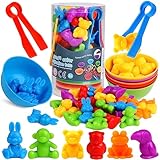
3. Counting Animals Color Sorting Matching Games with Sorting Bowls Montessori Sensory Early Educational Toys Learning Fine Motor Skill & Counting Math Toys Gift for 3 4 5 Year Old Boys Girls
Overview:
These Counting Animals transform math fundamentals into adorable rubber creature manipulatives. The 36-piece set features forest animals in six colors, accompanied by sorting bowls and tweezers, targeting ages 3-5. Children sort, count, and match while building hand strength and early mathematical concepts through tactile play.
What Makes It Stand Out:
The animal shapes provide narrative appeal that plain counters lack, encouraging imaginative play alongside structured learning. The rubber material offers superior durability and washability compared to plastic alternatives, while the included tweezers specifically target fine motor precision. Its Montessori alignment makes it versatile for home or therapeutic settings.
Value for Money:
This set offers excellent ROI for preschool math materials. The quality rubber construction ensures longevity despite frequent handling and cleaning. With 36 animals and multiple activity possibilities, it replaces several single-skill toys. For parents and teachers seeking Montessori-aligned resources, it delivers professional-grade materials at consumer pricing.
Strengths and Weaknesses:
Strengths include durable rubber material, engaging animal design, versatile learning applications, and true Montessori methodology. Weaknesses involve limited activity guidance—users must create their own challenges—and tweezers that may be stiff for younger three-year-olds. The color palette could be more distinct for children with visual processing challenges.
Bottom Line:
A robust, versatile math manipulative that successfully combines sensory appeal with educational rigor. Perfect for preschoolers developing counting skills and fine motor control. While it requires adult creativity to maximize potential, the quality materials and thoughtful design make it a sound investment for early learning environments.
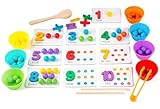
4. WECHARM KIDS Fine Motor Toys,Wooden Peg Board Bead Game for Toddlers - Rainbow Stacking, Color Sorting & Counting Toys | Fine Motor Skills Development | Math Learning Games for 3 4 5 Years Old
Overview:
WECHARM’s Wooden Peg Board Bead Game offers a classic Montessori approach to fine motor development. This set includes 56 rainbow-colored wooden beads, peg board, templates, and manipulation tools for ages 3-5. Children press, clip, and arrange beads to create patterns while developing dexterity, color recognition, and early math skills.
What Makes It Stand Out:
The wooden construction provides satisfying tactile feedback that plastic alternatives cannot match. Multiple manipulation tools—clips, spoons, sticks—offer varied fine motor challenges within one set. The included picture templates guide structured learning while the open-ended board encourages creative expression, making it adaptable for different learning styles.
Value for Money:
This wooden set represents solid value in an era of disposable plastic toys. The durable construction withstands years of classroom or home use, while the comprehensive component count eliminates need for supplementary purchases. As a multi-skill development tool covering fine motor, math, and artistic domains, it replaces several single-purpose toys.
Strengths and Weaknesses:
Strengths include premium wooden construction, multiple tool options, engaging rainbow colors, and screen-free creative potential. Weaknesses involve small beads that require vigilant supervision, templates that could offer more variety, and a storage system that isn’t as robust as the components themselves. The clip mechanism may initially challenge younger toddlers.
Bottom Line:
A thoughtfully crafted wooden manipulative that honors Montessori principles while engaging modern preschoolers. The quality materials and versatile design justify its price point. Ideal for parents prioritizing natural materials and teachers seeking durable classroom resources. Requires supervision but delivers substantial developmental benefits.
5. Color Sorting Toys Sensory Toys, Fine Motor Skills Game for Toddlers, Color Matching Toy Preschool Learning Activities Educational Calm Down Montessori Toy for Kids Boys Girls Ages 1 2 3 As Gifts

Overview:
This flower-shaped Color Sorting Toy provides sensory calm through gel-filled beads and color matching. Designed for ages 1-3, the compact 5.6" square device lets children squeeze and press soft rubber beads into matching color slots. It promotes color recognition, fine motor control, and emotional regulation in a silent, portable format.
What Makes It Stand Out:
The dual focus on fine motor development and sensory calming distinguishes this from purely academic toys. The squishy gel-filled beads provide proprioceptive input beneficial for children with autism, ADHD, or anxiety. Its silent operation and compact size make it uniquely suitable for travel, restaurants, or classroom calm-down corners where noise is a concern.
Value for Money:
As a specialized sensory tool, it offers reasonable value despite its simpler construction. It effectively combines multiple therapeutic functions—fine motor practice, color learning, and emotional regulation—in one affordable device. For families managing sensory needs, it provides professional-caliber support at a fraction of occupational therapy tool costs.
Strengths and Weaknesses:
Strengths include exceptional portability, silent operation, sensory therapeutic benefits, and toddler-friendly design. Weaknesses involve limited long-term engagement for neurotypical children, potential for bead wear with aggressive use, and age range that may be too broad—most appealing to 1-2 year olds. The gel filling could leak if punctured.
Bottom Line:
An excellent specialized tool for toddlers with sensory processing needs or families requiring quiet travel activities. While its appeal may be narrower than multi-piece sets, it excels at its designated purpose. Highly recommended for calm-down corners and sensory diets, though neurotypical older preschoolers may outgrow it quickly.
6. Learning Resources Grab That Donut! Fine Motor Game - Toddler Food Bakery Toys, Board Games, Color Sorting, Gifts for Boys and Girls, Hand Eye Coordination, Preschool Sensory Activities

Overview:
The Learning Resources Grab That Donut! game transforms skill-building into sweet, engaging play for preschoolers. This bakery-themed set uses specially designed tongs to help children ages 3+ develop hand strength and coordination while completing color-matching challenges. With 39 pieces including 24 colorful donuts, four tongs, order cards, and a spinner, it creates an immersive donut shop experience that grows with your child.
What Makes It Stand Out:
The standout feature is the versatile gameplay that adapts to different skill levels. Children can follow order cards, sort by color or decoration, or invent their own donut shop scenarios. The inclusive design accommodates children with learning differences, making it truly accessible for 1-4 players. The packaging cleverly doubles as a display stand, enhancing pretend play value without extra cost.
Value for Money:
Priced competitively with other fine motor games, this set offers exceptional longevity through its multiple play modes. While basic tongs and counters cost less, the cohesive theme, quality components, and structured gameplay justify the investment. The durable pieces withstand repeated classroom or home use, delivering value beyond single-purpose manipulatives that quickly become boring.
Strengths and Weaknesses:
Strengths include the engaging theme, progressive difficulty, inclusive design, and quality construction. The tongs effectively build dexterity while the order cards introduce early game rules. Weaknesses are minor: the small donut pieces require supervision for younger toddlers, and advanced preschoolers may outgrow the challenges quickly. Storage within the box-display is somewhat limited.
Bottom Line:
An excellent choice for parents and educators seeking purposeful play. It successfully disguises developmental work as delicious fun, making it ideal for reluctant learners or children needing fine motor support.
7. Learning Resources STEM Explorers Pixel Art Challenge - Science Kits & STEM Activities for Kids, Pattern Blocks, Fine Motor Skills, Math Manipulatives, Sorting and Counting, Gifts for Boys and Girls

Overview:
The STEM Explorers Pixel Art Challenge brings coding concepts into tactile, screen-free play for children 5+. This innovative kit includes 400 foam pixel pieces and a 5½" x 5½" tray where kids recreate 40 progressively challenging patterns. By translating digital pixel art into physical form, it builds spatial reasoning and problem-solving skills while strengthening fine motor coordination through precise placement.
What Makes It Stand Out:
The progressive challenge system sets this apart, growing from simple shapes to complex designs that teach binary patterns and computational thinking. Unlike basic pattern blocks, the pixel format introduces fundamental coding logic. The foam pieces are perfectly sized for small hands, and the screen-free approach appeals to parents limiting digital exposure while still teaching essential STEM skills.
Value for Money:
Compared to electronic STEM toys or coding robots, this offers remarkable value at a lower price point. The 400 durable foam pieces provide countless combinations beyond the 40 included challenges, extending play value. While foam may show wear over years of heavy use, the initial quality and educational breadth rival more expensive manipulative sets, making it a smart classroom or homeschool investment.
Strengths and Weaknesses:
Strengths include the clever STEM integration, progressive difficulty, quality foam construction, and versatility for independent or guided learning. The compact tray design is travel-friendly. Weaknesses: foam pieces can be lost easily, the challenge booklet could offer more open-ended prompts, and younger children may find advanced patterns frustrating without adult guidance.
Bottom Line:
A brilliant bridge between digital and physical learning that makes abstract coding concepts concrete. Perfect for STEM-focused families and educators seeking engaging, developmentally appropriate challenges.
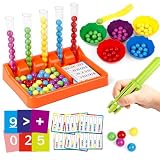
8. Broytain Counting and Color Sorting Toys for Toddlers,Math Manipulatives Match Games Educational Learning Fine Motor Skills,STEM Preschool Kindergarten Learning Activities
Overview:
Broytain’s Counting and Color Sorting set delivers a comprehensive math manipulative experience for toddlers through early elementary. This value-packed kit features 50 beads, five sorting cups, five test tubes, tweezers, a spoon, and 20 double-sided challenge cards. Children practice color recognition, counting, and fine motor skills by transferring beads between containers using various tools, mimicking scientific processes.
What Makes It Stand Out:
The laboratory-style test tubes and multiple gripping tools create unique sensory experiences that distinguish it from standard sorting trays. The 20 challenge flash cards provide structured learning pathways, while the sheer variety of components encourages open-ended exploration. The pencil-grip tool specifically targets pre-writing muscle development alongside sorting activities.
Value for Money:
This set dramatically undercuts competitors on price-per-piece, offering exceptional value for budget-conscious parents and teachers. While individual component quality may not match premium brands, the comprehensive assortment compensates. You’d spend significantly more purchasing these manipulatives separately, making it an economical way to stock a homeschool or preschool environment with diverse learning tools.
Strengths and Weaknesses:
Strengths include the impressive quantity of materials, versatile tools, challenge cards for guided learning, and excellent price point. The test tube concept is novel and engaging. Weaknesses involve inconsistent quality control across components, potential choking hazards requiring supervision, and overwhelming piece count for organized storage. Some tools may be too challenging for younger toddlers.
Bottom Line:
An outstanding budget-friendly option that doesn’t skimp on educational potential. Ideal for educators needing quantity and variety, though quality-conscious buyers might prefer premium alternatives for heavy use.
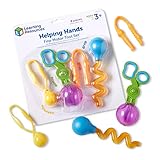
9. Learning Resources Helping Hands Fine Motor Tool Set Toy - Sensory Bin Sand Toys, Montessori, Plastic Tweezers, Therapy Games for Toddler, Homeschool Preschool Supplies
Overview:
Learning Resources Helping Hands tool set provides four specialized instruments designed to build fine motor strength through sensory play. This versatile kit includes uniquely shaped tools perfect for scooping, grabbing, and manipulating small objects in sensory bins filled with water beads, rice, or beans. Sized for small hands and built for durability, it supports progressive skill development from toddlerhood through early elementary with adaptable challenges.
What Makes It Stand Out:
The green scooper uniquely prepares children for scissor use by teaching proper grip and motion without sharp edges. Each tool targets different muscle groups and movements, offering more developmental specificity than generic tweezers. The bright, chunky design withstands enthusiastic classroom use while remaining engaging for individual therapy sessions or home sensory stations.
Value for Money:
As a specialized therapy tool, it commands a modest premium over basic tongs but delivers targeted developmental benefits. Purchasing similar occupational therapy tools individually would cost significantly more. The durable plastic construction ensures longevity across multiple children and years, making it cost-effective for classrooms, clinics, and homeschool co-ops seeking professional-grade materials.
Strengths and Weaknesses:
Strengths include the therapeutic design focus, exceptional durability, progressive challenge across ages, and versatility with various sensory materials. The scissor-skill tool is particularly innovative. Weaknesses: requires separate sensory bin materials, lacks structured activities in packaging, and may not engage children seeking themed play. The learning curve for proper tool use demands adult guidance initially.
Bottom Line:
An essential investment for occupational therapists, special educators, and parents supporting fine motor development. Its professional design transforms everyday sensory play into targeted muscle-building therapy.
10. hand2mind Grab That Monster Fine Motor Activity Set, Occupational Therapy Toys, Pincer Grasp Fine Motor Skills Toys for Toddlers 3-4, Play Therapy Games for Kids, Preschool Learning Activities

Overview:
The hand2mind Grab That Monster set delivers targeted occupational therapy through playful monster-themed activities. This specialized kit includes two distinct grabbers—one for grasping and one for extension—along with 48 mini monsters, four houses, and spinner cards. Children develop pincer grasp and tripod grip essential for handwriting while sorting colorful creatures, making it ideal for toddlers 3-4 building pre-writing skills through purposeful repetition.
What Makes It Stand Out:
The dual grabber design specifically targets different therapeutic goals, with the orange tool building grasp strength and the red tool developing extension movements. Created with occupational therapists, this addresses precise developmental milestones often missed by general toys. The monster theme maintains engagement during repetitive practice, and the included activity guide offers four structured games plus extension ideas for professional use.
Value for Money:
While pricier than basic sorting toys, its therapy-grade design justifies the cost for children needing developmental support. Comparable occupational therapy tools cost more when purchased through clinical suppliers. For families addressing specific fine motor delays, this focused approach prevents frustration and accelerates progress, delivering value through results rather than just entertainment.
Strengths and Weaknesses:
Strengths include the therapeutic precision, engaging theme, quality construction, and comprehensive activity guide. The one-handed grabber operation builds independence. Weaknesses: limited appeal for children outside the target age/skill range, higher price point for casual buyers, and small monster pieces pose storage and choking concerns. The specialized focus means less versatility for general play.
Bottom Line:
An exceptional tool for children with identified fine motor needs. Parents and therapists seeking purposeful, progress-driven play will find this monster-themed set delivers serious developmental benefits disguised as delightful fun.
Understanding Dexterity Games and Fine Motor Development
What Defines a Dexterity Game
Dexterity games specifically target the small muscles in the hands, fingers, and wrists through precise, controlled movements. Unlike general toys, these activities require intentional manipulation, grasp patterns, and hand-eye coordination. The most effective examples demand sustained attention while providing immediate tactile feedback. They bridge the gap between gross motor play and the refined movements needed for daily tasks like buttoning shirts, using utensils, or operating digital devices.
The Science Behind Fine Motor Development
Fine motor skill development follows a predictable sequence from proximal to distal control—meaning stability in the trunk and shoulders must be established before fingers can move with precision. Each dexterity game activates specific neural circuits, strengthening the brain-body connection through repetitive practice. Research shows that activities combining visual input with tactile exploration create stronger neural pathways than either stimulus alone. This is why multi-sensory dexterity tools consistently outperform single-modality exercises.
Benefits of Dexterity Games Beyond Basic Skills
Cognitive Advantages
When children engage with dexterity games, they’re not just building hand strength—they’re developing executive function. Planning movements, sequencing actions, and problem-solving spatial challenges activate prefrontal cortex development. These games also enhance working memory as players remember rules while executing precise movements. The concentration required builds attention span in ways that translate directly to classroom readiness and task persistence.
Physical Development Milestones
Quality dexterity games support the progression from power grips to precision pinches, strengthening the intrinsic hand muscles that occupational therapists target in intervention. They promote wrist stabilization, thumb opposition, and isolated finger movements—all critical for eventual handwriting proficiency. Many also incorporate bilateral coordination, teaching both hands to work together asymmetrically, which mirrors real-world tasks like holding paper while cutting with scissors.
Social and Emotional Growth
Turn-taking games build patience and emotional regulation. Cooperative dexterity challenges teach communication and shared problem-solving. Perhaps most importantly, mastering a difficult manipulation task creates genuine self-esteem that can’t be replicated through praise alone. The frustration tolerance developed when a tower topples or pieces slip builds resilience and growth mindset.
Key Features to Evaluate in 2026 Releases
Adaptive Difficulty Levels
The most valuable dexterity games in 2026 offer multiple entry points and expansion possibilities. Look for sets with interchangeable components that increase complexity gradually. Modular designs that allow you to add obstacles, reduce stability, or introduce time pressures extend a game’s useful lifespan from months to years. Some emerging options even use smart technology to adjust challenges based on performance analytics.
Tactile Feedback and Texture Variety
Modern developmental research emphasizes the importance of diverse tactile experiences. Games incorporating smooth, rough, squishy, rigid, warm, and cool surfaces stimulate different sensory receptors, building a more sophisticated sensory map in the brain. Weighted components add proprioceptive input that helps children develop better force modulation—knowing how much pressure to apply.
Digital vs. Physical Components
While screen-based dexterity apps have improved with haptic feedback, physical games remain superior for building true hand strength and three-dimensional spatial reasoning. However, hybrid options are emerging that use physical pieces tracked by digital interfaces, offering progress monitoring without sacrificing tactile benefits. For 2026, prioritize games where digital elements enhance rather than replace hands-on manipulation.
Age-Appropriate Selection Guidelines
Toddler-Friendly Options (Ages 2-4)
For the youngest users, focus on large, graspable pieces that support whole-hand patterns. Activities should emphasize basic release, simple stacking, and two-handed exploration. Avoid small parts entirely and prioritize materials that can withstand mouthing. The best toddler dexterity games build cause-and-effect understanding while developing the palmar arches needed for later precision.
Preschool Challenges (Ages 4-6)
This age group benefits from games requiring more refined pincer grasps and finger isolation. Look for activities involving threading, simple clips, or magnetic connections that provide satisfying feedback without excessive frustration. Preschool-level games should introduce basic rules while still allowing open-ended exploration. Color matching and simple patterns add cognitive layers without overwhelming developing motor control.
School-Age Complexity (Ages 6-12)
Older children need dexterity games that challenge speed, accuracy, and strategy simultaneously. Components can be smaller, and activities should require sustained attention spanning 15-30 minutes. This age benefits from competitive elements and scoring systems that motivate practice. Games incorporating tools like tweezers, chopsticks, or specialized grabbers build specific skill sets while feeling sophisticated enough for their age.
Teen and Adult Applications
Fine motor maintenance matters for adolescents developing instrument skills, tech-related repetitive strain, or rehabilitating injuries. Adult dexterity games often focus on stress relief, cognitive preservation, and occupational therapy goals. Look for professional-grade materials and challenges that improve finger agility, wrist flexibility, and hand endurance without seeming childish.
Categories of Dexterity Games by Mechanism
Stacking and Balancing Challenges
These classics remain relevant because they develop hand steadiness, graded control, and spatial judgment. Modern versions incorporate irregular shapes, moving bases, or asymmetric pieces that require constant adjustment. The best balancing games teach children to modulate force and anticipate consequences, building both physical and cognitive foresight.
Precision Placement Activities
Games requiring pieces to fit into specific slots, hooks, or targets refine visual-motor integration. The key is graduated precision—starting with large openings and progressing to smaller targets. Some 2026 designs use light or sound cues to indicate successful placement, providing immediate reinforcement. These activities directly correlate with skills needed for handwriting, typing, and tool use.
Manipulation and Grasping Tasks
Activities involving squeezing, twisting, turning, or manipulating resistance build hand strength and endurance. Look for games requiring sustained grasps, repetitive movements, or variable resistance levels. These are particularly valuable for children with low muscle tone or those recovering from injury. The resistance should be challenging but not exhausting.
Timed Challenge Formats
Introducing time pressure adds cognitive load that mimics real-world demands. Timed dexterity games teach quick thinking under pressure and build processing speed. However, ensure the timer can be removed or adjusted, as constant time pressure can increase anxiety and reduce motor control in some children. Use timed modes sparingly until basic competence is established.
Safety and Material Considerations
Material Safety Standards
In 2026, look for certifications beyond basic ASTM or EN71 standards. Seek out games using medical-grade silicone, FSC-certified wood, or recycled plastics with verified purity. Avoid phthalates, BPA, and latex in components that will be frequently handled. For therapeutic settings, antimicrobial coatings are becoming standard but verify they’re non-toxic and don’t create super-resistant bacteria.
Choking Hazard Awareness
Even with older children, small game pieces pose risks. Check that components are appropriately sized for the youngest potential user in the environment. Many manufacturers now include “choke tube testers” with their products. Magnetic pieces require extra scrutiny—ensure magnets are embedded securely and can’t be swallowed. For classroom or clinic use, consider tethered pieces that can’t be lost or ingested.
Evaluating Quality and Longevity
Durability Indicators
High-quality dexterity games withstand thousands of repetitions without wear. Examine joint construction, material thickness, and finish quality. Wooden pieces should be sanded smooth with non-toxic, chip-resistant finishes. Plastic components need flexibility without brittleness. Metal parts should be stainless or coated to prevent rust. Read warranty information—companies confident in durability often offer multi-year guarantees.
Manufacturer Reputation and Reviews
Research companies that collaborate with occupational therapists or child development specialists. Check for peer-reviewed studies supporting their design claims. User reviews mentioning longevity after months of use are more valuable than initial impressions. Be wary of brands with frequent complaints about pieces breaking or losing functionality quickly.
Budget Planning and Value Assessment
Price vs. Developmental Value
The most expensive dexterity game isn’t necessarily the best. Calculate cost-per-use by estimating how many months or years the game will remain appropriately challenging. A $50 game used weekly for three years costs less than a $15 game abandoned after a month. Multi-user games offer better value for families or classrooms. Some premium options include replacement parts, extending their lifespan indefinitely.
Longevity and Replayability Factors
Assess whether a game offers enough variability to stay interesting. Randomized setups, multiple challenge modes, or user-generated obstacles increase replay value. Games that can be played solo and competitively provide more flexibility. Consider storage—compact sets that travel well get used more frequently. Digital companion apps that track progress can justify higher initial costs by providing measurable outcomes.
Implementation Strategies for Maximum Benefit
Creating Consistent Practice Schedules
Short, daily sessions outperform marathon occasional play. Aim for 10-15 minutes of focused dexterity play most days rather than an hour on weekends. Integrate games into natural routines—morning wake-up, post-nap reset, or pre-dinner wind-down. Use visual schedules for children who benefit from predictability. Track participation with stickers or charts that celebrate effort, not just success.
Combining with Other Therapeutic Approaches
Dexterity games complement but shouldn’t replace comprehensive occupational therapy. Use them to reinforce skills targeted in professional sessions. Pair game play with sensory diets, core strengthening exercises, or visual-perceptual activities. For children with specific diagnoses like dyspraxia or cerebral palsy, consult therapists about which game mechanisms align with treatment goals.
Measuring Progress and Adjusting Challenges
Tracking Skill Milestones
Document specific observable changes: can the child now stack 5 blocks instead of 3? Use a pincer grasp consistently? Sustain activity for 10 minutes without frustration? Photograph or video progress monthly to visualize improvements that feel slow day-to-day. Some 2026 games include skill checklists aligned with developmental norms—use these as guides, not rigid expectations.
When to Increase or Decrease Difficulty
If a child shows signs of stress—avoiding the game, complaining of hand fatigue, or demonstrating regressed grasps—the challenge is too high. Conversely, boredom, rushing through tasks, or inventing overly complex rules indicates readiness for advancement. The sweet spot involves occasional success mixed with constructive failure. Adjust one variable at a time: piece size, time pressure, visual distractions, or physical instability.
Frequently Asked Questions
How long should dexterity game sessions last for optimal development?
For toddlers, aim for 5-10 minutes of focused play, gradually increasing to 15-20 minutes for preschoolers and 20-30 minutes for school-age children. Quality matters more than duration—stop while engagement is still high to build positive associations. Two short sessions daily often produce better results than one long session, as fatigue reduces motor control and learning efficiency.
Can dexterity games help children with diagnosed motor delays?
Yes, when selected appropriately and used consistently. Children with dyspraxia, developmental coordination disorder, or fine motor delays benefit from graded, repetitive practice. However, consult an occupational therapist to ensure you’re targeting the right skill deficits and not reinforcing compensatory patterns. Some children need prerequisite work on shoulder stability or sensory processing before dexterity games become effective.
What’s the difference between fine motor practice and dexterity games?
Fine motor practice includes any activity using small hand muscles, while dexterity games add structure, rules, and often competition or goals. The game format increases motivation and provides measurable outcomes. However, everyday activities like buttoning, cooking, or crafting also build fine motor skills. The best approach combines structured game play with real-world application.
How do I know if a game is too advanced for my child’s current abilities?
Watch for signs of frustration within 2-3 minutes, consistent failure despite genuine effort, or regression to immature grasp patterns. If you need to physically assist more than gently guide, the challenge is too high. A properly matched game should allow success about 60-70% of attempts, maintaining engagement while providing room for growth. Most quality games offer simpler variants—start there.
Are digital dexterity apps as effective as physical games?
Physical games remain superior for building true hand strength, three-dimensional spatial reasoning, and tactile discrimination. However, well-designed apps with haptic feedback can supplement practice, especially for visual-motor integration. The best 2026 approaches use physical pieces tracked digitally, combining tactile benefits with progress monitoring. Limit screen-based-only practice to no more than 20% of total dexterity time.
How often should dexterity games be rotated to maintain interest?
Introduce new challenges every 2-3 weeks but keep familiar favorites available. Children need repetition to master skills, so complete rotation creates setbacks. Instead, add one new game while maintaining 2-3 established activities. Seasonal themes or setting up “obstacle courses” combining multiple games can refresh interest without constantly purchasing new materials.
What safety certifications should I look for in 2026?
Beyond standard ASTM F963 and EN71, seek games certified to ISO 8124-1 for mechanical safety and ISO 8124-3 for chemical safety. For therapeutic use, look for FDA registration as medical devices or CE marking for clinical tools. New 2026 standards address antimicrobial coating safety and recycled material purity—verify these through independent lab testing documentation.
Can adults benefit from these games, or are they just for children?
Absolutely. Adults use dexterity games for stress relief, maintaining hand function as they age, rehabilitating injuries, and preventing repetitive strain from computer work. Many professional musicians, surgeons, and gamers use precision dexterity tools to maintain finger agility. The principles are identical—progressive challenge, varied tactile input, and consistent practice—though aesthetic preferences and difficulty levels differ.
How do I clean and maintain dexterity games properly?
Follow manufacturer guidelines—most wooden pieces need only damp cloth cleaning, while silicone components can be dishwasher-safe. Avoid harsh chemicals that degrade materials or leave residues. For shared therapeutic settings, use EPA-approved disinfectants safe for children’s products. Inspect monthly for loose parts, splinters, or material breakdown. Store in climate-controlled environments to prevent warping or cracking.
What red flags indicate a dexterity game is poorly designed?
Be wary of games with pieces that don’t fit together securely, inconsistent sizing, sharp edges, or finishes that chip easily. Poor design includes unclear rules, single-use components, or difficulty levels that jump abruptly. If a game requires excessive adult setup or only entertains for a few minutes, it lacks developmental depth. Trust your instincts—if it feels frustrating or flimsy, it probably won’t support sustained skill development.
See Also
- 10 Best Dexterity Games for Building Fine Motor Skills in 2026
- 10 Best Dexterity Games for Toddlers Developing Motor Skills in 2026
- 10 Best Dexterity Games for Teens in 2026
- 10 Expert-Recommended Dexterity Games for Teaching Focus in 2026
- 10 Must-Have Party Dexterity Games for Any Game Night Enthusiast in 2026