Table of Contents
Diving into the world of strategy board games can feel like stepping onto a battlefield without a map—especially when you’re just starting out. Many beginners assume these games require chess-like mastery or deep pockets, but nothing could be further from the truth. Modern strategy games are designed with accessibility in mind, offering bite-sized challenges that build your tactical muscles without overwhelming you. The best part? You don’t need to drain your wallet to experience the thrill of outmaneuvering opponents through clever planning and foresight.
Think of your first strategy game as a passport to a universe where every decision shapes your destiny, all from your kitchen table. With budgets often stretched thin, finding a game under $30 that delivers depth and approachability is the golden ticket. Forget intimidating rulebooks or complex setups that eat into playtime—today’s market brims with cleverly designed options that prioritize smooth learning curves and replayable fun. This guide cuts through the noise, focusing on what truly matters when choosing your gateway into strategic thinking: simplicity that doesn’t sacrifice substance, components that withstand eager hands, and mechanics that teach you to think ahead, one move at a time.
Top 10 Strategy Board Games for Beginners
Detailed Product Reviews
1. Gamewright - Shifting Stones – A Visual, Decision-Making Family Strategy Game of Tiles, Cards, and Tactics, 8 years +

Overview:
Shifting Stones is a compact strategy game for 2–5 players aged 8+, challenging participants to rearrange and flip nine patterned tiles to match scoring cards. With a 20-minute playtime, it’s designed for quick family sessions or solo play, emphasizing spatial reasoning and tactical foresight in a portable package.
What Makes It Stand Out:
Its dynamic tile-flipping mechanic is revolutionary for the age group—orientation and repositioning directly impact scoring, creating fluid, interactive puzzles. The minimal components (tiles and cards) ensure easy setup anywhere, while the solo variant adds unexpected versatility. Unlike static tile games, every move forces adaptive thinking, making it ideal for developing decision-making skills without overwhelming complexity.
Value for Money:
Priced competitively for a strategy-focused game, it outshines bulkier alternatives by delivering high replayability through variable card combinations. While cheaper games lack depth, Shifting Stones’ durable tiles justify its cost as a long-term investment for families seeking educational fun without recurring expenses.
Strengths and Weaknesses:
Strengths: Exceptionally portable; sharpens spatial intelligence; inclusive for mixed ages; rules are intuitive yet strategically rich. Weaknesses: Limited player count (max 5) may exclude larger groups; tile durability could wane with rough handling; lacks thematic depth for older teens.
Bottom Line:
A brilliantly accessible gateway into strategic gaming—perfect for family nights or classrooms. Its clever mechanics and portability make it a standout value for developing critical thinking in young minds.
2. Spin Master Games, Cardinal Classics Chess Teacher, Learn to Play Strategy Board Games for Beginners, Chess Sets for Adults, 2 Players, for Ages 8 & Up

Overview:
This Chess Teacher set simplifies chess for adult beginners using labeled pieces that visually indicate movement rules. Designed for two players, it transforms a traditionally complex game into an approachable experience with clear, engraved notations showing each piece’s name, direction, and step count.
What Makes It Stand Out:
The engraved movement guides on every piece eliminate guesswork—pawns show forward motion, knights display L-shaped paths—making learning tactile and immediate. Unlike standard sets requiring rulebooks, this integrates instruction into the board itself, accelerating confidence for novices without compromising classic aesthetics.
Value for Money:
An excellent entry point at a modest price, it surpasses cheap “starter” sets that omit educational features. While premium wooden sets cost more, this delivers identical gameplay with built-in teaching, saving hours of frustration. Ideal for adults avoiding digital tutorials.
Strengths and Weaknesses:
Strengths: Unbeatable for self-directed learning; sturdy pieces; instantly clarifies confusing rules like castling; doubles as a standard set once mastered. Weaknesses: Engravings may feel cluttered to purists; lacks storage solutions; not suited for advanced players seeking tournament规格.
Bottom Line:
The definitive beginner’s chess set for adults—transformative for new players. Highly recommended to demystify chess without sacrificing authenticity.
3. Spin Master Games, Cardinal Classics Chess Teacher, Learn to Play Strategy Board Games for Beginners, Chess Set for Kids, 2 Players, for Ages 8 & Up

Overview:
Tailored for children, this Chess Teacher set uses oversized, labeled pieces to teach chess fundamentals through intuitive visual cues. Each component clearly displays movement rules, turning abstract concepts into tangible learning moments for kids aged 8+ during family gameplay.
What Makes It Stand Out:
The child-centric design shines with bold, easy-to-read engravings—knights “jump” in vibrant L-shapes, queens show all-directional arrows—making rules instantly graspable. Paired with Spin Master’s kid-friendly branding (like Hedbanz tie-ins), it frames chess as playful rather than intimidating, fostering engagement through familiarity.
Value for Money:
Priced affordably, it outperforms generic kids’ sets by embedding education into every piece. Cheaper alternatives often skip teaching aids, requiring parental intervention; this set reduces supervision needs, offering long-term utility as skills grow. Worth every penny for early strategic development.
Strengths and Weaknesses:
Strengths: Captures children’s attention effortlessly; durable construction withstands rough play; scalable complexity (simple start, deep mastery); encourages screen-free bonding. Weaknesses: Oversized pieces limit board portability; engravings wear over years; less appealing to teens seeking “cool” designs.
Bottom Line:
A joyful, frustration-free introduction to chess for young learners. Essential for parents wanting to nurture critical thinking through play.
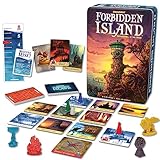
4. Gamewright - Forbidden Island - Cooperative Strategy Survival Board Game, 2-4 Players
Overview:
In Forbidden Island, players collaborate as explorers racing to retrieve treasures from a sinking island before it vanishes. This 2–4 player game (ages 10+) by Matt Leacock merges cooperative strategy with urgent, team-based decision-making, where communication is as vital as tactical moves.
What Makes It Stand Out:
The cooperative mechanic—where all win or lose together—fosters genuine teamwork, unlike competitive alternatives. Stunning artwork immerses players in a crumbling paradise, while adjustable difficulty (via island layout) ensures scalability from family nights to expert sessions. The treasure-capture objective creates thrilling, narrative-driven tension.
Value for Money:
Rich components and high replayability justify its cost, outperforming cheaper cooperative games with shallow mechanics. Expansions extend longevity, but even standalone, it delivers hours of engagement. Comparable titles often lack its polished balance of challenge and accessibility.
Strengths and Weaknesses:
Strengths: Masterfully teaches collaboration; visually captivating; rules digestible in minutes; perfect for building problem-solving skills. Weaknesses: Can overwhelm very young players (despite 10+ rating); high luck element in tile draws may frustrate strategists; box storage is cramped.
Bottom Line:
A modern cooperative classic—energetic, inclusive, and brilliantly executed. Unreservedly recommended for families and educators prioritizing teamwork.
5. Go for Beginners

Overview:
This introductory resource demystifies Go, the ancient abstract strategy game, for complete novices. Without overwhelming jargon, it breaks down core concepts like territory control and stone capture through structured lessons, likely including diagrams or a physical set to ease the steep learning curve.
What Makes It Stand Out:
Its focus on accessibility transforms Go’s complexity into digestible steps—prioritizing foundational tactics over esoteric theory. Unlike dense textbooks, it likely uses visual aids and progressive challenges to build confidence, making an intimidating game approachable for absolute beginners.
Value for Money:
An indispensable investment given Go’s high skill ceiling; free online resources often confuse newcomers. At a typical entry-level price, it saves months of frustration, providing curated guidance that generic apps lack. Superior to trial-and-error methods.
Strengths and Weaknesses:
Strengths: Bridges the knowledge gap efficiently; cultivates patience and spatial reasoning; timeless appeal for lifelong play. Weaknesses: Depth may still daunt some learners; physical versions require additional boards/stones; lacks interactive feedback of digital tutors.
Bottom Line:
The essential starting point for Go enthusiasts—transforms an elusive classic into an achievable passion. Mandatory for newcomers ready to embrace strategic depth.
6. Ravensburger Horrified Games - Greek Monsters - Strategy Board Game - Boost Critical Thinking & Teamwork - Cooperative Gameplay - Unique Monster Challenges - 1 to 5 Players - Adults & Kids 10+

Overview:
Ravensburger’s Horrified: Greek Monsters plunges players into a cooperative battle against six iconic mythical threats like Medusa and Cerberus. Designed for 1–5 players aged 10+, this strategy game tasks teams with defending Elysium through tactical movement, resource management, and collective problem-solving within a 60-minute session.
What Makes It Stand Out:
Its standout feature is the dynamic monster system: each creature operates under unique, evolving rules (e.g., Medusa’s petrifying gaze), ensuring replayability. The stunning thematic artwork and immersive components—like the Labyrinth board and Underworld Door—create a cohesive, cinematic experience. Crucially, it fosters genuine teamwork, as solo efforts guarantee failure.
Value for Money:
Priced competitively for a premium strategy game, it delivers exceptional value. The high-quality components, variable monster challenges, and 1–5 player flexibility outshine many cooperative games at similar price points, eliminating the need for frequent expansions to maintain engagement.
Strengths and Weaknesses:
Strengths: Deeply engaging cooperative mechanics; exceptional thematic integration; scalable difficulty for families; promotes critical thinking without overwhelming complexity. Weaknesses: Some monsters’ rules may confuse younger players initially; limited player interaction beyond teamwork (no direct competition); storage solutions for components could be better.
Bottom Line:
A masterclass in cooperative design that transforms Greek myths into thrilling, brain-teasing adventures. Highly recommended for families and strategy fans seeking meaningful teamwork over cutthroat competition.
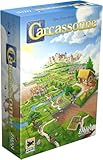
7. Asmodee Carcassonne Board Game - Classic Tile-Laying Strategy Game, Family Fun Medieval Adventure for Kids & Adults, Ages 7+, 2-5 Players, 35 Minute Playtime
Overview:
Carcassonne is a timeless tile-placement game where players collaboratively build a medieval landscape of cities, roads, and monasteries while strategically deploying “meeples” to claim territory. Suitable for ages 7+, this 35-minute game blends simplicity with surprising strategic depth for 2–5 players.
What Makes It Stand Out:
Its genius lies in effortless accessibility—newcomers grasp core rules in minutes—paired with enduring strategic richness. The beautifully illustrated tiles and iconic wooden meeples create instant visual appeal. The included mini-expansions (The River, The Abbot) add subtle complexity without complicating the elegant base game.
Value for Money:
An outstanding investment for casual and seasoned gamers alike. The streamlined rulebook, high replayability, and compact design offer more longevity per dollar than many modern strategy games. It’s a gateway game that rarely gathers dust.
Strengths and Weaknesses:
Strengths: Intuitive gameplay with layered strategy; quick setup and playtime; stunning artwork; highly portable; expansions enhance without bloating. Weaknesses: Luck-based tile draws can frustrate competitive players; limited player interaction may feel passive; base game lacks direct conflict mechanics.
Bottom Line:
A near-perfect family strategy game that balances approachability and tactical nuance. Essential for any board game collection, especially for those seeking quick, engaging sessions without sacrificing depth.
8. Spin Master Games, Chess Made Simple, Learn to Play Strategy Board Games for Beginners, Chess, 2 Players, for Kids Ages 8 & Up

Overview:
Spin Master’s Chess Made Simple is a beginner-focused chess set designed to demystify the classic game for ages 8+. Featuring step-by-step learning cards, move-illustrating pieces, and tiered strategy guides, it transforms chess into an accessible two-player experience for novices.
What Makes It Stand Out:
The detachable piece bases visually demonstrate each unit’s movement—a revolutionary aid for new players. Combined with progressive “levels” (basics to advanced tactics) and clear instructional cards, it removes the intimidation factor that often deters beginners from traditional sets.
Value for Money:
Priced modestly higher than basic sets, it justifies the cost through unparalleled educational scaffolding. Families investing in a child’s first chess set will find its learning tools far more valuable than generic alternatives, potentially eliminating the need for separate tutorials.
Strengths and Weaknesses:
Strengths: Exceptional learning aids for absolute beginners; clear tiered progression; durable double-sided board; reduces frustration during early learning phases. Weaknesses: Plastic pieces lack heft of premium sets; visual move guides may hinder memorization long-term; not ideal for experienced players seeking tournament-standard equipment.
Bottom Line:
The definitive starter chess set for children and adults taking their first steps. Prioritizes education over aesthetics but succeeds brilliantly in making chess feel achievable and fun.
9. HI-Q Classic Chess Board Game – Educational Strategy Set for Kids, Adults & Beginners – Standard Style Pieces with Folding Board – Family Game Night

Overview:
HI-Q’s Classic Chess set offers a no-frills, traditional approach to the “Game of Kings” for ages 6+. Featuring standard Staunton-style plastic pieces and a foldable board, it prioritizes reliability and educational value for beginners and casual players.
What Makes It Stand Out:
Its timeless design emphasizes pure gameplay: the smooth-gliding, flat-bottomed pieces and classic board layout mirror competitive standards, fostering authentic skill development. The compact folding board with integrated storage makes it uniquely practical for home or classroom use without sacrificing playability.
Value for Money:
An economical choice for families seeking a durable, screen-free STEM tool. While not luxurious, its focus on functional design delivers better longevity and educational utility per dollar than novelty-themed sets, especially for schools or frequent travelers.
Strengths and Weaknesses:
Strengths: True-to-tournament piece recognition; space-saving folding design; sturdy storage; proven cognitive benefits for all ages. Weaknesses: Cardboard board less durable than wood alternatives; plastic pieces feel lightweight; lacks learning aids for absolute beginners compared to specialized sets.
Bottom Line:
A dependable, no-nonsense chess set ideal for building foundational skills in a portable package. Perfect for educators and families wanting authentic gameplay without complexity or clutter.
10. Hasbro Gaming Battleship with Planes Strategy Board Game for Ages 7 and Up (Amazon Exclusive)

Overview:
This Amazon-exclusive Battleship variant modernizes the classic naval combat game by adding aircraft to the mix. For ages 7+, it retains the core “guess coordinates to sink enemy ships” mechanic but introduces planes that require unique targeting strategies across a two-tiered battlefield.
What Makes It Stand Out:
The integration of planes adds a fresh strategic layer—players must now manage both sea and air units, increasing depth without complicating rules. The portable battle cases with integrated storage maintain the original’s tactile satisfaction while enhancing on-the-go playability.
Value for Money:
Offers solid value as a refreshed take on a beloved classic. The added planes justify a slight price premium over standard editions by extending replayability, though hardcore fans may find the innovation modest compared to dedicated air-combat expansions.
Strengths and Weaknesses:
Strengths: Clever planes mechanic deepens strategy; retains nostalgic appeal; excellent portability; quick to learn for new players. Weaknesses: Plane rules feel tacked-on rather than deeply integrated; storage compartments slightly cramped; limited strategic evolution beyond basic Battleship tactics.
Bottom Line:
A worthy upgrade for Battleship enthusiasts seeking mild novelty, though purists may prefer the simplicity of the original. Best for families wanting a portable, slightly more tactical twist on a game-night staple.
Understanding Strategy Game Fundamentals for New Players
Defining “Strategy” in Modern Board Games
True strategy games go beyond luck-based rolls—they demand intentional choices where your decisions directly impact outcomes. Unlike party games or trivia, these titles require forward planning, resource management, and adapting to opponents’ moves. For beginners, look for mechanics where every turn presents clear, meaningful options without paralyzing complexity. The goal is to feel empowered, not lost in a sea of possibilities.
Why Simplicity Breeds Strategic Depth
The most accessible strategy games use streamlined rules to mask surprising depth. Think of them as “easy to learn, hard to master” frameworks where simple actions—like placing workers or drafting cards—create intricate decision trees. This balance ensures new players grasp core concepts quickly while leaving room to refine tactics over multiple plays. Avoid games where rules explanations eat half the session; your first game should spark “aha!” moments, not frustration.
Key Differences Between Strategy and Luck-Based Games
While dice rolls or card draws add excitement, pure strategy games minimize randomness. Your success hinges on skill, not fortune. For beginners, this means wins feel earned, and losses become valuable lessons. Watch for games where luck elements (like shuffled decks) create variability but don’t dominate outcomes—ensuring your choices remain the star of the show.
Essential Features to Prioritize Under $30
Player Count Compatibility for Your Group
Strategy shines in interaction, so match the game to your typical group size. Two-player-focused titles often feature tighter, more personal tactics, while 3-4 player games introduce dynamic player politics. Avoid games requiring exactly 4 players if your group fluctuates—opt for flexible counts (1-4 players) to ensure it hits the table regularly. Nothing gathers dust faster than a game that only works with elusive “full” groups.
Playtime That Fits Real-Life Schedules
Beginner-friendly strategy games should rarely exceed 60 minutes. Long setups or sprawling sessions deter repeat plays, especially for newcomers. Prioritize titles with 20-45 minute runtimes—enough for satisfying strategic arcs but short enough to fit between dinner and bedtime. Quick turns (under 2 minutes per player) keep energy high and prevent downtime-induced boredom.
Rulebook Clarity and Learning Curve
A game’s rulebook is your first teacher. Seek out editions with intuitive iconography, step-by-step examples, and minimal jargon. Some publishers even include QR codes linking to video tutorials—a huge plus for visual learners. Test this by skimming the rules online before buying; if terms like “action point allowance” make you sigh, move on. Your first game should feel like a guided tour, not a cryptic puzzle.
Evaluating Game Mechanics for Beginners
Turn Structure Simplicity
Look for games with clear, repetitive turn structures: “Do A, then B, then C.” Avoid convoluted phases where players must track multiple simultaneous actions. Mechanics like “pick one action from a shared pool” or “place one worker per turn” offer gentle entry points. Consistency here builds confidence—you’ll spend less time remembering rules and more time strategizing.
Resource Management Without Overwhelm
Early strategy games should use 2-3 resource types max (e.g., wood, coins, influence). Complex interlocking economies with eight+ resources cripple new players. Ideal titles let you grasp trade-offs instantly: “Do I collect more wood now or grab that high-value card?” Visual resource trackers on player mats help avoid spreadsheet fatigue.
Direct vs. Indirect Competition Styles
Consider your group’s vibe. Direct conflict games (e.g., area control with blocking) create lively tension but might frustrate competitive newbies. Indirect competition (like set collection where players vie for limited cards) feels less personal and more puzzle-like. For first-timers, indirect mechanics often ease the transition into strategic thinking without bruised egos.
Card Drafting as a Strategic Gateway
Card drafting—where players simultaneously select and pass cards—is a superstar mechanic for beginners. It’s visually engaging, forces quick decisions, and subtly teaches concepts like opportunity cost (“If I take this, what might others grab?”). Games using this system rarely exceed 30 minutes and scale perfectly for 2-4 players.
Component Quality on a Budget
Cardboard Thickness and Durability
Under $30, don’t expect chunky miniatures, but check component reviews. Flimsy cards that bend after one shuffle ruin immersion. Prioritize games with linen-finished cards (resists scuffs) and player boards over thin cardstock. A $5 upgrade in materials can mean years of play versus a single-season graveyard candidate.
Artwork That Aids Gameplay
Good art isn’t just pretty—it’s functional. Icons should be distinct at a glance, and color schemes must avoid confusing red/green for colorblind players. Games where art clarifies mechanics (e.g., resource symbols matching card borders) reduce rulebook dependency. Avoid titles where you need a magnifying glass to read text.
Storage Solutions Within the Box
Nothing kills momentum like sorting components pre-game. Seek boxes with custom trays or labeled compartments. Even simple dividers prevent “where does this meeple go?” chaos. If the box feels cavernous with loose bits, budget for a $3 foam insert—it’s worth preserving your sanity.
Navigating Complexity Ratings Wisely
Decoding “Weight” Scores Beyond the Hype
Platforms like BoardGameGeek assign “weight” scores (1.0-5.0), but beginners should target 1.5-2.5. Ignore 1.0 “filler” games—they lack strategic teeth. Conversely, 3.0+ often demands intense focus. Remember: weight reflects perceived complexity, not actual approachability. A well-designed 2.2 can feel lighter than a poorly explained 1.8.
Solo Mode as a Strategic Training Ground
A built-in solo variant is a hidden gem for new players. It lets you practice mechanics risk-free, experiment with strategies, and learn at your own pace. Look for “automated opponents” that mimic human tactics without being punishing. This feature transforms downtime into skill-building sessions.
Replayability Through Variable Setups
Avoid “solveable” games where optimal moves become predictable after three plays. Prioritize titles with modular boards, randomized objectives, or shuffled card decks that shift each session. Even small variations (like different starting resources) keep strategies fresh and encourage repeated exploration.
Making the Right Purchase Decision
Where to Buy for Best Value and Support
Local game stores (LGS) often run demo events—play before you pay! Online, compare prices across retailers but avoid third-party marketplaces with counterfeit risks. Check publisher websites for direct sales; they sometimes offer bundle deals. Remember: supporting ethical sellers ensures more great games get made.
Reading Reviews That Actually Help Beginners
Skip reviews praising “elegant mechanisms” if you don’t know what that means. Seek out “first impressions” videos from new-player channels. Focus on comments like “I taught my non-gamer spouse in 10 minutes” or “rules stuck after one play.” Reddit’s r/BoardGames subreddit has dedicated newbie threads worth mining.
Avoiding Common Beginner Traps
Don’t chase “hype trains” for complex eurogames—start small. Resist games marketed as “for families” if they mix luck-heavy luck mechanics (like heavy dice reliance) with strategy claims. Finally, ignore “best of all time” lists; your perfect game exists in the sweet spot between challenge and comfort, not prestige.
Frequently Asked Questions
What’s the biggest mistake beginners make when choosing their first strategy game?
Overestimating their tolerance for complexity. Starting with overly intricate games leads to frustration and abandonment. Begin with streamlined mechanics that teach core concepts intuitively before layering depth.
Can strategy games really be learned in under 15 minutes?
Absolutely. Many modern designs use visual cues and phased rule reveals (teaching “just enough” per round). If setup and explanation exceed 10 minutes, it’s likely too dense for true beginner-friendliness.
How do I know if a game has “meaningful choices” versus random luck?
Examine player agency: Can you consistently mitigate bad luck through planning? If a single dice roll often decides the game, it’s luck-driven. Strategy games let you adapt—like having multiple paths to victory despite setbacks.
Are card-based strategy games better for beginners than tile-laying ones?
Cards often offer clearer turn structure (draw, play, discard), making them more accessible. Tile-laying can be spatially challenging for new players. However, well-designed tile games with limited placement options (e.g., 2-3 choices per turn) work beautifully too.
Should I prioritize 2-player or multiplayer compatibility?
Match it to your reality. If you mostly play with one other person, invest in a stellar 2-player experience. For groups, ensure smooth scaling—but avoid games that crumble below 4 players. Versatility (1-4 players) is ideal if your group size varies.
What’s the role of “player interaction” in beginner strategy games?
Healthy interaction (trading, blocking, competing for resources) creates engagement without cutthroat negativity. Avoid games where players rarely affect each other—it feels like parallel solitaire. Also skip those where one bad move eliminates you early.
How important are physical components at this price point?
Critical. Flimsy cards or confusing tokens derail the experience. Prioritize linen-finish cards, distinct player colors, and clear iconography. A game with mediocre mechanics but great components stays in rotation; the reverse gathers dust.
Can I learn strategy without playing competitively?
Yes! Many modern games offer cooperative variants or solo modes where you “compete” against a system. This reduces pressure while teaching planning and risk assessment—perfect for building confidence before facing human opponents.
Why avoid games with “app integration” as a beginner?
Tech dependencies add friction: downloads, updates, or device sharing. Pure physical games let you focus on mechanics. Save app-assisted titles for when you’re comfortable with analog strategy fundamentals.
How many strategy games should a beginner own?
Start with one versatile title you’ll play repeatedly. Mastering one game’s depth beats owning five unplayed boxes. Once comfortable, expand based on what you loved (e.g., more card drafting if that clicked). Quality over quantity wins every time.
See Also
- 10 Best Budget Abstract Strategy Board Games Under $30 for New Players in 2026
- 10 Best Budget Strategy Board Games Under $30 for New Players in 2026
- How to Solve Boring Game Nights with the 10 Best Strategy Board Games in 2026
- 10 Best Board Games for Families Who Love Strategy and Fun in 2026
- 10 War Board Games That Solve the Problem of Shallow Strategy in 2026