Table of Contents
Looking to breathe new life into your favorite tabletop games without emptying your wallet? You’re not alone. Many casual board game enthusiasts reach a point where their beloved base games start feeling a bit too familiar, yet the thought of dropping significant cash on premium expansions feels overwhelming. The good news is that the board gaming industry has recognized this sweet spot, creating a robust market of affordable expansion packs that deliver substantial gameplay value for under thirty dollars.
Whether you’re hosting monthly game nights with friends or enjoying weekly sessions with family, understanding how to identify worthwhile budget expansions can transform your collection. These wallet-friendly add-ons can introduce fresh mechanics, new strategies, and extended replayability without the steep learning curve or financial investment of larger box expansions. Let’s explore what makes an expansion pack valuable for casual players and how to spot the best deals that will keep your gaming table exciting for years to come.
Top 10 Expansion Packs for Board Games
Detailed Product Reviews
1. CATAN 5-6 Player Board Game Expansion (6th Edition) Add More Players to Your Adventure, Ages 10+, 3-6 Players, 60-90 Minute Playtime

Overview: This expansion solves the classic board game night dilemma when two extra friends show up for CATAN. Designed exclusively for the 6th Edition base game, it extends the island with additional hexes, settlements, roads, and resource cards to accommodate 5-6 players seamlessly. The package maintains the core trading and building mechanics while introducing subtle modifications to keep gameplay balanced and engaging for larger groups.
What Makes It Stand Out: The enhanced turn-taking mechanism is the real gem here. It prevents the downtime issues that plague many expanded player counts by allowing strategic building between turns, keeping everyone engaged. Unlike previous editions, this version integrates perfectly with the 6th Edition’s refreshed artwork and components, creating a cohesive experience that doesn’t feel tacked-on.
Value for Money: At roughly half the price of a full game, this expansion delivers exceptional value for groups that regularly host five or six players. The alternative—purchasing a second copy or switching to a different game—costs significantly more and fragments your gaming experience. For occasional use, the value diminishes, but for weekly game nights with larger crowds, it’s practically essential.
Strengths and Weaknesses: Pros include seamless 6th Edition integration, balanced gameplay at higher player counts, and minimal rule complexity. The turn-taking innovation keeps engagement high. Cons are its exclusivity to 6th Edition (incompatible with earlier versions), extended playtime (90+ minutes), and limited utility if you rarely exceed four players.
Bottom Line: If you own CATAN 6th Edition and regularly play with five or more people, this expansion is non-negotiable. It preserves the game’s spirit while scaling beautifully.
2. Monopoly Go to Jail Expansion | Add More Fun to Classic Monopoly Game and Play Faster | Ages 8+ | 2-6 Players | 40 Mins. | Family Board Games

Overview: This expansion tackles Monopoly’s biggest criticism—interminable playtime—by injecting a mischievous twist that transforms Jail from penalty to opportunity. Requiring the classic base game, it introduces Corruption cards and a Super Jail space that fundamentally alter the risk-reward calculus. Games wrap up in approximately 40 minutes, making it feasible for weeknight family entertainment without sacrificing the property-trading essence.
What Makes It Stand Out: The brilliant inversion of Jail as a strategic asset sets this apart. Spending time behind bars now generates Corruption cards that let you sabotage opponents, rig auctions, and bend rules. The Super Jail escalation creates delicious tension—higher bail but more powerful Super Corruption cards. This mechanic rewards cunning over pure dice luck, adding a layer of tactical depth rarely seen in Monopoly variants.
Value for Money: For under $15, this expansion resurrects a game many families own but rarely play. The 40-minute runtime alone justifies the cost, saving hours of tedious endgame grinding. Compared to buying an entirely new quick-play board game, this leverages your existing investment while delivering a genuinely fresh experience.
Strengths and Weaknesses: Pros include dramatically reduced playtime, increased player interaction through corruption mechanics, and accessibility for ages 8+. The expansion maintains Monopoly’s familiar framework while adding strategic choices. Cons are its dependency on the base game, potential to alienate traditionalists who prefer pure capitalism, and that luck still heavily influences outcomes despite new tactical elements.
Bottom Line: Perfect for families who own Monopoly but avoid it due to time constraints. It delivers a snappier, more interactive experience without abandoning the classic feel.
3. Big Potato The Chameleon Board Game Expansion Pack

Overview: This modest expansion pack injects 40 fresh topic cards—totaling 640 new words—into the social deduction hit The Chameleon. Designed as a pure content add-on, it requires the base game to function and targets dedicated players who’ve exhausted the original card set. The expansion maintains the core “blend in” mechanic while introducing contemporary and absurd categories that spark new conversations and accusations.
What Makes It Stand Out: The topic selection demonstrates Big Potato’s signature irreverence. Categories like “Fast Food Chains” and “Things That Get Flushed Down The Toilet” are simultaneously relatable and ridiculous, creating fresh bluffing challenges. The expansion doesn’t tamper with the elegant core mechanics, instead trusting that new content alone can reinvigorate the experience for veteran players.
Value for Money: Retailing around $10-12, this is one of the most cost-effective ways to extend a beloved party game’s lifespan. The alternative—purchasing an entirely new social deduction game—costs 3-4 times more. For groups that play The Chameleon monthly, the per-use cost becomes negligible after just a few sessions.
Strengths and Weaknesses: Pros include seamless integration, genuinely funny and diverse topics, compact packaging for travel, and affordability. The cards use the same quality and design language as the base game. Cons are its lack of mechanical innovation, absolute requirement of the full game, and diminishing returns for casual players who haven’t exhausted the base set. It’s content, not innovation.
Bottom Line: A must-buy for Chameleon enthusiasts who’ve memorized the original topics. Casual players should master the base game first before investing.
4. Asmodee Splendor The Sun Never Sets Board Game Expansion - Enhance Gameplay with New Strategies & Challenges, Fun for Families, Kids & Adults, Ages 10+, 2-4 Players, 45 Min Playtime

Overview: This expansion enriches the gem-trading masterpiece Splendor by introducing bastions and lucrative Orient trade routes, adding strategic depth without bloating the game’s elegant framework. Players now balance traditional noble acquisition with building fortifications and establishing trade networks. The expansion maintains Splendor’s accessible 45-minute playtime while forcing veterans to completely rethink their engine-building strategies.
What Makes It Stand Out: The trade route mechanism brilliantly complements the existing chip economy. Bastions create new scoring paths that don’t rely on nobles, breaking the monotony of racing for the same aristocrats. The Orient cards introduce powerful asymmetrical abilities that reward long-term planning over reactive play, elevating Splendor from tactical puzzle to genuine strategic contest without sacrificing its intuitive flow.
Value for Money: Priced similarly to a mid-tier game but delivering a transformative experience, this expansion offers exceptional value for dedicated Splendor fans. It essentially creates a “Splendor 2.0” experience at a fraction of the cost of a sequel. Casual players may find less value, but for weekly players, it completely rejuvenates the base game.
Strengths and Weaknesses: Pros include meaningful strategic expansion, flawless integration with base components, increased replayability, and preservation of core elegance. The new mechanics feel essential rather than gimmicky. Cons include a slight learning curve for new players, potential analysis paralysis with added options, and that it doesn’t support 5-6 players. It also requires the base game.
Bottom Line: Indispensable for Splendor enthusiasts seeking fresh challenges. Occasional players should stick with the base game until they’ve mastered its nuances.
5. Asmodee Ticket to Ride USA 1910 Board Game Expansion - Train Route-Building Strategy Game, Fun Family Game for Kids & Adults, Ages 8+, 2-5 Players, 30-60 Minute Playtime

Overview: This card-only expansion completely replaces Ticket to Ride’s original deck with 181 larger-format cards and adds 35 new Destination Tickets, fundamentally refreshing the base game. The inclusion of three distinct play modes—1910 Rules, Mega Game, and Big Cities—provides varied strategic experiences without altering the core route-building mechanic. It’s essentially a “version 1.5” upgrade that addresses the base game’s minor component quality issues.
What Makes It Stand Out: The Globetrotter bonus card creates a compelling new victory path, rewarding ticket completion over longest route. The oversized cards dramatically improve handling and readability, a quality-of-life upgrade that feels surprisingly luxurious. Most significantly, the three play modes offer distinct meta-games: Big Cities concentrates competition in urban hubs, while the Mega Game throws all tickets into the mix for maximum chaos.
Value for Money: This is arguably the best value in board game expansions. For under $20, you get a full component upgrade, three game variants, and enough new tickets to make the base game feel novel again. The larger cards alone justify the price, eliminating the original’s flimsy, hard-to-shuffle cards.
Strengths and Weaknesses: Pros include superior card quality, versatile gameplay modes, increased strategic variety, and the satisfying Globetrotter bonus. The expansion integrates instantly with zero learning curve. Cons include its reliance on the base game, potential for ticket draws to create runaway leaders, and that it doesn’t add new map elements. Some tickets feel significantly harder than others.
Bottom Line: The definitive upgrade for any Ticket to Ride owner. Even casual players will appreciate the improved cards and optional variants.
6. Monopoly Free Parking Jackpot Expansion | Add More Fun to Classic Monopoly Game and Play Faster | Ages 8+ | 2-6 Players | 40 Mins. | Family Board Games

Overview: The Monopoly Free Parking Jackpot Expansion injects fresh energy into the classic property-trading game by transforming the often-debated Free Parking space into a dynamic jackpot mechanic. This official expansion addresses the common house rule while dramatically reducing playtime to approximately 40 minutes. Designed for 2-6 players ages 8 and up, it attaches seamlessly to any standard Monopoly board, replacing traditional Chance and Community Chest spaces with interactive spin spaces that keep the action moving.
What Makes It Stand Out: The centerpiece spinner mechanism creates genuine excitement, turning routine landings into potential windfalls. The innovative Deal Mobile token adds a strategic layer, allowing fortunate players to acquire free properties and dodge rent payments. By converting static card draws into active spinning opportunities, the expansion eliminates downtime while maintaining the core Monopoly experience. This is particularly valuable for families seeking the iconic gameplay without committing to marathon three-hour sessions.
Value for Money: Priced competitively against other board game expansions, this add-on delivers substantial gameplay transformation for a modest investment. It essentially doubles as a game accelerator and content enhancer, making it more economical than purchasing a completely new title. For families who already own Monopoly but rarely play due to time constraints, this represents excellent return on investment.
Strengths and Weaknesses: Strengths include significantly faster gameplay, easy rule integration, and heightened player engagement. The spinner adds satisfying tactile interaction. However, purists may dislike the reduced emphasis on traditional property trading. The expansion also introduces more luck dependency, potentially frustrating strategic players. It requires the base game, representing an additional purchase for newcomers.
Bottom Line: This expansion brilliantly solves Monopoly’s two biggest problems: excessive duration and stale gameplay. Perfect for families wanting classic Monopoly fun in a modern, time-conscious package. Highly recommended for casual players, though competitive gamers may find the luck factor excessive.
7. Hans Im Gluck Carcassonne Dragon & Fairy Board Game Expansion - Add Magical Creatures, Portals & Strategy, Family Fun for Kids & Adults, Ages 8+, 2-5 Players, 45 Minute Playtime
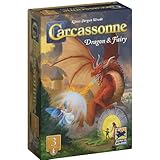
Overview: The Carcassonne Dragon & Fairy expansion introduces captivating mythical elements to the beloved tile-laying classic. This German-import expansion (Hans im Glück) adds a hungry dragon that prowls the board, a protective fairy that guards your meeples, and mystical portals that create unexpected connectivity. Requiring the base Carcassonne game, this expansion includes 26 new land tiles plus special Source and Lake tiles, supporting 2-5 players in about 45 minutes of enhanced strategic play.
What Makes It Stand Out: The dragon mechanic fundamentally alters placement strategy, as players must carefully position followers to avoid becoming prey. This creates delicious tension and interactive conflict rarely seen in base Carcassonne. The fairy offers tactical protection and scoring bonuses, forcing difficult decisions about resource allocation. Portals enable clever board connections that can rescue stranded meeples or complete ambitious structures. Together, these elements transform Carcassonne from a peaceful puzzle into a dynamic battlefield of wits.
Value for Money: As a mid-priced expansion, it delivers substantial content with high-quality tiles that match the base game’s production standards. The three distinct mechanics provide varied replayability, essentially offering multiple expansions in one package. For Carcassonne enthusiasts, this represents better value than purchasing several smaller expansions separately.
Strengths and Weaknesses: Strengths include excellent component quality, deep strategic integration, and the perfect balance of chaos and control. The dragon adds welcome player interaction. However, the aggressive nature may alienate those who prefer Carcassonne’s original peaceful gameplay. The additional rules require careful teaching, and the dragon’s movement can feel arbitrary to new players. Requires base game ownership.
Bottom Line: An exceptional expansion that breathes new life into Carcassonne without betraying its essence. Ideal for experienced players craving more interaction and tactical depth. Skip if you prefer the base game’s tranquil, solitary puzzle experience.
8. Abducktion - IntergalacDuck Research Expansion Pack, 25-30 Minutes, Additional Cards, 2 More Boards for up to 6 Players, and Glitter Ducks!

Overview: The Abducktion IntergalacDuck Research Expansion Pack elevates the quirky alien duck-abduction game to new heights of strategic chaos. This expansion increases player capacity to six while introducing forty glitter-enhanced super-powered ducks, twenty challenging formation cards, and two additional research pod boards. Designed for ages 12 and up, it extends playtime to 25-30 minutes while maintaining the base game’s blend of deception and pattern recognition.
What Makes It Stand Out: The glitter ducks aren’t merely cosmetic—they possess unique abilities that dramatically shift tactical considerations. The expanded player count transforms the game from intimate deduction to a raucous battle of wits, perfect for larger gatherings. New formation cards introduce sophisticated patterns that challenge even veteran players. The additional boards ensure everyone has adequate space to orchestrate their duck-napping schemes without congestion.
Value for Money: The expansion delivers substantial physical content—forty detailed ducks and two full boards—at a price point that feels generous. For groups who regularly hit the base game’s player limit, this effectively doubles the game’s utility. The component quality matches the original, and the added strategic depth provides lasting replayability that justifies the investment.
Strengths and Weaknesses: Strengths include seamless integration, increased player capacity, and enhanced strategic variety. The glitter ducks add delightful table presence. However, the larger player count can increase downtime between turns. The added complexity may slightly dilute the base game’s elegant simplicity. Requires ownership of the original Abducktion game.
Bottom Line: Essential for fans who want to include more players or crave additional strategic depth. The expansion preserves the original’s charm while adding meaningful content. Highly recommended for regular gaming groups, though casual players may find the base game sufficient.
9. CATAN Seafarers Board Game Expansion (6th Edition) Strategy Game for Kids and Adults, Ages 12+, 3-4 Players, 60 Minute Playtime, Made by Catan Studio

Overview: The CATAN Seafarers Expansion (6th Edition) remains the quintessential maritime addition to the legendary settlement-building game. This expansion introduces ships, exploration, and distant islands, transforming your CATAN experience into an age of discovery. Designed for 3-4 players ages 12 and up, it adds approximately 60 minutes of strategic gameplay as you navigate pirates, fog, and gold resources while building shipping routes between settlements.
What Makes It Stand Out: Seafarers masterfully preserves CATAN’s core engine while adding meaningful spatial and economic dimensions. The ship-building mechanic creates new victory paths beyond inland development, while the modular board scenarios provide incredible variety. The introduction of pirates adds interactive tension, and the gold resource offers flexible trading options. This expansion feels less like an add-on and more like a natural evolution of the base game.
Value for Money: As one of CATAN’s most substantial expansions, Seafarers delivers exceptional value through its high-quality components and virtually limitless replayability. The included scenarios provide months of gaming content, making it more economical than purchasing new standalone games. For CATAN owners, this is arguably the first expansion you should acquire.
Strengths and Weaknesses: Strengths include seamless 6th Edition integration, premium component quality, and perfectly balanced new mechanics. The exploration theme is universally appealing. However, setup time increases significantly with the additional tiles and pieces. The expansion also extends total playtime, which may not suit all groups. Absolutely requires the CATAN base game.
Bottom Line: A must-have expansion that transforms CATAN without overwhelming it. Perfect for players ready to explore beyond the original island. While it demands more setup time, the strategic rewards are undeniable. Essential for any serious CATAN collection.
10. Big Potato Herd Mentality Expansion Pack

Overview: The Big Potato Herd Mentality Expansion Pack delivers fresh content for the popular moo-tivated party game about thinking alike. This expansion adds new question cards that maintain the original’s simple premise: write the answer you think everyone else will write. While the product description is frustratingly minimal, the expansion functions as a straightforward content booster for the base game, providing more prompts for endless family entertainment.
What Makes It Stand Out: The new questions appear to dive into more absurd and thought-provoking territory, such as “What is the smelliest part of the human body?” This pushes the game’s humor into delightfully weird directions while preserving its accessible, cross-generational appeal. The expansion integrates instantly—no new rules or components to learn—making it perfect for immediate play. Big Potato’s signature quirky humor shines through each carefully crafted prompt.
Value for Money: As a modestly priced card-only expansion, it offers solid value for groups who’ve exhausted the base game’s questions. Party game expansions typically provide excellent cost-per-play ratios, and this appears no different. For regular players, it effectively renews the entire game experience for a fraction of the original cost.
Strengths and Weaknesses: Strengths include instant integration, maintained simplicity, and expanded content longevity. The questions seem suitably hilarious for diverse groups. However, the lack of new mechanics may disappoint those seeking gameplay innovation. The minimal component count feels slightly underwhelming for the price. Requires the base Herd Mentality game.
Bottom Line: A worthwhile purchase for fans who’ve played the original to death. It delivers exactly what you’d expect: more of the same great content. If you love Herd Mentality and want to keep the laughs going, this is a no-brainer. Those seeking mechanical depth should look elsewhere.
Understanding Board Game Expansions
What Defines an Expansion Pack?
An expansion pack is specifically designed content that builds upon a base game’s foundation, adding new elements while maintaining the core experience that made you love the original. Unlike standalone games, expansions require the base game to function properly. They typically come in various sizes—from small card decks to larger boxes with boards and miniatures—each offering different levels of content injection. For budget-conscious shoppers, understanding this definition helps set realistic expectations about what you’re purchasing and how it will integrate with your existing collection.
Why Expansions Enhance Your Gaming Experience
Expansions serve as carefully crafted evolution tools for games you’ve already mastered. They can fix minor imbalances, add variety to prevent repetitive gameplay, or introduce new player counts to accommodate your growing game night crew. For casual players, the right expansion means not having to learn an entirely new ruleset while still experiencing that “new game” excitement. Think of expansions as seasoning for a familiar recipe—they enhance what’s already good without requiring you to cook something completely different.
The Difference Between Expansions and Standalone Games
This distinction matters significantly when budgeting. Standalone games offer complete experiences but require learning entirely new systems. Expansions, conversely, leverage your existing knowledge investment. That thirty-dollar expansion often provides more immediate value than a thirty-dollar new game because you skip the learning curve and can start playing within minutes. For casual gamers with limited time, this efficiency translates directly into more actual playtime and better entertainment value per dollar spent.
Key Features to Look for in Budget Expansions
Replayability Value
The hallmark of any worthwhile expansion is how dramatically it increases your base game’s lifespan. Look for content that introduces modular elements—pieces you can mix and match with each playthrough rather than linear additions you experience once. A strong budget expansion might add new characters, variable setup conditions, or alternative end-game triggers that create dozens of new combinations. Calculate potential plays by considering how many new scenarios or setups the expansion enables compared to your base game’s current replayability.
Component Quality vs. Price
At sub-thirty-dollar price points, component quality varies wildly. Focus on expansions that prioritize functional components over flashy but unnecessary pieces. Thick cardstock, clear iconography, and durable printing matter more than miniatures or elaborate plastic pieces at this budget tier. Examine unboxing photos and community reviews that specifically discuss component durability. An expansion with excellent cardboard tokens you’ll use every game provides better value than one with a single impressive but rarely-used miniature.
Rule Complexity Considerations
Casual players should scrutinize how many new rules an expansion adds. The best budget expansions integrate seamlessly, adding depth without complexity. Look for content that uses familiar mechanics in new ways rather than introducing entirely new systems requiring separate reference sheets. A good rule of thumb: if the expansion’s rules explanation takes longer than five minutes, it might be too complex for casual game nights where socializing remains a priority over heavy strategy.
Player Count Flexibility
Many base games shine at specific player counts but falter with more or fewer participants. Excellent budget expansions address this by smoothing out scaling issues. They might add components that make three-player games as engaging as five-player ones, or introduce solo modes that weren’t previously available. When evaluating an expansion, consider your actual play patterns—if you regularly play with four people but your base game works best with three, prioritize expansions that improve the four-player experience.
Storage and Organization
Practical considerations often get overlooked until you’re wrestling with an overstuffed game box. Quality budget expansions either fit neatly inside the original game’s packaging or come with their own compact storage solutions. Some include additional baggies, inserts, or boxes designed to combine with the base game. This matters tremendously for casual players who lack extensive shelving systems or dedicated gaming rooms. An expansion that forces you to buy separate storage containers instantly loses its budget-friendly appeal.
Evaluating Value for Casual Players
Cost Per Play Calculation
Smart shoppers think beyond the sticker price. A fifteen-dollar expansion you’ll play twenty times costs just seventy-five cents per play, while a twenty-five-dollar expansion you’ll only use twice costs twelve fifty per session. Estimate your likely play frequency by considering how often you currently play the base game and whether the expansion addresses aspects that currently limit your table time. Expansions that solve specific pain points—like downtime between turns or repetitive strategies—typically see more use and thus deliver better value.
Content-to-Price Ratio
Analyze what you’re actually receiving for your money. A ten-dollar expansion with fifty new cards might offer better value than a twenty-five-dollar one with the same card count plus a few tokens you’ll rarely use. Compare the expansion’s content against its price and your usage patterns. For casual players, quantity of usable content trumps sheer volume. Those fifty cards that change every game beat a hundred cards that only work in specific scenarios you’ll rarely set up.
Avoiding Feature Creep
Some expansions suffer from “kitchen sink” design, throwing in every idea the developer had. This bloats the price and overwhelms casual players. Instead, seek focused expansions that do one or two things exceptionally well. A simple expansion that adds a brilliant new character class you’ll use constantly provides more casual-player value than a massive box with ten half-baked mechanics you’ll need to reference constantly. Less is often more when your game nights prioritize fun over complex optimization.
Integration with Base Game
The smoothest expansions feel like they were always part of the game. They use the same art style, component types, and design language as the base game, creating a cohesive experience. Poor integration creates friction—you’re constantly reminded you’re playing with an add-on. Read community discussions about how naturally expansions blend with the original. Expansions that require minimal setup changes or rule adjustments integrate more smoothly into casual gaming sessions where you want to start playing quickly.
Types of Expansions That Suit Casual Gaming
Modular Add-Ons
These expansions work like building blocks, letting you add or remove pieces based on your mood and time constraints. You might play with just one new module on a weeknight but combine three for a longer weekend session. This flexibility is perfect for casual players because you control the complexity and playtime. Modular designs also let you gradually introduce content to hesitant players, slowly building their comfort level rather than overwhelming them with everything at once.
Small Box Expansions
Typically priced under twenty dollars, small box expansions focus on concentrated content. They often add new cards, characters, or minor board pieces that pack significant variety into a tiny footprint. For casual players, these expansions offer the best risk-to-reward ratio—they’re affordable, store easily, and usually don’t drastically alter the learning curve. Their limited scope means designers focus on perfecting a few key additions rather than spreading themselves thin across numerous new systems.
Card-Based Expansions
Expansions consisting primarily of cards often deliver exceptional value at low price points. Cards are relatively inexpensive to produce but can dramatically alter gameplay through new actions, events, or objectives. For casual players, card expansions typically integrate seamlessly—shuffle them into existing decks and you’re ready to play. They also tend to scale well across different player counts and don’t require additional table space, making them practical choices for crowded game nights in small apartments.
Mini-Expansion Packs
These micro-expansions, often priced between five and fifteen dollars, target specific aspects of a game. They might add a single new faction, a handful of special power cards, or a small variant board. While seemingly minor, these targeted additions can refresh a game you’ve grown tired of without the commitment of a major expansion. For casual players, mini-expansions represent low-risk experiments—you can try several different ones to find what resonates with your group without breaking your budget.
Shopping Strategies for Budget-Conscious Gamers
Timing Your Purchases
Board game expansions follow predictable pricing patterns. New releases typically launch at full price, but many drop to the sub-thirty-dollar sweet spot within six months to a year. Holiday sales, especially Black Friday and post-holiday clearance events, often feature significant discounts on expansions. Publisher-specific sales during conventions or anniversaries can yield excellent deals. Patience pays off—adding items to wishlists and monitoring prices over a few months often results in twenty to forty percent savings.
Where to Find Deals
Beyond your local game store, numerous online retailers specialize in board game discounts. Marketplace sites often have sellers offering new or lightly used expansions at reduced prices. Board game café bulletin boards sometimes host community sales where local players trade or sell expansions. Publisher websites occasionally offer direct-to-consumer discounts or bundle deals. Signing up for newsletters from retailers and publishers alerts you to flash sales and clearance events before they sell out.
Community Trading and Reselling
The board gaming community actively trades and resells expansions, often in near-new condition. Online forums and local gaming groups frequently have buy/sell/trade threads where you can acquire expansions for half retail price or less. Many players buy expansions, play them a few times, then sell them to fund new purchases. These pre-owned copies typically contain all components and are indistinguishable from new ones. Just verify component lists before purchasing and factor in any missing pieces when negotiating price.
Bundling Opportunities
Some retailers offer bundle discounts when you purchase multiple expansions for the same game or across a publisher’s catalog. These bundles often bring each expansion well under the thirty-dollar threshold. Publisher subscription services or loyalty programs sometimes include expansion discounts as benefits. If you know you’ll want multiple expansions for a favorite game, waiting for a bundle deal can save thirty to fifty percent compared to individual purchases. Just ensure each expansion in the bundle offers value—you don’t want to pay for content you’ll never use.
Red Flags to Avoid
Overly Complex Rules
Be wary of expansions requiring extensive new rulebooks or multiple reference sheets. If community reviews mention needing to constantly check rules or that the expansion “completely changes the game,” it might be too complex for casual play. Expansions should feel like natural extensions, not complete overhauls requiring relearning. Watch for phrases like “steep learning curve” or “significantly increases playtime” in reviews—these often signal expansions better suited for dedicated hobbyists than casual groups.
Imbalanced Gameplay Elements
Some budget expansions add powerful new options that render base game content obsolete. This creates imbalance where players who understand the expansion dominate those who don’t. Look for community discussions about power creep or dominant strategies. Good expansions maintain parity between old and new content, ensuring everyone can compete regardless of their familiarity with the add-on. Expansions that receive criticism for “must-have” cards or strategies often create an arms race that casual groups find exhausting.
Poor Component Quality
At lower price points, some publishers cut corners on component quality. Thin cards that warp easily, flimsy cardboard tokens, or misprinted components can ruin the experience. Search for unboxing videos and photos showing actual components rather than renderings. Pay attention to comments about card stock weight, print clarity, and cutting accuracy. An expansion that requires sleeving cards to prevent damage adds hidden costs that push it beyond budget-friendly territory.
Compatibility Issues
Not all expansions work smoothly with every version of a base game. Publishers sometimes update artwork, component sizes, or rules between printings, creating mismatches. Verify that the expansion you’re considering matches your base game’s edition. Community forums often have threads dedicated to compatibility questions. An expansion that doesn’t quite fit your box, uses different card backs, or references outdated rules creates friction that casual players won’t want to deal with.
Making the Most of Your Expansion
Introducing Expansions to Your Group
Casual players often resist change, preferring the comfort of familiar rules. Introduce expansions gradually—maybe play one game with just a single new element, then add more once everyone is comfortable. Frame expansions as “new options” rather than “rule changes” to reduce intimidation. Have the expansion integrated and ready before game night so setup doesn’t reveal a daunting pile of new components. The smoother the introduction, the more receptive your group will be to future expansions.
Teaching New Rules Smoothly
The best way to teach expansion rules is by playing, not lecturing. Give each player a quick overview of what’s new, then start playing, offering guidance as situations arise. Keep the rulebook handy but resist reading it aloud—instead, demonstrate how new elements work when they come up naturally. For casual groups, maintain the social atmosphere by keeping rule explanations brief and integrated into gameplay. If an expansion requires more than two minutes of upfront explanation, consider introducing it in stages across multiple sessions.
Storing Combined Games
Once you’ve committed to an expansion, store it with the base game to avoid forgetting components. Many expansions fit inside the original box with creative organization. Use baggies, small plastic containers, or custom foam core inserts to keep everything sorted. Label bags clearly so setup remains quick. For casual players, efficient storage means you’re more likely to actually use the expansion rather than leaving it in a separate box that never makes it to the table. The easier it is to set up, the more play your expansion will see.
When to Play with Expansions vs. Base Game
Not every game session needs the expansion. Sometimes the base game provides the perfect light experience for newcomers or shorter time slots. Develop a sense for when to add expansion content—perhaps save it for longer sessions, experienced players, or when the base game feels stale. Having the flexibility to play either version actually increases your expansion’s value because you can tailor the experience to the moment. Casual gaming groups appreciate this adaptability more than being forced into maximum complexity every time.
Frequently Asked Questions
What exactly qualifies as a “budget” expansion?
Generally, budget expansions fall under the thirty-dollar price point, though many excellent options exist in the ten to twenty-dollar range. The key isn’t just price but value—how much gameplay enhancement you receive per dollar spent. Small box expansions, card packs, and mini-expansions typically fit this category, offering focused content without premium components that drive up costs.
How do I know if an expansion will work with my edition of the base game?
Check the publisher’s website for compatibility notes, as many publishers maintain charts matching expansions to specific printings. BoardGameGeek forums contain extensive discussion threads where users confirm compatibility between versions. Look for edition numbers or printing dates on your box and compare them with expansion requirements before purchasing.
Are cheaper expansions lower quality than premium ones?
Not necessarily. Price often reflects component quantity and type rather than design quality. Many affordable expansions offer brilliant gameplay innovations using simple cards or tokens. The key is reading reviews that specifically address component durability and design elegance. Some budget expansions outshine their pricier counterparts in pure gameplay value.
Should I buy multiple small expansions or one large one?
For casual players, multiple small expansions usually provide better value and flexibility. You can mix and match them based on your group’s mood and time constraints. Large expansions often introduce heavy new systems that might overwhelm casual groups. Small expansions let you experiment and find what resonates without significant financial commitment.
How long should I wait after buying the base game before getting an expansion?
Play the base game at least five to ten times first. This helps you identify what you actually want more of—whether it’s variety, player count flexibility, or advanced options. Understanding your base game’s strengths and weaknesses ensures you buy expansions that solve real issues rather than just adding random content you’ll rarely use.
Can expansions make a game too complex for casual players?
Absolutely, which is why rule complexity should be your primary filter. Expansions that add more than one or two new concepts can quickly push a casual game into intermediate territory. Read reviews specifically mentioning rules overhead and teaching time. The best casual expansions add depth through variety, not complexity.
What’s the best way to store expansions with the base game?
Remove insert trays that don’t accommodate expanded content and replace them with baggies or small plastic organizers. Store rulebooks together, and keep all components of each type in labeled bags. Many players create custom foam core inserts or purchase third-party storage solutions. The goal is making setup as fast as possible so you’re more likely to use the expansion.
Do expansions ever go out of print? Should I buy immediately?
Yes, expansions can and do go out of print, sometimes faster than base games because of smaller print runs. However, don’t panic-buy. Create a wishlist and monitor prices; if you see an expansion consistently selling out and being relisted at higher prices, that’s your signal to purchase. Most popular games see expansions reprinted eventually, but niche titles might not.
How do I introduce expansions to players who resist rule changes?
Start by playing the base game as usual, then suggest “trying one new thing” for the final round or half of the next game. Show rather than tell how the expansion works. Let them experience the benefit (more variety, better balance) before explaining mechanics. Positive first experiences create openness to future expansions.
Can I use expansions to make a game solo-playable?
Many expansions specifically add solo modes to previously multiplayer-only games. These range from simple automated opponent systems to complex AI decks. Check expansion descriptions for “solo mode” or “solo variant” mentions. BoardGameGeek’s solo gaming forums review how well these modes work, as some are afterthoughts while others provide genuinely engaging solo experiences.
See Also
- 10 Best Budget Expansion Packs for Board Games Under $30 for Casual Gamers
- 10 Best Expansion Packs for Board Games for New Players in 2026
- 10 Best Expansion Packs for Board Games for Deeper Strategy in 2026
- 10 Best Expansion Packs for Board Games After 6 Months of Testing in 2026
- 10 Premium Expansion Packs for Board Games for Collectors (Worth the Investment)