Table of Contents
The clock is ticking down, champagne flutes are chilling, and that familiar New Year’s Eve buzz is already in the air. Whether you’re hosting an intimate gathering of lifelong friends or a sprawling bash with colleagues and neighbors, the pressure to keep the energy high as midnight approaches is real. Forget the predictable playlist shuffle or awkward small talk circling the snack table – the secret to a truly unforgettable countdown often lies in the right game choices. But let’s be honest, scrolling through endless lists promising “the best” games can feel overwhelming, especially when those lists rarely consider your unique crowd, space, or the specific magic (and chaos) of ringing in the new year. What if the real key isn’t chasing a trending title, but understanding why certain games ignite laughter and connection in your living room at 11:45 PM?
Choosing games based solely on online rankings is a recipe for disappointment. That viral sensation requiring absolute silence? A disaster when Uncle Bob has had three glasses of prosecco. The intricate strategy game perfect for a quiet Tuesday? Utterly lost in the din of a packed NYE party. The magic happens when you move beyond generic “top 10” lists and focus on the principles that make a game genuinely work for this specific night, with these specific people. It’s about decoding your group’s vibe, anticipating the party’s natural rhythm, and selecting experiences designed to build momentum towards that perfect midnight cheer. Let’s ditch the arbitrary rankings and dive into the strategic, thoughtful approach that transforms your game selection from an afterthought into the unforgettable engine of your celebration.
Top 10 Adult Party Games
Detailed Product Reviews
1. CMYK Wavelength: The Mind Reading Party Game
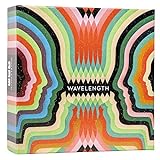
Overview: CMYK Wavelength challenges players to collaboratively guess where a clue falls on a spectrum (e.g., “hot to cold” or “wizard to not a wizard”). Designed for 2–12+ participants, it sets up in 5 seconds, teaches in 1 minute, and plays in 30 minutes, making it ideal for parties, family gatherings, or team offsites. Its simplicity and adaptability have earned endorsements from POLYGON and the NYT Wirecutter.
What Makes It Stand Out: The game’s unique “spectrum guessing” mechanic fosters intuitive teamwork, eliminating complex rules or downtime. Its scalability for large groups and near-instant setup differentiate it from traditional party games, while the abstract, creative prompts spark engaging discussions without relying on pop culture or explicit content.
Value for Money: Priced competitively against similar party games, Wavelength’s durability and replayability justify its cost. Unlike games requiring expansions, it delivers consistent fun out of the box for diverse group sizes, offering better longevity than single-mechanic alternatives.
Strengths and Weaknesses: Strengths: Effortless learning curve; inclusive for all ages; minimal setup; highly replayable. Weaknesses: Limited depth for strategy-focused players; spectrum interpretations can occasionally cause ambiguity.
Bottom Line: A near-perfect party game for quick, inclusive fun—ideal for casual gatherings. Its simplicity and universal appeal make it a standout investment for frequent entertainers.
2. WHAT DO YOU MEME? Incohearent, The Guess The Gibberish Party Game by Relatable, A Funny Card Game for Adults, Great for Bachelorette Party Games or Game Night Games, Includes 300 Cards

Overview: Incohearent tasks players with decoding gibberish phrases (e.g., “Hammock Hula Hoop”) within a time limit. This TikTok-viral card game includes 300 cards across Party, Spicy, and Pop Culture categories, supporting 3–8 players aged 17+. With over 750 million social media views, it’s engineered for laughter-driven game nights.
What Makes It Stand Out: The viral “gibberish decoding” concept is refreshingly original, blending wordplay with frantic energy. Category variety ensures broad appeal, while the 17+ rating allows for mildly edgy humor without explicit content, distinguishing it from family-oriented alternatives.
Value for Money: At its price point, the 300-card deck offers substantial replayability compared to smaller-box word games. The inclusion of diverse categories justifies the cost, though dedicated meme fans might crave more frequent updates.
Strengths and Weaknesses: Strengths: Hilarious, fast-paced gameplay; strong social media buzz; easy rules; versatile for dates or group events. Weaknesses: Limited depth for competitive players; some phrases may feel repetitive after extended use.
Bottom Line: A reliably fun, accessible game for young adults—perfect for breaking the ice at parties. Its viral success is well-earned, though best suited for casual, laughter-focused crowds.
3. USAOPOLY BLANK SLATE, Where Great Minds Think Alike, Fun Family-Friendly Board Game, Word Association Party Game, Easy to Learn, Fun to Play Family Game Night, 3-8 Players, Ages 8+
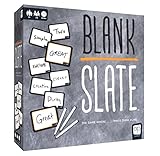
Overview: Blank Slate is a family-friendly word association game where players secretly write words to complete phrases (e.g., “______ minds think alike”), aiming to match others’ responses. Designed for 3–8 players aged 8+, it includes dry-erase slates, 250 cue cards, and a scoreboard for quick, prediction-based fun.
What Makes It Stand Out: The dry-erase slates enable reusable, eco-friendly play, while the “matching hidden words” mechanic encourages clever thinking over rote memorization. Its wholesome, inclusive design—safely bridging kids and adults—sets it apart from adult-exclusive competitors.
Value for Money: The comprehensive kit (slates, cards, scoreboard) provides exceptional longevity at a mid-range price. Unlike disposable card games, the reusable components offer better long-term value for families seeking durable game-night staples.
Strengths and Weaknesses: Strengths: Truly family-appropriate; reusable materials; quick rounds; fosters creative thinking. Weaknesses: Less chaotic fun for hardcore party gamers; limited appeal for teens seeking edgier humor.
Bottom Line: An excellent, reusable choice for family game nights. Its thoughtful design and adaptability make it a top recommendation for mixed-age gatherings.
4. Fofeadm Drinking Board Games for Adults, Rubber Mat Drinking Board Game, Funny Party Interactive Drinking Games for Game Night, Birthday, Family Play or Any Occasion, Age 21+, 2-8 Players

Overview: This rubber-mat drinking game combines board movement with beverage-based dares, questions, and challenges. For 2–8 players aged 21+, it includes a compact mat, 8 pieces, and 2 dice, targeting events like birthdays or bachelorette parties where alcohol fuels the fun.
What Makes It Stand Out: The portable rubber mat withstands spills—a rarity in drinking games—while its versatile prompts (dare/question/challenge) cater to diverse group dynamics. Unlike card-centric alternatives, its board-game structure encourages physical interaction and strategic movement.
Value for Money: The low price reflects its simple components, but the mat’s durability and reusability offer solid value. It undercuts pricier drinking games, though the lack of digital or thematic depth may limit replay appeal.
Strengths and Weaknesses: Strengths: Spill-resistant design; highly portable; inclusive for small/large groups; sparks lively bonding. Weaknesses: Generic prompts lack originality; purely alcohol-dependent (no sober variant); mat size feels cramped for 8 players.
Bottom Line: A practical, no-frills drinking game for casual adult gatherings—best for those prioritizing portability over novelty. Not essential, but a functional addition to existing game nights.
5. What Do You Meme? After Hours by Relatable, The Explicit Expansion Pack for Game Night, Board Games, Adult Games, and Party Games, Includes 100 Caption Cards to Play with Full-Sized Game
Overview: After Hours is an explicit 100-card expansion pack for the core What Do You Meme? game, adding uncensored, adult-themed captions for players 18+. It dives into edgy topics, targeting bachelorette parties or 21st birthdays where raunchy humor is welcome.
What Makes It Stand Out: The pack’s unapologetically bold content elevates the base game’s meme-creation chaos, with captions tackling taboo subjects rarely seen in mainstream party games. Its specificity—designed only as an add-on—caters to mature audiences seeking uninhibited laughs.
Value for Money: As a low-cost expansion, it significantly refreshes the core game’s humor. However, its dependency on owning the full-sized set limits standalone value, making it worthwhile only for existing fans craving spicier content.
Strengths and Weaknesses: Strengths: Hilariously fearless prompts; seamless integration with core game; ideal for close-knit adult groups. Weaknesses: Useless without base game; humor may alienate conservative players; no new photo cards included.
Bottom Line: A must-have expansion for fans of the core game seeking edgier humor—but strictly avoid if you lack the original set or prefer family-friendly play.
6. Put A Finger Down Party Game by Hunch Games | Viral Prompt and Challenge Card Game for Adults, Teens, and College Groups | Hilarious Social Icebreaker with 400 Cards for 2+ Players

Overview:
This physical adaptation of the viral TikTok trend transforms relatable, often awkward, life prompts into a rapid-fire social icebreaker. Players hold up five fingers and lower one for each statement they relate to, sparking instant laughter and conversation among groups of any size. Its simplicity makes it ideal for casual gatherings or large parties seeking unifying fun.
What Makes It Stand Out:
The game’s genius lies in its effortless accessibility—no setup or prior knowledge needed—and the clever inclusion of “Up and Down” twist cards that introduce penalties, role reversals, or storytelling challenges. With 400 diverse prompts covering modern experiences (like “used dating apps” or “faked being busy”), it consistently generates genuine, relatable reactions that deepen social connections.
Value for Money:
Priced competitively against similar party games, the 400-card deck ensures high replayability without requiring app integration. While niche prompt fatigue may set in after repeated plays, the flexibility for 2+ players and quick rounds (5–10 minutes) justify the cost for frequent social hosts seeking spontaneous, screen-free interaction.
Strengths and Weaknesses:
Strengths: Incredibly easy to learn; sparks organic conversation; portable; accommodates large groups seamlessly.
Weaknesses: Humor leans heavily on Gen Z/millennial experiences, potentially alienating older players; limited strategic depth may bore hardcore gamers; twist cards can slow momentum if overused.
Bottom Line:
A stellar choice for teens, college groups, or anyone wanting effortless, laughter-filled icebreaking. Its viral roots translate perfectly to tabletop play, though its narrow generational appeal slightly limits universal charm. Highly recommended for casual social settings.
7. It’s Bananas! The Monkey Tail Game – Funny Family & Party Game for Kids & Adults | Hilarious Gift for Birthday, Christmas, Bachelorette, Thanksgiving, White Elephant

Overview:
It’s Bananas! is a physical comedy game where players mimic increasingly absurd monkey-themed actions (like “thrusting” or “backward squats”) drawn from cards. Designed for all ages, it leverages viral TikTok fame—boasting 250 million views—and eco-conscious packaging to deliver high-energy, tech-free fun at parties or family gatherings.
What Makes It Stand Out:
The game’s standout feature is its universal physical humor, proven to unite multi-generational groups through unscripted, belly-laugh moments. Its carbon-neutral production and reduced packaging appeal to eco-aware consumers, while celebrity endorsements (Ryan Seacrest, ITV) validate its crowd-pleasing chaos. The simplicity—draw a card, act it out—ensures zero learning curve.
Value for Money:
At a mid-range price point, it offers exceptional replayability through unpredictable player interpretations of actions. Though lacking complex strategy, its ability to transform any space into a laughter-filled spectacle (without batteries or screens) makes it a worthwhile investment for frequent entertainers seeking inclusive, accessible fun.
Strengths and Weaknesses:
Strengths: Universally engaging for kids/adults; promotes physical activity; eco-friendly ethos; compact and travel-ready.
Weaknesses: Requires moderate mobility (may exclude some players); humor relies on willingness to be silly; minimal strategic depth beyond initial novelty.
Bottom Line:
A top-tier party starter that reliably delivers joy across ages. Its eco-angle and proven viral success make it a guilt-free gift for holidays or game nights. Ideal for groups unafraid to embrace physical comedy—just ensure ample space for monkey antics.
8. Cards Against Humanity

Overview:
Cards Against Humanity (CAH) is a deliberately provocative party game where players combine dark-humored “fill-in-the-blank” prompts (black cards) with outrageous responses (white cards) to create intentionally offensive or absurd combinations. Version 2.0 includes 600+ cards, targeting mature audiences who relish boundary-pushing comedy.
What Makes It Stand Out:
CAH’s cult dominance stems from its unapologetic embrace of taboo topics, fostering chaotic group dynamics through player-curated “awfulness.” The inclusion of alternate rules (like “Crabs Adjust Her Clams”) and 150+ new cards in v2.0 refreshes gameplay, while its reputation as a “horrible people” game creates a self-selecting, engaged community.
Value for Money:
With 600 cards and near-infinite replayability via house rules, CAH offers exceptional longevity per dollar. While cheaper alternatives exist, none match its cultural penetration or consistent humor density. However, its niche appeal—strictly for adults who enjoy shock comedy—limits broader value.
Strengths and Weaknesses:
Strengths: Unmatched replayability; fosters bold group interaction; endlessly customizable; iconic status ensures widespread familiarity.
Weaknesses: Humor can alienate sensitive players; requires a like-minded group to succeed; card quality feels flimsy for the price.
Bottom Line:
A must-have for mature crowds seeking unfiltered, edgy humor, but ill-suited for family or conservative settings. Version 2.0 refines an already robust formula—buy it only if your group thrives on discomfort-driven comedy.
9. Lucky Egg Official Grab The Mic – Family Karaoke Board Game w/Foam Mic, 8+ Ages, 2-10 Players - Games for Bad Singers w/ 240 Lyrics (120 Cards) (First Edition)

Overview:
Grab The Mic reimagines karaoke for non-singers by turning lyric recall into a frantic race. Players flip word cards (e.g., “love,” “rain”), then scramble to grab a foam microphone and sing any song containing that word. Designed for 2–10 players, it prioritizes speed and humor over vocal talent.
What Makes It Stand Out:
The game brilliantly sidesteps singing pressure by focusing on quick thinking—players hum, misquote, or invent lyrics under time constraints, guaranteeing giggles. Multiple game modes (via a modular board) and 240 lyric prompts ensure variety, while the tactile foam mic adds playful physicality absent in digital karaoke.
Value for Money:
Priced accessibly, it includes robust components (tokens, board, mic) for lasting use. Though music knowledge affects enjoyment, its inclusivity for tone-deaf players and adaptability to small/large groups make it a strong value—especially compared to app-dependent alternatives requiring subscriptions.
Strengths and Weaknesses:
Strengths: Perfect for shy singers; fast-paced and inclusive; encourages creativity; high replayability with varied modes.
Weaknesses: Gen X/millennial music bias may stump younger players; limited appeal without pop-culture familiarity; mic durability concerns with rough handling.
Bottom Line:
A refreshing twist on musical games that democratizes karaoke fun. Ideal for families or casual groups valuing laughter over talent—just ensure players share overlapping music tastes for maximum enjoyment.
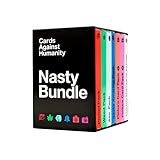
10. Cards Against Humanity: Nasty Bundle • 6 Nasty Themed Packs + 10 All-New Cards
Overview:
This CAH expansion bundle delivers six themed card packs (Period, Weed, Ass, Saves America, and two Picture Card sets) plus 10 exclusive cards, injecting highly specific, boundary-pushing humor into the base game. Explicitly labeled “too spicy for most stores,” it targets veteran players seeking intensified edginess.
What Makes It Stand Out:
The Nasty Bundle excels in thematic depth, with packs like “Saves America” satirizing politics and “Picture Cards” adding visual punchlines. It transforms CAH’s already dark humor into laser-focused chaos, appealing to players craving niche, uncomfortable laughs that standard decks avoid.
Value for Money:
As a niche add-on, it offers high value only for existing CAH fans eager to refresh gameplay. The 6+ packs significantly extend replayability, but its $20+ price tag feels steep without the base game. Not cost-effective for newcomers—strictly a “for fans, by fans” product.
Strengths and Weaknesses:
Strengths: Deepens CAH’s humor with targeted themes; picture cards innovate gameplay; 10 bonus cards add novelty.
Weaknesses: Requires base game (sold separately); humor is excessively crude for even some CAH players; minimal physical components per dollar.
Bottom Line:
An essential upgrade for die-hard CAH enthusiasts wanting darker, more specific laughs—but overpriced and inaccessible for casual players. Only purchase if your group craves maximum discomfort and already owns the core game.
Understanding Your Unique Celebration Dynamics
Before even glancing at game mechanics, taking a clear-eyed look at your specific party ecosystem is non-negotiable. What works flawlessly for ten reserved book club members will bomb with twenty rowdy coworkers, and vice versa. Honest assessment here saves hours of frustration later.
Assessing Group Size and Familiarity
The number of guests and how well they know each other fundamentally dictates viable game styles. Intimate groups (4-8 people) can handle more complex, conversation-driven experiences, while larger gatherings (15+) often thrive on simpler, high-energy activities that minimize downtime. Crucially, consider the “stranger factor” – are most guests close friends, or is there a significant mix of acquaintances? Games requiring deep personal sharing can backfire with less familiar crowds, whereas light-hearted team challenges can quickly bridge gaps.
Gauging Energy Levels and Preferences
Be realistic about your crowd’s typical energy. Are they known for marathon dance sessions or prefer cozy conversation? Do they lean towards witty banter or physical comedy? Consider age ranges too – a game perfect for twenty-somethings might leave fifty-somethings bewildered, and vice versa. Polling guests subtly beforehand (“What’s your favorite way to break the ice?”) or observing past gatherings provides invaluable intel. Ignoring this step risks selecting a high-octane party game for a group that just wants to unwind.
Factoring in Alcohol Consumption Realistically
Let’s acknowledge the elephant in the room: New Year’s Eve often involves libations. Games requiring fine motor skills, complex rules, or sustained concentration become exponentially harder (and less fun) as the night progresses. Prioritize games with simple, forgiving mechanics, clear visual cues, and the flexibility to accommodate varying levels of… enthusiasm. Games where mistakes are part of the fun, not a barrier, are golden.
Essential Game Mechanics for NYE Success
Not all game mechanics are created equal when the clock is ticking towards midnight. Certain core elements consistently elevate the experience, turning potential lulls into bursts of shared joy and creating those “remember when…” moments you’ll toast to next year.
Simplicity in Rules and Setup
The golden rule for NYE: minimal explanation time. If you need a five-minute tutorial, it’s probably the wrong choice. Opt for games where the core concept is instantly graspable (“Get the ball in the cup,” “Guess the word on your forehead,” “Move faster than everyone else”). Physical setup should be equally straightforward – unfolding boards or sorting intricate components eats precious party minutes. Games that can literally be pulled from a box and started in under 60 seconds are champions.
Built-in Momentum and Pacing
NYE parties have a natural arc, and your games should complement it. Early evening might suit slightly slower, mingling-focused games. As midnight nears, prioritize mechanics that generate rapid-fire action, quick rounds, and escalating energy. Look for features like timed challenges, sudden elimination (kept light-hearted!), or physical movement that gets people out of their seats. The best NYE games feel like they naturally build towards the countdown, not stall it.
Inclusivity Through Design
Forced participation is the death knell of fun. Seek mechanics that offer multiple ways to engage: some players might thrive on quick thinking, others on physical dexterity, and some might prefer strategic observation. Games with optional participation levels, team play where quieter members can contribute without spotlight, or mechanics where “losing” is hilarious rather than embarrassing foster true inclusivity. Avoid anything requiring specific cultural knowledge or physical abilities that might exclude guests.
Visual and Auditory Engagement
In a lively, potentially noisy room, games relying solely on whispered dialogue or tiny text will fail. Prioritize strong visual elements – bright components, clear gestures, expressive cards – that cut through the ambient noise. Similarly, incorporate sound intentionally: games with clapping, stomping, or collective shouting can amplify the festive atmosphere, while those needing quiet concentration should be reserved for calmer moments (if at all).
Scalability Without Sacrificing Fun
The ideal NYE game adapts seamlessly whether three extra guests arrive last minute or a few people head home early. Look for mechanics where player count adjustments are simple (adding/removing teams, adjusting round length) without fundamentally changing how the game feels or plays. Avoid games rigidly designed for exactly 6 players that fall apart with 7 or 5.
Practical Considerations for Your Space and Timeline
Even the most brilliantly designed game can flop if it clashes with your physical reality or the party’s flow. Overlooking these practical aspects is a common pitfall that turns potential fun into frustration.
Navigating Your Physical Environment
Honestly assess your space as it will be on NYE. Is the floor clear for movement, or is every surface covered in coats and bags? How much open floor space exists between furniture? Can people move freely without knocking over drinks? Games requiring significant running, sprawling on the floor, or large open circles are impractical in cramped apartments. Conversely, tiny card games get lost in a huge backyard. Match the game’s spatial needs to your actual party footprint, not your Pinterest-perfect living room.
Managing Time Commitment Realistically
Every game eats into your precious countdown minutes. Be brutally honest about how long you actually have for gameplay before midnight. A game promising “20 minutes” but requiring 10 minutes of setup and explanation is a time bomb. Prioritize games with clear, short round structures (e.g., “first to 5 points wins,” “play 3 quick rounds”) that you can easily start and stop. Always have a clear endpoint in mind to avoid the awkward “just one more round?!” limbo as 11:55 PM hits.
Tech Dependence: Proceed with Caution
While apps can enhance some experiences, relying on stable Wi-Fi, individual phone batteries, or a single host device is risky NYE night. Glitches, dead phones, or incompatible operating systems can derail everything. If a game requires tech, have a solid non-tech backup plan or choose alternatives with purely physical components. The last thing you need at 11:30 PM is troubleshooting Bluetooth pairing.
Crafting the Perfect Game Flow for the Countdown
The sequence of games matters as much as the games themselves. Treating game selection as a single choice ignores the evolving energy of the night. Strategic sequencing maximizes enjoyment and builds perfectly to the stroke of twelve.
Strategic Game Placement: Early, Middle, and Countdown
Resist starting with your “big” game. Early evening (7-9 PM) is for low-stakes icebreakers and mingling enhancers – think simple drawing prompts or light trivia that encourages movement and conversation without pressure. The middle phase (9-11 PM) is prime time for your core, higher-energy group activities that build momentum. Save your absolute simplest, most inclusive, and physically minimal game for the final 15-20 minutes leading directly into midnight – something that gets everyone involved simultaneously with zero setup, ensuring no one is left out as the countdown begins.
Smooth Transitions Are Key
Jarring shifts kill momentum. Plan how you’ll move from one activity to the next. Can the end of Game A naturally lead into the setup for Game B? (e.g., teams formed in a trivia game stay together for a relay). Avoid long pauses for explanation; have rulesheets ready or practice a 30-second pitch. Sometimes, simply saying “Alright team captains, huddle up for the next challenge!” keeps energy flowing better than detailed instructions.
Reading the Room and Pivoting Gracefully
The most crucial skill isn’t choosing the perfect game, but recognizing when it’s not working and adapting. If a game causes confusion, frustration, or disengagement, have the confidence to pause, simplify the rules on the fly, or switch to your backup plan immediately. A smooth, lighthearted pivot (“Okay, clearly we need less thinking and more dancing – let’s try this instead!”) preserves the fun far better than stubbornly pushing through a failing activity.
Frequently Asked Questions
Frequently Asked Questions
What if I have a mix of very shy and very outgoing guests? Focus on team-based games where quieter individuals can contribute within a smaller, supportive group. Avoid high-pressure “spotlight” mechanics like stand-up表演 or forced solo performances. Games with written components or drawing can give shy guests a less verbal way to participate.
How do I choose games for a very large group (20+ people)? Prioritize games that naturally divide into smaller teams or stations, minimizing the number of people actively playing in any single round. Mass participation games where everyone does the same simple action simultaneously (like a coordinated dance challenge or group charades) often work better than complex turn-based systems. Ensure instructions can be heard clearly by all.
My space is really small – what types of games should I avoid? Steer clear of games requiring significant running, jumping, or large open circles. Avoid anything with components that could easily get knocked over (like tall towers or delicate structures). Focus on seated games, card-based activities, or very contained physical challenges (like balancing objects on a spoon over a tiny distance).
What’s the best type of game to play in the last 10 minutes before midnight? Choose something utterly simple, inclusive, and requiring zero setup that involves everyone at once. Think coordinated clapping rhythms, a single group charades word, a massive group high-five chain, or a simple “pass the balloon” around the circle. The goal is universal participation with no downtime.
Can I incorporate the New Year’s theme into the games without it feeling forced? Absolutely, but subtly. Use “2026” or “New Year” as a prompt in drawing or word games, incorporate countdown timers into challenges, or have a “resolution” element where players make silly, lighthearted promises for the new year as part of a trivia question. Avoid overly complicated thematic overlays that obscure the core fun.
How do I handle games when some guests have had quite a bit to drink? Prioritize games with extremely simple, forgiving rules where mistakes are part of the humor. Avoid anything requiring precision, complex strategy, or reading small text. Physical games should be low-risk (no tripping hazards). Embrace the chaos – games where the “drunken” version is actually funnier often work best.
What if I need to set up the game quickly between arriving guests? Master the 60-second pitch and setup. Choose games where components are immediately visible and intuitive (like a deck of distinctive cards or a single central prop). Have the core rule explained in three short bullet points you can rattle off while handing out materials. Avoid games needing hidden roles or complex initial setup.
Are card games generally better than board games for NYE? Often, yes, due to portability and quick setup. Card games are usually easier to scale for different group sizes and adapt on the fly. However, the right board game with simple mechanics and high interaction can be fantastic. The key is the specific game’s complexity and setup time, not the format itself.
How many different games should I plan for the night? Quality over quantity. Having 2-3 well-chosen games that flow into each other is far better than five half-played attempts. One strong icebreaker/mingler, one core group game for the peak energy period, and one perfect countdown closer is often the ideal trifecta. Be prepared to repeat a crowd-pleaser!
What’s the biggest mistake people make when choosing NYE party games? Choosing based solely on what’s trending online without considering their specific group’s dynamics, space constraints, and the actual timeline of their party. The “best” game for someone else’s perfect Instagram moment is often the worst choice for your unique, joyful, and slightly chaotic New Year’s Eve reality. Context is everything.