Table of Contents
Imagine the joy when your child confidently uses a sophisticated word like “magnificent” instead of “cool” to describe a sunset, or crafts a story brimming with vivid descriptions that leap off the page. Building a robust vocabulary isn’t just about sounding smart; it’s the bedrock of comprehension, critical thinking, and self-expression. For children, a strong lexicon unlocks better reading skills, deeper understanding across all school subjects, and the confidence to communicate complex ideas effectively. In today’s fast-paced world, where clear communication is more vital than ever, nurturing this essential skill through engaging, playful methods is not just beneficial—it’s crucial for their lifelong success.
Word games offer a magical pathway to vocabulary expansion, transforming what might feel like tedious memorization into pure, captivating fun. Unlike traditional flashcards or drills, well-designed games tap into children’s natural love of play, competition, and discovery, embedding new words in memorable contexts. They provide immediate feedback, encourage active use of language, and foster a genuine curiosity about words—their meanings, origins, sounds, and nuances. As we look towards evolving educational landscapes, understanding the principles behind effective vocabulary-building games becomes key, allowing parents and educators to choose activities that truly resonate with children’s developmental stages and learning styles, creating joyful moments that build linguistic confidence for years to come.
Top 10 Word Games
Detailed Product Reviews
1. USAOPOLY The Original TAPPLE, The Fast-Paced Family Board Game,Choose a Category & Race Against The Timer to be The Last Player,Learning Word Game for Ages 8 & Up, 2-8 Players, 15-20 Minute Play Time

Overview: TAPPLE revitalizes family game nights with its lightning-fast category-based wordplay. Players race against a built-in timer, shouting words starting with a specific letter for randomly drawn categories, then physically tapping the corresponding tab on the portable wheel. Designed for 2-8 players aged 8+, it delivers intense, 15-20 minute rounds.
What Makes It Stand Out: The tactile “tap” mechanic and relentless timer create unmatched urgency, eliminating downtime. Its portability—storing all 144 categories in the wheel—and broad accessibility (simple rules, no reading required) make it ideal for travel or large groups. The pressure-cooker gameplay fosters quick thinking and laughter.
Value for Money: Priced competitively against similar party games, TAPPLE justifies its cost with durable construction, high replayability (36 category cards), and versatility across age groups. It outperforms digital alternatives by encouraging face-to-face interaction without screens.
Strengths and Weaknesses: Strengths: Inclusive for varied skill levels; exceptional replay value; compact storage. Weaknesses: Timer can feel overly harsh for younger kids; limited strategic depth; category repetition may occur after extensive play.
Bottom Line: An exceptional, adrenaline-pumping choice for families seeking quick, engaging group fun. Its simplicity and portability make it a must-have for game nights, though younger players may need slight rule adjustments. Highly recommended for 2-8 players.
2. USAOPOLY BLANK SLATE, Where Great Minds Think Alike, Fun Family-Friendly Board Game, Word Association Party Game, Easy to Learn, Fun to Play Family Game Night, 3-8 Players, Ages 8+
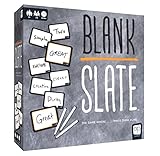
Overview: Blank Slate challenges players to predict collective thinking through word association. Each round, a “Word Cue” card (e.g., “Cold _____”) prompts players to secretly write a matching word on dry-erase slates. Points are scored when only one other player writes the same word, emphasizing subtle social intuition over vocabulary.
What Makes It Stand Out: The game’s brilliance lies in its social deduction twist—success hinges on anticipating others’ minds, not linguistic skill. The dry-erase slates add tactile fun, while 250 double-sided cue cards ensure near-limitless variety. It’s effortlessly learnable yet deeply engaging for groups of 3-8.
Value for Money: At its price point, Blank Slate offers remarkable longevity with high-quality components (durable slates, sturdy cards). It surpasses cheaper word games by fostering genuine connection and laughter, making it superior to trivia-heavy alternatives for mixed-age groups.
Strengths and Weaknesses: Strengths: Fosters hilarious “aha!” moments; scales perfectly for parties; zero setup time. Weaknesses: Can feel repetitive with small groups; scoring nuances might confuse very young players; limited replayability if cues feel overused.
Bottom Line: A standout for social gatherings, Blank Slate transforms predictable word games into a dynamic group psychology experiment. Its ease of play and infectious energy make it ideal for families and parties—just ensure your group enjoys collaborative chaos.
3. Hasbro Gaming Scrabble Board Game, Classic Word Games for Kids Ages 8 and Up, Fun Family Game for 2-4 Players, The Classic Crossword Game
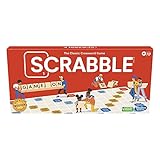
Overview: Scrabble remains the gold standard for strategic word games, challenging players to build high-scoring crossword grids using letter tiles on a premium board. With wooden racks, textured boards, and 100 letter tiles, this edition honors the 70-year legacy while appealing to new generations aged 8+.
What Makes It Stand Out: The tactile wooden components and strategic depth set it apart—premium squares multiply scores, enabling clever comebacks. Unlike digital versions, physical play encourages face-to-face banter and spatial reasoning. The inclusion of expert tips helps novices master tactics like two-letter words.
Value for Money: A worthwhile investment for families, offering decades of replayability. Though pricier than budget word games, its heirloom-quality materials and timeless appeal justify the cost. It outshines apps by fostering direct interaction and teaching spelling without screens.
Strengths and Weaknesses: Strengths: Unmatched strategic depth; durable, satisfying components; educational for vocabulary. Weaknesses: Steeper learning curve for young kids; scoring complexity can slow gameplay; limited to 4 players.
Bottom Line: An essential classic for word enthusiasts. While newer games offer faster pacing, Scrabble’s intellectual richness and physical presence make it irreplaceable for families wanting to build lasting memories—and vocabulary skills. A definitive buy for patient players.
4. Winning Moves Yahtzee Words Games USA, Family Word Game Version for 2 or More Players, Ages 8+

Overview: Yahtzee Words ingeniously merges Yahtzee’s dice-rolling strategy with word formation. Using seven letter dice instead of numbers, players create 2–6 letter words across multiple rounds, targeting categories like “All Consonants” or the elusive 7-letter “Yahtzee” on a familiar scoresheet.
What Makes It Stand Out: The fusion of Yahtzee’s probability-driven scoring with linguistic creativity is unique. Players balance vocabulary knowledge with tactical risk-taking (e.g., gambling for bonus points). The upper/lower section scoring creates satisfying tension, while the rarity of 7-letter words adds excitement.
Value for Money: An affordable twist on two classics, offering fresh gameplay without steep costs. It delivers more strategic variety than pure word games like Boggle at a similar price, though component quality is modest (cardboard scoresheet vs. Scrabble’s wood).
Strengths and Weaknesses: Strengths: Accessible for casual and competitive players; enhances spelling/jumbling skills; quick setup. Weaknesses: Luck-heavy due to dice rolls; limited depth for hardcore word gamers; scoresheet feels flimsy.
Bottom Line: A playful, inventive hybrid perfect for Yahtzee fans seeking wordplay. While lacking Scrabble’s depth, its blend of chance and language makes it a fun, budget-friendly addition to game nights—especially for mixed-skill groups. Recommended for lighthearted fun.
5. Winning Moves Big Boggle with 5x5 Grid and 25 Letter Cubes Games USA, Thought Provoking Word Game Bigger Than The Original, for 2 or More Players, Ages 8+ (1147)

Overview: Big Boggle amplifies the classic word hunt with a 5x5 grid (25 cubes) and three-minute timer, challenging players to find as many four+ letter words as possible. Unique scoring rules award points only for unique words—sparking fierce competition as players race to spot uncommon terms.
What Makes It Stand Out: The larger grid exponentially increases word possibilities, encouraging longer, creative terms. The “no shared words” scoring creates thrilling tension, while the frantic 3-minute timer ensures rapid, energetic rounds. Its retro charm (dating to 1979) appeals to nostalgia without feeling outdated.
Value for Money: A robust, durable game that outperforms smaller Boggle editions. The increased replayability from the expanded grid justifies a slight premium over standard versions, though component quality is functional rather than luxurious.
Strengths and Weaknesses: Strengths: Highly replayable; fosters quick thinking; excellent for solo or group play. Weaknesses: Can frustrate younger players with obscure words; scoring disputes may arise; timer mechanism occasionally jams.
Bottom Line: The definitive Boggle experience for word enthusiasts. Big Boggle’s expanded grid and competitive scoring make it superior to the original for ages 10+, though very young children might struggle. A must-own for fans of fast-paced, brain-teasing fun.
6. Spin Master Games, Upwords, Classic Word Game with Stackable Letter Tiles, Family Board Game, Crossword Activity, 1-4 Players, for Ages 8 & Up
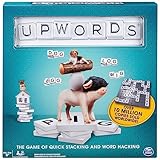
Overview: Upwords reinvents the classic crossword genre with stackable letter tiles on a rotating board. Players build words horizontally or vertically, then strategically stack new letters on top to form entirely new words, scoring points for every tile placed. Designed for 1-4 players aged 8+, it transforms traditional word gameplay into a dynamic spatial challenge. What Makes It Stand Out: The innovative tile-stacking mechanic and lazy Susan board are game-changers, allowing continuous word evolution without board congestion. Bonus points for using all seven tiles in a single turn add high-stakes excitement, while the accessible rules ensure quick adoption for all literacy levels. This physical interactivity surpasses static grid games like Scrabble. Value for Money: Priced competitively with premium word games, Upwords justifies its cost through exceptional replayability and durable components. The rotating board eliminates squabbles over visibility, and the stackable system creates endless linguistic possibilities, offering more strategic depth than entry-level alternatives at similar price points. Strengths and Weaknesses: Strengths: Highly engaging spatial strategy; inclusive for varying skill levels; rotating board enhances group interaction; robust tile quality. Weaknesses: Stacking can feel disruptive to traditionalists; advanced players may dominate early; limited strategic depth compared to expert Scrabble. Bottom Line: Upwords is a brilliantly refreshing twist on word games that fosters creative thinking and lively competition. Its unique mechanics justify the investment for families seeking dynamic, screen-free entertainment, earning a strong recommendation for game nights.
7. Lost Boy Entertainment Words are Hard - Party Games - Family Card Games - for Kids 8 and up - for Adults - Family Game Night - Travel Game - Laugh Out Loud

Overview: Words are Hard is a lightning-fast reaction card game where players slap central cards matching visual prompts on their dealt hand. With no reading or spelling required, it’s a pure visual recognition frenzy designed for any group size, promising chaotic laughter in under 10 minutes per round. What Makes It Stand Out: Its genius lies in universal accessibility—players as young as 8 compete equally with adults thanks to picture-based cards. The “unlimited players” flexibility is genuinely unique, scaling seamlessly from 1-on-1 duels to massive parties. The slap mechanic creates infectious physical comedy absent in most word-adjacent games. Value for Money: At a modest price point, the 250-card deck delivers extraordinary value through sheer replayability and crowd versatility. Unlike niche party games, it works for kids’ birthdays, adult gatherings, or classrooms without modification, outperforming specialized games costing twice as much. Strengths and Weaknesses: Strengths: Zero learning curve; accommodates any group size; travel-friendly; consistently hilarious; inclusive for non-native speakers. Weaknesses: Short play sessions may feel insubstantial; physical slapping risks minor injuries; limited strategic depth beyond reflexes. Bottom Line: Words are Hard excels as the ultimate icebreaker party game, transforming any space into a laughter-filled arena. Its brilliant simplicity and universal appeal make it a must-have for social gatherings, earning top marks for spontaneous fun.
8. Hasbro Gaming Boggle Classic Game | Word Search Games | Ages 8+ | 1 or More Players | Portable Travel Size | Fun Family Dice Games for Adults and Kids

Overview: Boggle remains the quintessential timed word search game, challenging players to find as many words as possible in a 4x4 grid of dice within 90 seconds. Shaken fresh each round, this portable classic pits solo players against the clock or groups in high-pressure vocabulary scrambles for ages 8+. What Makes It Stand Out: The frantic 90-second countdown creates unmatched tension, while diagonal/horizontal/vertical word hunting tests spatial awareness beyond linear crossword games. Its true solo-play capability is rare among word games, and the compact case makes it ideal for travel—unbeatable for quick mental workouts. Value for Money: As a decades-tested staple, Boggle offers exceptional durability and replay value at an affordable price. The travel size edition provides identical gameplay to bulkier competitors, and its solo mode adds utility missing in party-focused alternatives like Bananagrams. Strengths and Weaknesses: Strengths: Intense, fast-paced gameplay; perfect for solo skill-building; highly portable; encourages rapid vocabulary recall. Weaknesses: Timer mechanism can jam; group scoring requires manual verification; limited strategic depth beyond speed. Bottom Line: Boggle’s enduring popularity is well-earned: it’s the definitive word search challenge for sharpening minds under pressure. A superb investment for families and solo players seeking quick, brain-boosting fun, highly recommended for its simplicity and engagement.
9. Quiddler Card Games for Kids - Playing Cards Word Games, Deck of Cards, Fun Family Games for Kids and Adults, Game Night, Travel Games, Multi-Player, Ages 8+

Overview: Quiddler challenges players to craft the highest-scoring words from an expanding hand of letter cards across eight progressively harder rounds. This strategic card game blends rummy-style melding with vocabulary skills, accommodating 1-8 players in sessions emphasizing both spelling and tactical planning. What Makes It Stand Out: The escalating round structure (3 to 10 cards per hand) creates a compelling difficulty curve, while dual bonus points for longest word and most words per round enable dramatic comebacks. Its educational depth—enhancing spelling, vocabulary, and critical thinking—sets it apart from purely luck-based word games. Value for Money: Priced modestly for its educational impact, Quiddler delivers exceptional replayability through variable scoring tactics. It outperforms flashcards for literacy development while providing more strategic engagement than Bingo-style word games, making it ideal for classrooms and family nights. Strengths and Weaknesses: Strengths: Deep educational value; accessible rules with strategic depth; accommodates large groups; portable deck format. Weaknesses: Initial scoring complexity may daunt young children; less chaotic fun than party games; requires stronger vocabulary than visual alternatives. Bottom Line: Quiddler is a masterful fusion of education and entertainment, rewarding linguistic creativity with satisfying strategy. Highly recommended for families and educators seeking substantive, replayable wordplay that grows with players’ skills.
10. Ransom Notes - The Ridiculous Word Magnet Party Game, 3+ Players

Overview: Ransom Notes tasks players with crafting absurd responses to outrageous prompts (e.g., “Confess to stealing the office coffee creamer”) using limited magnetic word tiles. This 3-6 player party game thrives on improv comedy, with magnets slapped onto submission cards for hilarious peer voting. What Makes It Stand Out: The tactile magnet mechanic and ever-shifting word pools generate uniquely chaotic outcomes per round. With 250 prompts and 840 magnets, combinations feel infinite, while the option to curate “PG” prompts by removing 15-30% of cards ensures adaptable maturity levels—unlike rigid adult-party games. Value for Money: The substantial component count (magnets, metal cards) justifies its premium price, offering years of replayability. It outvalues single-deck card games through physical engagement and scalability, functioning equally well for intimate gatherings or team-based large groups. Strengths and Weaknesses: Strengths: Unmatched creative freedom; magnets enable playful physicality; highly customizable intensity; fosters inclusive collaboration. Weaknesses: Explicit prompts require pre-screening for families; setup involves magnet sorting; less structured than trivia games. Bottom Line: Ransom Notes is a riotous magnet-powered improv fest that sparks relentless laughter. Its brilliance lies in adaptability—equally perfect for raucous adult nights or filtered family fun—making it a standout gift for creative socializers.
Understanding Vocabulary Development in Children
The Critical Role of Early Word Exposure
Children’s brains are uniquely primed to absorb language during their early years. Rich exposure to diverse vocabulary through conversation, storytelling, and interactive play lays the essential neural groundwork. This initial exposure isn’t just about quantity; it’s the quality of context—seeing and hearing words used meaningfully in varied situations—that helps children grasp subtle differences in meaning and usage, forming the foundation for deeper linguistic understanding.
How Vocabulary Growth Fuels Overall Learning
A burgeoning vocabulary acts as a catalyst for nearly every academic and social skill. Strong word knowledge directly enhances reading comprehension; children can’t understand what they read if they don’t know the words. It also supports writing fluency, mathematical reasoning (understanding problem statements), scientific inquiry, and even social-emotional development, as children gain the language to articulate feelings and navigate complex interactions. Vocabulary is truly the currency of learning.
Recognizing Developmental Stages and Needs
Effective vocabulary building respects where a child is developmentally. Preschoolers thrive on concrete nouns, action verbs, and descriptive words tied to their immediate world. Early elementary students begin grasping more abstract concepts, synonyms, and basic prefixes/suffixes. Upper elementary and middle schoolers can tackle nuanced meanings, figurative language, and domain-specific terminology. Tailoring word games to these stages ensures challenge without frustration, keeping the experience positive and productive.
Core Mechanics of Effective Vocabulary-Building Games
The Power of Active Engagement Over Passive Learning
Games that require children to use new words—saying them aloud, writing them, acting them out, or applying them in sentences—are vastly more effective than those where they simply recognize or match words. This active production strengthens neural pathways, moving words from passive recognition into the child’s working vocabulary. Look for mechanics demanding verbalization, creative application, or strategic word choice.
Context is King: Embedding Words Meaningfully
Isolated word lists fade quickly. The most memorable vocabulary gains happen when words are encountered within rich, relatable contexts—a compelling story snippet, a funny scenario, or a relevant problem to solve within the game. Games that weave new terms into narratives, themes, or playful challenges help children intuit meaning and remember usage far better than decontextualized drills.
Incorporating Multiple Senses and Modalities
Engaging more than one sense deepens learning. Games combining visual cues (illustrations, symbols), auditory elements (pronunciation, rhymes, sound effects), kinesthetic actions (moving pieces, acting out words), and tactile components (handling cards, writing) create stronger, more accessible memory traces. This multi-sensory approach caters to diverse learning styles and makes word acquisition more robust and enjoyable.
Essential Features to Prioritize in Word Games
Age-Appropriate Challenge and Scaffolding
The ideal game offers a “just-right” challenge: slightly beyond current ability but achievable with effort. Good games include built-in scaffolding—hints, visual supports, adjustable difficulty levels, or progressive rounds—that allows children to experience success while gradually stretching their skills. Avoid games that are consistently too easy (boring) or too hard (frustrating), as both kill motivation.
Clear Focus on Word Meaning and Usage
While speed and spelling have their place, prioritize games that emphasize understanding and application. Does the game require defining words, using them correctly in sentences, identifying synonyms/antonyms, or recognizing connotations? Games that go beyond mere identification to explore how words function and relate to each other foster deeper, more flexible vocabulary knowledge.
Built-In Motivation and Positive Reinforcement
Sustained engagement is key. Look for games with inherent rewards—solving a puzzle, completing a story, earning points through clever wordplay—not just external prizes. Mechanics that celebrate effort, strategic thinking, and creative use of language (even if imperfect) build intrinsic motivation. Positive feedback loops within the game itself (“Great job using ’enormous’ correctly!”) reinforce learning and confidence.
Adapting Games for Different Learning Styles and Needs
Catering to Visual Learners
Visual learners benefit immensely from games rich in imagery, color-coding, graphic organizers, or spatial elements. Picture clues, illustrated word cards, concept maps within gameplay, or games involving arranging visual elements to form sentences or meanings can make abstract words concrete and memorable for these children.
Engaging Auditory Learners Effectively
Auditory learners thrive on sound. Prioritize games emphasizing pronunciation, rhyming, alliteration, word origins (etymology), listening for meaning, or verbal storytelling. Games involving charades with verbal clues, listening to word definitions and guessing, or creating rhythmic chants with new vocabulary leverage their strengths and make learning resonate.
Supporting Kinesthetic and Tactile Learners
Children who learn by moving and touching need games that get them active. Consider games involving physical movement (stepping on word tiles, acting out charades), manipulating physical components (building words with letter tiles, sorting cards into categories), or incorporating gestures. The physical connection to the word creates a powerful memory anchor.
Integrating Technology Thoughtfully
Evaluating Digital Word Game Apps Critically
Digital platforms offer interactive potential, but not all apps deliver true vocabulary depth. Scrutinize apps for meaningful context, active production requirements, adaptive difficulty, and minimal distracting “bells and whistles.” Prioritize apps that encourage thinking about words, not just rapid tapping. Ensure screen time is balanced with offline interaction and play.
Blending Physical and Digital Play
The most effective approach often combines tactile, face-to-face gameplay with selective digital tools. Use physical board games or card sets as the core activity, perhaps supplementing with a digital dictionary app for quick look-ups during play, or using a tablet for researching word origins after a game session. This hybrid model leverages the social and sensory benefits of physical play with the convenience of digital resources.
Ensuring Tech Enhances, Not Replaces, Human Interaction
Technology should facilitate conversation and connection, not isolate the child. Choose digital games designed for shared play (cooperative apps, family trivia) or use tech as a springboard for discussion (“What does ‘persuade’ mean? Can you think of a time someone persuaded you?”). The richest vocabulary growth happens through dialogue and shared discovery.
The Social Dimension of Word Play
Why Cooperative Play Boosts Language Skills
Games emphasizing teamwork—solving word puzzles together, building stories collaboratively, or giving clues to help a partner guess—create natural opportunities for rich verbal interaction. Children negotiate meaning, explain concepts to peers, hear diverse word usage, and practice active listening, all within a supportive, low-pressure social context that accelerates language acquisition.
Navigating Competitive Play Positively
Friendly competition can be motivating, but it must be managed carefully. Focus on effort, strategy, and learning (“Great try with that tricky word!”) rather than just winning. Choose competitive games with elements of luck to balance skill, or implement team-based competition. The goal is sustained engagement and positive feelings about words, not anxiety or discouragement from losing.
Fostering a Safe Space for Linguistic Risk-Taking
Vocabulary growth requires experimentation, which means making mistakes. Games should cultivate an environment where guessing wrong is part of the fun and learning process. Encourage phrases like “What makes you think that?” or “Let’s see if the context clues help,” turning errors into teachable moments without judgment, empowering children to explore language boldly.
Going Beyond Single Words: Building Language Awareness
Exploring Word Families and Morphology
Effective games often introduce children to how words are built. Activities involving prefixes, suffixes, and root words (morphology) help kids decode unfamiliar terms. Games that challenge players to create multiple words from a root (e.g., “act,” “action,” “react,” “actionable”) or change word forms (nouns to verbs) build powerful analytical skills for independent vocabulary growth.
Understanding Nuance, Connotation, and Figurative Language
Moving beyond basic definitions, advanced vocabulary involves grasping shades of meaning. Games incorporating synonyms with subtle differences (“happy” vs. “ecstatic”), exploring positive/negative connotations, or identifying metaphors and similes within gameplay help children appreciate language’s richness and use words more precisely and expressively.
Connecting Words to Real-World Knowledge and Interests
Vocabulary sticks best when linked to passions and experiences. Games themed around dinosaurs, space, art, cooking, or sports naturally introduce relevant terminology. Encourage children to suggest themes for word games or connect new words encountered in games to their favorite books, hobbies, or current events, making learning personally relevant and memorable.
Making Word Games a Sustainable Habit
Integrating Play into Daily Routines Seamlessly
Sustainability comes from ease of integration. Keep game components accessible (a small basket of cards, a dedicated shelf for board games). Link short vocabulary bursts to existing routines: a quick word definition game during breakfast, a synonym challenge while walking to school, or storytelling with new words before bedtime. Consistency trumps duration.
Empowering Children as Game Designers and Leaders
When children create their own word games or rule variations, ownership and engagement skyrocket. Provide simple templates: blank card decks for making custom matching games, story dice prompts, or guidelines for inventing new rounds. Let them teach the game to siblings or parents—explaining rules reinforces their own understanding and confidence.
Tracking Progress and Celebrating Linguistic Milestones
Gentle, positive tracking builds motivation. Use a simple word journal where children record new favorites, create silly sentences, or draw pictures. Celebrate milestones like using a “challenge word” correctly in conversation or noticing a vocabulary game concept in their reading. Focus on effort and application, not just the number of words “learned.”
Frequently Asked Questions
How much time should my child spend playing vocabulary games daily?
Aim for consistent, short bursts—10 to 20 minutes of focused play most days is far more effective than infrequent long sessions. Integrate it naturally into your routine; even 5 minutes of playful word exploration during downtime counts. The key is regular, enjoyable exposure without pressure.
My child gets frustrated easily with challenging words. How can I help?
Start with games significantly below their frustration point to build confidence. Use abundant scaffolding: offer choices (“Is it ‘big’ or ’enormous’?”), provide strong visual clues, or allow them to pass and return later. Celebrate effort and partial answers (“You got the ‘un-’ prefix right!”). Gradually increase difficulty only when they show readiness.
Are digital word games as effective as physical board games?
They can be, but it depends entirely on the app’s design. Prioritize apps requiring active word production and deep thinking over passive matching. However, physical games often foster richer social interaction and multi-sensory engagement. A balanced mix of both, with an emphasis on shared play, is usually ideal.
What’s more important: learning definitions or using words in context?
Using words in meaningful context is paramount. Knowing a definition is a starting point, but true mastery comes from understanding how and when to use a word correctly within a sentence or situation. Choose games that emphasize application, storytelling, and real-world usage over rote definition recall.
How do I know if a word game is appropriate for my child’s age?
Check the manufacturer’s age range as a rough guide, but observe your child. Can they grasp the core mechanics independently? Are the words slightly challenging but decipherable with clues? Do they stay engaged and show enjoyment? If they’re consistently frustrated or bored, the game isn’t the right fit, regardless of the labeled age.
Can vocabulary games help children with learning differences like dyslexia?
Absolutely. Multi-sensory games (incorporating movement, sound, touch) are particularly beneficial. Focus on games emphasizing meaning and context over pure spelling speed. Allow extra time, use colored overlays if helpful, and prioritize games building phonemic awareness and morphological understanding, which support decoding skills.
Should I correct my child every time they misuse a new word during play?
Gently and sparingly. Over-correction stifles risk-taking. Instead, model correct usage naturally: “Oh, you said ‘The cake was enormous!’ That’s a great word! ‘Enormous’ means really, really big, like a giant cake!” or ask guiding questions: “Does ’enormous’ fit here, or maybe ‘delicious’?” Focus on the learning moment, not the error.
How can I connect vocabulary games to my child’s schoolwork?
Notice themes or subjects they’re studying (ancient Egypt, ecosystems, fractions) and seek or create word games around that vocabulary. After a game, ask, “Did any of these words remind you of what you learned in science today?” This bridges play and academics, showing the relevance of their growing lexicon.
Is it okay if the game involves some competition?
Yes, if managed well. Ensure the competitive element is lighthearted and secondary to the wordplay itself. Emphasize teamwork (“Let’s beat the game together!”), focus praise on effort and strategy, and avoid games where slow processors are consistently penalized. The goal is positive association with words, not stress over winning.
My child prefers solo play. Are there good single-player word games?
Definitely! Many excellent options exist: crossword puzzles (age-appropriate), word search puzzles with a twist (find words and use them in a sentence), digital apps with adaptive solo challenges, or activities like creating word webs in a journal. Solo play allows self-paced exploration and reflection.
See Also
- The 10 Most Revolutionary Word Games for Expanding Kids’ Vocabulary in 2026
- The 10 Ultimate Best Word Board Games for Language Nerds in 2026
- The 10 Ultimate Best Word Board Games for Language Lovers in 2026
- The 10 Ultimate Best Word Puzzle Games for Solo Players in 2026
- The 10 Ultimate Best Word Games for Language Lovers in 2026