Table of Contents
Remember those Friday nights gathered around the coffee table, the air buzzing with competitive energy as your family raced to shout out answers before the timer ran out? Trivia games have a magical way of transforming ordinary evenings into memorable bonding experiences, sparking laughter, friendly debates, and maybe even settling a few long-standing “is that really true?” arguments. In today’s fast-paced world, where screens often dominate family time, the simple joy of shared knowledge and collective groans over a tricky question feels more valuable than ever. They’re not just games; they’re catalysts for connection, conversation, and celebrating the quirky things we all know (or think we know!).
As we step into 2026, the landscape of family trivia has evolved beautifully beyond the classic board formats. Experts are noticing a significant shift towards more inclusive, adaptable, and thoughtfully designed experiences that cater to the diverse dynamics of modern families. It’s less about obscure facts only an encyclopedia could answer and more about creating accessible fun where everyone, from the youngest elementary student to the grandparents, can genuinely participate and feel successful. The focus now is squarely on maximizing engagement, fostering learning in disguise, and ensuring the game becomes a cherished ritual, not just a one-off activity gathering dust on the shelf. Choosing the right one, however, requires understanding what truly makes a trivia game shine in a family setting.
Top 10 Trivia Games for Families
Detailed Product Reviews
1. I should have known that! - A Trivia Game About Things You Oughta Know, Green
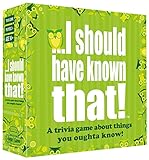
Overview: This compact trivia game (6"x6"x2") targets players aged 14+ with a cheeky premise: testing knowledge on “obvious” facts you should recall. Originating from Poland, it delivers quick, shame-free fun centered around common but often forgotten general knowledge. What Makes It Stand Out: Its unique angle lies in the self-deprecating humor and focus on everyday trivia that feels instantly familiar yet tricky to recall. The “oughta know” theme creates relatable, light-hearted moments rather than intimidating academic challenges, perfect for casual play. Value for Money: Priced accessibly for its niche appeal, it offers solid replayability within its specific concept. While lacking the breadth of larger trivia sets, its focused theme justifies the cost for those seeking humorous, low-stakes game nights over encyclopedic knowledge tests. Strengths and Weaknesses: Strengths: Clever, engaging theme; portable size; sparks laughter through shared forgetfulness. Weaknesses: Limited question depth; narrow appeal for trivia purists; no team play mechanics; repetitive after extended sessions. Bottom Line: A fun, niche party game for teens and adults who enjoy playful self-roasting over trivia. Best for small groups seeking quick laughs, though not a replacement for comprehensive trivia collections. Recommended for its unique humor.
2. Do You Really Know Your Family? A Fun Family Game Filled with Conversation Starters and Challenges - Great for Kids, Teens and Adults
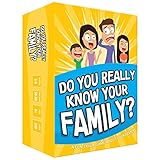
Overview: Designed for families with kids 8+, this game prioritizes bonding over trivia. It uses personal questions and silly challenges to uncover hidden family dynamics, transforming game night into a catalyst for genuine connection and shared laughter. What Makes It Stand Out: It uniquely replaces traditional trivia with intimate, family-specific prompts (“What’s Mom’s favorite childhood memory?”) and physical challenges. This fosters vulnerability and storytelling, making every round reveal new layers about loved ones. Value for Money: Excellent value for families seeking meaningful interaction. The emphasis on personalized content ensures high replayability as relationships evolve. Cheaper than therapy for building communication—and far more fun. Strengths and Weaknesses: Strengths: Unbeatable for sparking heartfelt conversations; inclusive for all ages; simple rules; creates lasting memories. Weaknesses: Less engaging for non-families or large groups; questions may feel repetitive over time; minimal strategic depth. Bottom Line: An essential tool for strengthening family bonds through playful interaction. Skip this only if you prefer competitive trivia over emotional connection. Highly recommended for parents wanting deeper engagement with kids/teens.
3. Who Knows More? Kids or Adults, The Ultimate Trivia Game for Kids, Teens and Adults - A Fun Family Party Game
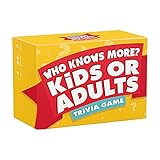
Overview: This team-based trivia battle pits kids (8+) against adults across diverse categories like pop culture and science. With a straightforward point-collecting mechanic (first to 20 wins), it’s engineered for fast-paced, intergenerational competition. What Makes It Stand Out: The deliberate “kids vs. adults” team structure creates built-in excitement and role reversal. Categories balance age-appropriate topics, ensuring neither side dominates unfairly—a rarity in family trivia games. Value for Money: Offers strong value with its inclusive design and high replayability across age groups. The team focus maximizes engagement for 4+ players, outperforming solo-play trivia sets in group settings at a competitive price point. Strengths and Weaknesses: Strengths: Truly balanced for all ages; energetic team dynamics; broad topic range; easy setup. Weaknesses: Can become chaotic with >6 players; lacks depth in niche subjects; point system feels simplistic for older teens. Bottom Line: The best trivia game for mixed-age family showdowns. It delivers consistent fun without alienating younger players. A top pick for game nights where everyone deserves a fair shot at victory.
4. Hasbro Gaming Trivial Pursuit Game: Family Edition Board Game, Family Trivia Games for Adults and Kids, 2+ Players, Ages 8+ (Amazon Exclusive)
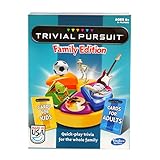
Overview: Hasbro’s Family Edition modernizes the classic trivia staple for ages 8+, featuring kid-adult split question cards and a streamlined board. Designed for 2+ players, it retains the iconic wedge-collecting race while optimizing pace for family audiences. What Makes It Stand Out: Dual difficulty cards (100 kid/100 adult sets totaling 1,200 questions) and a “quick-play” board (wedges earned on any space) solve traditional Trivial Pursuit’s pacing issues. Brand trust ensures polished execution. Value for Money: Justifies its premium price with immense content volume and Hasbro’s quality. Outlasts cheaper trivia games through sheer replayability and adaptability—kids grow into the adult questions. A long-term investment. Strengths and Weaknesses: Strengths: Unmatched question variety; seamless age inclusivity; faster gameplay; team-play flexibility. Weaknesses: Board storage is bulky; adult questions occasionally too hard for young kids; Amazon-exclusive limits availability. Bottom Line: The definitive family trivia upgrade. If you own one board game for multi-gen play, this should be it. Essential for households valuing tradition with modern tweaks.
5. Super Trivia Game for Adults with 1200 Questions - Fun Board Game for Adults - Family Road Trip Travel Game for The Pursuit of Trivial Knowledge
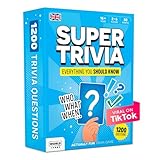
Overview: Targeting adults and teens 16+, this travel-friendly game emphasizes estimation (“How far to the Moon?”) and visual trivia alongside standard questions. Housed in a compact box, it promises “countless hours” of competitive, knowledge-testing fun. What Makes It Stand Out: Its standout 200 picture-based and estimation questions (“give your best guess”) differentiate it from text-heavy rivals. The travel size and adult-focused humor cater specifically to road trips or mature game nights. Value for Money: Solid for adult-centric groups, though the teen focus feels forced (16+ only). The estimation mechanic adds novelty, but question depth lags behind Trivial Pursuit. Best as a secondary game. Strengths and Weaknesses: Strengths: Innovative estimation rounds; highly portable; strong adult appeal; unique visual cards. Weaknesses: Age restriction excludes younger teens; “teen boy gift” marketing misfires; lacks team rules; some questions dated. Bottom Line: A fun, niche pick for adult road trips or parties craving fresh trivia mechanics. Not ideal for families—prioritize Product 4 instead—but worth considering for grown-up gatherings.
6. The Magical World of Disney Trivia Games – Board Games for Family Night, Multi-Player Board Game, Family Board Game, Travel Games, Disney Toys, Ages 6+

Overview: This Disney trivia board game delivers a dedicated experience for fans of all ages, featuring 1,250 questions spanning classic and modern Disney/Pixar content, from Steamboat Willie to Encanto. Designed for 2+ players aged 6 and up, it includes themed components like character pawns and kid-focused question cards. What Makes It Stand Out: Its standout feature is the dual-difficulty system: standard cards for older players and illustrated, simpler cards for children, ensuring genuine inclusivity. The vibrant board adorned with iconic movie art, Mickey-shaped tokens, and recognizable character pawns (Mickey, Elsa, Stitch, etc.) deepen immersion, making it more engaging than standard trivia sets. Value for Money: Priced competitively for a premium family board game, it offers exceptional replayability with 1,250 questions and durable components. It surpasses cheaper, single-topic Disney games by covering the entire franchise history and accommodating varied ages, justifying its cost as a long-term family investment or gift. Strengths and Weaknesses: Strengths: Truly inclusive for young children; high-quality, thematic components; vast question range minimizes repetition. Weaknesses: Gameplay mechanics are fairly traditional trivia (roll-and-answer); may feel slow for older teens/adults without kids; box size less travel-friendly than card-only games. Bottom Line: An outstanding choice for Disney-loving families seeking an accessible, visually appealing game night staple. Its child-inclusive design and expansive content make it a top-tier gift for ages 6+, though trivia purists might prefer more complex mechanics.
7. I Should Have Known That Trivia Game Yes or No Edition – A Trivia Game About Things You Oughta Know
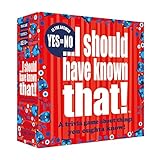
Overview: This compact trivia game challenges players with over 400 “Yes or No” questions on everyday常识 topics—like keyboard layouts or allergy myths—targeted at ages 14+. It’s a standalone edition (2+ players) that fits in a small 5.7-inch box, emphasizing quick, social gameplay. What Makes It Stand Out: The exclusive “Yes/No” format is its genius hook, eliminating obscure knowledge barriers and encouraging instant debate. Questions focus on surprisingly tricky common-knowledge gaps (e.g., “Can you be allergic to a hairless cat?”), sparking “aha!” moments that define its addictive, conversational appeal. Value for Money: At a modest price point, it delivers high replay value through rapid-fire rounds and social engagement. While question volume (400+) is lower than some competitors, the unique format justifies cost, especially as it complements the original game for expanded play. Strengths and Weaknesses: Strengths: Intuitive, fast-paced gameplay; universally relatable questions; highly portable; sparks lively discussion. Weaknesses: Limited depth for trivia enthusiasts seeking detailed facts; repetitive format may wear thin after extended play; age 14+ excludes younger families. Bottom Line: A brilliantly accessible party game that turns everyday ignorance into fun. Ideal for casual gatherings or as a conversation starter, it’s excellent value for its niche—but those wanting deep trivia may find it too simplistic.
8. Hasbro Games Trivial Pursuit Mini Packs Multipack, Fun Trivia Questions for Adults and Teens Ages 16+, Includes 4 Game Featuring 4 Decades

Overview: This multipack bundles four Trivial Pursuit mini-games, each dedicated to a decade (80s, 90s, 2000s, 2010s), with 240 pop-culture questions per pack. Designed for ages 16+, it uses a card-only format for portability, requiring just 5 correct answers to win. What Makes It Stand Out: Decade-specific nostalgia is the core draw, targeting millennials and Gen X with hyper-relevant questions on trends, music, and events. The card-only design eliminates boards/pawns, making it uniquely travel-friendly while retaining Trivial Pursuit’s trusted trivia quality. Value for Money: Offering 960 questions total across four themed packs, it provides exceptional variety per dollar. The compact size and no-setup gameplay enhance value for road trips or parties, outperforming full-board versions in portability without sacrificing content depth. Strengths and Weaknesses: Strengths: Nostalgia-driven engagement; ultra-portable; quick rounds ideal for social settings; high question volume. Weaknesses: Lacks physical board for traditionalists; decade focus may alienate players unfamiliar with certain eras; minimal strategic depth beyond recall. Bottom Line: A superb, space-saving trivia solution for pop-culture fans who crave decade-specific nostalgia. Highly recommended for adult/teen groups prioritizing portability and quick play, though traditionalists might miss the classic board.
9. QUOKKA Trivia Games for Adults with 500 Questions - Fun Adult Board Game Trivia Cards for Teens, and Families – Trivia Cards with Answers – Great Board Games Trivia for Family Party and Game Night

Overview: QUOKKA’s trivia set features 500 questions across 100 cards (5 per card), targeting adults, teens, and families. It emphasizes flexible gameplay—duels, team play, or timed rounds—with a compact design suitable for game nights or travel. What Makes It Stand Out: Versatility defines this set: multiple play modes (1v1, teams, timed) and adjustable win conditions (3 or 5 cards) cater to diverse group dynamics. The clear answer layout on each card enables effortless verification, smoothing gameplay flow during lively gatherings. Value for Money: The 500-question library offers robust replayability at a budget-friendly price. Its family-inclusive design (ages 12+) and adaptability—from casual to competitive—provide broader utility than single-audience games, making it a cost-effective staple for regular game nights. Strengths and Weaknesses: Strengths: Highly adaptable rules; compact and travel-ready; clear answer presentation; strong family/teens crossover appeal. Weaknesses: Question depth varies (some overly simple); lacks thematic focus (general trivia); no physical components beyond cards reduce immersion. Bottom Line: A flexible, accessible trivia workhorse perfect for mixed-age groups seeking hassle-free fun. Its portability and rule variations make it a top pick for frequent game nights, though niche trivia fans may desire more specialized content.
10. Outset Media Movies Trivia Game - Party Game - Family Game - Travel Game - Fun and Easy to Play - 880 Trivia Questions - for 2 or More Players - Ages 12+

Overview: This movie-centric trivia game tests knowledge across genres (comedy, sci-fi, horror, etc.) with 880 questions on 220 cards. Designed for 2+ players aged 12+, it prioritizes simplicity and portability in a compact box ideal for travel. What Makes It Stand Out: The sheer breadth of cinematic coverage—spanning decades and genres—sets it apart, appealing to casual viewers and buffs alike. Its ultra-portable design (fits in a purse/backpack) and effortless “read-answer-discuss” rules make it a standout travel companion. Value for Money: With 880 high-quality questions at a mid-range price, it delivers exceptional density per dollar. The family-friendly age range (12+) and genre diversity ensure broad appeal, outpacing pricier niche movie games in versatility and accessibility. Strengths and Weaknesses: Strengths: Massive question library; unbeatable portability; inclusive for teens/adults; sparks film discussions. Weaknesses: No visual aids (e.g., movie stills); limited depth on obscure films; card-only format feels sparse compared to board games. Bottom Line: A superb, no-fuss movie trivia game for on-the-go fun. Highly recommended for film fans seeking a portable, engaging party or travel game, though collectors may want more visual or strategic elements.
Understanding the Modern Family Trivia Landscape
Why Trivia Remains a Family Game Night Staple
Trivia games consistently top family game night lists for compelling reasons. They inherently encourage active listening and quick thinking, providing a low-pressure environment for kids to absorb information across diverse subjects like history, science, pop culture, and geography. More importantly, they spark organic conversations that extend far beyond the game itself – a question about ancient Egypt might lead to a shared story about a family vacation, or a music question could unveil Grandma’s favorite band from her youth. This natural flow of discussion strengthens family bonds and creates shared memories in a way passive entertainment rarely does.
Key Shifts in Trivia Game Design for 2026
Gone are the days of trivia games relying solely on rote memorization of esoteric facts. Contemporary design prioritizes accessibility and broad appeal. Experts highlight a move towards tiered difficulty within single questions, allowing players of varying ages and knowledge levels to contribute meaningfully. There’s also a strong emphasis on visual and audio elements, incorporating images, short video clips, or sound bites to make questions more engaging and less text-dependent, especially crucial for younger players or those who learn visually. Furthermore, thematic depth has increased, with games often built around rich, immersive worlds or narratives that make answering questions feel like part of an adventure.
Essential Features to Evaluate Before You Buy
Assessing True Age Appropriateness
Don’t just glance at the box’s suggested age range; dig deeper. Consider the cognitive skills required. Does the game rely heavily on reading speed, which might disadvantage younger children even if they know the answer? Are the questions based on knowledge typically acquired by a certain age, or are they designed with layered hints? Look for games that explicitly state how they accommodate different learning stages, perhaps through adjustable difficulty settings, multiple-choice options for younger players, or visual aids that provide context clues alongside the text.
Question Variety: Beyond Just Facts
A stellar family trivia game offers a dynamic mix of question types. While straightforward “who, what, when” questions have their place, the best incorporate picture rounds (identify the landmark, animal, or artwork), audio clips (name that song or sound effect), sequence challenges (put these historical events in order), or even simple charades or drawing elements related to the topic. This variety prevents fatigue, caters to different intelligences (visual, auditory, kinesthetic), and ensures that a player who might struggle with pure recall can shine in another format, keeping everyone invested.
Replayability: The Secret to Longevity
The true test of a family game is whether it gets pulled out repeatedly. High replayability stems from several factors. A massive, diverse question bank is fundamental – ideally thousands of questions to minimize repeat sightings during regular play. Look for mechanisms that randomize the experience: modular boards, draw-and-play card systems, or digital apps that shuffle content effectively. Games incorporating player-generated content (like submitting your own fun facts) or variable objectives (different ways to win each game) also significantly boost the “let’s play again!” factor, ensuring the novelty doesn’t wear off after a few sessions.
Physical Components and Setup Simplicity
Family game nights should start with fun, not frustration. Evaluate the physicality of the game. Are the cards large enough to read easily under table lighting? Is the board sturdy and lay-flat, or does it curl up annoyingly? Consider storage – does everything have a dedicated, secure place in the box? Crucially, assess setup time. A game requiring intricate board assembly or lengthy rule explanations before the first question is asked is a recipe for dampened enthusiasm, especially with younger kids. The best family trivia games have setup that takes under two minutes, allowing the focus to shift immediately to playing.
Maximizing the Educational and Social Value
Learning Through Play: The Subtle Power of Trivia
The educational benefits of well-designed trivia are profound yet often subtle. Players absorb geographical locations, historical timelines, scientific concepts, and cultural nuances simply by engaging with the questions. Crucially, the game format turns learning into an active, rewarding process – getting an answer right provides instant positive reinforcement. This experiential learning is far more effective and memorable than passive study. Games focusing on critical thinking, like those requiring deduction from clues or evaluating the plausibility of answers, further develop essential cognitive skills applicable far beyond the game board.
Fostering Inclusive Participation for All Ages
The hallmark of a truly great family trivia game is its ability to make everyone feel like a valuable contributor, regardless of age or knowledge base. Seek out mechanics that level the playing field: cooperative modes where the family works together against the game, team play that mixes ages, or scoring systems that reward effort and partial knowledge (e.g., points for getting close to the correct year). Games that avoid overly niche topics in favor of broadly relatable themes (animals, food, basic science, common history) naturally create more moments where every player has a shot, preventing younger members from feeling perpetually sidelined.
Sparking Meaningful Conversation and Connection
Trivia’s magic often happens in the spaces between the questions. A well-phrased question can trigger personal stories (“Oh! We saw that dinosaur skeleton at the museum last summer!”), shared laughter over a common misunderstanding, or even gentle, respectful debates about interpretations. The best games include discussion prompts or “fun fact” bonuses that encourage players to elaborate on their answers or share related experiences. This transforms the game from a simple quiz into a platform for deeper family interaction and storytelling, strengthening emotional connections in a natural, enjoyable way.
Navigating Different Game Formats and Technologies
Traditional Board Games: Timeless Appeal
Physical board games remain incredibly popular for good reason. They offer tangible interaction – shuffling cards, moving pieces, the satisfying thump of dice – that creates a distinct, screen-free atmosphere perfect for focused family time. They are generally device-independent, ensuring no one is left out due to tech issues or battery life. Look for modern board trivia games that incorporate innovative physical elements, like rotating dials for answers, modular boards that change layout, or high-quality, durable components that withstand enthusiastic play. Their simplicity and reliability make them a cornerstone of many family game collections.
Digital Integration and App-Assisted Play
The line between physical and digital is increasingly blurred in 2026 trivia. Many top-tier games now feature companion apps that handle question delivery, scoring, timers, and sound effects, eliminating the need for a designated reader and ensuring consistent pacing. These apps can offer dynamic difficulty adjustment, track player progress over time, and provide rich multimedia content (videos, images, audio) impossible in a pure physical format. Crucially, evaluate how essential the app is – is the core game still playable without it for simpler sessions, or is the app mandatory? Reliable app performance and ease of use are non-negotiable for family harmony.
Hybrid Physical-Digital Experiences
Emerging as a significant trend, hybrid games offer the best of both worlds. Imagine a physical board where players use a tablet to scan question cards, triggering augmented reality (AR) elements that bring historical figures to life or overlay geographical information on a map. Or a game where physical answer dials sync with an app to create interactive challenges. These experiences aim for deeper immersion while retaining the social, face-to-face interaction of traditional board games. Consider the setup complexity and potential tech barriers (need for multiple devices, strong Wi-Fi) before diving into this category, ensuring it suits your family’s tech comfort level.
Pure Digital Trivia Platforms
For families embracing screen time strategically, dedicated trivia apps and online platforms offer vast libraries and convenient play. They excel in solo practice, asynchronous play (taking turns over days), and connecting with extended family remotely. However, for core family-together game nights, pure digital options often lack the shared physical space and tactile engagement that fosters the deepest connection. If opting for digital, prioritize platforms designed specifically for co-located play, with features like pass-and-play modes, large shared screens, and minimal individual device reliance to keep the focus on group interaction.
Strategic Considerations for Your Family’s Dynamics
Matching Game Pace to Your Family’s Energy
Consider your family’s typical game night vibe. Do you thrive on fast-paced, high-energy competition with quick rounds and buzzer chaos? Or do you prefer a more relaxed, conversational pace where discussion is encouraged and time pressure is minimal? Some trivia games are built like lightning-round tournaments, while others are more leisurely exploration sessions. Choosing a game whose inherent rhythm aligns with your family’s natural energy prevents frustration – a slow-paced group overwhelmed by a frantic buzzer game, or competitive siblings bored by a plodding, discussion-heavy format, won’t have fun.
Team Dynamics vs. Individual Play
The decision between team play and individual competition significantly impacts the experience. Team play (especially mixed-age teams) naturally promotes collaboration, communication, and support, making it ideal for fostering inclusivity and reducing pressure on younger or less confident players. Individual play can heighten excitement and personal achievement but risks creating wider skill gaps and potential discouragement. Many modern games cleverly blend both, allowing for team rounds or offering cooperative challenges alongside competitive elements, providing flexibility to adapt to your group’s mood each night.
Balancing Competition with Cooperation
The healthiest family game nights strike a balance between friendly rivalry and shared goals. Overly cutthroat competitive trivia can breed resentment, especially if one member consistently dominates. Look for games incorporating cooperative elements: perhaps a “family challenge” round against the game itself, shared bonus points for collective achievements, or mechanics where helping another player answer correctly earns you points too. This shifts the focus from “beating each other” to “succeeding together,” preserving positive feelings and ensuring everyone looks forward to the next game.
Considering Space and Storage Realities
Be brutally honest about your available space and storage habits. That beautifully boxed game with a massive board is useless if it won’t fit on your dining table or if the box gets crushed in a crowded closet. Compact card-based trivia games or those designed to fit neatly into standard library-sized boxes are often more practical for real-world family life. Consider where you’ll store it – is there a dedicated game shelf, or will it live under the TV? Choosing a format that integrates seamlessly into your existing space ensures it actually gets played, not just collected.
Making Your Trivia Game Night a Resounding Success
Setting the Stage for Engagement
Don’t underestimate the power of environment. Clear the table, ensure good lighting on the cards or screen, and eliminate major distractions (put phones in a basket!). A little ambiance goes a long way – maybe dim the overhead lights and use a table lamp, or have themed snacks related to a game’s topic. Most importantly, set a positive tone from the start: emphasize that it’s about fun and participation, not just winning. A quick reminder that silly answers or good guesses are welcome helps everyone relax and engage more fully.
Facilitating Play: The Role of the Game Master
Even in app-driven games, having a designated facilitator (who rotates!) can smooth things out. This person ensures rules are followed consistently, manages timers fairly, reads questions with appropriate energy (or troubleshoots the app), and gently steers discussions back on track. Their role isn’t to dominate but to enable smooth, inclusive play. For physical games without an app, a good facilitator is essential – they should be neutral, patient, and skilled at paraphrasing questions for clarity without giving away answers, especially for younger players.
Extending the Fun Beyond the Final Score
The game shouldn’t end when the winner is declared. Dedicate a few minutes to revisit the most interesting or surprising questions. “Who knew that about penguins? Let’s look it up!” or “Remember when Grandpa told that story about the 1960s during the music round?” encourages further learning and connection. Consider a simple ritual, like the winner choosing the next game or getting first pick of snacks, to end on a positive, inclusive note. The goal is to leave everyone feeling satisfied and already looking forward to the next time.
Frequently Asked Questions
Frequently Asked Questions
What’s the single most important feature to look for in a family trivia game? Focus on genuine inclusivity – how well does the game enable players of vastly different ages and knowledge levels to participate meaningfully and feel successful? Look for tiered difficulty or varied question formats.
How can I make trivia less intimidating for my young child who’s just learning to read? Prioritize games with strong visual or audio components (picture rounds, sound clips). Have an older player or adult read questions aloud clearly, and consider implementing a “help a teammate” rule where others can offer one clue.
Are app-based trivia games suitable for young kids under 8? It depends heavily on the specific app. Look for those with minimal text, large interactive elements, voice narration, and very short rounds. Co-play with an adult is almost always necessary for this age group to navigate and understand.
My family gets competitive; how can we keep trivia fun and avoid arguments? Explicitly choose games with cooperative elements or team play. Set ground rules beforehand about respectful discussion. Focus on celebrating interesting facts and funny answers, not just the score. Consider non-competitive scoring like “most creative answer” awards.
How many players is ideal for most family trivia games? Most modern family trivia games are designed for 2-6 players. For larger families (7+), team play is essential, or look for games specifically scaled for bigger groups, often utilizing app-based systems for simultaneous answering.
Do trivia games actually help with school subjects? Absolutely, but indirectly. They spark interest in topics, reinforce factual knowledge through repetition in a fun context, and develop critical thinking skills like recalling information under mild pressure and evaluating answer choices – all valuable academic assets.
How often should we play the same trivia game before it gets stale? This varies, but games with large, randomized question pools (thousands of questions) or high replayability mechanics (variable boards, player-generated content) can stay fresh for dozens of plays. Rotate with 2-3 core trivia games to maintain novelty.
What’s the best way to handle a question where the entire family disagrees on the answer? Consult the game’s answer source if provided. If it’s ambiguous, vote democratically or use a fun tiebreaker (like rock-paper-scissors). The key is to resolve it quickly and move on, preserving the game’s flow and fun.
Can trivia games be educational for adults too, or are they just for kids? Definitely for adults! Well-designed trivia covers diverse topics, often refreshing forgotten knowledge or introducing fascinating new facts. The social interaction and mental agility required are cognitively beneficial for all ages.
How do I know if a trivia game’s content is appropriate for my family’s values? Preview the game’s theme and sample questions if possible (check publisher websites or retailer descriptions). Look for games that avoid overly mature humor, controversial topics, or sensitive subjects unless you specifically seek those. Reading recent, detailed customer reviews often highlights content nuances.
See Also
- 10 Top-Rated Trivia Games According to Experts in 2026
- 10 Top-Rated Word Puzzle Games According to Experts in 2026
- 10 Top-Rated Party Board Games According to Experts in 2026
- 10 Top-Rated Crossword Board Games According to Experts in 2026
- 10 Top-Rated Word Games According to Experts in 2026 for Language Lovers