Table of Contents
Watching your child strategize during play isn’t just adorable—it’s the subtle hum of a developing supercomputer. While they might think they’re merely moving pieces across a board or solving a colorful puzzle, their brain is actually forging neural pathways for critical thinking, pattern recognition, and future problem-solving. In today’s fast-paced world, nurturing these logical muscles early isn’t a luxury; it’s essential preparation for academic challenges and real-world decision-making. And the best part? They won’t even realize they’re learning because they’re too busy immersed in the thrill of the game.
Gone are the days when “educational games” meant dull drills or overtly academic tasks. Modern strategy games for kids seamlessly weave skill-building into captivating experiences, transforming abstract concepts like sequencing, spatial reasoning, and resource management into tangible, joyful play. Whether it’s planning several moves ahead in a tactical challenge or adapting to unexpected twists in a cooperative adventure, these games provide a safe, engaging sandbox for trial, error, and triumph. Let’s explore how to choose the right strategic experiences that turn playtime into powerful cognitive development without ever feeling like homework.
Top 10 Strategy Games for Kids
Detailed Product Reviews
1. Educational Insights Kanoodle - Original 3D Brain Teaser Puzzle, Single Player Mind Challenge Toys, Handheld Travel Games, Challenging Logic Puzzles and Gifts for Kids, Teens & Adults Ages 7+

Overview:
The Educational Insights Kanoodle is a compact, single-player puzzle game challenging users to solve over 200 2D and 3D logic puzzles using colorful, interlocking pieces. Hailed as a TikTok sensation with over 9 million units sold, it targets ages 7+ as a screen-free, portable brain teaser ideal for travel or quiet time.
What Makes It Stand Out:
Its standout feature is the progression from beginner to expert puzzles across two dimensions, fostering spatial reasoning without digital distractions. The self-contained, pocket-sized case ensures pieces stay secure during travel, while its cross-generational appeal engages kids, teens, and adults equally—making it a rare solo game that unites families.
Value for Money:
Priced accessibly for its replayability, Kanoodle outperforms generic puzzle toys. With hundreds of challenges, it offers far more longevity than one-off board games, justifying its cost as a frequent go-to for commutes or waiting rooms. Alternatives often lack its structured difficulty curve or portability.
Strengths and Weaknesses:
Strengths: Exceptional portability; high replay value; builds critical thinking; durable plastic pieces; truly screen-free engagement. Weaknesses: Limited to solo play; 3D puzzles may frustrate younger kids; plastic storage case feels flimsy over time.
Bottom Line:
A must-have for puzzle enthusiasts seeking affordable, screen-free cognitive exercise. Its portability and scalable challenges make it an outstanding gift for ages 7+, despite minor durability concerns. Highly recommended for travel or daily brain boosts.
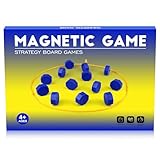
2. Bameca Magnetic Chess Game with Full-Size Stones, Magnet Game with String, for Family & Party & Travel & Camping, Puzzle Strategy Games, 2 Player Games for Kids & Adults
Overview:
Bameca Magnetic Chess is a two-player strategy game where competitors place magnetic stones upright within a rope circle, aiming to avoid triggering attraction that forces them to collect pieces. Designed for ages 4+, it emphasizes tactile suspense and quick turns, packing into a travel-friendly storage bag.
What Makes It Stand Out:
The game’s magnetic tension creates unique, heart-racing moments as the circle fills—stones unpredictably snap together, demanding careful strategy. Unlike digital games, it fosters face-to-face interaction with simple rules that scale from children to adults, all within a minimalist setup (rope, 20 stones, bag).
Value for Money:
Its $15–$20 price point delivers exceptional value for a durable, screen-free group activity. While similar strategy games cost more, Bameca’s portability and multi-scenario use (camping, parties) ensure frequent play, easily outlasting cheaper novelty toys with limited replayability.
Strengths and Weaknesses:
Strengths: Highly engaging magnetic mechanics; ultra-portable; quick setup; promotes strategic thinking; inclusive for ages 4+; sparks laughter during tense moments. Weaknesses: Rope can fray with heavy use; luck influences outcomes; two-player limit reduces group flexibility.
Bottom Line:
A brilliantly simple yet thrilling game perfect for family gatherings or travel. Though reliant on some luck, its magnetic suspense and portability make it a worthwhile impulse buy for strategy fans. Ideal for casual players seeking unplugged fun.
3. lartoys Rope Untangling Puzzle Game, Educational Strategy Board Game for Kids & Adults, Family Travel Party Games with Multi-Level Challenges, Gifts for All Ages(Manual on Box)

Overview:
The lartoys Rope Untangling Puzzle challenges players to free tangled plastic-tipped ropes from a board by strategically moving ends over (never under) knots. With adjustable difficulty (3–10 ropes), it’s a hands-on logic game for ages 4+ that builds spatial skills during solo or two-player sessions.
What Makes It Stand Out:
Its patented design (U.S. D1101871) offers unique, scalable challenges: kids start with simple tangles, while adults tackle complex 10-rope mazes. The tactile, screen-free play directly enhances problem-solving and focus, outshining digital alternatives. The travel case and clear video instructions further elevate accessibility.
Value for Money:
Priced competitively at $20–$25, it surpasses similar puzzles in replayability and educational depth. Unlike single-solution brainteasers, its infinite configurations (via user-created tangles) ensure lasting engagement, making it a smarter investment than disposable screen-time alternatives.
Strengths and Weaknesses:
Strengths: Highly adaptable difficulty; strong educational value; durable plastic ropes; fosters patience and spatial reasoning; excellent travel size; patent-protected uniqueness. Weaknesses: Initial setup can confuse beginners; plastic tips may detach with rough play; limited multiplayer interaction.
Bottom Line:
A standout STEM-focused game that grows with the player. Despite minor setup quirks, its versatility and cognitive benefits make it a top-tier gift for families wanting meaningful, screen-free challenges. Highly recommended for curious minds of all ages.
4. Taco vs Burrito - The Wildly Popular Surprisingly Strategic Card Game Created by a 7 Year Old - 5 Ways to Play - a Family-Friendly Party Game for Kids, Teens & Adults

Overview:
Taco vs Burrito is a fast-paced card game where 2–4 players (ages 6–106) compete to build the most absurd taco or burrito using ingredient and action cards. Created by a 7-year-old, it features five gameplay variations, quick 15-minute rounds, and whimsical food-themed strategy.
What Makes It Stand Out:
The game’s origin story—crafted by a child—infuses it with infectious creativity and accessibility. Action cards like “Steal a Taco” or “Nacho Cheese” add chaotic fun, while five distinct modes (e.g., team play, solitaire) ensure novelty. Its humor and simplicity bridge generational gaps effortlessly.
Value for Money:
At $15–$20, it’s a steal for the replay variety. Most party games offer one mode; Taco vs Burrito’s five rule sets deliver disproportionate value, outperforming pricier alternatives. The durable cards and meal holders justify gifting for birthdays or holidays.
Strengths and Weaknesses:
Strengths: Incredibly easy to learn; high replayability via multiple modes; hilarious theme; fosters strategic thinking subtly; inclusive for all ages; compact box. Weaknesses: Card quality is mid-range; heavy luck element; theme may not appeal to serious gamers.
Bottom Line:
A joyful, unexpectedly strategic game perfect for family nights or parties. Though luck-driven, its charm, versatility, and origin story make it a crowd-pleasing essential. An easy recommendation for lighthearted, inclusive fun.
5. ThinkFun Gravity Maze - Falling Marble Logic Game - Challenging STEM Toy for Kids 8-12 - Gravity Marble Maze - Brain-Building Fun - Educational Gift - Boosts Critical Thinking & Problem Solving

Overview:
ThinkFun Gravity Maze is a single-player STEM puzzle where players arrange translucent towers on a grid to create a path guiding a marble to a target. With 60 challenges (beginner to expert), it merges engineering principles with hands-on play for ages 8–14.
What Makes It Stand Out:
Its genius lies in transforming abstract logic into tangible physics: players “see” cause-and-effect as marbles tumble through custom-built mazes. Unlike static puzzles, it encourages iterative experimentation, making spatial reasoning visceral. The sleek design also doubles as a desk decoration.
Value for Money:
Priced at $30–$35, it’s pricier than basic puzzles but justified by its educational depth and durability. Competing STEM toys often lack its structured challenge progression or marble-run thrill, offering better long-term engagement per dollar.
Strengths and Weaknesses:
Strengths: Exceptional STEM integration; high-quality, sturdy components; self-paced learning; collaborative potential; visually appealing; builds engineering intuition. Weaknesses: Limited to solo play; marbles can roll away; steeper difficulty jump at expert levels.
Bottom Line:
A superb investment in critical thinking that makes physics captivating. Despite the solo focus, its educational payoff and build quality make it a top-tier gift for curious kids. Highly recommended for budding engineers and puzzle lovers alike.
6. The Genius Square from The Happy Puzzle Company – Game of The Year Award Winner, 60000+ Solutions STEM Puzzle Game. Roll Dice, Race Your Opponent to Fill Grid with Different Shapes!

Overview:
This award-winning STEM puzzle challenges players to race against time or opponents by filling a 6x6 grid using uniquely shaped colored pieces after dice rolls determine blocker placements. Designed for 1-2 players, it combines spatial reasoning with lightning-fast problem-solving in a compact, travel-friendly package.
What Makes It Stand Out:
Its staggering 62,208 possible configurations (verified solvable) ensure endless replayability, while the dual-grid setup enables competitive head-to-head play. The tactile wooden pieces and intuitive dice mechanic make complex spatial challenges accessible, promoting STEM skills without feeling academic. The “one solution guaranteed” promise reduces frustration, encouraging multiple attempts.
Value for Money:
Priced mid-range for strategy games, it delivers exceptional longevity through near-infinite puzzles. Compared to single-solution puzzles, its reconfigurable design offers far more play per dollar. The durable components and portability justify the cost for educators and families seeking screen-free brain training.
Strengths and Weaknesses:
Strengths: Massive replay value; excellent motor skill and spatial reasoning development; quick setup; inclusive for various ages/skill levels. Weaknesses: Smaller pieces pose choking hazards for under-3s; competitive mode can frustrate younger players; storage compartments lack organization for pieces.
Bottom Line:
A brilliantly engineered puzzle that transforms math into thrilling play. Ideal for STEM-focused families or classrooms, it earns its awards through ingenious design and near-limitless challenges. Highly recommended for ages 6+ seeking cognitive engagement.
7. Asmodee Ticket to Ride First Journey Board Game - Fun and Easy for Young Explorers! Train Strategy Game, Family Game for Kids & Adults, Ages 6+, 2-4 Players, 15-30 Min Playtime

Overview:
A streamlined entry point to the beloved Ticket to Ride series, this version simplifies cross-country train routing for young explorers. Players collect colored train cards to claim railway routes across a kid-friendly U.S. map, racing to complete six destination tickets and earn the Golden Ticket.
What Makes It Stand Out:
The reduced map size, shorter routes, and clear iconography make complex strategy accessible to first-time gamers aged 6+. The Golden Ticket victory condition provides tangible, achievable goals, while maintaining core mechanics like route blocking and card drafting from the original. Playtime under 30 minutes sustains child engagement.
Value for Money:
An affordable gateway to strategic gaming, it introduces foundational concepts without overwhelming new players. Compared to the full Ticket to Ride, it’s a cost-effective primer that often sparks interest in more complex versions. Components are durable, ensuring years of use for growing gamers.
Strengths and Weaknesses:
Strengths: Perfectly scaled rules for young children; quick, satisfying gameplay; strong educational value in planning and color matching; high replayability. Weaknesses: Map lacks depth for experienced gamers; limited player count (max 4); tickets can feel restrictive for very young players.
Bottom Line:
An exceptional introductory strategy game that successfully distills Ticket to Ride’s magic for elementary-aged children. Its thoughtful simplification and brisk pace make it a standout choice for family game nights. Highly recommended as a first “serious” board game.
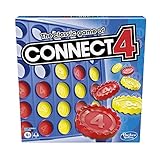
8. Hasbro Gaming Connect 4 Classic Grid,4 in a Row Game,Strategy Board Games for Kids,2 Player .for Family and Kids,Ages 6 and Up
Overview:
A refreshed take on the timeless vertical-checkers classic, this edition features modern aesthetics and three gameplay modes. Two players drop colored discs into a grid, aiming to align four vertically, horizontally, or diagonally while blocking opponents—a blend of simplicity and tactical depth.
What Makes It Stand Out:
Beyond standard play, the “Frenzy” and “Pop-Out” variants (allowing disc removal from the base) add strategic layers without complicating rules. The sleek grid design in vibrant colors enhances visual appeal, while the compact size fits seamlessly into family game rotations or travel packs.
Value for Money:
As an affordable staple, it offers unmatched longevity for its price. While basic versions exist, the dual alternate modes here provide significant added value over competitors. Its durability and universal appeal ensure it outlasts trend-driven games.
Strengths and Weaknesses:
Strengths: Effortless to learn; portable; three distinct modes extend play life; develops early strategy skills; near-instant setup. Weaknesses: Two-player limitation excludes larger groups; no storage for discs; “Pop-Out” mode can feel unbalanced for younger players.
Bottom Line:
A vibrant, versatile upgrade to a proven classic that remains essential for family collections. Its enduring gameplay and fresh variations make it a smart buy for parents seeking screen-free, skill-building fun. Highly recommended for casual and competitive play.
9. CATAN Junior Board Game - Swashbuckling Adventure for Young Pirates! Strategy Game, Fun Family Game for Kids and Adults, Ages 6+, 2-4 Players, 30 Minute Playtime, Made by CATAN Studio

Overview:
CATAN Junior adapts the acclaimed strategy franchise into a pirate-themed adventure for children. Players build ships and lairs across tropical islands to collect resources (wood, goats, gold), aiming to expand their networks while avoiding the Ghost Captain—a perfect stepping stone to complex CATAN games.
What Makes It Stand Out:
The whimsical pirate narrative (including Coco the Parrot helper) makes resource management tangible for kids. Simplified mechanics like fixed resource costs and no trading lower barriers to entry, while the 30-minute playtime respects young attention spans. The ring-shaped board eliminates complex geography.
Value for Money:
At a modest premium over basic kids’ games, it delivers exceptional educational value in planning and resource allocation. For families invested in CATAN, it’s a cost-effective primer that builds foundational skills for the main series, extending long-term gameplay ROI.
Strengths and Weaknesses:
Strengths: Engaging theme eases STEM learning; smooth difficulty curve; supports 2-4 players; excellent component quality; fosters negotiation via parrot mechanic. Weaknesses: Limited strategic depth for older kids; Ghost Captain mechanic feels random; no solo play option.
Bottom Line:
A charming, brilliantly executed introduction to strategic gaming that captures CATAN’s essence for young pirates. Its balance of simplicity and meaningful choices makes it indispensable for families growing into hobby gaming. Highly recommended for ages 6-10.
10. Kollide by Relatable, Exciting Magnetic Game for Easter Family Game Night, Great Fun Games for Kids and Easter Basket Gifts, Includes 1 Rope, 20 Magnets, and Instructions

Overview:
Kollide reimagines strategy with a unique magnetic tug-of-war concept. Players attach magnets to a central rope, using repulsion and attraction forces to strategically “collide” opponents’ magnets off the line—a physics-based duel blending dexterity and tactical foresight.
What Makes It Stand Out:
Its novel magnetic mechanics offer screen-free experimentation with real-world physics, standing apart from traditional board games. Marketed as an Easter basket stuffer, the compact kit (rope, 20 magnets, bag) enables impromptu play anywhere. The TikTok popularity hints at viral appeal through shareable moments.
Value for Money:
Priced as a novelty item, it delivers novelty but limited depth. While fun for short bursts, the lack of structured rules beyond basic collisions reduces replay value compared to strategy classics. Best as a supplementary gift rather than a core game purchase.
Strengths and Weaknesses:
Strengths: Highly portable; sparks curiosity about magnetism; quick setup; engaging for casual play; ideal as a small gift. Weaknesses: Shallow strategy; magnets detach easily; no clear win condition beyond “last magnet standing”; limited instructions hinder complexity.
Bottom Line:
A creative, conversation-starting novelty game perfect for Easter baskets or travel, but lacking strategic substance for regular family game nights. Manage expectations—it’s a fun experiment, not a deep strategy title. Recommended only as a supplementary gift.
Why Strategy Games Are Essential Brain Builders for Growing Minds
The Cognitive Workout You Can’t See
Every time a child weighs options, anticipates consequences, or adjusts a plan mid-game, they’re engaging executive functions—the mental processes that manage planning, focus, and self-control. Strategy games provide low-stakes environments where kids practice these skills through concrete actions, like deciding which resource to collect first or predicting an opponent’s next move. This active application solidifies abstract thinking far more effectively than passive learning, building mental flexibility that translates to classroom success and everyday problem-solving.
Beyond Winning: The Real Developmental Prizes
While the satisfaction of victory is motivating, the true value lies in the journey. Navigating setbacks, analyzing why a tactic failed, and iterating on strategies teach resilience and metacognition—the ability to think about one’s own thinking. These experiences normalize intellectual struggle as part of growth, fostering a “growth mindset” where challenges become opportunities rather than threats. Over time, this cultivates confident, adaptable thinkers who approach complex tasks with curiosity instead of fear.
Key Features to Prioritize When Selecting Strategy Games
Rule Simplicity vs. Strategic Depth Balance
The sweet spot for kids’ strategy games lies in easy-to-grasp rules that unfold layered complexity during play. Look for mechanics explained in 2–3 clear sentences but offering multiple viable approaches. A game where basic movement is intuitive but allows for advanced blocking or diversion tactics, for instance, ensures accessibility while preventing boredom as skills improve. Avoid overwhelming rulebooks; the focus should be on doing, not memorizing.
Physical vs. Digital: The Tangible Advantage
While digital strategy apps have merit, physical games offer irreplaceable benefits for young learners. Manipulating pieces builds fine motor skills and spatial awareness, while face-to-face interaction teaches social cues and sportsmanship. The tactile feedback of moving tokens or cards also reinforces cause-and-effect relationships more viscerally than a screen. For foundational logical development, prioritize hands-on play where kids can physically rearrange elements to test hypotheses.
Replayability Through Variable Setup
A game that plays identically every time quickly loses its strategic edge. Seek titles with randomized elements—like shuffled cards, modular boards, or adjustable starting conditions—that create unique scenarios. This variability forces players to adapt strategies on the fly rather than memorize solutions, directly training flexible thinking. Games where no two sessions play alike keep engagement high while deepening analytical skills through repeated exposure to novel problems.
Matching Games to Developmental Stages
Early Logical Foundations (Ages 5-7)
At this stage, focus on games emphasizing concrete cause-and-effect and simple sequencing. Turn-based mechanics with immediate visual feedback help kids connect actions to outcomes—like placing tiles to complete a path or matching symbols to advance. Short playtimes (10–15 minutes) maintain attention spans, while cooperative formats reduce pressure, allowing them to experiment without fear of “losing.” Prioritize clear visual cues over text-heavy instructions.
Building Complex Reasoning (Ages 8-10)
Children here can handle multi-step planning and basic resource management. Games introducing conditional thinking (“If I save this token now, I can unlock a bonus later”) or spatial puzzles requiring foresight thrive at this level. Introduce gentle competitive elements where players must anticipate others’ moves, but ensure consequences feel fair and reversible. Abstract concepts like probability can emerge through dice mechanics or card draws, making math intuitive.
Strategic Sophistication (Ages 11+)
Preteens are ready for games involving long-term planning, risk assessment, and nuanced trade-offs. Look for mechanics that require evaluating multiple variables simultaneously—such as balancing immediate gains against future positioning or weighing collaborative versus individual goals. Games with emergent complexity, where simple rules generate deep strategic possibilities, challenge advanced logical reasoning while keeping engagement high through meaningful player agency.
Design Elements That Enhance Learning Potential
Visual Scaffolding for Abstract Concepts
Strong strategy games for kids translate invisible logic into visible systems. Icons that intuitively represent actions, color-coded resource tracks, or spatial layouts that mirror real-world relationships (like building bridges across a river) make abstract reasoning accessible. This visual support helps children internalize frameworks they’ll later apply to purely conceptual problems in math or science.
Gradual Complexity Through Modular Rules
The best games grow with the player. Titles offering “starter” and “advanced” rule variants allow beginners to master core mechanics before layering on strategic depth. This scaffolding prevents overwhelm and builds confidence incrementally. For example, a game might start with direct competition, then introduce negotiation or alliance mechanics in later sessions—each step expanding the child’s strategic toolkit without resetting their foundational understanding.
Feedback Loops That Teach Cause and Effect
Effective games provide immediate, unambiguous feedback when strategies succeed or fail. If a player’s plan collapses due to a miscalculation, the reason should be clear through the game state—like an unguarded position leading to a loss. This transparency helps kids isolate variables and understand why a decision worked (or didn’t), turning mistakes into targeted learning moments rather than vague frustrations.
Avoiding Common Pitfalls in Game Selection
The “Too Competitive” Trap
While healthy competition has value, games where early mistakes permanently disadvantage players can frustrate developing strategists. Avoid titles with “runaway leader” problems or punishing elimination mechanics. Instead, favor systems where players remain engaged throughout—like catching-up mechanisms or cooperative goals—ensuring the focus stays on iterative learning, not just winning.
Overestimating Attention Spans
A game’s advertised age range often reflects rule comprehension, not strategic stamina. A 7-year-old might grasp mechanics but lack the patience for 45-minute sessions. Prioritize playtimes under 20 minutes for under-8s, gradually increasing duration as attention spans mature. Watch for physical cues like fidgeting or rushed decisions; these signal it’s time to pause or switch to a simpler variant.
Ignoring Emotional Resilience Needs
Logical growth requires emotional safety. Games where luck heavily dictates outcomes (like constant dice rolls) can undermine the sense of agency crucial for strategic thinking. Similarly, excessively punishing mechanics may trigger avoidance. Opt for balanced designs where skill consistently influences results, helping kids trust that effort and analysis lead to improvement—a key motivator for sustained engagement.
Integrating Strategy Play into Daily Routines
Making Strategy a Family Language
Casually incorporate strategic thinking into everyday moments: “Should we take the long route to avoid traffic, or the short one with lights?” or “What’s the fastest way to pack these groceries?” This normalizes planning and trade-off analysis, making formal game sessions feel like natural extensions of daily life rather than isolated “lessons.”
From Play to Real-World Application
After game sessions, ask open-ended questions: “What would you do differently next time?” or “How did you figure out their next move?” These reflections bridge play and practical logic, helping kids consciously apply strategies to homework (e.g., outlining essays) or social conflicts (e.g., negotiating playtime). The goal is to make strategic thinking a habitual lens for navigating challenges.
Frequently Asked Questions
How much screen time is appropriate for digital strategy games?
For children under 10, limit digital strategy play to 20–30 minutes per session, ensuring it complements—not replaces—physical games. Prioritize apps with minimal distractions (no ads or pop-ups) and clear cause-and-effect mechanics. Always co-play initially to discuss strategies and reinforce that screen-based logic connects to real-world thinking.
Can strategy games help kids with ADHD focus better?
Yes, when chosen carefully. Short-turn games with high tactile engagement (like flipping cards or moving tokens) provide sensory feedback that sustains attention. Start with 5–10 minute sessions, using timers to create predictable structure. Games emphasizing visual organization over memory retention often work best, reducing cognitive overload while building focus stamina gradually.
What if my child gets frustrated when they lose?
Reframe “losing” as data collection: “Your plan didn’t work this time—what did the game teach you?” Use cooperative games initially to shift focus from winning to shared problem-solving. If frustration flares, pause and analyze one specific decision (“What if we tried blocking that path first?”) to depersonalize the setback and highlight learning opportunities.
Are cooperative games as effective as competitive ones for building logic?
Absolutely. Cooperative strategy games develop critical skills like perspective-taking, communication, and collective analysis—essential components of complex problem-solving. They also lower emotional barriers to experimentation, allowing kids to propose bold strategies without fear of personal failure, often accelerating logical growth in risk-averse learners.
How do I know if a game is too advanced for my child?
Signs include constant rule reminders, impulsive moves without planning, or disengagement after 1–2 rounds. If your child can’t explain the goal in their own words after two plays, simplify using house rules (e.g., removing one mechanic). A well-matched game should spark “I want to try again!” energy, not avoidance.
Do strategy games improve academic performance?
Research links regular strategy play to stronger performance in math (particularly geometry and probability), reading comprehension, and scientific reasoning. The pattern recognition, hypothesis testing, and systematic thinking cultivated transfer directly to STEM subjects and analytical writing, making these games stealthy academic allies.
Can strategy games benefit toddlers under 5?
For ages 3–4, focus on simplified sequencing games like memory matching or path-building puzzles with large pieces. These develop foundational logical skills—such as recognizing patterns and understanding order—without overwhelming young brains. Keep sessions very short (5–8 minutes) and emphasize process over outcome.
How often should kids play strategy games for maximum benefit?
Aim for 2–3 focused sessions weekly, each lasting 15–30 minutes depending on age. Consistency matters more than duration; regular exposure reinforces neural pathways. Integrate short strategy “snacks” into routines—like a quick puzzle during breakfast—to build habits without pressure.
What’s the biggest mistake parents make with strategy games?
Forcing premature complexity. Jumping to advanced games because a child excels at puzzles ignores the emotional resilience needed for strategic play. Start simple, celebrate small analytical wins (“You noticed that pattern!”), and let confidence in their logical abilities grow organically through achievable challenges.
How do I encourage strategic thinking without taking over the game?
Ask guiding questions instead of giving answers: “What could happen if you move there?” or “Which piece seems most powerful right now?” Use “I wonder…” statements to model analysis without directing play. Your role is to facilitate their discovery, not demonstrate your own strategy.
See Also
- 10 Must-Have Kids Board Games for Developing Strategy Skills in 2026
- 10 Top-Rated Strategy Board Games According to Experts in 2026
- 10 Top-Rated Advanced Strategy Games According to Experts in 2026
- 10 Top-Rated Political Strategy Games According to Experts in 2026
- 10 Top-Rated Family Strategy Games According to Experts in 2026