Table of Contents
As parents and caregivers become increasingly aware of the crucial role fine motor skills play in a child’s overall development, the demand for expert-backed activities continues to surge. Occupational therapists have long championed purposeful play as the gold standard for strengthening those tiny hand muscles, improving hand-eye coordination, and building the foundational skills needed for writing, self-care, and academic success. With 2026 bringing innovative approaches to classic developmental principles, understanding what makes certain games truly therapeutic versus merely entertaining has never been more important.
The landscape of fine motor skill development tools has evolved dramatically, moving beyond simple puzzles and beads to incorporate multi-sensory experiences that engage children while targeting specific muscle groups and coordination patterns. What sets therapist-recommended games apart isn’t flashy marketing or trending characters—it’s their deliberate design that balances challenge with achievability, encourages repeated practice without boredom, and aligns with developmental milestones. This guide explores the essential features, categories, and selection criteria that define the most effective fine motor skill games, empowering you to make informed decisions for the children in your care.
Top 10 Fine Motor Skill Games
Detailed Product Reviews
1. Learning Resources Noodle Knockout! Fine Motor Game - Montessori Preschool Activities, Educational Sensory Play Toy, Occupational Therapy Must Haves for Kids

Overview:
The Noodle Knockout! transforms fine motor skill development into an engaging ramen restaurant simulation. Designed for ages 4+ with 2-4 players, this 67-piece set uses specialized chopsticks to grab silicone noodles and toppings, building hand strength essential for writing. Children fill order cards while practicing color recognition, sorting, and early math concepts in a playful, screen-free environment that works equally well in homes and classrooms.
What Makes It Stand Out:
The ramen-themed gameplay creates immediate visual appeal that stands apart from typical pegboard or bead activities. The custom-designed chopsticks offer graduated resistance perfect for developing grip strength, while the three game variations ensure extended replay value. The soft, wiggly silicone noodles provide superior sensory feedback compared to rigid plastic alternatives, making it particularly effective for occupational therapy settings where tactile engagement is crucial.
Value for Money:
With 20 noodles, 27 toppings, sorting bowls, order cards, and four pairs of chopsticks, this comprehensive kit eliminates the need for supplementary purchases. Learning Resources’ reputation for durable educational toys ensures longevity through years of classroom or sibling use. Similar fine motor sets cost 20-30% more while offering fewer components and less thematic engagement, making this an economical choice for developmental play.
Strengths and Weaknesses:
Strengths: Highly engaging theme maintains child interest; grows with ability through multiple difficulty levels; excellent sensory materials; strong educational alignment with preschool standards.
Weaknesses: Small toppings may be lost easily; requires adult setup for younger players; theme might not resonate with all children; chopsticks can frustrate beginners initially.
Bottom Line:
Noodle Knockout! delivers exceptional developmental value through its clever theme and thoughtful design. Ideal for parents seeking occupational therapy tools or teachers wanting engaging fine motor stations, it successfully disguises skill-building as pure fun. The minor organizational challenges pale compared to its therapeutic benefits and lasting appeal.
2. Learning Resources STEM Explorers Brainometry - 3d Puzzle, Brain Games, Brainteaser, Building Logic Toys, Gifts For Boys and Girls, Fine Motor Skills , Pattern Blocks, Math Manipulatives

Overview:
Brainometry elevates traditional pattern blocks into three-dimensional spatial challenges for ages 5+. This 34-piece set includes colorful geometric blocks and ten double-sided activity cards that progressively develop critical thinking, mathematical reasoning, and fine motor skills. Children replicate 2D patterns and build 3D structures, mastering spatial relationships without screens through hands-on problem solving suitable for home, classroom, or travel.
What Makes It Stand Out:
Unlike flat pattern blocks, the 3D design forces children to think volumetrically, building skills essential for advanced geometry and engineering. The coated cards withstand sticky fingers and regular use, while the sturdy yet lightweight blocks are perfectly sized for small hands. Its compact storage box makes it ideal for restaurant waiting games or classroom centers, providing focused brain training that adapts to growing abilities.
Value for Money:
Learning Resources’ durable construction ensures this set survives years of rigorous play, outlasting cheaper alternatives that crack or fade. The ten progressive challenge cards offer more structured learning than basic block sets, justifying the investment. While some competitors include more pieces, Brainometry’s quality and focused curriculum provide better long-term educational returns for STEM skill development.
Strengths and Weaknesses:
Strengths: Excellent durability for classroom use; progressive difficulty prevents boredom; highly portable for travel; builds genuine spatial reasoning; screen-free engagement sustains focus.
Weaknesses: Only 34 pieces may limit free-form creativity; ten cards might feel insufficient for advanced users; younger children may struggle with 3D concepts; pieces can slide on smooth surfaces.
Bottom Line:
Brainometry successfully bridges play and spatial intelligence development. Perfect for parents prioritizing STEM foundations or teachers seeking quality math manipulatives, its 3D focus offers unique cognitive benefits. The limited piece count is a minor trade-off for the purposeful design and lasting durability that characterize premium educational tools.
3. Counting Animals Color Sorting Matching Games with Sorting Bowls Montessori Sensory Early Educational Toys Learning Fine Motor Skill & Counting Math Toys Gift for 3 4 5 Year Old Boys Girls
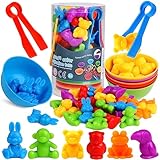
Overview:
This Montessori-inspired set uses 36 soft rubber forest animals in six colors to teach counting, sorting, and color recognition to children ages 3-5. Paired with six sorting bowls and two large tweezers, toddlers develop hand strength and fine motor precision while engaging in open-ended or structured play. The washable rubber construction prioritizes safety, making it suitable for classroom, homeschool, or therapeutic environments.
What Makes It Stand Out:
The animal-shaped counters deliver superior engagement compared to traditional plastic discs, sparking imaginative play alongside skill development. The ultra-soft rubber material provides calming sensory input particularly beneficial for children with autism or ADHD, while the included tweezers are ergonomically designed for small hands still developing pencil grip. Unlike rigid alternatives, these squishable pieces offer therapeutic tactile feedback.
Value for Money:
With 36 animals, six bowls, and two tweezers, this comprehensive kit rivals sets costing significantly more. The durable rubber withstands constant squeezing and washing, outlasting brittle plastic counters that crack. Its versatility across standard preschool curricula and special needs therapy provides exceptional utility, eliminating the need for separate sensory and math manipulatives.
Strengths and Weaknesses:
Strengths: Superior sensory appeal; washable hygienic design; excellent for special needs populations; animal shapes boost engagement; tweezers develop tripod grip effectively.
Weaknesses: Rubber material attracts lint and dust; limited to six colors; bowls may tip easily; tweezers require initial adult guidance; storage box could be more robust.
Bottom Line:
This animal sorting set excels as a dual-purpose educational and therapeutic tool. Parents of children with sensory needs will find exceptional value, while teachers gain a washable, engaging math manipulative. Minor maintenance issues are easily outweighed by its unique sensory benefits and cross-disciplinary applications.
4. WECHARM KIDS Fine Motor Toys,Wooden Peg Board Bead Game for Toddlers - Rainbow Stacking, Color Sorting & Counting Toys | Fine Motor Skills Development | Math Learning Games for 3 4 5 Years Old
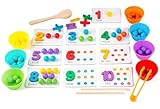
Overview:
This wooden pegboard set features 56 rainbow-colored beads that children ages 3+ press, clip, and arrange to develop fine motor skills and creativity. The Montessori-inspired design includes ten picture templates, sorting cups, and multiple manipulation tools—bead clip, spoon, and sticks—offering varied ways to practice color recognition, counting, and hand-eye coordination while creating colorful designs on the sturdy baseboard.
What Makes It Stand Out:
The premium wooden construction provides an eco-friendly alternative to plastic manipulatives, with meticulously sanded edges ensuring safety. Multiple manipulation tools differentiate this from single-method toys, allowing progression from simple spooning to advanced clipping motions. The included templates guide early learners while leaving room for open-ended artistic expression, making it equally suitable for structured learning and creative free play.
Value for Money:
Fifty-six beads represent exceptional quantity for the price point, while solid wood construction guarantees durability through years of sibling and classroom use. Comparable wooden bead sets cost 30% more with fewer components. The addition of three manipulation tools and ten templates eliminates supplementary purchases, delivering comprehensive fine motor training in one investment.
Strengths and Weaknesses:
Strengths: Natural wooden materials; multiple tool options support skill progression; high bead count enables complex designs; templates scaffold learning; excellent for parent-child interaction.
Weaknesses: Beads require vigilant supervision for mouthing toddlers; wooden cups may chip if dropped; no built-in storage for loose pieces; clip tool challenges younger users; limited color contrast in low light.
Bottom Line:
WECHARM’s wooden bead board offers superior quality and versatility for families prioritizing natural materials. While demanding more supervision than plastic alternatives, its durability and multi-tool design provide lasting developmental value. Ideal for parents seeking screen-free, tactile learning that grows with their child’s abilities.
5. Color Sorting Toys Sensory Toys, Fine Motor Skills Game for Toddlers, Color Matching Toy Preschool Learning Activities Educational Calm Down Montessori Toy for Kids Boys Girls Ages 1 2 3 As Gifts

Overview:
This compact 5.6" x 5.6" flower-shaped board features gel-filled rubber beads that toddlers squeeze and press into matching color slots, developing fine motor control while experiencing calming sensory input. Designed for ages 1-3, it serves as both an educational color-matching tool and a therapeutic calm-down device, particularly beneficial for children with autism, ADHD, or sensory processing needs. Its silent operation makes it ideal for travel, classrooms, or quiet time.
What Makes It Stand Out:
Unlike placement-based sorting toys, the squeeze mechanism provides proprioceptive feedback that actively calms anxious children, transforming a learning tool into a self-regulation device. The ultra-soft gel beads and compact, integrated design eliminate choking hazards and lost pieces common in traditional sorting sets. Its portability and silent operation allow use in restaurants, cars, or classroom calm-down corners where noise would be disruptive.
Value for Money:
The specialized sensory design justifies its price point against generic sorting toys, offering dual functionality as both educational toy and therapeutic tool. Similar sensory fidget items cost as much without color-matching benefits. Its durable construction withstands repeated squeezing, and the all-in-one design means no replacement parts, delivering long-term value for parents of children with special sensory needs.
Strengths and Weaknesses:
Strengths: Exceptional calming effect for special needs; truly portable and silent; no loose pieces to lose; easy sanitization; immediate sensory feedback.
Weaknesses: Limited to color matching only; gel beads risk rupture with aggressive use; small size offers less dramatic engagement; age labeling conflicts (1-3 vs 3-5); higher price than basic plastic sorters.
Bottom Line:
This sensory sorting board excels as a portable calm-down tool rather than a comprehensive learning system. Parents of children with autism or ADHD will find invaluable self-regulation support, while educators gain an effective quiet-time resource. For general skill development, supplement with more varied manipulatives, but for sensory regulation, it’s unmatched.
6. Learning Resources Grab That Donut! Fine Motor Game - Toddler Food Bakery Toys, Board Games, Color Sorting, Gifts for Boys and Girls, Hand Eye Coordination, Preschool Sensory Activities

Overview: This donut-themed fine motor game transforms skill-building into sweet bakery play for preschoolers ages 3+. The 39-piece set includes colorful donuts, specialized tongs, order cards, and a spinner, with a clever box that doubles as a display case. Children strengthen hand muscles while fulfilling bakery orders, making developmental practice feel like imaginative fun rather than therapy.
What Makes It Stand Out: The ergonomically designed tongs provide optimal resistance for developing hand strength without frustration. Four distinct play modes—from following order cards to creating custom shops—ensure engagement as abilities advance. Its inclusive design thoughtfully accommodates children with learning differences, making it accessible for 1-4 players and truly versatile for diverse developmental needs.
Value for Money: At approximately $25-30, this kit consolidates multiple educational tools into one system. Purchasing separate fine motor instruments and sorting games would cost significantly more. The durable construction withstands classroom rotation and home use, making it a cost-effective investment that evolves with your child over several years of preschool development.
Strengths and Weaknesses: Strengths include purpose-built tongs for targeted muscle development, versatile gameplay preventing boredom, exceptional durability, and genuine inclusivity for diverse learners. The bakery theme appeals universally across genders. Weaknesses involve small pieces requiring supervision for younger users, potential piece loss over time, and a spinner mechanism that can feel delicate during vigorous play.
Bottom Line: An exceptional educational toy that masterfully disguises intensive fine motor training as delightful bakery role-play. Essential for preschool development, this game belongs in every early childhood classroom and home with children ages 3-6. Highly recommended for purposeful, engaging learning.
7. Learning Resources STEM Explorers Pixel Art Challenge - Science Kits & STEM Activities for Kids, Pattern Blocks, Fine Motor Skills, Math Manipulatives, Sorting and Counting, Gifts for Boys and Girls

Overview: This screen-free STEM kit engages children ages 5+ in hands-on pixel art creation while building critical thinking. The set includes 400 foam pixel pieces, a 5½" tray, and 40 progressive challenges teaching coding concepts and spatial reasoning. Kids develop problem-solving through tactile pattern-building that makes abstract STEM principles concrete and enjoyable without digital devices.
What Makes It Stand Out: The 40 challenges escalate strategically from simple to complex, introducing coding logic through physical manipulation. Unlike traditional pattern blocks, these foam pixels create pixel art reminiscent of digital design, bridging physical and digital thinking. The compact tray makes it portable for travel or classroom centers, offering screen-free alternative to digital overload.
Value for Money: At approximately $20-25, this multi-year STEM resource offers remarkable value. The 400 durable foam pieces provide endless creative possibilities beyond structured challenges. Comparable STEM kits often cost $30+ while offering fewer components. Its versatility for homeschooling, classroom stations, or independent play maximizes return on investment for parents and educators.
Strengths and Weaknesses: Pros include progressive challenge system, durable foam pieces safe for young hands, screen-free coding concept introduction, and exceptional portability. The activity booklet provides clear visual instructions. Cons include foam pieces that scatter easily, occasional difficulty extracting pieces from the tray, and limited color palette restricting creative expression. Younger children may need initial guidance.
Bottom Line: A brilliant screen-free STEM tool developing spatial reasoning and computational thinking through engaging pixel art. Perfect for ages 5-10, this kit deserves a place in homes and classrooms prioritizing hands-on learning. Highly recommended for budding engineers and artists seeking tactile problem-solving.
8. Broytain Counting and Color Sorting Toys for Toddlers,Math Manipulatives Match Games Educational Learning Fine Motor Skills,STEM Preschool Kindergarten Learning Activities
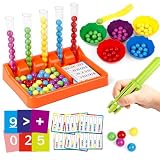
Overview: This comprehensive sorting set targets early math and fine motor skills for toddlers ages 3-6. The 83-piece kit includes 50 colorful beads, sorting cups, test tubes, tweezers, spoons, and 20 double-sided challenge cards. Children practice color matching, counting, and sequencing while manipulating pieces with tools designed to strengthen pincer grasp and hand-eye coordination through engaging laboratory-style play.
What Makes It Stand Out: The unique test tube setup creates visual novelty that distinguishes it from typical sorting trays. Dual-function tools—tweezers and spoon—accommodate different skill levels and preferences. Twenty challenge cards provide structured learning progression, while open-ended design encourages creative experimentation. The pencil-grip tool specifically targets pre-writing muscle development essential for kindergarten readiness.
Value for Money: Priced around $20-25, this set offers outstanding component quantity and variety. Similar sets with fewer pieces often cost more. The inclusion of 50 beads, multiple containers, tools, and activity cards creates a complete learning system replacing several separate purchases. Durable plastic construction ensures longevity for classroom or homeschool use across multiple children.
Strengths and Weaknesses: Strengths include impressive component count, versatile tool options, engaging test tube format, and comprehensive activity cards supporting multiple learning objectives. Weaknesses include beads posing choking hazards for younger siblings, test tubes that can tip if base is unstable, and tweezers that may challenge some 3-year-olds initially. Storage organization could be improved.
Bottom Line: An excellent value-packed manipulative set combining fine motor development with early math concepts. The unique laboratory theme adds novelty to essential skill practice. Ideal for preschool through kindergarten, this belongs in early learning environments. Strongly recommended for comprehensive developmental support.
9. Learning Resources Helping Hands Fine Motor Tool Set Toy - Sensory Bin Sand Toys, Montessori, Plastic Tweezers, Therapy Games for Toddler, Homeschool Preschool Supplies
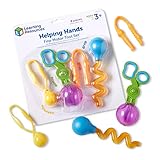
Overview: This specialized four-piece tool set focuses exclusively on developing fine motor precision for children ages 3+. The collection includes uniquely designed tweezers, a scooper, and manipulative tools engineered to build hand strength and dexterity. Designed for sensory bins, these tools transform everyday materials like rice, beans, or water beads into therapeutic skill-building opportunities for home or classroom.
What Makes It Stand Out: Each tool serves distinct developmental purpose—the green scooper teaches scissor grip mechanics safely, while various tweezers target different finger muscles. This focused approach outperforms generic tool sets. Progressive difficulty levels accommodate children from toddler through elementary ages. Compatibility with any sensory material provides unlimited activity possibilities and continuous challenge adaptation.
Value for Money: At roughly $10-15, this offers exceptionally affordable entry into structured fine motor development. Purchasing individual occupational therapy tools would cost significantly more. Durable plastic construction withstands constant use in classrooms and clinical settings. While simple, the ergonomic engineering justifies every penny for parents and therapists seeking targeted, professional-grade skill development.
Strengths and Weaknesses: Pros include purpose-specific tool design, progressive skill challenge, universal sensory material compatibility, and occupational therapy-quality at consumer price. Bright colors engage children effectively. Cons involve limited included materials requiring separate sensory bin setup, larger size not fitting all containers, and steep learning curves for some tools with younger toddlers requiring adult guidance.
Bottom Line: An essential, no-frills tool set delivering professional-grade fine motor development at accessible price. Perfect for parents, teachers, and therapists seeking targeted hand strength building. Highly recommended as foundation for any sensory-based learning program supporting children ages 3-8.
10. hand2mind Grab That Monster Fine Motor Activity Set, Occupational Therapy Toys, Pincer Grasp Fine Motor Skills Toys for Toddlers 3-4, Play Therapy Games for Kids, Preschool Learning Activities

Overview: This monster-themed activity set transforms fine motor practice into playful creature capture for toddlers ages 3-4. The 57-piece set includes two specialized Monster Grabbers, 48 Mini Monsters, four Monster Houses, and spinner cards. Children develop pincer grasp and hand strength by operating grabbers to sort monsters, building essential pre-writing skills through engaging dramatic play with occupational therapy pedigree.
What Makes It Stand Out: The innovative Monster Grabbers are engineered for single-hand operation, providing isolated finger extension and grasping practice that directly translates to pencil grip. Occupational therapy-inspired design creates muscle memory through repetitive fun motions. Unlike static sorting toys, the active grabbing mechanism adds kinesthetic learning while monster theme maintains high engagement for reluctant participants needing therapeutic support.
Value for Money: Priced around $25-30, this set offers specialized therapeutic value comparable to clinical tools costing far more. The 48 monsters and multiple components provide extensive replay value. While pricier than basic sorting toys, the targeted pincer grasp development and occupational therapy pedigree justify investment for children needing focused support. The included activity guide adds professional structure for parents and educators.
Strengths and Weaknesses: Strengths include brilliantly designed grabbers isolating specific finger movements, high monster count for extended play, engaging theme, and occupational therapy-level developmental targeting. Two grabber types address different grasp patterns. Weaknesses include easily scattered pieces, grabbers that may challenge some 3-year-olds initially, and higher price point than simple sorting alternatives. Storage bag would improve organization.
Bottom Line: A superior fine motor tool disguising intensive occupational therapy exercises as monster-catching adventures. Essential for children developing pre-writing skills or needing therapeutic support. Highly recommended for preschoolers ages 3-5, especially those struggling with pencil grip or requiring targeted fine motor intervention.
Understanding Fine Motor Skills Development
Fine motor skills involve the coordinated movements of small muscles in the hands, fingers, and wrists. These seemingly simple abilities form the foundation for countless daily tasks, from buttoning a shirt to holding a pencil correctly. Occupational therapists emphasize that these skills develop sequentially, with each new ability building upon previously mastered movements.
What Are Fine Motor Skills?
Fine motor skills encompass more than just finger strength. They include in-hand manipulation, finger isolation, pincer grasp development, hand arching, and bilateral coordination. Each component contributes to a child’s ability to perform precision tasks with control and confidence. Games that target these specific components tend to yield the most significant therapeutic benefits.
Why Early Development Matters
The preschool and early elementary years represent a critical window for fine motor refinement. During this period, children’s brains demonstrate remarkable neuroplasticity, making it the ideal time to establish proper movement patterns. Delayed fine motor development can impact academic performance, self-esteem, and independence in self-care tasks. Therapeutic games address these concerns proactively.
The Role of Occupational Therapy
Occupational therapists assess fine motor challenges through standardized testing and clinical observation. They design intervention strategies using specific games and activities that target identified deficits. The best therapeutic games mirror the same principles OTs use in clinical settings: graded challenge, meaningful engagement, and measurable outcomes that track progress over time.
Key Features Occupational Therapists Look For
Not all toys marketed as “educational” truly support fine motor development. Therapists evaluate games based on specific criteria that ensure therapeutic value and developmental appropriateness.
Age-Appropriate Challenge Levels
Effective games match a child’s current abilities while providing just enough challenge to promote growth without causing frustration. This “just right” challenge keeps children engaged while building skills incrementally. Look for games that offer multiple ways to play or adjustable difficulty settings that can evolve with your child’s development.
Multi-Sensory Engagement
The most powerful fine motor games incorporate visual, tactile, and sometimes auditory feedback. Textured surfaces, vibrant colors, and satisfying sounds when pieces connect provide sensory reinforcement that motivates continued practice. This multi-modal approach strengthens neural pathways more effectively than single-sensory activities.
Progressive Difficulty Scaffolding
Quality therapeutic games include natural progressions that allow children to start with simpler tasks and advance to more complex challenges. This scaffolding might involve increasing the number of pieces, decreasing their size, adding time pressures, or combining multiple skills simultaneously. This design ensures long-term use and continued skill development.
Safety and Durability Standards
Therapist-recommended games must withstand repetitive use while maintaining safety. Rounded edges, non-toxic materials, and pieces large enough to prevent choking hazards are non-negotiable features. Durability matters because skill mastery requires consistent practice over months, not days.
Categories of Highly-Rated Fine Motor Skill Games
Occupational therapists consistently recommend specific categories of games that target different aspects of hand development. Understanding these categories helps you build a comprehensive toolkit for skill building.
Threading and Lacing Activities
These classic activities remain staples in therapy clinics for good reason. Threading beads onto strings or lacing cards requires sustained pincer grasp, bilateral coordination, and visual tracking. The repetitive nature builds muscle memory, while varying bead sizes and string thicknesses allows for graded challenge. Advanced versions might include pattern cards that add cognitive sequencing to the motor demands.
Precision Pinching and Grasping Games
Activities that require picking up small objects using a refined pincer grasp strengthen the thumb-index finger opposition crucial for writing. Games involving sorting small items into compartments, transferring objects with controlled movements, or building with tiny components fall into this category. The key is the deliberate, controlled nature of each movement.
Construction and Building Challenges
Building games that require connecting pieces through pushing, pulling, snapping, or aligning develop hand strength and dexterity. These activities often incorporate bilateral coordination as children stabilize with one hand while manipulating with the other. The three-dimensional nature adds spatial reasoning to the motor challenge, creating a more comprehensive developmental experience.
Scissor Skills Development Tools
Proper scissor use requires complex coordination of hand muscles, visual tracking, and sequencing. Games that include safety scissors with progressive cutting lines—from straight to curved to angular—help children master this essential school readiness skill. The best versions include various paper weights and textures to generalize the skill across materials.
Tweezer and Tongs Manipulation Tasks
Using tweezers or small tongs to transfer objects provides excellent strengthening for hand arches and intrinsic muscles. These tools force children to use proper grasp patterns rather than compensatory strategies. Games might involve sorting by color or size, building structures, or completing picture puzzles using only the tool—not fingers.
Pegboard and Pattern Matching Sets
Pegboards require precise finger placement, controlled pressure, and often pattern replication. These games target finger isolation, hand-eye coordination, and visual motor integration. Advanced sets include patterns of increasing complexity, timed challenges, or three-dimensional building options that extend the therapeutic value across developmental stages.
Clay and Putty Manipulation Materials
resistive putty and modeling compounds provide proprioceptive feedback that strengthens hand muscles while allowing creative expression. Activities like hiding small objects in putty for children to find, rolling snakes, or building structures target different muscle groups. The resistance level can be adjusted based on the child’s strength and endurance.
Buttoning and Fastening Practice Boards
Self-care skills represent a primary domain of occupational therapy. Practice boards with various fasteners—buttons, zippers, snaps, and laces—allow children to master these independence skills in a low-pressure environment. The repetitive nature of these games builds automaticity for daily living tasks.
Pencil Grip and Pre-Writing Activities
Games that simulate writing movements without actual pencils help develop the foundational strokes needed for letter formation. Tracing paths, connecting dots, or drawing shapes in sensory materials like sand or shaving cream build motor memory for writing readiness. These activities reduce the cognitive load of letter formation while building muscle strength.
Mazes and Path-Tracing Challenges
Mazes require controlled pencil movements, visual tracking, and problem-solving. When designed therapeutically, they include wide paths that gradually narrow, various line styles (straight, curved, zigzag), and engaging themes that motivate completion. These games directly translate to handwriting skills while feeling like pure play.
How to Choose the Right Games for Your Child
Selecting appropriate fine motor games requires observation and understanding of your child’s unique needs and interests. A thoughtful selection process ensures better engagement and outcomes.
Assessing Your Child’s Current Skill Level
Before purchasing any game, observe your child’s current abilities. Can they hold a crayon with a mature grasp? Do they struggle with buttoning clothes? Can they manipulate small objects with control? Answering these questions helps identify which skill areas need targeting. Consider consulting with your child’s teacher or pediatrician for additional insights.
Matching Games to Therapeutic Goals
If your child receives occupational therapy, align home games with their treatment goals. Ask their therapist which specific skills need reinforcement and which game categories would be most beneficial. This coordination between clinical and home intervention accelerates progress significantly. Keep a simple log of which games you play and how your child responds.
Creating a Home Therapy-Friendly Environment
Designate a consistent space for fine motor practice that’s well-lit, organized, and free from distractions. Store games in accessible containers that allow independent selection. Consider having a “game of the week” rotation that provides novelty while allowing mastery to develop. The environment should feel inviting, not clinical, to maintain intrinsic motivation.
Implementing Games into Daily Routines
Consistency matters more than duration when building fine motor skills. Integrating therapeutic games into everyday life ensures regular practice without power struggles.
Short, Frequent Sessions Work Best
Occupational therapists recommend 10-15 minute sessions, 3-5 times weekly, rather than hour-long marathons. Young children have limited attention spans for challenging tasks, and fatigued hands don’t learn effectively. Setting a timer creates clear boundaries and prevents frustration. Many families find success with “fine motor time” right after breakfast or before dinner.
Making It Fun vs. Making It Work
The magic happens when children don’t realize they’re doing therapeutic work. Follow your child’s lead, allow for creativity within the game’s structure, and celebrate effort rather than perfection. If resistance occurs, modify the challenge level or switch to a different game category. The goal is positive association with hand activities.
Tracking Progress Without Pressure
Take photos or keep a simple checklist of new skills your child demonstrates. Notice when they can manipulate smaller pieces, complete tasks more quickly, or show increased confidence. Share these observations with your child’s therapist to inform treatment planning. Avoid comparing your child to others—fine motor development varies widely and typically follows its own timeline.
Frequently Asked Questions
What age should children start using fine motor skill games?
Children can begin engaging with simple fine motor activities as early as 12-18 months, starting with large, easy-to-grasp pieces. True therapeutic games become most beneficial around age 3 when children can follow simple instructions and demonstrate more controlled hand movements. Always supervise young children and choose age-appropriate materials.
How do I know if my child needs occupational therapy for fine motor skills?
Signs that warrant professional evaluation include avoiding drawing or coloring, extreme frustration with self-care tasks, inability to hold utensils or crayons appropriately by age 4, consistent hand switching, or significant delay compared to peers. Trust your instincts—if something feels off, a screening can provide clarity and direction.
Can digital games improve fine motor skills?
While some tablet apps target finger isolation and visual motor skills, therapists overwhelmingly recommend hands-on, three-dimensional activities for comprehensive development. Physical games provide tactile feedback, resistance training, and bilateral coordination opportunities that screens cannot replicate. Limit digital fine motor practice to less than 20% of overall hand strengthening time.
How long before I see improvement in my child’s skills?
Most families notice subtle improvements in 6-8 weeks with consistent practice. However, significant changes in strength and coordination typically require 3-6 months of regular engagement. Every child progresses differently based on their starting point, consistency of practice, and individual neurological development.
Are expensive therapeutic games better than household items?
Not necessarily. Many effective fine motor activities use everyday materials like tongs for transferring cotton balls, homemade playdough, or lacing with shoestrings through colanders. Commercial games often provide better durability and graduated challenge levels, but creativity with household items works wonderfully for supplementing structured activities.
How can I motivate a child who resists fine motor practice?
Incorporate their interests into the activities. If they love animals, use small animal figurines for tweezing games. For vehicle enthusiasts, build ramps with construction pieces. Offer choices, keep sessions brief, and model enthusiasm. Sometimes framing it as “hand exercises” rather than “games” reduces pressure for children who feel anxious about performance.
What’s the difference between fine motor and gross motor skills?
Gross motor skills involve large muscle groups for activities like running, jumping, and balancing. Fine motor skills use small hand and finger muscles for precision tasks. While distinct, they influence each other—core stability (gross motor) supports seated task endurance needed for fine motor work. Both require attention for overall development.
Can older children benefit from these games?
Absolutely. School-age children who struggle with handwriting speed, legibility, or endurance can strengthen foundational skills through these games. Tweens and teens recovering from injuries or with developmental delays also benefit. Simply select more complex, age-appropriate versions that don’t feel babyish to maintain engagement.
How many different games should I have at home?
A well-rounded collection includes 5-7 different game categories that target various skill areas. This variety prevents boredom and ensures comprehensive development. Rotate games every few weeks to maintain novelty while allowing skill mastery. Quality matters more than quantity—better to have a few excellent games than dozens of mediocre ones.
Should I correct my child’s grasp during game play?
Gentle guidance is helpful, but constant correction creates frustration. Model proper technique, offer tools like adaptive grips if needed, and praise approximations of correct form. If your child consistently uses immature grasp patterns, consult an occupational therapist for specific strategies rather than creating negative associations with the activities.
See Also
- 10 Top-Rated Doodle Board Games According to Experts in 2026
- 10 Top-Rated Storytelling Games According to Experts in 2026
- 10 Top-Rated Card Board Games According to Experts in 2026
- 10 Top-Rated Hidden Object Board Games According to Experts in 2026
- 10 Top-Rated Quick Play Board Games According to Experts in 2026