Table of Contents
Imagine this: you’re gathered around a table, the air thick with suspicion. Every clue matters, every lie could be your downfall, and the thrill of uncovering the truth is utterly electrifying. Deduction strategy games aren’t just pastimes; they’re immersive mental workouts that challenge your logic, observation, and ability to read others. In our hyper-connected, information-saturated world of 2026, these games offer a uniquely satisfying escape – a chance to slow down, think deeply, and engage in face-to-face (or screen-to-screen) intellectual combat. They tap into our fundamental love of mystery and problem-solving, providing a refreshing counterpoint to the instant gratification of digital scrolling.
The landscape of deduction games has evolved dramatically by 2026. What once might have been simple card games or board-based whodunits now encompasses sophisticated experiences blending physical components, digital apps, augmented reality elements, and incredibly nuanced social dynamics. Finding the perfect game for your group, however, requires more than just grabbing the shiniest box off the shelf. With so many mechanics, player counts, and thematic depths available, knowing what truly matters in a deduction game is crucial. This guide cuts through the noise, focusing on the essential features and strategies to help you discover the ideal deduction experience that will captivate your friends, family, or gaming group for years to come.
Top 10 Deduction Strategy Games
Detailed Product Reviews
1. ENTHRONE – Abstract Deduction Strategy Game for 2 Players by Smirk & Dagger | Ages 10+ | 20–30 Min Playtime

Overview: ENTHRONE is a tightly crafted two-player deduction game where rivals battle through hidden identities and strategic pawn movements on a visually striking board. Players aim to deduce their opponent’s secret pawn or seize the throne through calculated eliminations.
What Makes It Stand Out: Its exclusivity as a deep 2-player experience sets it apart in a genre dominated by larger groups. The premium components—sculpted 3-inch fantasy busts, a stained-glass puzzle board, and tactile movement tiles—create an immersive table presence rarely seen in abstract strategy games. The blend of deduction, bluffing, and spatial reasoning within 30 minutes offers remarkable depth without complexity.
Value for Money: Priced moderately for its component quality, it delivers exceptional value for dedicated 2-player strategy enthusiasts. While cheaper card-based alternatives exist, ENTHRONE’s heirloom-grade materials and focused gameplay justify the investment for those prioritizing aesthetics and replayability in head-to-head contests.
Strengths and Weaknesses:
Strengths: Stunning production quality; perfectly balanced for two players; intuitive yet strategically rich; minimal setup; high replayability through varied tactics.
Weaknesses: Limited player count excludes groups; niche appeal for non-deduction fans; board assembly can be fiddly initially.
Bottom Line: A must-buy for 2-player strategy aficionados seeking a beautiful, brain-burning duel. Its elegance and premium execution make it a standout despite its narrow player focus.
2. The Resistance Card Game by Indie Boards & Cards | Social Deduction Strategy Game of Bluffing, Deception, Negotiation | Party Game for 5–10 Players Ages 13+ | 30 Minute Rounds

Overview: The Resistance plunges 5–10 players into a sci-fi spy thriller where hidden loyalties dictate every mission. Team-based deception drives the action as Resistance fighters battle saboteurs through voting, bluffing, and psychological warfare in fast-paced rounds.
What Makes It Stand Out: The no-elimination rule ensures constant engagement, a rarity in social deduction games. Its streamlined mechanics—focusing on team proposals and secret voting—create explosive group dynamics without complex rules. The dystopian theme integrates seamlessly with tense negotiations, making every session feel cinematic.
Value for Money: An affordable gateway into social deduction, outperforming pricier alternatives with its scalability and replayability. At under $20, it offers more consistent group fun than games requiring apps or elaborate setups, especially for 7+ players.
Strengths and Weaknesses:
Strengths: Inclusive gameplay (no sitting out); effortless to teach; thrives with larger groups; fosters hilarious confrontations; highly replayable.
Weaknesses: Can devolve into chaotic accusations with inexperienced players; less strategic depth than Eurogames; theme feels generic compared to components.
Bottom Line: The definitive social deduction starter for parties. Its simplicity, inclusivity, and relentless tension make it a budget-friendly essential for groups of 5–10.
3. Coup Card Game by Indie Boards & Cards | Fast Bluffing and Social Deduction Strategy | Hidden Roles, Deception, and Player Interaction | Quick 15-Minute Game for 2–6 Players | Adults, Teens, Families

Overview: Coup distills social deduction into a lightning-fast 15-minute duel of bluffing and challenges. Players wield hidden character roles to seize coins, sabotage rivals, and call bluffs in a compact, high-stakes card game ideal for quick sessions.
What Makes It Stand Out: Unmatched speed and portability define Coup. Its minimalist design—just 15 cards and coins—creates intense player interaction through simple actions (income, steal, coup) and bold challenges. The elegance of its risk-reward system encourages fearless deception even with strangers.
Value for Money: Exceptional for its price point, offering endless replayability in a tiny box. It outshines bulkier games by delivering pure social chaos anywhere, making it a smarter investment than single-session party games.
Strengths and Weaknesses:
Strengths: Extremely portable; rules mastered in under 5 minutes; thrives with 2–6 players; encourages bold plays; perfect warm-up/closer game.
Weaknesses: Limited strategic depth for hardcore gamers; luck-heavy early on; role interactions can feel repetitive after dozens of plays.
Bottom Line: The ultimate pocket-sized social assassin. For quick, cutthroat fun that fits in your backpack, Coup is unbeatable value and a must-own.
4. Asmodee The Werewolves of Miller’s Hollow Party Game - Social Deduction and Strategy Game, Fun Family Game for Kids and Adults, Ages 10+, 8-18 Players, 30 Minute Playtime, Made by Zygomatic

Overview: Werewolves of Miller’s Hollow transforms large groups into a village riddled with hidden werewolves. By day, players accuse neighbors; by night, werewolves strike. This classic pits collective deduction against cunning deception in a scalable 30-minute showdown.
What Makes It Stand Out: Its genius lies in effortless scalability for 8–18 players—a sweet spot most deduction games ignore. Customizable roles (seer, hunter, etc.) adapt to group size, ensuring balanced chaos whether playing with 8 or 18. The streamlined “day/night” phases keep momentum high despite big groups.
Value for Money: A budget-friendly powerhouse for gatherings, costing less than specialty large-group games. While components are basic (cards, tokens), its unmatched capacity to engage massive parties delivers disproportionate fun per dollar.
Strengths and Weaknesses:
Strengths: Handles huge groups flawlessly; easy role explanations; fosters wild group dynamics; minimal setup; ideal for schools or parties.
Weaknesses: Cardboard tokens feel cheap; new players disrupt balance; requires a strong moderator; less strategic than smaller-group alternatives.
Bottom Line: The go-to for big crowds. If you regularly host 10+ people, this affordable, scalable gem is indispensable despite modest components.
5. Spy Alley - Mensa Award-Winning Strategy Game - Social Deduction & Bluffing Board Game - Family Game Night Fun - Ages 8+ for 2-6 Players

Overview: Spy Alley tasks players with infiltrating enemy HQ while deducing rivals’ nationalities through clever questioning and bluffing. This vintage deduction game blends logic, memory, and misdirection on a circular board, appealing to families and strategy fans alike.
What Makes It Stand Out: Its Mensa award underscores exceptional strategic depth disguised as accessible fun. The unique “information denial” mechanic—where players avoid confirming clues—creates brilliant mind games. Decades of popularity prove its timeless design, enhanced by a charming spy-movie theme.
Value for Money: Priced mid-range, it justifies cost through multi-generational appeal and durability. Unlike trend-driven games, its replayability spans childhood to adulthood, outlasting flashier alternatives with pure brain-teasing longevity.
Strengths and Weaknesses:
Strengths: Truly all-ages friendly; deep deduction without complexity; heirloom-quality components; encourages critical thinking; massive nostalgia factor.
Weaknesses: Movement can feel luck-dependent; weaker theming than modern games; slower pace than Coup/The Resistance.
Bottom Line: A classic that earns its awards. For families seeking strategic depth without intimidation, Spy Alley remains a brilliantly engineered, enduring investment.
6. There’s Been A Murder - A Collaborative Card Game of Death and Deduction (Packaging May Vary) by Pressman, for Ages 14 and up

Overview: This social deduction card game flips the script by having all players collaborate as detectives against a hidden murderer within the group. Designed for 3-8 players aged 14+, it challenges teams to collectively identify the murderer before they escape, fostering communication and shared strategy in every session.
What Makes It Stand Out: Unlike competitive deduction games, its purely cooperative nature eliminates player elimination and emphasizes teamwork. The unique card effects drive dynamic interactions, ensuring high replayability as card combinations and murderer identities change each game. The tension of a shared loss condition (“Don’t let the Murderer escape!”) creates intense group engagement.
Value for Money: Priced accessibly, it delivers exceptional replay value through its modular card-driven mechanics. While packaging inconsistencies are noted, the core gameplay justifies the cost, outperforming many pricier party games that lack its cohesive cooperative focus.
Strengths and Weaknesses: Strengths: Encourages inclusive teamwork; quick setup and rules; highly replayable; no player downtime. Weaknesses: Packaging variability may affect component durability; limited strategic depth for hardcore gamers; requires honest communication, which can falter with larger groups.
Bottom Line: An ideal entry-point into social deduction for cooperative groups, offering tense, accessible fun. Highly recommended for casual players seeking a shared challenge over cutthroat competition, despite minor production quirks.
7. Hasbro Gaming Clue Conspiracy Board Game for Adults and Teens, Secret Role Strategy Games, Ages 14+, 4-10 Players, 45 Minutes, Mystery & Party Games
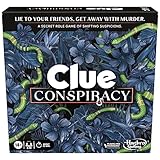
Overview: A modern reinvention of Clue, this strategic party game pits players on secret teams—Friends protecting Mr. Coral or the Conspiracy plotting his murder—at a tropical resort. For 4-10 players aged 14+, it blends deduction, bluffing, and sabotage in a 45-minute session packed with shifting alliances.
What Makes It Stand Out: The dual-win conditions (disarming traps vs. executing a secret murder plot) and team-based deception create rich psychological gameplay. Unlike classic Clue, lying and misinformation are core mechanics, amplified by the tropical setting and character-driven roles that heighten the party atmosphere.
Value for Money: Justifies its premium price with deep strategic layers and high re-playability across varied group sizes. It surpasses simpler deduction games by offering nuanced team dynamics, though it’s costlier than entry-level alternatives like Secret Hitler.
Strengths and Weaknesses: Strengths: Innovative team-based deception; immersive theme; accommodates large groups; multiple win paths. Weaknesses: Setup can be fiddly; learning curve steeper than traditional Clue; Conspiracy victory can feel luck-dependent in smaller games.
Bottom Line: A compelling evolution of Clue that excels in social strategy. Perfect for groups who enjoy psychological tension and teamwork, though newcomers may need guided first plays. A strong investment for mature game nights.
8. Asmodee Love Letter Card Game (2025 Refresh) - Deduction & Player Elimination Strategy Game for Kids & Adults, Ages 10+, 2-6 Players, 20 Minute Playtime

Overview: This refreshed classic is a lightning-fast deduction game where players compete to deliver love letters to a princess through bluffing and strategic card play. Accommodating 2-6 players in just 15–20 minutes, it remains a staple for family and casual gaming with its streamlined mechanics.
What Makes It Stand Out: Its brilliance lies in minimalist elegance—21 cards drive profound tactical depth through player elimination and hidden information. The 2025 edition’s eco-friendly packaging (no single-use plastics) and included velvet bag enhance portability and sustainability without compromising the timeless, accessible gameplay.
Value for Money: Exceptional for its price, offering near-infinite replayability in a compact package. The refresh adds tangible ethical value, making it a smarter buy than older editions or similar games like Skull, which lack its polished simplicity.
Strengths and Weaknesses: Strengths: Ultra-portable; rules mastered in minutes; balances luck and strategy perfectly; eco-conscious update. Weaknesses: Player elimination may frustrate younger kids; limited thematic depth; 2-player mode feels less dynamic.
Bottom Line: A must-have gateway game that remains unmatched for quick, strategic fun. The eco-refresh cements its status as the best value in portable deduction—ideal for families, travelers, and game-night newcomers.
9. BFF Games Hidden Leaders Board Game - Deduction and Strategy Game, Fantasy Game for Kids and Adults, Ages 10+, 2-6 Players, 20-40 Minute Playtime, Made by

Overview: Set in the fantasy realm of Oshra, this deduction game tasks players with secretly leading factions to influence the kingdom’s future. For 2–6 players aged 10+, it combines tableau building with social deduction in compact 20–40 minute sessions focused on hidden agendas and direct interaction.
What Makes It Stand Out: Its unique “influence” victory condition—where players win by aligning with factions rather than direct elimination—creates nuanced strategic depth. The charming fantasy artwork and character-driven theme elevate it beyond abstract deduction, while near-zero downtime keeps all players engaged.
Value for Money: Priced competitively, it offers distinctive mechanics that justify cost over generic card games. Though niche, its blend of tableau building and deduction provides richer long-term engagement than simpler titles like Coup, especially for theme-focused groups.
Strengths and Weaknesses: Strengths: Innovative win mechanics; engaging theme; constant player interaction; easy to learn; strong visual appeal. Weaknesses: Faction balance can feel uneven; limited replayability in small groups; theme may not resonate with all players.
Bottom Line: A refreshing twist on deduction that rewards clever strategy over pure bluffing. Recommended for intermediate gamers seeking thematic depth, though casual players might prefer lighter alternatives like Love Letter.
10. Gamewright - Deduckto - A Quacking Deduction Game - Card Game for Kids Ages 8 and Up - Great for Family Game Night!

Overview: A delightfully silly deduction game where players—each secretly a duck in disguise—race to guess their own animal, outfit, and location. Designed for 2–4 players aged 8+, this 15-minute family game uses simple clues to foster logical thinking with a playful, low-pressure vibe.
What Makes It Stand Out: Its adorable duck theme and triple-layer deduction (animal + disguise + location) make it uniquely accessible for children. The “first to guess correctly wins” mechanic ensures energetic engagement, while the absurd combinations (e.g., a pirate duck at the library) spark laughter and creativity.
Value for Money: An outstanding budget-friendly pick for young families. At its price point, it outshines educational deduction games with its re-playability and charm, though it lacks the strategic depth of adult-focused titles.
Strengths and Weaknesses: Strengths: Perfect for kid attention spans; intuitive rules; highly replayable; encourages deductive reasoning; compact travel size. Weaknesses: Too simplistic for teens/adults; limited player count; minimal strategic depth beyond basics.
Bottom Line: The ideal first deduction game for children, blending education with whimsy. A no-brainer for family game nights seeking quick, screen-free fun—just don’t expect complex strategy. Highly recommended for ages 8–12.
Understanding Core Deduction Mechanics
Before diving into specific features, it’s vital to grasp the fundamental mechanics that define this genre. Understanding these will help you pinpoint what truly resonates with your preferred style of play.
Hidden Information vs. Public Clues
The heart of deduction lies in the distribution of information. Games might rely heavily on hidden roles or identities known only to individuals (like secret traitors), or they might present a pool of public clues that all players must interpret collectively (like a murder mystery board). Consider whether your group thrives on the tension of private knowledge and potential deception, or prefers the collaborative puzzle-solving of analyzing shared evidence. Some modern hybrids blend both elements for layered complexity.
Player Interaction Dynamics
How players gather information and influence the game state varies significantly. Are you directly questioning others, making accusations, trading secrets, or observing subtle behavioral tells? High-interaction games foster lively debate and bluffing, while more puzzle-focused deduction might involve quieter analysis of components. Assess your group’s comfort level with confrontation versus contemplation; mismatched expectations here can derail the fun.
Resolution Pathways
How does the game conclude? Is it through a single, dramatic accusation phase? A race to gather specific evidence? A gradual process of elimination? Understanding the resolution mechanic helps set expectations. Games with sudden, high-stakes endings create intense climaxes, while those with incremental progress offer sustained engagement. Consider if your group prefers the nail-biting pressure of a final guess or the steady satisfaction of methodical deduction.
Matching Games to Your Player Group
The perfect game for one group can be a disaster for another. Honestly evaluating your typical players is non-negotiable for a great experience.
Ideal Player Count Range
Don’t just look at the box’s minimum and maximum. Dig deeper into the sweet spot. Many deduction games play dramatically differently with 3 players versus 6. Some mechanics (like certain hidden role setups) fundamentally break down below 4 or above 8 players. Consider the consistency of your group size – if you always have exactly 5 people, prioritize games optimized for that number, even if the box says “3-8.”
Skill Level and Experience
Be brutally honest about the group’s collective experience with strategy games and deduction specifically. Introducing a complex game with layered bluffing and intricate clue systems to absolute beginners often leads to frustration and disengagement. Conversely, seasoned gamers might find overly simplistic deduction mechanics boring. Look for games with clear, scalable learning curves or distinct difficulty modes that cater to your group’s current abilities and potential for growth.
Social Comfort and Engagement Style
Deduction games often involve deception, accusation, and reading others. How comfortable is your group with direct confrontation, playful lying, or being the center of suspicion? Some groups adore the theatricality of bluffing, while others prefer a more cerebral, less socially intense puzzle. Consider personality dynamics – will shy players get overshadowed in a highly interactive game? Does your group enjoy spirited debate or prefer quieter collaboration? Choosing a game that aligns with your group’s social rhythm is paramount.
Evaluating Game Complexity and Depth
“Complexity” in deduction games isn’t just about rules density; it’s about cognitive load, strategic depth, and replayability. Finding the right balance is key.
Rules Simplicity vs. Strategic Depth
A game can have straightforward rules but offer immense strategic depth through player interaction and deduction. Conversely, complex rules can sometimes overshadow the core deduction experience. Prioritize games where the rules serve the deduction, not obscure it. Can the core deduction loop (gather info -> analyze -> act) be grasped quickly, even if advanced tactics take time to master? This separation often leads to more accessible yet enduring games.
Replayability Factors
The bane of deduction games is knowing the solution or套路 (taolu -套路 meaning套路 or pattern). True replayability comes from variability: different roles, randomized setups, modular boards, or player-driven narratives that change each session. Look beyond “different cards” – does the core puzzle structure shift meaningfully? Games utilizing apps for dynamic scenarios or offering multiple distinct scenarios often boast superior longevity. Consider how many unique, engaging plays the game realistically offers before feeling stale.
Session Length and Pacing
Deduction thrives on tension, but pacing is critical. Games that drag on with repetitive clue-gathering phases can lose momentum, while those that resolve too quickly might feel unsatisfying. Consider your group’s attention spans and typical game night duration. Does the game build tension effectively? Are there natural peaks and valleys in the action? A well-paced deduction game keeps players constantly engaged, feeling like each turn brings them closer to a breakthrough or a critical decision point.
Considering Thematic Integration and Components
Theme and physical components aren’t just window dressing; they significantly impact immersion and how clues are processed.
Theme Enhancing Mechanics
The best deduction games weave theme and mechanics inseparably. Is the theme merely a skin, or does it actively inform how deduction works? For instance, a sci-fi game might use holographic interfaces for clue revelation, while a historical mystery might rely on authentic-looking documents. Strong thematic integration makes clues feel organic and the deduction process more intuitive and immersive, reducing cognitive load associated with abstract mechanics.
Component Quality and Functionality
In 2026, component quality is paramount, especially for deduction where clues are central. Poorly printed cards, flimsy boards, or confusing iconography directly hinder the deduction process. Look for clear, readable text, durable materials (especially for cards handled frequently), and components designed with usability in mind. Consider storage solutions too – a game that’s a hassle to set up or put away due to poor organization will rarely see the table, no matter how good the deduction is.
Accessibility Features
Modern deduction games increasingly incorporate accessibility considerations. This includes colorblind-friendly design (using symbols and colors for critical info), scalable text sizes on components, rules written with clear language, and considerations for physical accessibility (e.g., component size, handling requirements). Assessing these features ensures the game is truly inclusive for everyone in your potential player pool, preventing frustration and broadening who can enjoy the experience.
Navigating the Modern Market Landscape
The way we discover, purchase, and even play deduction games has transformed. Knowing how to navigate this landscape is part of finding your perfect match.
Beyond the Box: App Integration and Digital Companions
Digital companions are now commonplace, but their role varies wildly. Some apps simply handle setup or scoring, while others dynamically generate scenarios, provide immersive audio/visual clues, or even act as a non-player game master. Evaluate how the app enhances (or potentially hinders) the core deduction experience. Is it essential, or just a gimmick? Does it require every player to have a device? Consider your group’s tech comfort and willingness to embrace these integrations.
Physical vs. Hybrid vs. Digital-First Experiences
Deduction games now span a spectrum: traditional physical boxes, hybrid physical/digital setups, and fully digital experiences (like sophisticated browser-based or app-only games). Each has pros and cons. Physical games foster tangible interaction but require space and setup. Hybrids offer dynamic content but depend on tech. Digital-first can be highly accessible and updateable but may lack the social “table presence.” Determine which format best suits your group’s preferences and constraints.
Sustainability and Ethical Production
Consumer awareness around sustainability is higher than ever in 2026. Many publishers now prioritize recycled/recyclable materials, reduced plastic, ethical manufacturing, and responsible sourcing. While not directly impacting gameplay, supporting publishers who align with your values can enhance your enjoyment. Look for clear information on component sourcing and production ethics – it’s increasingly a mark of quality and responsibility in the industry.
Key Features for Long-Term Enjoyment
Beyond the initial excitement, certain features ensure a deduction game remains a cherished part of your collection.
Scalable Difficulty Systems
The mark of a truly great deduction game is its ability to grow with your group. Look for built-in mechanisms to adjust difficulty: optional advanced rules, variable player powers that change complexity, or scenario-based difficulty levels. This prevents the game from becoming too easy too quickly or being inaccessible to newer players, significantly extending its lifespan and appeal across different skill levels within your circle.
Community and Creator Support
A vibrant player community and active publisher support can breathe new life into a deduction game long after purchase. Does the publisher regularly release free scenario expansions, offer variant rules, or engage with the community for feedback? A strong community often creates house rules, puzzle variants, and shared resources that enhance replayability far beyond the base game. Checking publisher websites and dedicated forums before buying is a smart move.
Ease of Teaching and Onboarding
The best deduction game is the one that actually gets played. A game that’s notoriously difficult to explain will gather dust. Prioritize games with intuitive core loops, clear visual aids in the rulebook, and streamlined setup. Games that allow new players to grasp the basics quickly and start participating meaningfully (even if they lose the first few times) foster inclusion and encourage repeat plays. Watch tutorial videos before buying to gauge teachability.
Frequently Asked Questions
Frequently Asked Questions
How do I know if a deduction game is too complex for my group? Start by reading objective rule summaries (not just marketing blurbs) focusing on the core loop. Look for “teach time” estimates from reviewers. Games emphasizing simple actions (ask, show, accuse) with clear win conditions are usually more accessible than those with intricate resource management layered on top of deduction.
What’s the ideal player count for most deduction games? While it varies, the sweet spot for many social deduction games is 5-7 players. This provides enough hidden roles or perspectives for meaningful deception and clue diversity without becoming unwieldy. Puzzle-focused deduction often scales better to smaller groups (3-4).
Can deduction games be played solo effectively? Yes, many puzzle-focused deduction games (like logic grid mysteries or solo scenario modes) are designed specifically for single players. Social deduction, which relies on human interaction and bluffing, generally does not translate well to solo play without significant digital assistance.
How important is theme compared to mechanics in deduction games? Theme is crucial for immersion and making clues feel logical, but mechanics are the foundation. A weak theme can be overlooked if the deduction is brilliant, but poor mechanics will ruin even the most compelling setting. Prioritize solid mechanics first, then see if the theme enhances them.
What makes a deduction game replayable? True replayability comes from high variability: randomized roles, modular setups, multiple distinct scenarios, or player-driven narratives that change outcomes. Avoid games where the solution path is the same every time; look for systems that generate unique puzzles or social dynamics each session.
Are app-assisted deduction games worth the extra hassle? It depends on the implementation. Apps that streamline setup, scoring, or provide dynamic, non-repetitive scenarios add significant value. Apps that are buggy, require constant device attention, or feel like a gimmick often detract. Research specific app functionality before purchasing.
How can I find deduction games suitable for mixed-skill groups? Look for games with explicit “beginner modes,” scalable difficulty rules, or asymmetric player roles where newcomers can have simpler objectives. Games with a strong collaborative deduction element (everyone vs. the game) are often more forgiving for new players than cutthroat competitive ones.
What’s the biggest mistake people make when choosing a deduction game? Choosing based solely on theme or box art without understanding the core deduction mechanics and player interaction style. A gorgeous sci-fi theme won’t save a game if its deduction loop relies on mechanics your group dislikes (e.g., excessive luck or passive observation).
How long should a typical deduction game session last? Aim for 45-90 minutes for most social deduction or puzzle games. Shorter sessions (30-45 mins) work for lighter games or filler experiences. Sessions exceeding 2 hours can strain the tension unless the pacing is exceptionally tight and the deduction deeply engaging.
Are there deduction games good for large groups (8+ players)? Yes, but they often require specific mechanics like team play, moderated roles (e.g., a game master), or digital tools to manage information flow. Pure social deduction can become chaotic above 8, so look for games explicitly designed and tested for larger counts, often featuring structured phases or breakout groups.
See Also
- How to Choose the 10 Best Deduction Strategy Games for Game Night in 2026
- 10 Must-Have Deduction Strategy Games for Enhancing Logical Reasoning in 2026
- We Tested 50 Deduction Strategy Games - Here are the 10 Best for 2026
- The 10 Ultimate Best Deduction Strategy Games for Adult Thinkers in 2026
- The 10 Most Revolutionary Deduction Board Games of 2026