Table of Contents
Abstract strategy games represent the purest form of intellectual combat on the tabletop. Stripped bare of luck, theme, or hidden information, these games place two minds in direct opposition, where every move is a declaration and every counter a rebuttal. There’s an undeniable elegance in their simplicity—a stark board, identical pieces, and rules that can often be learned in minutes, yet mastered over lifetimes. For centuries, from the ancient courts of Persia to modern living rooms, these games have captivated players seeking a true test of foresight, calculation, and adaptability. They’re not just pastimes; they’re distilled mental sparring.
Choosing the right abstract strategy game for head-to-head play, however, isn’t as straightforward as it seems. With so many options varying wildly in complexity, physical footprint, and strategic flavor, it’s easy to feel overwhelmed. Will you prioritize lightning-fast skirmishes perfect for coffee breaks, or deep, contemplative battles that stretch over an hour? Do you need something portable for travel, or a centerpiece for your gaming table? And crucially, how do you match the game’s demands to the skill levels and patience of your regular opponents? Understanding the core pillars that define these games transforms the search from guesswork into a strategic decision worthy of the games themselves. Let’s dissect what truly matters.
Top 10 Abstract Strategy Games for Head-to-Head Play



Detailed Product Reviews
6. Mabula - Build, Push and Connect to Win in an Abstract Marble Movement Strategy Game for Kids & Adults, Ages 10+, 2 Players, 15 Minute Playtime

Overview: Mabula is a compact abstract strategy duel for two players, challenging spatial reasoning and forward planning through dynamic marble manipulation. Players push marbles across a circular board to form connected groups while avoiding sending any off the edge, with each game offering unique setups due to randomized starting positions.
What Makes It Stand Out: Its innovative marble-pushing mechanic creates an engaging physical interaction absent in most abstracts. The multiple victory conditions—winning via the largest single group or multiplying smaller groups in advanced mode—add significant strategic depth. Randomized perimeter setups ensure high replayability within its tight 15-minute playtime.
Value for Money: Priced competitively for a wooden-component strategy game, Mabula delivers exceptional replay value through its variable setups and dual scoring modes. It outperforms similar-priced abstracts by offering deeper spatial puzzles than basic tile-layers while remaining more accessible than complex eurogames.
Strengths and Weaknesses: Strengths: Highly portable, quick to teach, physically satisfying marble movement, excellent replayability, and genuinely strategic depth for its simplicity. Weaknesses: Limited player count (strictly 2-player), potential for analysis paralysis in advanced mode, and minor luck influence from initial marble placement.
Bottom Line: Mabula is a standout abstract strategy game that masterfully blends tactile engagement with thoughtful spatial puzzles. Its quick playtime, high replay value, and dual difficulty modes make it an essential pick for dueling enthusiasts and families seeking a substantial yet accessible brain teaser.
7. Rio Grande Games Fenix - Strategy Boardgame, Ages 8+, 2 Players, 20-30 Mins, Multi

Overview: Fenix is a streamlined, visually striking grid-based duel where two players battle to be the last “king” standing. Featuring vibrant warm-toned boards and phoenix-etched tokens, it emphasizes quick tactical decisions within a 20-30 minute timeframe, targeting families and casual gamers.
What Makes It Stand Out: The game’s striking aesthetic—particularly the detailed phoenix tokens and colorful board—creates immediate visual appeal. Its core “last king standing” objective simplifies strategy focus, while the grid movement offers clear spatial challenges. The warm color palette enhances the thematic phoenix rebirth motif effectively.
Value for Money: As an entry-level abstract strategy game, Fenix offers solid value through durable components and high visual appeal, justifying its price point against similar quick-play duels. While lacking the depth of premium abstracts, its aesthetic quality and simplicity provide good bang-for-buck for casual play.
Strengths and Weaknesses: Strengths: Beautiful, thematic components; extremely easy to learn; visually engaging; fast-paced gameplay; durable tokens. Weaknesses: Limited strategic depth compared to genre staples; repetitive after extended play; minimal replayability due to fixed board layout; lacks player-scaling options beyond 2 players.
Bottom Line: Fenix excels as a visually appealing, accessible gateway abstract strategy game perfect for young players or casual game nights. While veterans may crave more complexity, its simplicity, speed, and stunning components make it a worthwhile purchase for families seeking a beautiful, easy-to-teach duel.
8. Quixo | Wooden Abstract Strategy Board Game for Kids and Adults | Family Game Night Favorite | Tic-Tac-Toe Style Competitive Puzzle | Easy to Learn, Fast to Play | Ages 8+ | 2-4 Players | 15 Min

Overview: Quixo reimagines Tic-Tac-Toe as a dynamic wooden strategy game where players manipulate a 5x5 grid of carved cubes to form five-in-a-row. Supporting 2-4 players in 15-minute sessions, it combines elegant aesthetics with surprisingly deep spatial puzzles, appealing to all ages.
What Makes It Stand Out: The tactile wooden cubes and board double as attractive coffee-table decor, enhancing its premium feel. Clever mechanics—removing and reinserting cubes to shift the entire row/column—create constant board evolution. Flexible play modes (1v1, teams, or free-for-all) significantly boost versatility beyond standard abstracts.
Value for Money: Quixo justifies its price through exceptional build quality, multi-player flexibility, and enduring global popularity. The wooden construction outlasts cardboard competitors, while the 2-4 player range offers more social value than strictly 2-player abstracts at similar price points.
Strengths and Weaknesses: Strengths: Stunning wooden components; effortless ruleset; scales perfectly from 2-4 players; highly replayable; strong visual appeal; quick setup. Weaknesses: Minimal theme; potential for kingmaking in 4-player games; limited strategic depth for hardcore abstract enthusiasts; cubes can slide during play.
Bottom Line: Quixo is a near-perfect family strategy game, blending beautiful craftsmanship with accessible yet engaging gameplay. Its versatility across player counts and age groups, coupled with rapid playtime, makes it an essential, high-value addition to any game night collection.
9. Hive Pocket Game by Smart Zone Games | Portable Abstract Strategy Game for 2 Players | Includes Ladybug and Mosquito Expansions | Compact Travel Edition of The Award Winning Hive Strategy Game

Overview: Hive Pocket condenses the acclaimed Hive strategy system into a travel-friendly edition, featuring insect-shaped tiles that form a boardless play area. Supporting two players, it includes the Ladybug and Mosquito expansions, delivering deep tactical gameplay in a compact soft-shell bag.
What Makes It Stand Out: The ingenious boardless design—where tiles are the playing surface—enables setup anywhere, from coffee shops to airplanes. Including two key expansions (Ladybug’s 3-space climb, Mosquito’s mimicry) adds significant strategic layers absent in the base game. The pocket format sacrifices nothing in gameplay depth.
Value for Money: Despite its small size, Hive Pocket offers exceptional value by packing the full strategic complexity of the standard game plus expansions into a travel-ready package. It outperforms similarly priced travel games through its depth, included expansions, and durable resin pieces.
Strengths and Weaknesses: Strengths: Truly portable; boardless versatility; includes valuable expansions; retains full strategic depth; high-quality resin tiles; quick setup. Weaknesses: Tiny pieces risk loss during outdoor play; expansions slightly steepen the learning curve; strictly 2-player only; soft bag offers minimal spill protection.
Bottom Line: Hive Pocket is a triumph of travel game design, delivering the award-winning Hive experience with zero compromises on strategy. Essential for abstract strategy fans seeking deep, portable head-to-head gameplay, especially with expansions included.
10. UP Games Floristry Board Game - Competitive Flower Auction & Storefront Design! Fun & Creative Strategy Game for Family, Kids & Adults, Ages 12+, 2 Players, 20 Min Playtime
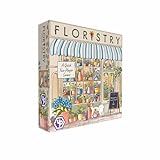
Overview: Floristry challenges two players to become master florists through competitive auctions and storefront design. Over 10 timed rounds, players bid on flower tiles (roses, tulips, etc.) to create scoring patches, blending auction tactics with spatial arrangement in a 20-minute session.
What Makes It Stand Out: The thematic auction-storefront dual mechanism creates unique strategic tension: balancing immediate tile acquisition against long-term spatial planning. Scoring via largest contiguous patches per flower type encourages creative, asymmetric layouts. Its floral theme provides refreshing novelty in the abstract strategy space.
Value for Money: Floristry offers strong value through its innovative hybrid mechanics and high-quality components at a mid-range price. While niche, it delivers more thematic engagement than pure abstracts and greater strategic depth than most auction-lite games, justifying its cost for 2-player specialists.
Strengths and Weaknesses: Strengths: Fresh floral theme; engaging auction + spatial puzzle blend; tight 20-minute playtime; clear scoring; beautiful artwork. Weaknesses: Strictly 2-player; limited replayability due to fixed scoring categories; auction randomness may frustrate purists; spatial planning can feel restrictive late-game.
Bottom Line: Floristry is a charming, strategically satisfying duel that successfully merges auction tactics with creative spatial design. Its unique theme, quick playtime, and thoughtful mechanics make it a compelling choice for couples or dueling enthusiasts seeking thematic depth.
Understanding Abstract Strategy Essentials
Defining the Genre: What Makes a Game “Abstract”?
True abstract strategy games share non-negotiable traits: perfect information (no hidden cards or dice rolls), symmetrical starting positions, and victory determined solely by player decisions. There’s no luck, no theme-driven narrative, and no random elements influencing outcomes. The board is a neutral battlefield, and pieces function based on pure positional logic. Recognizing this core DNA helps separate genuine abstracts from strategy games with thematic or luck-based elements that might muddy the waters of pure skill-based competition.
The Critical Role of Perfect Information
Perfect information is the bedrock of fairness and depth in abstract play. Knowing everything about the current game state—every piece’s location, every possible move—eliminates frustration from randomness and shifts the entire burden of victory or defeat squarely onto the players’ shoulders. This transparency forces profound calculation, as mistakes are solely your own, and bluffs rely on psychological misdirection rather than hidden information. It’s this very clarity that creates the intense, almost meditative focus these games demand.
Symmetry vs. Asymmetry in Starting Positions
While many classics begin with perfectly symmetrical setups (mirroring each player’s pieces), some modern interpretations introduce thoughtful asymmetry. Symmetry ensures absolute fairness at the outset, making the game a pure test of who executes better from an identical foundation. Asymmetry, when done well, creates distinct strategic roles or challenges for each player, adding complexity but potentially introducing balance concerns. Consider whether you and your opponent value absolute neutrality or enjoy the dynamic tension of inherently unequal starting conditions.
Key Factors in Selecting Your Head-to-Head Game
Assessing Player Skill Level Compatibility
Matching the game’s complexity to the players’ experience is paramount. A novice overwhelmed by deep tactical trees will quickly disengage, while an expert bored by shallow mechanics will find little satisfaction. Look for clear indicators: games with minimal rules but emergent depth offer accessible entry points, while those requiring memorization of intricate patterns or long-term positional sacrifices cater to seasoned strategists. Honest self-assessment of both players’ patience for learning curves prevents frustration and ensures longevity.
Evaluating Game Length and Pacing Requirements
Time investment drastically alters the experience. Do you crave decisive duels resolved in under 15 minutes, ideal for lunch breaks or quick challenges? Or do you relish sprawling conflicts demanding 45+ minutes of deep contemplation? Consider the game’s typical move count, decision complexity per turn, and whether it encourages swift play or deliberate analysis. A mismatch here—like bringing a marathon game to a fast-paced setting—guarantees dissatisfaction, regardless of the game’s inherent quality.
Board Size and Piece Count Implications
The physical scale of the playing area directly influences strategic depth and cognitive load. Smaller boards (e.g., 5x5 or 6x6 grids) often lead to sharper, more tactical confrontations where mistakes are punished immediately. Larger boards (8x8 or beyond) enable grander strategic maneuvering, long-term planning, and complex spatial relationships but demand greater memory and visualization skills. Similarly, fewer pieces streamline focus on core interactions, while more pieces introduce layered tactical possibilities and potential for overwhelming complexity.
Physical Components: Material, Storage, and Portability
The tangible feel matters immensely in repeated play. Consider the weight and texture of pieces—are they satisfying to handle? Does the board lie flat and resist sliding? Crucially, evaluate storage: can the entire set pack neatly into a small box for travel, or does it sprawl across your shelf? Portability needs vary; a coffee-table centerpiece differs vastly from a game destined for backpacks. Durable, non-slip materials prevent frustrating mid-game disruptions, especially during intense matches.
Strategic Depth and Replayability Mechanics
Emergent Complexity from Simple Rules
The hallmark of a great abstract is rules so straightforward they can be grasped quickly, yet yielding near-infinite strategic variety. Look for mechanics where interactions between basic elements (like movement and capture) create unexpected tactical puzzles and strategic dilemmas. Games relying on this principle avoid overwhelming new players while offering veterans endless nuance to explore. Complexity arising organically from interaction, rather than layered rules, ensures the game remains accessible yet endlessly challenging.
Avoiding Solvability and Predictability
A game vulnerable to being “solved” through exhaustive analysis loses its magic. Seek designs with sufficient branching possibilities and strategic ambiguity to prevent dominant, unbreakable opening theories. Subtle asymmetries in piece movement, dynamic board states (like changing terrain or capture conditions), or spatial relationships that defy simple calculation all contribute to longevity. The best abstracts maintain mystery even after dozens of plays, as truly optimal paths remain elusive or context-dependent.
The Impact of Player Interaction Intensity
How directly do players clash? Some games feature constant, direct conflict—pieces capturing or blocking each other relentlessly. Others involve more indirect competition, where players vie for control of space or resources with less immediate confrontation. High-interaction games create thrilling, dynamic tension but can feel aggressive; lower-interaction games emphasize positional play and long-term planning, potentially feeling more cerebral but possibly less engaging for some. Match the interaction level to your preferred competitive rhythm.
Practical Considerations for Real-World Play
Space Requirements for Home and Travel
Be brutally honest about where and how you’ll play. A large, heavy wooden set might dominate your dedicated game room but is impractical for cafes or vacations. Compact magnetic sets or folding boards excel for travel but might lack the tactile presence of a substantial set at home. Measure your typical play surface and consider storage space—nothing kills enthusiasm like a game perpetually buried in a closet because it’s cumbersome to set up.
Visual Clarity and Aesthetic Appeal
Can you instantly distinguish pieces and board states at a glance, even during tense moments? High-contrast colors, distinct piece shapes, and uncluttered board markings prevent costly misreads. Aesthetics also matter for sustained enjoyment; a visually pleasing set invites repeated play, while a drab or confusing layout becomes a chore. Prioritize clarity over excessive ornamentation—function should drive form, but beauty shouldn’t be sacrificed where it enhances the experience.
Durability for Frequent Use
If you plan daily duels, components must withstand constant handling. Check for thick, warp-resistant boards, pieces with substantial weight that won’t tip easily, and finishes that resist chipping or fading. Flimsy cardboard or tiny, easily lost pieces are a recipe for frustration after just a few sessions. Invest in quality where it counts; a durable set pays dividends through years of reliable, uninterrupted play.
Matching Games to Your Playstyle and Goals
Identifying Your Strategic Preferences
Are you drawn to aggressive, all-or-nothing tactics, or do you prefer gradual positional strangulation? Do you thrive on calculating forced sequences, or excel at intuitive pattern recognition? Understanding your own strategic instincts helps narrow choices. Games emphasizing immediate threats suit aggressive players, while those rewarding long-term board control cater to patient strategists. Aligning the game’s core appeal with your natural style makes learning and mastery more enjoyable.
Considering the Learning Curve Trajectory
How steep is the climb from novice to competent player? Some games offer quick wins and rapid skill progression, building confidence swiftly. Others present a near-vertical initial curve, demanding significant effort before the strategic landscape reveals itself. Assess your tolerance for early frustration. A gentle learning curve fosters consistent play; a steeper one might yield greater long-term rewards but risks abandonment if initial sessions feel impenetrable.
Evaluating Social Dynamics for Regular Opponents
Who will you play with most often? A game perfect for two intensely competitive veterans might alienate a casual partner seeking lighter engagement. Consider patience levels, competitiveness, and shared goals. Does your opponent enjoy post-game analysis, or just a quick battle? Does the game facilitate friendly rivalry, or breed excessive tension? The ideal abstract harmonizes with your specific social dynamic, not just abstract (pun intended) ideals of “good gameplay.”
Digital vs. Physical Play Experiences
The Unique Appeal of Tangible Components
There’s irreplaceable satisfaction in the feel of moving a substantial piece across a textured board—the tactile feedback, the spatial awareness gained from physical manipulation. This physicality anchors your thinking, reduces eye strain compared to screens, and creates a shared, immersive presence with your opponent. For many, the ritual of setup and the sensory experience are inseparable from the game’s intellectual pleasure, fostering deeper engagement and memorable moments.
Advantages of Digital Platforms for Practice and Analysis
Digital versions offer undeniable perks: instant opponent matching, automated rule enforcement, move undo/review, and robust analysis tools. They’re ideal for solo practice against AI of varying strengths, studying endgame databases, or dissecting past matches move-by-move. The convenience of playing anywhere with a device lowers barriers to frequent practice. However, digital play often lacks the visceral connection and shared physical space that fuels the intense, personal rivalry of face-to-face abstract combat.
When to Choose Physical, Digital, or Hybrid Play
Prioritize physical sets for your primary head-to-head experience—it nurtures the direct human connection central to the genre. Use digital tools strategically: for learning rules, practicing openings against AI, or connecting with distant opponents when physical play isn’t possible. Avoid letting digital convenience erode the unique social and tactile magic of sitting across a real board from your rival; it’s this embodied experience that makes abstract strategy truly timeless.
Frequently Asked Questions
How short can a typical abstract strategy game session be?
Many modern abstracts are designed for speed, with sessions often lasting 5-15 minutes. These typically feature minimal pieces, small boards, and rapid decision-making, making them ideal for quick challenges or filling small time gaps without sacrificing strategic depth.
Do these games require memorizing openings like chess?
While some deep abstracts have studied opening theories, most prioritize understanding core principles over rote memorization. Beginners can succeed by focusing on fundamental tactics like controlling key areas or creating threats, rather than learning specific move sequences. Complexity varies significantly by game.
Can children effectively play abstract strategy games?
Absolutely, with appropriate game selection. Simpler abstracts featuring clear goals, minimal rules, and larger pieces are excellent for developing critical thinking in kids as young as 6 or 7. Look for games emphasizing visual patterns and immediate cause-and-effect to match younger players’ cognitive development.
Is perfect information always better than hidden information?
Not inherently—it’s a design choice affecting experience. Perfect information creates pure skill tests but can feel overwhelming. Hidden information introduces bluffing and risk assessment, adding different strategic layers. True abstracts exclude hidden elements by definition, but understanding this distinction helps choose your preferred challenge type.
How important is physical component quality for gameplay?
Critical for sustained enjoyment. Poorly made pieces that slide, thin boards that warp, or confusing visuals directly hinder play by causing errors and frustration. Invest in sets with substantial, non-slip components and clear, high-contrast designs—they transform good games into great, reliable experiences.
Can abstract games be played solo effectively?
While primarily designed for two, many offer solo puzzles or AI opponents. However, the essence of head-to-head abstract play—the unpredictable human element, reading your opponent’s psychology—is lost. Solo play is best for learning mechanics or practicing tactics, not replicating the core competitive experience.
Do I need a large table to play most abstract games?
Not necessarily. Many excellent head-to-head abstracts fit comfortably on standard coffee tables (around 24"x24" or smaller). Portable sets often pack into 8"x8" boxes. Always check the required play area before purchasing, especially if space is limited.
How do I know if a game has sufficient depth for long-term play?
Look for evidence of emergent complexity: simple rules enabling varied strategies, resistance to complete “solving,” and a track record of sustained tournament play or active player communities. Games where top players still debate optimal approaches years after release typically offer enduring depth.
Are abstract strategy games suitable for casual social gatherings?
They can be, but choose carefully. Very complex or slow-paced abstracts may not suit large, casual groups. Opt for quicker, visually engaging games with intuitive goals if mixing abstract play with broader social events. They shine brightest in focused, one-on-one settings.
What’s the biggest mistake beginners make when choosing an abstract game?
Overestimating their desired complexity. Starting with a game significantly beyond current skill level leads to frustration and abandonment. Begin with highly accessible titles featuring clear goals and rapid feedback, then gradually explore deeper mechanics as foundational skills and appreciation develop. Patience with the learning curve is key.
See Also
- We Tested 50 Abstract Strategy Games - Here are the 10 Best for Skill Development in 2026
- We Tested 50 Abstract Strategy Games - Here are the 10 Best for Critical Thinking
- We Tested 50 Strategy Board Games - Here are the 10 Best for Brain Training
- We Tested 50 Area Control Board Games - Here are the 10 Best for Tactical Play in 2026
- We Tested 50 Card-Based Trivia Games - Here are the 10 Best for Strategy Lovers