Table of Contents
If you’re the kind of gamer who relishes outsmarting opponents through careful planning, resource optimization, and adapting to ever-changing variables, roll and write games offer a surprisingly deep playground for strategic thinking. These compact powerhouses have evolved far beyond simple dice rollers with scoring pads—they’re now sophisticated systems where every mark on your sheet represents a calculated decision that ripples through your entire game plan. The genre has exploded with innovations that give strategy lovers plenty to sink their teeth into, even within a small box.
What makes these games particularly appealing to the strategically minded is how they distill complex decision-making into accessible formats. You’re not just reacting to random outcomes; you’re building engines, managing economies, and often engaging in subtle psychological warfare with your fellow players—all while working within the constraints of what the dice (or cards) provide. Our deep dive into dozens of titles revealed fascinating patterns about what separates truly strategic roll and writes from casual time-fillers, and understanding these elements will transform how you evaluate and enjoy this dynamic genre.
Top 10 Roll and Write Games for Strategy Lovers
Detailed Product Reviews
1. Blue Orange Games Kingdomino Duel, Roll & Write Board Game - Dice Rolling Version of The Award Winning Strategy Board Game Kingdomino - 2 Players. Recommended for Ages 8 & Up

Overview: Kingdomino Duel reimagines the Spiel des Jahres-winning tile-laying classic as a strategic roll-and-write for two players. Designed by original creators Bruno Cathala and Ludovic Maublanc, players roll four dice each turn, combining two to form a domino pattern they draw onto their kingdom sheet. The goal remains connecting matching terrain types to score points, now enhanced by a clever Spellbook mechanism where dice results unlock shared special abilities. This portable package includes 100 sheets, four custom dice, and pencils, delivering an authentic Kingdomino experience in compact form.
What Makes It Stand Out: The innovative dice-combination system faithfully recreates the domino selection puzzle while adding a unique competitive layer. The shared Spellbook creates direct player interaction rare in roll-and-writes, as you race to claim abilities before your opponent. Its exclusive two-player design ensures tight, tactical gameplay without multiplayer downtime. The medieval theme stays cohesive throughout, and the award-winning design pedigree guarantees balanced, engaging decisions.
Value for Money: With 100 double-sided sheets providing 50-100 plays, quality custom dice, and pencils, this offers substantial content. Priced competitively with other strategy roll-and-writes, it leverages the Kingdomino brand without premium cost. Replacement pads are relatively affordable, and the durable dice ensure long-term replayability beyond the included sheets.
Strengths and Weaknesses: Strengths include authentic Kingdomino feel, excellent two-player interaction, portable design, and clever Spellbook mechanism. Rules are intuitive for ages 8+. Weaknesses include strict two-player limitation, finite sheets requiring eventual repurchase, and potential repetitiveness after extensive sessions. Luck of dice rolls may frustrate strategic purists.
Bottom Line: Kingdomino Duel is essential for Kingdomino fans and roll-and-write collectors seeking strategic depth in a portable format. It excels at creating engaging head-to-head challenges, making it perfect for couples, parents with children, or gaming pairs wanting quick yet meaningful competition.
2. My City Roll and Build | Board Games | Dice Game | Roll and Write | 1 to 6 Players | Kosmos | 1-6 Players | Fast-Paced Game

Overview: My City Roll and Build distills the beloved legacy game into a versatile roll-and-write experience supporting 1-6 players. Players roll dice to draw buildings onto their city grid, optimizing spatial placement for scoring while navigating challenges like bandits and gold discovery. The game shines through its 12-episode campaign structure, introducing new mechanics gradually that can be played standalone or as a connected narrative. Each 30-minute session delivers evolving gameplay with legacy-style progression without permanent component alteration.
What Makes It Stand Out: The innovative campaign system transforms this from a simple filler into a substantive gaming experience. Unlike traditional roll-and-writes, episodes add rules, scoring conditions, and narrative elements that meaningfully change each play. The robust solo mode is genuinely engaging, while the 6-player maximum makes it ideal for family gatherings. It successfully captures the city-building essence of the original My City while remaining accessible and non-destructive.
Value for Money: With 12 distinct episodes effectively providing a dozen different games, this offers exceptional replayability. The component quality is solid, and the campaign structure extends its lifespan far beyond typical roll-and-writes. Compared to the original legacy game, it’s more affordable and reusable, representing strong value for families and gaming groups.
Strengths and Weaknesses: Strengths include versatile player count, excellent solo mode, innovative campaign progression, and family-friendly accessibility. The evolving mechanics prevent boredom. Weaknesses include some episodes being more engaging than others, potential complexity for younger players despite the 8+ rating, and the campaign requiring consistent groups to maximize impact.
Bottom Line: My City Roll and Build is a standout roll-and-write that elevates the genre through its campaign structure. Perfect for families wanting evolving gameplay without legacy commitment, it offers tremendous variety and replayability in an approachable package.
3. Greater Than Games | Lab Notes | Strategy Board Game | Science Roll and Write | 2 to 5 Players | 30+ Minutes | Ages 14+

Overview: Lab Notes brings refreshing scientific authenticity to the roll-and-write genre, tasking 2-5 players with building chemical compounds through dice-driven element collection. Players roll element dice to form legitimate compounds shown on reference cards, scoring points while managing lab fire risks that can block valuable spaces. The game includes custom dice, compound cards, score sheets, pencils, and even a pencil sharpener as the first-player marker. Designed for ages 14+, it balances educational chemistry concepts with genuine strategic gameplay in 30+ minute sessions.
What Makes It Stand Out: The science theme transcends mere window dressing, teaching real chemical bonding while remaining strategically engaging. Building actual compounds from the periodic table creates unique satisfaction, and the lab fire mechanism introduces meaningful risk-reward decisions. The included sharpener is a charming component touch, and the ability to build real-world chemicals for bonus points adds educational depth rarely seen in board games.
Value for Money: The complete package includes everything needed for immediate play with quality components. As an educational tool that entertains while teaching legitimate chemistry, it offers dual value. Compared to purely entertainment-focused games, its learning component justifies the investment for families, teachers, or science enthusiasts seeking substantive content.
Strengths and Weaknesses: Strengths include unique educational theme, quality components, clever fire mechanism, and genuine strategic depth. It scales well from 2-5 players. Weaknesses include the 14+ age rating limiting family accessibility, theme that may not appeal to all gamers, and potential analysis paralysis when optimizing compound selection. The rulebook could be clearer for non-chemists.
Bottom Line: Lab Notes is a triumph for science-minded gamers and educators wanting entertainment with educational substance. While its niche theme narrows its audience, it executes its vision brilliantly, making it essential for those fascinated by chemistry or seeking refreshingly different roll-and-write experiences.
4. Calliope Roll for It! Deluxe Edition – Fast Dice Rolling Game of Luck & Strategy for 2–8 Players Ages 8+ | Quick Family Board Game Night Fun in Travel Tin

Overview: Roll for It! Deluxe Edition delivers lightning-fast dice-rolling action for 2-8 players in a premium package. Players simultaneously roll dice to match patterns on target cards, claiming them for points in rapid 15-20 minute rounds. The deluxe treatment includes high-quality dice, illustrated cards, an embroidered bag, and a sleek embossed tin for storage. This combines pure luck with tactical decisions about which cards to pursue, creating accessible, energetic gameplay perfect for gatherings. The simple rules allow immediate play across all skill levels and ages 8+.
What Makes It Stand Out: The deluxe components elevate this beyond typical filler games—the embossed tin, embroidered bag, and quality dice create a premium feel. The simultaneous play eliminates downtime, keeping all players constantly engaged. Its 8-player capacity makes it exceptionally versatile for parties, while the quick rounds allow flexible session lengths. The game balances accessibility with enough tactical choice to remain interesting across repeated plays.
Value for Money: While pricier than the standard edition, the deluxe components justify the upgrade for those valuing durability and presentation. The tin ensures portability and protection, making it ideal for travel. Compared to similarly priced party games, it offers superior component quality and broader player range, representing solid value for frequent hosts.
Strengths and Weaknesses: Strengths include premium components, zero downtime, massive player count, intuitive rules, and perfect portability. It works as both gateway game and party filler. Weaknesses include high luck dependency that may alienate strategy purists, limited depth for extended gaming sessions, and the deluxe price premium over the basic version.
Bottom Line: Roll for It! Deluxe is an essential party game that combines quality production with universally accessible fun. Perfect for families, casual gamers, and hosts needing entertaining fillers, its premium components and engaging gameplay justify the investment despite its luck-heavy nature.
5. Thames & Kosmos Lost Cities: Roll & Write | A Family Friendly Game from Kosmos Games |by Reiner Knizia | for 2 to 5 Players, Ages 8 and up

Overview: Lost Cities: Roll & Write translates Reiner Knizia’s beloved card game into an elegant dice-driven expedition. For 2-5 players, you roll dice to launch and advance archaeological expeditions, starting with low numbers and building upward for greater rewards. Each of the five expeditions offers push-your-luck decisions—invest heavily for potential big scores or play conservatively to avoid penalties. The compact, lightweight design makes it ideal travel entertainment, while the simple rules and quick playtime suit family game nights for ages 8+.
What Makes It Stand Out: Knizia’s masterful scoring system remains intact, creating tense decisions about when to commit to expeditions. The dice adaptation introduces new probability considerations while preserving the original’s risk-reward tension. Its minimal footprint and non-destructive components make it infinitely replayable and highly portable. The progressive number mechanism creates satisfying engine-building within a short timeframe, distinguishing it from simpler roll-and-writes.
Value for Money: As a small-box game with unlimited replayability, it offers excellent long-term value. The non-consumable nature means no replacement parts needed. Priced competitively within the Lost Cities line, it provides a fresh take on a proven formula without requiring the original, making it accessible for newcomers while offering variety for existing fans.
Strengths and Weaknesses: Strengths include brilliant Knizia design, unlimited replayability, excellent portability, simple yet deep decisions, and strong solo play potential. It scales perfectly across player counts. Weaknesses include dice luck that can override strategy, potential for analysis paralysis, and may feel too simple for gamers seeking complex mechanisms. The theme is lightly applied.
Bottom Line: Lost Cities: Roll & Write successfully adapts a classic into a portable, endlessly replayable format. Ideal for families, travel, and Knizia fans, it offers sophisticated decision-making in an accessible package, making it a must-have roll-and-write that respects its source material while standing confidently on its own.
6. CrowD Games | Arkham Travel Guide | 1-4 Players | Ages 14 and up | Roll and Write | Tourism Game | Cozy Route Charting Puzzle | Creepy Lovecraft | Average Playtime 30 min
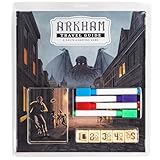
Overview: Arkham Travel Guide reimagines Lovecraft’s infamous city as a tourist destination in this strategic roll-and-write. Players become tour guides crafting routes for visitors while managing their own sanity and collecting forbidden Tomes. The game supports 1-4 players and delivers a satisfying 30-minute experience that captures cosmic horror without the heavy rules overhead.
What Makes It Stand Out: The tourism twist on Lovecraftian horror is genuinely fresh—showing visitors around a city where cultists lurk and Old Ones stir. Shared custom dice reduce randomness, letting you focus on route optimization and resource management. The climax where you confront Cthulhu, Yog-Sothoth, Dagon, or Shub-Niggurath provides excellent replayability, as each Great Old One changes your final challenge. The solo mode shines as a atmospheric puzzle.
Value for Money: For a roll-and-write with this much thematic integration and variability, it punches above its weight class. Comparable games often lack the narrative framework or replayability that four distinct end-game bosses provide. The component quality and custom dice justify the investment for horror gaming fans.
Strengths and Weaknesses: Strengths include the clever subversion of horror tropes, strategic depth beyond typical roll-and-writes, and exceptional solo play. Weaknesses: the theme may alienate non-Lovecraft fans, player interaction is minimal, and route planning can feel repetitive after multiple plays with the same Old One.
Bottom Line: A must-have for Lovecraft enthusiasts and solo gamers seeking a strategic, atmospheric roll-and-write that delivers cosmic dread in a compact package.
7. Dice Kingdoms of Valeria: Strategic Roll & Write Game for 1-4 Players, Ages 14 and Up - Daily Magic Games

Overview: Dice Kingdoms of Valeria transports the popular Valeria universe into the roll-and-write genre. Designed by Levi Mote, this 1-4 player game has you rolling six dice to hire citizens, defeat monsters, construct roads, and wield magic. The simultaneous activation mechanic keeps everyone engaged throughout the 30-40 minute playtime.
What Makes It Stand Out: The two dice that activate citizens for all players create delicious tension and competition—you’re constantly watching opponents’ sheets while planning your own strategy. Multiple viable scoring paths through guilds, monsters, or domains prevent the game from feeling solved. The six-dice allocation puzzle offers more strategic depth than typical roll-and-writes, while maintaining accessibility.
Value for Money: Positioned in the mid-range for roll-and-writes, it offers substantial content for fans of the Valeria series. The simultaneous activation feature adds value by reducing downtime, effectively giving you more game per minute compared to traditional turn-based alternatives.
Strengths and Weaknesses: Strengths include the interactive simultaneous play, rich strategic choices, and strong thematic connection to the Valeria world. Weaknesses: the theme may feel derivative if you’re unfamiliar with Valeria, the simultaneous activation can cause analysis paralysis, and experienced players might find it less innovative than it appears.
Bottom Line: An excellent choice for Valeria fans and gamers wanting a more interactive, strategic roll-and-write experience that rewards careful planning without sacrificing pace.
8. Award-Winning Board Game for Families – Rolls 2 Riches | Fast-Paced Dice, Card & Strategy Game for Kids & Adults | Perfect for Parties, Travel, Camping, Game Nights & Outdoor Summer Fun
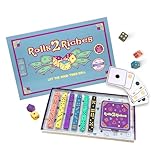
Overview: Rolls 2 Riches merges dice, cards, and board game elements into a fast-paced family experience. Supporting 2-6 players ages 8 and up, this award-winning game delivers quick rounds that work equally well at game nights, parties, or camping trips. The magnetic box makes it genuinely travel-friendly and protects components.
What Makes It Stand Out: The hybrid design successfully blends multiple mechanics without feeling cluttered, creating surprising depth while remaining accessible. Its true standout feature is versatility—it transitions seamlessly from adult game nights to family sessions with kids. The magnetic storage solution demonstrates thoughtful production design that frequent travelers will appreciate.
Value for Money: As a multi-purpose game that replaces several single-use titles in your collection, it offers excellent value. The portability factor extends its utility far beyond your game shelf, making it cost-effective for families who game on vacation.
Strengths and Weaknesses: Strengths include broad age appeal, quick teach, portable design, and engaging gameplay across skill levels. Weaknesses: hardcore gamers may find it too light, luck can overshadow strategy, and component durability in the magnetic box needs long-term verification.
Bottom Line: The ultimate family game night Swiss Army knife—Rolls 2 Riches delivers consistent fun across generations and locations, making it an essential addition to any casual gaming collection.
9. Roll to The Top - Adventures Expansion - Roll-and-Write Baord Game - 1 to 6 Players - 20 Minutes Play Time

Overview: This expansion to Roll to The Top adds fresh landmarks and dice manipulation options to the monument-building race. Supporting 1-6 players in just 20 minutes, it maintains the original’s accessible core while introducing new strategic layers through add, remove, and swap dice abilities that transform decision-making.
What Makes It Stand Out: The polyhedral custom dice aren’t just cosmetic—they fundamentally change risk assessment and planning. The ability to manipulate dice results mid-turn creates exciting pivot moments rare in roll-and-writes. It scales perfectly from solo puzzle to competitive six-player race without adding complexity or time, a remarkable achievement for any expansion.
Value for Money: As an expansion, it requires the base game, which limits its standalone value. However, the gameplay variety it injects effectively doubles the base game’s lifespan, making it a worthwhile investment for fans seeking to extend their experience and replayability.
Strengths and Weaknesses: Strengths include the innovative dice manipulation mechanics, excellent scalability, quick playtime, and custom dice quality. Weaknesses: mandatory base game requirement, light theme that doesn’t resonate with everyone, and potential for experienced players to optimize the fun out of the experience.
Bottom Line: A lean, smart expansion that revitalizes Roll to The Top. Essential for owners of the base game who want more strategic depth without sacrificing the snappy 20-minute runtime.
10. Inside Up Games Draft & Write Records | Music Board Game, Card Drafting | Draft Your Band, Tour The World, Top The Charts | for 1 to 6 Players | for Ages 10 and Up | 30-40 Minute Playtime

Overview: Draft & Write Records innovates by merging card drafting with roll-and-write mechanics in a music industry theme. Players form bands, create harmonies, and tour worldwide in 30-40 minutes. The 1-6 player count and included solo mode make it highly versatile for any gaming situation, from solo sessions to full group play.
What Makes It Stand Out: The drafting element adds direct player interaction missing from most roll-and-writes, while the music theme provides a refreshing alternative to typical fantasy or city-building settings. The QR code tutorial with Paul Grogan is a standout feature, offering professional rules explanations that get you playing faster than traditional manuals and reduce teaching time significantly.
Value for Money: Positioned competitively for a game with dual mechanics and professional digital content. The hybrid design essentially gives you two game experiences in one, offering better value than purchasing separate drafting and roll-and-write titles for your collection.
Strengths and Weaknesses: Strengths include the innovative mechanical fusion, accessible tutorial, broad player count, and unique theme. Weaknesses: the music industry theme may not connect with all players, card drafting feels lighter compared to dedicated drafting games, and component quality is unproven without hands-on evaluation.
Bottom Line: A fresh, accessible hybrid that successfully blends two popular mechanics. Perfect for music fans and gamers seeking interactive roll-and-write experiences with a contemporary twist.
What Makes a Roll and Write Game Truly Strategic?
Beyond Luck: Strategic Decision Points
The hallmark of any strategic game is the ratio of luck to meaningful choices. In roll and writes designed for strategy lovers, dice results serve as inputs rather than dictators of your fate. You might roll a 4, but whether you use that 4 to expand your territory, activate a powerful combo, or hoard resources for a future turn creates branching decision trees that keep your brain engaged. The best strategic titles ensure that even “bad” rolls offer interesting alternatives rather than simply shutting down your plans.
Look for games where dice manipulation exists but comes at a cost. Perhaps you can spend resources to modify results, but doing so sacrifices potential progress elsewhere. This creates tension between sticking with suboptimal outcomes and paying premium prices for perfection. The strategic depth emerges from these constant value judgments, not from simply accepting randomness.
Long-Term Planning vs. Tactical Adaptation
Strategic roll and writes shine when they force you to balance your grand vision against immediate opportunities. You might start the game with a clear engine-building path, but mid-game dice results could present a lucrative short-term gain that requires deviating from your plan. The genius lies in how these games reward both approaches while punishing rigid thinking or pure opportunism.
Pay attention to scoring systems that create multiple viable paths to victory. Games that offer a single “optimal” strategy quickly become solved puzzles, but those with several competing objectives force you to commit to a strategy early while remaining flexible enough to pivot when the dice don’t cooperate with your initial scheme.
The Role of Player Agency in Dice Outcomes
True strategic depth emerges when you feel a sense of control over probabilistic elements. This might come through reroll mechanisms, dice drafting where you can choose from communal pools, or action spaces that let you mitigate bad luck in exchange for tempo. The key is that these options should feel meaningful but limited—you’re managing risk, not eliminating it.
Games that provide too much control lose the exciting tension that dice bring, while those with too little leave you feeling like a passenger. The sweet spot creates moments where you take calculated gambles, weighing the probability of future rolls against guaranteed but smaller gains.
Key Mechanics That Strategy Fans Should Look For
Engine Building Potential
The most satisfying strategic roll and writes let you construct powerful engines that compound your actions over time. Early game choices should feel like investments that pay dividends in later rounds. This might manifest as unlocking new action spaces, creating resource conversion loops, or building multipliers that dramatically increase your scoring potential.
When evaluating a game, consider whether early decisions create cascading benefits. Does placing a marker in round one make your round five actions significantly more powerful? Can you chain abilities together to create explosive combos? These elements transform the experience from simple tactical responses to genuine strategic construction.
Resource Management Challenges
Resource scarcity drives interesting decisions. The best strategic titles make you juggle multiple currencies—whether that’s literal resources, action opportunities, or spatial constraints on your sheet. You should constantly feel the pinch of “I want to do everything but can only afford a few things.”
Look for games where resources aren’t just spent but converted, stored, or invested. Perhaps you can hoard dice results for future turns, or sacrifice immediate points for a more powerful position later. The tension between spending and saving, between diversification and specialization, creates the kind of crunchy decisions strategy gamers crave.
Combo Systems and Synergy
Synergistic interactions between different parts of your sheet elevate roll and writes from simple exercises to strategic masterpieces. When activating one section triggers bonuses in another, which then unlocks a third area, you’re no longer just filling boxes—you’re orchestrating a complex machine.
The depth comes from recognizing these synergies during gameplay and adjusting your strategy to maximize them. Games that hide these connections behind clever iconography or spatial relationships reward repeated plays and deep analysis, giving you new strategic insights dozens of games in.
Risk vs. Reward Calculations
Strategic roll and writes should present you with gambles that make you pause and calculate. Maybe you can push your luck for a massive payoff, but failure sets you back dramatically. Or perhaps you can commit to a high-risk strategy that requires specific dice combinations, knowing that alternative paths exist if the rolls don’t cooperate.
These moments of tension, where you must evaluate probability, opportunity cost, and your current position relative to opponents, separate the wheat from the chaff for strategy enthusiasts. The best games make these decisions feel consequential without being arbitrary.
Complexity vs. Depth: Finding Your Sweet Spot
Understanding True Complexity
Many gamers conflate complexity with depth, but they’re distinct concepts. Complexity refers to rules overhead—how long it takes to learn and teach. Depth refers to the richness of strategic possibilities that emerge from those rules. The most rewarding roll and writes often achieve remarkable depth with modest complexity.
When assessing a game, consider whether each rule adds strategic texture or just procedural overhead. Do you need to remember exceptions and special cases, or does the system integrate cleanly? Strategic players appreciate elegance—where simple frameworks generate complex decisions.
Depth Through Simple Rules
Some of the most strategically satisfying games operate on just a few core principles that interact in fascinating ways. A simple rule about adjacency might create spatial puzzles that take dozens of plays to master. A basic set collection mechanism, when combined with other systems, can produce emergent strategies that weren’t obvious from the rulebook.
This elegance means you spend less time managing the system and more time engaging with its strategic implications. Your mental energy goes toward planning and adaptation rather than rules recall, which is exactly where strategy lovers want to focus.
When More Complexity Adds Value
That said, some strategic minds crave the intricate clockwork of more complex systems. Additional layers can create richer decision spaces and more specialized strategies. The key is that each added mechanism should integrate meaningfully with existing ones rather than feeling tacked on.
Multi-phase turns, variable player powers, or evolving game states can provide the heavy, chewy experience that some strategy gamers seek. Just ensure that the complexity serves strategic expression rather than obscuring it behind a wall of rules.
Player Interaction in Strategic Roll and Writes
Indirect Competition and Shared Dice
Many roll and writes feature shared dice pools where all players use the same results. This creates delicious indirect interaction—you’re not just solving your own puzzle, you’re trying to find the optimal path before opponents snag the best options. When you take a high value for your strategy, you might be denying it to someone else, turning dice selection into a subtle draft.
This form of interaction rewards table awareness and adaptability. You need to understand not just your own position but what your opponents are building toward, so you can anticipate which dice they’ll value and potentially block them without sacrificing your own progress.
Direct Interaction Mechanics
While less common, some strategic roll and writes incorporate direct confrontation. You might be able to attack opponents’ territories, steal resources, or otherwise mess with their sheets. This adds a whole new layer of strategic consideration—you must balance building your own engine with defending against threats.
These games appeal to strategy gamers who enjoy reading opponents and engaging in psychological warfare. The roll and write format keeps the conflict lightweight and fast-paced while still delivering that competitive edge.
Balancing Solitary Focus with Table Awareness
Even in games with minimal interaction, strategic players benefit from watching opponents’ sheets. Understanding which strategies are being contested affects your decisions. If three players are racing for the same scoring path, perhaps pivoting to a less crowded option yields better results.
The best strategic titles create this tension between optimizing your own sheet and remaining aware of the broader competitive landscape. You’re simultaneously playing your game and the meta-game of position relative to others.
Solo Play Considerations for Strategy Gamers
AI Systems and Automa Decks
For solo strategy enthusiasts, the quality of the AI opponent matters immensely. Simple “beat your own score” modes often lack the strategic pushback that makes decisions meaningful. Look for games with sophisticated Automa systems that simulate human-like competition.
Good solo modes should force you to adapt your strategies based on the AI’s actions, not just optimize in a vacuum. The best ones create realistic pressure points and make you feel like you’re competing for the same resources and opportunities.
Beat Your Own Score vs. Target Scores
Some solo modes challenge you to reach target scores across difficulty levels, while others ask you to simply improve your personal best. Target-based systems often provide clearer strategic goals and better difficulty scaling. You can analyze what strategies succeed at each difficulty tier, creating a puzzle-like optimization challenge.
Personal best systems offer more freedom but can feel less directed. They work best when the game includes enough variability that each session presents unique strategic puzzles rather than a single solvable optimization problem.
Solo Variants That Maintain Strategic Integrity
The key question for solo strategy gamers: does the solo mode preserve the core strategic decisions of the multiplayer game? Too often, solo modes strip away interaction layers, leaving a hollow shell. The best implementations maintain the tension, resource competition, and decision complexity that make the game strategically rich.
Look for solo modes that use the same core systems but introduce new constraints or AI behaviors that force strategic adaptation. The goal is a parallel experience, not a completely different game wearing the same skin.
Components and Replayability Factors
Sheet Design and Strategic Options
The physical layout of your player sheet profoundly impacts strategic depth. Well-designed sheets use spatial relationships to create additional decision layers. Adjacency bonuses, connected regions, and placement restrictions turn simple marking into geometric puzzles.
Consider how the sheet evolves over the game. Does it become a strategic map that tells the story of your choices? Can you read an opponent’s strategy from their sheet’s layout? These visual and spatial elements add a dimension that pure number-crunching lacks.
Dice Customization and Variety
Strategic richness often comes from custom dice that provide more than just numbers. Dice with symbols, colors, or special faces create more nuanced decision spaces. When each die face represents a different action type or resource, you’re choosing between fundamentally different options rather than just quantities.
Games that include multiple dice sets or allow you to upgrade dice over the course of play add another strategic layer. You might be building not just an engine on your sheet, but also improving the probability distribution of your random inputs.
Unlockable Content and Legacy Elements
Some modern roll and writes incorporate campaign modes where your decisions carry between sessions. Unlocking new sheets, abilities, or rules creates meta-strategic considerations. You’re not just playing to win this game; you’re positioning yourself for future advantages.
This format appeals to strategy gamers who enjoy long-term planning and seeing their strategic skills evolve across a narrative arc. The permanence of your choices adds weight to each decision, transforming individual sessions into chapters of a larger strategic journey.
Theme Integration and Strategic Depth
When Theme Enhances Strategic Thinking
A common critique of roll and writes is that they’re abstract exercises with thematic wallpaper. However, the best strategic examples use theme to guide your decision-making. When the mechanics naturally evoke the theme—building a city, exploring territory, managing a corporation—you can leverage thematic intuition to grasp strategic concepts.
Strong theme helps you remember complex interactions because they make narrative sense. You understand why certain combos work because they tell a coherent story, reducing cognitive load while maintaining strategic depth.
Abstract Strategy in Roll and Write Format
Conversely, some strategy purists prefer the clean elegance of abstract systems where theme doesn’t obscure the pure strategic geometry. These games focus entirely on mechanism interaction, creating puzzles of efficiency and optimization.
The appeal lies in the transparency of the system. You can see all strategic possibilities clearly, making the game about pure skill in navigating the decision space. For strategy lovers who enjoy analyzing systems, these abstracts can be profoundly satisfying.
Learning Curve and Rulebook Clarity
Teaching Strategic Concepts
A well-designed strategic roll and write should be teachable in 10-15 minutes but offer dozens of plays to master. The rulebook’s ability to convey not just how to play, but how to think strategically, matters immensely. Good rulebooks include strategy hints, common pitfalls for new players, and examples of interesting interactions.
When evaluating a game, consider whether the rules create a smooth on-ramp to strategic play or if they frontload complexity in ways that obscure the game’s depth. The best designs reveal their strategic layers gradually, letting you appreciate the system’s elegance before demanding mastery.
Reference Materials and Player Aids
Strategic depth suffers when you’re constantly flipping through rulebooks. Quality player aids that summarize scoring conditions, action options, and phase sequences keep your focus on strategy rather than administration.
Look for games that provide comprehensive reference sheets or have player-facing information integrated into the sheets themselves. These tools lower the barrier to deep strategic thinking and reduce analysis paralysis caused by uncertainty about the rules.
Game Length and Strategic Satisfaction
Filler Games with Strategic Bite
The best strategic roll and writes defy the “filler” label by delivering meaningful decisions in 20-30 minutes. They achieve this through simultaneous play and streamlined turns where each choice feels consequential. You should finish these games feeling like you’ve solved a genuine strategic puzzle, not just gone through motions.
The key is density of decisions. Every roll should present multiple viable paths, and your choices should compound quickly enough that you see strategic arcs develop within the short timeframe. This efficiency appeals to strategy gamers who want a satisfying mental workout without committing to a three-hour epic.
Epic Campaigns in Compact Form
On the other end of the spectrum, some roll and writes stretch into 60+ minute experiences that rival heavier board games in strategic depth. These longer games often feature multi-stage engines, complex scoring categories, and evolving game states that reward deep concentration.
The strategic satisfaction comes from seeing long-term plans mature over many turns. You can build intricate systems, recover from setbacks, and engage in extended strategic battles with opponents. For strategy lovers who want the depth of a big-box game in a portable format, these titles deliver remarkable experiences.
Building Your Strategic Roll and Write Collection
Curating for Different Strategic Itches
A well-rounded collection should offer variety in strategic focus. Consider games that emphasize different skills: spatial reasoning, resource optimization, engine building, risk management, and player interaction. This variety ensures you always have the right strategic challenge for your mood.
Think about overlap too. Two games with similar strategic cores may not both deserve shelf space, but games that approach strategy from different angles can complement each other beautifully. A collection that offers diverse strategic experiences will stay fresh longer.
Storage Solutions for Growing Collections
One advantage of roll and writes is their compact size, but collections can still grow unwieldy. Consider how you’ll organize sheets, dice, and writing implements. Some players prefer binders for completed sheets to track improvement, while others use dedicated storage boxes for active games.
The strategic value of good organization shouldn’t be underestimated. When you can easily access and set up your games, you’re more likely to get them to the table. Quick setup means more time for strategic thinking and less time hunting for components.
Frequently Asked Questions
What makes a roll and write game strategic rather than just luck-based?
Strategic roll and writes give players meaningful ways to mitigate and respond to randomness. They feature multiple uses for each dice result, resource management that requires planning, and scoring systems that reward long-term strategy over fortunate rolls. The best designs make you feel like you’re navigating probabilities and optimizing decisions rather than just recording fate’s dictates.
How do I evaluate whether a roll and write has enough depth for my tastes?
Look for games with engine-building potential, combo systems, and multiple viable paths to victory. Check if player choices early in the game create cascading effects later. Reviews from strategy-focused gamers often highlight whether a game rewards repeated plays with new strategic insights or becomes repetitive quickly.
Can roll and write games really satisfy serious strategy gamers?
Absolutely. Modern roll and writes have evolved sophisticated mechanisms that rival heavier board games. They offer engine building, resource conversion chains, spatial puzzles, and player interaction in condensed packages. Many strategy gamers appreciate how these games deliver meaningful decisions without the setup time and table space of larger titles.
What’s the ideal player count for strategic roll and writes?
Most strategic roll and writes work best with 2-4 players, though many include excellent solo modes. Too many players can lead to excessive downtime, undermining the genre’s strength as a quick, engaging experience. The sweet spot depends on whether you prefer direct interaction (fewer players) or more chaotic, indirect competition (more players).
How important is sheet variety for replayability?
Sheet variety significantly impacts longevity. Games with multiple sheets featuring different layouts, starting positions, or special abilities create fresh strategic puzzles. Some titles include dozens of unique sheets, while others use the same layout but vary scoring conditions. Both approaches work, but more variety generally means more strategic exploration.
Should I prioritize games with custom dice or standard dice?
Custom dice often indicate stronger strategic design because they allow for more nuanced action distributions than simple numbers. However, standard dice can work wonderfully when paired with clever manipulation mechanisms. Focus on how dice integrate with the overall system rather than whether they’re custom or standard.
How do I know if a game’s solo mode is strategically worthwhile?
Test whether the solo mode preserves the core strategic decisions of the multiplayer game. Good solo modes create pressure through AI opponents, target scores that require optimization, or variability that forces strategic adaptation. Avoid modes that simply ask you to “beat your own score” without meaningful external pressure.
What’s the typical learning curve for strategic roll and writes?
Most quality strategic roll and writes can be taught in 10-20 minutes but take 5-10 plays to master. The rules themselves should be straightforward, but understanding strategic timing, optimal combos, and opponent reading takes experience. This ratio of easy-to-learn, hard-to-master is a hallmark of good design.
How much should I expect to pay for a quality strategic roll and write?
Prices range from $15-$40 depending on component quality, sheet count, and complexity. Higher prices often reflect custom dice, thick pad of sheets, or campaign elements. Strategic depth doesn’t necessarily correlate with price—some of the most rewarding titles are modestly priced.
Can roll and write games work for competitive tournament play?
Yes, though it’s less common than in other genres. The best candidates feature minimal luck, multiple balanced strategies, and clear skill differentiation. Games with shared dice pools work particularly well for competition since all players face identical random inputs, making victory purely a matter of superior strategic execution.
See Also
- We Tested 50 Doodle Board Games - Here are the 10 Best for Roll and Write Lovers
- We Tested 50 Roll and Write Games - Here are the 10 Best for Competitive Play
- We Tested 50 Dice Games for Kids - Here are the 10 Best for Learning in 2026
- We Tested 50 Kids Dice Games - Here are the 10 Best for Learning and Fun
- We Tested 50 Dice Games - Here are the 10 Best for Quick Setup