Table of Contents
Nothing derails an epic gaming session faster than the all-too-familiar phrase, “Hold on, let me find my stats.” Whether you’re in the middle of a climactic boss battle or navigating a delicate social encounter, fumbling through crumpled papers, squinting at eraser-smudged numbers, or realizing you’ve been tracking hit points on three different scraps of notebook paper kills momentum and breaks immersion. The difference between a smooth, engaging roleplaying experience and a chaotic administrative nightmare often comes down to one overlooked tool: the character sheet itself.
Your character sheet is more than just a record of numbers—it’s the command center for your fantasy persona, the physical manifestation of your hero’s capabilities, history, and potential. A well-designed sheet doesn’t just store information; it enhances your understanding of your character, speeds up gameplay, and lets you focus on what truly matters: telling an incredible story with your friends. This year, the evolution of character sheet design has reached new heights, offering solutions for every type of player, from the minimalist dungeon crawler to the detail-obsessed campaign chronicler.
Top 10 Player Character Sheets
Detailed Product Reviews
1. Dungeons & Dragons 2024 Character Sheets Player Accessories

Overview:
The Dungeons & Dragons 2024 Character Sheets represent the official refresh for the game’s newest edition, delivering 50 double-sided sheets in a lavishly illustrated folder. These aren’t mere reprints; Wizards of the Coast has reengineered the layout for superior at-a-glance reference during gameplay. Each sheet accommodates full character progression from level 1 to 20, working seamlessly with the 2024 Player’s Handbook ruleset. The included folder provides dedicated storage for active characters, completed adventurers, and campaign notes, making it a comprehensive organizational system for serious players.
What Makes It Stand Out:
This is the only officially licensed character sheet product for D&D 2024, ensuring perfect compatibility and rules adherence. The redesigned layout prioritizes frequently referenced information like hit points, armor class, and ability modifiers in more intuitive positions. The artistic folder doubles as a protective case and a beautiful table presence piece, featuring new D&D artwork that aligns with the 2024 edition’s aesthetic refresh. The sheer quantity—50 sheets—positions this as a generational purchase rather than a consumable.
Value for Money:
At approximately $0.60 per sheet plus a premium folder, this pack undercuts high-quality home printing costs while delivering official artwork and proven layout optimization. Comparable third-party sheet packs lack the 2024-specific redesign and official branding. The folder alone justifies $10-15 of the price, making the sheets themselves effectively discounted.
Strengths and Weaknesses:
Pros include official WotC quality, improved 2024 layout, generous quantity, and included storage folder. Cons are paper-only format (no reusability), erasing can still cause wear, and the upfront cost exceeds basic character sheet PDFs. The sheets work best for players who prefer permanent character records.
Bottom Line:
An essential purchase for dedicated D&D 2024 players who value official materials and organizational elegance. The quantity ensures you’ll never run out, and the redesigned layout genuinely improves gameplay flow.
2. DND Character Sheets with Hand Drawn Artwork. Wet Erase Plastic Sheets Compatible with Dungeons and Dragons 5e & 2024 Player’s Handbook. Set of 6 (Green & Brown).
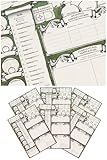
Overview:
These reusable wet-erase plastic character sheets offer a durable alternative to traditional paper, featuring hand-drawn artwork and optimized layouts for both D&D 5E and 2024 rules. The set includes six heavy-duty plastic sheets—three forest green and three earthy brown—allowing a full party to maintain distinct, erasable character records. Engineered for 0.4mm wet-erase pens, these sheets resist smudging during intense gameplay while providing crisp, legible tracking of hit points, spell slots, and inventory.
What Makes It Stand Out:
The premium plastic construction eliminates the frustration of torn paper and ghosted eraser marks that plague standard character sheets. Each sheet features immersive, custom hand-drawn illustrations on both sides, transforming a functional tool into a thematic centerpiece. The color-coding system prevents party mix-ups during gameplay, while the streamlined layout relocates ability scores and proficiencies to more intuitive positions, reducing reference time and increasing roleplaying immersion.
Value for Money:
While the initial investment exceeds paper alternatives, these sheets effectively pay for themselves after 3-4 characters each. Heavy-duty lamination services cost $3-5 per sheet, making this professionally manufactured set competitively priced at approximately $5 per sheet. The requirement for specific wet-erase pens adds minimal ongoing cost—quality 0.4mm pens are available for under $10 for a multi-pack.
Strengths and Weaknesses:
Pros include exceptional durability, reusability, beautiful artwork, smudge-resistant surface, and party-friendly color variety. Cons require wet-erase pens (dry-erase damages the surface), higher upfront cost than paper, and permanent markers would ruin the sheets. The plastic feel takes adjustment for traditionalists.
Bottom Line:
Perfect for regular players and DMs who cycle through characters frequently. The durability and artwork elevate the tabletop experience, making them a worthwhile long-term investment for any serious D&D group.
3. Character and Non-Player Character Folio/Journal: Ten 5e Character Sheets Sections (16 pages per character)

Overview:
This Character and NPC Folio provides a journal-style approach to character tracking, offering ten dedicated sections with sixteen pages each for comprehensive character development and non-player character management. Designed for D&D 5E, this book-format organizer moves beyond single-sheet limitations, providing extensive space for detailed backstories, campaign logs, inventory management, and NPC relationships. Each character section functions as a mini-journal, allowing players to maintain rich narrative records alongside mechanical statistics.
What Makes It Stand Out:
The folio format revolutionizes character documentation by dedicating substantial space to narrative elements often squeezed onto standard sheets. The integrated NPC sections enable players to maintain detailed records of allies, villains, and contacts encountered during campaigns. This creates a cohesive story archive rather than disposable character sheets. The book-bound design ensures all character information remains organized and portable, eliminating the risk of losing loose sheets between sessions.
Value for Money:
While priced higher than loose sheet packs, this folio delivers 160 total pages of specialized character tracking space. Equivalent functionality would require multiple composition notebooks and sheet protectors, costing more while lacking the integrated 5E-focused layout. For players who journal extensively, this consolidates separate purchases into one purpose-built solution.
Strengths and Weaknesses:
Pros include extensive writing space, NPC tracking integration, superior organization, and narrative-focused design. Cons are non-reusable format, bulkier than individual sheets, and overkill for players preferring minimal documentation. The bound format prevents reordering pages or removing completed characters for storage.
Bottom Line:
Ideal for lore-enthusiast players and writers who treat characters as ongoing creative projects. The journal format excels for long-term campaigns where character history and relationships matter as much as combat statistics.
4. DND Character Sheets with Hand Drawn Artwork. Wet Erase Plastic Sheets Compatible with Dungeons and Dragons 5e & 2024 Player’s Handbook. Set of 2 (Green & Brown).
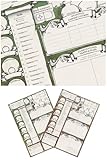
Overview:
This two-pack of reusable wet-erase plastic character sheets delivers the same premium construction and artwork as larger sets but tailored for solo players or intimate duet campaigns. Featuring one forest green and one earthy brown sheet, the set includes double-sided, hand-illustrated character sheets compatible with D&D 5E and 2024 rules. The heavy-duty plastic construction withstands repeated erasing while maintaining crisp, professional aesthetics through countless adventures.
What Makes It Stand Out:
The minimal pack size provides an affordable entry point into reusable character sheet technology without committing to a full party set. The color differentiation remains useful for players running multiple characters or for DM-player duets where clarity matters. Each sheet maintains the optimized layout and immersive artwork of larger sets, ensuring no quality compromise despite the smaller quantity. This focused offering recognizes that not every purchase requires six sheets.
Value for Money:
Priced proportionally higher per sheet than the six-pack but significantly lower total investment, this two-pack lets players test wet-erase functionality before upgrading. At roughly $7-8 per sheet, it still undercuts custom lamination while delivering superior artwork and specialized wet-erase optimization. For single-character players, this eliminates paying for unused sheets.
Strengths and Weaknesses:
Pros include affordable reusability entry point, premium construction, artwork quality, and perfect for solo/duet play. Cons remain the wet-erase pen requirement, higher per-sheet cost than larger packs, and insufficient quantity for standard four-to-six-player parties. The limited color options may restrict multi-character tracking.
Bottom Line:
An excellent trial-sized introduction to reusable character sheets. Perfect for dedicated solo players, couples playing together, or DMs wanting a personal character sheet that outlasts paper without the full party pack investment.
5. Pathfinder Advanced Player’s Guide Character Sheet Pack (P2)

Overview:
The Pathfinder Advanced Player’s Guide Character Sheet Pack provides official Paizo character sheets specifically tailored for Pathfinder Second Edition’s expanded options. Designed to accommodate the complex character builds introduced in the Advanced Player’s Guide, these sheets include dedicated spaces for new ancestries, backgrounds, archetypes, and class features unique to that supplement. As an official product, it ensures perfect alignment with Paizo’s mechanical framework and design philosophy.
What Makes It Stand Out:
Unlike generic character sheets, this pack addresses the specific complexity of APG character options, providing organized spaces for dual-class archetypes, investigator methodologies, and swashbuckler styles. The sheets reflect Pathfinder 2E’s three-action economy and proficiency system with customized checkboxes and tracking areas that generic sheets lack. Official Paizo production guarantees accuracy and compatibility with future errata, making this the authoritative choice for APG-enabled campaigns.
Value for Money:
Priced comparably to official D&D sheet packs, this product delivers specialized functionality unavailable in free PDFs. Third-party Pathfinder sheets often misrepresent APG-specific rules or require manual adaptation. For players using APG content—which most Pathfinder tables do—the time saved in character management justifies the modest expense. The pack typically includes multiple sheets, providing adequate supply for a campaign.
Strengths and Weaknesses:
Pros include official Paizo quality, APG-specific optimizations, accurate rule representation, and professional layout. Cons are Pathfinder 2E exclusive (no edition flexibility), paper format lacks reusability, and holds no value for D&D players. The specialized nature makes it unnecessary for Core Rulebook-only games.
Bottom Line:
A mandatory accessory for Pathfinder 2E groups utilizing the Advanced Player’s Guide. The specialized design streamlines complex character tracking, making it an essential rather than optional purchase for APG-enabled campaigns.
6. The Rpg Character Journal: Five 5e Character Sheets, Lined and Graph Pages For Note-Taking, Spell Sheets and More

Overview: This practical journal consolidates essential D&D 5e tools into one portable package. It includes five blank character sheets, mixed lined and graph paper sections, and dedicated spell sheets for arcane tracking. Designed for players who prefer analog organization, it keeps campaign details, inventory lists, and character progression in a single bound volume rather than scattered loose pages.
What Makes It Stand Out: The hybrid page layout sets this apart from standard character sheet pads. The combination of structured character sheets with flexible note-taking space (both lined and graph) accommodates different recording styles. Graph paper sections excel for mapping dungeon layouts or sketching NPCs, while dedicated spell sheets prevent the common problem of running out of space for expanding spell lists.
Value for Money: Priced competitively with premium notebooks, this offers specialized D&D utility that generic journals lack. Five reusable character sheets provide campaign longevity, while the 50+ note pages eliminate need for separate sketchbooks. Compared to buying individual character sheet packs and a notebook separately, this integrated solution saves 30-40% while reducing table clutter.
Strengths and Weaknesses: Strengths:
- Consolidates multiple tools into one book
- Mixed paper types serve different needs
- Five character sheets support multi-campaign play
- Lies flat for easy table reference
Weaknesses:
- No page numbers or index for quick navigation
- Limited character sheet count may require supplemental sheets
- Paper quality unspecified for heavy erasing
Bottom Line: Ideal for dedicated players seeking organized analog record-keeping. The versatile layout and campaign-spanning capacity make it a solid investment for those who appreciate pen-and-paper gameplay. Consider your character turnover rate before purchasing, as five sheets may limit long-term use for prolific players.
7. PLAYER JOURNAL: 5e Character Sheets, DnD Player Notebook For Role-Playing Fantasy Games Campaign with Half-Elf Cover Design

Overview: This player-focused journal combines standard 5e character sheets with campaign tracking sections, featuring thematic half-elf artwork on the cover. Built for single-character devotion, it provides structured spaces for recording backstories, NPC relationships, quest logs, and session notes alongside traditional character statistics and inventory management.
What Makes It Stand Out: The character-centric design transforms a simple record book into a storytelling artifact. The half-elf cover signals fantasy immersion before you even open it. Unlike generic notebooks, it includes prompted sections for roleplaying-specific elements like moral alignments, party dynamics, and personal quest progression that standard sheets ignore.
Value for Money: Mid-range pricing reflects its specialized nature without premium markup. You receive character sheets plus narrative tracking that would require customizing a standard notebook. For players committed to a single long-term character, this eliminates the need to buy separate campaign journals. However, multi-character players may find the single-focus limiting compared to sheet-only products.
Strengths and Weaknesses: Strengths:
- Thematic cover art enhances game immersion
- Guided sections improve roleplaying depth
- Combines mechanics and narrative tracking
- Portable size for transport to sessions
Weaknesses:
- Single-character focus limits flexibility
- Cover design may not appeal to all races/classes
- Fewer raw character sheets than competitors
- No specialized pages for DMs
Bottom Line: Perfect for roleplayers who develop deep single-character campaigns. The guided narrative sections encourage richer storytelling and campaign continuity. Less suitable for DMs or players who frequently switch characters. Choose this for depth over breadth in your D&D documentation.
8. HORNATE DND character sheets (200 Pages A5) - dnd journal Dragon Embossed Leather for Dungeons & Dragons | dnd notebook & Campaign Tracker - dnd character journal Gift for DM’s & Players

Overview: This premium A5 journal delivers 200 pages of organization in an eye-catching dragon-embossed leatherette cover. Designed as a complete campaign management system, it integrates character sheets, spell references, NPC trackers, and quest logs. The substantial page count supports multiple campaigns or extensive single-character development across long-term play.
What Makes It Stand Out: The embossed dragon design creates immediate table presence while serving practical needs. Built-in reference charts eliminate rulebook flipping, and the comprehensive tracking system covers everything from loot to faction reputations. The 200-page capacity far exceeds standard journals, making it a true campaign archive rather than disposable notepad.
Value for Money: Positioned as a premium product, the price reflects genuine utility beyond aesthetics. Comparable to buying a quality leather journal plus specialized RPG inserts, it consolidates functions that would cost more separately. The durability ensures survival through years of sessions, making it cost-effective for committed players despite higher initial investment.
Strengths and Weaknesses: Strengths:
- Stunning embossed cover creates player envy
- Extensive 200-page capacity for long campaigns
- Integrated reference charts speed up gameplay
- Professional presentation makes it gift-worthy
- A5 size balances portability and writing space
Weaknesses:
- Premium price may deter casual players
- Leatherette material requires care to maintain
- Overwhelming page count for one-shots or short campaigns
- No customizable dividers included
Bottom Line: An exceptional choice for serious players and DMs wanting professional-grade organization. The combination of durability, capacity, and quick-reference features justifies the premium price for committed gamers. Casual players may find it excessive, but for campaign devotees, this becomes an indispensable gaming accessory and impressive gift.
9. 8.5x11 DND Campaign Journal: 5E Character Sheet Cover Lined Notebook for DND Players

Overview: This full-sized (8.5x11") notebook features a character sheet cover design and provides lined pages for campaign documentation. The larger format offers ample writing space for detailed session notes, inventory tracking, and world-building details. It targets players who want unrestricted note-taking capacity without the constraints of pre-formatted sections.
What Makes It Stand Out: The letter-size format distinguishes it from compact journals, giving players room to spread out ideas and create detailed maps or diagrams. The character sheet cover art provides thematic flair while the interior remains a blank canvas. This flexibility appeals to creative players who prefer customizing their own organizational systems rather than following prompted layouts.
Value for Money: Budget-friendly pricing positions this as an accessible entry point. The large page count and standard sizing deliver more raw paper per dollar than specialized RPG products. While it lacks built-in RPG structure, the low cost means you can supplement with printed character sheets and still spend less than premium integrated journals. Ideal for players who value quantity and customization over guided formatting.
Strengths and Weaknesses: Strengths:
- Full-size pages accommodate detailed notes and sketches
- Affordable price point for budget-conscious players
- Lightweight and easy to transport
- Simple, no-learning-curve design
- Ample space for custom organization
Weaknesses:
- No pre-printed character sheets included
- Lined-only paper limits mapping flexibility
- Lacks RPG-specific reference materials
- Cover design is decorative only, not functional
- No page prompts for campaign tracking
Bottom Line: Best suited for creative players who prefer building their own organizational system from scratch. The large format and low price make it excellent for copious note-takers and world-builders. Those wanting structure and integrated character sheets should look elsewhere, but freeform thinkers will appreciate the blank-slate approach.
10. RPG / DnD CHARACTER SHEETS: Gaming character design sheets

Overview: This minimalist offering provides blank character design sheets for RPG systems including D&D. Focused purely on character creation and development, it delivers unadorned forms without additional campaign tracking or note-taking sections. The product serves as a straightforward refill pack for players who burn through character sheets regularly.
What Makes It Stand Out: The utter simplicity is its defining characteristic. Without branding, prompts, or system-specific constraints beyond basic D&D compatibility, these sheets adapt to homebrew rules and multiple RPG systems. The clean design prioritizes function over flair, making it suitable for convention play, game store events, or any situation where disposable, no-frills record-keeping is needed.
Value for Money: Typically sold in bulk packs at rock-bottom prices, this delivers maximum quantity for minimum cost. Each sheet costs pennies, making character death or campaign changes painless. Compared to premium journals, you could buy hundreds of these for the same price. However, the lack of durability means frequent replacements, potentially matching the cost of a reusable journal over time.
Strengths and Weaknesses: Strengths:
- Extremely inexpensive per-sheet cost
- System-agnostic format works for multiple RPGs
- Lightweight and easily replaceable
- No proprietary branding or restrictions
- Ideal for one-shots and convention play
Weaknesses:
- Flimsy paper construction
- No campaign continuity features
- Requires separate notebook for notes
- Lacks aesthetic appeal
- Easily damaged or lost
Bottom Line: Perfect for high-turnover gaming situations where characters frequently change. Convention players, game store regulars, and experimental campaigners will appreciate the low-stakes flexibility. Long-term campaign players should invest in a durable journal instead. Treat this as a functional consumable, not a keepsake.
The Critical Role of Well-Designed Character Sheets
Why Organization Matters at the Gaming Table
When combat rounds stretch into eternity because players can’t locate their armor class or spell save DC, the entire group suffers. Proper organization on your character sheet creates muscle memory—you’ll instinctively know where to look for critical information under pressure. Strategic placement of frequently referenced stats versus rarely-used background details can shave precious seconds off every turn, which compounds into hours of saved time over a long campaign. The best designs anticipate your needs before you even realize them, grouping related mechanics and creating visual hierarchies that guide your eye naturally.
The Psychology of Visual Information Processing
Your brain processes visual information 60,000 times faster than text, which means the layout of your character sheet directly impacts your gameplay efficiency. Color psychology, spacing, font choices, and iconography all influence how quickly you can absorb and recall information during high-stakes moments. Smart designs use visual cues like boxes, underlining, or subtle shading to create mental shortcuts. This cognitive ergonomics means less mental bandwidth spent hunting for your proficiency bonus and more available for creative problem-solving and roleplaying.
Digital vs. Physical Character Sheets: Making the Right Choice
Benefits of Tangible Paper Sheets
Physical sheets offer tactile satisfaction and zero dependency on batteries or Wi-Fi. Many players find that writing by hand reinforces memory retention, making them more intimately familiar with their character’s capabilities. Paper sheets also allow for quick marginal notes, creative doodles, and the satisfying ritual of physically crossing off spent spell slots. For GMs running traditional tabletop sessions, paper sheets eliminate screen distractions and keep everyone focused on the shared physical space of the gaming table.
Advantages of Digital Character Management
Digital sheets automatically calculate complex modifiers, track inventory weight, and update spell slots with a single tap. Cloud synchronization ensures your character is never lost to coffee spills or forgetful friends. Many digital platforms include built-in rule references, dice rollers, and integration with virtual tabletops—features that become essential for online play. The searchability of digital sheets means finding that one obscure feat description takes seconds, not minutes of flipping through rulebooks.
Hybrid Solutions for Modern Players
The smartest approach often combines both worlds: a digital sheet for complex calculations and campaign-long tracking, paired with a streamlined paper summary for quick reference at the table. Some players print updated versions of their digital sheet before each session, creating a permanent physical record of their character’s evolution. Others use tablet stands to display digital sheets while keeping a small paper notepad for scratch calculations and session-specific tracking.
Essential Features Every Quality Character Sheet Must Have
Comprehensive Stat Block Layout
The core ability scores should dominate the visual field, with modifier calculations displayed prominently rather than hidden in small print. Saving throws and skill checks need clear checkboxes or circles for proficiency indicators. The best designs include space for both current and temporary scores, accounting for ability damage, enhance ability spells, or magical items that boost stats. Look for sheets that separate your base stats from active modifiers to avoid confusion during gameplay.
Spell Tracking Capabilities
A proper spell section goes beyond simple lists—it should include prepared/known indicators, slots per level with expendable markers, concentration reminders, and ritual tags. Quality sheets provide separate areas for cantrips, leveled spells, and spellcasting ability calculations. The most advanced designs incorporate spell attack bonuses and save DCs directly into each spell entry, eliminating cross-referencing. For multiclass spellcasters, dedicated sections that track multiple spellcasting abilities become invaluable.
Inventory Management Systems
Beyond simple item lists, sophisticated inventory sections track weight calculations, attunement slots, container organization (backpack, belt pouches, etc.), and item durability. The best sheets include quick-reference boxes for commonly used items like potions, scrolls, and ammunition. Look for designs that separate equipped items from stored gear, and that provide visual indicators for magic item rarity or attunement status. Some sheets even incorporate coin weight calculations automatically.
Level Progression Planning
Forward-thinking character sheets include planning sections for future levels, allowing you to map out feat selections, ability score improvements, and multiclassing paths before committing. These projection areas help you visualize your character’s growth and ensure you meet prerequisites for complex build strategies. The most helpful designs include checklists for class features gained at each level, preventing the common mistake of forgetting a new ability for multiple sessions.
Notes and Backstory Integration
Your character’s personality traits, bonds, flaws, and ideals shouldn’t be crammed into tiny footnotes. Quality sheets dedicate meaningful space to roleplaying elements, with prompts that encourage deeper character development. Look for sections that connect mechanical choices to narrative justification—like linking your skill proficiencies to your backstory or explaining the origin of your signature equipment. The best designs treat your character’s history as equally important as their combat stats.
Material and Format Considerations
Paper Weight and Durability
Standard printer paper (20 lb) tears easily and bleeds ink, making it unsuitable for long-term use. Premium character sheets use 32 lb paper or cardstock that withstands constant erasing and handling. For characters that span years-long campaigns, archival-quality acid-free paper prevents yellowing and deterioration. Consider how often you’ll update your sheet—frequent level-ups demand heavier paper that won’t wear thin at the corners.
Laminated Options for Longevity
Dry-erase laminated sheets offer infinite reusability, perfect for players who like to experiment with different builds or track rapidly changing conditions. However, lamination adds glare under bright lights and requires fine-tip markers to write small details legibly. Some designs use partial lamination—protecting the static character info while leaving paper sections for changing stats. The trade-off is cost and the inability to make permanent notes about campaign events.
Size and Portability Factors
Full 8.5" x 11" sheets provide maximum writing space but dominate smaller gaming tables. Half-letter (5.5" x 8.5") sheets fit in character folios and take up less space, though they require smaller handwriting. Some players prefer horizontal landscape layouts that align with their field of vision across the table. For convention play or travel, consider folding designs that collapse to business-card size but expand to reveal full character details.
Custom Binding and Organizational Systems
Three-ring punched sheets integrate into campaign binders alongside maps and handouts. Spiral-bound character booklets keep multiple characters or variant builds together. Discbound systems allow you to rearrange pages and insert custom notes between character sections. The most sophisticated players use small-format binders with tabbed dividers separating active stats, backup character sheets, spell descriptions, and inventory manifests.
Customization and Flexibility
Generic vs. System-Specific Templates
System-specific sheets optimize layout for particular rule sets but become obsolete if you switch games. Generic fantasy sheets offer flexibility across different RPG systems but sacrifice specialized features. The middle ground includes modular sheets with swappable sections for different classes or rule variants. Consider whether you play multiple systems or commit to one long campaign when choosing between dedicated and adaptable designs.
Reusable Dry-Erase Designs
For one-shots or convention games, dry-erase sheets eliminate prep time and paper waste. These work best with simpler character concepts where you’re not tracking extensive backstory or campaign history. The downside is smudging—accidentally wiping off your prepared spells with a sleeve can be catastrophic. Look for designs with deep-set writing areas or protective overlays that prevent accidental erasure while allowing intentional changes.
Modular Component Systems
Advanced character management uses magnetic or sticker-based systems where you attach class-specific modules to a base sheet. This approach lets you swap out spell cards, inventory tiles, or ability features as your character evolves. While initially expensive, modular systems shine for players who love tactile interaction and frequently multiclass or respec their characters. The physical act of placing a new ability tile can be more satisfying than simply writing it down.
Color-Coding and Visual Organization
Strategic use of color improves information retrieval speed by up to 70%. Red sections for combat stats, blue for skills, green for spells—this visual language becomes instinctive. Some sheets use colored paper for different character classes or campaign arcs. Others incorporate highlighter-friendly designs with light gray backgrounds that won’t obscure your color-coding system. Just ensure your color choices remain legible under various lighting conditions and for colorblind players.
Advanced Features for Serious Players
Multi-Classing Management Tools
Characters with multiple classes need clear separation of features, spell slots, and ability progressions. Sophisticated sheets include parallel tracking columns or layered stat blocks that prevent confusion between class abilities. Look for designs that calculate combined proficiency bonuses and handle overlapping features gracefully. The best sheets visually distinguish which class contributed each feature, making it easier to remember your character’s complex mechanical origins.
Condition and Effect Trackers
Temporary conditions like poisoned, charmed, or concentrating on a spell require prominent, impossible-to-ignore tracking. Quality designs incorporate large checkboxes or sliding indicators for common conditions, with space to note the source and duration. Some advanced sheets include condition summary tables right on the page, eliminating rulebook lookups. For high-level play, trackers that handle multiple simultaneous effects become essential to maintaining accurate gameplay.
Companion and Familiar Sections
Beast master rangers, necromancers, and druids need integrated space for companion stats, hit points, and abilities. The best sheets treat companions as extensions of the main character, with synchronized initiative trackers and shared condition monitors. Look for designs that include mini-stat blocks for multiple summoned creatures, plus areas to note their commands and reactions. This prevents the common problem of forgetting your familiar’s abilities until after they’ve mattered.
Campaign-Specific Custom Fields
Long-running campaigns often introduce house rules, custom magic items, or unique reputation systems. Flexible sheets include blank sections specifically designed for these homebrew elements. Some designs feature dot-grid or graph-paper areas that adapt to any tracking need—from stronghold building costs to faction relationship maps. The most versatile sheets acknowledge that no standard template can account for every GM’s creativity.
Accessibility and User Experience
Font Size and Readability
Tiny fonts might fit more information but strain eyes during late-night sessions. Minimum 10-point font for body text and 12-point for critical numbers prevents squinting. Sans-serif fonts improve digit readability, especially for 6s and 9s. The best designs use font weight variations—bold for modifiers, regular for base scores—to create instant visual distinction. Always test a sheet under actual gaming conditions, including dim lighting and when you’re tired.
Visual Impairment Considerations
High-contrast color schemes (black on white, white on black) help players with low vision. Some sheets offer large-print versions with 16-point fonts and expanded spacing. Tactile elements like embossed lines or different paper textures can help visually impaired players navigate by touch. Digital sheets should be compatible with screen readers and offer zoom capabilities up to 300% without layout breaking.
Language and Translation Options
Non-native speakers benefit from sheets that use universal symbols alongside text, reducing language barrier issues. Some designs offer bilingual layouts with two languages side-by-side, perfect for international gaming groups. Look for sheets that separate flavor text from mechanical terms, making translation easier. The most inclusive designs use iconography for common actions (attack, defense, magic) that transcends language entirely.
Left-Handed Player Accommodations
Most character sheets favor right-handed writing with binding on the left. Left-handed players should seek designs with minimal binding interference or single-page layouts. Some sheets offer mirror-image versions with binding holes on the right side. Digital tablets with stylus support eliminate this issue entirely, while top-bound or discbound physical sheets provide ambidextrous usability.
Cost and Value Analysis
Free Printable Options
The internet offers thousands of free character sheet PDFs, ranging from bare-bones functional to surprisingly sophisticated. While cost-effective, free options often lack durability and may not include updates for errata. The hidden cost becomes printer ink and paper replacement over time. Evaluate free sheets based on community reviews and whether they receive updates when game systems release new editions.
Premium Professional Sheets
Paid character sheets typically offer superior design, heavier paper stock, and sometimes include exclusive features like integrated spell cards or leather folios. Prices range from a few dollars for downloadable templates to $30+ for physical deluxe packages. The investment makes sense for dedicated players who spend hundreds of hours with a single character. Consider the cost-per-hour of enjoyment—spending $20 on a sheet for a year-long campaign equals pennies per session.
Subscription Digital Services
Monthly services provide cloud storage, automatic updates, and cross-platform synchronization. These excel for players who game across multiple groups or locations. However, subscription fatigue is real—evaluate whether you’ll use enough features to justify another recurring charge. Some services lock your character data behind the subscription, meaning you lose access if you cancel. Look for platforms that offer data export in standard formats.
DIY Creation Costs
Creating your own character sheet template costs time rather than money, but offers perfect customization. Factor in software costs (Adobe Creative Suite, pro layout tools), learning curve time, and iteration expenses from test prints. The hidden value lies in deep system mastery gained through designing your own sheet. Many GMs find that creating custom sheets for their campaign world enhances their setting’s uniqueness and player engagement.
Environmental and Practical Concerns
Eco-Friendly Material Choices
Recycled paper sheets reduce environmental impact, though they may be slightly less smooth for erasing. Soy-based inks offer another green alternative. Digital sheets have minimal environmental footprint but require electricity and device manufacturing. Some companies now offer tree-free sheets made from stone paper or agricultural waste. For the environmentally conscious, laminated reusable sheets eliminate paper waste entirely after the initial production.
Archival Quality for Long Campaigns
Characters that span multiple years deserve preservation. Acid-free, lignin-free paper prevents yellowing and brittleness. Use archival-safe pens (no gel inks that fade) and store sheets in protective sleeves away from sunlight. For digital sheets, maintain backups in multiple formats (PDF, cloud, external drive) and consider printing annual snapshots for physical archiving. Some players create “character scrapbooks” combining sheet updates with session notes and artwork.
Storage and Transportation Solutions
Loose sheets get damaged in backpacks. Consider character folios—reinforced folders with pockets for notes, maps, and multiple character versions. For GMs transporting dozens of NPC sheets, accordion files or portable filing boxes prevent chaos. Waterproof document bags protect against spills, the nemesis of paper character sheets. Some players use mailing tubes to transport rolled sheets without creasing, though this requires flat storage at home.
Disaster Recovery and Backup Strategies
Always have a backup—photocopy your character sheet weekly or photograph it with your phone. Digital players should enable automatic cloud syncing and export PDFs after each level-up. Some groups maintain a “character vault” where the GM keeps copies of all sheets between sessions. For irreplacable sheets with years of notes, consider scanning at high resolution as a digital backup. The hour spent creating backups pales compared to rebuilding a four-year character from memory after a coffee catastrophe.
Frequently Asked Questions
What’s the difference between official and third-party character sheets? Official sheets guarantee compatibility with game system updates and errata, while third-party options often innovate with layout improvements and specialized features. Third-party designers can take risks that corporate publishers avoid, resulting in creative solutions for specific playstyles. However, official sheets maintain consistency across gaming groups and are universally recognized by GMs.
Should I use digital or paper character sheets? Choose digital if you value automatic calculations, cloud backup, and integration with virtual tabletops. Paper excels for tactile players, screen-free environments, and those who remember information better through handwriting. Many players successfully use both—a digital master sheet for accuracy and a paper summary for quick reference. Consider your group’s technology comfort level and whether devices at the table enhance or distract from your play experience.
How often should I update my character sheet? Update your sheet immediately when you level up, acquire significant treasure, or suffer permanent changes like ability score drains. During sessions, use scratch paper or marginal notes for temporary effects, then transfer permanent changes after the game. Weekly reviews help catch discrepancies before they impact gameplay. Never wait more than one session to record level-up features—you will forget something important.
Can I laminate my character sheet? Yes, but use 5-mil or thinner lamination to maintain flexibility. Thick lamination makes sheets stiff and prone to catching on other materials. Use fine-tip dry-erase markers and keep a dedicated eraser. Consider partial lamination—protecting static sections like your character name and class while leaving paper areas for changing stats. For archival purposes, laminate a copy and keep the original unlaminated.
What information should be most prominent on my character sheet? Your character name, class, level, current hit points, armor class, and primary attack bonus deserve the largest, most central placement. Spell save DCs and common skill modifiers should be immediately visible without searching. Secondary information like background details, equipment lists, and backstory can occupy peripheral areas. Think in terms of “how often do I reference this mid-combat” when prioritizing layout.
How do I track temporary conditions effectively? Use large, brightly colored checkboxes or sliding indicators placed near your hit points. Write the condition name, source, and end condition (duration, save, etc.) in a dedicated temporary effects box. Some players use colored paper clips or magnetic tokens on their sheet edges as physical reminders. The key is making the condition impossible to ignore—if it’s tucked in a corner, you’ll forget you’re poisoned until it’s too late.
Are there character sheets for non-standard campaigns? Yes, many designers create sheets for specific settings (horror, sci-fi, nautical) or campaign types (one-shots, west marches, evil parties). These include custom fields for sanity scores, ship statistics, or reputation tracks. Generic sheets with extensive blank sections can adapt to any homebrew setting. Some GMs commission custom sheets that reflect their world’s unique mechanics, creating a cohesive thematic experience.
What’s the best way to organize multiple characters? Use a dedicated binder with tabbed dividers for each character, storing active sheets in protective sleeves. Digital players should maintain separate folders per character with consistent naming conventions. For players with many one-shot characters, create a “character codex” with basic stats on index cards and full sheets in a filing box. Always label digital files with character name, level, and campaign to avoid confusion.
How can I make my own custom character sheet? Start by analyzing what information you reference most during sessions. Sketch layouts on graph paper, testing different arrangements. Use free tools like Google Slides or Canva for digital design, or invest in layout software like Adobe InDesign for professional results. Print test copies and use them in actual play before finalizing. Share your design with your gaming group for feedback—what works for you might confuse others.
What should I do if my character sheet gets damaged? Immediately create a backup copy and assess what information is salvageable. For minor damage, clear tape can stabilize tears. Major damage requires reconstruction—use session notes, party records, and your GM’s notes to rebuild. This is why weekly photocopies or digital photos are essential. Some GMs keep master copies of all character sheets specifically for disaster recovery. Consider it a learning experience and implement a better backup system for your replacement sheet.
See Also
- Stop Losing Track of Stats with the 10 Best Role-Playing Game Character Sheets in 2026
- Stop Losing Track of Stats with the 10 Best Roleplaying Game Trackers This Year
- Stop Losing Your Notes with the 10 Best Role-Playing Game Accessories This Year
- Stop Losing Miniatures with the 10 Best Hex Grid Playmats This Year
- 10 Top-Rated Player Character Sheets According to Experts in 2026