Table of Contents
Let’s face it: nothing kills the buzz of a game night faster than awkward silences, confused rule explanations, or that one friend who’s already checking their phone after ten minutes. You’ve set the mood with snacks, dimmed the lights, and gathered your favorite people, only to realize the game you picked feels stale, overly complicated, or just plain boring for this specific group. It’s frustrating when the very activity meant to spark laughter and connection ends up highlighting disengagement instead. The problem often isn’t your friends or your hosting skills—it’s selecting the wrong game for the moment.
Forget chasing fleeting “top 10” lists that rarely consider your unique crew. The secret to consistently vibrant, laughter-filled evenings lies in understanding why certain games resonate and how to match them to your group’s dynamic, energy level, and even the space you’re in. It’s about moving beyond generic recommendations and developing a thoughtful approach to choosing games that genuinely fit your people. This guide cuts through the noise, focusing on the essential features and considerations that transform game selection from a gamble into a surefire recipe for unforgettable fun. Let’s unlock the keys to nights where everyone leans in, not out.
Top 10 Adult Party Games
Detailed Product Reviews
1. CMYK Wavelength: The Mind Reading Party Game

Overview: CMYK Wavelength is a collaborative telepathic party game where players work together to interpret spectrum-based clues (e.g., “Hot or cold,” “Wizard or not a wizard?”). Designed for 2–12+ players, it sets up in 5 seconds, teaches in 1 minute, and plays in 30 minutes, making it ideal for parties, team offsites, or family gatherings seeking instant, inclusive fun.
What Makes It Stand Out: Its unique spectrum mechanic eliminates elimination, ensuring everyone participates continuously. Endorsements from POLYGON (“one of the best party games”) and NYT WIRECUTTER add credibility. The game’s adaptability to massive groups—without complex rules—sets it apart from traditional party games that falter beyond 6 players.
Value for Money: Priced competitively against similar party games, its replayability via infinite clue combinations justifies the cost. Unlike games requiring expansion packs, Wavelength delivers complete, scalable entertainment out of the box, offering better longevity than many alternatives.
Strengths and Weaknesses: Strengths: Effortless setup/learning; thrives with large groups; encourages creative thinking; no player elimination. Weaknesses: Can feel abstract for rule-focused players; clue interpretation may lead to occasional confusion in diverse groups.
Bottom Line: A near-flawless party game for inclusive, brain-teasing fun. Highly recommended for groups of any size seeking quick, engaging interaction without tedious rules.
2. WHAT DO YOU MEME? Incohearent, The Guess The Gibberish Party Game by Relatable, A Funny Card Game for Adults, Great for Bachelorette Party Games or Game Night Games, Includes 300 Cards

Overview: Incohearent is a viral card game where players decode phrases written in gibberish (e.g., “Sew Fudgy”) against a timer. With 300 cards spanning Party, Spicy, and Pop Culture categories, it accommodates 3–8 players (17+), leveraging its TikTok fame (750M+ views) for accessible, laughter-driven gameplay.
What Makes It Stand Out: Its internet-born gimmick—translating phonetic nonsense into recognizable phrases—creates instant, chaotic fun. The three distinct card categories cater to varied group dynamics, while the timer mechanic ensures high-energy rounds. Its social virality guarantees broad appeal for modern game nights.
Value for Money: At a mid-range price, the 300-card deck offers exceptional replayability. Compared to meme-based competitors, Incohearent’s fresh, updated content and portability provide superior value, especially for groups prioritizing quick, social deduction over strategy.
Strengths and Weaknesses: Strengths: Hilarious, accessible gameplay; strong social media traction; compact and travel-friendly; diverse card themes. Weaknesses: Limited depth for strategy enthusiasts; “Spicy” cards may not suit all audiences; requires moderate reading speed.
Bottom Line: A must-have for lighthearted, fast-paced game nights. Perfect for teens and adults wanting viral-worthy laughs—just ensure your group enjoys wordplay chaos.
3. USAOPOLY BLANK SLATE, Where Great Minds Think Alike, Fun Family-Friendly Board Game, Word Association Party Game, Easy to Learn, Fun to Play Family Game Night, 3-8 Players, Ages 8+
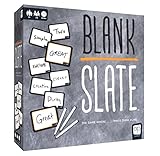
Overview: Blank Slate is a family-friendly word association game where players write single words to complete prompts (e.g., “______ minds think alike!”), aiming to match others’ responses without communication. For 3–8 players (ages 8+), it includes 250 double-sided cue cards, dry-erase slates, and a scoreboard for quick, prediction-based fun.
What Makes It Stand Out: The dry-erase slates enable reusable, mess-free play, while the “matching the crowd” mechanic sparks hilarious insights into groupthink. Its true all-ages appeal—unlike adult-exclusive competitors—makes it a rare gem for mixed-generation gatherings, from kids’ parties to adult game nights.
Value for Money: Priced affordably, the durable components (slates, thick cards) ensure longevity. It outperforms cheaper card-only games by eliminating replacement costs, offering better long-term value for families seeking reliable, repeatable entertainment.
Strengths and Weaknesses: Strengths: Truly family-inclusive; reusable components; simple rules for all ages; fosters social observation. Weaknesses: Less edgy than adult-focused games; replayability hinges on group creativity; scoreboard can feel superfluous.
Bottom Line: An outstanding choice for wholesome, engaging family fun. Highly recommended for groups wanting inclusive, screen-free interaction without mature content.
4. Fofeadm Drinking Board Games for Adults, Rubber Mat Drinking Board Game, Funny Party Interactive Drinking Games for Game Night, Birthday, Family Play or Any Occasion, Age 21+, 2-8 Players

Overview: This rubber mat-based drinking game merges board game movement with beverage-themed challenges. Players roll dice, move pieces, and complete dares or answer questions, triggering drinks. Designed for 2–8 players (21+), it includes a 15"x11" mat, 8 pieces, and 2 dice, targeting parties, birthdays, or casual nights.
What Makes It Stand Out: The durable, spill-resistant rubber mat solves common pain points of paper boards in drinking scenarios. Its versatility across events (bachelorette parties, tailgates) and emphasis on group dares—rather than pure trivia—creates organic, rowdy camaraderie absent in rigid drinking games.
Value for Money: An economical entry into drinking games, especially considering the mat’s durability versus flimsy alternatives. While niche, it delivers solid entertainment for the price if your group regularly drinks—though it lacks the replay depth of non-alcoholic competitors.
Strengths and Weaknesses: Strengths: Spill-proof mat; compact and portable; inclusive dares foster interaction; ideal for themed events. Weaknesses: Gameplay is simplistic; requires alcohol to function; mat size limits player immersion; not reusable sober.
Bottom Line: A practical, fun-focused drinking game for casual adult gatherings. Best for groups prioritizing convenience and laughter over strategic depth—just keep the beverages stocked.
5. What Do You Meme? After Hours by Relatable, The Explicit Expansion Pack for Game Night, Board Games, Adult Games, and Party Games, Includes 100 Caption Cards to Play with Full-Sized Game
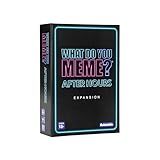
Overview: After Hours is an explicit expansion pack for the base What Do You Meme? game, adding 100 uncensored caption cards for “filthier” meme creation. Targeted at players 18+, it tackles edgy topics (NSFW humor, politics) and is marketed for bachelorette parties, 21st birthdays, or adult travel.
What Makes It Stand Out: It transforms the family-friendly base game into a raunchy party staple with bold, controversial content. The expansion’s specificity—focusing purely on mature humor—caters perfectly to groups seeking unapologetic, boundary-pushing fun unavailable in the core set.
Value for Money: Reasonably priced for 100 high-impact cards, but only valuable if you own the base game. Compared to standalone adult games, it’s a cost-effective way to escalate an existing favorite, though its niche appeal limits broader utility.
Strengths and Weaknesses: Strengths: Amplifies base game hilarity for mature crowds; sparks bold conversations; compact and easy integration. Weaknesses: Useless without core game; too explicit for many groups; risks alienating players with sensitive topics.
Bottom Line: A niche but potent upgrade for What Do You Meme? veterans wanting edgier humor. Only recommend if your group craves unfiltered comedy and already owns the full-sized game.
6. Put A Finger Down Party Game by Hunch Games | Viral Prompt and Challenge Card Game for Adults, Teens, and College Groups | Hilarious Social Icebreaker with 400 Cards for 2+ Players

Overview:
This viral card game transforms the popular social media trend into an in-person experience, designed to spark laughter and conversation among groups of 2+ players. With 400 prompt cards, it challenges participants to react physically by putting fingers down based on relatable or outrageous scenarios, making it ideal for teens, adults, and college settings.
What Makes It Stand Out:
Its genius lies in simplicity: players hold up five fingers and react instantly to read-aloud prompts, creating rapid, inclusive gameplay. Special “twist” cards introduce penalties and expressive challenges, ensuring dynamic interactions. The game accommodates any group size, from intimate pairs to large gatherings, with minimal setup and high replayability due to varied card combinations.
Value for Money:
Priced competitively for a 400-card set, it outperforms many party games by eliminating complex rules or equipment. While cheaper alternatives exist, the sheer volume of curated prompts and adaptability for diverse social settings justify the cost, offering hours of organic entertainment without recurring expenses.
Strengths and Weaknesses:
Strengths: Effortless to learn; fosters genuine connection; highly portable; scales perfectly for small or large groups; prompts feel fresh across multiple plays. Weaknesses: Humor relies heavily on group chemistry; limited physical engagement beyond finger movements; some prompts may feel repetitive after extended use.
Bottom Line:
An exceptional icebreaker that delivers on its viral promise, this game is perfect for casual hangouts or parties seeking lighthearted, inclusive fun. Highly recommended for teens and adults wanting spontaneous laughter without prep work.
7. It’s Bananas! The Monkey Tail Game – Funny Family & Party Game for Kids & Adults | Hilarious Gift for Birthday, Christmas, Bachelorette, Thanksgiving, White Elephant

Overview:
A physically comedic party game where players mimic monkey poses (like tail-grabbing squats) to avoid elimination, designed for all ages. Its viral TikTok fame (250M+ views) and eco-friendly credentials make it a standout for family gatherings, holidays, or adult celebrations seeking unscripted hilarity.
What Makes It Stand Out:
The game’s physicality—requiring expressive movements like “monkey thrusts” and backward squats—creates uncontrollable laughter, distinguishing it from card-based alternatives. Its carbon-neutral production and multi-generational appeal (kids to grandparents) add ethical and practical value. Celebrity endorsements (e.g., ABC’s Live with Kelly and Ryan) underscore its mass-market charm.
Value for Money:
At a mid-range price, it offers exceptional durability and replayability through pure physical comedy, with no batteries or apps needed. Though pricier than basic card games, its ability to engage large groups (2–10 players) and suitability for diverse occasions (birthdays, holidays) provide strong long-term value.
Strengths and Weaknesses:
Strengths: Universally accessible; zero setup time; eco-conscious packaging; generates authentic, high-energy moments; works for 2+ players. Weaknesses: Physically demanding for less mobile players; limited strategic depth; humor may not resonate with reserved groups.
Bottom Line:
A must-have for active, outgoing crowds prioritizing laughter over rules. Ideal as a gift for families or parties, though less suited for sedentary or intimate settings.
8. Cards Against Humanity

Overview:
A deliberately offensive party game where players fill in blank phrases with outrageous cards to create cringe-worthy combinations. Marketed as “for horrible people,” this base version (2.0) includes 600 cards (500 white, 100 black) and rule variations, targeting mature audiences seeking dark humor.
What Makes It Stand Out:
Its unapologetic edginess and user-driven expansions define its cult status. The game thrives on taboo topics, with simple mechanics (match white cards to black prompts) enabling rapid, chaotic rounds. The inclusion of “preposterous alternate rules” encourages creative chaos, while its reputation as a social litmus test fuels its appeal.
Value for Money:
Priced affordably for a high-replay card game, its strength lies in expansion compatibility (like the Nasty Bundle). However, value diminishes if your group dislikes offensive humor. Cheaper knockoffs exist, but official quality and continuous updates justify the cost for fans of subversive comedy.
Strengths and Weaknesses:
Strengths: Infinitely replayable; fosters bold group dynamics; easy to learn; massive expansion ecosystem; iconic cultural status. Weaknesses: Humor polarizes; not suitable for conservative/kid-friendly groups; cardboard quality is functional but unremarkable.
Bottom Line:
A niche but essential pick for adults who relish boundary-pushing humor. Avoid if sensitivity is a concern, but perfect for groups unafraid to embrace the cringe.
9. Lucky Egg Official Grab The Mic – Family Karaoke Board Game w/Foam Mic, 8+ Ages, 2-10 Players - Games for Bad Singers w/ 240 Lyrics (120 Cards) (First Edition)

Overview:
A lighthearted karaoke game where players race to sing song lyrics containing a revealed keyword, using a foam microphone. Designed for “bad singers,” it emphasizes speed and humor over vocal talent, with 240 lyrics across 120 cards for 2–10 players aged 8+.
What Makes It Stand Out:
The “no skill required” angle lowers performance anxiety, while the foam mic adds playful physicality. Multiple game modes (via the board) and fast-paced rounds—where players frantically recall lyrics under pressure—ensure constant engagement. Its real magic lies in turning musical mishaps into collective laughter.
Value for Money:
Competitively priced for a complete kit (mic, board, tokens, cards), it outshines traditional karaoke setups by requiring zero tech or setup. Though lyric depth isn’t encyclopedic, the focus on quick, accessible fun makes it a smart investment for family game nights versus app-based alternatives.
Strengths and Weaknesses:
Strengths: Inclusive for non-singers; energizing pace; versatile game modes; high laughter-to-effort ratio; sturdy foam mic. Weaknesses: Limited to common song knowledge; replayability dips if group knows few hits; board modes feel underdeveloped.
Bottom Line:
A joyful, stress-free karaoke alternative that’s perfect for casual family or friend gatherings. Highly recommended for groups wanting musical fun without vocal pressure.
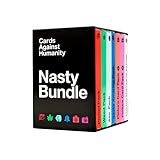
10. Cards Against Humanity: Nasty Bundle • 6 Nasty Themed Packs + 10 All-New Cards
Overview:
An adult-only expansion pack for Cards Against Humanity, featuring six themed decks (Period, Weed, Ass, etc.) plus 10 exclusive cards. Designed to “make everyone uncomfortable,” it intensifies the base game’s edgy humor with hyper-specific, provocative content.
What Makes It Stand Out:
The bundle’s niche themes (like the Picture Card Packs) cater to subcultures within CAH’s fanbase, adding layers of customization. Its exclusivity—deemed “too spicy for most stores”—appeals to veterans seeking fresh shock value. The ten new cards also offer unique, never-before-seen combinations.
Value for Money:
Priced moderately for six packs, it’s a steal for hardcore CAH players craving novelty. However, it’s useless without the base game, and the hyper-specific themes may not resonate universally. Compared to standalone expansions, the bundle offers better variety per dollar but risks redundancy if themes overlap with existing decks.
Strengths and Weaknesses:
Strengths: Massive thematic diversity; high shock factor; seamless integration with base game; great for dedicated fans. Weaknesses: Requires base game (not standalone); humor can feel forced or repetitive; unsuitable for mixed-age groups.
Bottom Line:
A worthwhile splurge for seasoned CAH players wanting to escalate the chaos, but skip if you’re new to the franchise or prefer milder humor.
Understanding Your Group Dynamics
Assessing Player Count and Compatibility
The number of people showing up isn’t just a headcount—it fundamentally shapes your game options. Games designed for intimate gatherings of 3-4 often falter with 8 players, while large-group standbys can feel sparse with too few. Crucially, consider how well your guests know each other. Are they close friends comfortable with playful teasing, or a mix of colleagues needing icebreakers? Mismatching the game’s social intensity to the group’s rapport is a common pitfall leading to forced interactions or discomfort.
Gauging Energy Levels and Preferences
Walk into any game night, and you’ll find a spectrum of energy. Some groups crave high-octane, rapid-fire action that gets everyone shouting, while others prefer the thoughtful pacing of strategic deduction or collaborative storytelling. Pay attention to your crew’s typical vibe: do they unwind with witty banter or deep strategy? Ignoring this mismatch—like forcing a quiet, introverted group into a raucous charades marathon—guarantees disengagement. Observe past gatherings; what energized them? What felt draining?
Navigating Skill and Experience Disparities
A major source of frustration arises when game complexity clashes with the group’s collective experience. Throwing a intricate strategy game at casual players guarantees confusion and resentment, while seasoned gamers might find overly simplistic party games tedious. Be honest about the group’s baseline. Are there competitive power-players who dominate, or newcomers wary of rules? The ideal game minimizes steep learning curves and offers accessible entry points while allowing room for skill development, ensuring no one feels left behind or unchallenged.
Decoding Game Mechanics for Maximum Engagement
Prioritizing Active Participation Over Spectating
Nothing deflates a game night like watching others play while you wait your turn. Seek out mechanics that keep everyone involved continuously. Games utilizing simultaneous play, real-time collaboration, or constant player interaction prevent downtime and maintain energy. The goal is minimizing “waiting” phases where engagement plummets—look for designs where even when it’s not your direct turn, you’re strategizing, reacting, or contributing to the unfolding action.
Evaluating the Role of Creativity and Improvisation
Games that tap into creativity—whether through storytelling, drawing, or quick-thinking wordplay—often generate the most authentic laughter and memorable moments. Consider if your group enjoys expressing themselves freely or prefers structured challenges. Mechanics encouraging improvisation can break the ice brilliantly but might intimidate shy participants. Look for adjustable “creativity pressure”; some games offer scaffolding (like prompts or categories) that make jumping in less daunting for hesitant players.
Understanding the Competition-Collaboration Spectrum
Is your group looking for friendly rivalry or shared victory? Highly competitive games can energize some crowds but create tension in others, especially if someone takes losses hard. Conversely, purely cooperative games foster teamwork but might lack the playful friction some enjoy. Many successful modern games blend both, offering light competition within a collaborative framework or team-based challenges. Knowing your group’s tolerance for direct competition versus the appeal of working together is vital for smooth sailing.
Practical Considerations for Seamless Gameplay
Time Commitment and Pacing Realities
Be brutally realistic about how long your group actually wants to commit. A game promising “20 minutes” that routinely takes 45 due to complex setup or slow turns will frustrate everyone. Consider the actual time investment: setup, rule explanation, playtime, and breakdown. Fast-paced games with simple, repeatable rounds often fit modern attention spans better than marathon sessions requiring deep focus. Prioritize games with clear natural stopping points if schedules are tight.
Space and Setup Constraints
Don’t underestimate the physical logistics. That brilliant game requiring a large central table might be impossible in a cozy living room. Consider seating arrangements—are players facing each other? Does the game need floor space for movement? Also, evaluate setup complexity: intricate boards, numerous cards, or complex token placement can eat into precious social time and deter repeat plays. Streamlined setup and compact storage often make a game a keeper for casual gatherings.
Noise Level and Environmental Fit
Think about the atmosphere you want to cultivate and your venue’s limitations. Some games thrive on loud, energetic shouting and movement, perfect for a house with space. Others rely on whispered clues or quiet deduction, better suited for apartments or late-night sessions where noise matters. Choosing a game whose natural volume aligns with your space prevents constant shushing or, worse, disturbing neighbors, ensuring the focus stays on fun, not damage control.
Accessibility and Inclusivity Essentials
Simplifying Rules Without Sacrificing Depth
The biggest barrier to entry is often convoluted rules. The best party games feature core mechanics graspable in under two minutes, with optional nuances emerging through play. Look for intuitive actions—pointing, drawing, speaking simply—that don’t require memorizing complex phases. A game shouldn’t need a rulebook lawyer; clear, concise instructions and visual aids (like iconography) are non-negotiable for smooth onboarding of new players.
Accommodating Diverse Physical and Cognitive Needs
Thoughtful game selection considers all participants. Does the game require rapid dexterity that might exclude some? Does it rely heavily on fine motor skills for drawing? Are color distinctions critical for colorblind players? Does it demand intense short-term memory? Opt for games with flexible components—larger cards, alternative ways to give clues, adjustable time limits—to ensure everyone can participate meaningfully without feeling like a burden.
Fostering Psychological Safety
Games involving personal revelations, bluffing, or mild deception can be hilarious but require trust. Gauge your group’s comfort level. Are they open to gentle teasing, or does sarcasm fall flat? Avoid mechanics that could accidentally highlight sensitive topics or make someone feel targeted, especially early in a group’s dynamic. The best games create shared vulnerability through lighthearted scenarios, not potentially hurtful personal jabs, ensuring laughter is inclusive and kind.
Long-Term Value and Replayability Factors
Avoiding the One-and-Done Trap
Some games deliver a single explosive round of fun but lose all magic upon repetition. True replayability stems from variability: modular boards, diverse card decks, or mechanics where player interaction creates unique stories each time. Ask: “Will the experience feel fresh the third time we play, or even the tenth?” Games with high randomness or emergent narratives often have legs, while those relying solely on a single gimmick usually don’t.
Considering Expansion and Modularity Potential
While avoiding specific products, note that some game systems are designed with longevity in mind. Look for core sets that allow for expansion packs adding new themes, mechanics, or challenges, effectively extending the game’s life. Even without expansions, games offering built-in variants or “house rule” potential through simple tweaks encourage ownership and adaptation by your group, keeping the experience dynamic.
Assessing Storage and Durability
Let’s be practical: if a game is a hassle to store or fragile, it won’t get played. Bulky boxes shoved on a high shelf gather dust. Flimsy cards get bent. Consider component quality and storage efficiency. Games with durable cards, compact boxes, or clever internal organization are more likely to be grabbed spontaneously. Durability isn’t just about cost—it’s about removing friction between the idea of playing and actually getting the game to the table.
Frequently Asked Questions
How do I choose a game for a mixed group of gamers and non-gamers?
Focus on games with extremely simple core rules (learnable in 2 minutes) and high player interaction where everyone contributes constantly. Avoid complex strategy or deep theme immersion; prioritize accessible mechanics like pattern matching, quick drawing, or light deduction with clear, visual components. Ensure the game minimizes downtime between turns.
What’s the biggest mistake people make when picking party games?
Overestimating their group’s patience for complex rules or long setup times. The most common failure is choosing a game requiring significant explanation or a lengthy first playthrough, which immediately saps energy and creates frustration before the fun even starts. Simplicity and speed to first play are paramount.
How can I prevent one dominant player from taking over?
Seek games with simultaneous play (everyone acts at once) or strong collaborative/team elements that distribute agency. Mechanics where players give clues, vote anonymously, or contribute to a shared goal often mitigate dominance. If competitive, ensure the game has catch-up mechanics or team play to balance influence.
Are there good party games for very large groups (8+ people)?
Absolutely. Look for games designed specifically for high player counts, often utilizing team play, elimination-free mechanics, or simultaneous participation. Key features include minimal downtime per player, easy spectator engagement, and streamlined turns. Avoid games requiring intricate individual turns or deep strategic planning in large groups.
How important is theme versus mechanics for party fun?
For pure party games, mechanics vastly outweigh theme. A clever, engaging mechanic (like real-time drawing or collaborative storytelling) creates the fun; theme is usually just decoration. Don’t get seduced by a cool theme if the core interaction is slow, passive, or overly complex. Fun comes from doing, not just the subject matter.
What if my group gets too competitive and it ruins the mood?
Prioritize cooperative games where the group wins or loses together, or games with light, playful competition focused on creativity rather than pure winning (e.g., “funniest answer” voting). Avoid games with direct player elimination or harsh “take that” mechanics. Explicitly set a lighthearted tone before starting: “This is about laughs, not crushing your friends!”
How can I make game nights more inclusive for shy players?
Choose games emphasizing creativity over speed or knowledge, offering multiple ways to participate (writing, drawing, speaking briefly). Avoid high-pressure performance elements. Games with anonymous input (like card submissions) or team-based clue-giving can help shy players contribute without the spotlight. Always emphasize that there are no “wrong” creative answers.
What’s the ideal game length for most adult gatherings?
Aim for core gameplay sessions of 20-45 minutes. This fits modern attention spans, allows time for setup/explanation within a 60-minute block, and provides a natural stopping point. Games with modular rounds (e.g., play 3-5 short rounds) offer flexibility to extend or shorten based on the group’s energy without feeling incomplete.
How do I know if a game will actually get played multiple times?
Prioritize games with high inherent variability—different card combinations, evolving player interactions, or modular setups that create unique experiences each time. Avoid games reliant on a single surprise element or gimmick that loses impact after the first play. Replayability comes from emergent fun, not just the initial novelty.
Are physical components (like cards or boards) crucial, or are app-based games viable?
Physical components generally foster better group connection and reduce screen distraction. Tangible elements (shuffling cards, moving pieces) enhance the shared physical experience. While some app-assisted games work, pure digital party games often struggle with engagement as players focus on individual screens rather than each other. Prioritize physical interaction for true social connection.
See Also
- Stop Boring Game Nights with the 10 Best Party Board Games This Year
- Stop Boring Game Nights with the 10 Best Crossword Board Games This Year
- Stop Boring Game Nights with the 10 Best Sports Trivia Games This Year
- Stop Boring Game Nights with the 10 Best Drawing Games This Year
- Stop Boring Game Nights with the 10 Best Acting Games This Year