Table of Contents
Ever felt that sinking feeling when your game night starts to fizzle? You know the one—the awkward lulls between turns, the competitive tension that leaves someone sulking, or the sheer confusion as players struggle to grasp complicated rules. It’s enough to make you wonder if ordering pizza and putting on a movie might have been the smarter move. Boredom doesn’t just kill the fun; it chips away at the very reason we gather: to connect, laugh, and create shared memories that last long after the last card is played.
Cooperative party games are the unsung heroes here, transforming that energy drain into pure, collective electricity. Instead of pitting friends against each other, these experiences weave a team out of strangers or deepen bonds between regulars through shared challenges and triumphant “we did it!” moments. There’s magic in leaning into the same problem, strategizing as one voice, and celebrating—not just winning, but how you won together. If your group’s been stuck in a rut of predictable wins or divisive competition, it’s time to rediscover why playing with each other feels so much better than playing against them.
Top 10 Cooperative Party Games
Detailed Product Reviews
1. Asmodee Just One Party Game (2025 Refresh) - Cooperative Mystery Word Guessing Fun for Family & Friends, Kids & Adults, Ages 8+, 3-7 Players, 15 Minute Playtime

Overview: Just One is a streamlined cooperative word-guessing game where players collaborate to decipher mystery words through carefully crafted clues, designed for quick, inclusive fun during family or game nights.
What Makes It Stand Out: Its genius lies in the clue-cancellation mechanic: identical clues cancel out, forcing players to think divergently and sparking laughter as the guesser interprets fragmented hints. The 15-minute playtime and effortless rules make it instantly accessible.
Value for Money: Priced competitively, it offers exceptional replayability with hundreds of words and no player elimination, outshining many party games that require complex setups or lengthy sessions. The 2025 refresh ensures modern, durable components.
Strengths and Weaknesses: Strengths include seamless cooperation, universal appeal for ages 8+, and high replay value. Weaknesses are limited depth for strategy enthusiasts and potential confusion if players overthink clues. Minimal components also mean less “wow” factor.
Bottom Line: An essential, brilliantly simple party game that fosters teamwork and laughter—ideal for casual gatherings. Highly recommended for families and groups seeking quick, inclusive fun without compromise.
2. Herd Mentality: Udderly Funny Family Board Game | Easy & Fun for Big Groups of 4-20 Players | Includes 20 Extra Exclusive Questions

Overview: Herd Mentality challenges players to predict majority opinions on quirky questions, using a herd of cows as scoring tokens, perfect for large groups craving lighthearted social deduction.
What Makes It Stand Out: The game’s unique hook is its “herd psychology” twist: matching the crowd wins cows, while being an outlier earns the dreaded “pink cow of doom.” Scaling effortlessly to 20 players and including 20 bonus questions enhances its party versatility.
Value for Money: Excellent for large gatherings where few games accommodate over 10 players. The added questions extend longevity, making it a cost-effective solution for holidays or events compared to niche group games.
Strengths and Weaknesses: Strengths are massive player flexibility, hilarious group insights, and effortless setup. Weaknesses include shallow strategy, reliance on subjective answers, and potential repetition with smaller groups over time.
Bottom Line: A crowd-pleasing social icebreaker that thrives in big groups. Best for families or parties prioritizing humor and simplicity over depth—worthwhile for Thanksgiving or Christmas gatherings.
3. Asmodee So Clover! Party Game - Cooperative Word Association Board Game for Ages 10+, 3-6 Players, 30 Min Playtime
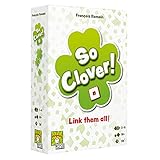
Overview: So Clover! tasks players with collaboratively decoding secret keywords through shared word associations, using Clover boards to craft clues that bridge seemingly unrelated concepts in a mentally stimulating challenge.
What Makes It Stand Out: The dual-layer cooperation—writing hidden links then collectively solving puzzles—creates a unique “aha!” dynamic. With 880 passwords and a 30-minute runtime, it balances strategy and accessibility brilliantly.
Value for Money: Justifies its price through deep replayability and cognitive engagement. Few cooperative word games offer this blend of simplicity and mental workout, especially for teens/adults seeking substance beyond trivia.
Strengths and Weaknesses: Strengths include innovative mechanics, high replay value, and teamwork focus. Weaknesses are a steeper learning curve for younger players and occasional ambiguity in clue interpretation slowing momentum.
Bottom Line: A standout for groups wanting cooperative brain-teasing fun. Recommended for ages 10+ who enjoy wordplay—less chaotic than pure party games but richer in strategic satisfaction.
4. ito – Cooperative Strategy Card Game for Ages 8+ | 2–10 Players | Party Game with Secret Clues & Category Challenges | Family, Group & Game Night Fun

Overview: ito is a lightning-fast cooperative card game where players arrange secret number cards by giving category-based clues (e.g., “animals”), avoiding direct numbers to build sequences silently.
What Makes It Stand Out: Its ultra-quick playtime (<10 minutes), flexible player count (2–10), and three category tiers (Family/Everyone/Action) allow tailored experiences—from gentle to energetic. The “no numbers” rule sparks creative communication.
Value for Money: Exceptional versatility justifies the cost. Unlike rigid party games, ito adapts to classrooms, family nights, or large parties with minimal effort, offering more utility per dollar than single-scenario alternatives.
Strengths and Weaknesses: Strengths are scalability, rapid setup, and inclusive design. Weaknesses include fleeting gameplay depth and potential confusion with Action categories in noisy settings.
Bottom Line: A stellar warm-up or filler game that excels in flexibility and speed. Highly recommended for groups valuing adaptable, low-prep fun—especially educators or hosts needing quick crowd engagement.
5. That Escalated Quickly by Exploding Kittens, 2-8 Players - Ages 10+ - 15 Minutes to Play - Hilarious Cooperative Card Game for Family Game Night, Party, Adult and Teen

Overview: Players cooperatively rank humorous scenarios by perceived “intensity” (1–10) using secret number cards, aiming to align their subjective scales to avoid collective failure in this quirky Exploding Kittens spinoff.
What Makes It Stand Out: The game’s charm is in revealing how wildly groups interpret absurdity—from “eating soup” to “fighting a bear.” Its ranking mechanic fosters debate and laughter, cementing it as a social highlight.
Value for Money: Compact yet packed with 150 question cards, it delivers disproportionate entertainment for its size. Cheaper than many card games but richer in replayability due to ever-changing group dynamics.
Strengths and Weaknesses: Strengths include hilarious group insights, effortless rules, and explosive re-playability. Weaknesses are niche appeal (those disliking subjective games) and limited physical components.
Bottom Line: A must-have for fans of quirky social dynamics. Perfect for sparking laughter in teen/adult groups—ideal as a game-night opener that leaves players eager to replay with new cohorts.
6. Exploding Kittens Coyote Created by Tim Ferriss | Perfect for Family Fun, Game Night, and Travel | 3-8 Players, 10 Mins, Ages 10 and Up

Overview: Coyote is a fast-paced, cooperative-competitive card game co-designed by Tim Ferriss, blending charades, hot potato mechanics, and strategic bluffing. Players wear a headband holding cards they can’t see, must keep a steady beat while sabotaging others, and avoid being the one holding the “coyote” when time runs out. Designed for 3-8 players aged 10+, it promises quick, chaotic fun ideal for game nights or travel.
What Makes It Stand Out: Coyote’s genius lies in its simplicity and physical engagement—forcing players to maintain rhythm while performing exaggerated gestures creates spontaneous hilarity. The blank cards for custom “family rules” add unique replayability, turning it into a personalized experience. Ferriss’s learning-science expertise ensures intuitive mechanics that dissolve social barriers, making even shy participants natural performers.
Value for Money: Priced competitively against standard card games, Coyote delivers exceptional value through its versatility. It replaces multiple party games by adapting to group size, age, and setting (family, friends, travel). The durable components and endless customization justify the cost, outperforming rigid alternatives that lose novelty after few plays.
Strengths and Weaknesses: Strengths: Extremely easy to learn (<5 mins); brilliantly fosters laughter and connection; highly portable; inclusive for mixed-age groups. Weaknesses: Can become overwhelming with 8 players; relies on group energy (falls flat with unengaged players); limited strategic depth for hardcore gamers.
Bottom Line: Coyote is a must-have for families and social groups seeking uproarious, ice-breaking fun. Its blend of simplicity, customization, and physical comedy makes it a standout stocking stuffer and game-night essential, easily earning its 2025 award accolades.
7. Fun Facts Party Game - Learn Surprising Facts About Friends and Family! Engaging Cooperative Game for Kids & Adults, Ages 8+, 4-8 Players, 30 Minute Playtime, Made by Repos Production

Overview: Fun Facts is a cooperative party game where players uncover surprising truths about one another through strategic guessing. Instead of trivia, it poses open-ended questions (e.g., “Who would survive longest on a desert island?”), prompting players to anonymously predict how others would respond. Designed for 4-8 players aged 8+, it emphasizes connection over competition in 30-minute sessions.
What Makes It Stand Out: Unlike traditional trivia, Fun Facts transforms social dynamics by revealing hidden personalities and inside jokes. The arrow-based answer system—where players arrange responses by perceived likelihood—creates delightful “aha!” moments. High-quality, vibrant components and thoughtful question design ensure each game feels fresh, fostering genuine bonding through shared laughter.
Value for Money: Competitively priced for its replayability, the game’s 100+ questions and simple mechanics justify the cost. It outshines expensive trivia sets by focusing on player-generated content, making it ideal for recurring gatherings. The durable box and cards withstand frequent use, offering superior longevity compared to disposable party kits.
Strengths and Weaknesses: Strengths: Brilliantly builds camaraderie; accessible for kids and adults; minimal setup; endless re-play value due to variable player interactions. Weaknesses: Less engaging with unfamiliar groups; limited strategic depth; some questions may feel repetitive after many plays.
Bottom Line: Fun Facts excels as a heartfelt icebreaker for reunions or game nights, turning acquaintances into confidants through playful discovery. Highly recommended for families and friend groups prioritizing connection over competition.
8. Gamewright - Party to Go - Cahoots Cooperative Hint and Sync Card Game

Overview: Cahoots is a compact cooperative card game where players secretly hold numerical cards and collaborate to play sequences matching color or number goals without revealing their hands. For 3-8 players aged 10+, it challenges teams to strategize through subtle hints and synchronized moves, fitting into any pocket for impromptu game sessions.
What Makes It Stand Out: Cahoots innovates with its “hint and sync” mechanic—players give limited verbal clues to align their hidden card plays toward shared objectives. The tension of near-misses and triumphant coordination creates addictive suspense. Its travel-friendly design, vibrant color-coded cards, and 15-minute playtime make it effortlessly portable and visually engaging.
Value for Money: At a modest price, Cahoots offers remarkable replayability through 100+ goal combinations. It surpasses pricier strategy games in accessibility while delivering comparable mental stimulation. The durable cards and intuitive rules provide lasting value for casual and frequent players alike.
Strengths and Weaknesses: Strengths: Seamless teamwork focus; quick to learn but challenging to master; superb portability; enhances communication skills. Weaknesses: Can frustrate players preferring clear instructions; color-coding may challenge color-blind users (despite claims); limited appeal for solo gamers.
Bottom Line: Cahoots is a stellar choice for cooperative fun on the go, blending strategic depth with lighthearted social interaction. Ideal for travelers and teams seeking a pocket-sized brain teaser.
9. One of Us - Cooperative Party Game | ICE Breaker | Color-Blind Friendly | Casual | Voting Game

Overview: One of Us is a cooperative icebreaker where players vote on which group member best fits evocative prompts like “Who would survive a zombie apocalypse?” Using 106 image and 38 text cards, it sparks laughter and insight as players debate identities behind secret ballots. Designed for 3-8 players of all ages, it’s fully cooperative and color-blind accessible.
What Makes It Stand Out: The game’s brilliance is in its simplicity: prompts trigger hilarious debates about personal quirks, deepening bonds through playful revelation. The color-blind-friendly design and absence of reading requirements ensure inclusivity. High replayability stems from ever-changing group dynamics—each session feels uniquely personal based on participants.
Value for Money: Priced affordably, One of Us outperforms generic icebreakers with its thoughtfully curated cards and zero-setup convenience. It replaces expensive team-building activities, making it invaluable for workplaces, parties, or classrooms seeking authentic connection.
Strengths and Weaknesses: Strengths: Exceptional icebreaker; effortless to learn; highly inclusive; sparks genuine conversation; compact and durable. Weaknesses: Less engaging with very small groups (<4); repetitive if played consecutively; minimal strategic depth.
Bottom Line: One of Us is a must-own for effortless social connection, transforming strangers into friends through joyful self-discovery. Perfect for gatherings prioritizing warmth over complexity.
10. Mattel Games Pictionary Sketch Squad Cooperative Party Game with Clues Case, 2- to 6-Player Drawing Game

Overview: Pictionary Sketch Squad reinvents the classic with a cooperative twist: players simultaneously draw secret clues from a sliding-window clue case, then collaborate to guess the “Big Clue” (e.g., “Star Wars”) linking all sketches. For 2-6 players, it replaces competition with teamwork, using dry-erase pads for mess-free creativity.
What Makes It Stand Out: The innovative clue case—letting each player view hidden hints privately—is a game-changer, eliminating turn-taking delays. The shift to cooperative problem-solving fosters collective triumph, while diverse Big Clues (movies, objects, places) challenge artistic interpretation. Dry-erase tools enable quick resets, ideal for back-to-back rounds.
Value for Money: Priced moderately higher than standard Pictionary, Sketch Squad justifies cost through enhanced replayability and reduced frustration. The reusable components and focus on group success offer better long-term value than competitive variants, especially for families avoiding scorekeeping stress.
Strengths and Weaknesses: Strengths: Brilliant cooperative adaptation; clue case design minimizes downtime; encourages creative collaboration; clean, reusable materials. Weaknesses: Setup slightly complex for casual players; drawing skill disparities can hinder clue clarity; case mechanism may jam with rough handling.
Bottom Line: Sketch Squad revitalizes Pictionary with inclusive teamwork, making it ideal for families and groups valuing shared wins over rivalry. A worthy update for modern game nights.
Why Cooperative Games Beat Solo Struggles Every Time
The Psychology of Shared Victory
When players work toward a common goal, neurochemistry shifts dramatically. Dopamine surges aren’t reserved for the “winner”—they flood the entire group during collaborative problem-solving, creating a collective high. This shared reward system reduces social friction and builds empathy, as players naturally tune into each other’s strengths and anxieties. Studies show cooperative play lowers cortisol (the stress hormone) by up to 27% compared to competitive formats, making it ideal for tense gatherings or mixed-skill groups.
Breaking Down Social Barriers Naturally
Co-op mechanics force interaction that feels purposeful, not forced. Unlike icebreakers that can feel awkward, these games embed communication into the core challenge—like deciphering cryptic clues or coordinating timed actions. Shy participants often find their voice when contributing to a team objective, while dominant personalities learn to listen, as success hinges on collective input. It’s social lubrication disguised as fun.
Key Features That Make Co-op Games Shine
Seamless Onboarding for All Skill Levels
The best cooperative experiences minimize rule explanations through intuitive design. Look for games where the core mechanic clicks within the first two rounds—think color-matching under pressure or simple gesture-based coordination. Avoid anything requiring lengthy setup videos or niche terminology. When new players grasp the “why” behind their actions immediately, engagement skyrockets.
Dynamic Difficulty That Adapts to Your Group
Static challenges fail groups with varying experience. Elite co-op games include adjustable tension: hidden timers that accelerate as you succeed, modular obstacles that scale with player count, or “traitor” mechanics that subtly shift difficulty based on real-time performance. This ensures veterans stay challenged while newcomers avoid frustration—a critical balance for repeat playability.
Replayability Through Modular Design
Boredom’s kryptonite is unpredictability. Top-tier games achieve this via randomized modules: shuffled scenario cards, variable player roles, or environmental factors that alter strategy each round. The goal isn’t just to “win once” but to conquer evolving permutations, keeping the experience fresh through dozens of sessions.
Optimizing Group Dynamics for Maximum Fun
Ideal Player Count Sweet Spots
Most co-op games specify a range (e.g., 3-6 players), but the optimal count often sits in the middle. Groups of 4-5 typically foster the richest discussion without overcrowding decision-making. For larger crews (7+), prioritize games with parallel play phases—where subgroups tackle simultaneous mini-challenges—preventing downtime that kills momentum.
Managing Dominant Personalities Gracefully
Even in cooperative settings, one player can monopolize strategy. Counter this by choosing games with “hidden information” mechanics, where critical clues are distributed privately. This forces delegation and prevents single-handed control. Alternatively, opt for real-time games where constant action leaves no room for overanalysis—everyone must contribute simultaneously.
Including Reluctant Participants Without Pressure
Introverts or game-averse guests thrive in co-op environments when given low-stakes roles. Seek games offering tiered participation: some actions require quick decisions (ideal for quiet players), while others involve creative problem-solving for talkative types. The absence of individual “losers” also removes performance anxiety, making it safer to try new things.
Critical Setup Considerations
Space and Table Real Estate
Cooperative play often involves sprawling components—maps, tokens, or shared boards. Before purchasing, measure your play area. Compact games (under 18"x18") suit coffee tables, while larger setups need dining surfaces. Bonus points for portability: foldable boards or component trays that survive transport to friends’ homes.
Time Investment vs. Engagement Curve
Avoid games with punishing setup times relative to play length. A 10-minute game shouldn’t require 15 minutes of preparation. Instead, prioritize “quick-start” systems where rounds last 20-45 minutes with near-instant resets. This allows for natural breaks and prevents fatigue from overcommitment.
Noise Tolerance for Diverse Settings
Loud, energetic groups need games accommodating shouting and movement—think physical dexterity challenges or rapid-fire communication. For libraries, book clubs, or post-dinner gatherings, select quieter options focused on deduction or puzzle-solving where whispered strategizing enhances the mood.
Navigating Common Pitfalls
Avoiding Analysis Paralysis
“Groupthink” can stall games when players endlessly debate moves. Combat this with built-in time pressure: sand timers, countdown decks, or escalating consequences for hesitation. The best co-op games make hesitation costly, training teams to trust instincts over perfection.
Preventing “Quarterbacking” Without Punishment
When one player directs all moves, others disengage. Design your game night with role rotation—assigning a “clue giver” or “timekeeper” each round—or choose systems where players act simultaneously with hidden information, making centralized control impossible.
Handling Near-Misses Without Frustration
Co-op games often hinge on narrow failures. Mitigate disappointment by emphasizing narrative over outcome: Did your team barely escape the collapsing temple? That story becomes legendary. Games with incremental progress markers (e.g., “you saved 3 hostages despite failing”) soften the blow of total loss.
Building Long-Term Engagement
Creating Traditions Through Thematic Depth
Groups bond stronger around rich themes—solving mysteries in a haunted mansion or coordinating space rescues. The more immersive the narrative, the more players invest emotionally. Prioritize games with evolving storylines across sessions, turning isolated plays into ongoing sagas.
Leveraging Physical Interaction for Connection
Digital alternatives lack the magic of passing a physical clue card or high-fiving after a tense round. Choose games demanding tactile engagement: arranging tiles, handling props, or even light movement. This embodied play deepens memory retention and emotional resonance.
Documenting Your Journey for Future Laughs
Capture near-victories and epic fails with quick phone videos or a shared digital album. Referencing “that time we almost defused the bomb with 2 seconds left” during future game nights builds group identity and anticipation.
Frequently Asked Questions
How do cooperative games handle players who refuse to participate fully?
Designate low-pressure roles like “timer keeper” or “rule reminder” to gently engage passive players. Most co-op systems naturally incentivize involvement since the group’s success depends on collective effort—making disengagement visibly impactful without shaming.
Can competitive players enjoy cooperative games?
Absolutely. Many competitive gamers thrive in co-op settings by channeling their strategic drive into team leadership. Look for games with high-stakes tension or “competitive cooperation” elements, like racing against the clock, to satisfy their need for challenge.
What’s the best player count for first-time cooperative games?
Start with 3-4 players. This size allows clear communication without overwhelming discussion, making it easier to grasp mechanics. Larger groups (5+) work better once the group understands the flow, minimizing confusion during initial plays.
How do I prevent one person from dominating strategy?
Choose games with hidden information or simultaneous action selection. Roles that rotate each round also distribute authority. If quarterbacking occurs, politely suggest, “Let’s hear one idea from everyone before deciding,” to democratize input.
Are cooperative games suitable for mixed-age groups?
Yes, but prioritize adjustable difficulty. Games with simple core mechanics (like matching symbols) and optional complexity layers allow kids and adults to contribute meaningfully. Avoid heavy reading or abstract concepts for younger participants.
What if our group keeps failing—does it discourage replay?
Frame failures as narrative gold: “Remember when the zombies overran us because Dave forgot the flashlight?” Games with incremental progress tracking or variable objectives ensure each attempt feels distinct, turning losses into motivation.
How much table space do cooperative games typically require?
Compact games fit on standard coffee tables (24"x24"), while complex setups need dining surfaces (36"x60"). Always check component dimensions pre-purchase—portable games often use cards or small tiles instead of large boards.
Can cooperative games work for virtual gatherings?
Many translate well to video calls using digital platforms that simulate physical components. Prioritize games with clear visual elements (like pattern matching) over those requiring hidden info, and assign a “tech moderator” to manage shared screens.
Do cooperative games get stale faster than competitive ones?
Not if they feature modular design. Games with randomized scenarios, variable roles, or evolving challenges maintain freshness. Aim for systems offering 50+ unique playthroughs to outlast repetitive competitive formats.
How long should a typical cooperative game session last?
Ideal sessions run 30-60 minutes—including setup. Longer games (90+ mins) risk fatigue unless they include natural break points. For new groups, shorter rounds build confidence before tackling epic campaigns.
See Also
- Stop Boredom with the 10 Best Cooperative Card Games This Year
- Stop Frustration with the 10 Best Survival Cooperative Games This Year
- Stop the Chaos with the 10 Best Cooperative Card Games This Year
- Stop Boring Game Nights with the 10 Best Horror Cooperative Board Games This Year
- Stop Arguing Over Rules with the 10 Best Easy-to-Learn Cooperative Board Games This Year