Table of Contents
Remember that sinking feeling when game night starts to feel less like fun and more like a chore? You pull out the same worn box, hear the same groans about “not that game again,” and suddenly, the excitement of connecting with friends or family evaporates. It’s not that the games are bad—they’re familiar, reliable—but that very predictability becomes the enemy of engagement. When every session unfolds with the same strategies and outcomes, the spark that makes game nights special flickers out, leaving everyone checking their watches instead of leaning into the table. Game night stagnation is a silent killer of social connection, and it’s more common than you think.
The solution isn’t necessarily buying more games—it’s finding the right kind of game that actively fights boredom by design. Enter modern deck-building mechanics, a genre that thrives on unpredictability and player-driven evolution. Unlike static board games where the setup and rules rarely change, deck-builders put you in the architect’s seat, constantly reshaping your strategy as the game unfolds. Each session becomes a unique puzzle, ensuring no two nights play alike. This isn’t just about shuffling cards; it’s about injecting fresh energy into your gatherings through dynamic gameplay that rewards creativity, adapts to group dynamics, and turns every player into an active participant rather than a passive rule-follower. Let’s explore how this genre can revitalize your routine.
Top 10 Deck Building Games
Detailed Product Reviews
1. Fantasy Flight Games Star Wars The DeckBuilding Game | Strategy Card Game | Head-to-Head Tactical Battle Game for Adults & Kids | Ages 12+ | 2 Players | Average Playtime 30 Minutes (FFGSWG01)

Overview: This head-to-head deckbuilder plunges players into the iconic conflict between the Galactic Empire and Rebel Alliance. Designed for two players, it offers a streamlined 30-minute experience where you build decks, deploy legendary characters and vehicles, and battle to destroy three of your opponent’s bases. Its accessible rules make it approachable for teens and adults alike. What Makes It Stand Out: The game shines through its deep faction asymmetry—Imperial players focus on overwhelming force and the Death Star, while Rebels excel at agility and hit-and-run tactics. Including over 50 cards featuring Luke, Vader, X-Wings, and TIE Fighters authentically captures Star Wars’ essence, enhancing immersion without complex rules. Value for Money: Priced competitively around $25, it delivers exceptional value. The high-quality components, thematic depth, and replayability surpass many entry-level deckbuilders. While expansions add longevity, the base game provides complete, satisfying duels, outperforming generic card games in its price bracket. Strengths and Weaknesses: Strengths: Intuitive learning curve, strong thematic integration, quick setup, and balanced asymmetry. Weaknesses: Limited player count (2 only), minimal strategic depth for hardcore gamers, and base destruction mechanic can feel luck-dependent early on. Bottom Line: An outstanding entry-point deckbuilder for Star Wars fans and casual strategists. Its perfect blend of accessibility, theme, and tactical nuance makes it a must-have for dueling enthusiasts, though veterans may crave more complexity.
2. Mistborn Deckbuilding Game by Brotherwise Games | Fantasy Card Strategy with Allomantic Powers | Build Your Deck, Burn Metals, and Battle Through Cinematic Missions | 1 to 4 Players | Ages 13+

Overview: Based on Brandon Sanderson’s Mistborn novels, this deckbuilder transports players to Scadrial. It uniquely blends solo/co-op narrative missions with competitive play, challenging you to recruit heroes, “burn” metals like Steel or Pewter for powers, and complete cinematic objectives. The game accommodates 1-4 players with adaptable scaling. What Makes It Stand Out: Its standout feature is the Allomancy system—burning metals triggers cascading abilities that enable creative combos (e.g., Pewter for brute force, Steel for precision). The evolving mission structure and faction-specific powers create a deeply thematic, story-driven experience rare in deckbuilders. Value for Money: At $40, it justifies its cost through versatility. The inclusion of solo/co-op modes, multiple replayable missions, and high-quality components offers substantial content. It outvalues rigidly competitive-only games by catering to varied playstyles, though expansion needs may arise long-term. Strengths and Weaknesses: Strengths: Innovative metal-burning mechanics, exceptional narrative integration, flexible player count, and rich strategic depth. Weaknesses: Steeper learning curve than entry-level games, mission setup can be fiddly, and component storage isn’t optimized. Bottom Line: A masterclass in thematic deckbuilding that excels for both Sanderson fans and strategy veterans. Its narrative depth and metal-powered mechanics warrant the investment, though newcomers should brace for initial complexity.
3. Asmodee Star Wars: The Deckbuilding Game: The Clone Wars Edition - Intense Galactic Battle, Strategy Game for Kids and Adults, Ages 12+, 2 Players, 30 Minute Playtime
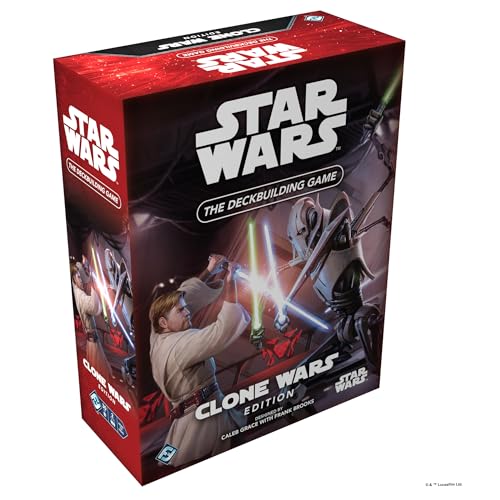
Overview: A standalone sequel to FFG’s original, this edition reimagines the deckbuilder for the Clone Wars era. Players command either the Galactic Republic or Separatist Alliance, battling to destroy bases using iconic characters like Anakin or General Grievous. It retains the swift 30-minute dueling format while overhauling factions and cards. What Makes It Stand Out: The Clone Wars edition distinguishes itself with faction-specific mechanics: Republic players leverage clone trooper swarms and Jedi heroes, while Separatists deploy droid armies and tactical sabotage. Bases like Kamino and Geonosis introduce fresh strategic layers absent in the original game. Value for Money: Priced near $30, it offers solid standalone value. New art, revised mechanics, and era-specific cards justify purchasing over the first edition, though owning both creates ultimate replayability. It edges out competitors with its polished theme integration at this price point. Strengths and Weaknesses: Strengths: Fresh faction designs, streamlined rules, stunning Clone Wars-era artwork, and perfect for franchise newcomers. Weaknesses: Lacks cross-compatibility with the original game, minimal innovation beyond theme, and still limited to 2 players. Bottom Line: The definitive Clone Wars strategy experience—ideal for fans seeking focused, thematic duels. While not revolutionary, its tight design and era-specific charm make it a worthy addition to any Star Wars gamer’s shelf.
4. Gwent - Official Licensed Version | Complete Set | Competitive Deck Building Strategy Game | Fantasy Card Battler From the Popular Video Game | Tactical Playing Cards | Ages 12+ | 1-5 Players | 20 min
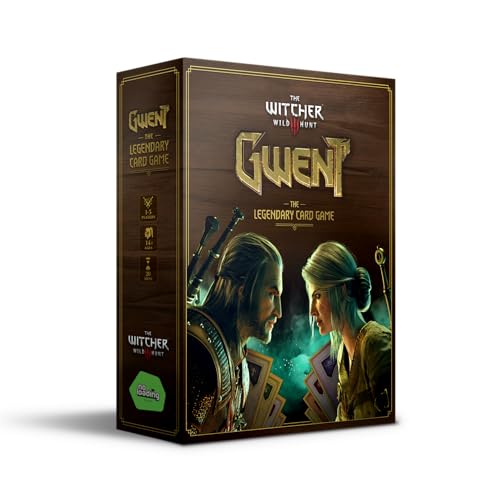
Overview: Adapted from The Witcher 3’s beloved mini-game, this physical version captures Gwent’s bluff-heavy duels. Players represent one of five factions (e.g., Nilfgaard, Scoia’tael), deploying unit and special cards across three rows to outscore opponents in a best-of-three round format. Its 20-minute runtime suits quick, intense matches. What Makes It Stand Out: Gwent’s genius lies in its “round-based” scoring and mandatory bluffing—winning two rounds secures victory, encouraging strategic card hoarding. The inclusion of all five factions (400+ cards) and video-game-accurate art creates unmatched authenticity for Witcher fans. Value for Money: At $35, it’s a steal for the component volume. The complete faction set, playmat, and rulebook deliver everything needed for competitive play, outpacing niche deckbuilders. However, limited expansions may hinder long-term depth compared to living card games. Strengths and Weaknesses: Strengths: Brilliant bluff mechanics, exceptional portability, high replayability, and strong video-game nostalgia. Weaknesses: Faction balance issues (some weaker than others), scoring can feel opaque to beginners, and cardboard tokens lack durability. Bottom Line: A triumphant translation of a digital phenomenon. Its tactical depth and portability make it essential for Witcher enthusiasts and casual strategists, though competitive players may desire more meta support.
5. Unstable Games Command of Nature Card Game - Nature-Themed Strategy Game for 2-6 Players, Ages 8 and Up - Family Game Night Card Game from The Creators of Unstable Unicorns and Here to Slay

Overview: From the makers of Unstable Unicorns, this lighthearted game tasks players with commanding elemental forces (Earth, Air, Water, Fire) to build “Nature-Based Powers.” Designed for 2-6 players, it emphasizes quick turns, interactive card effects, and humorous artwork, targeting family game nights with an 8+ age rating. What Makes It Stand Out: Its standout trait is accessibility—simple “draw one, play one” rules with chaotic player interaction (stealing powers, sabotaging builds). The nature theme, realized through playful art and intuitive mechanics, avoids Unstable Games’ trademark snark, making it uniquely family-friendly. Value for Money: Priced at $20, it excels as a crowd-pleaser. Supporting up to six players at this cost is rare, and the included Sand & Wind expansion doubles replayability. It outshines pricier games for casual groups but lacks depth for serious strategists. Strengths and Weaknesses: Strengths: Effortless to learn, scales perfectly for large groups, vibrant art, and genuinely inclusive for kids. Weaknesses: Shallow strategy, high luck dependency, and limited longevity for experienced gamers. Bottom Line: The ideal gateway deckbuilder for families—hilarious, inclusive, and effortlessly engaging. While not for hardcore tacticians, its charm and value make it a staple for stress-free game nights.
6. Avatar: The Last Airbender: Aang’s Destiny, Cooperative Deck Building Strategy Board Game, Play as Aang, Katara, Appa & More, Fun for Family Game Night, Ages 10+, 2-4 Players, 60 Minutes

Overview: This officially licensed cooperative deck-builder immerses players in the Avatar universe, tasking teams of 2-4 with restoring balance across the Four Nations. Players embody beloved characters like Aang and Katara, working together to complete missions and defeat foes within a 60-minute session suitable for ages 10+. What Makes It Stand Out: Its progressive unlock system is exceptional—seven distinct boxes gradually introduce complexity, encouraging replayability as players master bending, recruit allies, and gather items. The authentic journey through all Four Nations, coupled with seamless cooperative mechanics where every decision impacts the team’s success, creates a deeply thematic and engaging narrative experience. Value for Money: Priced competitively for a narrative-driven cooperative game, it offers substantial content through its unlockable boxes. While similar cooperative games exist, the strong Avatar theme and structured difficulty curve provide better long-term value than one-off experiences, justifying its cost for fans and families seeking shared adventures. Strengths and Weaknesses: Strengths: Highly thematic progression, excellent family accessibility, strong cooperative tension. Weaknesses: 60-minute runtime may test younger players’ attention spans; setup complexity increases with unlocked content, potentially overwhelming new groups. Bottom Line: A must-play for Avatar enthusiasts and cooperative game fans, delivering a well-structured, thematic adventure that grows with your group. Highly recommended for family game nights seeking meaningful teamwork.
7. USAOPOLY Harry Potter Hogwarts Battle Cooperative Deck Building Card Game | Official Licensed Merchandise Board Great Gift for Fans Movie artwork For 132 months to 1188 months

Overview: This cooperative deck-builder casts 2-4 players as Harry, Hermione, Ron, or Neville to defend Hogwarts against escalating threats. Featuring authentic movie art, it spans seven progressively challenging adventures (60+ minutes each) where players master spells, recruit allies, and battle villains using over 250 cards. What Makes It Stand Out: The seven-adventure campaign structure is its core innovation—each game unlocks new mechanics, villains, and secrets, creating a compelling narrative arc. The deep integration of Harry Potter lore, from spellcasting to iconic characters, combined with accessible deck-building, makes it a standout thematic experience. Value for Money: With 252 cards, multiple player boards, and seven distinct scenarios, it offers exceptional replayability for its price. Though the age range notation (“132-1188 months”) is unconventional, its actual 11+ suitability provides more sustained engagement than many single-session deck-builders, especially for Potter fans. Strengths and Weaknesses: Strengths: Immersive campaign progression, rich thematic integration, high component volume. Weaknesses: Later adventures demand significant strategic depth, potentially frustrating casual players; setup time accumulates across sessions. Bottom Line: An essential pick for Harry Potter fans seeking a cooperative journey through Hogwarts’ challenges. Its campaign depth justifies the investment, though newcomers should start with earlier adventures.
8. Asmodee Star Wars: The Deckbuilding Game: Mandalorian Faction Pack - Play as The Mandalorian, Bounty Hunters & Troopers, Strategy Game for Kids & Adults, Ages 12+, 2 Players, 30 Minute Playtime

Overview: This expansion for Star Wars: The Deckbuilding Game adds the Mandalorian faction (50+ cards), enabling 2-player strategic duels or a new 3-player free-for-all mode. Players command Grogu, Clan Kryze, and bounty hunters within 30-minute sessions, leveraging Force neutrality for tactical advantages. What Makes It Stand Out: The unique Force neutrality mechanic—granting bonuses like extra damage when the Force is balanced—adds fresh strategic layers. The included 3-player mode with dual galaxy rows, exclusive neutral cards, and new win conditions significantly expands the base game’s versatility beyond standard duels. Value for Money: As an expansion, its value hinges on owning the core game. Priced reasonably for 50+ faction-specific cards and a complete 3-player system, it delivers substantial strategic depth for competitive players. However, standalone value is nonexistent—it’s strictly for existing fans. Strengths and Weaknesses: Strengths: Innovative Force mechanics, seamless 3-player integration, rich Mandalorian theme. Weaknesses: Requires base game (sold separately); limited replayability if only playing 2-player mode repeatedly. Bottom Line: A superb expansion for Star Wars: The Deckbuilding Game enthusiasts, especially those seeking 3-player action. Essential for Mandalorian fans but irrelevant without the core set.
9. Ascension Deckbuilding Game: Ascension Eternal

Overview: Designed by Magic: The Gathering pros, this streamlined deck-builder offers rapid 20-minute duels for two players aged 10+. It emphasizes speed and tactical precision, using a central “center row” of cards to acquire heroes, monsters, and constructs that shape your evolving strategy. What Makes It Stand Out: Its breakneck pace sets it apart—games consistently finish in 20 minutes without sacrificing strategic depth. The simultaneous play (no waiting for turns) and elegant “runes/victory point” economy create intense, accessible decision-making, perfect for quick sessions or competitive play. Value for Money: As a standalone, theme-light deck-builder, it’s competitively priced for its replayability and professional design pedigree. Though less thematic than licensed games, its pure mechanical focus offers better long-term value for strategy purists seeking a tight, endlessly replayable core experience. Strengths and Weaknesses: Strengths: Blazing-fast gameplay, expert-level design, high replayability. Weaknesses: Minimal theme/narrative; limited player count (2 only); lacks campaign depth for story-driven fans. Bottom Line: An exceptional choice for players prioritizing speed and strategic purity over theme. Ideal for quick duels or as a gateway to competitive deck-building—highly recommended for its efficiency.
10. USAOPOLY Harry Potter: Hogwarts Battle - The Charms and Potions Expansion/Second Expansion to Harry Potter Deckbuilding Game/Featuring New Abilities & Cards/Officially Licensed

Overview: This expansion for Harry Potter: Hogwarts Battle introduces Charms mechanics, Ginny Weasley as a playable character, and new villains. Requiring the core game, it adds 158 cards and components to enhance cooperative play for 2-5 players (ages 11+, 60+ minutes). What Makes It Stand Out: The Charm ability—expanding player boards to boost magical powers—revolutionizes strategy, while Ginny’s inclusion adds fresh character dynamics. New villains and “trap” surprises create unpredictable challenges, deepening the core game’s campaign without overwhelming complexity. Value for Money: Priced fairly for its card volume and innovative mechanics, it significantly extends the core game’s lifespan. However, value plummets if you lack Hogwarts Battle—it’s purely additive content, not a standalone experience. Strengths and Weaknesses: Strengths: Meaningful new mechanics (Charms), exciting character addition (Ginny), enhances replayability. Weaknesses: Absolute dependency on core game; minimal impact for groups who’ve exhausted the base campaign. Bottom Line: A worthwhile upgrade for Hogwarts Battle veterans craving new strategic layers and Ginny’s charm. Avoid if you don’t own the base game—it’s purely supplemental.
Understanding Game Night Stagnation
Why Familiar Games Lose Their Spark
Familiarity breeds contempt in game nights when mechanics become so predictable that players execute moves on autopilot. When outcomes feel predetermined—like knowing exactly who wins Monopoly by turn three—the mental engagement necessary for genuine fun disappears. Players disengage, conversations stall, and the social glue that holds game nights together starts to weaken. This stagnation often stems from games lacking meaningful player agency or variability, reducing sessions to repetitive exercises rather than collaborative experiences.
The Hidden Cost of Predictable Gameplay
Beyond boredom, predictable games subtly erode group cohesion. When players feel their choices don’t matter, frustration builds, especially among competitive personalities. Conversely, overly luck-dependent classics can alienate strategically minded friends. This imbalance creates silent resentment—someone might tolerate Clue for the tenth time but mentally check out, diminishing the collective energy. Over time, these micro-frustrations make groups hesitant to schedule the next game night, accelerating the cycle of disengagement.
Recognizing the Signs in Your Group
Spotting stagnation early is crucial. Warning signs include consistent attendance drops, shortened play sessions (“Just one round, then we stop”), or recurring suggestions to “just watch a movie instead.” Pay attention to body language: crossed arms, frequent phone checks, or minimal table talk during gameplay signal disconnection. If your group defaults to the same three games out of sheer inertia rather than enthusiasm, it’s time for a strategic intervention.
Why Deck-Building Mechanics Break the Cycle
Built-In Replayability Through Variable Setup
Deck-builders sidestep stagnation by design. No two setups are identical—starting decks, available cards, and victory conditions shift with every session. This variability forces players to adapt strategies on the fly, eliminating the “autopilot” problem of static games. When the landscape changes each time, players must actively observe, analyze, and innovate, transforming passive participation into dynamic problem-solving that keeps minds engaged.
Player Agency as the Core Engine
Unlike games where luck dictates outcomes, deck-builders center player decisions as the driving force. Every card purchase, discard choice, or resource allocation directly shapes your path to victory. This agency creates investment: players feel their choices matter, fostering ownership of both successes and failures. When someone exclaims, “I made that happen!” instead of “The dice screwed me,” engagement deepens organically.
Scalable Complexity for Diverse Groups
Modern deck-builders often include modular rules or adjustable difficulty, letting you tailor depth to your audience. Introduce streamlined rules for casual players while offering advanced options for veterans—all within the same game framework. This flexibility prevents frustration for newcomers and boredom for experts, ensuring everyone remains challenged at their level without fragmenting the group.
The Thrill of Emergent Strategy
Deck-builders encourage emergent gameplay where unexpected combinations create “aha!” moments. A card interaction you’ve never seen before might spark a winning strategy, or a rival’s unexpected move could force a complete tactical pivot. These organic surprises generate genuine table talk, laughter, and shared discovery—reigniting the spontaneous joy that stagnant game nights lack.
Implementing Deck-Builders in Your Routine
Starting Small: Low-Barrier Entry Points
Avoid overwhelming your group with complex systems. Begin with accessible titles featuring intuitive iconography, minimal setup, and sub-60-minute playtimes. Look for games emphasizing visual clarity and immediate player impact—where even newcomers feel effective by round two. Starting small builds confidence and demonstrates the genre’s appeal without triggering resistance to “another complicated game.”
Teaching Techniques That Prevent Frustration
Position learning as part of the fun. Use analogies to familiar concepts (“Think of this like upgrading your character in a video game”) and focus on core verbs first (“Your goal is to buy cards that make your deck stronger”). Encourage players to explain their own turns early on—this reinforces understanding and shifts teaching from a lecture to collaborative discovery. Always emphasize that mistakes are part of the process; a flawed first game often makes for the best second game.
Balancing Competition and Collaboration
Deck-builders can feel cutthroat, so frame them as shared creative challenges. Highlight how one player’s strategy might inadvertently help others (e.g., “Your attack cards cleared the path for my big play!”). For highly competitive groups, introduce cooperative variants if available, where players combine decks to beat a shared obstacle. The goal is to foster “we solved this” energy rather than “I beat you” tension.
Creating Rituals Around New Sessions
Pair deck-builder nights with thematic snacks, music, or pre-game discussions about strategy goals. Assign “role cards” where players adopt playful personas (“Today I’m the resource hoarder!”). These rituals transform gameplay into an event, not just an activity, making the novelty of deck-builders part of the overall experience rather than a standalone feature.
Managing Table Talk Without Disruption
Deck-builders thrive on player interaction, but excessive chatter can slow turns. Establish gentle ground rules: “Share your cool combo after resolving your turn” or “Ask one strategic question per player per round.” This maintains lively discussion while keeping momentum—turns feel purposeful, not rushed.
Maximizing Long-Term Engagement
Tracking Progress Beyond the Night
Use simple tools like shared spreadsheets or apps to log memorable plays, personal bests, or “most creative strategy” awards. Seeing growth over months—like mastering a tricky mechanic—builds investment. For casual groups, a physical “brag board” with sticky notes celebrating funny moments or clever moves reinforces positive associations.
Introducing Expansions Strategically
When your group masters the base game, expansions should deepen rather than complicate. Prioritize modules adding meaningful variability (new card types, alternate win conditions) over pure content dumps. Introduce one expansion element per session, discussing how it changes dynamics. This keeps the core experience fresh without resetting everyone’s learning curve.
Cross-Pollinating Mechanics with Classics
Bridge the gap between old favorites and new systems. If your group loves trivia games, highlight how deck-builders also involve knowledge (card synergies = trivia recall). For chess enthusiasts, emphasize the tactical depth and forward planning. Showing familiar skills transfer reduces intimidation and positions deck-builders as evolution, not replacement.
Hosting Themed Deck-Building Nights
Curate sessions around concepts like “Speed Rounds” (shorter timer variants), “Team Draft” (partners building shared decks), or “Wildcard Wednesdays” (house rules like reversed scoring). Themed nights prevent even deck-builders from becoming routine, leveraging the genre’s flexibility to keep expectations delightfully unpredictable.
Nurturing a Feedback Loop
After each session, ask specific, constructive questions: “What decision felt most impactful tonight?” or “Which card surprised you?” Avoid yes/no questions to spark reflection. Document responses and occasionally tweak future games based on feedback—this shows players their input shapes the experience, reinforcing ownership.
Advanced Tactics for Seasoned Groups
Designing Custom House Rules
Once comfortable, let players co-create minor variants. Maybe limit certain card types to encourage new strategies or add a “traitor” role where one player secretly works against the group. House rules should solve specific boredom points (e.g., “We always buy the same cards first—let’s ban one per game”) while preserving core balance.
Integrating Solo Play for Skill Building
Encourage members to try solo modes between group sessions. This builds individual confidence with mechanics, so group nights focus on advanced tactics rather than basics. Frame it as “homework that’s actually fun”—players return energized to test new approaches they discovered alone.
Leveraging Digital Tools Without Distraction
Use companion apps for setup reminders or rule clarifications, but ban phones at the table during play. Opt for physical components over digital aids where possible (e.g., custom card sleeves over screen references) to maintain tactile engagement. Technology should support the experience, not dominate it.
Frequently Asked Questions
How do I convince my group to try something new when they resist change?
Start by acknowledging their comfort with current games, then frame deck-builders as “the game that changes with us.” Demo a quick 15-minute session during a break in your usual game night—low pressure, high novelty. Focus on how it solves specific pain points they’ve voiced, like “remember when we complained about predictable endings last week? This fixes that.”
Are deck-builders too complex for casual players or mixed-age groups?
Many modern designs prioritize accessibility with intuitive iconography and streamlined turns. Look for games with “family mode” variants or adjustable player counts. The key is starting with core mechanics only—skip advanced rules until players grasp the basics. Most groups adapt faster than expected once they see immediate cause-and-effect in their choices.
How much table space do these games typically require?
Most deck-builders are space-efficient compared to sprawling board games, often needing only a central card market and personal play areas. Compact boxes with trays minimize setup sprawl. For tight spaces, choose games with shared markets instead of individual boards, and use card holders to keep layouts tidy.
Can deck-builders work for large groups of 6+ people?
Yes, but prioritize titles explicitly supporting higher counts. Some scale elegantly through team play or modular setups, while others may require splitting into smaller tables. Avoid games where downtime between turns exceeds 2-3 minutes—frequent player interaction keeps energy high in big groups.
Do these games require significant setup or cleanup time?
Generally, setup is faster than legacy or miniatures-based games: shuffle decks, lay out markets, and deal starting hands. Cleanup is often simpler too—no complex board resets. Look for titles with organized component trays to streamline both processes, keeping focus on playing.
How can I prevent analysis paralysis in strategic players?
Set gentle turn timers (90 seconds max) using a visible sand timer. Encourage “thinking aloud” so others engage with the decision process. For chronic overthinkers, suggest they draft a “top two” move while waiting—this maintains momentum without sacrificing depth.
Are expansions worth the investment for long-term play?
Only if they add meaningful variability, not just more of the same. Prioritize expansions introducing new mechanics, asymmetric factions, or alternate win conditions. Avoid “content bloat” expansions; instead, seek those that fundamentally shift how the base game feels.
How do I handle players who dominate the card market?
Introduce house rules like “no hoarding” (limit purchases per turn) or encourage cooperative drafting where players take turns selecting market cards. Frame scarcity as part of the fun: “The best decks thrive under constraints—how creative can we get with limited options?”
Can kids enjoy these games, or are they too strategic?
Many entry-level deck-builders work beautifully for ages 8+, especially with cooperative variants. Choose titles with vibrant art, clear goals (like collecting sets), and minimal text. Kids often grasp the “build something better” loop intuitively—start with shorter playtimes and let them win early to build confidence.
What’s the biggest mistake new deck-builder groups make?
Trying to master all rules in one session. Focus on the core engine first: “Buy cards to improve your deck, then use it to score points.” Skip advanced actions until players grasp this loop. Rushing complexity kills momentum; let depth unfold naturally through repeated play.
See Also
- How to Solve Game Night Monotony with the 10 Best Dedicated Deck Card Games in 2026
- How to Solve Boring Openings with the 10 Best Fast-Paced Deck Building Games in 2026
- The 10 Ultimate Best Two Player Card Games for Date Night Deck Building in 2026
- How to Solve Lack of Game Variety with the 10 Best Dedicated Deck Card Games in 2026
- 10 Top-Rated Deck Building Game Expansions According to Experts in 2026


