Table of Contents
Picture this: it’s family game night, the snacks are laid out, and everyone’s gathered around the table with hopeful smiles. Then, within minutes, the game box opens to reveal confusing rules, flimsy pieces that snap under small fingers, or a theme that instantly bores half the family. The hopeful smiles fade into frustration, and the dreaded “I’m bored!” echoes through the room. Sound familiar? Many parents have faced this exact scenario, investing time and money into games that promise connection but deliver disappointment instead. The good news is that the right game can transform this experience entirely – fostering laughter, teaching subtle life skills, and creating cherished memories that last long after the pieces are put away.
Choosing a board game that truly resonates with kids and adults alike isn’t just about luck; it’s about understanding what makes a game premium and genuinely worth the investment. Forget cheaply made sets that fall apart after two plays or overly complex strategies that leave younger players feeling lost. Premium kids’ board games prioritize thoughtful design, exceptional durability, and mechanics that engage developing minds without overwhelming them. They’re built to grow with your child, offering layers of play that keep the game fresh for years, turning a simple box into a cornerstone of family bonding. Let’s explore how to find those special games that deliver real value, play after play.
Top 10 Kids Board Games
Detailed Product Reviews
1. Hasbro Gaming Candy Land Kingdom of Sweet Adventures Board Game for Kids, Easter Gifts for Boys and Girls, Ages 3 & Up (Amazon Exclusive)

Overview: Candy Land remains a cherished introduction to board gaming for preschoolers. This Amazon-exclusive version revives the classic race through a sugary kingdom, where players move gingerbread pawns based on colored card draws, aiming to reach the castle first without requiring reading skills. What Makes It Stand Out: Its enduring appeal lies in absolute simplicity and vibrant, immersive artwork depicting sweet-themed locations. The complete lack of reading requirements makes it uniquely accessible for ages 3+, fostering early color recognition and turn-taking in a purely luck-based, stress-free environment perfect for toddlers. Value for Money: Priced accessibly, it offers exceptional value as a durable, screen-free starter game. While alternatives exist, Candy Land’s iconic status, ease of play, and proven ability to engage very young children consistently justify its cost as a foundational family game. Strengths and Weaknesses: Strengths: Effortless setup and rules; visually captivating for kids; promotes color learning; genuinely inclusive for pre-readers. Weaknesses: Entirely luck-driven (no strategy); limited replay depth for older children; small pieces pose a minor choking hazard for under-3s. Bottom Line: An essential, affordable first board game that successfully introduces toddlers to group play. Its simplicity and charm make it a highly recommended staple for families with preschoolers, despite lacking strategic elements.
2. Hasbro Twister Party Classic Board Game for 2 or More Players,Indoor and Outdoor Game for Kids 6 and Up,Packaging May Vary

Overview: Twister delivers timeless physical comedy, challenging players to contort their bodies by placing hands and feet on colored circles dictated by a spinner. This classic mat-based game thrives as a high-energy group activity for families and parties, suitable for ages 6+. What Makes It Stand Out: Twister’s unique physicality sets it apart, transforming living rooms into laughter-filled obstacle courses. The spinner-driven randomness forces hilarious, often impossible, poses. Its versatility shines indoors for energetic play or outdoors, and team/tournament variations extend its party appeal significantly. Value for Money: As a durable, reusable mat that fosters active play without batteries or screens, Twister offers strong long-term value. While mat quality varies slightly, its ability to engage large groups repeatedly makes it a cost-effective investment compared to single-player electronic toys. Strengths and Weaknesses: Strengths: Unmatched physical engagement; scales perfectly for groups; simple rules; nostalgic fun for all ages; excellent energy-burner. Weaknesses: Requires significant floor space; physical limitations may exclude some players; mat can be bulky to store; potential for minor bumps or falls. Bottom Line: A must-have for active family game nights or parties, Twister’s unique physical challenge and enduring fun make it a worthwhile purchase that reliably delivers laughter and movement, just ensure adequate space.
3. Sorry! Board Game for Kids Ages 6 and Up; Classic Hasbro Board Game; Each Player Gets 4 Pawns; Family Game
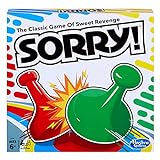
Overview: Sorry! delivers fast-paced, competitive fun where players race four pawns home using drawn cards, with the signature twist of sending opponents’ pieces back to start. This classic strategy game blends luck and light tactics for families with school-aged children. What Makes It Stand Out: The “sweet revenge” mechanic of bumping opponents is its defining, emotionally engaging feature, creating thrilling comebacks and playful tension. The combination of card-driven movement, slides, and collisions offers more strategic depth than pure race games, keeping turns dynamic and interactive. Value for Money: Priced competitively among strategy board games, Sorry! provides substantial replay value through its interactive gameplay and multiple winning paths. It outperforms simpler race games in engagement and justifies its cost as a reliable, long-lasting family game night centerpiece. Strengths and Weaknesses: Strengths: Highly interactive with exciting “bump” mechanics; easy to learn but offers tactical choices; fast-paced; durable components; strong multi-player engagement. Weaknesses: Luck-heavy with card draws; younger players might find setbacks frustrating; limited strategic depth for older teens/adults. Bottom Line: A superb choice for family game nights seeking lighthearted competition. Sorry!’s blend of luck, strategy, and playful sabotage makes it a highly recommended, enduring classic for ages 6 and up.
4. Hasbro Gaming Hungry Hungry Hippos Game for Preschoolers | Instant Marble Relaunch, Easy Set-Up & Storage| Ages 4 and Up | 2 to 4 Players | Kids Games

Overview: Hungry Hungry Hippos brings chaotic marble-chomping fun to preschoolers. Players frantically press levers to make their hippo gobble marbles launched into the central pond, combining dexterity and speed in a delightfully simple race to collect the most. What Makes It Stand Out: The instant marble reload system is a game-changer, eliminating tedious reset time between rounds for nonstop action. Coupled with the innovative storage solution that corrals all marbles and collapses the hippos, it solves major historical pain points while preserving the core, giggly gameplay kids adore. Value for Money: This thoughtful redesign justifies its price premium over older versions. The durable construction, elimination of lost marbles, and quick setup/storage significantly enhance usability and longevity, offering excellent value for hassle-free, repeated play sessions with young children. Strengths and Weaknesses: Strengths: Brilliant instant reload & storage features; perfectly pitched for ages 4+; promotes hand-eye coordination; high excitement with minimal rules; compact storage. Weaknesses: Marbles remain a small part hazard; gameplay is very simple/repetitive; limited strategic depth beyond speed. Bottom Line: An essential, modernized upgrade for preschoolers. The practical improvements make Hungry Hungry Hippos more enjoyable and manageable than ever, earning a strong recommendation for active, screen-free playdates or family time.
5. Hasbro Gaming Connect 4 Classic Grid,4 in a Row Game,Strategy Board Games for Kids,2 Player .for Family and Kids,Ages 6 and Up
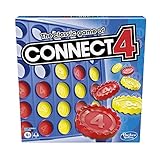
Overview: Connect 4 challenges players to outmaneuver opponents by dropping colored discs into a vertical grid, aiming to align four in a row horizontally, vertically, or diagonally. This sleek modern version refines the timeless two-player strategy experience for families. What Makes It Stand Out: Beyond the classic race-to-four gameplay, it offers three distinct modes: standard, the faster-paced Frenzy variant, and the strategic Pop-Out option (allowing disc removal). Its updated aesthetic with cool colors and a stable grid enhances visual appeal and playability without sacrificing the core strategic puzzle. Value for Money: As a durable, screen-free strategy game fostering critical thinking, Connect 4 provides outstanding value. The inclusion of multiple game modes significantly extends replayability compared to basic versions, making it a smart investment for developing logical skills at a very reasonable price point. Strengths and Weaknesses: Strengths: Simple rules with strategic depth; multiple engaging game modes; portable and quick to set up; excellent for developing planning skills; high replay value. Weaknesses: Strictly two-player; mastering strategy can lead to frequent ties between experienced players; grid can occasionally jam with discs. Bottom Line: A near-perfect blend of simplicity and strategy for two players. This refreshed Connect 4, with its added variations and modern look, is highly recommended for families seeking an affordable, brain-boosting classic game.
6. zeyce Tic Tac Toe Board Game,Tic Tac Toe Family Game, Classic Board Game, Classical Family Board Game,Children’s Tic Tac Toe Game, Plastic tic tac Toe Game, Board Size 15 X 15 cm

Overview:
This compact plastic Tic Tac Toe set offers a portable, eco-friendly take on the classic strategy game. Designed for quick setup and play, it targets families and children with its vibrant colors, lightweight build, and travel-friendly size (15x15 cm), making it ideal for on-the-go entertainment or small-space storage.
What Makes It Stand Out:
Its standout features include the use of non-toxic resin plastic for safety, combined with dual-purpose educational benefits: enhancing color/shape recognition and fine motor skills in young children. The bright, varied tokens double as cognitive tools, while the worry-free refund policy adds consumer confidence unusual for budget games.
Value for Money:
Positioned as an affordable entry-point game, it delivers solid value for its low price. While lacking the heft of wooden sets, its durability, portability, and multi-scene usability (car trips, parties, game nights) justify the cost better than disposable paper versions or pricier heirloom editions for casual play.
Strengths and Weaknesses:
Strengths: Extremely portable, child-safe materials, visually engaging for toddlers, promotes亲子 interaction, and effortless to clean. Weaknesses: Small components pose a choking hazard for under-3s, limited strategic depth for older kids, and the plastic feels flimsy compared to premium alternatives. Tokens can scatter easily during travel.
Bottom Line:
A practical, educational starter game for preschoolers that excels in portability and safety. Best suited for travel or young children needing basic cognitive stimulation, though not ideal for serious players or very long-term use. Recommended for its targeted purpose and value.
7. Monopoly Junior Super Mario Edition Board Game, Fun Kids’ Ages 5 and Up, Explore The Mushroom Kingdom as Mario, Peach, Yoshi, or Luigi (Amazon Exclusive)

Overview:
This themed adaptation simplifies classic Monopoly for young children (ages 5+), immersing them in Nintendo’s Mushroom Kingdom. Players choose iconic characters like Mario or Yoshi, buy themed properties (Yoshi’s Hill, Rock-Candy Mines), and collect coins using a dynamic power-up die with authentic sound effects.
What Makes It Stand Out:
The fusion of Super Mario nostalgia with streamlined gameplay is its key draw. The coin-collection mechanic, character-specific tokens, and interactive sound unit (emitting the classic Mario coin “ding”) create high engagement. Themed board art directly leverages beloved IP to teach turn-taking and basic money concepts.
Value for Money:
Priced competitively for licensed kids’ games, it offers strong value by merging entertainment with subtle skill-building. The Amazon-exclusive artwork and sounds justify a slight premium over generic Junior editions, though durability concerns may affect long-term play value for rough handling.
Strengths and Weaknesses:
Strengths: Captivating theme for Mario fans, intuitive rules for young kids, auditory feedback boosts excitement, and fast playtime (15-20 mins). Weaknesses: Heavy reliance on luck (minimal strategy), plastic components feel lightweight, and theme dependency limits appeal for non-fans. Sound unit requires battery replacement.
Bottom Line:
An excellent introductory strategy game for Super Mario enthusiasts that successfully simplifies Monopoly’s core concepts. Highly recommended for engaging preschoolers in structured play, though its longevity depends on the child’s interest in the theme.
8. Hasbro® Don’t Break The Ice Game, Classic Version for Ages 3+ Years, 2-4 Players
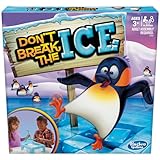
Overview:
A timeless preschool game where players take turns tapping out ice blocks to avoid dropping Phillip the Penguin through the grid. This physical dexterity game challenges steadiness and strategic thinking, supporting 2-4 players in quick, suspenseful rounds ideal for young children.
What Makes It Stand Out:
The tactile, hands-on gameplay—using a mini mallet to remove blocks—creates tangible tension as the structure weakens. Phillip’s precarious perch encourages careful observation and risk assessment, while the immediate cause-and-effect (blocks falling, penguin plunging) delivers instant, laughter-filled feedback.
Value for Money:
As a durable, battery-free classic, it provides exceptional value. The robust plastic construction withstands rough play, and its simplicity ensures years of use. Priced accessibly, it outperforms digital alternatives for developing fine motor skills and patience in toddlers without recurring costs.
Strengths and Weaknesses:
Strengths: Develops hand-eye coordination and strategic patience, highly engaging suspense, easy to learn, and promotes social interaction. Weaknesses: Small ice blocks are choking hazards for under-3s, Phillip can detach or break with forceful play, and limited replay depth for older kids beyond age 6.
Bottom Line:
A near-perfect dexterity game for preschoolers that masterfully blends simplicity with excitement. Highly recommended for fostering focus and gentle competition, though supervision is essential for the youngest players due to small parts.
9. Hasbro Gaming Scrabble Board Game, Classic Word Games for Kids Ages 8 and Up, Fun Family Game for 2-4 Players, The Classic Crossword Game
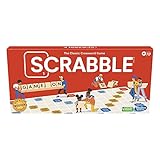
Overview:
The definitive word-building game where players craft intersecting words on a grid to maximize points using letter tiles. This edition features a textured board, wooden tiles, and racks, targeting families and older children (8+) seeking strategic, literacy-focused entertainment.
What Makes It Stand Out:
Premium wooden components and the textured board (preventing tile slippage) elevate the tactile experience. Its enduring appeal lies in adaptable difficulty: beginners learn vocabulary through short words, while experts deploy triple-word scores and challenges for competitive depth unmatched in word games.
Value for Money:
A worthwhile investment for families prioritizing educational play. Though pricier than paper-based alternatives, the heirloom-quality wood ensures decades of use. It outshines apps by fostering face-to-face interaction and genuine cognitive development, justifying its cost as a multi-generational staple.
Strengths and Weaknesses:
Strengths: Builds vocabulary and math skills organically, high replayability with varied strategies, durable materials, and fosters healthy competition. Weaknesses: Steep learning curve for young kids, luck-based tile draws can frustrate beginners, and games run long (45+ mins) for impatient players.
Bottom Line:
An essential, timeless word game that delivers unparalleled educational value and family bonding. Recommended for households wanting to blend fun with literacy development, though best introduced to children already comfortable with basic spelling.
10. Hasbro Gaming Chutes and Ladders Board Game | 2 to 4 Players | Back to School Gifts for Kids | Preschool Classroom Games | Ages 3+ (Amazon Exclusive)

Overview:
A no-reading-required race game where players spin to climb ladders or slide down chutes on a colorful board. Designed for preschoolers (ages 3+), it uses simple counting and luck-based movement to teach number recognition and turn-taking in a cheerful, low-stress format.
What Makes It Stand Out:
Its brilliance is in effortless accessibility: the spinner eliminates reading, while ascending ladders (for “good deeds”) and descending chutes provide clear cause-and-effect storytelling. Bright artwork and the physical act of moving pawns make counting tangible for early learners.
Value for Money:
An exceptional value for foundational math practice. Priced modestly, it’s a classroom and home essential that outperforms flashcards by embedding counting in pure fun. Durable construction supports years of classroom or family use, making it a cost-effective educational tool.
Strengths and Weaknesses:
Strengths: Perfect for pre-readers, reinforces counting/number order, short playtime (15 mins), and teaches graceful winning/losing. Weaknesses: Zero strategic depth (pure luck), repetitive for older kids, and spinner mechanism can jam with heavy use. Lacks adaptability for skill progression.
Bottom Line:
The ideal first board game for preschoolers, seamlessly blending education with entertainment. Highly recommended for parents and teachers introducing basic numeracy, though its simplicity means it won’t engage school-aged children long-term.
Why “Premium” Matters More Than You Think
Beyond the Price Tag: Defining True Value
When we talk about “premium” kids’ board games, it’s not merely about a higher cost. It’s a commitment to quality that permeates every aspect of the game. True value lies in materials that withstand enthusiastic play – think thick, splinter-free wood components, linen-finish cards that resist bending, and storage solutions that keep pieces organized and intact. It’s also reflected in the depth of gameplay; a premium game offers simplicity for young players to grasp initially, yet contains strategic layers that older kids or adults can explore, ensuring it doesn’t gather dust after the third use. This longevity transforms the initial cost into a meaningful per-play investment.
The Long-Term Playability Advantage
One of the most significant benefits of investing in quality is the game’s ability to remain engaging as children grow. Cheap games often have a very narrow age window – too simple for a six-year-old by the time they’re seven, or too complex for a four-year-old to ever enjoy. Premium games frequently incorporate adjustable rules, modular boards, or progressive difficulty levels. This adaptability means a game purchased for a preschooler can still be a source of strategic fun for the same child in elementary school, and even offer a challenge for visiting cousins or family game nights years later. It’s play that evolves, not expires.
Building Skills Subtly and Effectively
The best premium games are masterclasses in stealth learning. They move far beyond basic counting or color matching. Look for games that naturally cultivate critical executive function skills: working memory (remembering hidden information or sequences), cognitive flexibility (adapting strategies when the board changes), and inhibitory control (resisting impulsive moves). Games requiring players to plan several steps ahead foster foresight, while cooperative titles build communication and shared problem-solving. This isn’t forced education; it’s joyful practice of skills crucial for academic and social success, disguised as pure fun.
Navigating Age Appropriateness Wisely
Understanding Developmental Stages, Not Just Numbers
Age ranges on boxes are helpful starting points, but they’re not absolute. A game labeled “5+” might be perfect for one energetic five-year-old but frustrating for another still developing fine motor skills. Consider your child’s specific abilities: Can they handle small pieces safely? Do they understand basic turn-taking? Are they ready for simple strategy, or do they still thrive on pure luck and immediate results? Observe their current play preferences – do they love storytelling, physical challenges, or solving puzzles? Matching the game’s core mechanics to your child’s developmental stage and interests is far more critical than the number on the package.
The Pitfall of “Too Old” vs. “Too Young” Games
Choosing a game perceived as “too advanced” often leads to frustration and abandonment. If the rules are overly complex or require abstract thinking beyond a child’s current capacity, the game becomes a source of stress, not joy. Conversely, a game significantly below their skill level feels patronizing and boring, offering no challenge to hold their attention. The sweet spot lies in games that offer a slight stretch – introducing one new concept or skill beyond their current comfort zone, supported by intuitive mechanics and clear visual cues. This gentle challenge is where the most rewarding learning and engagement happen.
Considering Mixed-Age Family Dynamics
Family game nights rarely involve kids of a single age. A premium game shines when it accommodates this reality. Look for titles with “handicapping” options – simple rule tweaks that level the playing field between a six-year-old and a ten-year-old, like giving the younger player an extra move or a special ability. Cooperative games are often ideal here, as the family works together against the game itself, eliminating direct competition that can frustrate younger or less experienced players. The goal is inclusive fun where everyone feels capable and contributes meaningfully.
Essential Game Mechanics for Young Players
The Power of Cooperative Play
Games where players work together towards a common goal are often the golden ticket for positive family game nights, especially with younger children or mixed ages. Instead of fostering potentially hurtful competition, cooperative mechanics encourage communication, shared decision-making, and celebrating collective success. Players discuss strategies, help each other overcome obstacles presented by the game, and experience the satisfaction of solving a challenge as a team. This reduces frustration from losing, minimizes sibling rivalry flare-ups, and builds a strong sense of unity – turning the game into a true bonding experience rather than a contest.
Balancing Luck and Strategy Perfectly
Pure luck games (like simple roll-and-move) can be accessible for very young children but often lack depth and replayability as kids develop. Pure strategy games can feel overwhelming and unfair to beginners. The ideal premium game for kids strikes a careful balance. It incorporates elements of chance (like dice rolls or card draws) to keep things exciting and prevent the outcome from being predetermined, but layers in meaningful player choices. Can you decide where to move after rolling? Do you have options for how to use a card you drew? This balance ensures younger players aren’t constantly crushed by superior strategy, while older players still feel their decisions matter, keeping everyone engaged.
Engagement Through Theme and Storytelling
A compelling theme isn’t just window dressing; it’s a powerful engine for engagement, especially for children. Does the game cast players as brave explorers mapping a jungle? Chefs racing to cook the perfect meal? Magical creatures restoring balance to a kingdom? A strong, age-appropriate theme provides context for the actions players take, making abstract rules feel meaningful and exciting. Look for games where the mechanics naturally support the story – moving tokens becomes an expedition, collecting cards becomes gathering ingredients. This narrative element fuels imagination, increases emotional investment, and makes the learning feel like an adventure, not a lesson.
Durability and Design: Non-Negotiables for Family Use
Material Matters: What to Look For
Flimsy cardboard chips that bend, thin plastic tokens that snap, and cardstock that tears after one enthusiastic shuffle are the hallmarks of a game with a short lifespan. Premium games invest in robust construction. Seek out components made from thick, high-quality cardboard (often called “punchboard” but resistant to crumbling edges), durable plastic or wood pieces, and cards with a smooth, textured finish that resists scuffs and bends. The game board itself should be sturdy, with a finish that wipes clean. While wood is often the pinnacle of durability, high-quality laminated cardboard can also offer excellent longevity when well-made.
Storage Solutions That Actually Work
Nothing kills the fun faster than missing pieces or a jumbled mess every time you open the box. Premium games prioritize thoughtful storage. This often means custom-insert trays with precisely shaped compartments for every token, card, and board piece. No more digging through a sea of loose components! Good storage protects delicate parts during transport and makes setup and cleanup significantly faster – a huge plus when you’re trying to squeeze in game night before bedtime. Efficient storage directly translates to the game being used more often, maximizing your investment.
Safety and Sensory Considerations
For younger children, safety is paramount. Ensure all components are large enough to avoid choking hazards (check age recommendations carefully) and made from non-toxic materials. Beyond safety, consider the sensory experience. Are the pieces pleasant to handle? Smooth wood tokens feel more substantial and satisfying than cheap, scratchy plastic. Vibrant, clear artwork on thick cards is easier for young eyes to decipher than blurry, low-contrast images on thin stock. Thoughtful design considers how the game feels in the hand and looks on the table, contributing significantly to the overall enjoyment and perceived quality.
Maximizing Educational Value Through Play
Cognitive Skills in Action
Premium board games are dynamic classrooms disguised as entertainment. Pattern recognition is honed when matching symbols or sequences. Spatial reasoning gets a workout arranging tiles or navigating a board. Simple probability concepts emerge naturally when rolling dice (“Will I get the number I need?”). Games requiring players to hold multiple pieces of information in mind (like remembering hidden cards or tracking opponents’ moves) provide excellent exercise for working memory. The key is that these skills are developed organically through the need to play effectively, not through rote drills, making the learning stick.
Social-Emotional Learning on the Table
The game board is a microcosm of social interaction. Players learn invaluable lessons in patience while waiting for their turn. They practice graceful winning and, more importantly, handling the disappointment of losing – a crucial life skill. Cooperative games explicitly teach communication, negotiation (“Should we tackle the dragon first or rescue the princess?”), and shared responsibility. Even competitive games, when played with good sportsmanship, foster respect for rules and opponents. Navigating these interactions within the safe, structured environment of a game provides repeated, low-stakes practice for real-world social dynamics.
Encouraging Creativity and Problem-Solving
Many premium games go beyond prescribed paths, inviting creative thinking. Open-ended games might challenge players to build structures, tell stories based on card combinations, or find multiple solutions to a puzzle presented by the game. Resource management games (using tokens, cards, or actions strategically) require players to weigh options, anticipate consequences, and adapt plans on the fly – core problem-solving skills. This fosters flexible thinking and the confidence to try different approaches when faced with a challenge, both on the board and off.
Making the Smart Purchase Decision
Researching Beyond the Box Art
While attractive artwork is important for grabbing a child’s initial interest, it shouldn’t be the sole deciding factor. Dig deeper before buying. Read detailed descriptions focusing on how the game is played, not just the theme. Watch short, real-player demonstration videos (many creators post these) to see the flow of gameplay and complexity level. Look for reviews from parents of children in a similar age range, paying attention to comments about rule clarity, setup time, and actual play experience. Understanding the core mechanics is essential to判断 if it will suit your family’s dynamics and your child’s current abilities.
Considering Your Family’s Unique Rhythm
Be realistic about your typical game night. How much time can you consistently dedicate? A game requiring 45 minutes of intense focus might be unrealistic if you only have 20 minutes before bedtime. How many players usually join? Some games shine with 2 players but fall flat with 4, and vice versa. What’s your family’s tolerance for competition? If arguments frequently erupt over losing, prioritize cooperative games initially. Think about storage space too – a massive box with intricate inserts might be impractical for your home. The “best” game is the one that fits seamlessly into your life and gets played regularly.
The Trial Before the Buy (When Possible)
If feasible, try before you invest. Check if your local library has a board game collection – an excellent, low-risk way to test a game. Many game stores host open play nights or demo events where you can try games before purchasing. Borrowing from a friend whose children have similar ages is another great option. Seeing how your child actually engages with the physical components and grasps the rules in real-time is invaluable. It prevents the disappointment of buying a game based on promises that don’t translate to your family’s experience, ensuring your premium investment truly hits the mark.
Frequently Asked Questions
Frequently Asked Questions
Is it really worth spending more on a “premium” kids’ board game?
Absolutely, when you consider cost per play. A durable game that withstands years of use and remains engaging offers far better value than multiple cheap games that break or get discarded quickly. The depth of play and skill development also provide intangible benefits that cheaper alternatives often lack.
How can I tell if a game is genuinely well-made just from online descriptions?
Look for specific material mentions: “linen-finish cards,” “thick chipboard tokens,” “beech wood components,” or “custom foam insert.” Read reviews carefully for comments on component thickness, sturdiness, and how well the storage works. Avoid vague terms like “durable” without specifics.
My child gets frustrated losing. What type of game should I look for?
Prioritize cooperative games where the family works together against the game. If introducing competition, choose games with high luck elements and minimal player elimination, ensuring everyone stays involved until the end. Games with adjustable difficulty can also help level the playing field.
How important is the theme compared to the actual gameplay?
Theme is crucial for initial engagement, especially for kids, as it provides context and makes rules feel meaningful. However, compelling gameplay is what sustains interest long-term. The best games have a theme that seamlessly integrates with and enhances the core mechanics, not just stuck on top.
Can a single game really work for kids of very different ages, like 4 and 8?
Yes, but it requires careful selection. Look for games explicitly designed for wide age ranges with modular rules – simpler rules for younger players and optional advanced rules for older ones. Cooperative games or those with “handicaps” (like extra moves for younger players) are often most successful in mixed-age groups.
What are the biggest red flags indicating a game might not be durable?
Thin, flimsy cardstock cards that bend easily; small, fragile plastic pieces; a complete lack of organized storage (just a bag or loose pieces); and vague descriptions like “standard components” without material specifics. If the box feels very light, it’s often a sign of thin materials.
How do I know if the educational claims are meaningful or just marketing?
Focus on how the game works, not just what it claims. Does it require memory, planning, pattern recognition, or spatial reasoning to play effectively? Genuine educational value emerges naturally from the core mechanics needed to succeed, not from forced mini-lessons bolted onto the gameplay.
Should I avoid games with small parts for young children?
Always adhere strictly to the manufacturer’s age and safety warnings regarding small parts and choking hazards. For children under 3, avoid games with pieces smaller than a toilet paper tube. For preschoolers, supervise play closely and ensure pieces are large enough to be safe. Safety is non-negotiable.
How can I encourage my child to help clean up the game pieces?
Choose games with excellent, intuitive storage! When every piece has a clear, obvious spot in a custom tray, cleanup becomes a simple matching puzzle kids often enjoy. Frame it as part of the game (“Let’s get all the dragons back to their cave!”). Consistent routines also help – cleanup is always the last step.
What’s the best way to handle arguments during game night?
Set clear expectations before starting: kindness, respect for rules, and graceful losing/winning. For young kids, emphasize effort and fun over winning. If arguments flare, pause the game, take a breath, and reset. Sometimes switching to a cooperative game removes the competitive pressure causing friction.
See Also
- 10 Premium Family Board Games for Kids (Worth the Investment) in 2026
- 10 Premium Family Board Games for Holiday Gatherings (Worth the Investment)
- 10 Premium Family Board Games for Collectors and Enthusiasts (Worth the Investment)
- 10 Premium Family Board Games for Collectors (Worth the Investment)
- How to Solve Game Night Conflicts with the 10 Best Family Board Games in 2026