Table of Contents
Gather ‘round the table, unplug the devices, and rediscover the magic of genuine connection. In a world saturated with digital distractions, the simple act of sharing a physical card game creates moments that screens simply cannot replicate – the laughter over a surprising twist, the friendly debate over a clever play, the shared concentration as a family strategy unfolds. Premium family card games offer more than just entertainment; they build memories, spark conversation, and foster skills in a way that feels organic and deeply satisfying. Investing in the right deck isn’t just buying cardboard; it’s investing in countless future game nights filled with joy and togetherness.
But not all card games are created equal, especially when you’re seeking that “worth the investment” quality for family use. Flimsy cards, confusing rules, or themes that quickly lose appeal can turn a hopeful game night into frustration. The true value of a premium family card game lies in its ability to withstand enthusiastic play, engage multiple generations, and deliver fresh excitement long after the first shuffle. This guide cuts through the noise, focusing on the essential features and considerations that transform a simple deck of cards into a cherished, long-lasting centerpiece for your family’s connection time. Forget fleeting trends; let’s explore what truly makes a card game a wise, enduring investment for your household.
Top 10 Family Card Games
Detailed Product Reviews
1. USAOPOLY Flip 7, The Ultimate Blend of Press Your Luck & Strategy, Fast-Paced Addictive Card Game,Quick to Learn & Easy to Teach,Perfect for Game Nights, 3+ Players, Ages 8 & Up, 20 Minutes Play Time

Overview: Flip 7 delivers a thrilling press-your-luck experience where players strategically reveal numbered cards, aiming to accumulate points without drawing duplicates that cause a “bust.” Designed for quick 20-minute sessions with 3+ players aged 8+, it masterfully blends risk assessment with accessible strategy, making it ideal for lively game nights.
What Makes It Stand Out: Its uniquely structured deck—featuring decreasing multiples per number (twelve 12s down to one 1)—creates inherent tension. Special action cards like Flip Three, Freeze, and Second Chance inject unpredictable twists, transforming simple number matching into dynamic strategic decisions that keep every round fresh and engaging.
Value for Money: Priced competitively within the family card game market, Flip 7 offers exceptional replayability through its clever deck design and variable action cards. It surpasses simpler luck-based games in depth while avoiding the complexity (and cost) of heavier strategy titles, justifying its investment for frequent game-night hosts.
Strengths and Weaknesses: Strengths: Highly replayable due to strategic depth; fast setup and playtime; excellent tension from risk/reward mechanics; scalable for various player counts. Weaknesses: Can suffer from minor analysis paralysis with hesitant players; the unique deck structure might confuse some initially; limited visual appeal compared to illustrated games.
Bottom Line: Flip 7 is a standout press-your-luck gem that successfully balances simplicity with meaningful choices. Its innovative deck and action cards foster genuine excitement, making it a highly recommended addition to any family or casual gamer’s collection for consistently fun, bite-sized sessions.
2. Taco Cat Goat Cheese Pizza Wildly Entertaining Card Game for Family and Group Game Night | Easy to Learn and Play with 10-15 Minute Rounds | Fun for Kids, Teens, Adults, and Families | 2-8 Players

Overview: Taco Cat Goat Cheese Pizza is a rapid-fire, physical reaction card game where players slap a central pile when the spoken word matches the card played. Catering to 2-8 players aged 7+, its 10-15 minute rounds deliver non-stop laughter and chaos, perfect for breaking the ice or energizing any gathering.
What Makes It Stand Out: The genius lies in its effortless rules combined with frantic physical engagement—chanting “Taco, Cat, Goat, Cheese, Pizza” while racing to slap the pile creates instant, universal fun. Surprise action cards amplify the unpredictability, ensuring even quiet groups erupt into competitive giggles within minutes.
Value for Money: Offering unmatched entertainment density per dollar, this compact game provides hours of screen-free joy for diverse age groups. Its portability and near-zero setup time eclipse pricier alternatives, making it an essential, cost-effective staple for family game shelves, travel, or party favors.
Strengths and Weaknesses: Strengths: Incredibly easy to learn and teach; wildly inclusive for all ages; exceptional replayability; highly portable; boosts reflexes and focus. Weaknesses: Can become noisy and overwhelming; physical slapping may not suit all settings (e.g., libraries); limited strategic depth for hardcore gamers.
Bottom Line: Taco Cat Goat Cheese Pizza is a near-perfect party game that delivers pure, accessible fun with minimal effort. Its ability to unite generations in laughter makes it an unequivocal buy for families seeking reliable, uproarious entertainment that fits in your pocket.
3. Would You Rather? Family Card Game: Fun Questions, Hilarious Answers, Lively Conversations!

Overview: This classic conversation-starter game poses humorous or thought-provoking “Would You Rather?” dilemmas, sparking lively debates and revealing surprising perspectives. Tailored for families and groups, it transforms downtime into engaging, screen-free interaction through simple question-and-answer play.
What Makes It Stand Out: The game’s magic lies in its open-ended questions that encourage creativity and personal expression, avoiding physical components or complex rules. Questions range from silly (“Would you rather have spaghetti for hair or meatball freckles?”) to insightful, fostering genuine connection and memorable, laughter-filled moments.
Value for Money: An affordable investment for endless social engagement, it outperforms digital distractions by cultivating real conversation. While lacking physical components beyond cards, its high replayability through varied questions ensures long-term value for family bonding or ice-breaking at gatherings.
Strengths and Weaknesses: Strengths: Effortlessly sparks meaningful or hilarious discussions; zero setup required; inclusive for all ages and group sizes; excellent for travel or quiet evenings. Weaknesses: Relies heavily on player engagement; question quality varies; limited structure may feel aimless to some; no competitive element.
Bottom Line: Would You Rather? excels as a low-pressure tool for connection, making it ideal for families wanting to unplug and chat. Despite its simplicity, the laughter and insights it generates offer excellent value, earning a solid recommendation for casual, conversational fun.
4. Do You Really Know Your Family? A Fun Family Game Filled with Conversation Starters and Challenges - Great for Kids, Teens and Adults
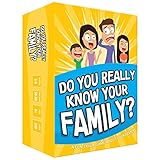
Overview: This interactive game challenges family members to prove their knowledge of one another through personal questions and lighthearted dares. Designed for ages 8+, it turns game night into a bonding experience where players answer queries about relatives or perform silly tasks, revealing hidden quirks and creating shared memories.
What Makes It Stand Out: Unlike pure trivia games, it blends question cards (“What’s Mom’s favorite childhood snack?”) with physical challenges (“Do your best impression of Uncle Bob”), adding dynamic variety. This mix deepens connections while ensuring constant engagement, whether uncovering secrets or laughing at impromptu performances.
Value for Money: At its price point, it delivers unique family-specific entertainment you can’t stream or download. The focus on personalized interaction offers richer emotional returns than generic games, justifying the cost for households prioritizing quality time and communication.
Strengths and Weaknesses: Strengths: Strengthens familial bonds through tailored questions; challenges add energetic variety; accessible for mixed-age groups; fosters empathy and active listening. Weaknesses: Requires honest participation to shine; less replayable once family facts are known; challenges may embarrass shy players.
Bottom Line: Do You Really Know Your Family? is a heartfelt, laughter-filled tool for deepening relationships. Its blend of insight and silliness makes it a worthwhile pick for families seeking meaningful, screen-free connection during game nights.
5. Cards Against Humanity: Family Edition • Ages 8+ • A Party Game for Your Horrible Family

Overview: This kid-friendly adaptation of the infamous adult party game swaps crude humor for absurd, age-appropriate prompts and answers. Targeted at ages 8+, it retains the original’s fill-in-the-blank format ("___ is a slippery slope that leads to ___") but focuses on goofy topics like “butt spaghetti” and “Mom’s friend Donna.”
What Makes It Stand Out: It successfully distills CAH’s chaotic, laugh-out-loud group dynamic into a family-safe experience. The 600+ curated cards avoid mature themes while preserving the game’s core appeal: outrageous combinations that spark uncontrollable giggles as players craft the funniest (and silliest) responses.
Value for Money: Offering the iconic CAH structure without inappropriate content, it provides tremendous value for families wanting inclusive party fun. While less edgy than the adult version, its fresh, tested card pool ensures consistent humor, making the price fair for shared, screen-free hilarity.
Strengths and Weaknesses: Strengths: Perfectly pitched humor for kids/teens; retains original’s social chaos; high replayability; easy to learn. Weaknesses: Humor is tamer, potentially less engaging for teens/adults; lacks the original’s bold edge; the “horrible family” tagline feels slightly misleading.
Bottom Line: Cards Against Humanity: Family Edition is a brilliantly executed, genuinely funny gateway to the CAH phenomenon. Though it wisely dials back the raunch, it delivers exactly what it promises: uproarious, inclusive fun, earning a strong recommendation for families ready to laugh together. (And yes, it’s still funner than Xbox.)
6. Hasbro Gaming 5 Alive Card Game, Fast-Paced Game for Kids and Families, Easy to Learn, 2 to 6 Players, Fun Summer Activities, Vacation Travel Essentials, Ages 8+

Overview: Hasbro’s 5 Alive is a rapid-fire card game where players race to shed cards while keeping a shared total below 21. Exceeding this triggers “Alive card” flips, with five flips eliminating a player. Designed for 2-6 participants aged 8+, it targets family gatherings and travel.
What Makes It Stand Out: Its high-stakes simplicity stands out—wild cards add chaotic twists by saving lives or sabotaging others, demanding quick risk assessment. The under-21 mechanic creates constant tension, making it ideal for short attention spans and impromptu play sessions.
Value for Money: Priced accessibly, it delivers solid replayability through unpredictability and ease of setup. While lacking digital integration, it outperforms pricier electronic games in fostering direct interaction, especially for budget-conscious families seeking screen-free fun.
Strengths and Weaknesses: Strengths: Lightning-fast setup and rules; excellent travel size; thrives with mixed-age groups. Weaknesses: Limited strategic depth for older teens; high luck dependency may frustrate competitive players; card durability feels modest for heavy use.
Bottom Line: A reliably entertaining choice for casual family game nights or vacations, particularly for younger kids. Its brevity and simplicity make it a worthwhile impulse buy for quick, laughter-filled rounds, though hardcore gamers may crave more complexity.
7. What Do You Meme?Edition by Relatable, Now with Refreshed Content, Easter Family Games for Kids and Adults, Easter Basket Gift, The TikTok Viral Sensation, Includes 300 Caption Cards, 108 Photo Cards

Overview: This family-friendly adaptation of the viral meme game replaces edgy content with kid-appropriate humor. Players match caption cards to photo cards to create the funniest memes, judged by a rotating peer. Aimed at ages 8+, it includes 408 cards for 3+ players.
What Makes It Stand Out: Its curated “Relatable” content ensures wholesome, inclusive fun without offensive material—a rarity in meme games. The judge’s subjective scoring (based on matching humor) sparks hilarious debates, while TikTok fame guarantees recognizable engagement for Gen Z players.
Value for Money: The 408-card count justifies its price against smaller party games. Refreshed content extends longevity, though digital meme trends may eventually date some cards. Superior to generic card games for group bonding, especially as a non-candy Easter basket stuffer.
Strengths and Weaknesses: Strengths: Exceptional for large groups; fosters creativity and laughter; travel-ready box. Weaknesses: Humor heavily depends on group dynamics; younger kids might miss subtleties; photo cards could feel repetitive after intense use.
Bottom Line: A top-tier, socially conscious party game for families and teens. Its universal appeal and ease of play make it a must-have for holiday gatherings or teen birthday gifts, despite occasional reliance on fleeting meme relevance.
8. Dump The Skunk! Game | Family Card Game by Reiner Knizia | Ages 7 and Up | 2-6 Players | 20 Mins. | Easy to Learn Games for Kids, Teens, and Adults

Overview: Designed by award-nominated Reiner Knizia, Dump The Skunk! challenges players to avoid accumulating points—especially from high-value “skunk” cards. With simple draw-play mechanics, it targets 2-6 players aged 7+ for quick 20-minute sessions.
What Makes It Stand Out: It masterfully balances accessibility and strategy: kids grasp the “don’t get stuck” premise instantly, while adults enjoy pushing luck to force opponents into skunk penalties. The compact size and skunk-themed art inject playful charm absent in abstract strategy games.
Value for Money: As a reimagined version of Don’t L.L.A.M.A!, it offers fresh visuals without gameplay bloat. Its durability and portability outshine cheaper travel games, providing years of use for under $15—ideal for grandparents or camping trips.
Strengths and Weaknesses: Strengths: Near-perfect learn-to-play ratio; deeply engaging for all ages; exceptional portability. Weaknesses: Limited player interaction beyond card play; skunk puns may wear thin; minimal replay variety after 20+ sessions.
Bottom Line: An essential, clever game for family collections. Its strategic depth disguised as silliness makes it a standout for game nights, easily earning a spot as a go-to travel companion for its sheer re-playability and inclusive design.
9. Five Crowns – Card Game for Kids and Adults, Travel and Family Game Night Favorite, The Game isn’t Over Until the Kings Go Wild, 5 Suited Rummy Style Card Game, 1-7 Players, Ages 8+

Overview: Five Crowns reinvents rummy with a fifth “star” suit and rotating wild cards, challenging players to form book/run combinations. Accommodating 1-7 players aged 8+, it emphasizes adaptability as wild cards shift each round.
What Makes It Stand Out: The star suit and dynamic wild cards (e.g., kings in round 11) prevent formulaic play, demanding constant reassessment. Its solo-play compatibility is rare for card games, while the 11-round structure offers satisfying progression missing in lighter party games.
Value for Money: Exceptional for the price—durable cards withstand heavy use, and the 1-7 player range eliminates the need for multiple games. Outperforms standard rummy decks in longevity, justifying its cost as a cornerstone family game.
Strengths and Weaknesses: Strengths: Highly scalable for group sizes; rich strategic depth; superb travel durability. Weaknesses: Initial rules complexity for young kids; slower pace than speed-focused games; limited visual appeal may deter teens.
Bottom Line: A near-flawless rummy evolution for serious family gamers. Its replayability and skill-building make it a worthy investment for regular game nights, though casual players might prefer faster alternatives.
10. Mattel Card Game Set (Skip Bo, Uno & Phase 10)

Overview: This trio bundles Mattel’s classics: Skip Bo (sequencing), Uno (color-matching), and Phase 10 (rummy-style sets). Targeting all ages, it offers versatile entertainment for 2-6 players with distinct mechanics in one package.
What Makes It Stand Out: Unmatched variety—Uno delivers quick chaos, Phase 10 adds layered strategy, and Skip Bo bridges both with pattern-building. The set covers virtually all card-game preferences, eliminating the need for separate purchases.
Value for Money: Outstanding value; buying these individually costs 30% more. High-quality components ensure durability, while the diversity caters to different moods (competitive, relaxed, strategic). Ideal for households with varying age groups.
Strengths and Weaknesses: Strengths: Maximum replayability across games; familiar rules reduce learning curves; compact storage. Weaknesses: Phase 10’s complexity may overwhelm young kids; Uno feels “basic” next to modern variants; no innovative twists.
Bottom Line: The ultimate starter bundle for any card-game novice or family. Its sheer versatility and reliability make it the smartest single purchase for building a game library, though dedicated fans might already own these staples.
Defining the Premium Family Card Game Experience
Understanding what elevates a card game beyond the basic dollar-store variety is crucial for making a smart investment. Premium isn’t just about a higher price tag; it’s a commitment to quality and experience that pays dividends in longevity and enjoyment.
Durability Beyond the Basics
The physical resilience of the cards themselves is non-negotiable for family use. Premium games utilize thick, rigid cardstock with a smooth, linen finish or a durable matte coating that resists bending, creasing, and the inevitable spills that happen during family gatherings. Look for cards that feel substantial in the hand and shuffle smoothly without sticking or fraying at the edges, even after hundreds of plays. This robust construction ensures the game remains playable and enjoyable for years, not just weeks.
Art and Design That Captivates
Visual appeal plays a significant role in engagement, especially for younger players. Premium games feature high-quality, original artwork that is both aesthetically pleasing and functionally clear. Icons are intuitive, card layouts are uncluttered, and the overall theme is cohesive and inviting. This isn’t just about looking pretty; clear, well-designed cards reduce confusion, speed up gameplay, and create an immersive atmosphere that draws everyone in, regardless of age.
Thoughtful Component Quality
Beyond the cards themselves, consider the entire package. Premium games often include well-crafted accessories like sturdy storage boxes or tuck boxes that protect the cards when not in use, clear rulebooks with excellent illustrations, and sometimes even unique components like custom tokens or score pads made from quality materials. This attention to detail in every element signals a commitment to the overall user experience and longevity.
Player Count and Flexibility Matters
One of the biggest pitfalls in choosing a family game is overlooking how well it accommodates your typical group size. A game perfect for two might fall flat with five, and vice versa. Premium family card games excel in offering adaptable or versatile player counts.
Two-Player Intimacy
While many card games are designed for larger groups, the best premium options often include thoughtful two-player variants. This transforms the game from a group activity into a wonderful tool for one-on-one bonding – perhaps between a parent and child or two siblings. Look for games where the core mechanics naturally scale down or have specific rules adjustments that maintain strategic depth and engagement without feeling like a compromised version.
The Sweet Spot: 3-5 Players
This is the most common family game night size, and premium games shine here. They ensure balanced interaction, minimize downtime between turns, and foster that dynamic group energy families love. The mechanics should encourage player interaction – whether through friendly competition, cooperative elements, or engaging negotiation – without becoming chaotic or allowing players to feel disconnected when it’s not their turn.
Large Group Dynamics
For bigger families or when friends come over, the ability to comfortably include 6+ players is a valuable premium feature. However, it’s not just about the number; it’s about how the game handles it. Does it maintain a reasonable playtime? Does interaction remain meaningful, or does it devolve into long waits? Premium games designed for larger groups often incorporate team play, simultaneous actions, or streamlined turns to keep everyone actively involved and the energy high.
Age Appropriateness and Skill Development
A truly premium family card game bridges generational gaps. It shouldn’t bore older players or overwhelm younger ones. The magic lies in accessible rules with layered depth, offering something valuable for every age at the table.
Clear Rules, Low Barrier to Entry
The initial hurdle for any family game is learning it. Premium games feature rulebooks that are exceptionally clear, concise, and often visually guided. Setup should be quick, and the core concept graspable within minutes. This ensures the game gets played immediately, rather than spending the evening deciphering instructions, which is crucial for keeping younger attention spans engaged and preventing early frustration.
Strategic Depth for Grown-Ups
While easy to learn, the best premium family card games offer meaningful decisions and strategic considerations that keep adults and older children intellectually stimulated. This isn’t about overwhelming complexity, but rather about providing enough player agency and interesting choices (e.g., hand management, resource allocation, timing decisions) to prevent the game from feeling simplistic or purely luck-based after the first few plays.
Hidden Learning Opportunities
The most valuable premium games seamlessly integrate skill development. Look for mechanics that naturally encourage counting, pattern recognition, basic probability assessment, spatial reasoning, or strategic planning. Cooperative elements can foster communication and teamwork, while competitive games teach good sportsmanship and handling both wins and losses gracefully. The learning happens organically through play, not as a forced educational lesson.
Replay Value: The Heart of the Investment
The single biggest factor determining if a card game is “worth the investment” is how often you want to play it. Premium games are designed from the ground up to offer high replayability, ensuring your purchase doesn’t gather dust.
Variable Setup and Scenarios
Games that change significantly with each playthrough combat predictability. This could involve modular card decks, different objective cards, variable player powers, or scenario-based setups. Knowing that no two games will play exactly the same keeps the experience fresh and encourages repeated plays to explore different strategies and outcomes.
Evolving Strategy and Mastery
A premium game reveals its depth over time. Initial plays might focus on understanding the rules, but subsequent games allow players to discover nuanced strategies, counter-strategies, and optimal plays. This journey towards mastery – even at a basic level – is inherently rewarding and gives players a reason to return to the table, discussing tactics and aiming to improve.
Solo and Cooperative Variants
Expanded play options significantly boost replay value. A well-designed solo mode offers a challenging puzzle for quiet moments, while cooperative variants shift the focus from competing against each other to working together against the game system. These alternative ways to play effectively give you multiple distinct games within one box, maximizing its utility and appeal across different moods and group sizes.
Thematic Integration and Immersion
Theme isn’t just window dressing; in a premium game, it’s woven into the mechanics to create a more engaging and memorable experience. The best themes resonate with families and enhance, rather than complicate, the gameplay.
Theme Enhances Mechanics
Instead of feeling tacked on, the theme should inform how the game works. For example, a game about exploration might have mechanics involving map-building or resource gathering that directly reflect the narrative. This cohesion makes the rules more intuitive (e.g., “I need to gather these ’tools’ cards to overcome the ‘obstacle’ card”) and creates a stronger sense of immersion, pulling players into the game’s world.
Family-Friendly and Engaging Narratives
The themes chosen for premium family games are carefully selected to be broadly appealing and appropriate. Think adventures, lighthearted competition, cooperative problem-solving, or whimsical journeys – scenarios that spark imagination without being scary or overly complex for younger minds. A strong, positive theme makes the game more inviting and provides natural storytelling opportunities during play.
Visual and Textual Reinforcement
High-quality art and thoughtful flavor text on cards or in the rulebook deepen the thematic experience. Seeing the story unfold visually and encountering small narrative touches with each card drawn reinforces the theme and makes the game world feel alive, adding another layer of enjoyment beyond the pure mechanics.
Storage and Portability Considerations
For a game to be truly family-friendly, it needs to survive not just gameplay, but also the realities of family life: storage in crowded spaces, transport to grandparents’ houses, or packing for vacations. Premium games prioritize practicality.
Secure and Protective Storage
A flimsy box that bends or tabs that won’t stay closed leads to lost cards – the death knell for any card game. Premium games feature rigid boxes with secure closures (like tuck-top lids with strong tabs or magnetic closures) or durable tuck boxes that fit snugly inside a protective outer sleeve. Internal organization, like card trays or dividers, prevents cards from shifting and getting damaged during storage.
Compact Design for On-the-Go Fun
While offering quality components, the best premium family card games are often remarkably compact. They fit easily into a backpack, glove compartment, or suitcase. This portability is essential for turning unexpected downtime – waiting at a restaurant, traveling, or visiting relatives – into a spontaneous game night opportunity, maximizing the game’s utility and play frequency.
Travel-Friendly Accessories
Some premium offerings go the extra mile with travel-specific features: smaller card sizes that fit in dedicated travel boxes, rubber band wraps to keep the deck secure, or even zippered pouches. Even without these, the inherent durability and secure storage of a premium game make it inherently more travel-ready than flimsier alternatives.
Understanding Game Length and Pacing
Respecting everyone’s time, especially with varying attention spans in a family, is critical. Premium family card games excel in delivering a satisfying experience within a predictable and manageable timeframe.
Predictable Play Duration
High-quality games clearly state an accurate playtime range on the box, and they deliver on it. Premium producers understand that a family game shouldn’t overstay its welcome. Knowing a game reliably lasts 20-30 minutes (or whatever the stated time is) allows for easy planning – fitting it into a busy schedule or knowing it’s suitable for younger players’ focus windows.
Consistent Pacing Throughout
Great family card games avoid long stretches of downtime or agonizingly slow builds. Premium designs ensure that players remain engaged turn after turn, with minimal waiting and a steady rhythm of meaningful decisions. The game should feel dynamic from start to finish, building towards a satisfying conclusion without dragging or rushing the final moments.
Scalability with Player Count
Crucially, the playtime shouldn’t balloon uncontrollably as more players join. Premium games are often designed so that adding players increases the duration only incrementally, or incorporates mechanics (like simultaneous actions) that keep the game moving briskly even with a full table. This predictability is vital for family game night success.
The Value Proposition: Cost vs. Long-Term Enjoyment
Evaluating whether a premium game is truly “worth it” requires looking beyond the initial price tag. It’s about calculating the cost per hour of high-quality, screen-free family connection it will generate over its lifespan.
Cost Per Play Analysis
This is the golden metric. Divide the game’s price by the estimated number of times your family will genuinely enjoy playing it over the next several years. A $30 game played 50 times costs $0.60 per play. Compare this to a $10 game that breaks after 5 plays ($2.00 per play) or the cost of a single streaming subscription month. Premium games, due to their durability and replayability, often have an incredibly low effective cost per play over time.
Beyond Monetary Value
Consider the intangible returns: strengthened family bonds, reduced screen time, development of cognitive and social skills in children, stress relief through laughter and play, and the creation of positive shared memories. These benefits contribute significantly to the overall value proposition, making the investment feel worthwhile on a deeper level than simple entertainment cost.
Comparing to Disposable Alternatives
Flimsy, mass-produced card games are often treated as disposable. When they wear out (which is quickly), you’re back to square one, spending more money and generating waste. A premium game, built to last, eliminates this cycle of constant replacement. The upfront cost is offset by years of reliable use, making it a more economical and environmentally conscious choice in the long run.
Finding Your Family’s Perfect Fit
Selecting the ideal premium card game isn’t one-size-fits-all. It requires thoughtful consideration of your family’s unique dynamics, preferences, and existing collection to ensure it becomes a staple, not a shelf-sitter.
Assessing Your Family’s Play Style
Be honest about what your family enjoys. Do you thrive on lighthearted laughter and quick rounds? Seek games emphasizing dexterity, simple bluffing, or rapid pattern matching. Do you enjoy collaborative problem-solving? Prioritize cooperative or semi-cooperative designs. Prefer quiet strategy? Look for elegant games with deeper tactical decisions. Matching the game’s core experience to your family’s natural inclinations is paramount for adoption.
Considering Existing Game Library
Avoid redundancy. If you already own several fast-paced set-collection games, a premium investment might be better spent on a cooperative adventure or a strategic engine-builder to diversify your options. A premium game should fill a gap or significantly elevate an experience you already love, offering something new or vastly superior to what you have.
Involving the Whole Family (Appropriately)
While the final decision often rests with parents, getting input from older children can increase buy-in. Show them descriptions (focusing on theme and type of gameplay, not specific titles if comparing options) and ask what sounds fun. For younger kids, consider their current attention span and motor skills – a game requiring fine dexterity might frustrate a 5-year-old, no matter how premium the components.
Frequently Asked Questions
Frequently Asked Questions
How can I tell if a card game’s components are truly durable before buying? Look for specific mentions of “thick cardstock,” “linen finish,” “matte coating,” or “poker-sized cards” in descriptions. Reviews often highlight component quality – search for terms like “durable,” “sturdy,” “bends easily,” or “flimsy.” Reputable publishers known for quality are also a good indicator.
Is a more expensive card game always a better investment for families? Not necessarily. Price alone isn’t a guarantee of suitability. A moderately priced game that perfectly matches your family’s size, age range, and preferred play style will offer far better value than an expensive game that sits unused because it’s too complex or slow for your group.
How important is the rulebook quality in a family card game? Extremely important. A poorly written rulebook is the fastest way to kill a game night. Premium games invest in clear, concise, step-by-step rules often supplemented with excellent iconography and example illustrations. Look for mentions of “easy-to-learn rules” or “well-illustrated guide” in reviews.
Can a premium card game be suitable for both young children and adults? Yes, the best ones bridge this gap. They achieve this through simple core rules accessible to kids, but layered strategic depth that engages adults. Look for games with adjustable difficulty, cooperative elements, or mechanics that are easy to grasp but offer room for tactical play as skills develop.
Do premium family card games take up a lot of storage space? Often, quite the opposite. Many premium card games are designed to be remarkably compact, especially compared to bulky board games. Their focus is on the deck and minimal components, fitting neatly into small shelves, drawers, or even bags for easy transport.
How do I know if a game has good replay value? Look for keywords like “variable setup,” “modular,” “different scenarios,” “asymmetrical roles,” or “highly replayable” in descriptions. Games relying heavily on random card draws with many possible combinations also tend to have higher replayability than those with a fixed sequence.
Are cooperative card games a good choice for family investment? Cooperative games can be excellent investments as they eliminate direct player conflict, foster teamwork, and often scale well for different group sizes. They are particularly strong choices for families wanting to work together towards a common goal, reducing potential frustration from competitive losses.
What’s the ideal game length for a family card game? For most mixed-age families, 15-30 minutes is often the sweet spot. It’s long enough to feel substantial and engaging but short enough to respect attention spans, especially for younger players, and allows for multiple rounds or trying different games in one session.
Can a single premium card game replace multiple cheaper ones? Potentially, yes. A game with high replayability, flexible player counts, and multiple play modes (solo, competitive, cooperative) can effectively serve the purpose of several simpler games, offering more variety and depth over time, justifying its higher initial cost.
How do I clean up spills on premium card game components? Act quickly! Blot (don’t rub) liquid spills immediately with a clean, dry, lint-free cloth. For minor residue, a slightly damp cloth followed by immediate drying can work, but avoid submerging cards. Prevention (keeping drinks covered) is always best, as liquids can warp even premium cardstock over time.
See Also
- 10 Premium Card Games for Collectors (Worth the Investment) in 2026
- 10 Premium Customizable Card Games (Worth the Investment) in 2026
- 10 Premium Trading Card Games (Worth the Investment) in 2026
- 10 Premium Collectible Card Games for Serious Collectors (Worth the Investment)
- 10 Premium Card Games for Game Night Hosts (Worth the Investment)