Table of Contents
Imagine stepping into the sandals of a Roman senator debating law, feeling the tension of drafting treaties in Renaissance Italy, or strategizing crop rotations along the Nile as an ancient Pharaoh. Premium civilization board games offer history lovers far more than just entertainment—they provide immersive, tactile time machines. These meticulously crafted experiences transform dusty textbook narratives into vibrant, strategic adventures where every decision ripples through simulated centuries. For enthusiasts craving depth beyond casual play, these aren’t mere games; they’re intricate portals to eras defined by cultural clashes, technological breakthroughs, and the relentless march of human ambition. The weight of a custom-sculpted monument piece, the texture of a linen-finished map, the strategic heft of managing an evolving society—these elements coalesce into something profoundly satisfying.
Investing in a high-end civilization game means committing to nights of thoughtful deliberation, where victory isn’t just about points, but about authentically navigating the complex forces that shaped our world. Unlike mass-market alternatives, these premium titles prioritize historical integrity alongside innovative mechanics, ensuring that the strategies you employ mirror real historical pressures and possibilities. They challenge players to think like statesmen, balancing diplomacy, resource scarcity, and cultural evolution against the backdrop of meticulously researched timelines. Whether you’re drawn to the intricate politics of classical antiquity or the explosive innovation of the industrial age, the right premium game becomes a cherished artifact—a centerpiece for your table that sparks conversation, deepens historical understanding, and rewards repeated exploration. This guide unpacks what makes these investments truly worthwhile for discerning history buffs.
Top 10 Civilization Board Games
Detailed Product Reviews
1. Asmodee Sid Meier’s Civilization: A New Dawn Board Game - Rewrite History Your Way! Strategy Game for Kids & Adults , Ages 14+, 2-4 Players, 1-2 Hour Playtime

Overview: This board game adapts the iconic PC strategy franchise into a streamlined, player-driven experience. Designed for 2-4 players aged 14+, it condenses empire-building, technological advancement, and military conquest into a manageable 60-120 minute session, focusing on accessible yet deep civilization simulation.
What Makes It Stand Out: A New Dawn excels with its innovative “agenda” system, replacing dice with player-nominated leaders to determine turn order and actions, fostering dynamic interaction. Multiple victory paths (science, culture, domination, diplomacy) ensure varied strategies, while beautifully sculpted miniatures and clear iconography enhance immersion without overwhelming complexity.
Value for Money: Priced moderately for a premium strategy game, it delivers exceptional replayability through its asymmetric agendas and diverse win conditions. It offers a more approachable and interactive entry point into the Civilization universe compared to denser, longer alternatives, justifying its cost for both newcomers and veterans seeking quicker sessions.
Strengths and Weaknesses: Strengths: Highly interactive player-driven mechanics; multiple engaging victory paths; excellent component quality; significantly faster setup and playtime than traditional 4X games. Weaknesses: Limited player count (max 4); less historical depth than the PC original; some agendas can feel unbalanced in specific matchups.
Bottom Line: A superb distillation of the Civilization experience, A New Dawn successfully translates epic strategy into a focused, interactive board game. Its unique agenda system and varied win conditions make it a highly recommended purchase for strategy fans seeking depth without excessive time commitment.
2. Civolution Board Game

Overview: Civolution, designed by Stefan Feld and Viktor Kobilke, presents a distinct civilization-building journey. It targets experienced gamers with its intricate systems, offering deep strategic potential through research and a novel dice-driven action mechanism within an epic scope of discovery.
What Makes It Stand Out: The core innovation is its unique dice-placement mechanic. Players assign custom dice to actions, with results influencing both immediate choices and triggering cascading effects based on knowledge researched. The vast pool of 160 unique knowledge areas provides immense strategic diversity and near-limitless replayability, encouraging constant experimentation.
Value for Money: Positioned as a premium, complex strategy game, Civolution justifies its price for dedicated hobbyists. The sheer depth of the knowledge tree and the novel dice system offer significant long-term value, outpacing many competitors in strategic scope, though it may be less accessible for casual players seeking immediate fun.
Strengths and Weaknesses: Strengths: Exceptionally deep and replayable knowledge system; innovative and engaging dice mechanics; strong strategic depth for experienced players; high potential for unique paths each game. Weaknesses: Steep learning curve; potential analysis paralysis; setup and rules explanation can be lengthy; component quality may not match premium price point for some.
Bottom Line: Civolution is a compelling, brain-burning strategy game for enthusiasts craving deep, asymmetric civilization building. Its unique dice-knowledge synergy offers immense satisfaction, making it a worthwhile investment for players ready to tackle its complexity, despite the significant learning investment required.
3. Asmodee 7 Wonders Board Game (New Edition) - Lead Your Civilization to Prosperity, Strategy Game for Kids and Adults, Ages 10+, 3-7 Players, 30 Minute Playtime

Overview: A cornerstone of modern board gaming, 7 Wonders challenges 3-7 players (age 10+) to build ancient civilizations through simultaneous card drafting. In rapid 30-minute rounds across three “Ages,” players gather resources, construct wonders, develop military, and pursue scientific achievements to earn the most victory points.
What Makes It Stand Out: Its genius lies in simultaneous play – all players draft cards at once, eliminating downtime and enabling smooth scaling from 3 to 7 players. The elegant drafting mechanism creates constant tension as you balance your own needs against denying neighbors crucial resources or cards, ensuring every game feels dynamic and interactive.
Value for Money: Offering exceptional value, the base game provides immense depth and replayability at a reasonable price. Its short playtime, high player count flexibility, and family-friendly accessibility (while retaining strategic heft) make it a near-perfect gateway and filler game, far exceeding alternatives in versatility per dollar.
Strengths and Weaknesses: Strengths: Brilliant simultaneous drafting minimizes downtime; scales perfectly for 3-7 players; quick to teach and play; high replayability; excellent family and gateway game. Weaknesses: Limited direct player interaction beyond card denial; military scoring can feel random with certain player counts; minimal theme integration beyond card names.
Bottom Line: 7 Wonders remains an essential board game purchase. Its lightning-fast, engaging gameplay for large groups, coupled with strategic depth and accessibility, delivers unmatched value. It’s a must-have for any game library, especially for families and social gamers.
4. Asmadi Games Innovation 4th Edition - Strategy Card Game, Invent an Empire, Tableau Building, Ages 14+, 2-4 Players

Overview: Innovation is a sharp, competitive card game where 2-4 players (14+) race through human history by building a personal tableau of 115 historically themed innovations. The goal is to achieve specific scoring conditions across ten distinct eras before opponents, demanding clever combination of card effects.
What Makes It Stand Out: The game shines with its unique “demand” and “score” mechanics, forcing players to actively challenge opponents’ achievements while pursuing their own. The historically rich cards (pyramids, printing press, internet) have potent, often disruptive effects, creating constant tactical puzzles and high player interaction as tableaus evolve dramatically each turn.
Value for Money: The 4th Edition’s visual overhaul and new Age 11 content enhance an already strong package. Priced competitively for a focused card game, its deep strategic interplay, high replayability through varied scoring paths, and compact design offer excellent value, surpassing many longer, less interactive strategy games.
Strengths and Weaknesses: Strengths: Intense player interaction and “take-that” potential; deep, puzzle-like tableau management; highly replayable with multiple viable strategies; compact and quick setup; rich historical theme integrated into mechanics. Weaknesses: Can feel punishing with aggressive play; managing complex card interactions has a learning curve; limited player count (2-4); expansions required for more players/variety.
Bottom Line: Innovation 4th Edition is a masterclass in competitive card-driven strategy. Its brilliant demand mechanic and historical depth create uniquely engaging, fast-paced matches. Highly recommended for gamers who enjoy sharp tactics and direct competition within a manageable timeframe.
5. Mosaic: A Story of Civilization - Strategy Board Game for Adults and Family | Fast, Fun, Action-Selection and Area Control Game | 1-6 Players | Ages 14 and Up | 120 Minutes | by Forbidden Games

Overview: Mosaic immerses 1-6 players (14+) in the ancient Mediterranean, where they expand civilizations across seven regions. Combining tableau building, action selection, and area control, players pursue victory points through wonders, technological goals, golden ages, and military dominance within a flexible two-hour timeframe.
What Makes It Stand Out: The game’s flexibility is key: choose from 9 unique Leaders with distinct powers, then select one of eight actions per turn to adapt your strategy. This, combined with variable card sets and multiple victory paths (projects, achievements, region control), ensures no two games play alike while maintaining accessible core mechanics.
Value for Money: Offering significant strategic depth for 1-6 players within a solid 120-minute limit, Mosaic provides strong value. Its high player count scalability, excellent replayability via Leaders and card combinations, and quality components justify the price, especially for groups needing adaptable, engaging strategy.
Strengths and Weaknesses: Strengths: Excellent scalability (1-6 players); high replayability through Leaders and variable setup; multiple viable victory paths; intuitive action selection; strong blend of strategy genres. Weaknesses: Area control can lead to kingmaking in larger games; setup is moderately complex; theme integration, while present, is less pronounced than mechanics; solo mode may feel less engaging.
Bottom Line: Mosaic delivers a robust, adaptable civilization experience that excels with groups. Its flexible strategies, player count range, and engaging action selection make it a standout recommendation for families and strategy gamers seeking a substantial yet accessible area-control challenge.
6. Asmodee 7 Wonders Architects - Shape History with Your Ingenious Wonders, Civilization Strategy Game for Kids and Adults, Ages 8+, 2-7 Players, 25 Minute Playtime
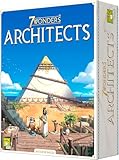
Overview: 7 Wonders Architects offers a streamlined, accessible civilization-building experience focused on constructing iconic wonders through clever card drafting. Designed for quick sessions, it distills strategic depth into a family-friendly package suitable for ages 8+ and accommodating up to 7 players. What Makes It Stand Out: Its unique open-drafting system, where shared face-up card rows on both sides create simultaneous strategic tension (drafting for yourself vs. denying opponents), sets it apart. The tight 25-minute playtime and support for large player counts make it exceptionally versatile for game nights, while the clear material/academic/military triad provides intuitive progression. Value for Money: Priced competitively for a modern strategy game, its high replayability (thanks to variable wonder goals and drafting dynamics) and broad age/player appeal justify the cost. It outperforms many shorter games by delivering meaningful decisions without complexity, offering better value than simpler children’s games or pricier 60+ minute titles for casual groups. Strengths and Weaknesses: Strengths include exceptional accessibility for new players, lightning-fast setup and play, and the brilliant denial mechanic enhancing player interaction. Weaknesses involve slightly shallower strategic depth compared to the original 7 Wonders, and the military track can feel underdeveloped in smaller games, occasionally leading to less impactful choices. Bottom Line: An outstanding gateway game that excels as a quick, engaging family or large-group filler. Its clever drafting and universal appeal make it a highly recommended, budget-friendly entry point into strategy gaming, despite minor depth limitations for hardcore enthusiasts.
7. Stone Age Board Game - Engaging Worker Placement Strategy for Civilization Building! Fun Family Game for Kids and Adults, Ages 10+, 2-4 Players, 60-90 Minute Playtime, Made by Z-Man Games

Overview: Stone Age is a classic worker placement game where players lead prehistoric tribes, gathering resources, building huts, and advancing culture to build the most prosperous civilization. Its elegant mechanics and thematic immersion have cemented its status as a genre staple for ages 10+. What Makes It Stand Out: The core worker placement system shines through its ingenious use of dice for resource acquisition—more workers mean higher dice rolls, balancing risk and efficiency. The critical need to manage food to feed workers adds constant tension, forcing tough choices between immediate needs and long-term development, creating deeply engaging resource optimization. Value for Money: As a consistently top-rated gateway strategy game, its enduring popularity and robust component quality (wooden resources, sturdy boards) deliver excellent value. It competes favorably against newer titles by offering timeless, accessible depth at a mid-range price point, especially for families seeking substantial yet learnable strategy. Strengths and Weaknesses: Strengths are its intuitive yet strategic worker placement, perfect food-management tension, and superb theme integration. Weaknesses include potential downtime in 4-player games, dice reliance occasionally frustrating players seeking pure strategy, and limited player interaction beyond indirect competition for spaces. Bottom Line: A must-have for strategy game collections. Stone Age remains a near-perfect blend of accessibility and meaningful decisions, offering fantastic value as a foundational worker placement experience that rewards repeated plays despite minor randomness.
8. Capstone Games Beyond The Horizon, Civilization Building Board Game, 2-4 Players, 120 Minutes, Ages 14+

Overview: Beyond The Horizon is a deep, strategic civilization builder where players explore, colonize, and advance through science, culture, and structures on a dynamically constructed map. Targeting experienced gamers (14+), it emphasizes multiple victory paths within a 2-hour session. What Makes It Stand Out: Its tile-placement map creation is transformative—each placed tile alters terrain and benefits, directly impacting all players’ strategies. Combined with powerful Leader and Technology cards that unlock unique abilities, this creates immense variability and high-stakes spatial planning, ensuring no two games play alike. Value for Money: Positioned as a premium euro-game, its substantial playtime, high-quality components (detailed tiles, cards), and exceptional replayability through variable setups justify the investment. It offers better value than many lighter euros by delivering complex, satisfying strategic depth that rewards mastery over numerous plays. Strengths and Weaknesses: Strengths include brilliant spatial strategy via tile placement, meaningful leader/tech synergies, and excellent replayability. Weaknesses are significant analysis paralysis potential due to numerous options, a steeper learning curve than advertised, and possible “runaway leader” issues if early tile placement is dominant. Bottom Line: Highly recommended for experienced strategy gamers seeking a challenging, variable civilization experience. While demanding, its inventive map mechanics and strategic richness provide outstanding long-term value for dedicated groups.
9. Clash of Cultures: Monumental Edition | Board Game WizKids - New Edition

Overview: Clash of Cultures: Monumental Edition revives the classic 4X civilization board game—explore, expand, exploit, exterminate—with massive component upgrades and refined rules. It delivers a direct, thematic conquest experience focused on military dominance and cultural spread for history and strategy fans. What Makes It Stand Out: The sheer scale of components is staggering: 300+ detailed miniatures (including unique Wonder sculpts), vast card decks, and abundant tokens create unparalleled visual immersion. Dice-based combat offers accessible, tense battles, while the focus on civilization-specific abilities and tech trees provides distinct strategic flavors beyond pure warfare. Value for Money: Priced as a premium box, its immense component count (especially the miniatures) and inclusion of base game plus expansion rules offer tremendous tangible value. It outshines many competitors by delivering a complete, visually spectacular 4X experience that justifies its cost for collectors and thematic gamers. Strengths and Weaknesses: Strengths are the breathtaking miniatures, strong theme integration, high replayability via diverse civilizations, and streamlined 4X mechanics. Weaknesses include potential player elimination in longer games, combat randomness that may frustrate euro-game fans, and setup/storage demands due to component volume. Bottom Line: An essential purchase for fans of thematic, combat-heavy civilization games. Its monumental components and faithful 4X adaptation deliver exceptional value and excitement, making it a standout despite minor balance quirks.
10. Stonemaier Games: Tapestry (Base Game) by Jamey Stegmaier | A Civilization Building Strategy Board Game | Lead a Civilization to Greatness Through Cultural & Tech Advances | 1-5 Players, 120 Mins

Overview: Tapestry reimagines civilization building as a beautiful, asymmetric race through time where players advance on science, technology, exploration, and military tracks while constructing a unique capital city. It blends narrative storytelling with strategic depth for 1-5 players in 90-120 minutes. What Makes It Stand Out: Its standout feature is the stunning, thematic integration of mechanics—advancing tracks unlocks narrative tapestry cards and 3D sculptures that visually chart your civilization’s story. The combination of asymmetric player powers, tactile city-building with detailed miniatures, and solo mode compatibility creates a uniquely immersive, visually rich experience. Value for Money: Justified by exceptional production quality (pre-painted landmarks, detailed mini-sculptures), high replayability from variable civilizations and paths, and robust solo support. It competes well against complex euros by offering a more accessible, narrative-driven alternative with superior component value for the price. Strengths and Weaknesses: Strengths include breathtaking components, strong theme-mechanics synergy, excellent solo play, and accessible yet strategic decision-making. Weaknesses are occasional analysis paralysis from too many options, potential imbalance between asymmetrical powers, and the science track sometimes feeling overly dominant. Bottom Line: A highly recommended, visually stunning gateway to deeper strategy gaming. Tapestry’s unique blend of narrative, beauty, and thoughtful mechanics provides excellent value, especially for solo and casual groups, despite minor strategic imbalances.
Understanding Premium Civilization Board Game Value
Defining the Premium Tier Beyond Price
When we discuss “premium” civilization games, it’s crucial to move beyond sticker shock. True premium status stems from exceptional design cohesion, where every component serves the historical narrative and gameplay depth. It’s about games that invest in research, ensuring mechanics reflect genuine historical constraints and opportunities, not just thematic window dressing. This tier offers experiences where the rulebook itself feels like a scholarly companion, explaining why certain mechanics mirror real-world developments, transforming play sessions into active learning.
The Long-Term Playability Factor
A hallmark of worthwhile investment is enduring replayability. Premium civilization games achieve this through variable setups, asymmetric factions with distinct historical paths, and dynamic event systems that prevent predictable outcomes. Unlike simpler games that lose luster after a few plays, these titles reveal new strategic layers and historical narratives over dozens of sessions. The best designs ensure no two empires rise or fall in exactly the same way, mimicking history’s inherent unpredictability and keeping the experience fresh for years.
Material Quality as Historical Immersion
Tangible quality directly impacts immersion. Premium titles often feature thick, linen-finished boards that resist wear, substantial cardstock tokens, and custom miniatures or monuments that feel authentic to their era. Consider the difference between a flimsy cardboard pyramid and a weighted resin obelisk—these details aren’t just aesthetic; they anchor you in the period, making resource management feel like stewarding a real civilization’s legacy. Durability also ensures your investment withstands repeated campaigns through the ages.
Critical Features for History-Focused Players
Historical Fidelity in Mechanics
Seek games where core mechanics embody historical realities. Does agricultural development realistically impact population growth and societal stability? Do trade routes reflect actual ancient networks and their vulnerabilities? Premium titles avoid anachronistic shortcuts, instead using mechanics to teach how societies functioned—perhaps modeling the logistical challenges of maintaining an empire across vast distances through clever movement or supply rules. This fidelity transforms abstract strategy into a meaningful historical simulation.
Depth of Cultural Representation
Superficial nods to history won’t suffice. Look for games that delve into the unique societal structures, belief systems, and technological trajectories of different cultures. Does the game capture the philosophical underpinnings of a civilization that influenced its governance or warfare? Premium designs move beyond stereotypical “units” to represent how cultural values shaped decision-making, offering nuanced paths to victory that honor historical diversity rather than reducing societies to combat stats.
Narrative Integration Beyond the Rulebook
The most compelling premium games weave narrative into the gameplay loop itself. Event cards shouldn’t just be random bonuses; they should recount pivotal moments—natural disasters, diplomatic breakthroughs, or intellectual revolutions—that players actively navigate. A well-designed narrative layer ensures every session tells a unique story rooted in plausible historical cause-and-effect, making you feel like a participant in, rather than just a student of, history.
Evaluating Design Philosophy and Balance
Strategic Depth vs. Accessibility Trade-offs
Premium civilization games often embrace complexity, but the best strike a careful balance. Deep strategy shouldn’t equate to impenetrable rules. Look for elegant designs where complexity emerges organically from interacting systems (e.g., how religion influences science or how terrain affects military movement), not from convoluted sub-rules. A quality game offers a clear learning curve, with foundational mechanics graspable in one playthrough and mastery unfolding over many, rewarding patience with profound strategic richness.
Player Interaction Dynamics
History is rarely made in isolation. Premium titles excel by fostering meaningful player interaction that mirrors historical dynamics—whether through intricate diplomacy systems, contested trade routes, or culturally influenced alliances. Avoid games where players primarily engage in “multiplayer solitaire”; the best designs create inevitable, thematic friction and cooperation, forcing negotiations and strategic adaptations that echo real geopolitical maneuvering.
Solo Play Considerations for History Enthusiasts
For many history lovers, these games are solo journeys of exploration. Premium titles increasingly include robust, challenging solo modes using autonomous “AI” factions that behave with historical logic—expanding aggressively like certain empires, prioritizing cultural achievements like others, or reacting plausibly to your actions. This isn’t an afterthought; it’s integral design that allows deep dives into historical strategy without needing a full table.
Investment Worthiness and Practical Considerations
Space and Time Commitment Realities
Premium civilization games often demand significant table space and playtime (3-4+ hours). Honestly assess your lifestyle: Do you have consistent access to a dedicated play area? Can you realistically commit to lengthy sessions? The investment loses value if the game remains perpetually boxed. Consider titles with effective “session play” mechanics or strong mid-game save points if extended playtime is a barrier, though these are rarer in deep strategy games.
Community and Ongoing Support
A vibrant player community significantly enhances longevity. Research if the game has active forums, strategy blogs, or organized play groups where enthusiasts dissect historical accuracy and share variant rules. Developer commitment to errata, clarifications, or even small expansions (not essential mini-expansions, but free rule tweaks) indicates a living game that matures, much like the historical scholarship it draws from.
Resale Value and Timeless Design
Unlike fleeting trends, well-crafted civilization games often retain strong resale value due to enduring appeal. Look for timeless themes (core human societal development) over hyper-specific historical moments tied to current events. Games focusing on universal concepts like settlement, innovation, diplomacy, and cultural legacy tend to age better and remain relevant for collectors and new players alike, protecting your financial investment.
Maximizing Your Historical Learning Experience
Leveraging Rulebooks as Educational Tools
Treat the rulebook as a primary source. Premium titles often include extensive designer notes explaining historical rationale for mechanics—why certain technologies were prerequisites for others, how resource scarcity shaped real empires, or the cultural context behind victory conditions. Read these sections not just to learn how to play, but why the game simulates history as it does, deepening your understanding beyond gameplay.
Post-Game Historical Deep Dives
Turn every session into a learning opportunity. After playing, research the historical events or figures referenced in the game. Did the simulated plague accurately reflect its real-world impact? How did the actual civilization handle the challenges you navigated? This active cross-referencing transforms gameplay from entertainment into a springboard for richer historical knowledge, making the investment multidimensional.
Hosting Themed Game Nights for Shared Discovery
Share the experience thematically. Pair gameplay with period-appropriate music, food, or even short documentary clips. Discuss historical decisions made during play: “Was our aggressive expansion historically plausible for this culture?” This transforms game night into a collaborative historical exploration, multiplying the value of your investment through social and educational enrichment.
Frequently Asked Questions
How do I determine if a premium game’s historical representation is accurate or respectful?
Focus on the game’s research sources cited in the rulebook or designer notes. Reputable titles often credit historians or academic works. Look for nuanced portrayal of cultures beyond stereotypes, avoidance of glorified conquest narratives, and mechanics that reflect genuine societal complexities rather than simplistic “civilized vs. barbarian” tropes.
Are premium civilization games suitable for beginners to the genre?
Some offer steeper learning curves, but many include excellent step-by-step tutorials or introductory scenarios. Prioritize games known for strong rulebook organization and clear iconography. Don’t assume complexity equals inaccessibility—some premium titles masterfully layer depth, making initial plays manageable while revealing complexity gradually.
What’s the biggest red flag indicating poor historical integration?
When mechanics or victory conditions feel arbitrarily grafted onto the theme with no logical connection (“tech tree” items appearing in nonsensical orders, cultures achieving victory through anachronistic or culturally incongruous means). Authentic games make the “why” of historical cause-and-effect clear through gameplay.
How important is physical component quality for the overall experience?
Crucial for immersion and longevity. High-quality boards, cards, and tokens make setup enjoyable and withstand repeated plays. Poor materials (thin cardboard, blurry art) break historical immersion and can lead to damaged components, diminishing the value of your investment over time.
Can these games effectively teach history, or are they just entertainment?
They excel as engagement tools, not replacements for academic study. They teach systems thinking—how geography, resources, culture, and innovation interconnect to shape societies. The real educational power comes when players use the game as a catalyst for further research into the depicted eras and civilizations.
What should I prioritize: historical accuracy or fun gameplay?
The best premium titles achieve both. Avoid games sacrificing either extreme. If mechanics are historically plausible but tedious, or fun but wildly inaccurate, the experience suffers. Seek designs where historical constraints create the engaging strategic puzzle, making accuracy integral to the fun.
How much should I realistically budget for a “worthwhile” premium game?
Prices vary widely ($80-$150+), but value isn’t solely price-driven. Assess component density, rulebook depth, and proven replayability. A $100 game offering 50+ hours of nuanced play and historical insight delivers better value than a $130 title with shallow mechanics and limited longevity.
Are expansions usually worth the additional investment for these games?
Only if they address core gameplay depth or historical scope meaningfully. Be wary of “cosmetic” expansions. Truly valuable expansions often add new factions with unique mechanics reflecting distinct historical paths, significant new eras, or refined systems that deepen the strategic and historical simulation.
How do I assess replayability before purchasing?
Research variable setup options, asymmetric faction abilities, and dynamic event systems. Games with multiple distinct victory paths, randomized historical events, or scenario-based play tend to have higher replay value. Avoid titles reliant on static maps or identical starting conditions every game.
Can these games be played solo with genuine challenge and immersion?
Yes, many premium titles now feature sophisticated solo modes using logic-driven autonomous opponents that mimic historical decision-making. Look for modes where the “AI” has clear historical goals and behaviors, creating a narrative-driven challenge that feels like competing against the era itself, not just an abstract system.
See Also
- 10 Premium Classic Board Games for Adult Strategy Games Lovers (Worth the Investment)
- 10 Premium Family Strategy Board Games for Game Night Excellence (Worth the Investment)
- 10 Premium Strategy Board Games for Serious Gamers (Worth the Investment)
- 2026’s Top 10 Civilization Board Games for History Lovers
- 10 Premium Strategy Board Games for Deck Building Enthusiasts (Worth the Investment)