Table of Contents
Hosting unforgettable gatherings where laughter flows freely and connections deepen is an art. Yet, too many nights dissolve into awkward small talk, scrolling through phones, or replaying the same tired games from years past. We’ve all been there: the energy dips, the conversation stalls, and the promise of a vibrant evening fades into mediocrity. What if the secret ingredient wasn’t just the drinks or the playlist, but a carefully chosen experience designed to spark genuine interaction and create stories you’ll reminisce about for months? The right game transforms passive mingling into active, joyful engagement.
Investing in premium adult party games isn’t about splurging frivolously; it’s a strategic move towards consistently elevating your social events. Forget flimsy cards and confusing rulesets that gather dust after one use. Truly premium games prioritize thoughtful design, durable materials, and mechanics that cater specifically to adult sensibilities—encouraging wit, strategy, collaboration, or lighthearted competition without resorting to juvenile gimmicks. They become heirlooms of your social circle, pulled out repeatedly because they reliably deliver the magic you seek: authentic connection and nights that linger in memory long after the last guest leaves.
Top 10 Adult Party Games
Detailed Product Reviews
1. CMYK Wavelength: The Mind Reading Party Game

Overview: CMYK Wavelength is a telepathic party game where players collaboratively determine where a clue (e.g., “hot or cold,” “wizard or not a wizard”) falls on a spectrum. Designed for 2–12+ players, it promises instant setup (5 seconds) and quick gameplay (30 minutes), making it ideal for parties, family gatherings, or corporate offsites. Its acclaim from POLYGON and NYT WIRECUTTER underscores its reputation.
What Makes It Stand Out: The game’s genius lies in its collaborative “mind-reading” mechanic—players must intuitively align their interpretations of abstract spectrums without verbal hints. Unlike competitive party games, it fosters team synergy and sparks hilarious debates. Its scalability for large groups and effortless learning curve (1 minute) set it apart from complex alternatives.
Value for Money: Priced moderately for its replayability and group flexibility, it outperforms niche party games that struggle beyond 6 players. While premium, its durability and universal appeal justify the cost compared to disposable card games.
Strengths and Weaknesses: Strengths: Incredibly inclusive, zero setup time, encourages creative thinking, and accommodates huge groups. Weaknesses: Limited depth for strategy-focused players; repetitive if overplayed.
Bottom Line: A must-have for social gatherings—effortless, engaging, and universally fun. Highly recommended for teams or families seeking instant connection without繁琐 rules.
2. WHAT DO YOU MEME? Incohearent, The Guess The Gibberish Party Game by Relatable, A Funny Card Game for Adults, Great for Bachelorette Party Games or Game Night Games, Includes 300 Cards

Overview: Incohearent is a viral card game where players decipher gibberish phrases (e.g., “H1W R U D01NG?”) within a time limit. Boasting 750M+ social media views, it targets adults (17+) for game nights, bachelorettes, or casual gatherings. The kit includes 300 category-tagged cards (Party, Spicy, Pop Culture) and accommodates 3–8 players.
What Makes It Stand Out: Its TikTok-fueled popularity stems from rapid, laughter-driven gameplay: one player holds up gibberish cards while others race to decode phrases. The blend of pop-culture relevance, accessible wordplay, and “tongue-twisting” challenges creates contagious energy unmatched by traditional word games.
Value for Money: At a mid-range price, the 300-card deck offers exceptional replayability versus similar games with fewer cards. The updated content and social-media cachet make it a standout investment for frequent game nights.
Strengths and Weaknesses: Strengths: Hilariously fast-paced, broad appeal, easy to learn, and perfect for ice-breaking. Weaknesses: Phrases may feel dated over time; “Spicy” cards could alienate conservative groups.
Bottom Line: A top-tier pick for lively adult gatherings—guaranteed to ignite laughter. Buy it if you want a modern, no-fuss game that consistently delivers fun.
3. USAOPOLY BLANK SLATE, Where Great Minds Think Alike, Fun Family-Friendly Board Game, Word Association Party Game, Easy to Learn, Fun to Play Family Game Night, 3-8 Players, Ages 8+
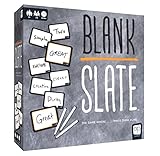
Overview: Blank Slate is a family-friendly word-association game where players secretly write words to complete phrases (e.g., “______ minds think alike”) on dry-erase slates. Aimed at ages 8+, it supports 3–8 players and emphasizes predicting others’ answers for points. The kit includes 250 double-sided cue cards, slates, and a scoreboard.
What Makes It Stand Out: Its simplicity shines—players compete to match anonymous responses, creating “aha!” moments when minds align. Unlike trivia-heavy games, it thrives on intuitive psychology, making it equally engaging for kids and adults. The physical slates encourage tactile interaction absent in card-only alternatives.
Value for Money: Priced accessibly, the reusable components (slates, durable cards) offer long-term value over single-use games. It’s a smarter buy than comparable party games with flimsier materials.
Strengths and Weaknesses: Strengths: Truly all-ages, quick setup, sparks genuine laughter, and promotes social bonding. Weaknesses: Limited variety in mechanics; replayability hinges on card diversity.
Bottom Line: An excellent, inclusive choice for family game nights—simple, wholesome, and endlessly entertaining. Ideal for groups craving lighthearted connection.
4. Fofeadm Drinking Board Games for Adults, Rubber Mat Drinking Board Game, Funny Party Interactive Drinking Games for Game Night, Birthday, Family Play or Any Occasion, Age 21+, 2-8 Players

Overview: This rubber-mat board game merges classic movement mechanics with drinking challenges for 2–8 players (21+). Roll dice, move pieces, and complete dares or questions to “take a shot.” Compact (15"x11"), it includes a mat, 8 pieces, and 2 dice—targeting parties, birthdays, or casual adult gatherings.
What Makes It Stand Out: The portable mat design eliminates setup fuss, while versatile challenges (dare/question/action) cater to diverse group dynamics. Unlike app-dependent drinking games, it’s purely physical, fostering face-to-face interaction ideal for bachelorettes or tailgates.
Value for Money: Budget-friendly for its niche, but requires your own beverages—unlike all-inclusive kits. Its reusability justifies cost versus single-night gimmicks, though durability may wane with heavy use.
Strengths and Weaknesses: Strengths: Highly portable, versatile for events, and ignites spontaneous fun. Weaknesses: Alcohol dependency limits sober players; mat quality feels thin; repetitive without custom rules.
Bottom Line: A solid, low-cost option for casual drinking circles—but only if your group enjoys alcohol-centric play. Skip if inclusivity for non-drinkers is a priority.
5. What Do You Meme? After Hours by Relatable, The Explicit Expansion Pack for Game Night, Board Games, Adult Games, and Party Games, Includes 100 Caption Cards to Play with Full-Sized Game
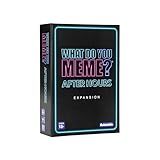
Overview: This explicit expansion pack adds 100 uncensored caption cards to the core What Do You Meme? game, targeting adults 18+ with risqué humor. Players pair captions to photo cards for “filthiest meme” wins, suited for bachelorettes, birthdays, or bold game nights. Note: Requires the base game.
What Makes It Stand Out: It transforms the family-friendly original into a raunchy social experience with edgy, topical content. The “judge’s choice” mechanic sparks unapologetic debates, while the NSFW focus caters specifically to adult groups seeking uninhibited laughs.
Value for Money: Affordable as an add-on, but useless without the base game. Offers high replay value for fans of dark humor, though niche appeal limits broader utility versus standalone games.
Strengths and Weaknesses: Strengths: Hilariously bold, elevates the core game, and perfect for close-knit adult groups. Weaknesses: Exclusionary for mixed audiences; content may offend; redundant if base game is unused.
Bottom Line: Only recommended for existing What Do You Meme? owners seeking spicy humor—ideal for wild nights but avoid if your crowd prefers clean fun.
6. Put A Finger Down Party Game by Hunch Games | Viral Prompt and Challenge Card Game for Adults, Teens, and College Groups | Hilarious Social Icebreaker with 400 Cards for 2+ Players

Overview:
This viral sensation translates the popular social media challenge into an accessible physical card game. Designed for groups of any size, it uses 400 prompt cards to spark relatable, often hilarious, reactions as players put fingers down based on shared experiences or quirky scenarios. Setup is instant, requiring no prior knowledge.
What Makes It Stand Out:
Its genius lies in leveraging a familiar online trend into tangible, inclusive gameplay. The “up and down” twist cards introduce unexpected penalties and storytelling prompts, fostering dynamic interactions. The rules are effortlessly simple—hold five fingers, react to prompts—ensuring immediate engagement without downtime, making it ideal for icebreaking or energizing gatherings.
Value for Money:
Priced mid-range for party games, the 400-card deck offers significant replayability through varied prompts and flexible group scaling (pairs to large parties). While comparable games may have more components, this excels in pure social utility, justifying its cost for frequent hosts seeking zero-prep conversation starters.
Strengths and Weaknesses:
Strengths: Incredibly easy to learn; perfect for diverse ages (teens+); minimal setup; fosters genuine connection; portable. Weaknesses: Humor relies heavily on group chemistry; prompts may feel repetitive after extensive play; lacks physical components beyond cards, reducing tactile engagement.
Bottom Line:
A superb, modern icebreaker that captures viral appeal with smart design. Highly recommended for college groups, casual hangouts, or anyone wanting laughter-driven connection—just ensure your crowd enjoys lighthearted, personal sharing.
7. It’s Bananas! The Monkey Tail Game – Funny Family & Party Game for Kids & Adults | Hilarious Gift for Birthday, Christmas, Bachelorette, Thanksgiving, White Elephant

Overview:
This physical comedy game tasks players with mimicking increasingly absurd monkey-themed actions (like “thrust like a monkey” or “backward squats”) while holding a tail. Aimed at multi-generational groups, it promises uncontrollable laughter through simple, active challenges requiring no screens or complex rules.
What Makes It Stand Out:
Its viral TikTok fame (250M+ views) and celebrity endorsements (e.g., Live with Kelly and Ryan) highlight its broad appeal. The carbon-neutral production and reduced packaging cater to eco-conscious buyers. The true standout is its universal accessibility—kids to adults can play, with hilarious moments emerging from failed attempts at wacky poses.
Value for Money:
Competitively priced, it delivers high-energy entertainment without batteries or apps. While component count is modest (tail, cards), the focus on physical play justifies the cost for families prioritizing active, tech-free bonding. Eco-credentials add intangible value for sustainability-minded consumers.
Strengths and Weaknesses:
Strengths: Exceptionally inclusive for all ages; generates genuine, belly-laugh moments; portable and quick to play; eco-friendly ethos; media-validated fun. Weaknesses: Requires physical mobility (may exclude some); replayability hinges on group creativity; tail component feels flimsy; humor isn’t for sedate gatherings.
Bottom Line:
An outstanding choice for lively family game nights or parties craving physical comedy. Ideal as a gift for holidays or group events—just confirm your crowd enjoys energetic, slightly silly participation.
8. Cards Against Humanity

Overview:
A deliberately offensive party staple where players complete fill-in-the-blank prompts using humorous, often taboo, white cards. Version 2.0 includes 600 cards (500 white, 100 black), targeting adult groups comfortable with dark, boundary-pushing humor. Gameplay involves a “Card Czar” selecting the funniest/most outrageous combination.
What Makes It Stand Out:
Its unapologetic embrace of shock humor and satirical edge sets it apart. The massive card library (including new version 2.0 additions) ensures varied, unpredictable rounds. The included alternate rules booklet encourages creative twists, sustaining engagement beyond basic play. It’s a cultural phenomenon for “horrible people” seeking no-holds-barred laughs.
Value for Money:
Priced affordably for its replay potential, the 600-card deck offers years of use. While cheaper alternatives exist, CAH’s brand recognition and consistent quality make it a benchmark. However, its niche appeal means value is highly contingent on your group’s tolerance for offensive content.
Strengths and Weaknesses:
Strengths: Massive replayability; iconic, shareable humor; simple rules; strong community support; excellent for tight-knit adult groups. Weaknesses: Exclusively for mature audiences; humor can alienate or offend; no physical components beyond cards; relies entirely on group dynamics.
Bottom Line:
A must-have for adult groups that relish dark comedy—but strictly avoid for families or sensitive crowds. A definitive purchase if your circle enjoys provocative, no-filter humor.
9. Lucky Egg Official Grab The Mic – Family Karaoke Board Game w/Foam Mic, 8+ Ages, 2-10 Players - Games for Bad Singers w/ 240 Lyrics (120 Cards) (First Edition)

Overview:
This game reimagines karaoke for non-singers by focusing on quick lyric recall, not vocal talent. Players race to grab a foam mic when they recognize a song snippet containing a revealed keyword (e.g., “love”). With 120 word cards (240 lyrics), it’s designed for 2–10 players aged 8+.
What Makes It Stand Out:
The physical foam mic adds thrilling tactile competition, while the “bad singer-friendly” angle lowers performance anxiety. Multiple game modes (via a modular board) and fast-paced turns keep energy high. The emphasis on memory under pressure—rather than singing ability—creates inclusive, chaotic fun.
Value for Money:
Solid value with a mic, board, tokens, and 120 cards included. It undercuts traditional karaoke systems in cost while offering unique gameplay. Though lyric depth depends on players’ music knowledge, the replayability through varied word combinations justifies the price for casual family nights.
Strengths and Weaknesses:
Strengths: Perfect for music lovers of all singing abilities; highly engaging with physical mic; quick setup; adaptable for kids/adults; encourages active participation. Weaknesses: Limited to players familiar with the song database; younger kids may struggle; no audio component (relies on memory); board feels underutilized in core mode.
Bottom Line:
An excellent, accessible karaoke alternative for family game nights. Highly recommended if your group enjoys music trivia and friendly competition—just ensure shared familiarity with mainstream songs.
10. Cards Against Humanity: Nasty Bundle • 6 Nasty Themed Packs + 10 All-New Cards
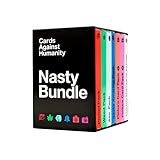
Overview:
This expansion pack injects extreme edge into the base Cards Against Humanity game with six themed decks (Period, Weed, Ass, Saves America, and two Picture Card packs), plus 10 exclusive cards. Explicitly marketed as “too spicy” for mainstream audiences, it targets players seeking intensified shock value.
What Makes It Stand Out:
The hyper-specific, boundary-smashing themes (e.g., bodily functions, politics) amplify CAH’s signature offensiveness. Picture cards introduce visual humor rarely seen in expansions, while the “Saves America” pack satirizes cultural divides. It’s designed to escalate discomfort—ideal for groups desiring maximum provocation.
Value for Money:
Priced higher than standard packs, its value is niche. The 6 themed decks offer substantial new content, but the 10 “all-new” cards feel like a token addition. Worthwhile only for die-hard CAH fans craving fresh, extreme material—casual players will find it excessive and redundant.
Strengths and Weaknesses:
Strengths: Unmatched thematic depth for CAH veterans; picture cards add novelty; consistently pushes boundaries; high replayability within its niche. Weaknesses: Requires base game (sold separately); humor is overly crude for many; minimal physical components; “all-new” cards are negligible; risks alienating even regular players.
Bottom Line:
A compelling upgrade for seasoned CAH groups seeking darker, more specific humor—but skip if you prefer the base game’s relative restraint. Only purchase alongside the main deck for maximum impact.
Understanding the Premium Party Game Difference
Beyond the Price Tag: Defining True Value
Don’t equate “premium” solely with a higher cost. True value lies in the holistic experience. It encompasses the immediate tactile pleasure of handling well-crafted components, the seamless flow of intuitive rules that don’t require an engineering degree to grasp, and the lasting replayability that ensures the game remains exciting months or even years later. A premium game minimizes setup frustration and maximizes engaged playtime, justifying its investment through sheer frequency of use and the quality of interactions it fosters. It’s the difference between a one-night novelty and a cherished staple.
The Material Matters: Why Build Quality is Non-Negotiable
Flimsy cards that curl after one shuffle or cheap plastic tokens that feel like toys instantly break immersion and signal low value. Premium games invest in substantial cardstock that withstands repeated shuffling, vibrant, scratch-resistant inks, and components with satisfying heft—like custom wooden meeples, durable acrylic tokens, or weighted dice. This isn’t just about looks; robust materials ensure the game survives enthusiastic play sessions and travels well, protecting your investment. The sensory experience of quality components subtly elevates the entire event, making players feel the game is worth their time and attention.
Rule Design: Clarity and Flow as Cornerstones
Nothing kills a party vibe faster than a 20-minute rule explanation followed by constant rulebook referencing. Premium games excel in elegant rule design. Core mechanics are graspable within minutes, often through intuitive iconography and well-structured rulebooks that anticipate common questions. The best designs minimize downtime between turns and create a natural rhythm of play. Consider how the rules facilitate interaction: do they force constant player engagement, or allow disengagement? Smooth, logical progression is paramount for maintaining energy and fun.
Essential Features to Evaluate Before You Buy
Replayability: The Heart of Long-Term Value
A single-use game is a poor investment. Prioritize titles boasting high replayability through varied scenarios, modular boards, evolving strategies, or significant player-driven narrative elements. Games incorporating asymmetric roles (where each player has unique abilities or goals) or variable player powers dramatically increase the likelihood that no two games feel the same. Look for mechanics that encourage different approaches each time—bluffing, deduction, cooperative strategy with changing threats, or creative expression—ensuring the game stays fresh through dozens of plays.
Player Count and Group Dynamics Fit
Not all games shine with the same number of people. A brilliant game for 6-8 might fall flat with only 3 or 4, and vice versa. Crucially, consider how the game functions at your typical group size. Does it encourage table-wide interaction, or devolve into isolated pairings? How does downtime feel with a larger group? Some excel at fostering collaboration, while others thrive on lighthearted competition. Assess whether the game’s core dynamic—cooperative, competitive, team-based, or free-for-all—aligns with the atmosphere you usually cultivate and the personalities in your circle.
Thematic Resonance and Appropriate Tone
The theme and tone significantly impact player comfort and enjoyment. A dark, complex strategy game might overwhelm guests seeking lighthearted fun, while a purely silly game might disappoint those craving intellectual stimulation. Premium games often integrate theme and mechanics seamlessly (“thematic integration”), where the story enhances the gameplay, not distracts from it. Consider your group’s sensibilities: do they appreciate subtle wit, overt humor, strategic depth, creative storytelling, or collaborative problem-solving? The best premium games have a tone that feels cohesive and appealing to your intended audience.
Setup and Cleanup Efficiency
Time spent setting up complex boards or sorting minuscule components is time not spent playing and connecting. Premium games often feature streamlined setup through clever tray designs, clear component organization, or rules that minimize initial configuration. Similarly, efficient cleanup is vital for post-game hospitality. Look for games where resetting takes mere minutes, allowing you to smoothly transition to the next activity or wind down the evening without frustration. A game that’s a chore to prepare or put away drastically reduces its likelihood of being played.
Gameplay Experience: Prioritizing the Human Element
Fostering Genuine Interaction and Conversation
The ultimate goal of a party game is to get people talking, laughing, and connecting meaningfully. Premium games achieve this by design. They create natural conversation starters through shared goals, intriguing dilemmas, or prompts that encourage players to share experiences or perspectives. Avoid games where players act in isolation; seek mechanics that necessitate negotiation, teamwork, discussion, or playful debate. The best interactions happen organically because of the game’s structure, not in spite of it, turning gameplay into the catalyst for memorable dialogue.
Balancing Competition and Camaraderie
While friendly competition can be fun, cutthroat mechanics can sour an evening, especially with mixed groups. Premium adult games often strike a careful balance. They might incorporate elements of cooperation within competition (semi-cooperative), feature “kingmaking” mitigation to keep eliminated players engaged, or emphasize lighthearted rivalry where losing feels fun, not frustrating. Consider whether the game rewards pure skill (potentially alienating less experienced players) or incorporates engaging luck or social deduction elements that allow diverse players to shine. The focus should be on shared enjoyment, not just who “won.”
Accessibility Without Sacrificing Depth
A premium game shouldn’t require a PhD to play, but it also shouldn’t feel like child’s play for adults. The sweet spot is “easy to learn, hard to master.” Initial rules should be graspable quickly, allowing players to jump into the fun, but layers of strategic depth or nuanced decision-making should emerge with repeated plays. This accessibility welcomes guests of varying game experience, while the underlying depth keeps regular players invested. Avoid games that are either overly simplistic (boring for seasoned players) or so complex they become inaccessible (alienating casual players).
Minimizing Downtime and Player Elimination
Long waits between turns are the enemy of party energy. Premium games employ clever mechanics to keep everyone engaged: simultaneous actions, phases where players act in parallel, or interactive elements that let players influence ongoing turns. Critically, avoid games with player elimination, especially in social settings. Watching others play while you’re out for 20+ minutes is a major buzzkill. Games that keep all participants actively involved throughout the entire session are essential for maintaining a positive, inclusive atmosphere where everyone feels valued.
Practical Considerations for Savvy Buyers
Storage Solutions and Portability
A premium game is an investment worth protecting. Consider its storage needs before purchasing. Does it come with a well-designed insert that securely holds all components, preventing damage during storage or transport? Is the box size practical for your space? If you frequently host at different locations or travel with games, portability becomes crucial. A game that’s a nightmare to pack or risks component loss quickly loses its appeal. Integrated, high-quality storage isn’t a luxury; it’s a necessity for longevity.
Visual Design and Table Presence
First impressions matter. Premium games often feature stunning, cohesive artwork and graphic design that enhances the theme and makes the game visually appealing on the table. Clear iconography and intuitive layout reduce rule confusion. The physical presence of a beautifully crafted game with vibrant components sets a positive tone before play even begins, signaling to guests that this is a special experience worth their engagement. It transforms the game from a mere activity into a centerpiece of the evening.
Manufacturer Reputation and Support
Reputable publishers of premium games typically stand behind their products. Research the company: do they have a history of quality control? Do they offer readily available rule clarifications, printable replacements for lost cards, or support for defective components? A strong community and active publisher often indicate a commitment to the game’s longevity and player satisfaction, adding another layer of value to your purchase. It’s peace of mind knowing support exists if minor issues arise.
Reading Between the Reviews
When researching, look beyond star ratings. Seek detailed reviews focusing on the aspects that matter to you: component quality, rule clarity, actual playtime with your target player count, and how well it fosters the interaction you desire. Pay attention to comments from players with groups similar to yours. Be wary of reviews fixated solely on min/maxing strategy if you prioritize social fun, or vice-versa. Focus on critiques about physical durability, rule ambiguities, and the feel of the gameplay experience over pure mechanical analysis.
The Investment Mindset: Maximizing Your Return
Calculating Cost Per Play
Shift your perspective from the initial price tag to the long-term value. Divide the game’s cost by the number of times you realistically expect to play it. A $60 game played 30 times costs only $2 per play session – far less than a movie ticket or many other forms of entertainment, especially considering the social value created. High-replayability premium games often yield an exceptionally low cost per play compared to cheaper alternatives played only once or twice. This reframing highlights the true economic and experiential ROI.
Building a Curated Collection, Not Just Accumulating Boxes
Resist the urge to buy every new release. Focus on acquiring a smaller collection of versatile, high-quality games that serve different purposes: one for large rowdy groups, one for deeper 4-player strategy, one for creative storytelling, etc. A curated set of 5-7 premium games that you know work brilliantly for your circle is infinitely more valuable than 20 games gathering dust. Each addition should fill a specific gap or significantly elevate your existing options, ensuring every game gets regular love and rotation.
Caring for Your Collection
Treat your premium games as the investments they are. Use protective sleeves for cards (even if not immediately necessary), store them upright in a cool, dry place away from sunlight, and handle components with care. A quick wipe-down of boards or tokens after play removes oils and crumbs. This simple maintenance dramatically extends the life and appearance of your games, preserving their value and playability for years. A well-cared-for premium game retains its tactile appeal and functionality far longer.
Frequently Asked Questions
How can I tell if a game’s components are truly durable?
Examine product descriptions for specifics: “poker-grade cardstock,” “scratch-resistant linen finish,” “thick chipboard,” or “acrylic tokens” are positive indicators. Look for reviewer photos showing the thickness of cards or the weight of tokens. Games with flimsy plastic or thin, easily bent cards typically won’t withstand repeated play.
Is a $50-$70 game really worth it over a $25-$35 one?
Often, yes, but it depends on your usage. If you play frequently, the premium game’s superior components, refined rules, and higher replayability mean it will be played significantly more often. The cost per play session becomes very low, and the enhanced experience justifies the initial outlay compared to cheaper games that break quickly or get boring after one use.
What’s the biggest mistake people make when buying adult party games?
Prioritizing novelty or complex strategy over group dynamics and ease of play. Choosing a game that doesn’t suit your typical group size, requires excessive setup, or creates long downtime/elimination leads to frustration, not fun. Always match the game’s core mechanics to your group’s social style and desired experience.
How do I know if a game has good replayability?
Look for features like variable setups, multiple winning strategies, modular boards, scenario expansions, or mechanics driven by player choices and interaction (like social deduction or creative prompts). Reviews often mention if subsequent plays feel fresh. Games reliant on a single static puzzle or trivia usually have lower replay value.
Are premium games suitable for mixed groups (casual and experienced players)?
Many are designed specifically for this! Look for “easy to learn, hard to master” descriptions. Games with intuitive core rules but strategic depth allow casual players to enjoy the experience while experienced players find nuance. Avoid overly complex eurogames or extremely luck-dependent party games if you want broad appeal.
How important is the rulebook quality?
Crucially important. A poorly written rulebook with ambiguous language or poor organization is the fastest way to kill a game’s potential. Premium games often feature well-edited, illustrated rulebooks with clear examples of play and quick-reference guides. Check reviews specifically mentioning rule clarity before purchasing.
Can premium games work for smaller groups (2-4 players)?
Absolutely, but you must choose carefully. Many premium games explicitly state ideal player counts. Look for titles specifically praised for their 2-4 player experience. Some larger-group games include “duo” or “small group” variants. Don’t assume a game for 4-8 will scale well down to 2; always verify.
What should I prioritize for a group that loves conversation?
Seek games with strong social deduction elements, cooperative storytelling mechanics, or discussion-based prompts. Games where players must talk, negotiate, share perspectives, or work together to solve a problem foster the richest conversation. Avoid games where players act independently with minimal interaction.
How do I store games to maximize their lifespan?
Use the included insert properly. Store games upright on a shelf, not stacked heavily. Keep them away from direct sunlight, extreme heat, or humidity (like basements or attics). For card games, consider using card sleeves, especially for frequent plays. A cool, dry, dark place is ideal.
Is it worth paying more for beautiful artwork and design?
Yes, for the overall experience. High-quality, thematic artwork enhances immersion and makes the game visually inviting on the table. Good graphic design (clear icons, intuitive layout) directly impacts ease of play and reduces confusion. It transforms the game from a functional tool into an appealing centerpiece that guests are excited to engage with.
See Also
- 10 Premium Adult Party Games for Wild Nights (Worth the Investment)
- 10 Premium Trivia Games for Adult Game Nights (Worth the Investment)
- 10 Premium Adult Party Games for Sophisticated Gatherings (Worth the Investment)
- 10 Premium Word Board Games for Gifted Players (Worth the Investment)
- 10 Premium Word Trivia Games for Language Nerds (Worth the Investment)