Table of Contents
Remember that magical moment when board game night transformed from a simple family ritual into something more? When you realized the laughter over a shared challenge wasn’t just fun, but was actually building critical thinking, sparking curiosity, or teaching graceful ways to handle disappointment? That powerful blend of engagement and education is precisely why educational board games are experiencing a renaissance. They’re no longer just a nostalgic pastime; they’ve evolved into sophisticated tools that make learning feel less like a chore and more like an exciting adventure waiting to unfold around the table. In today’s world, where screen time often dominates and attention spans feel increasingly fragmented, these tangible, interactive experiences offer a vital counterbalance – fostering connection, nurturing essential life skills, and proving that profound learning can happen through pure, unadulterated play.
Looking ahead to 2026, the landscape of educational gaming is poised for even greater innovation and relevance. We’re moving beyond basic flashcards-on-a-board towards experiences that seamlessly integrate core academic concepts with social-emotional growth, creative problem-solving, and real-world application. The focus is shifting towards games that adapt to diverse learning styles, encourage collaboration over cutthroat competition, and address the nuanced needs of modern learners. Whether you’re a parent seeking meaningful alternatives to digital entertainment, an educator searching for dynamic classroom tools, or simply someone who believes play is fundamental to human development, understanding how to choose the right educational game is more important than ever. It’s not just about the subject matter; it’s about finding the perfect catalyst for discovery that resonates with the unique individuals gathering around the table.
Top 10 Educational Board Games
Detailed Product Reviews
1. Number Hunter Math Board Game – Addition & Subtraction Adventure for Kids Ages 4-8 – Fun Educational STEM Game for Kindergarten, 1st-3rd Grade, Homeschool & Family Game Night

Overview: Number Hunter transforms foundational math practice into an engaging board game adventure for children aged 4-8. Designed for kindergarten through 3rd grade, it replaces traditional worksheets with hands-on gameplay focused on addition, subtraction, and number recognition during family or classroom sessions.
What Makes It Stand Out: Its standout feature is the seamless blend of STEM learning and adventure storytelling, where kids solve math problems to advance on the board. The durable, non-toxic materials ensure safety, while the screen-free design promotes focused learning. It’s uniquely adaptable for homeschooling, classrooms, or game nights, making math feel like play rather than practice.
Value for Money: Priced competitively against generic math tools, it offers exceptional value by combining longevity (high-quality construction) with educational depth. Unlike disposable worksheets or app subscriptions, it encourages repeated use and social interaction, justifying its cost as a versatile, multi-setting resource.
Strengths and Weaknesses: Strengths: Highly engaging for young learners, builds math confidence organically, easy to learn, and safe for kids. Weaknesses: Limited to basic arithmetic (no multiplication/division), and the theme may feel simplistic for advanced 8-year-olds.
Bottom Line: An outstanding investment for parents and educators seeking to make early math enjoyable; ideal for building foundational skills without screen time. Highly recommended for ages 5-7.
2. Hasbro Gaming Scrabble Junior Board Game | 2-4 Players | Family Educational Word Games for Kids | Back to School Gifts for Classroom | Ages 5+
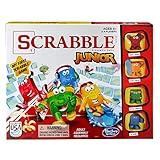
Overview: Scrabble Junior simplifies the classic word game for children aged 5+, offering a two-sided board that grows with players—from letter matching for beginners to independent word creation for advanced learners. It’s designed for 2-4 players, making it suitable for classrooms or family game nights.
What Makes It Stand Out: The dual-level gameplay is its key innovation, allowing kids to progress from matching letters to forming their own words seamlessly. Cute character tokens add charm, while the compact design ensures accessibility for young children still developing fine motor and spelling skills.
Value for Money: As an entry-level word game, it delivers solid value with durable components and reusability across skill levels. Though cheaper than adult Scrabble, it’s pricier than flashcards; however, its adaptability justifies the cost for long-term use in literacy development.
Strengths and Weaknesses: Strengths: Intuitive progression system, visually appealing tokens, and excellent for foundational spelling. Weaknesses: Limited replay value once kids master basic words, and the “advanced” side lacks depth for older players (e.g., no strategic depth beyond word formation).
Bottom Line: A reliable, age-appropriate introduction to word games that supports early literacy. Best for ages 5-6; skip if kids already read fluently.
3. University Games, Scholastic Race Across the USA Board Game , Geography Learning Game for Kids and Families, for 2 to 4 Players Ages 8 and Up

Overview: Race Across the USA challenges players to explore American geography by answering state-themed questions while racing toward their home state. Tailored for ages 8+, it accommodates 2-4 players and blends trivia with strategic movement for family or classroom use.
What Makes It Stand Out: Grade-appropriate questions ensure inclusivity—kids in different grades compete fairly on content suited to their level. The state-hopping adventure format makes learning tangible, while collaborative elements foster teamwork during group play.
Value for Money: Priced moderately for an educational game, it offers strong value through reusability and cross-grade appeal. Compared to generic geography apps, it encourages face-to-face interaction and critical thinking without screens, making it ideal for schools or family bonding.
Strengths and Weaknesses: Strengths: Adaptable difficulty, promotes genuine geography knowledge, and supports group dynamics. Weaknesses: Question depth varies (some too easy/hard for mixed ages), and gameplay can feel repetitive after multiple sessions.
Bottom Line: A top-tier geography tool that balances fun and learning. Highly recommended for classrooms or families with 8-12-year-olds seeking substantive educational play.
4. eeBoo: Making Change Game, Develops Math and Practical Money Skills, Educational Game That Allows for Skills to Form, Perfect for Ages 5 and up

Overview: eeBoo’s Making Change Game teaches practical money management by having players calculate correct change using mental math. Aimed at ages 5+, it includes play money, coins, and 50 item cards, challenging kids to collect diverse items while mastering real-world math.
What Makes It Stand Out: It uniquely bridges abstract math and daily life through realistic transactions, fostering financial literacy early. As a woman-owned, eco-conscious brand, eeBoo uses 90% recycled materials and vegetable inks, adding ethical appeal without compromising durability.
Value for Money: Its sustainable construction and screen-free design offer lasting value, though the $25-$30 price point is higher than basic card games. However, the focus on essential life skills—coupled with reusability—makes it a worthwhile investment over cheaper, less substantive alternatives.
Strengths and Weaknesses: Strengths: Builds critical real-world math skills, eco-friendly materials, and inclusive for varied skill levels. Weaknesses: Younger players (5-6) may struggle with subtraction complexity, and bonus-point mechanics feel underdeveloped.
Bottom Line: An exceptional tool for teaching money management with conscience. Essential for ages 7-10; slightly advanced for younger kids.
5. USAOPOLY The Original TAPPLE, The Fast-Paced Family Board Game,Choose a Category & Race Against The Timer to be The Last Player,Learning Word Game for Ages 8 & Up, 2-8 Players, 15-20 Minute Play Time

Overview: TAPPLE is a rapid-fire word game where players race against a built-in timer to shout category-related words starting with specific letters. Designed for 2-8 players aged 8+, it delivers quick, high-energy rounds perfect for parties or travel.
What Makes It Stand Out: Its standout feature is the portable Tapple wheel with integrated timer, enabling frantic, inclusive gameplay in just 15-20 minutes. The 144 categories (e.g., “Fruits,” “Countries”) ensure vast replayability, while the pressure-cooker pace sparks excitement unmatched by traditional word games.
Value for Money: At $20-$25, it’s a steal for large-group entertainment. Unlike apps or bulky board games, its compact design and minimal setup offer exceptional convenience and longevity, justifying the price for frequent game nights or classrooms.
Strengths and Weaknesses: Strengths: Highly engaging for groups, portable, and brilliantly simple. Weaknesses: Timer buzz can frustrate younger players, and categories occasionally lack depth for advanced vocabulary.
Bottom Line: A must-have party game that transforms wordplay into adrenaline-pumping fun. Perfect for ages 10+ in social settings; skip for very young or competitive-shy players.
6. Learning Resources Math Island Addition & Subtraction Game , Board Games , Ages 6+
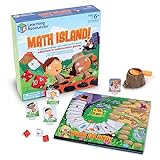
Overview:
This vibrant board game transforms foundational math practice into an engaging adventure for children aged 6+. Players navigate a volcano-themed island by solving addition and subtraction problems generated using two 10-sided number dice and an operation die. Designed for 2-4 players, it combines educational rigor with playful mechanics to build early numeracy skills during family game nights.
What Makes It Stand Out:
The standout feature is the interactive volcano popper mechanism, which launches dice when players land on special spaces, injecting surprise and physical engagement into math practice. Unlike static flashcards, this dynamic element sustains children’s interest while reinforcing mental math fluency. The dual dice system also creates varied equations, preventing rote memorization.
Value for Money:
Priced competitively for an educational tool, it offers superior replayability compared to workbooks or apps. The durable components (game board, character pieces, popper) justify the cost, especially considering its ability to grow with a child’s skill level. Cheaper alternatives often lack this tactile engagement and curriculum-aligned design.
Strengths and Weaknesses:
Strengths: Effectively builds math confidence through play; high-quality, colorful components; inclusive for mixed-age siblings; volcano popper adds thrilling unpredictability.
Weaknesses: Limited to addition/subtraction (no multiplication/division); popper mechanism may occasionally jam; younger players might need adult support initially.
Bottom Line:
An exceptional tool for making math enjoyable, this game successfully bridges education and entertainment. Highly recommended for parents seeking screen-free ways to boost early math skills—it turns practice into a sought-after activity.
7. The World Game - Geography Card Game - Educational Games for Kids, Family and Adults - Cool Learning Gift Idea for Teenage Boys & Girls 8-12 with Map

Overview:
This comprehensive card game teaches global geography through three core challenges: identifying countries on a map, recognizing national flags, and naming capital cities. Covering all 194 UN-recognized countries, it’s designed for 2-5 players aged 8+ and doubles as flashcards or trivia, making it ideal for classroom use or family travel.
What Makes It Stand Out:
The “strongest fact” mechanic encourages strategic thinking—players compete by sharing compelling country facts to win cards, moving beyond rote memorization. Its versatility stands out: the included world map enables spatial learning, while regularly updated country data ensures accuracy. The dual focus on fun and factual depth is rare in geography games.
Value for Money:
Offering exceptional breadth for its price, it surpasses single-topic alternatives (like capital-only games). The durable cards and included map provide long-term utility, whether used for structured learning or casual play. Cheaper games often omit map integration or lack comprehensive country coverage.
Strengths and Weaknesses:
Strengths: Covers flags, capitals, and locations comprehensively; adaptable for novices to experts; excellent travel companion; fact-based gameplay boosts retention.
Weaknesses: Steeper learning curve for absolute beginners; younger kids (8-10) may struggle without guidance; minimal visual aids beyond flags/maps.
Bottom Line:
A top-tier educational investment that transforms geography into an engaging challenge. Perfect for curious families or teachers—it’s both a gift that educates and a game that grows with players.
8. Spin Master Games, Hedbanz 2023 Edition with New Cards, Picture Guessing Board Game, for Family & Kids, 2-6 Players, for Ages 6 & Up

Overview:
The refreshed 2023 edition of this classic guessing game challenges players to identify the picture on their forehead headband using only yes/no questions. With six new character bands (dino, narwhal, robot, etc.), it accommodates 2-6 players aged 6+ and thrives in family gatherings or parties, emphasizing quick thinking and laughter.
What Makes It Stand Out:
The novelty lies in its brilliantly simple, inclusive mechanics—no reading required—and the 2023 edition’s themed bands (like “brain” or “butterfly”) add modern flair. Its universal appeal bridges generations, as players of all ages strategize questions (“Am I fictional?”). Unlike trivia-heavy games, it relies purely on deductive dialogue, fostering communication skills effortlessly.
Value for Money:
A worthy update to the original, the new cards justify repurchasing for veterans, while newcomers get immense replay value. At its price point, it outperforms similar games in durability and adaptability. Budget alternatives often lack quality components or diverse card themes.
Strengths and Weaknesses:
Strengths: Effortlessly teaches critical thinking; fast-paced and highly social; new bands enhance variety; minimal setup; ideal for mixed-age groups.
Weaknesses: Limited depth for older teens; repetitive after extended play; headbands may slip during energetic rounds.
Bottom Line:
A must-have for family game nights—the 2023 edition revitalizes a timeless formula with fresh charm. Highly recommended for sparking laughter and logical reasoning in equal measure.
9. National Geographic: Secret Clue Animals - Card Game for Kids 7 & Up - Fun & Cooperative Board Games for The for Girls & Boys Ages 7, 8, 9, 10

Overview:
This cooperative card game tasks players with working together to identify mystery animals using layered clues and stunning National Geographic photographs. Designed for ages 7+, it emphasizes teamwork over competition, as players decode hints about habitats, diets, and traits to solve each round before time runs out.
What Makes It Stand Out:
The authentic NatGeo photography and scientifically vetted facts create an immersive learning experience unmatched by generic animal games. Its cooperative structure—where all win or lose together—fosters communication and patience, addressing a gap in competitive-heavy kids’ gaming. The clue progression (from obvious to obscure) expertly scaffolds knowledge.
Value for Money:
Premium production quality justifies the cost, with durable cards featuring high-resolution images that withstand repeated use. Compared to solo-learning apps, it delivers irreplaceable social-emotional benefits. Few cooperative games for this age group integrate real-world conservation messaging so effectively.
Strengths and Weaknesses:
Strengths: Promotes collaboration and empathy; breathtaking educational visuals; adaptable for ages 6-12; NatGeo’s authority ensures factual accuracy; perfect for quiet or energetic play.
Weaknesses: Limited replayability once clues are memorized; timer may stress younger players; fewer cards than competitive counterparts.
Bottom Line:
A heartwarming, brain-boosting gem that makes learning about wildlife a shared adventure. Essential for families prioritizing teamwork and nature education—it’s more than a game, it’s a conversation starter.
10. Sorry! Board Game for Kids Ages 6 and Up; Classic Hasbro Board Game; Each Player Gets 4 Pawns; Family Game
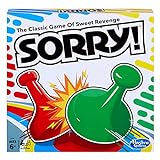
Overview:
This timeless Hasbro game pits players in a race to move all four pawns from start to home, using strategy and luck. With iconic “Sorry!” slides and pawn-colliding chaos, it’s designed for ages 6+ and delivers fast-paced, multi-generational fun where sending opponents backward is all part of the sweet revenge.
What Makes It Stand Out:
The game’s enduring appeal lies in its perfect balance of simplicity and strategic depth—easy for kids to grasp but with enough card-driven variables (draw 1, 4, 10, etc.) to keep adults engaged. The visceral thrill of a “Sorry!” slide creates unforgettable family moments, distinguishing it from overly complex modern board games.
Value for Money:
As a decades-old classic, it offers unbeatable longevity per dollar. The compact design and durable board withstand heavy use, outlasting trendier games. While digital alternatives exist, its tactile joy and screen-free social interaction provide unique value for spontaneous play.
Strengths and Weaknesses:
Strengths: Effortless to learn; high replayability with quick rounds; fosters sportsmanship; nostalgic for parents; accommodates up to 4 players seamlessly.
Weaknesses: Luck-heavy (minimal strategy); younger kids may find setbacks frustrating; limited educational value.
Bottom Line:
A non-negotiable staple for family game nights—the pure, unscripted joy of “Sorry!” remains unmatched. Buy it for the memories you’ll create, not the strategy you’ll master.
Choosing the Right Game: Key Considerations for Maximum Impact
Understanding Developmental Stages and Age Appropriateness
Selecting a game that aligns with cognitive, social, and motor skills is non-negotiable. A game too simplistic for an older child breeds boredom, while one requiring advanced strategic thinking can overwhelm a younger player, leading to frustration. Pay close attention to manufacturer age ranges, but also consider the specific developmental milestones of the child or group. Does the game require fine motor dexterity they haven’t mastered? Does it involve complex rule interpretation beyond their current capacity? Opting for games with adjustable difficulty levels or modular rules often provides the longevity needed as skills develop.
Matching Games to Specific Learning Objectives
What do you hope to achieve? Be crystal clear. Are you targeting foundational math fluency, vocabulary expansion, historical empathy, scientific reasoning, or perhaps executive function skills like planning and impulse control? Pinpointing your primary goal prevents choosing a game that only superficially touches on a subject. Look beyond the box’s marketing; examine the core mechanics. Does the gameplay require the use of the skill you want to develop, or is it merely present as a theme? A game where players constantly calculate resources to make decisions inherently builds math skills far more effectively than one where numbers are just on cards to be matched.
Evaluating Game Mechanics for Engagement and Learning
The way a game functions – its mechanics – is the engine driving both fun and education. Cooperative play, where players work together against the game itself, fosters communication, teamwork, and reduces the sting of losing. Competitive mechanics can teach healthy rivalry and strategic planning, but ensure they don’t overshadow the learning objective with excessive frustration. Look for mechanics like set collection (pattern recognition), worker placement (resource management), deduction (logical reasoning), or legacy elements (long-term planning and consequence). The best educational games make the process of playing the vehicle for learning, not just the endpoint.
Core Subject Areas: Games as Learning Pathways
Building Mathematical Proficiency Through Play
Effective math games move far beyond rote memorization. They embed numerical reasoning into the core challenge. Seek out games involving probability assessment during dice rolls, spatial reasoning in tile placement, resource allocation requiring addition/subtraction/multiplication, or pattern recognition in sequences. Games that require players to manipulate quantities dynamically, estimate outcomes, or understand ratios within the context of the game’s narrative create deep, intuitive mathematical understanding that textbooks often struggle to achieve.
Enhancing Language and Literacy Skills Creatively
Vocabulary development, narrative comprehension, persuasive speaking, and even early phonics can flourish through well-designed games. Look beyond simple word matching. Games that encourage storytelling, require players to describe concepts without using key words (fostering descriptive language), involve interpreting clues or character motivations, or build sentences through modular components create rich linguistic environments. The social pressure of explaining your move or negotiating a trade within the game naturally hones communication skills in a low-stakes, engaging setting.
Exploring Science and Nature Concepts Tangibly
Abstract scientific principles become concrete when players interact with them. Games simulating ecosystems demonstrate interdependence and cause-and-effect. Resource management games teach systems thinking and sustainability. Deduction games mirror the scientific method – forming hypotheses, testing through actions, and revising understanding based on outcomes. Games focusing on anatomy, geology, or physics through tactile components or scenario-based challenges allow players to explore complex concepts through direct manipulation and experimentation, making science feel relevant and exciting.
Developing Historical and Cultural Understanding
Moving beyond dates and names, the best historical games immerse players in the context, challenges, and decision-making of different eras or cultures. Games that simulate trade routes, diplomatic negotiations, or societal development encourage players to consider multiple perspectives and the complex factors shaping historical events. Cultural exploration games should be designed with authenticity and respect, focusing on shared human experiences, problem-solving within specific contexts, and fostering empathy rather than perpetuating stereotypes. The goal is understanding the “why” behind history and culture.
Fostering Critical Thinking and Problem-Solving Prowess
This is where many educational games truly shine. Look for games presenting layered puzzles, open-ended challenges, or scenarios requiring players to analyze information, identify patterns, weigh risks and benefits, and adapt strategies on the fly. Games with emergent gameplay – where each session unfolds differently based on player choices – are particularly potent. They force players to think several steps ahead, evaluate consequences, learn from mistakes in a safe environment, and develop flexible thinking strategies applicable far beyond the game board.
Beyond Academics: Cultivating Essential Life Skills
Nurturing Social-Emotional Intelligence
The game table is a microcosm of social interaction. Cooperative games explicitly build communication, empathy, and shared goal-setting. Even competitive games offer invaluable lessons in managing emotions – handling disappointment after a loss, celebrating others’ successes, practicing patience during turns, and learning to negotiate fairly. Games requiring players to read social cues, understand different perspectives to win, or manage limited resources under pressure provide direct, experiential learning in emotional regulation and interpersonal dynamics.
Strengthening Executive Function Skills
These crucial cognitive processes – working memory, cognitive flexibility, and inhibitory control – are fundamental for academic and life success. Games are unparalleled training grounds. Remembering complex rules or hidden information exercises working memory. Adapting strategy when the game state changes (like a new card draw or opponent move) builds cognitive flexibility. Resisting the urge to make an impulsive, suboptimal move requires strong inhibitory control. Games with phased turns or multiple simultaneous objectives provide constant, engaging practice for these executive muscles.
Encouraging Creativity and Innovative Thinking
Don’t underestimate games that spark imagination. Story-building games, sandbox-style experiences with open-ended components, or games requiring players to invent solutions within constraints foster divergent thinking. When players must interpret abstract components, create narratives for their actions, or find unconventional uses for game elements within the rules, they exercise creative problem-solving pathways essential for innovation in any field.
Building Resilience and a Growth Mindset
The inherent unpredictability of games – dice rolls, card draws, opponent actions – provides constant, low-stakes opportunities to practice resilience. Learning that a setback (a bad roll, a clever opponent’s move) isn’t failure but a chance to adjust strategy is invaluable. Games that encourage reflection (“What could I have done differently?”) and emphasize effort and learning over just winning cultivate a growth mindset. Players internalize that skills improve with practice and perseverance, directly translating to real-world challenges.
Practical Buying Guide: Making Smart Investment Choices
Assessing Component Quality and Durability
Given the hands-on nature and potential for multiple players (especially younger ones), sturdy components are essential. Check for thick cardboard tokens, linen-finished cards that resist shuffling damage, and wooden pieces less prone to chipping than thin plastic. Consider storage solutions within the box – are compartments logical and secure? A game with flimsy parts that quickly become damaged or lost will frustrate players and shorten its lifespan, negating its educational value and cost-effectiveness.
Considering Player Count and Group Dynamics
Be realistic about how many people will typically play. A fantastic 2-player strategy game is useless if you need something for a classroom of 25. Conversely, a game designed for large groups might feel chaotic and confusing with only two players. Also, consider group dynamics: Will the game work for mixed ages? Does it accommodate varying skill levels without one player dominating? Games with scalable difficulty or team play options often offer the most flexibility for diverse groups.
Evaluating Replayability and Long-Term Value
The best educational investments are games you’ll return to again and again. High replayability comes from variable setups (different maps, card decks, or starting conditions each game), multiple viable strategies to win, legacy elements that change the game over time, or modular rules allowing for complexity to be added as skills grow. A game that feels the same every time quickly loses its appeal and educational punch. Look for depth that unfolds over multiple plays.
Balancing Cost with Educational Depth
While budget is always a factor, view the purchase through the lens of cost-per-play and long-term skill development. A slightly more expensive game that offers years of engagement and targets multiple learning objectives often provides far better value than several cheaper games played once or twice. Consider if the game can be used across grade levels or adapted for different learning focuses. Sometimes, investing in one versatile, high-quality game is wiser than accumulating many shallow ones.
Frequently Asked Questions
Frequently Asked Questions
How much should I realistically spend on an educational board game? Focus on value per play. While prices vary, prioritize games offering significant replayability and targeting core skills you need. A $40-$60 game played dozens of times offers better value than a $20 game played once. Check for durability to ensure longevity.
Can these games truly replace traditional learning methods? They shouldn’t replace, but enhance. Educational games excel at building foundational understanding, engagement, and practical application of concepts in a low-pressure environment. They work best as a dynamic supplement to, not a substitute for, structured curriculum and diverse learning approaches.
My child gets frustrated losing. Are competitive games bad for them? Not necessarily, but choose wisely. Start with highly cooperative games or those with minimal player conflict. If using competitive games, emphasize effort and learning over winning, play short rounds, and model good sportsmanship. Games where “losing” feels like a natural part of the learning curve within the game itself are ideal.
How do I find games suitable for mixed-age groups (e.g., 6-year-old and 10-year-old)? Look for games with adjustable difficulty rules, variable player powers, or team play options. Cooperative games are often excellent here, as older players can gently guide younger ones. Avoid games where speed or complex reading is the sole advantage for older kids.
Are there effective educational games for teenagers and adults? Absolutely. Many strategy games deeply engage teens and adults in complex systems thinking, advanced resource management, historical analysis, and nuanced negotiation. The key is matching the theme and depth to their interests and cognitive level – don’t assume “educational” means childish.
How can I integrate these games effectively into a classroom setting? Align the game directly with your current learning objectives. Dedicate specific time for structured gameplay followed by guided discussion (“What strategy worked? Why? How does this connect to our topic?”). Use games for review, introducing concepts, or as a reward that still reinforces skills.
Do I need to play with my child, or can they play independently? Early on, active adult participation is crucial for modeling rules, managing frustration, and deepening learning through discussion. As children master rules and social dynamics, independent or peer play becomes valuable. Your role shifts to facilitating and occasionally joining in for connection.
I’m overwhelmed by choices. Where’s the best place to start researching? Focus on reputable educational toy stores (online or local), university education department recommendations, or reviews from trusted sources specializing in educational value (not just entertainment). Search specifically for “games for [specific skill, e.g., executive function]” rather than general “educational games.”
Can screen-based board game apps offer the same benefits? While some digital adaptations have merit, the physical, tactile, and face-to-face social interaction of traditional board games provides unique benefits for fine motor skills, shared spatial awareness, and unmediated social dynamics that screens often diminish. Prioritize physical games for core educational and social development.
How do I know if the game is actually working – are kids really learning? Observe! Are they using new vocabulary from the game in other contexts? Applying strategies learned? Asking deeper questions about the subject? Discuss the game afterward: “What was tricky? How did you figure it out? Where have you seen something like this before?” Genuine engagement and the transfer of concepts are strong indicators.
See Also
- 10 Must-Have Educational Board Games for Learning While Playing in 2026
- The 10 Ultimate Best Math Board Games for Learning Through Play in 2026
- 10 Top-Rated Educational Board Games According to Experts in 2026
- Why Educational Card Games Are Revolutionizing Learning in 2026
- The Ultimate Guide to Educational Board Games That Make Learning Fun for Kids