Table of Contents
Hosting trivia nights that leave your guests buzzing for weeks isn’t just about obscure facts—it’s about the electric charge of deception, the gasps when a bluff collapses, and the laughter that follows a perfectly executed lie. Forget static Q&A rounds; the magic happens when players weave truth and fiction so seamlessly that even the question master isn’t sure who’s trustworthy. In 2026, the most unforgettable gatherings will hinge on games where knowledge alone isn’t enough; it’s your ability to sell a story, read micro-expressions, and turn uncertainty into pure entertainment that crowns the night.
Bluffing games transform passive trivia into dynamic social theater, demanding quick wit, psychological insight, and a flair for drama. They level the playing field, letting casual players outmaneuver trivia buffs through sheer audacity. But with so many options flooding the market, choosing the right game can make or break your event. The wrong pick might lead to confused silence instead of roaring laughter, or drag on with complex rules that kill momentum. This guide cuts through the noise, focusing on the universal mechanics and group dynamics that define exceptional bluffing experiences—so you can consistently curate nights where every round feels fresh, inclusive, and utterly unscripted.
Top 10 Bluffing Games
Detailed Product Reviews
1. The Chameleon: Award-Winning Bluffing Board Game for Family, Adults & Friends | Includes 80 Extra Secret Words | Who is The Imposter?

Overview: The Chameleon is a rapid-paced social deduction game where players share a secret word—except one player, the Chameleon, who must blend in by subtly avoiding detection through coded clues and strategic deception. Designed for 3-8 players aged 14+, it promises quick, engaging rounds centered on hidden identity and bluffing. What Makes It Stand Out: Its genius lies in the asymmetrical tension: everyone but the Chameleon knows the word, forcing the imposter to listen intently and craft plausible responses without revealing ignorance. The included 80 extra words and multi-award-winning status (including “Best Party Game” at UK Games Expo) ensure lasting replayability and credibility. Value for Money: Priced competitively for a party game, the compact box delivers exceptional longevity through endless word combinations and quick 15-minute sessions. It outshines pricier alternatives by eliminating complex rules while maximizing social interaction, making it ideal for frequent game nights. Strengths and Weaknesses: Strengths: Effortless setup/learning; intense, inclusive gameplay; high replay value with extra words. Weaknesses: Limited strategic depth for hardcore gamers; younger players (under 14) may struggle with subtlety; relies heavily on group dynamics. Bottom Line: A must-have for social gatherings, The Chameleon excels as a lightning-fast icebreaker that consistently sparks laughter and suspicion. Highly recommended for families and adult groups seeking accessible, award-winning fun.
2. Big Potato Sounds Fishy Board Game: The Bluffing Family Game for Kids 10+ - Best New Family Quiz Games, Trivia Games for Groups of People
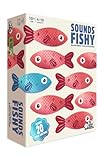
Overview: Sounds Fishy flips traditional trivia on its head: players invent humorous fake answers to real questions, then bluff the guesser into selecting their made-up response. Tailored for kids 10+ and groups, it emphasizes creativity over knowledge, turning ignorance into an advantage. What Makes It Stand Out: The game’s brilliance is in its role reversal—players want their absurd answers (e.g., “What’s a baby platypus called?”) to be chosen over the correct one. This fosters hilarious improvisation and levels the playing field, as trivia buffs gain no edge over imaginative newcomers. Value for Money: With high-quality components and abundant question cards, it offers remarkable replayability for its price. Unlike trivia games requiring niche knowledge, its “invent, don’t recall” mechanic ensures every session feels fresh, justifying the cost for families seeking versatile group entertainment. Strengths and Weaknesses: Strengths: Inclusive for all knowledge levels; encourages creativity and laughter; quick to learn (<5 mins); durable box. Weaknesses: Guessers can feel passive; some prompts may confuse younger kids; limited strategic depth beyond bluffing. Bottom Line: Sounds Fishy is a standout party game that transforms trivia into collaborative chaos. Perfect for mixed-age groups wanting lighthearted, repeatable fun—highly recommended for family game nights or casual gatherings.
3. Coup Card Game by Indie Boards & Cards | Fast Bluffing and Social Deduction Strategy | Hidden Roles, Deception, and Player Interaction | Quick 15-Minute Game for 2–6 Players | Adults, Teens, Families

Overview: Coup is a minimalist card game of deception where players use hidden roles (like Captain or Assassin) to manipulate, challenge, and eliminate opponents through bold lies and calculated risks. Its streamlined design delivers intense social deduction in just 15 minutes for 2–6 players. What Makes It Stand Out: The game shines with its elegant “claim or challenge” loop: players declare actions they may not have the role to perform, betting on opponents’ hesitation. Its tiny box packs profound psychological tension, rewarding bluffs while punishing overconfidence with swift consequences. Value for Money: Exceptional for its price, Coup offers near-infinite replayability through shifting alliances and player-driven narratives. It outperforms bulkier games by focusing purely on interaction—no boards or tokens needed—making it a staple for hobbyists and casual groups alike. Strengths and Weaknesses: Strengths: Ultra-portable; rules mastered in minutes; deep strategic layers emerge with experience; constant player engagement. Weaknesses: Can feel cutthroat with inexperienced groups; limited theme immersion; early eliminations possible in larger games. Bottom Line: A masterclass in efficient design, Coup is essential for fans of fast, brainy social games. Its perfect blend of simplicity and depth earns it a strong recommendation for teens and adults seeking high-stakes fun.
4. Gullible: The Hilarious Team Game of Creativity, Bluffing and Astonishing Facts. Will You Fool Your Family and Friends or Believe The Unbelievable? (Gullible - Same Game, Smaller Box) (New Edition)

Overview: Gullible pits teams against each other as they invent two plausible fake answers to bizarre trivia questions (e.g., “What’s a baby platypus called?”), betting chips to trick opponents into believing the absurd. This eco-conscious reissue emphasizes teamwork and creative deception for 2–10 players. What Makes It Stand Out: Beyond standard bluffing, it uniquely combines trivia fabrication with strategic betting—teams lose chips for backing fake answers, adding risk management. Its charitable ethos (10% profits to charity, eco-friendly materials) and Christmas/dinner-party versatility further distinguish it. Value for Money: The compact box delivers outstanding replayability through thousands of question combinations. While priced slightly higher than basic card games, its team-based structure, eco-credentials, and suitability for diverse group sizes (including couples) justify the investment. Strengths and Weaknesses: Strengths: Encourages teamwork and creativity; family-friendly yet engaging for adults; strong ethical appeal; scales perfectly from 2 to 10 players. Weaknesses: Betting mechanics may confuse younger kids; trivia quality varies; less intense for hardcore strategists. Bottom Line: Gullible is a joyous, conscience-friendly party game that turns ignorance into entertainment gold. Highly recommended for groups valuing humor, inclusivity, and social impact.
5. Bamboozled - A Hilariously Fun Bluffing Dice & Card Game. Family-Friendly Party Game for Kids, Teens & Adults. Fast and Easy to Learn

Overview: Bamboozled merges dice rolling with bluffing: players secretly note their dice results, then collectively lie or tell truths about rolls while others call bluffs. Its 15-second setup and portable tin make it ideal for spontaneous fun with kids, teens, and adults. What Makes It Stand Out: The seamless blend of dice luck and psychological warfare creates accessible chaos. Unlike pure deduction games, Bamboozled’s physical dice adds tactile excitement, while its compact tin (holding durable cards and rounded dice) ensures travel-ready entertainment without sacrificing quality. Value for Money: An affordable entry point into bluffing games, it offers surprising depth for its simplicity. The durable components and “anywhere” portability outshine cheaper, flimsier alternatives, providing hours of laughter per dollar—especially for families needing quick-setup diversions. Strengths and Weaknesses: Strengths: Lightning-fast learning curve; perfect for mixed-age groups; exceptionally portable; high-quality materials. Weaknesses: Limited strategic complexity; repetitive after extended play; dice rolls can occasionally overshadow skill. Bottom Line: Bamboozled is a stellar choice for effortless, on-the-go fun. Highly recommended as a birthday gift or travel game for families seeking inclusive, laugh-out-loud moments.
6. Little Secret | Bluffing Board Game for Family and Friends | an Exploding Kittens Card Game Collaboration | Award-Winning Board Game for 4-8 Players

Overview: Little Secret, a collaboration with Exploding Kittens, is a fast-paced bluffing game where players receive hidden passwords and must deduce who holds different ones through clever deception and word association. Designed for 4-8 players aged 10+, it delivers quick 20-minute sessions packed with social deduction and lighthearted tension.
What Makes It Stand Out: The partnership with Exploding Kittens injects playful, irreverent humor into the bluffing genre, while its intuitive word-based mechanics lower the barrier to entry. With over 700 unique words ensuring replayability, the focus on verbal deception—rather than complex strategy—makes it exceptionally accessible for mixed-age groups.
Value for Money: Priced competitively for a niche party game, its high replay value (thanks to the vast word bank) and strong brand appeal justify the cost. It outshines pricier strategy-heavy games for casual gatherings, offering more immediate fun per dollar than complex alternatives.
Strengths and Weaknesses:
Strengths: Effortless setup, broad appeal for families/teens, consistent laughs, and genuine surprise moments. The Exploding Kittens aesthetic enhances engagement.
Weaknesses: Limited strategic depth may disappoint hardcore gamers; outcomes can feel overly luck-dependent with larger groups.
Bottom Line: An excellent, accessible party game that nails lighthearted social deception. Ideal for families and casual gamers seeking quick, laughter-filled rounds—just don’t expect deep strategy.
7. Mattel Games Liar’s UNO Card Game in Travel & Storage Tin for Adults, Kids, Families, Parties & Game Nights, Outwit Other Players with Bluffing & Trickery (Amazon Exclusive)
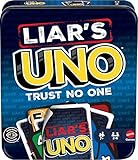
Overview: Liar’s UNO reimagines the classic card game by weaving bluffing into its core mechanics. Players announce cards they play face-down (“Liar’s Cards”), risking penalty draws if caught lying—or making accusers draw if truthful. This Amazon-exclusive travel edition fits 2-10 players and includes colorblind-friendly symbols.
What Makes It Stand Out: The seamless integration of bluffing into UNO’s familiar framework is genius, transforming a luck-based game into a test of nerve. The color-accessible card design is a standout inclusive feature, while the compact tin enhances portability for spontaneous play.
Value for Money: The travel tin adds practical value, and the bluffing twist revitalizes a $10-$15 game into a fresh experience. It’s a smarter investment than standard UNO for frequent game nights, though the core mechanics limit long-term depth compared to dedicated bluffing games.
Strengths and Weaknesses:
Strengths: Instantly familiar rules with exciting deception layer, excellent accessibility features, durable travel case, and broad age appeal.
Weaknesses: Bluffing can feel repetitive after multiple rounds; UNO’s inherent randomness still dominates strategy.
Bottom Line: A clever, accessible upgrade to UNO that’s perfect for casual players and travel. Worth buying for the bluffing novelty and inclusivity, but not a replacement for deeper social deduction games.
8. SAVANA Traitors Aboard - Award Winning Secret Identity Party Game - Fun, Bluffing and Betrayal | Easy to Learn, 15-Minute Round | Popular Games for 3-8 Players - Ages 10+

Overview: Traitors Aboard casts players as pirates on a ship where hidden Mutineers sabotage gold-collecting efforts. Team-based and fast (20-30 minutes), it challenges “loyal” players to complete objectives while Mutineers secretly undermine them—all through discussion, bluffing, and deduction for 3-8 participants.
What Makes It Stand Out: Its pirate-themed objective system (filling a gold chest) creates clear, engaging goals beyond simple accusation. The compact travel size and 15-minute learning curve make it exceptionally approachable, while team dynamics foster lively alliances and dramatic betrayals.
Value for Money: Priced mid-range for party games, its replayability shines with variable roles and short rounds. It offers more structured fun than free-for-all bluffing games like Mafia, justifying its cost for groups seeking cooperative-competitive balance.
Strengths and Weaknesses:
Strengths: Intuitive role-based gameplay, strong team interaction, quick setup, and high replay value with variable outcomes. Perfect for mixed generations.
Weaknesses: Smaller groups (3-4 players) reduce tension; outcomes can hinge on early luck rather than skill.
Bottom Line: A superb entry-point into team-based deception games. Highly recommended for families and casual groups wanting accessible, narrative-driven betrayal—just ensure 5+ players for best results.
9. PLAYVIEW 21 Bluff – The Ultimate Bluffing & Strategy Card Game for Family Game Night–Fast-Paced & Hilarious Party Game – Outsmart & Outbluff to Win – Includes 4 Custom Decks & Gift Box
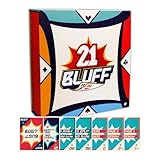
Overview: 21 Bluff merges 21-style card play with high-stakes deception. Players aim to接近 21 while bluffing their totals, using Power Cards to disrupt opponents. This 2-4 player game includes four custom decks and a gift box, targeting family game nights and parties with its fast, strategic chaos.
What Makes It Stand Out: The unique blend of number-based risk (like Blackjack) with social deduction sets it apart. Power Cards inject unpredictable twists, and the included multi-deck set enhances replayability. Positioning as a “gift-ready” game adds tangible value.
Value for Money: The four-deck bundle offers exceptional longevity at a premium price point. While costlier than single-deck games, it outperforms similar-priced titles (e.g., Skull) in variety for groups who enjoy recurring game nights.
Strengths and Weaknesses:
Strengths: Dynamic mix of math and bluffing, high-quality components, versatile for 2-4 players, and excellent gift potential. Power Cards prevent predictability.
Weaknesses: Niche appeal for non-math-inclined players; shorter playtime may not satisfy strategy seekers.
Bottom Line: A standout for fans of hybrid mechanics and gift-givers. Worth the investment for replay-focused groups, though traditional bluffing purists might prefer simpler alternatives.
10. Asmodee Skull Party Game - Bluffing and Strategy Game, Family Fun for Kids & Adults, Ages 13+, 3-6 Players, 30 Minute Playtime

Overview: Skull Party is a minimalist, high-stakes bluffing game where players place and reveal rose/skull tokens, betting on how many they can flip without hitting a skull. Updated with refreshed art and rules, it’s a strategic duel for 3-6 players aged 13+, lasting 30 minutes.
What Makes It Stand Out: Its elegant simplicity—only four tokens per player—creates profound psychological depth. The tactile token-flipping and escalating bids generate intense, silent tension. The compact design and rule updates modernize a cult classic for new audiences.
Value for Money: As a niche strategy game, its premium price reflects durable components and timeless mechanics. It surpasses flashier games in replay depth per dollar, ideal for collectors seeking a cerebral party staple.
Strengths and Weaknesses:
Strengths: Deep strategic nuance, stunningly simple rules, superb tension, and exceptional portability. Rewards observation and psychology over luck.
Weaknesses: Too cerebral for young kids; player count heavily impacts dynamics (best at 4-6).
Bottom Line: A masterclass in minimalist design. Essential for strategy enthusiasts and game-night veterans craving pure, tension-filled deduction—skip if you prefer lighthearted chaos.
Understanding Bluffing Game Mechanics
Before diving into selection, grasp the core structures that make these games tick. Recognizing these frameworks helps you match a game’s DNA to your group’s vibe.
The Psychology of Deception in Gameplay
Bluffing thrives on cognitive dissonance—players must balance truth-telling with strategic lying while interpreting others’ tells. Games leveraging this create tension where every pause or smirk becomes data. Look for mechanics that force players to perform confidence, not just state it, as this elevates engagement beyond simple guessing.
Hidden Information vs. Public Knowledge Dynamics
Some games bury critical facts (like secret roles or hidden cards), while others manipulate publicly known trivia. Hidden info breeds paranoia and deduction; public knowledge twists familiar facts into weapons. Assess whether your group enjoys unraveling mysteries or redefining common knowledge through lies—it dictates which style resonates.
Player Interaction Intensity Spectrum
Interaction ranges from silent deduction to full-table debates. High-interaction games (e.g., accusing others face-to-face) fuel energy but can overwhelm shy guests. Lower-interaction variants suit smaller groups or introverts. Prioritize games where interaction scales with player count—no one should feel sidelined during critical moments.
Critical Factors for Group Compatibility
Your audience’s personality is non-negotiable. A mismatch here turns potential hits into awkward flops, regardless of a game’s popularity.
Navigating Group Size Realities
Games designed for 4–6 players often crumble with 10+ attendees, leading to downtime. Conversely, large-group specialists lose nuance in tiny settings. Prioritize titles with modular rules: adjustable player counts, team variants, or elimination mechanics that maintain pace whether you have 5 or 20 people.
Energy Level and Social Confidence Considerations
High-energy groups thrive on chaotic, fast-paced bluffs where interruptions are encouraged. For reserved crowds, opt for structured turns with gentle pressure—like written submissions or phased reveals—to avoid putting anyone on the spot. The best games include “safety valves,” like optional anonymity, so quieter players aren’t drowned out.
Replay Value Through Variable Setup
Avoid games where the “optimal bluff” becomes predictable after two plays. Seek titles with randomized roles, evolving objectives, or modular question decks. Bonus points for mechanics that let players influence future rounds (e.g., stealing points from bluffers), ensuring no two nights feel identical.
Game Design Elements That Prevent Fatigue
Even brilliant concepts fail if execution drags. These subtle features keep momentum alive when attention spans waver.
Turn Length and Pacing Mechanics
Limit individual turns to 30 seconds or less. Games using sand timers, rapid-fire voting, or simultaneous action submission prevent analysis paralysis. Watch for “downtime traps”—like lengthy scoring phases—that fracture group focus between rounds.
Fail-Safes Against Player Elimination
Early elimination kills engagement. Top-tier bluffing games keep everyone active through hidden scoring, role-swapping, or spectator roles with influence (e.g., whispering clues). If elimination is unavoidable, ensure it happens late in the game when alternatives are exhausted.
Thematic Immersion Over Complexity
A strong theme (detective noir, alien diplomacy) makes rules intuitive—players “act” rather than memorize. Avoid excessive tokens or charts; physical components should enhance the lie (e.g., mood rings indicating truthfulness), not distract from it.
Accessibility and Inclusivity Essentials
The best games welcome diverse players without diluting the challenge. Overlook this, and you’ll alienate half your guests.
Minimizing Language and Cultural Barriers
Games relying on puns, regional slang, or hyper-specific cultural references exclude non-native speakers or varied backgrounds. Prioritize universal mechanics (e.g., visual cues, number-based bluffs) or include multilingual support. Avoid trivia requiring niche knowledge—it shifts focus from bluffing to rote recall.
Physical and Cognitive Load Management
Check component sizes for visibility, and avoid games requiring fine motor skills (e.g., stacking tiny tiles). For cognitive accessibility, opt for clear turn sequences over memory-heavy mechanics. Colorblind-friendly design isn’t optional—verify symbols/icons distinguish roles without relying solely on color.
Onboarding Speed for New Players
If setup takes longer than gameplay, you’ve lost momentum. Ideal games teach core loops in under 5 minutes using intuitive components (e.g., color-coded cards for roles). Look for “teach-by-doing” structures where early rounds are low-stakes practice.
Future-Proofing Your Game Selection
2026’s standout titles will adapt to emerging social trends—don’t get stuck with yesterday’s gimmicks.
Tech-Integrated but Not Tech-Dependent
Apps that track scores or generate questions add novelty, but shouldn’t be mandatory. Choose games where tech is optional—a nice-to-have for stats, not a requirement for play. Avoid anything needing constant internet; dead zones kill immersion.
Sustainability in Components and Packaging
Eco-conscious guests notice. Prioritize games using recycled materials, minimal plastic, and resealable packaging. Bonus: titles with digital-only expansions (e.g., printable question packs) reduce physical waste while refreshing content.
Community-Driven Content Evolution
The longest-lasting games have active creator communities sharing user-generated scenarios or house rules. Check if publishers regularly release free, balanced expansions—this signals commitment beyond the initial sale.
Frequently Asked Questions
How do I explain bluffing game rules without confusing new players?
Start with the objective (“Your goal is to make others believe your lie while spotting theirs”), not mechanics. Use a single, dramatic example round with exaggerated bluffing. Skip edge cases—clarify them only when they arise mid-game.
What’s the ideal player count for maximum fun?
Most bluffing games peak at 6–8 players. Below 5, dynamics feel sparse; above 10, turns drag. If exceeding 8, split into teams or choose games with “spectator involvement” mechanics to keep everyone engaged.
Can these games work for virtual trivia nights?
Yes, but prioritize titles with simultaneous actions (e.g., all submitting bluffs at once) and digital-friendly components. Avoid physical dexterity elements. Test video call features like “reaction emojis” to replace table chatter for voting.
How do I handle a player who’s terrible at lying (or spotting lies)?
Reframe “failure” as part of the fun—celebrate outrageous lies even when caught. For frequent truth-tellers, assign roles forcing deception (e.g., “You must bluff this round”). Never shame; humor disarms frustration.
Are bluffing games suitable for corporate events?
Absolutely—if chosen carefully. Avoid cutthroat sabotage mechanics. Opt for cooperative-competitive hybrids where teams bluff together, and ensure themes are professional (e.g., “marketing pitches” instead of “spy missions”).
What makes a bluffing game replayable year after year?
Three things: 1) Rules that allow house modifications, 2) Question decks with endless variety (or user-generated content), and 3) Mechanics where player personalities—not just the game—create unique outcomes each time.
How do I prevent arguments over rule interpretations?
Choose games with a dedicated “rule arbiter” role (rotated each round) or include quick-reference cards at every seat. Prioritize titles with binary outcomes—e.g., majority vote decides bluffs—eliminating subjective judgment calls.
Can children enjoy bluffing games?
Yes, with age-appropriate themes. Look for games replacing lies with “silly truths” (e.g., “Convince us this absurd fact is real”) and avoid intense social deduction. Ideal for ages 10+; younger kids thrive with visual bluffing (e.g., hidden picture matching).
What’s the biggest mistake first-time hosts make?
Overcomplicating the first game. Start with one core bluffing mechanic (e.g., “submit a fake answer to a trivia question”), not layered rules. Master simplicity before introducing role powers or multi-phase rounds.
How do bluffing games differ from standard trivia?
Trivia tests knowledge accuracy; bluffing games test social manipulation. In trivia, correct answers win. In bluffing, convincing delivery of wrong answers—or exposing others’ lies—earns points. The focus shifts from “what you know” to “how you perform.”
See Also
- 10 Must-Have Party Trivia Games for Epic Gatherings in 2026
- 10 Must-Have Kids Trivia Games for Learning and Laughter in 2026
- 10 Must-Have Bluffing Games for Maximum Laughs in 2026
- How to Solve Boring Game Nights with the 10 Best TV Show Trivia Games in 2026
- 10 Must-Have Party Trivia Games for Unforgettable Gatherings in 2026