Table of Contents
Bluffing games have always held a magnetic pull, tapping into something deeply human—the thrill of deception, the rush of a perfectly executed lie, and the satisfying collapse of an opponent’s confidence. It’s not just about the cards in your hand or the dice on the table; it’s a psychological dance where observation, nerve, and calculated risk intertwine. In today’s landscape, where social interaction is increasingly digital and fleeting, these games offer a uniquely visceral, face-to-face experience that algorithms simply can’t replicate. The sheer unpredictability of human behavior makes every round a fresh adventure, drawing players back for “just one more game” long into the night.
The evolution of bluffing mechanics has been nothing short of remarkable, moving far beyond simple poker faces and poker chips. Modern designers are weaving intricate layers of deception into diverse themes and mechanics, creating experiences that challenge our perceptions and social instincts in entirely new ways. Forget static rulebooks; we’re seeing dynamic systems that adapt to player behavior, hybrid genres blending deduction with resource management, and even innovative tech integrations that heighten the tension without sacrificing the essential human element. Understanding what makes these contemporary bluffing experiences truly revolutionary isn’t about chasing hype—it’s about recognizing the core elements that transform a simple game into a captivating social crucible. Let’s explore the features and considerations that define the cutting edge of bluffing gameplay.
Top 10 Bluffing Games
Detailed Product Reviews
1. The Chameleon: Award-Winning Bluffing Board Game for Family, Adults & Friends | Includes 80 Extra Secret Words | Who is The Imposter?

Overview:
The Chameleon is a rapid-fire social deduction game where players share a secret word—except one impostor holding the “Chameleon” card. The goal is to identify the imposter before they blend in, using subtle wordplay and observation. Designed for 3-8 players aged 14+, it delivers tense, laughter-filled rounds in just 15 minutes.
What Makes It Stand Out:
Its genius lies in the asymmetry: everyone knows the secret word (e.g., “Pizza”), but the Chameleon must bluff using adjacent board terms without revealing ignorance. The included 80 extra words ensure high replayability, while multi-award-winning design (UK Games Expo, Dice Tower) validates its engaging, accessible mechanics.
Value for Money:
Priced competitively against similar party games, it offers exceptional longevity with minimal components. The extra word packs justify the cost, outlasting pricier alternatives like Codenames in replay value for casual groups, though hardcore gamers might crave deeper strategy.
Strengths and Weaknesses:
Strengths: Effortless setup and rules; perfect pacing for quick sessions; brilliantly simple yet suspenseful; inclusive for mixed-skill groups.
Weaknesses: Limited strategic depth for veteran gamers; requires 4+ players for optimal fun; younger teens may struggle with subtle bluffing.
Bottom Line:
An outstanding party staple that excels in accessibility and rewatchability. Ideal for families and casual gamers seeking lighthearted, competitive fun—highly recommended for game nights prioritizing quick laughs over complexity.
2. Big Potato Sounds Fishy Board Game: The Bluffing Family Game for Kids 10+ - Best New Family Quiz Games, Trivia Games for Groups of People
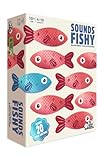
Overview:
Sounds Fishy flips trivia on its head: players invent absurd fake answers to real questions (e.g., “What’s a group of flamingos called?”), then convince others their made-up response is correct. Tailored for kids 10+ and adults, it thrives on creativity and comedic deception for 4-8 players.
What Makes It Stand Out:
Unlike traditional trivia, it eliminates knowledge barriers—everyone gets the true answer upfront and crafts ridiculous alternatives. The “push-your-luck” betting mechanic adds tension, while vibrant artwork and inclusive design make it a standout for mixed-age groups craving collaborative chaos.
Value for Money:
Generous content (200+ questions) ensures endless variety, justifying its mid-range price. It outperforms pricier trivia games by prioritizing humor over rote memorization, though expansion packs could enhance longevity for frequent players.
Strengths and Weaknesses:
Strengths: Hilarious, low-pressure gameplay; effortless to learn; sparks creativity; scales perfectly for large groups; vibrant, durable components.
Weaknesses: Less engaging for trivia purists; repetitive without house rules; younger kids may need help inventing answers.
Bottom Line:
A joyful, inventive party game that transforms trivia into collaborative comedy. Perfect for families and casual groups—highly recommended if you prioritize laughter and inclusivity over competitive depth.
3. Coup Card Game by Indie Boards & Cards | Fast Bluffing and Social Deduction Strategy | Hidden Roles, Deception, and Player Interaction | Quick 15-Minute Game for 2–6 Players | Adults, Teens, Families

Overview:
Coup is a razor-sharp card game of deception where players assume hidden roles (like Captain or Assassin) to accumulate influence, bluff actions, and eliminate rivals. In 15 minutes, 2-6 players engage in high-stakes mind games involving challenges, counter-challenges, and strategic elimination.
What Makes It Stand Out:
Its minimalist design—just role cards and coins—creates profound psychological depth. The “call the bluff” mechanic drives intense player interaction, while compact size and clean ruleset enable fierce, portable sessions. Mastery hinges on reading opponents, not luck.
Value for Money:
Exceptional for $15–20; the tiny box delivers countless replayable rounds. Cheaper than most strategy games yet richer in social dynamics than many $50+ titles, though expansions (like Rebellion) are recommended for extended play.
Strengths and Weaknesses:
Strengths: Incredibly fast setup and gameplay; deep strategic potential; highly portable; fosters memorable table talk; scales brilliantly from 2 to 6 players.
Weaknesses: Can feel cutthroat for casual groups; early elimination possible; requires attentive players to avoid downtime.
Bottom Line:
A near-perfect gateway to social deduction—lean, addictive, and endlessly replayable. Essential for strategy fans and game-night regulars seeking intense, quick-play interaction. Highly recommended.
4. Gullible: The Hilarious Team Game of Creativity, Bluffing and Astonishing Facts. Will You Fool Your Family and Friends or Believe The Unbelievable? (Gullible - Same Game, Smaller Box) (New Edition)

Overview:
Gullible challenges teams to invent two plausible fake facts for outrageous questions (e.g., “What’s a baby platypus called?”), betting chips on which answer is real. With eco-conscious production and charity ties, it blends trivia, creativity, and bluffing for 2–10 players.
What Makes It Stand Out:
The team-based betting system—where misallocated chips are lost—adds strategic tension absent in solo-bluffing games. Its focus on believable absurdity (e.g., “Onglet” vs. “Puggle”) sparks hilarious debates, while the smaller box and ethical ethos appeal to eco-aware buyers.
Value for Money:
Packs impressive content into a budget-friendly box, with 10% profits donated to charity. Cheaper than similar trivia games, though the smaller card size may frustrate some. The eco-angle justifies a slight premium for socially conscious shoppers.
Strengths and Weaknesses:
Strengths: Teams foster collaboration; no trivia knowledge needed; wildly creative; eco-friendly production; ideal for varied group sizes.
Weaknesses: Fact inaccuracies occasionally undermine credibility; betting rules slightly fiddly for new players; less suspenseful than hidden-role games.
Bottom Line:
A charming, socially responsible party game that turns ignorance into comedy gold. Best for families and casual groups valuing humor and ethics—recommended if you embrace playful chaos over cutthroat competition.
5. Bamboozled - A Hilariously Fun Bluffing Dice & Card Game. Family-Friendly Party Game for Kids, Teens & Adults. Fast and Easy to Learn

Overview:
Bamboozled combines dice rolls and card-based bluffing: players declare their roll (e.g., “three 5s”), but others can challenge or “bamboozle” with wild claims. Designed for all ages, it fits in a travel tin for spontaneous 10–15 minute sessions with 2–6 players.
What Makes It Stand Out:
The dice-and-card hybrid creates dynamic tension—rounds escalate as players raise stakes with increasingly audacious bluffs. Durable components (rounded dice, sturdy cards) and vibrant artwork enhance its family-friendly appeal, while the portable tin encourages impromptu play.
Value for Money:
Excellent for its price, offering high-quality materials rarely seen in budget party games. Outshines comparable dice games (like Liar’s Dice) with added card mechanics, though limited content may reduce longevity for hardcore fans.
Strengths and Weaknesses:
Strengths: Lightning-fast setup; intuitive for kids 8+; travel-ready; encourages quick thinking; inclusive across ages; durable construction.
Weaknesses: Shallow strategy beyond basic bluffing; repetitive after extended play; minimal theme integration.
Bottom Line:
A superb entry-level bluffing game for families and casual gatherings. Prioritizes accessibility and portability over depth—highly recommended for on-the-go fun, but less so for strategy enthusiasts.
6. Little Secret | Bluffing Board Game for Family and Friends | an Exploding Kittens Card Game Collaboration | Award-Winning Board Game for 4-8 Players

Overview: Little Secret, co-created with Exploding Kittens, is a swift word-association bluffing game where players share a secret password but must deduce who holds a different one. Designed for 4-8 players aged 10+, it promises quick 20-minute rounds of deduction and deception during family or friend gatherings.
What Makes It Stand Out: Its collaboration with Exploding Kittens injects playful chaos, while the intuitive “password” mechanic—where players subtly lie or probe others—creates organic tension. With 700+ words to bluff with, replayability is high, and the focus on social deduction over complex rules makes it accessible.
Value for Money: Priced competitively for an award-winning party game, it offers more thematic depth than basic bluffing titles. While simpler than strategy-heavy games, the sheer volume of word combinations justifies the cost for groups seeking lighthearted, repeatable fun.
Strengths and Weaknesses: Strengths: Effortless setup, rapid gameplay, and hilarious betrayals foster engagement. The Exploding Kittens charm broadens its appeal. Weaknesses: Limited strategic depth for hardcore gamers; password reuse can occur with smaller groups, slightly reducing novelty over time.
Bottom Line: An excellent, accessible party game that delivers consistent laughs and light strategy. Highly recommended for casual game nights where quick setup and social interaction are priorities, though not ideal for players seeking complex mechanics.
7. Mattel Games Liar’s UNO Card Game in Travel & Storage Tin for Adults, Kids, Families, Parties & Game Nights, Outwit Other Players with Bluffing & Trickery (Amazon Exclusive)
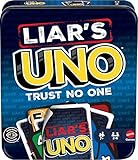
Overview: Liar’s UNO reimagines the classic card game by making deception a core rule. Players announce cards played face-down (“Liar’s Cards”), risking draws if caught lying—or making accusers draw if truthful. This Amazon-exclusive travel tin edition supports 2–10 players and integrates color-blind-friendly symbols.
What Makes It Stand Out: The genius twist transforms UNO’s familiarity into a high-stakes bluffing arena. Mandatory “UNO!” calls at one card heighten tension, while color-accessible symbols ensure inclusivity—a rare, thoughtful feature in party games. The compact tin enhances portability.
Value for Money: Excellent value as a travel-sized novelty game. It leverages UNO’s ubiquity for instant recognition but adds fresh strategic layers without inflating the price. Cheaper than many dedicated bluffing games, it’s a smart impulse buy for UNO fans.
Strengths and Weaknesses: Strengths: Seamless blend of bluffing and UNO mechanics; inclusive design; perfect for on-the-go play. Weaknesses: Limited replay depth beyond initial novelty; relies heavily on group chemistry (shy players may struggle).
Bottom Line: A brilliantly executed UNO variant that injects suspense into a familiar format. Ideal for families and casual gamers seeking quick, inclusive fun—especially as a travel game—but less compelling for serious strategists.
8. PLAYVIEW 21 Bluff – The Ultimate Bluffing & Strategy Card Game for Family Game Night–Fast-Paced & Hilarious Party Game – Outsmart & Outbluff to Win – Includes 4 Custom Decks & Gift Box
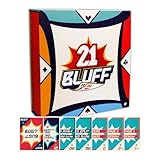
Overview: 21 Bluff is a fast-paced card game where players race toward 21 while bluffing about their hand. Using custom decks, it combines blackjack-like scoring with strategic deception, Power Cards, and bluff-calling mechanics for 2–4 players in 15–20 minute rounds.
What Makes It Stand Out: Power Cards introduce chaotic twists (e.g., reversing scores), adding unpredictability absent in pure bluffing games. The included gift box and four decks enhance value, while its blend of math strategy and poker-faced lies bridges casual and competitive play.
Value for Money: Exceptional for the package: four decks and a sturdy box justify the price, outperforming single-deck rivals. It targets fans of UNO or Skull but offers deeper strategy, making it a versatile staple for game nights at a fair cost.
Strengths and Weaknesses: Strengths: Addictive risk-reward gameplay; high replayability via Power Cards; elegant for 2–4 players. Weaknesses: Less engaging with only two players; Power Cards can occasionally unbalance rounds.
Bottom Line: A near-perfect party game that balances strategy, speed, and laughter. Highly recommended for small groups wanting dynamic, replayable fun—though larger gatherings may prefer alternatives like Little Secret.
9. SAVANA Traitors Aboard - Award Winning Secret Identity Party Game - Fun, Bluffing and Betrayal | Easy to Learn, 15-Minute Round | Popular Games for 3-8 Players - Ages 10+

Overview: Traitors Aboard casts players as pirates collecting gold while hidden “Mutineers” sabotage the effort. This award-winning game tasks loyalists with filling a treasure chest and rooting out traitors through discussion and deduction, accommodating 3–8 players in 20–30 minutes.
What Makes It Stand Out: Team-based betrayal creates intense social dynamics—loyalists must collaborate without exposing themselves, while Mutineers sow doubt. Its pirate theme and travel-friendly size enhance immersion, and the 15-minute round structure ensures snappy, replayable sessions.
Value for Money: Strong value as a compact, high-replay party game. It rivals heavier social deduction titles (e.g., Werewolf) at a lower price point, with simpler rules ideal for younger players or mixed-age groups.
Strengths and Weaknesses: Strengths: Engaging team psychology; quick to learn; portable; fosters lively debate. Weaknesses: Mutineers can feel powerless if caught early; optimal with 5+ players (less dynamic at 3–4).
Bottom Line: A standout for group strategy and laughter, perfect for family nights or casual get-togethers. Best for 5+ players seeking accessible, thematic betrayal—skip if your group prefers solo-focused bluffing.
10. Asmodee Skull Party Game - Bluffing and Strategy Game, Family Fun for Kids & Adults, Ages 13+, 3-6 Players, 30 Minute Playtime

Overview: Skull is a minimalist bluffing classic where players place decorated tiles (roses and skulls) face-down, then bet on how many they can flip without hitting a skull. This updated edition refines the cult favorite for 3–6 players, emphasizing pure psychological strategy in 30-minute sessions.
What Makes It Stand Out: Its elegant simplicity—only four tiles per player—creates profound tension. The updated rules clarify nuances, while the tactile tiles and compact box make it ideal for intimate gatherings. Mastery hinges on reading opponents, not luck.
Value for Money: Premiumly priced but justified by exceptional build quality and timeless design. Comparable to Skull’s older editions, it’s an investment for serious game collectors, though less accessible for beginners than UNO-based variants.
Strengths and Weaknesses: Strengths: Deep strategic depth; beautifully minimalist; highly portable; fosters intense player interaction. Weaknesses: Steep learning curve for new players; less chaotic fun than themed games (e.g., Exploding Kittens collabs).
Bottom Line: A masterclass in strategic bluffing for mature players. Essential for enthusiasts who value psychological depth over theme—but beginners or large groups may prefer more forgiving alternatives.
Understanding the Modern Bluffing Game Landscape
The Shift from Pure Chance to Strategic Deception
Gone are the days when bluffing was solely the domain of high-stakes poker tournaments. Contemporary designs prioritize layered deception as the central mechanic, demanding players read subtle cues, manage information asymmetry, and strategically manipulate perceptions. This shift transforms bluffing from a sporadic tactic into the very foundation of the gameplay loop, creating a consistently engaging mental challenge where every action carries deceptive potential.
Why Psychological Depth Matters More Than Ever
The most compelling modern bluffing experiences delve deep into cognitive psychology. They exploit how humans process trust, interpret micro-expressions (even digitally), and succumb to cognitive biases like confirmation bias or the sunk cost fallacy. Games leveraging these principles create richer, more immersive deception scenarios where understanding your opponents’ thought processes becomes as crucial as your own strategy, leading to profoundly memorable interactions.
The Rise of Hybrid Game Mechanics
Pure bluffing can sometimes feel one-dimensional. The current frontier lies in seamlessly integrating bluffing with other compelling mechanics like worker placement, set collection, or narrative progression. This hybridization adds strategic depth and variety, ensuring that bluffing isn’t the only path to victory and preventing the gameplay from becoming predictable or repetitive over multiple sessions.
Essential Features Defining Cutting-Edge Bluffing
Dynamic Information Revelation Systems
Static hands of cards limit deception opportunities. Revolutionary designs feature systems where information is revealed gradually, unpredictably, or through player-driven triggers. This constant flux keeps players on their toes, as the “truth” of the game state is perpetually in motion, forcing constant reassessment of bluffs and genuine information, significantly amplifying the tension and strategic depth.
Player-Driven Narrative Consequences
The best modern bluffing games understand that deception thrives on stakes. Incorporating mechanics where successful (or failed) bluffs directly alter the game’s narrative, unlock unique paths, or change player objectives creates powerful emotional investment. Knowing that a well-timed lie can fundamentally reshape the experience adds immense weight to every deceptive choice.
Accessibility Without Sacrificing Depth
Truly innovative bluffing games master the balance between easy entry and deep mastery. Streamlined core rules lower the barrier to entry, welcoming new players, while intricate layers of psychological strategy and emergent gameplay provide veterans with near-infinite replayability. Clever design ensures the bluffing mechanics feel intuitive initially but reveal profound complexity over time.
Evaluating Replayability and Long-Term Engagement
Variable Player Powers and Asymmetrical Roles
Replayability is often the Achilles’ heel of bluffing games. Introducing asymmetrical roles or unique player powers ensures that no two games play identically. Each role might have distinct bluffing advantages, vulnerabilities, or win conditions, forcing players to adapt their deceptive strategies significantly with every new session, keeping the experience fresh and challenging.
Modular Components and Scenario Design
Static boards and fixed setups lead to predictable patterns. Games utilizing modular boards, randomized scenario cards, or adjustable rule modules create vastly different tableaus and objectives each time. This variability prevents players from developing foolproof strategies, ensuring that adaptability and reading the specific context of this game become paramount skills.
The Critical Role of Player Count Flexibility
A game that only shines at its “ideal” player count severely limits its usability. Revolutionary designs carefully calibrate mechanics to function effectively across a range of players (e.g., 3-6), often with clever scaling rules. This ensures the delicate balance of information, pressure, and interaction necessary for compelling bluffing remains intact whether you have a small intimate group or a larger party.
Design Innovations Enhancing the Bluffing Experience
Non-Verbal Communication Channels
While verbal bluffs are classic, the most innovative games explore deception through actions, timing, and physical components. Hidden information tracks, timed decision phases, or the strategic placement of tokens can convey powerful (and misleading) signals without a single word being spoken, adding a rich, often more nerve-wracking, dimension to the deception.
Tech Integration Done Right
Thoughtful use of companion apps or simple digital aids can elevate bluffing without replacing human interaction. Apps might manage hidden information impartially, introduce randomized events that disrupt plans, or track subtle player tendencies – all while preserving the core face-to-face confrontation. The tech should serve the deception, not overshadow it.
Physical Components as Deception Tools
The tactile nature of board games is a unique asset. Modern designs leverage high-quality, thematic components not just for aesthetics, but as active tools of deception. Think hidden screens with variable reveals, custom dice with ambiguous symbols, or player boards that strategically obscure information, making the physical act of playing integral to the bluffing strategy.
Practical Considerations for Choosing Your Next Bluffing Game
Assessing Group Dynamics and Player Profiles
Not every bluffing game suits every group. Consider your regular players’ tolerance for direct confrontation, their patience for complex rules, and their enjoyment of high-pressure situations. A game perfect for a group of competitive strategists might overwhelm a casual, social group seeking lighthearted fun. Honesty about your group’s preferences is key to a satisfying experience.
Time Commitment vs. Intensity Level
Bluffing games can range from quick 15-minute filler games to intense 90-minute strategic marathons. Evaluate how much mental energy your group wants to invest. High-intensity deception requires significant focus; attempting a complex game when players are tired often leads to frustration rather than fun. Match the game’s demands to your group’s current capacity.
Space, Setup, and Component Management
Practicalities matter. Consider your available play space, setup/cleanup time, and how easily components can be managed during the heat of deception. Games with numerous tiny tokens or complex initial setups can disrupt the flow and tension crucial to bluffing. Streamlined setup often leads to smoother, more immersive gameplay sessions.
Building Skills for the Modern Bluffing Arena
Developing Observation Beyond the Obvious
Effective bluffing isn’t just about lying well; it’s about detecting lies. Cultivate the habit of noticing subtle shifts: changes in decision speed, inconsistent verbal patterns, physical tells (even over video calls), or unusual patterns of information sharing. Training yourself to be a keen observer fundamentally improves both your ability to deceive and detect deception.
Mastering the Art of Plausible Deniability
The most successful bluffs often contain a kernel of truth or align with a plausible narrative. Learn to craft deceptions that fit within the logical framework of the game’s current state, making it harder for opponents to pinpoint the lie. A bluff that seems too perfect is often the easiest to see through.
Emotional Regulation Under Pressure
Bluffing inherently involves risk and potential embarrassment. Developing the ability to manage your own nervous reactions (a flushed face, hesitant speech) and remain calm when called out is crucial. Similarly, learning to control your reaction when seeing through a bluff prevents you from telegraphing your knowledge to others. Composure is a powerful deceptive tool.
Frequently Asked Questions
How do I know if a bluffing game is too complex for my group?
Start by examining the rulebook’s estimated playtime and complexity ratings (often found online). Look for descriptions of core mechanics – if terms like “asymmetrical roles,” “multi-layered information tracking,” or “dynamic variable setup” dominate, it might be heavy. Opt for games explicitly labeled “light” or “medium-light” with streamlined bluffing mechanics if your group prefers simplicity.
Can bluffing games work well in online settings or video calls?
Yes, but effectiveness varies. Games designed with digital play in mind (using platforms like Board Game Arena or Tabletop Simulator) or those relying less on physical components and more on verbal deduction often translate best. Video calls can capture some facial tells, but nuances are harder to read. Avoid games heavily dependent on hidden physical manipulation.
What’s the biggest mistake new bluffing game players make?
Over-bluffing, especially early on. New players often try to deceive constantly, making their actions predictable. Successful bluffing relies on establishing baseline truthful behavior first. Bluff strategically when the stakes are high or when you have a strong read on opponents, not as your default move every turn.
How important is theme in a bluffing game?
Theme significantly impacts immersion and how intuitively the bluffing mechanics feel. A strong theme (like spies, negotiations, or market manipulation) provides context that makes deceptive actions feel logical and engaging, rather than arbitrary. Weak theme can make the bluffing feel hollow or confusing.
Are there bluffing games suitable for families with younger kids?
Absolutely. Look for games with simpler rules, lower confrontation levels, and themes appealing to kids (like animals or treasure hunting). These often use visual cues or simple action choices for deception rather than complex verbal poker. Check age recommendations, but many “family strategy” games incorporate light bluffing elements suitable for ages 8-10+.
How can I improve my ability to detect bluffs?
Practice active listening and observation. Pay attention to inconsistencies between what a player says and their actions or previous behavior. Notice changes in their usual pace of play – sudden hesitation or unusual speed can be tells. Most importantly, consider the game context: does their claimed information logically fit the current state?
What makes a bluffing game replayable long-term?
Key factors include high player interaction variability (different opponents yield different experiences), modular setups/scenarios, asymmetrical roles, and mechanics that generate emergent, unpredictable situations. Games where optimal strategy shifts significantly based on the group and session avoid feeling solved.
Is “mean-spirited” confrontation unavoidable in bluffing games?
Not at all. Many modern designs foster “friendly fire” deception – the tension comes from the intellectual challenge and game mechanics, not personal attacks. Look for games emphasizing humorous themes, shared goals with individual deception, or mechanics where being caught in a bluff has funny or minor consequences rather than harsh penalties.
How do I introduce bluffing games to a group unfamiliar with the genre?
Start with very accessible titles featuring light deception as a secondary element. Use games with clear, immediate feedback (e.g., a simple “call” mechanic where truth is quickly revealed). Emphasize the fun of the social puzzle and storytelling aspect over “winning” the deception initially. Keep the first session low-stakes and lighthearted.
Can bluffing games be educational or skill-building?
Definitely. They enhance critical thinking, risk assessment, emotional intelligence, active listening, and non-verbal communication skills. They teach players to analyze information critically, consider multiple perspectives, manage uncertainty, and understand how their own behavior might be perceived – valuable skills far beyond the game table.