Table of Contents
Dice games have been captivating young minds for centuries, and in 2026, they’re experiencing a remarkable renaissance among families seeking screen-free entertainment. These simple yet powerful tools offer something that digital games often can’t: tangible interaction, immediate feedback, and endless possibilities for learning disguised as pure fun. For children between ages 6 and 12, dice games serve as perfect developmental companions, growing with your child from simple number recognition to complex strategic thinking.
Choosing the right dice games for your elementary-aged child isn’t just about picking what’s popular or what worked for your neighbor’s kids. This age range spans crucial developmental milestones—from early reading skills to abstract mathematical concepts—meaning a game that thrills a first-grader might bore a sixth-grader senseless. This comprehensive guide walks you through everything you need to know about selecting dice games that will engage, educate, and entertain your child throughout these formative years.
Top 10 Dice Games for Kids 6-12
Detailed Product Reviews
1. University Games, Pizza Party Dice Game, Dice Game for Kids and Families, Ages 6+

Overview:
The University Games Pizza Party Dice Game transforms family game night into a fast-paced pizza-building competition. Designed for two players ages six and up, this portable dice game challenges participants to roll combinations that complete pizza slice cards. The first to assemble an entire pizza wins, creating quick, engaging rounds that maintain attention spans. Its compact design makes it ideal for travel, fitting easily into bags for road trips or restaurant waiting games.
What Makes It Stand Out:
The game’s pizza-themed visual progression provides tangible satisfaction as players literally build their victory. Unlike abstract scoring systems, children see their pizza come together slice by slice, which boosts engagement. The dice-rolling mechanism combined with card collection creates a tactile experience that bridges pure luck with light strategy. Its travel-ready size distinguishes it from bulkier board games.
Value for Money:
As a two-player game, it offers excellent value for sibling pairs or parent-child duos at an affordable price point. However, families with more children must purchase multiple sets, which diminishes overall value. Compared to other travel games, the reusable components and durable dice provide lasting entertainment, justifying the investment for its intended two-player use.
Strengths and Weaknesses:
Strengths include simple rules that children grasp immediately, an engaging theme that resonates with kids, true portability, and quick 10-15 minute gameplay. Weaknesses are the strict two-player limitation requiring multiple purchases for larger groups, potential repetitiveness after extensive play, and limited strategic depth for older players.
Bottom Line:
Perfect for two-player scenarios, this game excels as a travel companion and introductory dice game. Families should assess their player count before purchasing—excellent for pairs, but budget-conscious buyers with multiple children should consider alternatives.
2. ThinkFun Math Dice Junior Game - Engaging Math Skills Builder | Perfect for Kids Aged 6+ | Aids in Mental Agility | Toy of The Year Nominee

Overview:
ThinkFun’s Math Dice Junior builds mental arithmetic skills through stealth learning for children ages six and up. Players roll a 12-sided target die and five six-sided scoring dice, then race to combine scoring dice using addition or subtraction to match the target number. With over 50 million games sold globally, ThinkFun delivers a proven educational tool that develops cognitive agility while maintaining genuine fun. The compact pouch design enables play anywhere.
What Makes It Stand Out:
This game excels at disguising rigorous math practice as exciting competition. The adjustable difficulty accommodates skill progression, from simple addition to complex multi-number operations. As a Toy of the Year nominee, it carries educational credibility that parents and teachers trust. The absence of a game board creates pure, uncluttered mental exercise focused entirely on calculation speed and accuracy.
Value for Money:
Exceptional educational ROI makes this a worthwhile investment. The durable dice and infinite replayability ensure years of use as children advance from basic sums to more sophisticated mental math. Compared to tutoring sessions or electronic learning apps, this one-time purchase provides ongoing skill development at a fraction of the cost.
Strengths and Weaknesses:
Strengths include genuine skill development, absolute portability, quick setup, trusted brand reputation, and adaptability for different ability levels. Weaknesses involve potential disengagement from math-resistant children, limited physical interaction beyond dice rolling, and possible simplicity for advanced learners beyond third grade.
Bottom Line:
An essential educational tool that successfully balances learning with enjoyment. Highly recommended for parents seeking to strengthen their child’s mathematical foundation through play rather than drills.
3. University Games, Scholastic Math Match Travel Dice Game, Mathematics Reinforcement Game for Kids, for 2 or More Players Ages 5 and Up

Overview:
University Games’ Scholastic Math Match combines dice rolling with card matching to reinforce four fundamental operations for children ages five through twelve. Endorsed by Scholastic, this travel-friendly game offers both solo and competitive modes where players match equation results to target numbers. The game adapts across a remarkable seven-year age span, making it suitable for diverse family structures and homeschooling environments seeking gameschooling excellence.
What Makes It Stand Out:
The Scholastic endorsement provides unparalleled educational credibility, assuring parents of curriculum alignment. Covering addition, subtraction, multiplication, and division in one package delivers comprehensive math reinforcement. The dual play modes—solitaire for focused practice and competitive for engagement—offer flexibility unmatched by single-mode games. Its ability to scale from kindergarten to sixth grade represents exceptional longevity.
Value for Money:
Outstanding value for families with multiple children, as one purchase serves kids from ages five to twelve. The comprehensive operation coverage eliminates need for separate games as skills advance. For homeschoolers, it provides curriculum support at a fraction of workbook costs, while the reusable components ensure continuous use.
Strengths and Weaknesses:
Strengths include authoritative educational backing, broad age range, multiple play modes, comprehensive math coverage, and true portability. Weaknesses are potential simplicity for the upper age range, the fiddly nature of managing both dice and cards simultaneously, and limited player interaction in competitive mode compared to full board games.
Bottom Line:
A versatile, credential-backed educational investment that grows with your child. Ideal for families prioritizing mathematical development through play, particularly those with multiple children across elementary ages.
4. Farkle Classic Dice Game – Rainbow Kids Games, Dice Games, Family Games, Travel Games, Adult Games, Board Games, Dice Cup, Dice Set, Farkle Score Sheets Included, Ages 8+

Overview:
The Farkle Classic Dice Game Rainbow Edition revitalizes the timeless risk-reward dice game with vibrant colored dice for players ages eight and up. Six rainbow-hued dice (red, orange, yellow, green, blue, purple) create visual appeal while players roll to score combinations, risking accumulated points with each additional roll. Complete with score sheets, this set accommodates families and game nights where luck and daring intersect in quick, tension-filled rounds.
What Makes It Stand Out:
The rainbow dice elevate the classic Farkle experience from utilitarian to visually engaging without altering proven gameplay. The included score sheets provide immediate out-of-box play, while the risk-reward mechanic creates genuine suspense that dice games often lack. Its accessibility—simple enough for children yet strategically engaging for adults—makes it a rare true family game.
Value for Money:
As a classic game with a premium visual upgrade, it offers excellent entertainment value. The dice quality justifies the price point, and included score sheets add convenience. Compared to board games with similar player counts, Farkle delivers comparable engagement at a lower cost with simpler storage requirements.
Strengths and Weaknesses:
Strengths include the compelling risk-reward mechanic, quality rainbow dice aesthetic, true cross-generational appeal, quick learning curve, and included score sheets. Weaknesses involve eventual depletion of score sheets requiring photocopying, luck dependency that may frustrate strategic players, and variable dice cup quality in some production runs.
Bottom Line:
An essential addition to any family game collection. The Rainbow Edition’s visual flair breathes new life into a proven classic, making it perfect for game nights, travel, or casual play across all ages.
5. Covelico Exercise Dice for Kids Physical Education Equipment, Gymnastics Games for Indoor Obstacle Course for Kids, Outdoor Gross Motor Toys & Indoor Recess Work Out Game, Gymnastics Toys Ages 3+

Overview:
The Covelico Exercise Dice transforms physical activity into playful competition for children ages three and up through a 12-sided soft foam die featuring exercise actions. Each roll commands movements like jumping, hopping, or skipping, with one “pick your own” side encouraging creativity. Designed for obstacle courses, PE classes, therapy sessions, or indoor recess, this screen-free tool promotes gross motor development while maintaining engagement through game-like suspense.
What Makes It Stand Out:
The soft PU foam construction ensures safety during active play, distinguishing it from rigid plastic alternatives. Twelve distinct actions provide variety, while the “pick your own” face empowers children to design custom exercises. Its versatility across settings—home, classroom, playground, therapy—creates exceptional utility. The clear iconography enables independent play without adult direction, fostering autonomy.
Value for Money:
Excellent value for parents, teachers, and therapists seeking movement-based engagement tools. The durable foam withstands repeated use across multiple environments, replacing disposable activity ideas with a permanent solution. Compared to electronic active games or elaborate PE equipment, this single die delivers comparable benefits at minimal cost.
Strengths and Weaknesses:
Strengths include soft safe material, remarkable versatility across age groups and settings, gross motor skill development, group or solo usability, and screen-free engagement. Weaknesses involve potential foam wear over extensive use, simplicity that may not challenge older children, and reliance on adult creativity to maintain long-term interest beyond basic rolling.
Bottom Line:
An indispensable tool for anyone responsible for active children. Brilliantly simple yet remarkably effective, it successfully merges exercise with play to combat screen time and promote physical development.
6. Matrix Dice Game – Pop-and-Play Bubble Pad Educational Math Dice Game – Fun Math Games for Kids 8–12, Teens, Adults, and Seniors – Ideal for Classrooms and Family Board Game Night for 2-4 Players
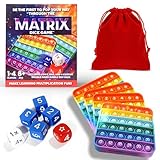
Overview: The Matrix Dice Game transforms multiplication practice into a tactile, competitive experience. This pop-and-play system uses bubble pads reminiscent of fidget toys, where players roll dice, perform calculations, and pop corresponding numbers to clear their boards. Designed for ages 8 through seniors, it accommodates 2-4 players in fast-paced 15-20 minute sessions.
What Makes It Stand Out: The innovative bubble pad mechanic provides satisfying sensory feedback while reinforcing math facts. Unlike flashcards, the physical popping action creates muscle memory associations. The three-die system (standard, wild, and multiplier) adds strategic depth, while the double-sided pads offer varied difficulty levels. Created by The Dice Emporium, a specialist in premium dice design, the components reflect genuine gaming expertise rather than generic educational toy manufacturing.
Value for Money: At its price point, Matrix competes favorably with electronic math games while offering superior durability. The reusable bubble pads eliminate ongoing costs, and the quality dice set alone rivals standalone dice collections costing nearly as much. For classrooms, the four included pads provide better per-student value than single-player alternatives.
Strengths and Weaknesses: Strengths:
- Tactile learning engages multiple senses
- Scales from basic addition to complex multiplication
- Premium dice and sturdy bubble pads ensure longevity
- Appeals across wide age range Weaknesses:
- Limited to four players maximum
- Bubble pads may lose resistance over extensive use
- Pure math focus might not engage reluctant learners
Bottom Line: Matrix excels as an educational tool that doesn’t feel like homework. Ideal for teachers seeking classroom engagement tools and parents wanting screen-free math practice, it’s a worthwhile investment that makes multiplication genuinely enjoyable.
7. Regal Games - Farkle Classic Dice Game w/ 6 Colored Dice, 1 Convenient Dice Cup for Easy Shaking, and 25 Score Sheets - Fun Family Game for Travel, Camp, and More - Ideal for 2-4 Players (Ages 12+)

Overview: Regal Games delivers the classic Farkle experience in a compact, travel-ready package. This push-your-luck dice game challenges players to build scoring combinations while risking everything on additional rolls. The set includes six colored dice, a plastic shaking cup, 25 score sheets, and clear rulebook—everything needed for immediate play with 2-4 players.
What Makes It Stand Out: Farkle’s enduring appeal lies in its perfect risk-reward balance, accessible to newcomers yet strategically rich for veterans. The included dice cup provides proper randomization and contains rolls, solving a common household gaming nuisance. The colored dice enhance visibility and add visual appeal over standard white dice. Its rule simplicity means players can learn in two minutes but stay engaged for hours.
Value for Money: This complete set undercuts assembling components separately. Comparable dice sets cost $5-8 alone, while the cup and custom score pads add significant value. Against other travel games, Farkle offers higher replayability at a lower price point than most card games with similar player counts.
Strengths and Weaknesses: Strengths:
- Zero learning curve with intuitive scoring
- Excellent portability for travel and camping
- Promotes mental math without feeling educational
- High replay value across age groups Weaknesses:
- Plastic cup feels lightweight compared to leather alternatives
- Only 25 score sheets included (though photocopying solves this)
- Official age 12+ rating excludes younger capable players
Bottom Line: A no-brainer addition to any game collection, particularly for travel enthusiasts. Regal Games’ Farkle set delivers the complete experience at an unbeatable price. The minor component compromises don’t diminish the gameplay quality that has made Farkle a beloved classic.
8. Premkid Exercise Dice for Kids,12-Sided Giant Foam Yoga Dice Games for Indoor and Outdoor Use, Kids Exercise Equipment for Classroom and Physical Education Learning and Preschool Games

Overview: Premkid’s Exercise Dice set transforms physical activity into a game of chance with three large foam dice. The red die determines repetitions (1-11), the yellow features animal movements, and the blue displays yoga poses. Children roll the dice and perform the indicated exercise, combining numeracy, animal recognition, and physical fitness in an oversized, child-safe format.
What Makes It Stand Out: The foam construction prioritizes safety without sacrificing durability—waterproof and soft enough for indoor use yet substantial for outdoor play. The three-dice system creates 1,331 possible combinations, preventing routine fatigue. Unlike single-function fitness cards, the randomization element encourages reluctant participants and adds genuine game-like excitement to physical education.
Value for Money: Competing products often cost more for single dice or less durable vinyl options. This three-dice set provides a complete activity system that replaces multiple pieces of equipment. For classrooms, it offers group engagement at a fraction the cost of electronic activity systems or specialized PE gear.
Strengths and Weaknesses: Strengths:
- Soft foam prevents injury and indoor damage
- Waterproof for easy cleaning
- Develops number recognition and animal knowledge
- Versatile for home, classroom, or therapy use Weaknesses:
- Foam may tear with rough handling over time
- 11-repetition maximum limits progression
- Animal illustrations could be more detailed
- Storage bag not included
Bottom Line: An excellent tool for parents and educators combatting screen time and sedentary behavior. The Premkid Exercise Dice successfully gamifies movement in a safe, engaging package that children genuinely request. Minor durability concerns are outweighed by immediate engagement benefits.
9. QUOKKA Board Game for 8-12 Year Olds - Original Edition - Family Card Game for Kids Ages 5-8 - What Would You Choose | Do Kids Rather? | Pick Your Answer | Get to Know You - Fun Game Night for Kid

Overview: QUOKKA’s “What Would You Choose” is a conversation-driven card game featuring over 500 hypothetical questions designed to reveal preferences and spark discussion. Players draw cards and answer prompts ranging from silly to thought-provoking, with no right or wrong answers. The game supports 2+ players aged 5+, making it adaptable for family gatherings, classroom icebreakers, or travel entertainment.
What Makes It Stand Out: The sheer volume of questions ensures extensive replayability, while the open-ended nature fosters genuine connection rather than competitive tension. Unlike trivia games that emphasize knowledge, this format celebrates individuality and reasoning. The compact box size and simple rules make it instantly accessible, requiring no table space or complex setup—perfect for car trips or waiting rooms.
Value for Money: With 500+ cards, this offers better per-question value than similar conversation starters. It replaces multiple single-theme card games and provides years of use. The price point matches basic card games while delivering more substantial family engagement potential.
Strengths and Weaknesses: Strengths:
- Massive content library prevents repetition
- No complex rules or reading requirements for younger players
- Promotes language development and critical thinking
- Highly portable for travel and holidays Weaknesses:
- Card stock could be thicker for durability
- Some questions may be too abstract for the youngest players
- Lacks structured scoring for competitive groups
- Theme may not appeal to all children
Bottom Line: A must-have for families seeking screen-free interaction. QUOKKA’s game excels at turning downtime into quality conversation time. While not for competitive gamers, it’s perfect for parents wanting to understand their children’s thinking and strengthen family bonds through shared laughs and surprising revelations.
10. Montessori Wooden Board Games, 48 Colorful Sticks Dice Game with 12 Balls, Family Game for Kids and Adults, Math Educational Toys for 3 4 5 6 Years Old, Fine Motor Skills Toy Gifts for Boys and Girls

Overview: This Montessori-inspired wooden game reimagines classic pickup sticks with a colorful, educational twist. Players place 48 painted wooden sticks into a tower frame, then take turns rolling a die to remove matching colored sticks without dislodging 12 perched balls. The game builds fine motor control, color recognition, and strategic thinking for 1-6 players aged 3+.
What Makes It Stand Out: The wooden construction aligns with Montessori principles of natural materials and purposeful play. The added ball-balancing element elevates simple stick removal into a suspenseful dexterity challenge. With 48 sticks—more than traditional sets—it extends gameplay and allows for creative rule variations. The non-toxic paint and smooth sanding demonstrate safety-conscious design for the target age group.
Value for Money: Solid wood components justify the price over plastic alternatives that break easily. The multi-function design (pickup sticks, color matching, balancing game) replaces several single-purpose toys. For preschools, the six-player capacity offers better value than smaller sets, while the included storage pouch protects the investment.
Strengths and Weaknesses: Strengths:
- Durable, eco-friendly wooden construction
- Develops fine motor skills and patience
- Adaptable difficulty for varied ages
- Attractive enough for room display Weaknesses:
- Small balls pose choking hazard for under-3s
- Paint may chip with heavy use
- Setup requires careful stick placement
- Limited instructions for alternative games
Bottom Line: An exceptional early learning tool that grows with children. The Montessori Wooden Board Game successfully balances education with genuine entertainment. While supervision is needed for the youngest players, its quality construction and developmental benefits make it a superior choice over flimsier alternatives for families and classrooms prioritizing skill-building through play.
Understanding the Appeal of Dice Games for Kids
Dice games occupy a unique sweet spot in children’s entertainment. They combine the thrill of chance with opportunities for skill development, creating experiences that feel exciting rather than instructional. Unlike board games with complex setups, dice games typically offer immediate playability—something that resonates deeply with kids who crave quick engagement.
The tactile nature of rolling dice satisfies sensory needs while building fine motor skills. Each toss becomes a mini-event, filled with anticipation and surprise. This physical interaction helps cement learning in ways that passive activities cannot match, making dice games particularly effective for kinesthetic learners.
Age-Appropriate Considerations Across the 6-12 Spectrum
Developmental Milestones for Ages 6-7
Children in early elementary school are mastering basic number sense, simple addition, and turn-taking. They need games with straightforward rules that can be explained in under two minutes. Look for options that emphasize color matching, counting to 20, and simple pattern recognition. At this stage, oversized dice with clear numbering work best for developing eyes and hands.
Building Skills for Ages 8-9
Third and fourth graders can handle multi-step instructions and basic multiplication concepts. They’re ready for games involving simple strategy, probability awareness, and scorekeeping. This age group benefits from games that introduce elements of risk versus reward, helping them develop decision-making skills while practicing mental math.
Advanced Challenges for Ages 10-12
Pre-teens crave complexity and competition. They can manage games with variable rules, strategic depth, and elements of resource management. For this group, seek out games that incorporate probability calculations, long-term planning, and opportunities for clever tactical moves. They’ll appreciate games that feel “grown-up” while still delivering accessible fun.
Key Educational Benefits to Look For
Mathematical Foundation Building
Quality dice games naturally reinforce arithmetic skills through repeated practice. The best options embed addition, subtraction, multiplication, and even early division into gameplay without making it feel like homework. Watch for games that require players to combine dice results in multiple ways, encouraging flexible number thinking.
Reading and Language Development
Many modern dice games incorporate word-building or storytelling elements. These can significantly boost vocabulary, spelling skills, and creative expression. For reluctant readers, games that combine dice with word creation offer a low-pressure way to practice literacy skills.
Critical Thinking Enhancement
Dice games that present meaningful choices help children develop logical reasoning and problem-solving abilities. Look for games where dice results serve as tools rather than just random outcomes—where kids must decide how to apply their rolls to achieve specific goals.
Essential Features That Define Quality Dice Games
Component Quality and Design
In 2026, dice games come in materials ranging from standard plastic to sustainable wood and even soft foam for quiet play. Consider your environment: foam dice work beautifully for apartment living, while engraved wooden dice offer durability for heavy use. The printing should be etched or molded rather than painted on, preventing wear over time.
Rulebook Clarity and Accessibility
The best games include rulebooks written with children in mind—clear language, visual examples, and perhaps even QR codes linking to tutorial videos. A well-designed game should be playable within five minutes of opening the box, with rules that can be referenced quickly during play.
Scalability and Variability
Games that offer multiple ways to play or adjustable difficulty levels provide better long-term value. Some dice games include modular rulesets that can be added as children grow, essentially becoming several games in one package. This adaptability ensures the game remains challenging and engaging year after year.
Game Mechanics That Engage Different Learning Styles
Visual-Spatial Elements
For visual learners, dice games that incorporate patterns, colors, or grid-based movement are particularly effective. These might involve arranging dice to form specific shapes or using dice results to navigate visual puzzles. The spatial reasoning developed through these activities supports geometry understanding later in school.
Auditory-Verbal Components
Children who learn through language benefit from dice games that encourage storytelling, debating strategies, or calling out results. Games that prompt players to explain their reasoning or create narratives based on dice combinations help verbal processors solidify their understanding.
Kinesthetic-Tactile Engagement
Some kids need to move to think. Dice games with physical components beyond just dice—like building towers, knocking down targets, or moving pieces across boards—serve these learners exceptionally well. The act of physically manipulating game elements reinforces concepts through muscle memory.
Safety and Durability Factors
Choking Hazard Awareness
While children aged 6-12 are generally past the stage of putting objects in their mouths, younger siblings might not be. If your household includes children under three, prioritize games with larger dice (at least ¾ inch) and avoid sets with small, detachable pieces. Many manufacturers now include age-appropriate sizing guides on packaging.
Material Safety Standards
In 2026, reputable dice game manufacturers adhere to rigorous safety certifications. Look for products labeled with CPSIA compliance, EN71 standards, or ASTM certifications. These ensure materials are free from harmful chemicals like phthalates and heavy metals. Eco-conscious families should also seek out games made from recycled or sustainably sourced materials.
Longevity and Wear Resistance
Consider how dice will look after hundreds of rolls. Sharp-edged dice with indented numbers maintain readability longer than painted ones. Storage solutions matter too—games with dedicated dice bags or trays prevent loss and protect components from damage between play sessions.
Portability and Storage Considerations
Travel-Friendly Designs
Family life in 2026 often means activities on the go. Compact dice games that fit in a backpack or glove compartment maximize play opportunities. Look for games with magnetic dice or self-contained components that won’t scatter during car rides or restaurant waits.
Home Organization Solutions
A growing collection needs proper storage. Some dice games now include modular boxes that stack neatly or display-worthy tins that double as room decor. Consider games with minimal setup requirements—those that can be played on any flat surface without elaborate boards or numerous pieces.
Digital-Physical Hybrids
Emerging in 2026 are dice games that companion with apps for score tracking or extended gameplay, while keeping the core physical dice experience intact. These can reduce clutter from score pads and rulebooks while maintaining the tactile benefits of traditional play.
Social Development Aspects
Turn-Taking and Patience
Dice games naturally teach children to wait for others and respect game flow. The best options for younger players include engaging elements during “off-turn” times—like predicting outcomes or planning next moves—so waiting feels active rather than passive.
Sportsmanship and Resilience
Games involving chance provide perfect opportunities to practice handling disappointment gracefully. Look for games where luck balances with skill, allowing children to experience both victory and defeat in low-stakes environments. This builds emotional regulation skills that transfer to other life situations.
Collaborative vs. Competitive Options
While competitive games have value, cooperative dice games where players work toward common goals are gaining popularity in 2026. These foster teamwork, communication, and shared problem-solving—skills increasingly emphasized in modern educational settings.
Balancing Fun and Learning
The Engagement Factor
The most educational game in the world is useless if it sits on a shelf. Prioritize games that generate genuine excitement. Read reviews focusing on “replayability”—games children ask to play again and again. The sweet spot combines enough randomness to keep outcomes unpredictable with enough strategy to make wins feel earned.
Hidden Learning Objectives
Expertly designed dice games embed educational content so seamlessly that kids don’t realize they’re learning. A game about collecting dice results might secretly practice multiplication tables. Another about building patterns could reinforce geometry concepts. The best learning happens when education is the means, not the end.
Theme and Aesthetic Appeal
In 2026, dice games feature themes ranging from space exploration to fantasy quests to environmental conservation. Choosing themes aligned with your child’s interests dramatically increases engagement. Quality artwork and component design make the experience immersive, encouraging extended play sessions that deepen learning.
Budget-Friendly vs. Premium Options
Entry-Level Price Points
Excellent dice games exist at every price point. Budget-friendly options often come with fewer components but can deliver exceptional gameplay. These are ideal for testing whether your family enjoys a particular mechanic before investing in more elaborate versions. Many classic dice games remain affordable while offering timeless value.
Premium Feature Justification
Higher-priced dice games typically justify costs through superior materials, innovative mechanics, or extensive content. Limited edition wooden sets, games with dozens of dice variants, or those including expansion content offer long-term value. Consider cost-per-play when evaluating premium options—a $30 game played 100 times costs less per session than a $10 game played twice.
Subscription and Digital Alternatives
The 2026 market includes dice game subscription services delivering new games quarterly, allowing families to test variety without large upfront investments. Digital dice game platforms offer virtual versions for tablets, though these sacrifice tactile benefits. A hybrid approach—using digital versions to test games before buying physical copies—can optimize both budget and satisfaction.
Where to Shop for Dice Games in 2026
Specialty Retailer Advantages
Local game stores employ knowledgeable staff who can demonstrate games and offer personalized recommendations based on your child’s interests and abilities. Many host family game nights where you can test games before purchasing. These retailers often support local game designers and stock unique titles not found in mass-market stores.
Online Marketplace Considerations
E-commerce platforms provide extensive selection and user reviews, but require careful filtering. Focus on reviews from verified purchasers with children in the target age range. Look for detailed feedback about durability and actual playtime rather than superficial unboxing impressions. Pay attention to review dates—games evolve, and recent reviews reflect current production quality.
Educational Supply Channels
Teachers’ supply stores and educational catalogs curate dice games specifically for learning outcomes. While sometimes more expensive, these sources vet products for educational efficacy and durability in classroom settings. They often include curriculum alignment information, helping you understand which academic skills each game reinforces.
Testing Games Before Committing
In-Store Demo Opportunities
Progressive retailers in 2026 maintain demo copies for customer use. Take advantage of these by playing a full round with your child before buying. Observe whether they can explain rules back to you—a sign of true comprehension. Note how long the game holds their attention and whether they ask to play again.
Rental and Library Programs
An emerging trend is game libraries at public libraries and community centers. These allow families to borrow dice games for weeks at a time, providing thorough testing before purchase. Some toy libraries operate on membership models, offering access to extensive collections for a fraction of buying costs.
Digital Trial Versions
Many modern dice game publishers offer free print-and-play versions or app-based demos. While not replicating the full tactile experience, these trials reveal whether game mechanics resonate with your child. Use these as preliminary screening tools before investing in physical copies.
Building a Versatile Dice Game Collection
Starting with Core Classics
Every collection benefits from foundational games that teach essential mechanics. These include simple roll-and-move games, basic set-collection games, and straightforward probability games. Classics remain classics for a reason—they reliably entertain while building fundamental skills.
Adding Strategic Depth
Once your family masters basics, introduce games offering layered decisions. These might involve dice drafting (choosing from a pool), dice placement (assigning dice to specific actions), or engine-building (creating combinations that generate ongoing benefits). Such games grow with your family, revealing deeper strategies over time.
Incorporating Thematic Variety
Rotate themes to maintain interest: math-focused games for weekdays, storytelling games for creative weekends, and competitive tournament-style games for family game nights. This variety ensures dice games remain fresh and appealing across different moods and energy levels.
Adapting Games for Different Skill Levels
House Rules and Modifications
The best dice games invite customization. Simplify rules for younger players by removing advanced options or providing head starts. For older children, introduce handicaps or bonus challenges to level playing fields when playing with younger siblings. This adaptability extends a game’s useful life across years.
Progressive Difficulty Unlocking
Some games include “achievement” systems where mastering basic rules unlocks advanced modules. This structure mirrors video game progression, motivating children to master fundamentals before accessing complexity. It also allows the same game to serve different ages simultaneously.
Solo Play Modes
Games offering solo variants provide value when playmates aren’t available. These modes often include puzzle-like challenges or score-target goals, letting children practice skills independently. Solo play builds confidence and allows kids to experiment with strategies without social pressure.
Future-Proofing Your Dice Game Selection
Timeless vs. Trendy Mechanics
While licensed character games might excite initially, their appeal often fades as interests change. Focus on games built around solid mechanics rather than temporary trends. Classic gameplay elements like push-your-luck, resource management, and pattern building remain engaging across generations.
Expansion Compatibility
Games designed with expansion content in mind offer extended value. Check whether publishers regularly release new dice variants or rule modules. This ecosystem approach means your initial investment grows over time rather than becoming obsolete.
Community and Support
Active player communities create user-generated content, variant rules, and online tutorials. Games with strong online presences often receive unofficial updates and fan expansions, dramatically extending their lifespan. Check for official websites with FAQ sections and active social media groups before purchasing.
Frequently Asked Questions
What makes a dice game educational for kids?
Educational dice games embed learning within engaging mechanics. They practice math facts, probability, strategic thinking, or language skills through repeated, enjoyable play rather than explicit instruction. The best educational games are so fun that children don’t realize they’re learning.
How many dice games should our family own?
Start with three to five quality games offering different experiences: one quick filler game (5-10 minutes), one medium-weight strategy game (20-30 minutes), and one storytelling or creative game. This variety covers different moods and time constraints without overwhelming choice.
Can dice games really help with math anxiety?
Absolutely. Dice games present math as a tool for achieving goals rather than a test to pass. The low-pressure environment, combined with immediate positive feedback, helps build mathematical confidence. Many teachers use dice games as anxiety-reducing practice tools.
What’s the ideal game length for this age group?
For ages 6-7, aim for 10-15 minutes. Ages 8-9 can handle 20-25 minutes. Ages 10-12 often enjoy games lasting 30-45 minutes. However, the best indicator is your child’s engagement—end while they’re still having fun to create positive associations.
Are custom dice worth the extra cost?
Custom dice with special symbols or shapes can transform gameplay, making complex concepts intuitive. For specific learning goals (like fractions or geometry), custom dice are invaluable. For general play, standard dice with creative rules often suffice.
How do I prevent dice from getting lost?
Establish a “dice home”—a specific bag or box where dice live. Play games on trays or in shallow boxes to contain rolls. Some families use dice towers or cups for rolling. Teaching children to count dice before and after play builds responsibility.
Can dice games be played effectively with just two players?
Many dice games scale beautifully for two players, though some require minor rule adjustments. Look for games specifically marked as “2-player compatible” or try co-op games where two players team up against the game itself. Solo modes also work well for parent-child pairs.
How often should we introduce new dice games?
Introduce new games when your child has mastered current ones or shows declining interest. For most families, one new game every 2-3 months maintains engagement without creating overwhelm. Let children request replays of favorites to build deep understanding.
What if my child gets frustrated with luck-based outcomes?
Choose games where dice results provide choices rather than dictate outcomes. Cooperative games also reduce frustration since the group shares both setbacks and victories. Frame luck as an exciting element rather than unfair, and model good sportsmanship when you experience bad rolls.
Are digital dice rollers an acceptable substitute?
Physical dice offer tactile benefits and probability lessons that digital rollers can’t replicate. However, app-based rollers work well for travel or when physical dice are impractical. Use them as supplements, not replacements, to maintain the developmental advantages of hands-on play.
See Also
- We Tested 50 Dice Games for Kids - Here are the 10 Best for Learning in 2026
- How to Choose the 10 Best Party Dice Games for Large Groups in 2026
- How to Choose the 10 Best Roll and Write Games for Kids in 2026
- How to Choose the 10 Best Dice Games for Classroom Use in 2026
- The 10 Ultimate Best Dice Games for Fast-Paced Parties in 2026