Table of Contents
The landscape of economic board games has never been more dynamic, and 2026 marks a pivotal year where resource management mechanics are reaching new heights through innovative expansion content. If you’ve ever felt that your favorite engine-building game was just one mechanism away from perfection, or wished your go-to trading simulation offered deeper supply chain decisions, you’re not alone. Expansions have evolved from simple add-ons to transformative experiences that can completely rewire how we approach virtual economies at the table.
What makes this year particularly exciting is the convergence of several trends: designers are increasingly treating expansions as standalone design laboratories, player communities are demanding more meaningful content over cosmetic additions, and publishers are responding with ambitious systems that address the nuanced feedback gathered over years of competitive play. For resource management enthusiasts, this means expansions that don’t just add more—they add better, smarter, and more strategically satisfying ways to manipulate markets, optimize production, and outmaneuver opponents through economic mastery.
Top 10 Economic Game Expansions
Detailed Product Reviews
1. Hegemony: Historical Events Expansion - 50 New Cards Add Events to Your Gameplay, Unique Asymmetric Card Driven Game Board Game, Ages 14+, 2-4 Players
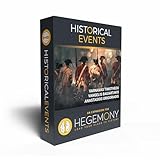
Overview: Hegemony: Historical Events injects 50 new cards into the acclaimed asymmetric political-economic game, transforming sessions with historically-inspired political and economic events. Players navigate wars, revolutions, financial crises, and reforms that mirror real-world governance challenges, forcing each class—the Working Class, Middle Class, Capitalist Class, and State—to adapt dynamically. The expansion maintains core tension while adding narrative depth and unpredictable twists reflecting actual historical pressures on societies.
What Makes It Stand Out: The integration of real historical events creates emergent storytelling that feels authentic and educational. Unlike random event decks, these cards specifically target Hegemony’s unique class-based asymmetry, forcing meaningful political and economic responses. The dual nature of political events (wars, revolutions) and economic events (crises, reforms) ensures both short-term shocks and long-term strategic shifts. This isn’t just more content—it’s a thematic layer making each playthrough feel like an alternative history simulation.
Value for Money: For a card-only expansion, value hinges on play frequency. Regular Hegemony players gain dozens of hours of fresh scenarios, offering better ROI than full game purchases. Casual players may find the investment harder to justify given the base game’s substantial complexity. Dedicated fans will appreciate the enhanced replayability, though the price point requires commitment to the system.
Strengths and Weaknesses: Pros: Deepens thematic immersion; creates memorable narrative moments; enhances replayability; strong educational value. Cons: Requires base game; increases randomness potentially frustrating strategic players; adds setup time; may overwhelm newcomers already struggling with core rules.
Bottom Line: Historical Events is a must-have for Hegemony enthusiasts craving narrative variety and thematic depth. It transforms the base game into a richer historical simulation, though casual players should master the core game first before adding this complexity layer.
2. Rio Grande Games: Power Grid Bremen/Manhattan -Strategy Board Game, Electric Power Companies Competition, Economic Development, Ages 14+, 2-6 Players

Overview: This double-map expansion challenges players to dominate electrical markets in two radically different environments. Bremen intensifies competition through scarce resources and nuclear plant limitations, while Manhattan crams high demand into tight geographical constraints. Both preserve Power Grid’s brilliant auction and resource management mechanics while forcing veterans to abandon familiar strategies. The expansion refreshes the base experience without rule changes, making it immediately accessible for experienced players seeking new puzzles.
What Makes It Stand Out: These maps offer genuinely divergent strategic experiences rather than cosmetic changes. Bremen’s resource scarcity creates a brutal supply-and-demand battlefield where every coal and oil purchase matters. Manhattan’s spatial constraints force excruciating network-building decisions in premium real estate. These aren’t just new geographies—they’re economic thought experiments highlighting how infrastructure and resource availability shape market dynamics, creating distinct meta-games.
Value for Money: As a double-map expansion, this offers solid value compared to single-map packs. Power Grid’s longevity depends on map variety, and these provide distinctly different challenges that keep sessions fresh. The price aligns with comparable expansions, making it reasonable for fans. However, if you own several maps already, incremental value decreases.
Strengths and Weaknesses: Pros: Two unique strategic environments; maintains core gameplay; high replayability; excellent for experienced players. Cons: Requires base game; doesn’t address Power Grid’s known issues like player order advantage; similar to other map expansions; not transformative.
Bottom Line: Bremen/Manhattan is an excellent addition for Power Grid devotees who’ve exhausted base maps. The scenarios are thoughtfully designed with genuine strategic novelty, though they won’t convert players who don’t already love the core economic engine.
3. Hegemony: Crisis & Control Expansion - Add New Automas & Modules, Solo Play, Unique Asymmetric Card Driven Game Board Game, Ages 14+, 1-4 Players

Overview: Crisis & Control addresses Hegemony’s biggest limitation by introducing three sophisticated Automas, enabling robust solo play for the first time. Simulate any player count, controlling multiple classes against AI opponents that mimic human decision-making patterns. Beyond solo modes, three new modules inject additional variability: Crisis Mode accelerates tension, Control Mode adds asymmetric objectives, and a random events module increases unpredictability. The expansion preserves political-economic depth while making complex systems accessible for solo strategists.
What Makes It Stand Out: The Automas are remarkably intelligent, using streamlined flowcharts that capture each class’s core motivations without bogging down gameplay. Unlike many solo modes that feel like multiplayer approximations, these AI opponents create authentic pressure through class-appropriate behaviors. The ability to practice with any class combination against credible opposition makes this invaluable for learning and mastery. The additional modules aren’t afterthoughts—they fundamentally alter win conditions and strategic priorities.
Value for Money: For solo gamers, this expansion is essentially essential—it unlocks the full Hegemony experience. The three Automas and modules provide dozens of hours of varied play, offering better value than many standalone solo games. Multiplayer-only owners will find less immediate value, though modules add welcome variety. The price is justified if you plan to play solo even occasionally.
Strengths and Weaknesses: Pros: Enables true solo play; well-designed AI opponents; increases replayability; excellent learning tool. Cons: Requires base game; adds significant complexity; setup becomes more involved; modules may feel overwhelming combined with base asymmetry.
Bottom Line: Crisis & Control is indispensable for solo players eager to tackle Hegemony’s brilliant asymmetry. The Automas are thoughtfully crafted, and new modes provide genuine strategic depth. Multiplayer groups should consider it primarily for the additional modules rather than solo components.
4. Rio Grande Games Power Grid: France/Italy Expansion - Economic Board Game - Expansion to Power Grid and/or Power Grid: Recharged. Ages 13+, 2-6 Players, 60-120 Min Game Play

Overview: This map expansion brings two national grids to the economic strategy game, each with distinct resource economies forcing strategic recalibration. France’s nuclear-friendly policies provide early atomic plant access and abundant uranium, creating a different energy market. Italy’s waste-heavy, resource-light profile demands careful planning and adaptation to scarcity. These slot directly into the base game or Power Grid: Recharged, offering fresh challenges without rule changes for experienced players craving geographic variety that meaningfully impacts decisions.
What Makes It Stand Out: The maps create asymmetric starting conditions rewarding different strategies. France’s nuclear advantage encourages aggressive early plant acquisition and uranium dependency planning. Italy’s constraints demand exceptional resource efficiency and creative solutions to persistent shortages. This isn’t just new terrain—it’s an economic sandbox testing how resource availability shapes competitive behavior. Subtle rule variations reflect real-world energy policies, adding thematic authenticity often missing in map expansions. Each map feels like a distinct economic puzzle.
Value for Money: As a standard map expansion, value depends entirely on Power Grid play frequency. Regular players gain strategic variety preventing stagnation and extending lifespan significantly. The price is comparable to other map packs, making it a fair investment. Casual players may find strategic shifts too subtle to justify cost, especially with several maps already owned.
Strengths and Weaknesses: Pros: Distinct economic environments; thematically integrated; maintains core gameplay; good for veterans. Cons: Requires base game; minor variations may disappoint those seeking radical change; doesn’t fix base game issues like player order advantage; limited novelty for casual players.
Bottom Line: France/Italy is a solid map pack for Power Grid enthusiasts seeking strategic variety. The national-specific twists are thoughtfully implemented, though they represent evolutionary rather than revolutionary change. Recommended for dedicated fans who play regularly, but not essential for occasional players satisfied with base maps.
5. Rio Grande Games RIO565 Puerto Rico Expansions 1 & 2

Overview: This package consolidates two classic expansions for the legendary role-selection board game, introducing new buildings, plantation tiles, and role options that deepen Puerto Rico’s engine-building gameplay. Players gain access to additional production chains, novel scoring opportunities, and alternative victory paths that refresh the base experience. The expansions integrate seamlessly, maintaining elegant core mechanics while providing veteran players with new puzzles to solve and strategies to explore in this timeless economic classic.
What Makes It Stand Out: Combining both expansions offers immediate variety without separate purchases. New buildings create meaningful strategic forks, forcing players to reconsider established opening moves and mid-game transitions. Additional roles and tiles prevent the base game’s tendency toward optimal patterns, restoring exploratory feel that veterans may have lost. This isn’t just more content—it’s a strategic reset making Puerto Rico feel freshly challenging again, breathing life into one of board gaming’s most influential designs.
Value for Money: Getting two expansions in one package provides excellent value compared to separate purchases. For Puerto Rico enthusiasts who’ve played the base game extensively, this revitalizes a classic at a fraction of a new game’s cost. Casual players may find additions unnecessary, as the base game remains robust. The price is aggressive enough to justify purchase for anyone playing Puerto Rico more than a few times annually.
Strengths and Weaknesses: Pros: Significantly increases strategic depth; excellent bundle value; maintains base game elegance; prevents strategic stagnation. Cons: Requires base game; may overwhelm newer players; some buildings feel situational; doesn’t modernize aging components.
Bottom Line: This expansion bundle is essential for Puerto Rico fans seeking to revitalize their experience. The strategic additions are substantive, and the combined package offers outstanding value. Newcomers should master the base game first, but veterans will find this transforms a familiar classic into a fresh challenge.
6. CATAN Histories Settlers of America Board Game - Forge Trails into Rails! Strategy Game, Family Game for Kids & Adults, Ages 14+, 3-4 Players, 120 Min Playtime, Made by CATAN Studio

Overview:
This historical spin-off reimagines the classic Catan formula through 19th-century American westward expansion. Players guide settlers across the frontier, transforming primitive trails into a thriving railroad network. The game maintains Catan’s beloved resource management and trading mechanics while introducing railway development as the primary engine of progress. Set in the steam-powered era, you’ll compete to connect rising cities and deliver goods across the continent.
What Makes It Stand Out:
The evolution from trails to rails creates a compelling narrative arc absent in the original game. The steam-era theme is deeply integrated, with iron horses and railroad networks driving economic prosperity. Historical immersion combines with strategic depth, offering a fresh take on familiar mechanics. The transformation mechanism provides visual and strategic satisfaction as your network expands across the board.
Value for Money:
Priced similarly to other Catan variants, this offers substantial value for fans seeking thematic variety. The historical setting and railroad mechanics differentiate it enough from base Catan to justify the purchase. Compared to standalone historical games, it leverages familiar rules, reducing the learning curve while delivering a new experience.
Strengths and Weaknesses:
Strengths include accessible gameplay for Catan veterans, rich historical theme, and engaging strategic decisions around network building. Weaknesses involve a 14+ age rating that limits family play, potential similarity fatigue for Catan purists, and a lengthy 120-minute runtime that may deter casual gamers.
Bottom Line:
An excellent choice for Catan enthusiasts craving historical flavor and railroad-building strategy. While not revolutionary, it successfully marries familiar mechanics with an engaging new theme.
7. Rio Grande Games: Concordia: Roma/Sicilia - Expansion, Strategy Board Game, Civilization-Building, Economic, Ages 14+, 2-5 Players, 45-90 Min

Overview:
This expansion adds two distinct maps to the acclaimed Concordia civilization-building series. Players can develop trade networks in ancient Rome’s bustling quarters or navigate Sicily’s volcanic landscape. Each board introduces unique geographical challenges and opportunities that refresh the base game’s economic engine. As an expansion, it requires the core Concordia game to play.
What Makes It Stand Out:
Rome’s innovative Ship track delivers exciting bonus opportunities, while Sicily’s Mount Etna introduces dynamic volcanic activity that disrupts production in surrounding provinces. This dual-map approach provides radically different experiences—strategic optimization in Rome versus risk management in Sicily. The historical settings are authentically rendered, enhancing immersion.
Value for Money:
For Concordia owners, this represents excellent value, essentially providing two games in one package. The maps significantly alter strategies without overwhelming complexity. Compared to full standalone games, expansions offer more economical variety. The replayability factor is high, as each map demands distinct tactical approaches.
Strengths and Weaknesses:
Strengths include map variety, thematic integration, and seamless compatibility with all Concordia expansions. The volcano mechanic adds exciting unpredictability. Weaknesses are the mandatory base game requirement and that it doesn’t fundamentally alter core mechanics, which may disappoint players seeking revolutionary changes.
Bottom Line:
Essential for Concordia fans wanting to expand their horizons. The contrasting maps provide fresh challenges that will reinvigorate your appreciation for this masterful economic strategy game.
8. Capstone Games Age of Rail: La Pampa & Allegheny Expansion, Strategy Board Game of Building Railroads, 60 Minute Play Time, 3 to 6 Players, Ages 14 and Up

Overview:
The fourth installment in the Iron Rail series introduces two new maps—Argentina’s La Pampa and Pennsylvania’s Allegheny region. This expansion maintains the series’ signature shareholding and network-building mechanics while implementing a point-to-point map system. Players invest in rail companies, construct tracks, and earn dividends through strategic network expansion across historically inspired landscapes.
What Makes It Stand Out:
The point-to-point map system creates more restrictive and tactical route-building compared to previous titles. The limited action mechanism forces crucial decisions each turn, balancing immediate dividends against long-term network growth. The economic engine thrives on player-driven market manipulation and interdependent investment strategies, creating intense competition.
Value for Money:
For Iron Rail series enthusiasts, this expansion delivers substantial strategic depth at a reasonable price point. Two maps double the replayability, while the refined mechanics justify the investment. Compared to standalone economic games, expansions offer cost-effective variety. The 60-minute playtime provides dense strategy without overwhelming commitment.
Strengths and Weaknesses:
Strengths include tight, interactive gameplay, elegant economic systems, and meaningful strategic choices. The limited actions create tension and prevent analysis paralysis. Weaknesses include the base game requirement, potential complexity for newcomers, and maps that may feel too similar to series veterans despite mechanical tweaks.
Bottom Line:
A must-have for Age of Rail devotees seeking fresh challenges. The refined mechanics and dual maps provide enough innovation to rekindle interest while maintaining the series’ strategic brilliance.
9. Portal Games Imperial Settlers: Rise of The Empire

Overview:
This ambitious expansion introduces an Open World campaign spanning four historical eras to Imperial Settlers. Players guide their civilization from Antiquity through the Middle Ages, Industrial Revolution, and into Modern Times. The campaign structure creates a persistent narrative where discoveries, conquests, and quests carry lasting consequences across multiple sessions.
What Makes It Stand Out:
The epic chronological progression transforms Imperial Settlers from a tactical card game into a grand strategic saga. Each era introduces unique inventions, provinces, and quests that fundamentally alter gameplay. Remarkably, it maintains compatibility with all existing Imperial Settlers expansions, allowing unprecedented customization. The solo mode shines particularly bright here.
Value for Money:
For dedicated Imperial Settlers fans, this expansion offers exceptional value, essentially creating a campaign version of the entire system. The multi-session experience provides hours of gameplay. While requiring the base game, it revitalizes every component you already own. Compared to standalone campaign games, it leverages your existing investment brilliantly.
Strengths and Weaknesses:
Strengths include epic scope, seamless expansion integration, and meaningful progression systems. The historical journey feels genuinely impactful. Weaknesses involve significant time commitment, potential rules overhead when combining multiple expansions, and that casual players may find the campaign structure daunting.
Bottom Line:
Transformative for Imperial Settlers enthusiasts. If you’re invested in the system, this expansion delivers an unforgettable campaign experience that justifies every previous purchase.
10. Rio Grande Games: Balkan Railways - Economic Train Board Game, Wealth Building, No Luck Stategy, Area Expansion Ages 14+, 3-5 Players, 45-90 Min
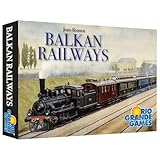
Overview:
This standalone economic train game casts players as merchants and leaders building railroads across the rugged Balkan Peninsula. Set against the dream of a modern Orient Express, you’ll unite Croatia, Serbia, Bosnia, and Kosovo through strategic rail development. The game eliminates luck entirely, focusing on pure economic competition through loans, investments, and strategic manipulation.
What Makes It Stand Out:
The no-luck design creates a pure strategic environment where victory depends entirely on financial acumen. The harsh Balkan setting provides a fresh alternative to typical American or Western European train games. Each turn presents four tight actions—starting railways, expanding, merging, or purchasing business interests—creating agonizing decisions with cascading economic consequences.
Value for Money:
As a complete game, it offers strong value for strategy gamers seeking deep economic gameplay. The 45-90 minute runtime provides substantial depth without excessive length. Compared to heavier economic simulations, it delivers similar satisfaction at a moderate price point. The unique historical theme adds distinctive flavor.
Strengths and Weaknesses:
Strengths include ruthless strategic depth, elegant economic systems, and zero randomness. The loan mechanism and hostile takeovers create intense player interaction. Weaknesses involve a steep learning curve, potentially cutthroat dynamics that may alienate casual players, and a niche theme less accessible than mainstream alternatives.
Bottom Line:
Perfect for serious gamers craving pure economic strategy without luck. Balkan Railways rewards sharp financial maneuvering in a historically rich, uncompromising competitive environment.
Why Expansions Transform Resource Management Games
Expansions serve as evolutionary catalysts for base games, particularly in the economic genre where complexity and replayability directly correlate with long-term value. Unlike other genres where expansions might simply add new scenarios or characters, economic game expansions fundamentally alter the mathematical engines that drive decision-making. They introduce new variables into carefully balanced equations, forcing veterans to abandon optimized strategies and rediscover the joy of exploration.
The most impactful expansions understand that resource management isn’t just about accumulation—it’s about conversion, timing, and adaptation. By layering in new mechanisms that interact with existing systems in unexpected ways, these expansions create emergent gameplay that feels both familiar and refreshingly unpredictable. This transformation is especially crucial for players who have internalized base game patterns and crave the intellectual challenge of mastering a new economic paradigm.
Core Mechanic Enhancements
Game-changing expansions typically introduce resource conversion chains that weren’t possible in the base game. These aren’t just simple trade ratios but multi-step processes where raw materials undergo several transformations, each with branching decision points. Look for expansions that add intermediate resources or byproducts, creating waste management considerations that mirror real-world industrial complexities. The best designs make these additions feel integral rather than tacked-on, often by retrofitting them into the original action economy in elegant ways.
Player Interaction Amplifiers
Economic games thrive on player-driven markets, and superior expansions amplify this through mechanisms that increase interdependence. This might take the form of shared infrastructure investments where players must collectively fund projects while competing for the benefits, or dynamic pricing systems where every transaction shifts market values for all participants. The key is finding expansions that transform parallel solo optimization races into genuinely interactive economic ecosystems where your opponents’ production decisions directly shape your own strategic options.
Strategic Depth Multipliers
The most valuable expansions multiply strategic depth without linearly increasing complexity. They accomplish this by introducing orthogonal strategies—entirely new paths to victory that don’t simply layer onto existing ones but create meaningful trade-offs. For resource management fans, this might mean choosing between vertical integration (controlling entire supply chains) versus horizontal specialization (dominating a single resource market). These expansions reward economic literacy, allowing players who understand concepts like opportunity cost and economies of scale to leverage that knowledge into competitive advantages.
Key Features to Identify in 2026 Expansions
This year’s crop of economic expansions showcases several signature features that distinguish revolutionary content from incremental updates. Understanding these elements helps you identify which expansions will genuinely refresh your collection versus those that simply add more of the same. The design community has collectively moved toward expansions that solve specific problems or unlock specific potentials within base systems.
Advanced Resource Conversion Chains
Modern expansions are embracing biochemical and industrial engineering concepts, where resources aren’t just different values but fundamentally different states. Seek out content that introduces catalyst resources—materials that don’t score points themselves but enable powerful transformations. These designs often include energy mechanics or workforce specialization, where converting resources requires not just the materials but the right type of labor or machinery, creating layered decision trees that reward long-term planning.
Living Market Economies
Static buy-sell boards are giving way to algorithmic market systems that respond to player behavior. Game-changing expansions now feature markets with supply and demand curves, speculative bubbles, and correction mechanisms. Some incorporate futures contracts or options trading, allowing players to hedge against price volatility. These systems create natural boom-and-bust cycles that mirror real economic phenomena, making market timing as important as production efficiency.
Production Engine Specialization
Rather than generic factories that produce anything, 2026’s best expansions force players to commit to specialized infrastructure. This might involve blueprint cards that lock certain buildings into specific production chains, or tech trees that make early specialization decisions cascade throughout the game. The result is asymmetric economic capabilities that emerge organically from player choices rather than being predetermined, ensuring each game develops its own unique industrial ecosystem.
Scarcity and Surplus Dynamics
Revolutionary expansions are rethinking how scarcity works. Instead of simply making resources rare, they create meaningful surplus problems—situations where overproduction triggers penalties, market crashes, or forced waste. This introduces fascinating optimization challenges where efficient players must carefully throttle their engines. Look for expansions that include spoilage mechanics, storage costs, or environmental impact tracks that turn abundance from an unmitigated good into a strategic consideration.
Multi-Phase Economic Cycles
The most ambitious expansions are breaking free from static economies by introducing distinct phases with different rules. You might experience expansion phases with cheap credit and abundant resources, followed by contraction phases where liquidity dries up and efficiency becomes paramount. These cyclical designs force players to build flexible engines that can survive downturns while capitalizing on booms, mirroring the macroeconomic realities that make real-world markets so compelling.
Types of Economic Game Expansions
Understanding the taxonomy of expansion types helps you match your preferences to the right kind of content. Each category serves different player needs and addresses different aspects of the base game experience. Recognizing these patterns allows you to predict how an expansion will feel at the table before committing to the purchase.
Overhaul Expansions
These are the heavyweights that fundamentally rewrite core systems. They often replace original mechanisms entirely, treating the base game as a foundation to build something more sophisticated upon. For resource management enthusiasts, overhaul expansions might introduce entirely new resource types that change the viability of existing strategies, or replace simple income systems with complex cash flow and depreciation mechanics. These expansions typically require relearning significant portions of the game but reward that investment with dramatically expanded strategic space.
Module-Based Additions
Modular expansions offer a buffet of options, allowing you to customize the complexity and flavor of each play. A single expansion might include a market volatility module, a production chain extension, and an advanced AI opponent system. This flexibility is ideal for groups with varying skill levels or those who want to gradually increase depth. The best modular designs ensure components work both independently and in combination, creating exponential variety without overwhelming players when used together.
Campaign and Legacy Extensions
For players who crave narrative context for their economic optimization, campaign expansions thread multiple sessions into a cohesive story where decisions carry persistent consequences. These might feature tech trees that unlock across games, industries that develop based on collective player choices, or markets that remember past manipulation. The resource management becomes more meaningful when you’re building an economic dynasty rather than optimizing isolated sessions, though these expansions demand consistent play groups and long-term commitment.
AI and Solo Enhancements
As solo gaming continues its meteoric rise, economic expansions are increasingly including sophisticated automa systems that simulate competitive market pressure. The most advanced versions don’t just replicate opponent actions but create believable economic agents with distinct strategies that affect shared markets. These expansions often include difficulty scaling and scenario-based challenges, turning resource management into a puzzle-like optimization experience that still captures the dynamic feel of multiplayer competition.
Critical Purchasing Considerations
Investing in expansions requires more evaluation than impulse buying. The wrong expansion can clutter your game with unused components or introduce complexity that alienates your play group. Smart purchasing means looking beyond marketing hype to assess how the content will integrate with your specific gaming context.
Integration Complexity Assessment
Before purchasing, honestly evaluate how much complexity your group will tolerate. Some expansions add elegant layers that enhance the core experience, while others create rules exceptions that slow play and increase teaching time. Look for expansions that streamline existing processes while adding depth, rather than those that bolt on entire new subsystems requiring constant rulebook consultation. The best designs make you wonder how you ever played without them.
Player Count Optimization
Many economic games shine at specific player counts, and expansions can dramatically shift this optimal range. Some additions reduce downtime in high-player-count games through simultaneous action mechanisms, while others add meaningful decisions for lower player counts by introducing dummy players or market forces. Consider your most frequent player count and seek expansions that specifically address those scenarios rather than promising universal improvement.
Table Time Impact
Expansions inevitably increase playtime, but the ratio of time added to depth added varies wildly. A game-changing expansion might add 30 minutes but triple the strategic possibilities, while a weak one adds 15 minutes of busywork. Research how expansions affect the decision-to-outcome ratio—do they create more interesting choices per minute, or simply more steps to resolve the same decisions? Time-conscious groups should prioritize expansions with streamlined turn structures that offset their added content.
Component Quality Benchmarks
Economic games rely heavily on tactile components—resources, tokens, currency—and expansion quality must match or exceed the base game. In 2026, leading expansions are adopting standardized component sizing and improved production techniques. Evaluate whether new resources are distinguishable at a glance, if storage solutions integrate with existing boxes, and whether the physical quality justifies the price premium. Poor component design can undermine the entire experience, no matter how brilliant the mechanisms.
Community Support and Longevity
The lifespan of an expansion depends on community engagement. Active player communities generate variants, scenarios, and clarifications that extend value far beyond the box contents. Before buying, investigate whether the expansion has sparked ongoing discussion, if designers are providing rules updates, and whether tournament scenes are adopting the new content. Expansions that create their own metagame evolution offer the best long-term value, especially for competitive resource management enthusiasts.
2026 Market Trends for Resource Management Expansions
The current design zeitgeist is shaped by broader cultural and technological movements that influence how we think about economies, both real and simulated. Recognizing these trends helps you anticipate which expansions will feel contemporary and engaging versus those that might age quickly.
Digital-Physical Hybrid Mechanics
Several groundbreaking expansions now incorporate companion apps not as gimmicks but as essential economic components. These might manage complex market algorithms that would be tedious to track manually, simulate dynamic supply chains with hundreds of moving parts, or introduce hidden information economies where app-managed events create unpredictable scarcity. While some purists resist this integration, the best implementations use technology to enable mechanics that would be impossible physically, opening new frontiers for resource management depth.
Environmental Sustainability Themes
Reflecting real-world concerns, 2026’s expansions increasingly incorporate ecological economics. This isn’t just thematic window dressing—these expansions make waste management, renewable resources, and environmental degradation core mechanical elements. Players must balance short-term extraction with long-term viability, as depleted resources may become permanently scarce. This adds a fascinating temporal dimension to optimization, where the most efficient engine might also be the most destructive, forcing moral and strategic trade-offs that mirror contemporary challenges.
Asymmetric Starting Economies
Rather than everyone beginning with identical capabilities, trendsetting expansions now provide divergent starting positions that reflect different economic philosophies. One player might begin with abundant raw materials but primitive infrastructure, while another starts with advanced technology but resource poverty. These asymmetries create natural trading partners and specialization incentives, making the economic interdependence feel earned rather than forced. The best designs ensure these differences are balanced through opportunity rather than identical power levels.
Narrative-Driven Market Fluctuations
Random events are evolving into narrative arcs that explain market volatility. Instead of drawing a card that says “drought: grain prices double,” you might experience a three-stage story where early investment in irrigation technology mitigates later catastrophe. These narrative frameworks make economic consequences feel logical and predictable in hindsight, rewarding players who pay attention to story cues and invest in appropriate hedging strategies. The result is a more immersive and strategically satisfying experience.
Getting the Most from Your Expansion Collection
Owning powerful expansions is only half the equation—integrating them effectively into your gaming lifestyle determines their true value. Strategic collection management ensures your expansions enhance rather than overwhelm your hobby.
Organizing and Storing Enhanced Games
With expansions, storage becomes a critical consideration. The best practice is to integrate expansion components into the base game box using custom inserts, keeping everything needed for a single session together. This reduces setup time and prevents the “expansion shelf” problem where content never gets played because it’s inconvenient to access. For games with multiple modules, consider storing each module in separate baggies within the main box, clearly labeled for quick identification during setup.
Learning and Teaching Expanded Rules
Teaching an expanded game requires more finesse than teaching the base game alone. Always teach the base game first to new players, even if it means playing without your shiny new content. For experienced groups, introduce expansions one module at a time, playing a full session with each before combining them. This builds intuitive understanding of how each addition changes the economic landscape. Create cheat sheets that highlight key differences from the base game, focusing on how expansion mechanisms interact with familiar systems rather than explaining everything from scratch.
Participating in Expanded Game Communities
Maximize your investment by joining communities dedicated to your favorite economic games. These forums are treasure troves of fan-made scenarios, balance variants, and advanced strategy discussions that leverage expansion content in ways designers never anticipated. Many communities run expansion-focused tournaments or challenges that force creative use of new mechanics. Contributing your own discoveries not only gives back but deepens your mastery, as explaining strategies forces you to articulate economic principles you might otherwise execute intuitively.
Frequently Asked Questions
How do I know if an expansion will work for my casual gaming group?
Focus on modular expansions with optional complexity. Look for content that adds variety without increasing rules overhead, such as new resource types that use existing conversion mechanisms. Avoid overhauls that require relearning core systems, and prioritize expansions that specifically advertise “casual-friendly” modules or streamlined variants.
Will expansions make my economic games too long?
It depends on the design. Quality expansions add depth without proportional time increases by enabling more simultaneous actions or reducing decision paralysis through clearer strategic paths. Research playtime reports from other owners, and look for expansions that replace base game elements rather than simply adding to them, as these often maintain similar session lengths.
Should I buy expansions for games I haven’t mastered yet?
Generally, no. Master the base game first to appreciate what the expansion improves. Playing without expansion content reveals the design’s core economic rhythms, making it easier to understand how additions change the strategic landscape. Exceptions exist for games where the community consensus is that an expansion “completes” an otherwise underwhelming base experience.
How many expansions are too many for one game?
There’s no universal limit, but diminishing returns typically start after two or three major expansions. The key is ensuring each expansion adds distinct strategic dimensions rather than piling on similar mechanics. If you find yourself forgetting rules or spending more time managing components than making decisions, you’ve likely crossed into oversaturation territory.
Do expansions generally increase a game’s resale value?
Paradoxically, expansions often decrease resale value because they limit the buyer pool to those wanting the complete package. Individual expansions can be hard to sell separately. If resale is a priority, keep expansions in pristine condition and maintain original packaging. However, the best economic expansions are those you’ll never want to sell because they become inseparable from the base experience.
Are digital companion apps required for modern economic expansions?
Most expansions with apps include optional offline modes, but these often require cumbersome manual bookkeeping. The apps typically enable mechanics that would be impractical to manage physically. If you prefer pure analog play, verify that the expansion offers fully physical variants before purchasing, and read reviews specifically addressing the app-independent experience.
How do I store games with multiple expansions efficiently?
Invest in custom box inserts designed for your specific game and its expansions. These organizers consolidate everything into the original box while keeping components sorted. For games with many expansions, consider storing less-frequently used modules separately but keeping core expansion content integrated. Label everything clearly to avoid setup confusion.
Can expansions fix broken economic games?
Sometimes, but it’s rare. Expansions can address specific imbalances or add missing strategic paths, but they can’t salvage fundamentally flawed core loops. If the base game’s economy feels broken, an expansion is more likely to add complexity to a broken foundation than to repair it. Look for designer commentary explicitly stating what specific problems the expansion solves.
What’s the best way to learn an expansion’s rules?
Start with the expansion’s rulebook, which typically covers only new content. Then, watch a teach video that integrates expansion concepts into the base game flow. Finally, run a solo practice round focusing on how expansion mechanisms interact with familiar systems. This layered approach prevents cognitive overload and highlights the expansion’s strategic implications.
Are campaign expansions worth it for economic games?
Campaign expansions excel when they create persistent economic consequences that span sessions. If you enjoy seeing your economic empire evolve and can commit to a regular play group, they offer unparalleled depth. However, they’re poor value for infrequent players or those who prefer optimizing isolated sessions. Evaluate whether the narrative framework enhances the economic decisions or simply adds story baggage to what should be clean mechanical puzzles.
See Also
- 10 Best Economic Game Expansions for Resource Management Fans in 2026
- The 10 Ultimate Best Economic Game Expansions for Resource Management Fans in 2026
- The 10 Ultimate Best Economic Game Expansions for Resource Management Lovers in 2026
- How to Choose the 10 Best Economic Game Expansions for Your Collection in 2026
- How to Choose the 10 Best Economic Game Expansions for Long Campaigns in 2026