Table of Contents
Forget the roll of dice or the shuffle of cards. There’s a quiet revolution happening in head-to-head gaming, one built on pure intellect, foresight, and the elegant dance of perfect information. Abstract strategy games – those timeless contests where luck plays no role, and every move is a deliberate calculation – are experiencing a remarkable renaissance. In 2026, they’re not just relics of ancient courts; they’re the pinnacle of competitive, cerebral entertainment, offering unmatched depth and fairness for players seeking a true test of wits against an opponent. The simplicity of their rules often masks staggering complexity, creating battles where a single misstep can unravel an entire campaign, making every session intensely personal and deeply satisfying.
Why the surge in popularity now? Modern design sensibilities are breathing new life into this venerable genre. Today’s abstracts are shedding any perception of being overly arcane or visually sterile. Designers are masterfully blending profound strategic depth with intuitive accessibility, stunning physical craftsmanship, and mechanics that feel incredibly fresh. They cater to our contemporary desire for meaningful connection, mental challenge in an age of distraction, and games that offer endless replayability without relying on randomness. If you’re looking for a head-to-head experience where your skill, planning, and adaptability are the only factors determining victory, the current landscape of abstract strategy is richer and more exciting than ever before. Understanding what makes these modern marvels tick is key to finding your perfect strategic partner.
Top 10 Abstract Strategy Games for Head-to-Head Play
Detailed Product Reviews
1. The Rose King - Strategic 2-Player Board Game of Medieval Power Struggle | Classic Abstract Game | Easy to Learn, Deep Strategy

Overview: The Rose King delivers a tightly focused abstract strategy experience rooted in the War of the Roses conflict. Designed exclusively for two players, it strips away complexity to offer pure tactical dueling over board control using a compelling medieval theme and straightforward mechanics.
What Makes It Stand Out: Its unique blend of historical inspiration within a classic abstract framework sets it apart. The integration of thematic power cards alongside simple movement rules creates significant strategic depth without overwhelming newcomers. The dedicated 2-player design ensures perfectly balanced, competitive matches where every move carries weight, avoiding the scaling issues common in games adapted for fewer players.
Value for Money: Priced competitively against abstract strategy games, it offers excellent value. The complete set (board, cards, markers) provides durable, thematic components that justify the cost, especially compared to generic abstracts lacking its narrative cohesion and thoughtful card-driven mechanics. It’s a superior investment over basic strategy games with flimsier parts.
Strengths and Weaknesses: Strengths: Exceptionally easy to learn yet deeply strategic; strong theme enhances replayability; perfectly balanced for two; high-quality included components; quick setup. Weaknesses: Limited visual flair compared to premium board games; theme, while present, doesn’t deeply influence mechanics for some; lacks variability beyond core rules, potentially reducing long-term novelty for hardcore strategists.
Bottom Line: The Rose King is a near-perfect entry for players seeking accessible yet rich head-to-head strategy. Its seamless blend of theme, simplicity, and depth makes it a standout recommendation for couples or friends wanting quick, meaningful tactical battles without complex rules overhead.
2. ENTHRONE – Abstract Deduction Strategy Game for 2 Players by Smirk & Dagger | Ages 10+ | 20–30 Min Playtime

Overview: ENTHRONE is a sleek deduction game where two players duel to uncover their opponent’s hidden royal identity while protecting their own. Combining elements of bluffing, tactical movement, and deduction on a visually striking shared board, it delivers intense, focused gameplay in under half an hour.
What Makes It Stand Out: The game’s centerpiece is its exceptional production quality, featuring eight intricately sculpted 3-inch fantasy busts and a stunning stained-glass puzzle board that create remarkable table presence. The core deduction mechanic—using movement tiles to probe identities and make bold throne grabs—feels fresh and deeply interactive, offering constant mind games within a compact framework.
Value for Money: While positioned at a premium price point due to its high-end components, ENTHRONE justifies the cost for players prioritizing aesthetics and tactile satisfaction. It surpasses cheaper deduction games in component quality and thematic immersion, though budget-conscious buyers might find comparable strategic depth in less lavish alternatives. The replayability from varied setups enhances long-term value.
Strengths and Weaknesses: Strengths: Gorgeous, premium components; highly engaging deduction and bluffing; quick setup and playtime; strong player interaction; high replayability through variable strategies. Weaknesses: Premium price may deter some; learning curve for deduction newbies; limited strategic depth compared to heavier strategy games; the puzzle board can be fiddly to assemble initially.
Bottom Line: ENTHRONE is a top recommendation for players who value beautiful design and tight, interactive deduction. Its blend of visual splendor and clever mechanics makes it an ideal gift or staple for 2-player game nights, despite its niche appeal to pure strategy enthusiasts.
3. Asmodee Azul Duel Board Game - Competitive Head-to-Head Tile-Placement Strategy Game, Stunning Mosaic Art and Quick Gameplay for Kids & Adults, Ages 8+, 2 Players, 30-45 Minute Playtime

Overview: Azul Duel distills the beloved Azul series into a refined head-to-head experience, challenging two players to craft elegant mosaics through strategic tile drafting and placement. It retains the series’ visual charm while optimizing mechanics specifically for intense, direct competition.
What Makes It Stand Out: The game shines through its breathtaking Chinese shadow theatre-inspired artistry and components, transforming tile placement into a visually captivating experience. Streamlined rules eliminate downtime, maintaining constant tension and meaningful choices. The variable setup via different scoring tiles ensures high replayability, making each duel feel distinct despite the focused scope.
Value for Money: Positioned as a premium 2-player game, Azul Duel offers strong value. Its stunning components and polished mechanics surpass many entry-level abstracts, justifying a higher price. While cheaper tile-laying games exist, few match its aesthetic quality, strategic depth, and dedicated duel optimization, making it a worthwhile investment for fans of the genre or families seeking sophisticated gameplay.
Strengths and Weaknesses: Strengths: Exquisite artwork and components; perfectly balanced for two players; quick to learn yet strategically rich; high replayability; excellent for developing planning skills; accessible for younger players (8+). Weaknesses: Higher cost than basic strategy games; limited physical board interaction compared to area-control games; some may miss the original Azul’s multi-player chaos; scoring can feel opaque to beginners.
Bottom Line: Azul Duel is an essential purchase for 2-player strategy enthusiasts and families. Its beautiful design, thoughtful mechanics, and consistent engagement make it a standout duel experience that’s easy to recommend for casual and serious gamers alike.
4. Pressman 4 In A Row - The Head to Head Game of Strategy , 5", Multicolor

Overview: Pressman’s 4 In A Row is the classic vertical strategy game where two players race to align four colored disks in a row—horizontally, vertically, or diagonally. This compact, durable plastic version delivers timeless turn-based fun for all ages, emphasizing straightforward spatial reasoning.
What Makes It Stand Out: Its enduring appeal lies in sheer simplicity and universal accessibility. The physicality of dropping disks into the vertical grid creates satisfying tactile feedback absent in digital versions. As a pure abstract game with no luck, it offers clear, immediate strategic challenges ideal for developing critical thinking in children, while retaining enough depth for casual adult play.
Value for Money: An exceptional budget-friendly option, its low price point is justified by its purpose-built durability and no-frills functionality. While lacking the thematic depth or components of premium strategy games, it outperforms similarly priced plastic games in longevity and educational value. It’s unmatched for introducing core strategy concepts at an entry-level cost.
Strengths and Weaknesses: Strengths: Extremely affordable; incredibly easy to learn; durable plastic construction; truly portable; zero setup time; excellent for teaching spatial logic to kids; genuinely two-player focused. Weaknesses: Very basic strategy by modern standards; minimal component variety (just disks/board); visually plain compared to contemporary games; limited replayability for experienced players; no thematic engagement.
Bottom Line: Pressman 4 In A Row is a must-have for families with young children or anyone seeking a no-cost, instantly accessible strategy game. While simplistic for hardcore gamers, its durability, affordability, and pure strategic foundation make it a timeless, practical recommendation.
5. CrowD Games | Portals Board Game | Abstract Strategy Game | Spatial Reasoning | High Player Interaction on a Shared Board | Versatile Play for 1–4 Players | Ages 10+ | 40–80 Min
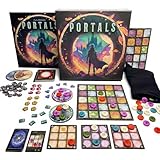
Overview: Portals is a modern abstract strategy game emphasizing deep spatial reasoning and direct player interaction on a single shared board. Designed for 1-4 players, it challenges participants to control key areas using portals and tokens, offering scalable strategic depth across its player counts.
What Makes It Stand Out: Portals excels with its “low luck, high skill” philosophy—zero randomness ensures every move directly impacts opponents, creating intense, cerebral duels. The optional modules (hidden objectives/special abilities) significantly expand strategic layers, while its solo mode provides a robust puzzle experience. The elegant, beautiful components highlight meaningful decisions without distracting from pure strategy.
Value for Money: Positioned as a premium abstract, Portals delivers strong value through versatility. Supporting 1-4 players with meaningful adjustments (rare for abstracts) and modular complexity justifies its cost. It surpasses many dedicated 2-player games in flexibility, though budget buyers focused solely on duels might prefer cheaper niche options. The high component quality and replayability enhance long-term worth.
Strengths and Weaknesses: Strengths: Exceptional player interaction on shared board; deep, scalable strategy; excellent solo mode; beautiful, functional components; modular complexity via add-ons; truly zero-luck mechanics. Weaknesses: Steeper learning curve than entry-level abstracts; higher price point; variable playtime (40-80 mins) can feel inconsistent; 3-4 player mode less intense than 2-player; setup slightly more complex than minimal abstracts.
Bottom Line: Portals is a top-tier recommendation for abstract strategy aficionados seeking depth, interaction, and versatility. Its blend of pure skill, modular replayability, and stunning design makes it a standout investment for serious players, despite a higher barrier to entry for casual gamers.
6. Mabula - Build, Push and Connect to Win in an Abstract Marble Movement Strategy Game for Kids & Adults, Ages 10+, 2 Players, 15 Minute Playtime

Overview: Mabula is a compact abstract strategy game where two players manipulate marbles on a circular board, aiming to form the largest connected group. Its core mechanic involves carefully pushing marbles to shift positions without knocking any off the edge, blending spatial reasoning with tactical foresight in quick 15-minute sessions ideal for ages 10+.
What Makes It Stand Out: The dynamic marble-pushing mechanic creates immediate tactile engagement, distinguishing it from static grid-based games. Multiple win conditions—standard largest-group scoring or advanced mode multiplying group sizes—cater to varying skill levels. Randomized perimeter setups ensure high replayability, while the family-friendly depth bridges casual and strategic play.
Value for Money: Priced competitively for a wooden-component strategy game, Mabula offers exceptional longevity through its ever-changing setups and dual difficulty modes. It outperforms similarly priced abstracts like Hive Pocket in accessibility while matching the strategic weight of pricier titles, making it a smart investment for dueling enthusiasts.
Strengths and Weaknesses:
Strengths: Highly replayable due to randomized starts; intuitive rules with meaningful tactical depth; durable wooden components; quick setup and playtime.
Weaknesses: Strictly limited to two players; advanced scoring may overwhelm younger kids despite the 10+ age claim.
Bottom Line: A brilliantly executed abstract duel that transforms simple marble movement into deeply strategic fun. Highly recommended for strategy fans seeking quick, replayable head-to-head clashes.
7. Rio Grande Games Fenix - Strategy Boardgame, Ages 8+, 2 Players, 20-30 Mins, Multi

Overview: Fenix is a streamlined grid-based battle game where two players command forces to eliminate the opponent’s king. Featuring vibrant warm-toned tokens etched with phoenix motifs, it delivers accessible head-to-head combat in 20-30 minutes, targeting families and casual gamers aged 8+.
What Makes It Stand Out: Its striking visual design—particularly the phoenix-engraved tokens and colorful board—creates immediate table appeal. The pure king-elimination objective simplifies strategy compared to chess, while the grid movement offers clear spatial puzzles. The compact rule set ensures new players grasp fundamentals in under five minutes.
Value for Money: As an entry-level abstract, Fenix justifies its price with high-quality components that feel substantial for the cost. While less complex than premium strategy games, its durability and aesthetic make it a better value than mass-market alternatives like checkers sets, especially for visual-focused players.
Strengths and Weaknesses:
Strengths: Beautiful, thematic art and components; exceptionally easy to learn; portable and durable; fast-paced matches.
Weaknesses: Limited strategic depth for experienced gamers; no variable setups reduce replayability; tokens lack differentiation beyond art.
Bottom Line: A visually stunning gateway abstract game perfect for families or new players, though veterans may crave more complexity. An excellent choice for accessible, attractive two-player duels.
8. Quixo | Wooden Abstract Strategy Board Game for Kids and Adults | Family Game Night Favorite | Tic-Tac-Toe Style Competitive Puzzle | Easy to Learn, Fast to Play | Ages 8+ | 2-4 Players | 15 Min

Overview: Quixo reimagines Tic-Tac-Toe as a dynamic wooden puzzle game where players rotate and push cubes to create five-in-a-row alignments. Supporting 2-4 players in 15-minute rounds, it combines elegant tactile components with escalating spatial challenges, appealing to families and strategy fans aged 8+.
What Makes It Stand Out: The boardless design—using interlocking wooden cubes—creates a constantly reshaping playfield that demands adaptive thinking. Unique 1v1 or team-play flexibility broadens its social appeal, while the premium wooden pieces double as decor. Its “simple-to-learn, hard-to-master” balance has cemented it as a modern classic.
Value for Money: Quixo excels in value through exceptional build quality and near-limitless replayability. Priced moderately higher than paper-based games, it surpasses them in longevity and aesthetics. Compared to similar-strategy games like Gobblet, its wooden construction and 4-player support justify the cost for frequent game nights.
Strengths and Weaknesses:
Strengths: Gorgeous, durable wooden components; rules learned in 2 minutes; scales perfectly from 2 to 4 players; endless strategic variety.
Weaknesses: Cube manipulation can feel fiddly on uneven surfaces; limited solo-play potential.
Bottom Line: A must-have abstract strategy game that elevates Tic-Tac-Toe into a deeply engaging, beautiful experience. Unreservedly recommended for family game nights or strategy newcomers.
9. Hive Pocket Game by Smart Zone Games | Portable Abstract Strategy Game for 2 Players | Includes Ladybug and Mosquito Expansions | Compact Travel Edition of The Award Winning Hive Strategy Game

Overview: Hive Pocket condenses the acclaimed Hive strategy system into a travel-ready edition, featuring magnetic insect tiles and expansions. Two players build interconnected “hives” using uniquely moving pieces (e.g., bees, spiders), with no board required—ideal for on-the-go tactical duels.
What Makes It Stand Out: The boardless, portable design shines here: lightweight tiles snap into a travel bag, enabling gameplay anywhere. Crucially, it includes the Ladybug and Mosquito expansions (absent in the base game), adding vertical movement and mimicry mechanics that dramatically deepen strategy. The tactile insect art enhances immersion without sacrificing portability.
Value for Money: Exceptional value as it bundles expansions usually sold separately, matching the full-sized game’s depth at a lower cost. The travel durability and included expansions make it superior to alternatives like Blokus Portable, especially for strategy travelers seeking premium, board-free gameplay.
Strengths and Weaknesses:
Strengths: True portability with robust travel bag; expansions included boost replayability; intuitive yet profoundly strategic; no setup or board needed.
Weaknesses: Smaller tiles may frustrate players with dexterity issues; expansions slightly increase complexity for absolute beginners.
Bottom Line: The definitive portable abstract strategy game. A stellar investment for travelers or Hive fans, offering award-winning depth with unmatched convenience.
10. UP Games Floristry Board Game - Competitive Flower Auction & Storefront Design! Fun & Creative Strategy Game for Family, Kids & Adults, Ages 12+, 2 Players, 20 Min Playtime
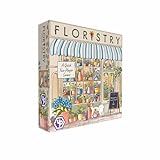
Overview: Floristry casts players as rival florists competing in 10 timed auction rounds to acquire flower tiles (roses, tulips, etc.) and arrange them into high-scoring storefront displays. This 20-minute strategy duel blends bidding tactics with spatial puzzle-solving for ages 12+.
What Makes It Stand Out: Its unique auction-meets-tessellation mechanic—where players bid on tiles then strategically place them to maximize color-group points—creates constant tension. The floral theme isn’t superficial; scoring directly ties to realistic “patch” aesthetics, offering creative satisfaction beyond typical abstracts. The strict 10-round structure ensures relentless pacing.
Value for Money: Priced fairly for a niche strategy game, Floristry delivers standout replayability through variable tile drafting and dynamic scoring. It outperforms similarly priced auction games (e.g., Modern Art) in thematic integration and visual appeal, though its 2-player limit narrows its audience compared to party games.
Strengths and Weaknesses:
Strengths: Fresh auction-puzzle hybrid mechanics; beautiful floral artwork; tight 20-minute playtime; deeply engaging spatial decisions.
Weaknesses: Strictly 2-player only; theme may not resonate with non-gardening enthusiasts; minimal luck once bidding starts.
Bottom Line: A brilliantly original strategy experience where creativity meets cutthroat competition. Highly recommended for 2-player strategy fans seeking fresh, thematic depth.
Understanding the Core Appeal of Modern Abstracts
Defining the Abstract Strategy Genre
At its heart, an abstract strategy game features no hidden information, no randomizers like dice or shuffled decks, and a clear path to victory defined solely by player decisions. Think of it as a pure puzzle solved collaboratively (yet competitively) by two minds. The board state is always fully visible, every piece moves according to fixed rules, and the outcome hinges entirely on who can out-think, out-plan, and adapt better in the moment. This creates a uniquely transparent and fair competitive environment.
Why Pure Strategy Resonates in 2026
In a world saturated with digital noise and unpredictable outcomes, the clarity of abstract strategy is profoundly appealing. Players crave experiences where mastery is directly tied to effort and intellect, not luck or resource grinding. These games foster deep cognitive engagement, sharpening pattern recognition, spatial reasoning, and long-term planning skills. The direct, unmediated clash of minds also creates a powerful social connection; you’re not just playing against someone, you’re engaging in a genuine intellectual dialogue across the board.
The Evolution Beyond Classics
While chess and Go remain towering giants, the modern abstract scene has exploded with innovative mechanics and themes (often purely aesthetic, not narrative). Designers are exploring new movement systems, dynamic board states, asymmetric objectives within symmetric rules, and novel win conditions that go beyond simple capture or territory control. This evolution ensures the genre feels vibrant and relevant, offering challenges that feel distinctly contemporary while respecting the core tenets of pure strategy.
Essential Physical Components to Evaluate
Board Design and Material Quality
The playing surface is your battlefield, and its quality matters immensely. Look for boards that are substantial enough to stay put during intense moments, with clear, easy-to-read markings. Materials range from sustainable woods and premium felts to innovative recycled composites. Consider texture – a slightly grippy surface prevents pieces from sliding – and whether the board folds or stores pieces efficiently. A well-crafted board isn’t just functional; it elevates the entire tactile experience and signifies a game built to last.
Piece Craftsmanship and Ergonomics
Your pieces are your army, and how they feel in your hand impacts play. Assess weight (hefty feels premium, lightweight can be faster), material (wood, stone, acrylic, recycled plastic), and shape. Do they stack cleanly? Are they easy to distinguish by touch alone? Well-designed pieces should be comfortable to handle, stable when placed, and visually distinct without relying solely on color (important for accessibility). The tactile feedback of placing a solid piece is part of the game’s rhythm.
Storage and Portability Considerations
How easily can you get this game to the table and put it away? Integrated storage within the board is a huge plus, keeping components organized and preventing losses. Consider the footprint – a large board might be impressive but impractical for smaller spaces. For gamers on the go, lightweight materials and compact folding designs become critical factors. A game that’s a chore to set up or store won’t get played, no matter how brilliant the strategy.
Deep Dive into Gameplay Mechanics
Movement Systems and Spatial Dynamics
How pieces traverse the board defines the game’s spatial puzzle. Is movement grid-based (orthogonal, diagonal, hexagonal) or freeform on a point-and-line network? Do pieces have unique movement capabilities, or is movement uniform? Pay attention to how movement interacts with capture, blocking, and terrain features. The best modern abstracts create rich spatial challenges where controlling key areas or pathways becomes as crucial as direct confrontation.
Capture Mechanics and Tactical Depth
Capture is often central, but how it happens creates vastly different experiences. Is it direct replacement (like chess), custodial (sandwiching between two pieces), displacement, or something entirely novel? Does capture have immediate consequences, or does it feed into a longer-term objective? The elegance and tactical implications of the capture system are major drivers of a game’s moment-to-moment tension and strategic variety.
Victory Conditions Beyond Checkmate
Modern abstracts frequently innovate here. While direct elimination is common, look for games where victory comes from territory control, specific piece placement, achieving a formation, managing resources generated through play, or even simultaneous objective completion. Multiple viable paths to victory, or conditions that shift subtly during play, prevent the game from becoming predictable and encourage diverse strategic approaches.
Assessing Strategic Depth and Replayability
The Learning Curve: Approachability vs. Mastery
A hallmark of a great abstract is a low barrier to entry but near-infinite depth. The core rules should be explainable in minutes, allowing new players to grasp the basics quickly. However, the strategic possibilities should unfold over dozens, even hundreds, of plays. Evaluate how long it takes to feel competent versus how long it takes to feel truly mastered. Games that offer immediate fun while revealing deeper layers over time have the strongest staying power.
Opening Theory and Mid-Game Complexity
Consider the nature of the opening phase. Is it highly theoretical, like chess, requiring memorization, or does it encourage creative, asymmetric setups that change each game? The mid-game complexity – the density of meaningful decisions and the interplay of tactics and long-term strategy – is where the game truly lives. Look for mechanics that generate constant, non-obvious dilemmas where every move impacts multiple potential outcomes.
Endgame Clarity and Tension
The finale should be decisive and tense. Does the path to victory become clearer as the game progresses, allowing for precise calculation, or does it remain murky until the last move? Games with crisp endgame logic, where careful play can overcome a slight deficit or secure a narrow win, feel deeply satisfying. Avoid games where the outcome is often decided long before the final move due to unavoidable cascading failures.
Practical Considerations for Real-World Play
Session Length and Pacing
Be realistic about your available time. Some modern abstracts deliver intense, decisive clashes in 15-20 minutes, perfect for a coffee break. Others are deep, contemplative marathons demanding 60+ minutes of focused play. Consider the average playtime at your skill level – learning a complex game takes longer. Also, assess the pacing: is it a rapid-fire back-and-forth, or are turns contemplative with significant downtime? Your preference here greatly impacts enjoyment.
Setup Time and Mental Load
How long does it take to get from box to first move? Minimal setup is a major advantage for frequent play. Similarly, consider the cognitive load: does the game demand constant, intense calculation from the first turn, or does the complexity build gradually? Some players thrive on relentless mental pressure, while others prefer games with breathing room for strategic reassessment. Honesty about your desired mental exertion level is key.
Space Requirements and Table Presence
Be honest about your playing environment. Measure your typical game space. A large, ornate board might dominate a small table, while tiny pieces could be frustrating on a cramped surface. Consider visual clutter – does the board layout remain clear as the game progresses, or does it become a confusing jumble? The game should fit comfortably into your physical play space without causing constant spatial anxiety.
Future-Proofing Your Abstract Game Selection
Community and Competitive Viability
Is there an active community playing this game? Check online platforms for player counts, discussion forums, or organized tournaments (even local or online). A strong community ensures you’ll find opponents, access to learning resources like strategy guides or videos, and potential rule clarifications. For some players, the possibility of engaging in a competitive scene is a major draw for long-term investment.
Designer Reputation and Design Philosophy
Research the creator’s background. Do they have a track record of innovative, well-balanced abstract designs? What is their stated design philosophy? Are they focused on elegance, dramatic tension, novel mechanics, or accessibility? Understanding the designer’s intent can help predict whether their approach aligns with your personal preferences for how a strategic contest should feel and unfold.
Long-Term Durability and Sustainability
Look beyond the initial play. Are components made from materials likely to withstand years of handling? Are replacement parts available? Increasingly, sustainability matters – are materials recycled, recyclable, or sustainably sourced? A game that feels ethically produced and built to last physically enhances its value proposition significantly in today’s market. Consider if the design itself feels timeless or overly tied to a fleeting trend.
Frequently Asked Questions
Frequently Asked Questions
What exactly defines an “abstract strategy” game? It’s a game with perfect information (no hidden elements), no random chance (no dice/cards), and victory determined solely by player decisions based on the current board state. Think pure skill contests like Chess or Go.
How do I know if a modern abstract has enough depth for long-term play? Look for games with simple core rules but emergent complexity. If strategic dilemmas remain non-obvious even after 10+ plays, and if top players still discover new nuances years later, it likely has significant depth. Community activity is also a good indicator.
Are modern abstracts harder to learn than classics like Chess? Not necessarily. Many are designed with intentional accessibility, featuring rules teachable in 5 minutes. While mastery takes time, the initial hurdle is often lower than Chess, which has specific piece movements and special rules to memorize.
Can abstract strategy games be played well with a significant skill disparity? Yes, many modern designs incorporate elegant handicapping systems (like giving the weaker player extra moves or specific advantages) that allow meaningful competition without altering core rules, preserving the pure strategic experience.
How important is the physical component quality for an abstract game? Crucially important. Since interaction is purely physical manipulation of pieces on a board, high-quality, well-balanced pieces and a stable, clear board significantly enhance focus, tactile satisfaction, and the overall playing experience, especially during long sessions.
Do any modern abstracts work well for more than two players? While the genre is predominantly head-to-head (2-player), some innovative designs successfully support 3 or 4 players, often through team play or carefully structured free-for-all mechanics that maintain strategic integrity, though 2-player remains the purest form.
Is there a risk of “solving” a modern abstract game like Checkers was? Theoretically yes for any finite game, but well-designed modern abstracts feature such immense complexity (vastly larger than Checkers) and dynamic board states that practical solving by humans or even current computers within a relevant timeframe is virtually impossible, ensuring enduring challenge.
How can I find opponents for less common abstract strategy games? Online platforms dedicated to abstracts are thriving. Many games have dedicated communities on niche board game sites, Discord servers, or even physical clubs in larger cities. The digital version of the game (if available) is often the easiest way to find random opponents globally.
Do abstract strategy games offer any benefits beyond entertainment? Significantly. They are proven tools for enhancing critical thinking, spatial reasoning, pattern recognition, foresight, patience, and emotional regulation under pressure. They provide a unique mental workout that translates to real-world cognitive benefits.
Are modern abstracts suitable for children? Many are excellent for developing young minds, but suitability depends on the specific game’s complexity and physical components (small pieces). Look for games with very simple rules, large sturdy pieces, and shorter playtimes designed with younger strategic thinkers in mind; always match the game to the child’s developmental stage.
See Also
- We Tested 50 Abstract Strategy Games - Here are the 10 Best for Head-to-Head Play
- 2026’s Top 10 Abstract Strategy Games for Head-to-Head Play
- 10 Must-Have Abstract Strategy Games for Sharpening Your Mind in 2026
- How to Choose the 10 Best Abstract Strategy Games for Gift-Giving in 2026
- 10 Abstract Strategy Games That Solve Decision Fatigue in 2026