Table of Contents
Imagine a family gathered around the table, not staring at individual screens but leaning in with shared excitement. A child’s eyes light up as they sound out a tricky word, another giggles while crafting a silly sentence, and a parent beams with quiet pride. This isn’t a nostalgic memory—it’s the vibrant reality modern board games can create, transforming literacy practice from a chore into a cherished ritual. In today’s digital landscape, where screens dominate playtime, finding engaging, screen-free activities that genuinely boost foundational reading skills feels more crucial than ever. The good news? The world of board gaming has evolved far beyond simple roll-and-move mechanics, offering sophisticated tools designed to build confidence and competence in young readers through pure, unadulterated fun.
Gone are the days when “educational games” meant dull drills disguised as play. Today’s innovative designs seamlessly weave phonics, vocabulary expansion, comprehension, and even creative writing into captivating gameplay that kids beg to repeat. These aren’t just games; they’re stealthy skill-builders, leveraging the natural human love of stories, competition, and collaboration to strengthen the neural pathways essential for reading success. For parents and educators seeking meaningful alternatives to passive screen time, understanding how to choose the right game—based on a child’s specific developmental stage and literacy needs—is the key to unlocking this powerful learning potential. Let’s explore the features and mechanics that make certain board games exceptional catalysts for building lifelong readers.
Top 10 Reading Board Games for Kids
Detailed Product Reviews
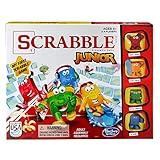
1. Hasbro Gaming Scrabble Junior Board Game | 2-4 Players | Family Educational Word Games for Kids | Back to School Gifts for Classroom | Ages 5+
Overview:
Hasbro’s Scrabble Junior adapts the classic word game for young learners aged 5+. It features dual-level gameplay: a picture-matching side for beginners and a letter-building side for advancing players, using colorful character tokens for scoring. Designed as an educational tool, it aims to foster early literacy in a family-friendly format.
What Makes It Stand Out:
The game’s standout feature is its progressive difficulty—kids start matching letters to images before constructing actual words, easing them into spelling. The charming animal tokens replace traditional scorekeeping, making tracking points intuitive and engaging for preschoolers. Its compact design and familiar Scrabble branding offer immediate recognition for parents seeking trusted educational toys.
Value for Money:
Priced moderately for a durable board game, it outperforms flashcards or apps by providing hands-on, screen-free interaction. While simpler than adult Scrabble, its reusability across developmental stages justifies the cost for classrooms or families with multiple young children, especially as a back-to-school staple.
Strengths and Weaknesses:
Strengths: Effortless transition from matching to spelling; high-quality components; ideal for 2–4 players; reinforces vocabulary visually. Weaknesses: Limited word-building depth for advanced players; duplicate feature descriptions in marketing; character tokens may distract from learning focus.
Bottom Line:
A reliable, age-appropriate introduction to word games that grows with your child. Best for parents seeking foundational literacy tools—though older kids may outgrow it quickly, its dual-level design offers solid short-term value.
2. Kangaroo Cravings Learn to Read Sight Word Games - Fun Reading Games for Kids Ages 5-7 - Parent & Teacher Must Haves for Preschool, Kindergarten, 1st-3rd Grade

Overview:
Kangaroo Cravings is a research-backed board game targeting sight word mastery for children aged 4–9. It transforms reading practice into a multi-sensory adventure, using 300 essential words and action-based challenges to build literacy skills without traditional drills.
What Makes It Stand Out:
Rooted in the Science of Reading (SOR), it uniquely integrates phonological awareness, phonics, and vocabulary through kinesthetic activities like dancing or drawing. Its 98% replayability rate—validated by awards and media features (Good Morning America, Forbes)—and adaptability for neurodiverse learners (e.g., ADHD/dyslexia) set it apart from passive flashcards.
Value for Money:
Despite a premium price, its classroom-tested design and 300-word scope deliver exceptional ROI compared to fragmented learning apps or workbooks. The adjustable difficulty ensures longevity across grades, making it cost-effective for homeschoolers or teachers investing in reusable resources.
Strengths and Weaknesses:
Strengths: Science-aligned pedagogy; highly engaging for reluctant readers; inclusive for diverse learning needs; robust word bank. Weaknesses: Storage for components isn’t specified; over-reliance on group play may limit solo use; “98%” claim lacks cited study details.
Bottom Line:
An award-winning powerhouse for sight word fluency. Highly recommended for parents and educators prioritizing evidence-based, joyful literacy development—especially for children needing dynamic alternatives to rote memorization.
3. SpriteGru Sight Word Bingo Game, 120 Sight Words Learn to Read Level 1 & Level 2 Bingo Board Game Dolch’s & Fry’s Words Lists for Kindergarten and Preschool Kids 4-8, Perfect for Classroom & at Home

Overview:
SpriteGru’s Sight Word Bingo teaches Dolch and Fry sight words to kids aged 4–8 via a versatile bingo format. Its 120 double-sided tokens and 12 player boards accommodate group settings while building recognition, hand-eye coordination, and reaction speed.
What Makes It Stand Out:
The dual-level system (red for beginners, blue for advanced) allows tailored progression within one set. Beyond standard bingo, it offers five creative variants like “Cooperative Bingo” and “Frame Bingo,” fostering adaptability. The included velvet storage bag and large token size (1.3") enhance practicality for classrooms.
Value for Money:
This comprehensive kit—featuring 100 chips, 12 boards, and 120 tokens—surpasses cheaper single-level alternatives in scalability. At a mid-range price, it’s economical for teachers needing durable, multi-player tools, though budget buyers might find smaller sets sufficient for home use.
Strengths and Weaknesses:
Strengths: Exceptional replay value with game variations; sturdy components; ideal for social learning; clear difficulty tiers. Weaknesses: Plastic chips may feel low-quality; no digital companion for tracking progress; limited tactile variety compared to action-based games.
Bottom Line:
A classroom-ready sight word solution that makes group learning social and structured. Perfect for teachers or large families, though solo practice options are minimal—prioritize if group engagement is your goal.
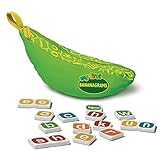
4. Bananagrams My First : Multi-Award Winning Kids Spelling Board Game For Ages 4+
Overview:
Bananagrams My First is a fast-paced, screen-free spelling game for ages 4+, using 80 letter tiles and 13 combo tiles to teach phonics and word building. Designed for 1–4 players, it eliminates waiting turns by having kids build words simultaneously.
What Makes It Stand Out:
Its “no turns, no waiting” mechanic keeps young children engaged—a rarity in educational games. The portable banana-shaped pouch and durable, kid-proof tiles enable play anywhere, while combo tiles (like “CH” or “SH”) simplify early spelling challenges beyond single-letter games.
Value for Money:
As an award-winning staple, it offers superior replayability per dollar versus worksheet-based tools. The travel-friendly design justifies its price for on-the-go families, though smaller sets exist for casual use; this excels for frequent, dynamic practice.
Strengths and Weaknesses:
Strengths: Encourages independent problem-solving; highly portable; reduces frustration with simultaneous play; combo tiles scaffold learning. Weaknesses: Limited vocabulary scope; minimal guidance for parents on scaffolding; tile storage pouch may snag.
Bottom Line:
An energetic, foundational spelling tool that turns phonics into tangible play. Ideal for active preschoolers needing hands-on literacy practice—skip if you prefer structured, step-by-step instruction.
5. Dr. Quest’s Magical Adventure–Educational Board Game for Kids Ages 6-9 – Spelling & Grammar Learning Game for Early Elementary | 180 Questions | Screen-Free Homeschool & Family Game | 2-6 Players

Overview:
Dr. Quest’s Magical Adventure is a 2–6 player spelling and grammar game for grades 1–3, featuring 180 challenges across a fantasy-themed board. Players assume roles (e.g., “Wizard Host”) to build sentences and collect gems while mastering core language skills.
What Makes It Stand Out:
The immersive storytelling transforms grammar drills into quests, with role-playing elements that boost engagement. Educator-designed challenges target nuanced skills like sentence structure—not just rote spelling—and the flexible player count suits classrooms or family game nights.
Value for Money:
Priced competitively for high-quality, teacher-tested materials, it outperforms digital subscriptions with reusable, screen-free play. The 30–45 minute sessions and focus on teamwork deliver long-term value for homeschoolers avoiding worksheet fatigue.
Strengths and Weaknesses:
Strengths: Comprehensive language coverage; promotes social skills via role-play; durable construction; ideal for small groups. Weaknesses: Setup may overwhelm younger kids; limited solo-play options; gem tokens could be choking hazards for under-6s.
Bottom Line:
A standout for building foundational English skills through collaborative play. Highly recommended for homeschoolers and teachers seeking a magical alternative to traditional grammar practice—avoid for very shy or nonverbal children.
6. Learning Resources Snap It Up Phonics - Reading Card Game, Sight Words Flash Cards, Phonics Family Board, ABC Classroom Must Haves, Toddler Activities, Homeschool Supplies, Montessori

Overview: This fast-paced card game transforms phonics practice into competitive fun for children, targeting sight words and word families through snap-and-shout gameplay. Designed for ages 4+, it replaces traditional flashcards with an engaging group activity that reinforces decoding skills.
What Makes It Stand Out: Its teacher-approved, low-pressure environment builds confidence in struggling readers while accommodating various skill levels. The adaptable rules allow customization for classrooms or home use, and the focus on word families and vowel sounds provides structured phonics reinforcement without feeling like drills.
Value for Money: Priced moderately for an educational game, it outperforms basic flashcard sets by offering reusable, dynamic play. The versatility across settings (homeschool, classroom, family night) justifies the cost, especially given its durability and repeat-play appeal.
Strengths and Weaknesses: Strengths: Boosts reading fluency through play; highly adaptable for different ages; builds confidence quickly. Weaknesses: Shorter attention spans may find the pace overwhelming; limited advanced content for older readers beyond foundational phonics.
Bottom Line: An exceptional tool for making phonics practice joyful and stress-free, ideal for teachers and parents seeking to transform reluctant readers into confident word-builders through energetic group play.
7. Melby Toys Word Seeds Phonics Game – Fun Reading & Board Games for Kids Ages 4-8, Learn to Read, CVC & Kindergarten Games

Overview: Word Seeds is a garden-themed board game where children advance by reading decodable words from leveled flash cards. Targeting ages 4–8, it covers CVC words, blends, digraphs, and long vowels across three progressive card sets.
What Makes It Stand Out: Its standout feature is the seamless scalability—games adjust to a child’s growth from kindergarten to early elementary. The 15-minute playtime suits short attention spans, while durable, kid-sized components withstand classroom use. The free piece-replacement policy adds exceptional peace of mind.
Value for Money: Excellent for its targeted skill progression and longevity. The inclusion of 132 decodable words across three levels offers more structured learning than comparable games at a similar price point, maximizing educational ROI.
Strengths and Weaknesses: Strengths: Grows with the child; sturdy, classroom-tested design; quick, focused gameplay. Weaknesses: Limited replayability once all levels are mastered; sight words require a separate edition.
Bottom Line: A smart, durable investment for parents and teachers wanting a progressive phonics tool that adapts to evolving reading skills, ensuring years of confidence-building practice.
8. The Fidget Game SquishyLand in Rainbow Reef - Educational & Phonics Learning Activities for Children in Pre-K to 2nd Grade - Mochi Squishy Toys Set with Board Game (2-6 Players) & Card Packs Included

Overview: SquishyLand merges phonics instruction with tactile play using squishy mochi toys, cards, and a board game. Designed for Pre-K–Grade 2, it builds early reading skills like phoneme manipulation and syllable decoding through multisensory engagement.
What Makes It Stand Out: Developed by teachers using the Science of Reading framework, it uniquely combines sensory tools (squishies) with curriculum-aligned content. Its inclusivity for neurodiverse learners—like those with ADHD or dyslexia—and alignment with U.S./Canadian standards set it apart as both therapeutic and academic.
Value for Money: Higher-priced but justified by premium, sensory components and rigorous educational design. The squishies’ stress-reducing benefits and adaptability for diverse learners enhance its worth beyond standard phonics games.
Strengths and Weaknesses: Strengths: Exceptional multisensory support; inclusive for all abilities; scientifically grounded. Weaknesses: Squishies may wear faster than plastic tokens; premium cost could deter budget-focused buyers.
Bottom Line: A groundbreaking choice for inclusive, stress-free literacy development, especially valuable for households or classrooms prioritizing sensory engagement and neurodiversity support.
9. Junior Learning Phonics Board Games Set, 6 Counters, Ages 4-5, Language Skills, Pre K-K, Medium

Overview: This compact set includes six double-sided phonics board games targeting beginning/middle/final sounds and digraphs for Pre-K–K learners. Players use a spinner to construct words while advancing on illustrated boards, with self-check answer sheets included.
What Makes It Stand Out: Its simplicity shines—minimal setup and clear instructions make it ideal for young beginners. The double-sided boards and self-correction sheets encourage independent play, while vibrant art maintains engagement without overwhelming complexity.
Value for Money: Budget-friendly for a multi-game set, though less innovative than competitors. It delivers solid foundational practice but lacks the scalability or sensory elements of higher-end options, suiting those needing straightforward, no-frills reinforcement.
Strengths and Weaknesses: Strengths: Easy to learn; promotes autonomy via answer sheets; versatile for groups (2–6 players). Weaknesses: Limited skill progression; spinner mechanism feels less dynamic than card-based games; minimal durability for heavy use.
Bottom Line: A practical, accessible starter kit for phonics basics—best for preschools or parents seeking affordable, screen-free practice without advanced features.
10. ThinkFun Zingo Sight Words Award Winning Early Reading Game for Pre-K to 2nd Grade - Toy of the Year Finalist, A Fun and Educational Game Developed by Educators for Boys and Girls

Overview: ThinkFun’s Zingo Sight Words uses a patented tile-dispensing “Zinger” to challenge players to match sight words on double-sided cards. Designed for Pre-K–Grade 2, it builds instant word recognition through fast-paced, bingo-style play.
What Makes It Stand Out: The Zinger mechanism creates tactile excitement unmatched by static card games, while the 72 sight words cover essential early vocabulary. Its Toy of the Year recognition and educator-backed design ensure developmental appropriateness and broad appeal across genders.
Value for Money: Premium-priced but justified by ThinkFun’s reputation for quality and the Zinger’s durability. Outperforms cheaper sight-word games with its engaging physical interaction and reusability, though supplementary word packs may be needed later.
Strengths and Weaknesses: Strengths: Highly engaging mechanics; builds fluency rapidly; inclusive design. Weaknesses: Limited phonics depth (sight-word focused); card-only play lacks multisensory elements of squishy/tactile competitors.
Bottom Line: A top-tier choice for sight-word mastery that turns rote memorization into thrilling play—essential for early readers needing speed and confidence with high-frequency words.
Understanding Literacy Through Play
The Science Behind Game-Based Learning
Research consistently shows that active, playful engagement significantly enhances neural connections related to language processing. When children manipulate physical components like letter tiles or story cards during gameplay, they activate motor and sensory pathways that reinforce memory and understanding far more effectively than passive worksheets. This multisensory input—seeing, touching, speaking, and hearing words in context—builds robust mental frameworks for decoding and comprehension.
Beyond ABCs: Holistic Literacy Development
True literacy encompasses much more than recognizing letters. Effective games target interconnected skills: phonemic awareness (hearing individual sounds), fluency (reading smoothly), vocabulary depth, and inferential comprehension. The best designs don’t isolate these elements but create organic opportunities where sounding out a word unlocks a story clue, or building a sentence structure helps overcome a game challenge, mirroring real-world reading demands.
Key Game Mechanics That Build Reading Skills
Tile-Matching and Pattern Recognition Systems
Games utilizing letter or word tiles require players to analyze visual patterns, identify beginning/middle/ending sounds, and manipulate components to form correct sequences. This hands-on manipulation strengthens orthographic mapping—the brain’s ability to store words for instant recognition—turning abstract symbols into tangible, memorable building blocks.
Narrative-Driven Story Construction
Mechanics where players co-create stories by drawing cards or arranging events foster comprehension and expressive language. Choosing how to sequence plot points (“First the dragon appeared, then the knight arrived”) builds understanding of narrative structure, while describing characters using vivid vocabulary cards expands descriptive language in a low-pressure, creative context.
Cooperative Problem-Solving Challenges
When players work together to decode a riddle or assemble a story puzzle to “save the day,” communication becomes essential. Discussing interpretations, debating word choices, and listening to peers’ ideas develops critical listening skills and the ability to articulate reasoning—foundational for deeper text analysis later on.
Matching Games to Developmental Stages
Early Emergent Readers (Ages 4-6)
Focus on games emphasizing oral language, sound discrimination, and print awareness. Look for mechanics involving rhyming word pairs, identifying initial sounds through picture prompts, or simple sentence formation with heavy visual support. Short playtimes and high tactile engagement (large pieces, spinners) maintain attention spans while building pre-reading confidence.
Early Fluent Readers (Ages 7-9)
Games should challenge decoding of multisyllabic words, introduce context-clue vocabulary building, and explore basic grammar concepts. Mechanics like “word ladder” challenges (changing one letter to form new words) or categorizing vocabulary by meaning during gameplay reinforce structural understanding beyond sight words.
Transitional Readers (Ages 10+)
Prioritize complex comprehension, inference, and critical analysis. Games involving interpreting ambiguous clues, debating character motivations from text snippets, or adapting stories based on changing rules develop higher-order thinking. Mechanics requiring players to summarize key points or predict outcomes based on subtle textual hints mirror advanced reading tasks.
Essential Features for Literacy Growth
Multi-Sensory Component Design
Effective games incorporate varied textures, colors, and physical interactions. Sandpaper letters for tracing, sound-effect dice, or story cards with rich illustrations engage multiple senses simultaneously, creating stronger memory anchors for new words and concepts than visual-only learning.
Scaffolded Difficulty Levels
The best games include adjustable rules or tiered challenges that grow with the player. Starting with picture-supported word building and progressing to independent sentence creation within the same game ensures sustained engagement and prevents frustration as skills develop, offering clear milestones for achievement.
Error-Proofing and Positive Reinforcement
Look for designs where “mistakes” are part of the fun—like humorous misreadings leading to funny story twists—rather than penalizing errors. Immediate, constructive feedback (e.g., self-checking answer keys with visual cues) allows children to self-correct confidently without adult intervention, fostering resilience.
Avoiding Common Pitfalls
The “Too Much Screen” Trap
Beware of games relying heavily on companion apps for core functionality. While some digital integration can enhance play, the primary literacy benefits come from physical interaction with words and social discussion. Prioritize games where the board, cards, and conversation drive 90%+ of the experience.
Complexity vs. Educational Value
A game packed with intricate rules might overwhelm emerging readers, shifting focus from language building to rule-memorization. Opt for streamlined mechanics where the literacy task is the core challenge—like quickly forming words from shared letters—keeping cognitive load focused on language development.
Ignoring Social-Emotional Factors
Literacy struggles can cause shame. Games promoting collaboration over cut-throat competition (“We need your word to unlock this clue!”) reduce anxiety. Mechanics emphasizing creative expression (“What crazy thing happens next?”) rather than “right answers” build confidence alongside skills.
Maximizing Learning During Gameplay
Strategic Questioning Techniques
Move beyond “What word did you make?” Ask open-ended prompts: “Why did you choose that word?” or “How does this card change the story?” This encourages deeper processing and connects game actions to real reading strategies like inference and prediction.
Intentional Vocabulary Expansion
When new words appear, briefly pause to explore meaning in context. “Look—the card says ‘mysterious cave.’ What might be mysterious about it?” avoids dictionary-style definitions and builds the habit of using surrounding text to unlock meaning.
Connecting Play to Real Reading
After playing, link mechanics to books: “Remember how we used the ‘un-’ tile to make ‘unhappy’? Let’s find words like that in your storybook!” This bridges the game’s abstract practice to authentic reading material, reinforcing transferable skills.
Future-Proofing Literacy Skills for 2026 and Beyond
Adapting to Evolving Language Demands
Games incorporating digital-age communication forms—like interpreting emojis as emotional context clues or crafting concise “text-message” summaries—prepare children for modern literacy landscapes where visual and textual cues intertwine.
Fostering Critical Media Literacy
Emerging designs weave in subtle mechanics for evaluating source credibility within game narratives (“Is this character’s clue trustworthy? Why?”). This builds foundational skepticism and analysis skills crucial for navigating online information overload in later years.
Supporting Multilingual and Diverse Learners
Innovative games now feature flexible components allowing seamless integration of home languages or cultural references. Mechanics focusing on universal concepts like emotions or story structure create inclusive entry points, recognizing that literacy development isn’t one-size-fits-all.
Frequently Asked Questions
How much gameplay time is ideal for literacy benefits?
Aim for consistent, short sessions (15-25 minutes) 2-3 times weekly. Frequent, enjoyable exposure trumps infrequent marathons, preventing fatigue and keeping the focus on positive association with reading.
Can these games help children with dyslexia or reading difficulties?
Absolutely. Multi-sensory mechanics, reduced time pressure, and visual/tactile supports in well-designed games provide alternative pathways for processing language, often reducing anxiety associated with traditional reading tasks.
Are solo-play games effective for literacy building?
While social interaction amplifies language development, some self-paced games with strong narrative elements or word puzzles can build foundational skills. Prioritize those requiring verbalization (e.g., “Say your word aloud”) to maintain oral practice.
How do I know if a game matches my child’s current reading level?
Look for adjustable difficulty. If your child can comfortably handle the game’s easiest tier with minimal help but finds the next level challenging (not impossible), it’s a strong match. Avoid games where they succeed only with constant adult correction.
Do games replace traditional reading practice?
No—they complement it. Games build specific sub-skills (phonemic awareness, vocabulary) in an engaging context, but sustained reading of books remains essential for fluency and deep comprehension. Think of them as targeted “skill workouts.”
Can older siblings effectively facilitate play for younger readers?
Yes, with guidance. Teach older kids to ask open-ended questions (“What sound does that start with?”) instead of giving answers. Assign them specific supportive roles (e.g., “You’re the Rhyme Checker!”) to foster patience and leadership.
What if my child only wants to play competitive games?
Channel competitiveness positively! Choose cooperative-competitive hybrids where teams race to solve word challenges, or use score-keeping systems where points come from helping others form words, not just individual wins.
How important is thematic appeal (e.g., dinosaurs, space)?
Crucial for engagement. A child passionate about pirates will immerse themselves in a word game set on a ship, making the literacy practice feel like adventure—not work. Match themes to their current obsessions.
Are expansion packs worth investing in?
Only if the core game is consistently loved. Expansions deepen literacy challenges (e.g., adding suffix tiles), but shouldn’t be purchased until the base game is mastered and requested repeatedly.
How can I assess real progress from gameplay?
Observe subtle shifts: Do they hesitate less on tricky sounds? Use new vocabulary spontaneously? Show increased stamina during play? Avoid quizzes; instead, note organic improvements in their everyday reading confidence and risk-taking.
See Also
- 10 Expert-Recommended Reading Board Games for Kids in 2026
- 10 Premium Reading Board Games for Kids (Worth the Investment) in 2026
- 10 Game-Changing Memory Board Games for Kids to Improve Focus in 2026
- How to Choose the 10 Best Memory Board Games for Kids in 2026
- 10 Essential Math Board Games for Kids Every Parent Needs in 2026