Table of Contents
Your board game collection has evolved from a casual shelf of classics into a carefully curated library of immersive experiences. With each new Kickstarter delivery and limited edition release, the complexity of storing and organizing countless tokens, miniatures, cards, and tiles grows exponentially. Modular game trays have emerged as the collector’s secret weapon, transforming chaotic boxes into elegant, efficient systems that protect your investment while dramatically improving setup and teardown times.
As we look toward 2026, the landscape of board game organization has never been more sophisticated. Whether you’re managing a sprawling campaign game with hundreds of components or a diverse collection of fifty different titles, understanding the essential types of modular trays and their features is crucial for making informed decisions. This guide explores the fundamental tray categories every serious collector should consider, the key features that separate premium solutions from basic options, and strategic approaches to building a modular system that grows with your passion.
Top 10 Modular Game Trays
Detailed Product Reviews
1. BCW Modular Card Sorting Tray | Customizable Display and Storage Grid, Expandable TCG Sorting Tray | Ideal for Sports Cards, Magic the Gathering, Pokémon, and Board Games

Overview:
The BCW Modular Card Sorting Tray is a versatile organization system designed for trading card collectors and gamers. Each of the six cells features an innovative movable base that toggles between flat storage and angled display positions, accommodating toploaders, sleeves, and magnetic holders. The precision dovetail joints allow for easy assembly into a sturdy grid that can be expanded with additional units.
What Makes It Stand Out:
The adaptable base design is genuinely innovative—most card trays force you to choose between display and storage, but this hybrid approach serves both purposes seamlessly. The dovetail expansion system creates a professional, cohesive look when connecting multiple trays, unlike cheaper snap-together alternatives. At 3 1/8" x 4 1/8" x 1 1/2", the cells perfectly fit standard trading cards in protective cases.
Value for Money:
While priced higher than basic plastic bins, the BCW tray justifies its cost through durable construction that protects valuable collections. For serious Magic: The Gathering or sports card investors, the archival-quality organization prevents edge wear and simplifies sorting sessions. Comparable solutions often lack the dual-position base and modular expandability.
Strengths and Weaknesses:
Pros include exceptional versatility, robust build quality, perfect sizing for sleeved cards, and expandability. The angled display mode is ideal for drafting or showcasing rare pulls. Cons are the initial assembly time, premium pricing that may deter casual collectors, and lack of portability once assembled.
Bottom Line:
This is an essential tool for dedicated collectors who regularly sort, display, or trade cards. The innovative design and durable construction make it worth the investment for protecting valuable collections.
2. Magnetic Board Game Storage Trays, Hexagonal Modular Organizer, Flexibility Customize Layout Tray Accessory, Holds Tabletop Bits, Components, Pieces, Dices (4-Pack)

Overview:
These hexagonal magnetic trays offer a stylish solution for organizing board game components. The four-pack features concealed magnets that allow trays to snap together in any configuration, creating custom layouts for different games. Each tray’s black rainbow finish provides visual flair while the felt interior protects delicate pieces from scratches and noise.
What Makes It Stand Out:
The magnetic connection system is the star feature—trays can be rearranged mid-game without disrupting components. The hexagonal shape enables honeycomb patterns that maximize table space efficiency. Unlike standard square bowls, these trays double as dice rolling areas with contained edges, preventing runaway dice during critical rolls.
Value for Money:
The 4-pack provides enough trays for medium-weight games at a reasonable per-unit cost. While more expensive than basic plastic cups, the aesthetic upgrade and functional versatility justify the price for enthusiasts who value table presence. The durable construction ensures longevity across hundreds of gaming sessions.
Strengths and Weaknesses:
Pros include flexible magnetic configuration, protective felt lining, attractive design, multi-purpose functionality, and space-saving stackability. The hexagonal shape is both visually and functionally superior. Cons include limited capacity per tray for larger games, potential for magnets to weaken over time, and the finish may show fingerprints. The 4-pack might be insufficient for games with many component types.
Bottom Line:
Perfect for board gamers seeking to elevate their table organization with a flexible, attractive system. The magnetic modularity makes it easy to adapt layouts for any game, though serious collectors may want the 7-pack for maximum versatility.
3. Magnetic Board Game Storage Trays, Hexagonal Modular Organizer, Flexibility Customize Layout Tray Accessory, Holds Tabletop Bits, Components, Pieces, Dices (7-Pack)

Overview:
This 7-pack expansion of the hexagonal magnetic tray system delivers maximum flexibility for serious board game enthusiasts. Identical to the 4-pack version but with three additional trays, this set accommodates complex games with numerous component types. The concealed magnets allow infinite configuration possibilities while the felt interiors continue to protect and quiet game pieces.
What Makes It Stand Out:
The expanded quantity transforms this from a convenient accessory into a comprehensive organization solution. You can now dedicate trays to each player in a 6-player game while keeping one central for shared resources. The ability to create large, interconnected honeycomb layouts across your entire gaming table is unmatched by traditional storage solutions.
Value for Money:
The 7-pack offers better per-tray value than the smaller set, making it economical for collectors with extensive game libraries. While the upfront cost is higher, the versatility across countless games eliminates the need for multiple specialized organizers. For those who regularly play heavy Eurogames or host game nights, this is a cost-effective investment.
Strengths and Weaknesses:
Pros include superior quantity for complex games, consistent magnetic strength, elegant aesthetic, protective felt, and excellent stackability for storage. The larger set enables true modular table layouts. Cons are the significant initial investment and potential overkill for casual gamers who play lighter titles. Storage space required for 7 trays may be a consideration.
Bottom Line:
The definitive choice for dedicated board gamers with diverse collections. If you frequently play games with 5+ players or complex component setups, this 7-pack provides the comprehensive organization solution you need.
4. MEEPLE HOUSE UNIQ TRAY SYSTEM Token Four-Cell Box for Board Game Pieces, Meeples, Dice, Tokens (5 Modular Trays with a Transparent Removable lid)

Overview:
The Meeple House Uniq Tray System provides practical storage for board game tokens, meeples, and dice through five modular four-cell boxes with transparent removable lids. Designed for organization and portability, each tray compartment keeps small components separated and secure during storage and transport, preventing the chaotic mixing that plagues many game boxes.
What Makes It Stand Out:
The transparent lids are the defining feature—allowing quick identification of contents without opening each tray. This is invaluable when setting up games with multiple token types. The modular design lets you bring only the trays needed for a specific game, reducing bulk. The four-cell configuration perfectly suits typical board game component categories.
Value for Money:
While pricing information is limited, the inclusion of five lidded trays offers solid value compared to purchasing individual component boxes. For gamers who transport games to events or friends’ houses, the protection and organization prevent costly component loss. The system eliminates the need for numerous zip-top bags that degrade over time.
Strengths and Weaknesses:
Pros include protective transparent lids, modular portability, good compartment sizing for tokens, and professional appearance. The lid design prevents spillage during transport. Cons include lack of magnetic connectivity, limited product details provided, unknown material durability, and cells may be too small for larger miniatures. No information on expandability or interlocking features.
Bottom Line:
An excellent solution for board gamers prioritizing component protection and portability. The lidded design makes it ideal for travel and storage, though those wanting table-side modularity may prefer magnetic alternatives.
5. BCW Modular Card Sorting Tray - 2ct | Customizable Display and Storage Grid TCG Sorting Tray | Ideal for Sports Cards, Magic the Gathering, Pokémon, and More

Overview:
The BCW Modular Card Sorting Tray 2ct delivers double the organizational capacity of the single set, providing two fully customizable 6-cell trays for serious trading card collectors. Each tray maintains the same innovative movable base design that toggles between flat storage and angled display modes, making this package ideal for extensive collections of sports cards, Pokémon, or Magic: The Gathering.
What Makes It Stand Out:
This two-pack essentially creates a 12-cell sorting station that can be arranged side-by-side or separated for different projects. The ability to have one tray in display mode for showcasing rare cards while using the second for flat storage of bulk cards is uniquely practical. The consistent dovetail system ensures both trays integrate seamlessly with additional expansion units.
Value for Money:
Purchasing the two-count package offers better per-tray pricing than buying individually, making it economical for collectors with thousands of cards. The investment is justified by the archival-quality protection and time saved during sorting sessions. For store owners or tournament organizers, this dual setup enables efficient card management across multiple activities.
Strengths and Weaknesses:
Pros include double capacity, cost savings over individual purchase, identical quality to single sets, and versatile configuration options. The expanded system handles large sorting projects efficiently. Cons include higher upfront cost, significant table space requirements when assembled, and potential overkill for casual collectors. Assembly of 12 cells requires more initial time investment.
Bottom Line:
The optimal choice for dedicated collectors managing large collections. If you regularly sort, trade, or display hundreds of cards simultaneously, this 2ct package provides the capacity and flexibility to streamline your organizational workflow.
6. X-Trayz Game Storage Trays - Organize Your Board Games with Ease! Pack of 6 Storage Trays for Board Games, Convenient Storage Solution for Game Components, Orange Color, Made by Lucky Duck Games

Overview: The X-Trayz Game Storage Trays from Lucky Duck Games offer a systematic approach to board game organization. This six-pack of orange trays targets gamers drowning in loose components, promising a universal fit for various box sizes. Designed as rigid inserts, they aim to replace plastic bags and scattered piles with structured compartments that streamline both storage and gameplay.
What Makes It Stand Out: The modular design shines brightest here—trays can be arranged like puzzle pieces within your game box, creating custom layouts for unique component mixes. Unlike static organizers, this adaptability means one set serves multiple games. The durable construction handles repeated use without cracking, while the bright orange color makes pieces easy to spot during frantic gameplay. Setup and cleanup become nearly effortless when every token has a designated home.
Value for Money: At their price point, these trays compete directly with foamcore DIY solutions and basic plastic containers. They eliminate the time investment of custom crafting while offering better integration than generic craft store options. For collectors with 5-10 medium-box games, the six-pack provides excellent coverage, though single-game enthusiasts might find dedicated inserts more tailored.
Strengths and Weaknesses: Strengths: Highly adaptable modular system; sturdy, long-lasting material; speeds up game setup significantly; space-efficient stacking. Weaknesses: Orange color may clash with some game aesthetics; rigid size might not fit all box depths; premium price versus basic alternatives.
Bottom Line: X-Trayz delivers versatile organization for serious board gamers who value flexibility. While not the cheapest option, the time saved and durability justify the investment for those managing multiple titles. Perfect for players tired of baggie chaos seeking a reusable, adaptable solution.
7. Luck Lab Board Game Storage Bowls, 6-Pack | Folding Tray Accessory Holds Tabletop Bits, Chits, Pieces | Swirl Colors | Bonus Storage Bag

Overview: Luck Lab’s silicone storage bowls bring portability and flair to board game organization. This six-pack of foldable trays targets gamers needing flexible, transportable solutions for bits and chits. The tie-dye swirl colors add personality while the included storage bag promises easy portability to game nights.
What Makes It Stand Out: The collapsible design sets these apart—bowls flatten to slip into the included bag, making them ideal for mobile gamers. The high-grade silicone construction prevents table scuffing while providing a soft landing for delicate components. Each 6x6 inch bowl offers generous capacity for tokens, dice, or cards, and the vibrant color options help with player-specific sorting or game-phase organization.
Value for Money: These bowls sit in the budget-friendly tier, costing less than rigid plastic alternatives while offering superior portability. The six-pack configuration provides enough bowls for most games, and the included storage bag adds value. However, silicone flexibility means they lack the structured compartmentalization of pricier modular systems, making them better for open storage than precise organization.
Strengths and Weaknesses: Strengths: Excellent portability; soft silicone protects components; fun aesthetic; budget-conscious pricing; included storage bag. Weaknesses: No divided compartments; can tip if bumped; colors may fade over time; not ideal for tiny pieces that need separation.
Bottom Line: Luck Lab bowls excel for gamers prioritizing portability and casual organization over precision. They’re perfect for meetups and conventions where lightweight, packable gear matters. While not a replacement for box inserts, they transform any table into an organized play space with minimal investment.
8. Board Game Trays – Organize, Play, and Win! Get Your Set of Trays Perfect for Board Game Accessories, Tokens, Meeples and Other Small Items… (Mixed)

Overview: These generic-branded Board Game Trays offer a straightforward plastic solution for component chaos. The six-pack of mixed trays promises universal compatibility with strategy games and RPGs, using stackable PLA plastic construction to create affordable organization for tokens, meeples, and small accessories.
What Makes It Stand Out: The stackable, lightweight design makes these trays exceptionally portable for game nights anywhere. Their simplicity is the selling point—no frills, just functional compartments that work across countless titles. The PLA material provides decent durability at room temperature, and the mixed set likely includes varied compartment sizes for different component types, from meeples to cards.
Value for Money: This is among the most economical options available, undercutting silicone and wood alternatives significantly. For budget-conscious gamers or those just starting their organization journey, the six-pack offers immediate relief from baggie madness. The trade-off is material sensitivity—PLA can warp in heat, and the generic branding may indicate inconsistent quality control compared to established names.
Strengths and Weaknesses: Strengths: Extremely affordable; highly portable; universal compatibility; stackable for storage; sufficient for most token types. Weaknesses: PLA warps in high temperatures; lacks premium feel; no modular customization; potential quality variance; limited aesthetic appeal.
Bottom Line: These trays deliver no-nonsense organization at an unbeatable price. Ideal for entry-level gamers or as a backup set for travel, they solve the basic problem of scattered pieces without breaking the bank. Keep them away from hot cars and they’ll serve reliably for years of casual play.
9. Token Silo Card Add On - 3-Piece Set of Game Trays, Holds Game Cards, Tokens, Dials and Dice, Organize LCG, TCG and Board Game Accessories, Modular Design, Yellow Color, Made by Gamegenic

Overview: Gamegenic’s Token Silo Card Add-On expands their modular storage system with three yellow trays specifically designed for cards. This set requires the main Token Silo unit but adds specialized compartments for standard and mini-American sized cards, targeting serious LCG and TCG players who need integrated storage.
What Makes It Stand Out: The precision engineering for card storage distinguishes this add-on. The large tray handles 40 single-sleeved standard cards, while two smaller trays accommodate 75 unsleeved mini-American cards each. This specificity ensures cards stay organized and protected, unlike generic trays where cards slide around. The modular system integrates seamlessly with other Gamegenic products, allowing color-coded customization and component-specific configurations.
Value for Money: As an add-on, this set’s value depends entirely on owning the base Token Silo. For existing users, it dramatically expands functionality at a reasonable price point, essentially tripling card capacity. However, as a standalone purchase, it’s useless. Compared to deck boxes, the integrated approach saves space within the Silo system but costs more than basic card storage solutions.
Strengths and Weaknesses: Strengths: Perfectly sized for sleeved/unsleeved cards; robust shock-resistant material; modular integration; color customization options; premium protection. Weaknesses: Requires main Token Silo unit; limited to card storage; premium pricing; yellow color may not suit all preferences.
Bottom Line: This add-on is essential for Token Silo owners needing serious card organization. It transforms the system into a comprehensive storage solution for LCGs and TCGs. Don’t purchase without the base unit, but if you’re invested in Gamegenic’s ecosystem, this expansion delivers targeted, high-quality functionality that justifies its cost.
10. Magnetic Wooden Token Tray Set (7pcs) | Hexagonal Modular Organizer for Board Games, Dice, Cards, and Miniatures
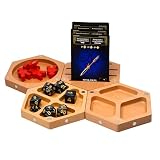
Overview: This seven-piece magnetic wooden tray set elevates board game organization with premium materials and innovative design. The hexagonal trays snap together via built-in magnets, creating customizable layouts for dice, tokens, cards, and miniatures while adding sophisticated aesthetics to any gaming table.
What Makes It Stand Out: The magnetic modular system is genuinely innovative—hexagons connect securely yet separate easily, allowing fluid reconfiguration between games. Crafted from high-quality wood with a polished finish, these trays outperform plastic alternatives in durability and visual appeal. The varied compartment designs within different trays accommodate diverse component sizes intelligently, while the stackable nature ensures compact storage.
Value for Money: Positioned at the premium end, these trays cost significantly more than plastic or silicone options. However, the wood construction, magnetic functionality, and elegant design justify the price for enthusiasts who view gaming accessories as long-term investments. They double as display pieces and offer heirloom quality absent in cheaper alternatives. For budget gamers, the cost is prohibitive, but collectors will appreciate the craftsmanship.
Strengths and Weaknesses: Strengths: Superior magnetic modularity; premium wood construction; elegant aesthetic; varied compartment shapes; stable and durable. Weaknesses: High price point; heavier than plastic; magnets may weaken over time; wood can scratch if mishandled.
Bottom Line: This set is the luxury choice for dedicated gamers who prioritize aesthetics and functionality. The magnetic system is both practical and impressive, making it ideal for regular hosts who want their setup to look as good as it performs. While expensive, the quality and versatility make it a worthwhile investment for serious hobbyists.
Why Modular Organization Transforms Your Gaming Experience
The Collector’s Dilemma: When Storage Becomes a Game Itself
Every dedicated collector reaches that pivotal moment when opening a game box feels like archaeology—digging through baggies, tuck boxes, and loose components to unearth what you need. This isn’t just inconvenient; it’s actively detrimental to your collection’s longevity. Unprotected pieces rub against each other, cards develop soft edges, and precious painted miniatures suffer chips and breaks. Modular trays solve this by creating designated homes for every component, eliminating the friction between wanting to play and actually playing.
The Psychology of Efficient Setup
The mental load of organizing components before gameplay can dampen enthusiasm, especially for complex games with lengthy setup requirements. Modular trays with intuitive layouts reduce cognitive overhead, letting you focus on strategy rather than sorting. When every token has a visible, accessible place, you spend less time hunting and more time engaging with the game’s mechanics. This psychological benefit compounds across your entire collection, making game nights more spontaneous and enjoyable.
Protecting Your Investment Over Time
Modern board games represent significant financial investments, with premium editions often exceeding $200. Modular trays act as insurance policies, preventing component degradation that diminishes both playability and resale value. Rigid tray systems prevent box compression, while individual compartments stop pieces from migrating and causing box bowing. For collectors who view their library as appreciating assets, proper organization isn’t just convenient—it’s essential preservation.
Core Tray Categories for Comprehensive Organization
Token and Component Sorting Trays
The workhorses of any modular system, these trays feature numerous small compartments designed for meeples, resource cubes, victory points, and various tokens. Look for designs with removable dividers that let you adjust compartment sizes based on specific game requirements. The best systems offer shallow depth for easy finger access and clear sightlines, preventing you from tipping trays to find that last amber token. Consider trays with slightly sloped walls that guide pieces back into compartments during cleanup.
Card Storage and Deck Management Systems
Card trays must balance capacity with accessibility. Essential designs include adjustable dividers that accommodate different card sizes—from standard MTG dimensions to oversized tarot-format cards—without bending or squeezing. Premium features include finger-cut notches for easy card removal, felt-lined bottoms to prevent edge wear, and slight compression mechanisms that keep decks snug during storage but release easily during play. Some advanced systems integrate card holders that tilt slightly upward, making deck drawing more ergonomic at the table.
Miniature Protection and Display Trays
For collectors of dungeon crawlers and wargames, miniature trays are non-negotiable. Essential designs feature individual cutouts for each figure, preventing contact that chips paint jobs or breaks delicate weapons. Look for systems with layered foam inserts or rigid walls that cradle miniatures securely. The depth should accommodate based miniatures without crushing them, while the layout should mirror the game’s organization for intuitive setup. Some designs incorporate clear acrylic lids, letting you display painted collections while keeping them protected.
Tile and Board Segment Organization
Games with modular boards—like tile-laying games or campaign maps with interlocking pieces—require specialized trays that prevent scratching and chipping. Essential features include horizontal stacking with thin dividers between layers, preventing weight compression on lower tiles. The trays should be shallow enough to let you flip through tiles like records in a crate, and rigid enough that stacked trays don’t flex and damage contents. Consider systems with indexed corners that align multiple trays perfectly in larger game boxes.
Integrated Dice Tower and Rolling Trays
The ultimate space-saving innovation combines storage with functionality. These modular units store dice in compartmentalized sections during transport, then assemble or unfold into dice towers or rolling trays at the table. Essential designs feature magnetic connections or precise interlocking tabs that create stable structures without wobbling. The rolling surface should be lined with noise-dampening felt or similar material, while the storage compartments should prevent dice from contacting each other to avoid chipping.
Material Considerations for Longevity
Wooden Tray Systems: Classic Durability
Baltic birch plywood has become the gold standard for wooden modular trays, offering exceptional strength-to-weight ratio and resistance to warping. Essential construction features include laser-cut precision for tight-fitting joints, sanded edges to prevent splinters, and unfinished interiors that won’t off-gas chemicals onto components. Look for designs that use compression or slot-together assembly rather than glue, allowing you to repair or replace individual pieces. The natural rigidity of wood protects against box compression better than most plastics.
Plastic and Acrylic Solutions: Lightweight Versatility
High-impact polystyrene and acrylic trays excel for their transparency and weight savings. Essential features include UV-resistant formulations that prevent yellowing over time, and scratch-resistant coatings that maintain clarity. The best designs use living hinges or reinforced corners that flex without cracking. While lighter than wood, premium plastic trays should still feel substantial, with walls thick enough to resist bowing when stacked. Consider that clear trays let you identify contents at a glance, speeding up game selection.
Foam and Fabric Inserts: Maximum Protection
For the ultimate in component safety, foam tray systems provide shock absorption that rigid materials can’t match. Essential designs use cross-linked polyethylene foam that won’t break down or leave residue on pieces. Look for multi-layer systems where you can remove top layers to access deeper storage, and precision-cut wells that grip components without requiring excessive force to remove them. Fabric-covered foam offers a premium feel while preventing static buildup that can attract dust to miniatures.
Critical Features That Define Quality
Interlocking and Stacking Mechanisms
The modularity depends entirely on how trays connect. Essential systems use precise interlocking tabs, magnetic alignment, or nested stacking that prevents shifting during transport. Test that connected trays form a rigid unit that won’t separate when you tilt the game box. The best designs allow you to lift the entire organized assembly out as one piece, while budget options might require you to remove trays individually. Look for systems with alignment features that work both horizontally and vertically.
Customizable Divider Systems
True modularity means adapting to new games without buying entirely new trays. Essential divider systems include multiple slot positions at regular intervals, allowing compartment sizes from 1x1 to 4x4 or larger. Premium features include dividers that lock into place without adhesive, yet release easily for reconfiguration. Some advanced systems offer curved or angled dividers for irregularly shaped components. The divider material should match the tray’s durability—flimsy dividers that bow under component weight defeat the purpose.
Integrated Labeling and Identification
As your collection grows, identifying which tray belongs to which game becomes crucial. Essential labeling systems include recessed areas for standard label makers, dry-erase compatible surfaces, or embedded metal plates for magnetic labels. Some innovative designs use color-coding systems with interchangeable corner pieces or edge bands. The labeling should be visible with trays stacked and shouldn’t interfere with the interlocking mechanism. UV-resistant labels prevent fading that makes identification difficult years later.
Portability and Transport Features
Collectors frequently transport games to conventions or game nights. Essential portable features include integrated handles, lids that lock securely without tape, and corner reinforcements that withstand drops. Some systems incorporate strap channels or bag compatibility, letting you carry multiple organized games simultaneously. Weight distribution becomes critical—trays that concentrate heavy components in one area create unbalanced boxes that are prone to tipping.
Strategic Organization Approaches
Game-Specific vs. Universal Systems
Game-specific trays maximize efficiency for a single title but become obsolete if you sell or trade the game. Universal systems sacrifice some optimization for flexibility, letting you reconfigure the same trays across multiple games. The essential strategy involves a hybrid approach: use game-specific trays for your permanent collection staples, and maintain a set of universal trays for rotating titles or new acquisitions. This balances investment protection with adaptability as your tastes evolve.
Vertical Storage Optimization
Modern collections often live on cube shelving or similar vertical systems. Essential tray designs for vertical storage include front-facing identification, shallow depth that prevents components from spilling when pulled out, and stability features that prevent tipping. Consider trays with slightly textured bottoms that grip shelf surfaces without making removal difficult. Some collectors prefer tray systems that fill entire cube dimensions, preventing wasted space and creating a clean, uniform appearance.
Planning for Expansion and Legacy Content
Campaign games with legacy elements require trays that accommodate growing component counts. Essential designs include expansion bays—empty compartments you gradually fill—or modular add-on trays that integrate seamlessly with the base system. Look for publishers who release tray expansion kits alongside game content, ensuring compatibility. Smart collectors plan for 50% more capacity than the base game requires, anticipating expansions and promos that accumulate over years.
Investment and Budget Considerations
Entry-Level vs. Premium Pricing Tiers
Modular trays range from $20 basic plastic systems to $200+ premium wood solutions. Essential entry-level features include adequate compartmentalization and basic durability, though you may sacrifice customization and aesthetics. Premium tiers offer exotic woods, integrated accessories, and precision engineering that justifies the cost for high-value collections. The key is matching tray investment to game value—a $15 organizer for a $300 Kickstarter deluxe edition makes sense, while budget options suffice for $30 gateway games.
Cost-Per-Game Analysis
Calculate organization costs across your collection rather than per game. A $100 universal tray system used across ten games costs $10 per game, while ten $25 game-specific organizers cost $250 total. Essential math involves estimating how many games each tray will serve over its lifetime. Durable universal systems often provide better long-term value, even with higher upfront costs. Consider depreciation too—quality wooden trays retain value for resale, while cheap plastic ones become disposable.
Future-Proofing Your Modular System
Scalability Factors to Evaluate
Before investing, assess whether the tray system will accommodate your collection’s growth trajectory. Essential scalability features include consistent sizing across product lines, ongoing manufacturer support, and active community engagement. Check if the company regularly releases new divider types or tray sizes. Systems locked to specific game dimensions become limiting as publishers experiment with box formats. True modularity means the system evolves with industry trends, not just today’s standards.
Adaptability for Unreleased Titles
The best modular systems anticipate unknown future needs. Essential adaptable designs include trays with unconventional compartment shapes, adjustable depths, or accessory attachment points. Some forward-thinking systems incorporate 3D printing templates, letting the community create custom components for new games. This open-source approach ensures your investment remains relevant even as game design trends shift. Consider whether the manufacturer embraces community innovation or maintains a closed ecosystem.
Customization and DIY Enhancement
Modular Add-Ons and Third-Party Accessories
Even the best tray systems benefit from enhancements. Essential accessories include token capsules, card holder attachments, and removable cup holders that integrate with tray edges. Some systems support magnetic accessories that snap onto tray exteriors, adding functionality without modifying the core unit. Look for ecosystems with active communities sharing 3D printable enhancements or aftermarket upgrades. This expandability transforms static trays into evolving platforms.
Painting and Personalization Techniques
Wooden trays offer customization potential that plastic and foam cannot match. Essential personalization includes staining to match game box art, painting faction symbols on dividers, or applying decals that reflect your gaming group. Use non-toxic, low-VOC finishes that won’t off-gas onto components. Some collectors embed LED lighting in tray walls for dramatic effect during gameplay. These personal touches make organization feel less utilitarian and more like an extension of your passion.
Maintenance and Long-Term Care
Cleaning Best Practices for Different Materials
Wood trays require occasional conditioning with mineral oil to prevent drying and cracking. Essential cleaning involves gentle dusting and spot-cleaning with barely damp cloths—never saturate wood. Plastic trays can handle mild soap and water but avoid harsh chemicals that cause clouding. Foam inserts need vacuuming with brush attachments and spot treatment with foam cleaners that don’t saturate the material. Establish a cleaning schedule; dust accumulation can migrate to game components.
Preventing Wear and Component Damage
Even organizers wear out with use. Essential prevention includes rotating heavily-used trays to distribute wear, using felt pads on tray bottoms to prevent shelf abrasion, and avoiding overloading compartments beyond design capacity. Check interlocking tabs periodically for stress cracks, especially in plastic systems. For foam trays, rotate which miniatures sit in high-pressure areas to prevent permanent compression dimples. These small maintenance habits extend tray lifespan significantly.
Sourcing and Community Intelligence
Evaluating Manufacturer Reputation
Research matters more than marketing claims. Essential evaluation includes examining user photos of trays after years of use, not just fresh unboxing shots. Look for manufacturers who respond to community feedback with design revisions. Warranty policies reveal quality confidence—companies offering multi-year guarantees typically produce durable products. Join collector forums where users discuss long-term experiences, not just initial impressions. The community’s collective wisdom identifies which systems truly last.
Crowdsourced Compatibility Information
Before purchasing, verify tray dimensions against your specific game box interiors. Essential resources include community-maintained spreadsheets and databases where users share precise measurements and fit photos. These crowdsourced efforts often reveal that “universal” trays don’t fit certain popular games due to box insert variations. Look for active communities that regularly update compatibility information for new releases. This due diligence prevents expensive mismatches and return shipping hassles.
Frequently Asked Questions
What exactly makes a game tray “modular” compared to standard inserts?
Modular trays feature interchangeable components, adjustable dividers, and connectivity systems that let you reconfigure layouts and combine multiple units. Unlike static inserts molded for one specific game, modular systems adapt to different games or evolving storage needs, making them reusable investments rather than single-purpose purchases.
Are modular trays worth the cost for someone who only owns 10-15 games?
The value proposition depends on game complexity and your budget. For collections heavy on token-intensive games like Wingspan or Gloomhaven, even a few universal trays can dramatically improve experience. Start with one versatile system for your most-played game and expand only if you appreciate the difference. Entry-level options make the benefits accessible without major financial commitment.
How do I accurately measure my game boxes to ensure tray compatibility?
Remove the original insert and measure the interior width, length, and depth at multiple points since boxes often taper. Account for any box lip or lid indentation that reduces usable height. Most manufacturers provide tray dimensions; compare these to your measurements, subtracting 2-3mm for easy removal. When in doubt, choose slightly smaller trays that leave breathing room over tight fits that damage box corners.
Can modular trays potentially damage cards or components over time?
Quality trays protect components, but poor designs can cause harm. Avoid trays with rough unfinished edges, tight card compartments that require forcing decks in and out, or foam that sheds particles. Ensure painted miniatures don’t rub against hard tray walls during transport. Periodic inspection of component condition reveals whether your specific tray system is helping or harming.
What’s the difference between universal trays and game-specific modular systems?
Universal trays prioritize flexibility with adjustable dividers and standard dimensions that fit many games, sacrificing some optimization. Game-specific modular systems are engineered for one title’s components but often include clever features like turn trackers or player board holders. Hybrid collectors use game-specific trays for permanent collection favorites and universal systems for rotating titles.
How many individual trays will I realistically need for an average-sized collection?
A typical 30-game collection might need 8-12 trays total: 2-3 universal token trays, 2 card organizers, 1-2 miniature trays if you play those genres, and specialized trays for 3-4 frequently-played complex games. Start with versatile pieces and add game-specific solutions only after confirming a title has permanent collection status.
Will modular trays fit in standard cube shelving units?
Most quality modular trays are designed with 30cm/12" cube storage in mind, but verify dimensions since some “cube” shelves vary. Trays that fill the entire cube maximize space but can be heavy to remove. Consider leaving 1-2cm clearance for easy handling. Some collectors prefer slightly smaller trays that can be pulled out like drawers.
Are there modular solutions that work for oversized collector’s edition boxes?
Yes, but options are more limited. Look for manufacturers offering “oversized” or “deluxe” tray lines specifically for larger formats. Some universal systems include extension kits that let you link multiple standard trays to fill big boxes. Custom-cut foam remains the most flexible solution for truly unusual dimensions, though it sacrifices modularity.
How can I prevent trays from sliding around inside the game box during transport?
Quality modular systems should fit snugly, but small gaps are common. Use museum putty, Velcro dots, or foam weatherstripping tape to secure tray corners to box bottoms. Some collectors cut thin foam sheets to fill void spaces. For vertical storage, ensure lids have minimal gap when closed—adding a foam pad to the inside lid can apply gentle pressure that keeps everything in place.
Can I successfully mix trays from different manufacturers in one box?
Mixing brands is possible but requires careful measurement since interlocking systems won’t connect across manufacturers. You can often combine a wooden token tray with a plastic card holder in the same box if dimensions are compatible. Focus on complementary functions rather than expecting seamless integration. Some collectors embrace this approach, using each manufacturer’s strengths for different component types.
See Also
- 10 Essential Modular Game Trays Every Board Game Enthusiast Needs in 2026
- How to Solve Clutter with the 10 Best Modular Board Game Trays in 2026
- How to Solve Setup Time Chaos with the 10 Best Modular Game Trays in 2026
- 10 Essential Clip-On Game Lights Every Tabletop Gamer Needs in 2026
- 10 Essential Stackable Game Storage Containers Every Board Gamer Needs in 2026