Table of Contents
Remember that slightly crumpled deck of cards tucked in the back of your game drawer? The one with the bent corners from enthusiastic little hands? In 2026, as screens continue to dominate childhood, that simple deck holds more power than ever. Card games aren’t just nostalgic relics; they’re stealthy super-tools for building crucial life skills away from the glow of devices. Forget complex setups or expensive components – the magic lies in shuffling, dealing, and the shared focus around a small pile of paper rectangles. They offer a tangible, social, and endlessly adaptable form of play that fits seamlessly into busy modern family life, whether it’s a quick 10-minute distraction before dinner or a rainy afternoon adventure.
Why focus on card games specifically now? Because they perfectly counterbalance the digital landscape our kids navigate. They demand real-time interaction, teach graceful winning and losing without algorithms, and fit in a pocket for impromptu play anywhere – the doctor’s waiting room, a café, or a park bench. Unlike apps that update or vanish, a good card game remains constant, growing with your child as their cognitive abilities develop. Investing in a few versatile decks isn’t just about entertainment; it’s about fostering resilience, strategic thinking, and genuine connection in a way that feels organic and unforced. Let’s explore how to choose the right card-based companions for your family’s journey this year.
Top 10 Kids Card Games
Detailed Product Reviews
1. Regal Games Card Games for Kids - Go Fish, Crazy 8’s, Old Maid, Slap Jack, Garbage Monster, War - Simple & Fun Classic Family Table Games - Games May Vary (6 Set)

Overview: This 6-deck set delivers classic card games tailored for children aged 4 and up, featuring Go Fish, Crazy 8’s, Old Maid, Slap Jack, War, and Silly Monster Memory Match. Designed for 2-6 players, it prioritizes accessibility and portability for young families seeking screen-free entertainment during travel or gatherings.
What Makes It Stand Out: The oversized cards (easier for small hands to grip) and vibrant, child-friendly illustrations significantly enhance engagement. Each game subtly builds color/number recognition, memory, and social skills, transforming playtime into stealthy learning. Its compact, pocket-sized design makes it ideal for road trips or sleepovers.
Value for Money: Priced competitively for six distinct decks, it outperforms single-game purchases. While materials aren’t premium, durability suffices for casual use. The inclusion of skill development justifies the cost versus basic card sets, offering long-term replayability across varied settings.
Strengths and Weaknesses: Strengths: Excellent portability; intuitive rules for preschoolers; strong educational integration; inclusive for mixed-age groups. Weaknesses: Card stock is thinner than competitors; “Garbage Monster” branding may confuse parents expecting traditional rules; limited strategic depth for older kids.
Bottom Line: An outstanding starter kit for introducing toddlers to card games, balancing fun, learning, and convenience. Highly recommended for parents prioritizing educational play and on-the-go entertainment, despite minor material limitations.
2. Hoyle 6-in-1 Kids Card Game Pack, 6 Fun Preschool Games in 1: Matching, Memory, Go Fish, Crazy Eights, Old Maid, Slap Jack, Ages 3+
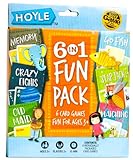
Overview: Hoyle’s compact pack bundles six preschool classics—Go Fish, Memory, Old Maid, Crazy Eights, Slap Jack, and Matching—into one box for ages 3+. Focused on simplicity, it promises quick setup and short play sessions ideal for developing attention spans.
What Makes It Stand Out: The emphasis on ultra-fast gameplay (15 minutes max per game) caters perfectly to young children’s focus limits. Rules are streamlined for instant comprehension, and the cohesive packaging eliminates clutter. It excels as a classroom or travel tool where time efficiency is critical.
Value for Money: Excellent value given the all-in-one design. Hoyle’s brand reliability ensures consistent quality, though card thickness is average. It’s more cost-effective than buying individual games, especially for educators or frequent travelers needing versatile, low-prep activities.
Strengths and Weaknesses: Strengths: Exceptionally quick setup/play; perfectly paced for preschoolers; durable box storage; strengthens memory and social interaction. Weaknesses: Card illustrations are less vibrant than competitors; no strategic variation for skill progression; minimal educational depth beyond basics.
Bottom Line: The top choice for parents and teachers seeking no-fuss, bite-sized game sessions. Its speed and simplicity make it indispensable for keeping young kids engaged, though it lacks the visual flair of premium alternatives.
3. Upgraded Kids Card Games Pack, 6 Decks, Go Fish, Old Maid, Crazy Eights, Memory Match, Slap Jack, War, Playing Cards, Easter Basket Stuffers, Stocking Stuffers

Overview: This premium set elevates kids’ card games with 54-card decks per title (Go Fish, Old Maid, Crazy Eights, Memory Match, Slap Jack, War), featuring thicker, coated paper and educational themes like sea life and occupations. Targeted at gift-givers, it emphasizes durability and cognitive development.
What Makes It Stand Out: The 30% thicker card stock resists bending and spills, while unique themes (e.g., vegetables, occupations) expand learning beyond basic matching. Individually wrapped decks simplify gifting as stocking stuffers or party favors, and “senior versions” add strategic layers for older players.
Value for Money: Priced higher than budget sets, but justified by superior materials and thematic depth. The longevity and dual-age appeal (kids/adults) offset the cost, especially for frequent use. Outperforms thinner competitors in durability, making it ideal for classrooms or heavy travel.
Strengths and Weaknesses: Strengths: Exceptional card quality; rich educational content; portable individual packaging; adaptable for skill levels. Weaknesses: Smaller card size may challenge younger children; themes could overwhelm toddlers; limited instructions for advanced variants.
Bottom Line: A worthwhile investment for discerning buyers seeking heirloom-quality educational games. Best for families desiring long-lasting, versatile play, though the standard card size may not suit all preschoolers.
4. USAOPOLY Flip 7, The Ultimate Blend of Press Your Luck & Strategy, Fast-Paced Addictive Card Game,Quick to Learn & Easy to Teach,Perfect for Game Nights, 3+ Players, Ages 8 & Up, 20 Minutes Play Time

Overview: Flip 7 is a strategic press-your-luck card game where players aim for 200 points by revealing numbered cards without duplicates. Designed for ages 8+, it combines risk assessment and quick math in 20-minute rounds, targeting families and game-night enthusiasts.
What Makes It Stand Out: The uniquely weighted deck (e.g., twelve 12s, eleven 11s) creates dynamic probabilities, while action cards like “Flip Three” and “Freeze” inject chaos. Its perfect blend of tension and strategy fills a niche between luck-based and complex board games, appealing to older kids and adults.
Value for Money: Stands out in the strategy-card category with high replayability. At mid-range pricing, it offers more depth than children’s sets and quicker sessions than heavy strategy games. Justifies cost through innovative mechanics that sustain interest over repeated plays.
Strengths and Weaknesses: Strengths: Brilliant risk-reward balance; intuitive yet strategic; fast setup; highly engaging action cards. Weaknesses: Luck-heavy early rounds; scoring math may frustrate younger players; limited player count (min. 3).
Bottom Line: A must-have for families with older children seeking thrilling, brain-teasing gameplay. Its addictive nature and clever design make it a standout game-night essential, though less ideal for very young audiences.
5. Taco Cat Goat Cheese Pizza Wildly Entertaining Card Game for Family and Group Game Night | Easy to Learn and Play with 10-15 Minute Rounds | Fun for Kids, Teens, Adults, and Families | 2-8 Players

Overview: This chaotic matching game tasks players with slapping a central pile when the spoken word (“Taco,” “Cat,” etc.) matches the card played. Suited for 2–8 players aged 7+, it thrives on speed, laughter, and reflexes in 10–15 minute bursts.
What Makes It Stand Out: Its universal appeal across ages—from kids to adults—stems from dead-simple rules and high-energy physical interaction. The “slap pile” mechanic creates spontaneous, hilarious moments, while action cards prevent predictability. Perfect for breaking the ice at parties.
Value for Money: Exceptional for group settings. The compact deck accommodates large crowds without extra cost, outperforming pricier party games. Its durability and replayability (thanks to variable slap triggers) ensure consistent value for family game rotations or travel.
Strengths and Weaknesses: Strengths: Incredibly easy to learn; fosters laughter and bonding; portable; sharpens reflexes and focus; inclusive for all ages. Weaknesses: Can become repetitive; physical slapping risks minor injuries; noise levels may overwhelm in quiet spaces.
Bottom Line: The ultimate party-starter for lively gatherings. Highly recommended for families wanting screen-free, high-energy fun, though supervision is advised for very young children during slap frenzies.
6. LotFancy Card Games for Kids, 6 Decks, Go Fish, Old Maid, Crazy Eights, Memory Match, Slap Jack, Animal Playing Cards, Easter Basket Stuffers, Stocking Stuffers, Birthday Gifts
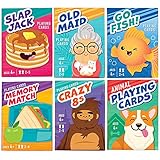
Overview: This 6-in-1 card game set delivers diverse, screen-free entertainment for children, featuring themed decks for Go Fish, Old Maid, Crazy Eights, Memory Match, Slap Jack, and versatile animal-themed playing cards. Designed for family game nights or on-the-go play, it targets ages 4-8 with educational undertones and vibrant visuals.
What Makes It Stand Out: The sheer variety is exceptional—six distinct games in one purchase, each with durable, plastic-coated cards (2.5” x 3.5”) and individual boxes. The animal-themed deck doubles as standard playing cards for War, while cute illustrations aid color/animal recognition and cognitive skills like matching and deduction, making learning seamless.
Value for Money: Priced competitively for six decks, it outperforms single-game sets. The premium blue-core cardboard resists bending, justifying the cost versus flimsier alternatives. Ideal as Easter/stocking stuffers or classroom rewards, it offers long-term replayability across multiple settings—trips, parties, or daily play.
Strengths and Weaknesses: Strengths: Exceptional versatility; sturdy, travel-friendly construction; strong educational value; inclusive themes. Weaknesses: Younger kids may struggle with complex rules (e.g., Crazy Eights); minimal instructions for animal deck limit War strategy depth.
Bottom Line: A superb, multifaceted starter pack for young card players, blending education with fun. Highly recommended for parents seeking durable, engaging alternatives to digital entertainment at an unbeatable value.
7. Hasbro Gaming Guess Who? Card Game for Kids, 2 Player Guessing Game, Fun Summer Activities, Vacation Travel Essentials, Ages 5+

Overview: Hasbro reimagines its iconic board game into a compact, portable card version for two players. Children ages 5+ race to guess their opponent’s hidden character by asking strategic yes/no questions, perfect for travel or quick play sessions.
What Makes It Stand Out: Its genius lies in distilling the full Guess Who? experience into a slim deck. The travel-friendly design (cards + small box) ensures entertainment anywhere, while retaining the core deduction gameplay that builds critical thinking. The familiar characters spark nostalgia for parents too.
Value for Money: Slightly pricier than generic card games but justified by Hasbro’s trusted branding and durability. It’s a niche solution for on-the-go families—far more engaging than tablets for short trips—and outlasts cheaper imitations with sturdier cardstock.
Strengths and Weaknesses: Strengths: Authentic Guess Who? gameplay; ultra-portable; sharpens logic and questioning skills; ideal for car/plane trips. Weaknesses: Limited to two players; replay value diminishes faster than board version; minimal variety in question tactics for older kids.
Bottom Line: An excellent travel companion for parents needing screen-free entertainment. Best for vacations or waiting rooms, though families seeking group play should consider alternatives.
8. Mattel Games UNO Card Game in Travel & Storage Tin for Kid, Adult & Family Nights & Parties, Color Blind Accessible & Customizable Deck (Amazon Exclusive)

Overview: Mattel’s UNO tin edition modernizes the classic matching game with inclusive design and travel convenience. Players race to discard cards by color/number while navigating Wild and Action cards, now enhanced for accessibility and customization.
What Makes It Stand Out: The color-blind accessible deck—using distinct symbols per color—is revolutionary for inclusive play. The metal tin protects cards during travel, while three blank Wild Cards let families invent house rules (e.g., “Draw Five!”), boosting replayability. Standard UNO chaos meets thoughtful innovation.
Value for Money: Priced slightly above standard UNO decks but worth it for the tin’s durability and accessibility features. The customizable cards add years of unique gameplay, outperforming non-accessible versions and flimsy travel sets.
Strengths and Weaknesses: Strengths: Industry-leading color-blind support; durable storage tin; creative rule customization; fast-paced fun for all ages. Weaknesses: Tin adds minor bulk; blank cards require supervision for young kids; limited to 108 cards (fewer than some deluxe editions).
Bottom Line: The definitive UNO edition for modern families. Essential for inclusive game nights and travelers—highly recommended despite the modest premium.
9. Asmodee Spot It! Classic Card Game (2024 Refresh) - Eco-Blister Edition, 5-in-1 Visual Perception Game for Quick Reflexes and Family Fun, Ages 6+, 2-8 Players, 10 Minute Playtime

Overview: Spot It! challenges players to spot the single matching symbol between any two circular cards in this fast-paced, portable game. The 2024 Eco-Blister edition refresh retains the core 55-card experience while reducing plastic waste.
What Makes It Stand Out: Its lightning-fast gameplay (10-minute rounds) suits busy schedules, and five mini-games within one deck maximize replay value. The eco-upgrade—replacing plastic shrink-wrap with recyclable blister—pairs sustainability with genius design: every card pair shares exactly one symbol.
Value for Money: Priced fairly for the quality and versatility. Competes well against single-mechanic games; the 2–8 player range and school/classroom suitability offer broader utility than niche alternatives, especially given the eco-conscious refresh.
Strengths and Weaknesses: Strengths: Unmatched replayability via 5 game modes; eco-friendly packaging; sharpens visual perception instantly; inclusive for large groups. Weaknesses: Minimal strategy depth; symbol fatigue can occur; small cards risk loss with toddlers.
Bottom Line: A near-perfect quick-play game for families and educators. The eco-tweak and enduring fun make it a standout buy for parties, travel, or classrooms.
10. underbartliv Card Games for Kids: Go Fish, Old Maid, Slap Jack, and Memory Match — 4 Decks in 1 Pack. Classic Kids Card Games for Family Game Night, Perfect for Toddlers, Kids

Overview: This curated 4-deck set revitalizes Go Fish, Old Maid, Slap Jack, and Memory Match with thematic art (ocean, professions, food, animals) for ages 3–8. Focused on durability and skill-building, it targets family game nights and educational settings.
What Makes It Stand Out: Thematic diversity elevates classic gameplay—ocean creatures for Go Fish, professions for Memory Match—making recognition intuitive. Premium 3.5” x 2.5” cards use thick, tear-resistant stock, and individual boxes simplify storage. The art style specifically aids toddlers’ visual learning.
Value for Money: Excellent for four themed decks at a mid-range price. Surpasses generic sets with sturdier materials and educational intent, though LotFancy’s 6-deck bundle offers more variety. Ideal as a first card-game investment for young families.
Strengths and Weaknesses: Strengths: Age-appropriate, vibrant themes; exceptional card thickness; strong skill development (memory, matching); portable storage. Weaknesses: Lacks instructions for advanced variations; themes may not appeal to older kids; no Wild/Action cards for dynamic play.
Bottom Line: A top choice for preschoolers and early elementary kids seeking durable, visually engaging classics. Perfect for gifting or foundational game nights—just prioritize if themes align with your child’s interests.
Understanding the Core Value of Card Games in 2026
Building Foundational Cognitive Skills Through Play
Card games are unparalleled training grounds for young minds. Simple matching mechanics strengthen visual recognition and memory recall, while sequencing games (like putting cards in numerical or color order) introduce early logic and pattern identification. As children progress, games involving simple addition, subtraction, or comparing values (higher/lower) transform abstract math concepts into concrete, engaging challenges. The constant need to remember rules, track turns, and anticipate opponents’ moves builds working memory and executive function – skills critical for academic success and everyday problem-solving, far beyond the game itself.
Fostering Essential Social and Emotional Intelligence
Beyond numbers and letters, card games are social laboratories. Taking turns teaches patience and respect for others’ time. Following rules, even when they feel inconvenient, builds self-regulation. Winning gracefully and losing without meltdowns are lessons hammered home through repeated, low-stakes practice. Games requiring cooperation (like team play or shared objectives) nurture communication, negotiation, and empathy. Navigating the minor frustrations of a bad draw or a clever opponent’s move provides safe opportunities to practice emotional control and resilience – skills increasingly vital in our complex world.
The Unmatched Portability and Accessibility Factor
In 2026’s fast-paced reality, convenience is king. A compact deck of cards weighs almost nothing, fits in the smallest bag, and requires zero batteries, Wi-Fi, or screen time. This makes spontaneous play possible anywhere, turning idle moments into valuable connection or learning opportunities. Unlike bulky board games, card games are incredibly accessible; rules can often be simplified for toddlers or scaled up for pre-teens, making them a single purchase that serves the whole family for years. This inherent flexibility ensures they remain relevant as your child grows, offering constant value without clutter.
Smart Selection: Key Features to Prioritize When Buying
Age Appropriateness Beyond Simple Labels
While age ranges on boxes are a starting point, look deeper. Consider your child’s actual developmental stage: Can they grasp turn-taking? Do they understand basic comparison (more/less)? Can they handle minor frustration? A game labeled “5+” might overwhelm a sensitive 5-year-old but be perfect for a mature 4-year-old. Prioritize games with scalable rules – core mechanics simple enough for young kids, but optional advanced rules to grow into. Avoid games relying heavily on complex reading or intricate strategies for preschoolers; focus on visual cues, matching, and simple actions instead.
Durability and Safety: Surviving Real-World Play
Kids are tough on toys, and cards are no exception. Prioritize decks with a quality finish – a subtle laminate or thick cardstock that resists bending, tearing, and the inevitable sippy cup spill. Rounded corners are a must for safety and longevity. For the youngest players (under 3), ensure cards are substantially oversized to prevent choking hazards and easy to grasp with small hands. Avoid decks with tiny, detachable parts or toxic inks. Sustainability matters too; look for FSC-certified paper or recycled materials where possible, reflecting 2026’s eco-conscious values.
Visual Design and Clarity for Young Players
Clear, uncluttered artwork is non-negotiable. Young children need instantly recognizable symbols, distinct colors (avoiding red/green for colorblind accessibility), and large, high-contrast numbers or icons. Avoid overly detailed illustrations that distract from the core game element on the card. Consistent iconography is crucial – the same symbol should always mean the same thing throughout the game. For early learners, picture-based games (animals, objects) are often more engaging and accessible than pure number or suit-based games. Bright, appealing colors are great, but not at the expense of clarity.
Maximizing Educational Potential Through Gameplay
Integrating Early Math Concepts Naturally
Card games are stealth math tutors. Simple games like “War” (comparing card values) build foundational number sense and the concepts of greater than/less than. Sequencing games (ordering cards by number) introduce ordinality. Games involving collecting sets or pairs reinforce counting and one-to-one correspondence. More complex games can incorporate simple addition (adding card values in tricks) or even basic probability (“What’s the chance I draw a red card?”). The key is keeping it playful – the math emerges from the fun, not as a forced lesson, making it stick far more effectively than worksheets.
Boosting Language and Literacy Skills Playfully
Don’t underestimate the verbal boost card games provide. Describing cards (“I have a big, green frog!”), making requests (“Can I have your blue fish?”), and explaining moves (“I’m putting this on top because it’s the same color!”) expand vocabulary and sentence structure. Memory games with picture cards encourage descriptive language and recall. Simple storytelling games using picture cards spark imagination and narrative skills. Even reading the rules together (for older kids) builds comprehension. The social interaction inherent in gameplay provides constant, meaningful opportunities for language practice in a low-pressure setting.
Cultivating Critical Thinking and Strategic Foundations
As children master the basics, card games introduce gentle strategy. “Should I play my high card now or save it?” “Which card should I discard to help my teammate?” These micro-decisions build foresight and evaluation skills. Games involving hand management (choosing which cards to keep or play) teach resource allocation. Deduction games (like simple versions of “Go Fish” where players infer what others hold) develop logical reasoning. Crucially, these skills are built through trial and error in a safe space, where a “wrong” move has minimal consequences but offers a clear learning moment for next time.
Essential Gameplay Mechanics for Lasting Appeal
The Power of Simple Matching and Set Collection
This is the cornerstone for young players. Games built around finding identical pairs or collecting sets of the same symbol/number are intuitive and deeply satisfying. The immediate visual feedback (“I found a match!”) provides a strong sense of accomplishment. These mechanics are incredibly versatile, forming the base for countless variations that can be adapted for different ages and skill levels. They teach categorization, visual scanning, and memory, all wrapped in accessible, repeatable fun that rarely grows old for early learners.
Sequencing and Ordering: Building Logical Pathways
Putting things in order is fundamental to understanding the world. Card games that involve arranging cards by number (1-10, or ascending/descending), size, color spectrum, or even story sequence (beginning, middle, end) develop crucial logical thinking and pattern recognition. This mechanic helps children understand sequences, transitions, and relationships between elements. It’s more active than simple matching, requiring players to analyze multiple cards and plan their placement, laying groundwork for mathematical operations and even early coding concepts.
Turn-Taking and Rule-Following as Core Social Contracts
The very structure of card games enforces social norms. Waiting for your turn, respecting the current player, and adhering to agreed-upon rules are non-negotiable for the game to function. This provides constant, practical reinforcement of these vital social skills in a context kids understand and (mostly!) want to participate in. Disagreements about rules become teachable moments for negotiation and problem-solving. Mastering this structure builds the patience and respect necessary for positive interactions far beyond the game table.
Cooperative Elements for Shared Success
While competition has its place, games emphasizing teamwork are invaluable. Cooperative card games, where players work together against the game itself (e.g., completing a sequence before a timer runs out, building a shared story), reduce pressure and foster communication, shared problem-solving, and collective celebration. This is especially beneficial for children who dislike losing or for mixed-age play, ensuring everyone feels included and successful. It shifts the focus from “beating others” to “solving the challenge together,” building stronger family or peer bonds.
Adaptable Rules for Evolving Skill Levels
The hallmark of a truly enduring card game is flexibility. Look for decks or rule sets that explicitly offer “easy mode” and “challenge mode.” Can matching pairs be simplified to just color for toddlers, then expanded to color and number for older kids? Can a sequencing game start with just 1-5 and gradually incorporate higher numbers? Games that grow with your child prevent quick boredom and maximize the return on your investment. Being able to tweak rules on the fly based on the players’ moods or energy levels also keeps the experience positive and engaging.
Making Card Games a Seamless Part of Family Life
Integrating Play into Daily Routines
Card games thrive on integration, not grand events. Keep a small deck in your everyday bag for unexpected waits. Make “pre-dinner card time” a 15-minute ritual. Have a specific deck ready for car rides instead of defaulting to screens. Short, frequent sessions are often more effective and less overwhelming than infrequent marathons, especially for younger children. The key is making them a natural, expected part of the flow of your day, reducing the friction of starting play.
Modeling Positive Attitudes and Sportsmanship
Your reaction sets the tone. Celebrate your child’s good plays genuinely. Model graceful acceptance of your own losses (“Wow, you got me that time! Great move!”). If you make a mistake, acknowledge it calmly (“Oops, I forgot it was your turn. My bad!”). Avoid excessive competitiveness or frustration – kids mirror adult behavior. Keep initial sessions focused on fun and understanding, not winning. Your calm, positive engagement teaches more about healthy competition and emotional regulation than any rulebook ever could.
Encouraging Child-Led Innovation and Rule Creation
Once kids grasp the basics, empower them to invent their own variations. “What if we played Go Fish but had to make sets of three?” “Can we make up a story using these picture cards?” This fosters creativity, deeper understanding of game mechanics, and ownership of the play experience. It transforms them from passive rule-followers into active designers, building confidence and critical thinking. Don’t fear “breaking” the official rules – playful experimentation is where profound learning often happens.
Frequently Asked Questions
Frequently Asked Questions
What’s the absolute youngest age to start introducing card games? Toddlers as young as 2-3 can begin with very simplified matching using large, durable picture cards. Focus on handling the cards, identifying simple images (“Find the dog!”), and basic turn-taking like passing cards, without complex rules. Keep sessions very short (5 minutes).
How do I handle constant arguing over rules with my kids? First, ensure rules are crystal clear and simple for their age. Write key rules down with pictures if helpful. Start with games having minimal subjectivity. If arguments arise, pause the game calmly. Ask, “What does the rule say?” or “How can we fix this fairly?” Sometimes a quick coin flip to resolve a dispute models compromise. Keep initial games short to avoid fatigue-induced friction.
My child gets frustrated and quits immediately when they lose. What can I do? Focus entirely on effort and participation initially, not winning. Praise specific actions (“Great job remembering where the match was!”). Play cooperative games where everyone wins or loses together. For competitive games, ensure the skill gap isn’t too large (play with simplified rules for you). Normalize losing: “Losing is part of playing! What did you learn for next time?” Keep games very short to minimize frustration buildup.
Are specialty kids’ card decks worth it over a standard playing deck? Standard decks are incredibly versatile (Go Fish, Memory, simple War), but specialty decks often feature clearer, more engaging visuals for young children, larger sizes, and rules specifically tuned for developmental stages. They remove the complexity of suits/face cards that confuse preschoolers. For the youngest players, a well-designed kids’ deck is usually more accessible and engaging than a standard deck.
How can I make card games appealing when my kids are glued to screens? Start incredibly small – a single 5-minute game. Choose highly visual, fast-paced games. Play with them enthusiastically; your engagement is the biggest draw. Keep the deck visible and accessible, not hidden away. Frame it as “Let’s play this quick game before screen time starts.” Never force it; let the fun of the game itself be the attraction. Consistency (a regular short playtime) builds the habit.
Do card games really help with school readiness? Absolutely. They directly build foundational skills: matching and sorting (early math/concepts), turn-taking and rule-following (classroom behavior), visual memory and processing speed, counting and number recognition, vocabulary development through discussion, and fine motor skills handling cards. These are precisely the executive function and cognitive skills teachers identify as critical for kindergarten readiness.
How many different card games should I have for one child? Quality over quantity! Start with just 1-2 versatile decks that offer multiple game options or scalable rules. Mastering a few games deeply is more valuable than having many half-understood ones. A single deck that can be used for matching, simple sequencing, and a basic cooperative game provides immense variety. Revisit games periodically as your child’s skills grow.
Can card games help shy or socially anxious children? Yes, significantly. The structured turn-taking and clear rules provide a safe, predictable framework for interaction that reduces social anxiety. Cooperative games remove competitive pressure. Starting with one-on-one play with a trusted adult lowers the stakes. The focus on the game itself, rather than direct conversation, gives anxious children a comfortable “role” to play within, facilitating gradual social connection.
How do I clean up smudged or sticky cards? For light smudges, a barely damp microfiber cloth wiped gently can work – test on one card first! Avoid soaking. For sticky residue, a tiny bit of mild soap on a damp cloth might help, but immediate, thorough drying with a soft towel is crucial. Prevention is best: wash hands before playing, avoid play during messy snacks, and store decks in protective boxes or sleeves. Laminated cards handle cleaning best.
Is it okay to let my child win sometimes? Early on, when learning rules or building confidence, occasionally letting them win (subtly!) can be positive. However, avoid making it a pattern. As they grasp the game, prioritize fairness and genuine play. Kids quickly sense insincerity. Instead, focus on making the game appropriately challenging (simplify rules for you) so they experience earned success through their own developing skills, which builds genuine confidence and resilience.
See Also
- 10 Essential Dedicated Deck Card Games Every Two-Player Enthusiast Needs in 2026
- 10 Essential Two Player Card Games Every Duelist Needs in 2026
- 10 Essential Solitaire Card Games Every Solo Player Needs in 2026
- 10 Essential Customizable Card Games Every Deck Builder Needs in 2026
- 10 Essential Customizable Card Games Every Strategy Gamer Needs in 2026