Table of Contents
Imagine the satisfying click of wooden resource tokens sliding across the table as you outmaneuver opponents through sheer economic foresight. That moment when your carefully constructed supply chain finally clicks, generating wealth while others scramble – that’s the unique thrill only deep economic board games deliver. For strategy enthusiasts, it’s not just about dice rolls or card draws; it’s about mastering complex systems, anticipating market shifts, and building empires through shrewd decision-making. In 2026, this niche has exploded beyond simple Monopoly derivatives, offering incredibly sophisticated simulations that challenge your intellect and mirror the intricate dance of real-world commerce and resource management. These aren’t just games; they’re immersive classrooms where every turn teaches valuable lessons in scarcity, value, and strategic patience.
Why focus on economic strategy games now? The world feels increasingly complex, with supply chains, inflation, and resource allocation dominating headlines. Players are actively seeking experiences that offer not just escapism, but understanding – a chance to grapple with these concepts in a controlled, engaging environment. Economic board games provide that perfect sandbox: high-stakes decision-making without real-world consequences, fostering critical thinking, risk assessment, and long-term planning skills applicable far beyond the game table. As we move deeper into 2026, the bar for these games has risen significantly. Players demand more than just number-crunching; they crave emergent narratives, meaningful player interaction, and mechanics that feel genuinely reflective of economic principles. Choosing the right game is crucial to unlocking this deep, rewarding experience.
Top 10 Economic Board Games
Detailed Product Reviews
1. Roxley Games Brass: Birmingham - an Economic Strategy Game for 2-4 Players | #1 Board Game on Board Game Geek | Ages 14+ | Plays in 60-120 Minutes

Overview:
Brass: Birmingham is a critically acclaimed economic strategy game set during England’s Industrial Revolution (1770-1870). Players act as entrepreneurs developing industries and networks in Birmingham, navigating shifting market demands over two eras. Its deep planning mechanics and historical theme have cemented its #1 ranking on BoardGameGeek.
What Makes It Stand Out:
The game’s genius lies in its perfectly balanced asymmetric player interaction and era-based scoring. Linking industries via canals/railroads creates emergent strategic depth, while revised rules ensure fairness across all player counts. The tactile components and immersive theme elevate it beyond abstract strategy, making economic decisions feel historically resonant.
Value for Money:
Priced mid-to-high for board games ($70-$90), it justifies cost through unparalleled replayability, award-winning design, and premium components. Unlike lighter economic games, Brass offers decades of strategic nuance, outperforming competitors like Age of Steam in thematic integration and balance.
Strengths and Weaknesses:
Strengths: Exceptional replay value; seamless integration of theme/mechanics; masterful balance for 2-4 players; high-quality components. Weaknesses: Steep learning curve; 120-minute playtime may deter casual gamers; limited direct conflict could frustrate aggressive players.
Bottom Line:
Essential for strategy enthusiasts seeking a challenging, historically rich experience. While not ideal for beginners, its depth, balance, and prestige make it a worthy investment for serious gamers—easily justifying its top-tier status and price.
2. Paycheck to Billionaire: Master Financial Freedom - Smart Investing & Cost Management Board Game - Ideal for Game Night, Educational Play - Perfect for Boys and Girls Ages 8+, Adults and Family

Overview:
Paycheck to Billionaire is an educational board game teaching financial literacy through entrepreneurial gameplay. Aimed at ages 8+, it simulates building a business empire via cost management and investing, avoiding complex bankruptcy mechanics to keep sessions family-friendly and engaging.
What Makes It Stand Out:
Its standout feature is accessibility: simplified real-world economics (e.g., scaling startups to empires) without overwhelming jargon. The “no bankruptcy” rule maintains positivity, while teacher-endorsed design makes it classroom-ready. The focus on collaborative strategy over cutthroat competition sets it apart from Monopoly-style games.
Value for Money:
At $25-$35, it offers strong value as a dual-purpose tool—entertaining family game night staple and practical financial educator. Cheaper alternatives often lack its cohesive structure, while pricier options (like Finance 101) don’t match its age-inclusive approach.
Strengths and Weaknesses:
Strengths: Effortlessly teaches investing basics; ideal for ages 8+; fosters teamwork; perfect for classrooms; durable components. Weaknesses: Oversimplifies complex finance; limited strategic depth for adults; replayability wanes after 5+ plays.
Bottom Line:
Highly recommended for parents/educators seeking a fun, non-intimidating intro to money management. Its educational focus outweighs simplicity flaws, making it a smart buy for families prioritizing financial literacy.
3. The Game of Pay Day with Popular 1970’s Artwork by Winning Moves Games USA, Where Players Make and Spend Money for Fun, for 2-4 Players, Ages 8+

Overview:
Pay Day revives the classic 1970s board game where players navigate a monthly calendar, earning salaries, paying bills, and managing unexpected windfalls or debts. With nostalgic artwork and straightforward mechanics, it’s designed for family bonding through relatable money-management scenarios.
What Makes It Stand Out:
The retro charm and timeless “life simulation” appeal distinguish it. Rolling dice to hit “Pay Day” while handling mail cards (bills, loans, lottery wins) creates gentle tension. Unlike modern financial games, it emphasizes real-world budgeting basics—like saving for emergencies—without complex stock markets.
Value for Money:
Priced affordably at $20, it delivers exceptional value for casual play. Cheaper than newer financial games but less educational depth than Paycheck to Billionaire. Its nostalgia factor and simplicity justify cost for families wanting low-stakes, screen-free interaction.
Strengths and Weaknesses:
Strengths: Instantly accessible; strong nostalgic appeal; teaches bill-paying fundamentals; quick setup; durable vintage-themed board. Weaknesses: Minimal strategy; luck-heavy outcomes; repetitive after repeated plays; dated graphics may not engage kids.
Bottom Line:
A solid choice for families seeking nostalgic, stress-free money management practice. While lacking depth for strategy fans, its charm and simplicity make it a worthwhile entry-point game for young children.
4. Hegemony: Lead Your Class to Victory - Unique Asymmetric Card Driven Game, Political Economic Board Game, Ages 14+, 2-4 Players

Overview:
Hegemony is a politically charged asymmetric card game where players lead socio-economic classes (Working, Middle, Capitalist, or State) in a fictional nation. Through resource management and negotiation, each class pursues unique victory conditions while navigating shared policy constraints.
What Makes It Stand Out:
True asymmetry defines Hegemony—each class has distinct goals, powers, and vulnerabilities, creating dynamic player-driven narratives. The card-driven mechanics blend voting, resource allocation, and Machiavellian diplomacy, offering a fresh take on political strategy rarely seen outside niche Eurogames.
Value for Money:
At $45, it’s competitively priced for its niche. While lighter than Brass, it delivers more thematic depth than most political games. The replayability from variable class interactions justifies cost for fans of asymmetric strategy, though casual players may prefer simpler alternatives.
Strengths and Weaknesses:
Strengths: Deep role immersion; innovative class-specific mechanics; encourages creative negotiation; compact playtime (~60 mins); thought-provoking themes. Weaknesses: High player-interaction dependency (can stall with passive groups); steep ruleset; limited solo-play options.
Bottom Line:
A compelling pick for strategy gamers craving thematic political simulation. Its asymmetry and negotiation depth shine, though it demands engaged players—best suited for experienced groups seeking fresh challenges.
5. Life Sutra: Bulls & Bears - Easy-to-Play Financial Board Game for Ages 12+ | 2-6 Players | Learn Stocks, Crypto & More | STEM-Approved

Overview:
Life Sutra: Bulls & Bears demystifies modern finance through accessible gameplay, teaching stocks, crypto, and commodities to players aged 12+. Designed for 2-6 players, it combines STEM-approved education with engaging market simulations, donating profits to Feeding America.
What Makes It Stand Out:
Its seamless integration of contemporary assets (like Bitcoin) and STEM validation sets it apart. The “easy-to-learn” design avoids jargon, using scenario cards for real-world decision practice. The charity angle adds purpose, while scalable player count ensures versatility for classrooms or large families.
Value for Money:
Priced at $30, it offers outstanding value. Few financial games cover crypto this accessibly, and STEM endorsement validates its educational merit. Cheaper than Investopoly but more relevant than vintage stock games—ideal for modern finance fundamentals.
Strengths and Weaknesses:
Strengths: Covers crypto/stocks intuitively; STEM-approved curriculum; supports Feeding America; accommodates 6 players; quick setup. Weaknesses: Oversimplifies market volatility; limited long-term strategy; component quality feels budget-conscious.
Bottom Line:
Highly recommended for teens/adults wanting a fun, guilt-free intro to investing. Its educational focus, charity tie-in, and modern asset coverage make it a standout—and worthy—addition to game nights.
6. Honey Buzz Board Game – Strategic Worker Placement & Economic Engine Builder – Fun Resource Management Game for Game Nights and Hobbyists

Overview: Honey Buzz immerses players in a charming bee-themed economic strategy game where you build hives, manage nectar, and fulfill orders from woodland creatures. Designed for 1-4 players, it combines worker placement, tile-laying, and dynamic market mechanics to create a deeply engaging resource management experience perfect for game nights.
What Makes It Stand Out: Its innovative fusion of worker placement with fluctuating market economics sets it apart. Pricing shifts based on supply and demand, forcing players to adapt strategies mid-game. The stunning artwork, premium wooden “beeples,” and vibrant components elevate the tactile experience, while the robust solo mode adds exceptional versatility rarely seen in this genre.
Value for Money: Priced competitively against similar strategy games, Honey Buzz delivers outstanding value. The high-quality components justify the cost, and the inclusion of solo play significantly extends replayability. Compared to alternatives like Wingspan, it offers a more focused economic challenge without sacrificing accessibility.
Strengths and Weaknesses:
Strengths: Accessible rules with deep strategic layers; exceptional component quality; dynamic market mechanics; strong solo implementation; visually delightful.
Weaknesses: Setup can be time-consuming with all components; market volatility may frustrate new players; limited player interaction beyond indirect competition.
Bottom Line: An exquisitely crafted engine-builder that balances whimsy with sharp strategy. Ideal for hobbyists and families seeking depth without overwhelming complexity, Honey Buzz earns a strong recommendation for its innovation and premium execution.
7. Playte Gachapon Trick Board Game - Adult Strategy Card Game (Ages 14+) - 2025 New
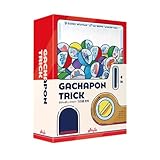
Overview: Playte Gachapon reimagines trick-taking with a ruthless economic twist: winners must buy cards from tricks they win, depleting their limited budget. Targeted at adults, this 2025 release forces players to weigh victory against financial ruin in a high-stakes auction-style card game for 2-4 players.
What Makes It Stand Out: The “pay-to-win” mechanic is revolutionary, transforming traditional trick-taking. Managing your starting 8,000 currency while avoiding elimination at 0 or 100 creates relentless tension. Exponential scoring (e.g., 5 matching cards = 25 points) rewards aggressive set collection, and strategic losing becomes a viable path to victory.
Value for Money: As a niche strategy game, its value hinges on replayability. The clever mechanics justify the price for enthusiasts, though component simplicity (standard cards) limits perceived premiumness. It outshines classics like Hearts in strategic depth but lacks the production quality of higher-priced alternatives.
Strengths and Weaknesses:
Strengths: Incredibly innovative “pay-to-win” system; high-stakes financial tension; deep risk-reward decisions; compact and portable; exceptional replay value.
Weaknesses: Minimal components feel basic; steep learning curve for casual players; elimination can feel punitive; limited visual appeal.
Bottom Line: A brilliantly tense economic card game that demands careful fiscal strategy. Best for experienced gamers seeking fresh mechanics, though its austerity may deter those expecting lavish components. Highly recommended for strategy-focused groups.
8. Free Market NYC Board Game | Economic and Worker Placement Board Game | Bundle with 2 Add-Ons

Overview: Free Market NYC satirizes capitalist economics through worker placement in a humorous New York City setting. This bundle includes the base game plus two add-ons, accommodating 2-5 players in 90-180 minute sessions of cutthroat resource competition focused on market manipulation and ironic social commentary.
What Makes It Stand Out: Its multilingual design is a standout feature—the board and components require no language skills, with rules explained in six languages. The satirical take on free-market ideology adds wit, while the included add-ons enhance replayability without bloating complexity. Worker placement mechanics are streamlined for broad accessibility.
Value for Money: The bundle offers exceptional value, effectively providing three games for the price of one. Compared to standalone titles like Scythe, it delivers more content per dollar. The long playtime and add-ons maximize utility, though the niche theme may not appeal to all.
Strengths and Weaknesses:
Strengths: Truly language-independent design; generous bundle with add-ons; sharp satire; scalable player count; easy to teach despite depth.
Weaknesses: Art style polarizing; lengthy runtime may test patience; theme overshadows mechanics for some; add-ons feel underdeveloped.
Bottom Line: A clever, accessible critique of capitalism with strong replayability. The bundle’s value and universal design make it a worthy pick for groups valuing thematic depth over visual polish, despite pacing issues.
9. Tulip Bubble by Moaideas Game Design | A Investment Game Based On Tulipmania | Economic Strategy Board Game for Adult Game Night | 3-5 Players

Overview: Tulip Bubble plunges players into 17th-century Holland’s infamous tulip mania, where they speculate on tulip prices through supply-demand mechanics and auctions. For 3-5 players, this 50-70 minute game merges historical intrigue with cutthroat investment strategy, featuring scientific botanical artwork and margin trading.
What Makes It Stand Out: Its authentic simulation of market bubbles is unmatched. Players manipulate tulip prices by flooding or restricting supply, while “buying on margin” introduces high-risk leverage. The auction system for rare tulips and collector bonuses creates nail-biting bidding wars, all wrapped in elegant historical theming.
Value for Money: Priced mid-range for strategy games, it delivers solid value through unique mechanics and high replayability. The compact box and specialized theme may limit mass appeal compared to Power Grid, but enthusiasts will appreciate its focused economic depth.
Strengths and Weaknesses:
Strengths: Brilliant supply-demand mechanics; historically immersive; exciting margin-trading risk; beautiful botanical art; tight playtime.
Weaknesses: Luck-dependent market swings can frustrate; limited player interaction beyond auctions; theme may not resonate universally; minimal component variety.
Bottom Line: A niche gem that masterfully translates economic history into engaging gameplay. Highly recommended for strategy fans seeking thematic depth, though its volatility may deter risk-averse players.
10. Allplay QE (Quantitative Easing) Board Game | Economic Auction Bidding Game for Families & Adults | 3-5 Players, 30 Min Playtime, Strategy Party Game with Unlimited Bidding

Overview: Allplay QE condenses high-stakes economic strategy into a brisk 30-minute auction game where players bid unlimited amounts for industry cards. Designed for 3-5 players, it simulates quantitative easing through bold financial maneuvers, blending accessibility with surprising strategic depth for families and adult groups.
What Makes It Stand Out: The “unlimited bidding” system is its crown jewel—players write any bid amount, creating thrilling risk-reward tension. Dry-erase boards enable reusable, error-friendly bidding, while variable industries and shifting demand ensure no two games play alike. Its lightning-fast pace stands out in the strategy genre.
Value for Money: Premium dry-erase components and markers justify the price, offering durability unmatched by card-based alternatives. For its replayability and production quality, it surpasses similar-priced games like For Sale, especially given the 30-minute runtime that fits tight schedules.
Strengths and Weaknesses:
Strengths: Innovative unlimited bidding; exceptional replayability; durable dry-erase components; quick setup/play; perfect for social groups.
Weaknesses: Shallow long-term strategy; limited depth for hardcore gamers; dry-erase markers may smudge; theme feels superficial.
Bottom Line: A brilliantly accessible party-strategy hybrid that shines in casual settings. While less complex than heavy eurogames, its speed, reusability, and bold mechanics make it a must-own for game-night regulars seeking lively competition.
Understanding Core Economic Mechanics
Before diving into a game, dissecting its fundamental economic engine is paramount. This reveals how value is created, transferred, and contested on the tabletop.
Resource Generation and Scarcity Dynamics
How does the game simulate the bedrock of economics: limited resources? Look beyond simple resource types. Does scarcity feel organic, driven by player actions and system constraints, or artificially imposed? Games that dynamically adjust resource availability based on collective player choices or scenario parameters create far more engaging and realistic pressure than static setups. Consider if the scarcity model encourages proactive planning or merely reactive scrambling.
Value Chains and Production Systems
The heart of many economic games lies in transforming raw materials into valuable goods. Evaluate the complexity and interdependence of these production chains. Are there multiple viable paths, or is there a single optimal route? Do intermediate goods have inherent value, or are they merely stepping stones? The most compelling systems feature branching chains where player choices significantly alter the efficiency and profitability of different production methods, forcing strategic adaptation.
Market Mechanics and Price Fluctuation
How does the game simulate the forces of supply and demand? Static pricing often feels artificial. Seek games where player actions directly influence the market – perhaps through auction mechanisms, open outcry trading, or systems where oversupply crashes prices while scarcity drives them up. The presence of volatile, player-driven markets adds immense strategic depth, demanding constant reassessment of when to buy, sell, or hold assets.
Evaluating Player Interaction and Competition
Economic strategy thrives on interaction. The best games create tension not through direct conflict, but through competition for limited opportunities and strategic interference.
Indirect Competition for Key Assets
True economic mastery often involves outmaneuvering opponents without direct confrontation. Does the game feature critical, limited assets – prime development locations, unique patents, exclusive trade routes – that players must strategically position themselves to claim? The most satisfying interactions occur when you feel you’ve secured an advantage through superior foresight and timing, not random luck or forced aggression.
Auction and Bidding Sophistication
Auctions are a staple, but their depth varies wildly. Go beyond simple highest-bidder wins. Look for systems with hidden information (sealed bids), escalating commitments (turn-based auctions), or asymmetric bidding currencies. Games where bids reveal information about opponents’ strategies or force difficult opportunity cost decisions (spending now vs. saving for later) elevate auctions from routine transactions to pivotal strategic moments.
Market Manipulation and Strategic Interference
Can players actively shape the economic landscape to their advantage, potentially hindering others? This might involve dumping goods to crash a market, cornering a resource supply, or strategically timing large sales/purchases. While potentially cutthroat, well-implemented manipulation mechanics add a thrilling layer of psychological play and long-term planning, mirroring real-world economic tactics (both ethical and otherwise).
Assessing Depth, Replayability, and Longevity
A top-tier economic game isn’t solved after three plays. Its depth ensures fresh challenges and evolving strategies with every session.
Scenario and Variable Setup Options
Replayability often hinges on diverse starting conditions. Does the game offer multiple maps, asymmetric player powers, or modular boards that fundamentally alter the economic landscape? Variable player goals or dynamically changing victory conditions prevent the game from falling into predictable patterns, ensuring each session presents unique strategic puzzles to solve.
Emergent Narrative and Player-Driven Stories
The best economic games generate compelling stories organically through player choices. Did a daring market cornering attempt backfire spectacularly? Did a carefully nurtured long-term investment finally pay off against all odds? Look for systems robust enough to facilitate these dramatic arcs, where player decisions, not scripted events, drive the narrative tension and memorable moments.
Scalability Across Player Counts
How does the economic ecosystem function with different numbers of participants? Some games thrive with 2 players as intense duels of wits, while others truly come alive with 4 or 5, creating complex market dynamics and shifting alliances. Ensure the game you choose maintains its core economic integrity and strategic depth across the player counts you typically play with; a game that falls apart with 2 or becomes chaotic with 5 is a significant limitation.
Considering Complexity and Learning Curve
Economic depth shouldn’t equate to impenetrable rules. Finding the right balance is key to sustained enjoyment.
Rule Clarity vs. Strategic Depth
A common pitfall is overly complex rules obscuring elegant strategy. The best games have rules that are learnable – concepts explained clearly with logical progression – even if the strategic implications take many plays to master. Look for clean rulebooks with strong examples of play. If the core economic engine (how resources flow, how value is created) isn’t immediately graspable after the first read, frustration may set in.
Decision Point Significance
Evaluate the weight and frequency of meaningful choices. Are most turns filled with trivial administrative actions, or does each decision carry significant strategic consequence? Depth comes from having multiple viable options at key decision points, each with clear pros, cons, and opportunity costs. Games where every action feels impactful, even in the early game, sustain engagement far better than those with long setup phases before real strategy kicks in.
Onboarding New Players
How approachable is the game for someone new to the genre? While deep strategy games have a learning curve, the best offer clear pathways for newcomers. This might involve streamlined starting scenarios, well-designed player aids focusing on core economic flows, or intuitive iconography. A game that consistently alienates new players limits your ability to share the experience and build a regular playgroup.
Educational Value and Real-World Parallels
One of the most compelling aspects of modern economic games is their ability to model real concepts in an engaging way.
Modeling Core Economic Principles
Does the game effectively illustrate concepts like opportunity cost, comparative advantage, marginal utility, or inflation? While not a textbook, the strongest titles make these principles tangible through gameplay. You feel the opportunity cost when choosing one action over another, or experience the sting of inflation as your currency loses purchasing power. This experiential learning is incredibly powerful.
Risk Management and Uncertainty
Real economies operate under uncertainty. Does the game incorporate meaningful risk elements beyond dice rolls? Look for systems involving market volatility, investment uncertainty (will this venture pay off?), or the risk of overextension. Learning to assess, mitigate, and sometimes strategically embrace risk within the game’s framework translates directly to valuable real-world financial and business acumen.
Systems Thinking and Interconnectedness
Economic games excel at teaching systems thinking. Players learn that changing one variable (e.g., flooding the market with a resource) ripples through the entire system, affecting prices, production, and opponent strategies. This fosters an understanding of complex interdependencies – a crucial skill in analyzing real-world economic, environmental, or social systems where isolated fixes often backfire.
Future-Proofing Your Game Choice: 2026 Trends
The board game landscape evolves rapidly. Considering emerging trends ensures your investment stays relevant.
Sustainability in Components and Design
Environmental consciousness is increasingly reflected in the industry. Look for publishers using recycled/recyclable materials, soy-based inks, and minimizing plastic components. Beyond materials, consider if the game’s design philosophy promotes longevity (modular boards, legacy-lite elements that refresh rather than destroy) – a sustainable approach to the hobby itself.
Integration with Digital Tools (Optional)
While purists prefer analog purity, some 2026 titles thoughtfully integrate apps for setup, scoring, or scenario generation, without being essential to core gameplay. Evaluate if such tools genuinely enhance the experience (e.g., managing complex economic calculations, enabling dynamic events) or feel like gimmicks that undermine the tactile board game feel. The best integrations are optional aids, not crutches.
Evolving Design Philosophies
The trend towards “elegant complexity” continues – achieving deep strategic interaction through streamlined rules. Games that prioritize meaningful player decisions over fiddly administration are gaining favor. Additionally, increased focus on narrative integration means economic choices often directly feed into the game’s thematic story, making the number-crunching feel more purposeful and engaging.
Frequently Asked Questions
Frequently Asked Questions
How can I tell if an economic game has meaningful decisions versus just busywork? Look for games where most actions have clear opportunity costs and multiple viable strategic paths. If you often find yourself doing the same routine actions every turn with little thought, it’s likely busywork. Meaningful games present dilemmas where the “best” choice isn’t obvious and depends on the evolving game state and opponent actions.
Are economic games suitable for players who aren’t good at math? Absolutely. While numbers are involved, the best economic games focus on relative value and strategic positioning rather than complex calculations. Strong visual design, clear iconography, and player aids often handle the math, allowing players to focus on the strategic implications (“Is this resource worth more to me now or later?”) rather than arithmetic.
What’s the difference between an economic game and a pure “engine builder”? While engine builders often involve economic elements, pure economic games emphasize the interaction within a shared market system – competition for resources, price fluctuations, and player-driven markets. Engine builders focus more on the individual player’s internal optimization loop, with less direct impact on the economic landscape faced by opponents.
How important is theme in an economic strategy game? Theme significantly impacts engagement. A strong theme that resonates with the mechanics (e.g., trading spices in a historic port, managing futuristic energy grids) makes abstract economic concepts feel tangible and purposeful. Weak theme can make the number-crunching feel dry, while a great theme immerses you in the strategic decisions.
Can these games realistically teach economic principles? Yes, but experientially, not academically. You won’t learn textbook definitions, but you will develop an intuitive grasp of concepts like supply/demand (seeing prices change based on actions), opportunity cost (choosing one action means losing another), and risk/reward through direct gameplay. It’s learning by doing in a simulated environment.
What player count typically works best for deep economic strategy? This varies, but many excel at 3-4 players. Two-player games can be intense duels but may lack market complexity. Five or more players can sometimes lead to analysis paralysis or reduced individual agency in the market. Always check the publisher’s recommended count range, as it’s usually where the economic system is most balanced.
How do I avoid analysis paralysis in complex economic games? Look for games with clear turn structures, time limits for major decisions (sometimes enforced by the rules or group norms), and player aids that streamline common actions. Games where the economic state changes significantly each round often force timely decisions, as waiting too long means missing critical opportunities.
Is high complexity necessary for a satisfying economic game? Not at all. Some of the most elegant and replayable games achieve deep strategic interaction with relatively streamlined rules. Focus on the quality of decisions and the richness of the economic simulation, not just the page count of the rulebook. Simplicity in rules can often lead to greater strategic depth.
How can I assess replayability before buying? Examine the game’s components and rules for variability. Look for multiple maps/scenarios, asymmetric player roles, variable setup options, and dynamic victory conditions. Read reviews focusing on whether strategies feel fresh after multiple plays. Games reliant on a single optimal path usually have low replay value.
What should I prioritize: player interaction or solo strategic depth? This depends entirely on your preferences. If you love outmaneuvering opponents through market play, prioritize strong indirect interaction. If you prefer deep contemplative strategy, a solitaire-focused economic puzzle might be better. Most top-tier games strike a balance, offering strategic depth within a competitive framework where your choices impact others. Consider your usual playgroup dynamics.
See Also
- 10 Essential Economic Board Games Every Strategy Enthusiast Needs in 2026
- 10 Essential Economic Strategy Games Every Board Gamer Needs in 2026
- 10 Essential Area Control Board Games Every Strategy Enthusiast Needs in 2026
- 10 Essential Economic Strategy Games for Finance Nerds in 2026
- 10 Essential Family Strategy Games Every Household Needs in 2026