Table of Contents
Ever felt that thrilling rush when the stakes climb, your pulse quickens, and every calculated decision could tip the scales toward victory or a costly miscalculation? For strategic thinkers, few experiences match the intellectual dance of auction and bidding mechanics within modern games. These aren’t just about shouting the highest number; they’re intricate psychological landscapes where understanding value, predicting opponents, and managing risk converge into pure strategic artistry. As we navigate 2026, the demand for games that sharpen these high-stakes cognitive muscles has never been higher, moving far beyond simple luck into realms demanding foresight, adaptability, and emotional control.
The evolution of auction-driven gameplay reflects our increasingly complex world, where information asymmetry and resource scarcity dominate real-world challenges. Modern strategic thinkers seek experiences that mirror the nuanced negotiations of business, the delicate resource allocation of project management, or the high-wire diplomacy of international relations – all within a contained, rule-based environment. These games provide a safe space to experiment with bold bids, test negotiation tactics, and learn from the immediate consequences of overextension or timidity. If you’re ready to move past luck-based mechanics and dive into the profound strategic depths where every chip placed is a statement of intent, this guide is your essential roadmap to mastering the auction and bidding genre in the current landscape.
Top 10 Auction and Bidding Games
Detailed Product Reviews
1. Allplay QE (Quantitative Easing) Board Game | Economic Auction Bidding Game for Families & Adults | 3-5 Players, 30 Min Playtime, Strategy Party Game with Unlimited Bidding

Overview:
Allplay QE is a fast-paced economic strategy game where players engage in high-stakes bidding wars across fluctuating industries. Designed for 3–5 players, it simulates market dynamics through unlimited bidding—participants write custom bids without caps, balancing risk and reward over 30 minutes of intense, social gameplay.
What Makes It Stand Out:
The “unlimited bidding” mechanic is revolutionary, fostering bold, creative strategies as players scribble any bid amount on reusable dry-erase boards. Variable industries and shifting demand ensure high replayability, while premium components (like durable tokens and erasable boards) elevate the tactile experience. Its perfect blend of simplicity for newcomers and depth for veterans sets it apart in the strategy genre.
Value for Money:
Priced mid-range for strategy games, QE delivers exceptional value. The reusable components eliminate setup waste, and the 30-minute runtime maximizes replay frequency. Compared to similar-priced games with shorter lifespans, QE’s dynamic scenarios justify the cost for families and strategy enthusiasts seeking longevity.
Strengths and Weaknesses:
Strengths: Innovative bidding system; quick learning curve; exceptional replay value; premium, eco-friendly materials; ideal for social gatherings. Weaknesses: Niche economic theme may not appeal to casual players; dry-erase markers require periodic replacement; limited player count excludes larger groups.
Bottom Line:
A standout strategy game that masterfully merges accessibility with depth. Its unique mechanics and replayability make it a worthwhile investment for families and game-night regulars, though theme preferences may sway some buyers. Highly recommended for 3–5 players.
2. Sharks of Wall Street Auction Core Bidding Card Game – Portable, Quick, Entertaining, Easy To Learn - for Adults and Teens - Party, Travel and Family Game Night - 20-40 Min, Age 14+, 2-6 Players

Overview:
Sharks of Wall Street is a compact card game where players compete in high-stakes auctions to dominate the market. Designed for 2–6 players aged 14+, it emphasizes quick decision-making and risk assessment in 20–40 minutes, making it ideal for travel or impromptu gatherings.
What Makes It Stand Out:
Its ultra-portable design—fitting easily in a pocket or bag—is unmatched for on-the-go gaming. The “bid high or fold” tension creates constant engagement, while the simple ruleset (learnable in minutes) lowers entry barriers. The blend of strategic depth and accessibility shines in diverse settings, from classrooms to pubs.
Value for Money:
As a budget-friendly card-only game, it offers fantastic value for frequent travelers or educators needing a versatile icebreaker. Though lacking premium components, its durability and broad appeal outshine pricier alternatives for casual play. Best for those prioritizing convenience over elaborate parts.
Strengths and Weaknesses:
Strengths: Exceptionally portable; lightning-fast setup; scales well for 2–6 players; easy to teach; high replayability through variable strategies. Weaknesses: Card stock quality feels thin; limited thematic depth; shorter playtime may disappoint hardcore gamers; no storage solution for markers (if used with dry-erase).
Bottom Line:
A stellar travel companion and party starter that excels in simplicity and portability. While not a strategy heavyweight, its engaging auctions and adaptability make it a top pick for casual gamers and educators. Perfect for quick, social fun.
3. GRRRE GAMES Nidavellir - Dwarven Auction and Bidding Game | Dice Tower Top 10 Game of All Time | Best Strategy Card Game for Kids, Teens, and Adults | 2 to 5 Players | Ages 10+ | 45 Minutes

Overview:
Nidavellir is an award-winning strategy game where players bid for turn order to recruit dwarves and heroes in a mythical Norse realm. For 2–5 players aged 10+, it combines auction mechanics with card drafting over 45 minutes, offering tactical depth accessible to younger audiences.
What Makes It Stand Out:
Its multi-award-winning status stems from elegant mechanics: upgrading coins to secure turn order and collecting dwarf sets for heroes creates layered strategy. Unique components like the 3D Royal Treasure stand and hero display holders enhance immersion. The game’s balance of simplicity (for kids) and complexity (for adults) is masterful.
Value for Money:
Priced at a premium, Nidavellir justifies cost through exceptional replayability and component quality. Unlike disposable party games, its strategic richness encourages repeated plays, making it a long-term investment. Comparable games lack its thematic cohesion or physical charm.
Strengths and Weaknesses:
Strengths: Deep yet teachable strategy; stunning 3D components; high replayability via variable dwarf/heroes; family-friendly; award-winning design. Weaknesses: 45-minute runtime may feel long for young children; assembly required for stands; limited player interaction beyond bidding.
Bottom Line:
A near-perfect fusion of accessibility and strategic depth, elevated by premium components. Its awards are well-earned, and it’s ideal for families seeking substantive gameplay. A must-buy for strategy fans and collectors, despite minor pacing quirks.
4. ZPOYOT 18Pcs Dry Erase Answer Paddles with Markers Thickened Handheld Double Sided Paddles Mini White Boards Small Dry Erase Signs Auction Paddles for Students Classroom Bidding Voting Games

Overview:
This 18-piece set includes double-sided mini whiteboards and markers for classroom interaction, voting, or games. Designed for quick responses, the paddles feature an ergonomic grip and reusable surface, targeting educators, trainers, or families needing affordable group tools.
What Makes It Stand Out:
The double-sided design doubles utility per paddle, while the thickened paper construction resists tearing—uncommon in budget sets. Its compact size (8.66" long) ensures portability, and the smooth surface allows effortless erasing. Ideal for “show your answer” activities without tech dependence.
Value for Money:
At an entry-level price, it delivers solid value for small classrooms (under 18 students). The inclusion of 8 markers reduces initial costs, though replacements may be needed. Cheaper than digital alternatives, but bulk buyers should consider the 33-piece variant for larger groups.
Strengths and Weaknesses:
Strengths: Cost-effective for small groups; tear-resistant material; easy to distribute/store; versatile for education or games; double-sided utility. Weaknesses: Markers smudge on humid days; paper feels flimsy compared to plastic boards; limited to 18 users; no storage case included.
Bottom Line:
A practical, no-frills solution for teachers or facilitators with modest group sizes. While not indestructible, its affordability and functionality make it a worthwhile classroom staple for daily assessments or interactive play.
5. ZPOYOT 33Pcs Dry Erase Answer Paddles with Markers Thickened Handheld Double Sided Paddles Mini White Boards Small Dry Erase Signs Auction Paddles for Students Classroom Bidding Voting Games

Overview:
This expanded 33-piece kit scales up ZPOYOT’s concept, offering 25 double-sided paddles and 8 markers for larger groups. Targeting schools, workshops, or big families, it maintains the same portable, reusable design optimized for quick-response activities.
What Makes It Stand Out:
The generous 25-paddle count accommodates full-sized classrooms (25+ students), a critical upgrade over smaller sets. Like its sibling, it features thickened paper for durability and a smooth writing surface, but the bulk quantity makes it uniquely suited for institutional use without breaking the bank.
Value for Money:
Exceptional value for large groups—cost per paddle drops significantly versus buying multiples of the 18-piece set. The 8 markers suffice for moderate use, though heavy classrooms may need extras. Outperforms pricier plastic boards in affordability for temporary setups.
Strengths and Weaknesses:
Strengths: Ideal for large classes/workshops; economical bulk pricing; reusable and eco-friendly; lightweight for transport; double-sided efficiency. Weaknesses: Still paper-based (less durable than plastic); markers prone to drying; no carrying case; inconsistent erasing on high-use days.
Bottom Line:
The go-to choice for educators managing big groups, offering unbeatable scalability at a low cost. Despite material limitations, its practicality for daily assessments or games makes it indispensable for schools prioritizing budget and functionality.
6. Mighty Boards: Art Society - Collection Board Game, Bid At Auctions, Collect & Display Your Art, Ages 10+, 2-4 Players, 30-60 Min

Overview: Mighty Boards: Art Society is a strategic collection game where players act as art connoisseurs bidding on paintings, arranging them on personal display walls, and chasing shifting trends to earn prestige points. Designed for 2-4 players aged 10+, it delivers a compact, thematic auction experience in 30-60 minutes.
What Makes It Stand Out: Its unique “trend prediction” mechanic sets it apart: arranging specific painting combinations on your wall influences scoring for future rounds, adding dynamic strategy beyond simple bidding. The tactile satisfaction of physically placing cards on your board and the accessible theme make art collecting engaging for families.
Value for Money: Priced moderately for a niche strategy game, it offers strong replayability through variable trends and player interaction. While not as deep as heavyweight auction games, it provides more thematic immersion and approachability than pure abstracts at a similar price point.
Strengths and Weaknesses: Strengths: Intuitive rules, beautiful art integration, excellent player interaction via auctions, and meaningful spatial arrangement. Weaknesses: Trend mechanics can feel opaque to new players, and luck in card draws occasionally overshadows strategy. Player count heavily impacts pacing (best at 3-4 players).
Bottom Line: A charming, accessible gateway into strategic auction games with clever spatial elements. Highly recommended for families and casual gamers seeking interactive, theme-driven fun without excessive complexity.
7. STOBOK Handheld Dry Erase Answer Paddles, Double Sided White Board for Classroom and Students, Portable Mini Writing Signs for Auction Bidding and Games, Small Eraseable Boards

Overview: STOBOK’s double-sided dry erase paddles are portable, handheld whiteboards designed for classrooms, auctions, and games. Each features an ergonomic handle, rounded safety corners, and a smooth, ghost-resistant writing surface, promoting reusable communication.
What Makes It Stand Out: The double-sided design doubles usable space without increasing bulk, while the comfortable, secure grip accommodates both children and adults. Its exceptional versatility shines—from silent student response tools to auction bidding and family game scoring—without paper waste.
Value for Money: Though slightly pricier per unit than basic single-sided paddles, the durability, dual surfaces, and thoughtful safety features justify the cost for frequent educational or event use. It’s a long-term eco-friendly investment compared to disposable alternatives.
Strengths and Weaknesses: Strengths: Ergonomic and safe design, ghost-free erasing, bright legible surface, and multi-scenario utility. Weaknesses: Requires separate marker purchase, and the pressboard core, while sturdy, may warp if exposed to moisture over time. Handle grip could be tighter for very small hands.
Bottom Line: An outstanding, versatile classroom essential that enhances engagement while reducing waste. Ideal for teachers and event organizers seeking reliable, reusable communication tools—worth the premium for daily use.
8. Dry Erase Paddles for Auction Bidding and Classroom Voting and Answers - 12 Pieces

Overview: This budget-friendly 12-pack of pressboard dry erase paddles offers a no-frills solution for classroom quizzes, auction bidding, or group voting. Measuring 5.25" x 8.75", they provide a single writable surface per paddle and require user-supplied markers.
Value for Money: Extremely cost-effective for bulk needs, especially for schools on tight budgets. The low per-unit price makes replacing damaged paddles feasible, though longevity may not match higher-end models. It’s ideal for one-off events or settings where disposability is acceptable.
Strengths and Weaknesses: Strengths: Affordable bulk pricing, lightweight portability, and immediate classroom utility for quick responses. Weaknesses: Single-sided use limits functionality, pressboard is prone to dents and warping, and corners lack rounding—reducing safety and durability versus competitors. Ghosting can occur with heavy use.
What Makes It Stand Out: Its primary advantage is sheer affordability for large groups; however, it lacks standout features like dual surfaces, ergonomic handles, or reinforced edges found in premium options. Customization is limited to one side only.
Bottom Line: A functional entry-level choice for occasional use or large-classroom deployments where cost trumps durability. Not recommended for daily heavy use but suitable for schools needing disposable-response tools.
9. 25th Century Games Ratzia – Auction & Gangster Card Game by Reiner Knizia Ages 12+ | 2–5 Players | 45 Min
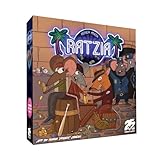
Overview: Ratzia, designed by legend Reiner Knizia, is a tense gangster-themed card auction game for 2–5 players. Players lead rival rat mafia families bidding on gangsters, businesses, and valuables across 140+ auctions, racing to accumulate wealth before police raids force hasty sales.
What Makes It Stand Out: Knizia’s masterful auction design shines through its unique “simultaneous hidden bidding” system using numbered cards—eliminating auctioneer bias and enabling constant player engagement. The thematic police interruptions inject thrilling unpredictability, distinguishing it from calmer auction classics.
Value for Money: Packed with high-quality components (141 auction cards, scoring tracks), it delivers exceptional depth for its price. It outperforms many auction games in strategic nuance and replayability, justifying its cost as a must-have for genre fans.
Strengths and Weaknesses: Strengths: Brilliant simultaneous bidding, dynamic police mechanic, tight 45-minute playtime, and Knizia’s signature strategic elegance. Weaknesses: Thematic depth is light (rats as mobsters feels superficial), and new players may struggle with optimal bidding card management early on.
Bottom Line: A near-perfect blend of accessible rules and deep strategy, Ratzia is essential for auction game enthusiasts. Its innovative mechanics and relentless pace make it a standout—highly recommended for competitive gamers.
10. Modern Art Abstract Board Game

Overview: Modern Art is a classic auction strategy game where players act as museum owners buying and selling paintings by five fictional artists over four rounds. With 3-5 players (ages 14+), it simulates high-stakes art markets through diverse auction formats, aiming to maximize end-game wealth.
What Makes It Stand Out: Its defining feature is five distinct auction types (once-open, sealed-bid, etc.), each demanding unique tactics and preventing repetitive play. The core loop—buying low, selling high based on artist popularity—is brilliantly simple yet deeply strategic, rewarding market prediction and bluffing.
Value for Money: As a reimplementation of a beloved classic, it offers timeless gameplay unmatched in its niche. While component quality is functional rather than lavish, the sheer strategic depth and replayability provide excellent value against modern auction games.
Strengths and Weaknesses: Strengths: Ingenious auction variety, addictive push-your-luck tension, and strong player interaction. Weaknesses: Artwork is abstract and generic (detracting from theme), and outcomes can swing dramatically based on early-round luck with artist reveals.
Bottom Line: A seminal auction game that remains unmatched in teaching market dynamics and adaptive bidding. Despite minor thematic shortcomings, it’s a top-tier recommendation for strategy fans seeking intense, replayable competition.
Understanding the Core Appeal of Auction Mechanics
The Psychological Chess of Valuation
At the heart of every compelling auction lies the fundamental challenge: determining true value under pressure. Unlike fixed-cost purchases, auction mechanics force players to constantly reassess an item’s worth based on shifting game states, opponent behavior, and long-term strategy. This dynamic valuation process mirrors real-world economic decisions, training players to separate emotional attachment from objective strategic benefit. The mental agility required to adjust bids on the fly, recognizing when an item becomes overvalued or a potential bargain emerges, is a core cognitive skill honed through these systems.
Resource Scarcity and Competitive Allocation
Auction mechanics excel at simulating environments of intense resource scarcity. When desirable actions, board positions, or assets are limited, the auction becomes the critical battleground for control. This scarcity isn’t arbitrary; it’s designed to create meaningful tension and force difficult trade-offs. Players must constantly weigh the immediate cost against potential future gains, understanding that winning one auction might leave them critically under-resourced for the next crucial phase. This constant juggling act against opponents vying for the same finite pool is where strategic depth truly flourishes.
Information Asymmetry as a Strategic Tool
Many sophisticated auction systems deliberately incorporate hidden information or incomplete knowledge. Players might know their own valuation but remain uncertain about opponents’ capabilities, goals, or the true market value of the item. Navigating this fog of war requires sophisticated bluffing, signaling, and deduction. Deciding when to reveal your hand through an aggressive bid, when to feign disinterest, or how to interpret subtle bidding patterns becomes as important as the bid amount itself, adding layers of meta-strategy beyond simple arithmetic.
Key Strategic Skills Developed Through Bidding Play
Risk Assessment and Management Under Uncertainty
Bidding inherently involves risk. Will winning this auction cripple your economy for the rest of the game? Is the opponent bluffing, or do they truly have deeper pockets? Auction games provide a structured environment to practice quantifying risk, understanding probability in competitive settings, and developing personal risk tolerance thresholds. Players learn to calculate not just the potential gain, but the cost of being wrong, fostering a disciplined approach to high-stakes decision-making applicable far beyond the game table.
Adaptive Thinking and Pivoting Strategies
The fluid nature of auctions means no single strategy remains optimal throughout a game. A dominant early bidding approach might become disastrous if opponents adapt or key resources change hands. Successful players master the art of reading the room – recognizing shifts in the meta-game, identifying when to abandon a planned path, and rapidly formulating new tactics based on the evolving auction landscape. This adaptability, the ability to pivot without panic, is a hallmark of advanced strategic thinking cultivated through repeated engagement with these mechanics.
Negotiation and Bluffing Fundamentals
While not always explicitly present, the psychological interplay in auctions closely mirrors core negotiation principles. Players practice subtle communication through their bids: signaling strength, feigning weakness, making credible threats, or creating illusions of consensus. Understanding when a bid is a genuine move versus a strategic ploy to drive up prices for others is crucial. These mechanics offer a low-stakes training ground for the nuanced art of persuasion and reading opponents’ intentions, skills vital in professional and personal interactions.
Factors to Consider When Choosing the Right Auction Experience
Group Dynamics and Player Count Impact
Not all auction mechanics scale equally. Some systems thrive with three cutthroat competitors where every bid is intensely personal, while others shine in larger groups where coalition-building and shifting alliances become key. Consider whether your typical group enjoys direct confrontation or prefers more indirect competition. Games designed for specific player counts often optimize the auction tension; a mechanic that creates perfect balance for four players might feel sluggish with two or chaotic with six. Assessing your group’s size and interaction preferences is paramount.
Complexity of the Bidding System Itself
Auction mechanics range from elegantly simple (simultaneous blind bidding with fixed currencies) to highly complex (multi-round auctions with variable currencies, hidden bids, and intricate tie-breakers). Evaluate your group’s appetite for learning curves. A simpler system allows quicker immersion in the strategic bidding itself, while a complex framework offers deeper long-term mastery potential but requires significant upfront investment. Ensure the complexity of the auction engine aligns with the overall strategic depth your group seeks, avoiding systems where the bidding rules overshadow the actual gameplay.
Integration with Overall Game Strategy
The most satisfying auction games don’t treat bidding as a standalone mini-game; it’s deeply woven into the core strategic fabric. Does winning an auction directly enable powerful actions, or is it merely acquiring components? How does the auction phase influence subsequent turns? Look for systems where the value of winning an auction is context-dependent and evolves, forcing players to consider long-term implications, not just immediate gains. Poorly integrated auctions feel tacked-on, while seamless integration creates a cohesive strategic experience where bidding decisions ripple through the entire game.
Theme and Immersion Alignment
While mechanics are king for strategists, the theme significantly impacts engagement and perceived value. Does the auction mechanic feel like a natural part of the game’s world? Bidding for expedition crews in an exploration theme resonates differently than bidding for stock shares in a financial simulation. A strong thematic connection makes the valuation process more intuitive and emotionally resonant, enhancing the strategic experience by providing clearer narrative context for why certain items hold value. Consider how well the auction’s “feel” matches the game’s intended atmosphere.
Mastering the Meta-Game: Beyond the Bid
Reading Opponent Patterns and Tells
As you play repeatedly with the same group, subtle patterns emerge. Does a particular player always overbid on certain types of items? Do they hesitate before making a decisive move? Developing the ability to spot these micro-behaviors – the equivalent of poker tells in a board game context – provides a significant edge. This observational skill involves noting betting rhythms, reaction times to specific bids, and even body language (in physical play). Learning to distinguish genuine signals from intentional misdirection is a critical meta-strategic layer.
Managing Your Own Information Footprint
Just as you read others, you must control the information you leak. Your bidding history becomes a public record opponents analyze. Consistently bidding high on specific items signals their importance to your strategy, potentially making them more expensive or targeted by others. Strategic players vary their approach, sometimes underbidding to conceal interest, other times making aggressive early bids to establish dominance or manipulate perceptions. Conscious management of the narrative you project through your bids is essential for long-term success.
The Long Game: Positioning for Future Rounds
Winning the current auction is rarely the ultimate goal; it’s about positioning yourself advantageously for the entire game. Savvy players sometimes deliberately lose an auction they could win if it drains an opponent’s resources excessively or sets up a more valuable opportunity later. They calculate the opportunity cost of winning now versus preserving strength. This requires a holistic view, understanding how the current bid impacts not just the immediate round, but the flow of subsequent auctions, resource availability, and opponent capabilities several turns ahead.
Emotional Discipline and Bankroll Management
The heat of a close auction can trigger emotional responses – the fear of losing, the thrill of outbidding, the frustration of being outmaneuvered. Top strategic thinkers cultivate emotional discipline, treating each bid as a calculated investment, not a personal victory or defeat. This ties directly into effective “bankroll” management within the game: knowing when to conserve resources for future critical moments, avoiding the sunk-cost fallacy after losing a bid, and preventing tilt after a string of unfavorable outcomes. Maintaining a cool head is a non-negotiable strategic asset.
Implementing Auction Games Effectively in Different Settings
For Professional Development and Team Building
The negotiation, risk assessment, and strategic communication inherent in auction games make them powerful tools in corporate training. Choose mechanics that emphasize collaborative bidding, shared resource pools with competitive elements, or scenarios requiring post-auction negotiation. Facilitators should focus debrief discussions on real-world parallels: how valuation strategies mirrored business decisions, how information sharing (or withholding) impacted outcomes, and the emotional dynamics of high-stakes resource allocation. The controlled environment provides safe, tangible lessons in strategic thinking under pressure.
In Educational Contexts for Critical Thinking
Educators can leverage auction mechanics to teach economics, probability, and logical reasoning. Simpler bidding systems work well for younger students to grasp basic supply/demand concepts, while more complex games challenge older students with game theory applications. Structured reflection after gameplay is key – asking students to justify their bids, analyze why certain items were over/undervalued, and discuss how opponent behavior influenced their decisions. This transforms gameplay into active lessons in decision-making frameworks and consequence evaluation.
For Solo Play and Cognitive Training
While inherently social, many modern auction games offer robust solo modes or puzzles specifically designed for single-player strategic challenges. These often feature AI opponents with distinct, predictable bidding personalities, allowing players to practice valuation, risk calculation, and long-term planning against consistent benchmarks. Solo play is ideal for mastering the core mechanics without social pressure, focusing purely on refining bidding algorithms and understanding optimal strategies within the game’s mathematical framework, serving as excellent cognitive maintenance.
Adapting for Hybrid and Digital Play
As hybrid (mixed physical/digital) gaming becomes standard, consider how auction mechanics translate. Simultaneous blind bidding often works flawlessly online, while complex open-outcry auctions might lose nuance without video. Apps that handle bid secrecy, currency tracking, and turn order during auctions significantly enhance the digital experience. When choosing games for hybrid groups, prioritize those with streamlined bidding interfaces in their digital implementations or robust physical components that photograph well for remote players, ensuring the strategic tension isn’t diluted by technical friction.
Frequently Asked Questions
How do auction/bidding mechanics differ from standard resource acquisition in board games?
Auction mechanics introduce direct player competition and dynamic pricing for resources, where value is determined through opponent interaction rather than fixed costs, creating constant risk assessment and psychological elements absent in simple purchase systems.
Can these games be too psychologically intense for casual groups?
Yes, some auction games thrive on high-pressure negotiation and bluffing, which can overwhelm players seeking lighter experiences. Look for games emphasizing simultaneous blind bidding or simpler valuation systems if your group prefers lower interpersonal tension.
Do I need strong math skills to excel at bidding games?
Basic arithmetic is sufficient for most; the real skill lies in strategic valuation, risk judgment, and reading opponents, not complex calculations. Understanding relative value and opportunity cost matters far more than rapid mental math.
How important is player count for the auction experience?
Crucial. Auction dynamics shift dramatically with group size – fewer players mean more direct conflict per bid, while larger groups foster coalitions and indirect competition. Always check recommended player counts for optimal tension.
Are there auction games suitable for teaching children strategic thinking?
Absolutely. Games with simple, simultaneous bidding using tokens for immediate rewards (like choosing turn order or small bonuses) introduce core concepts of valuation and trade-offs effectively for younger players.
Can auction mechanics work well in cooperative games?
Yes, often as a shared resource allocation challenge. Players might bid against each other using limited group resources to claim actions, creating internal tension while working towards a common goal, adding strategic depth to co-ops.
What’s the biggest strategic mistake beginners make in bidding games?
Overvaluing the immediate win – getting caught in “auction fever” and paying far more than an item’s strategic worth just to win the bid, depleting resources needed for later critical phases.
How do I prevent analysis paralysis during complex auctions?
Choose games with clear time limits per bid phase or encourage group norms for decisive action. Simpler bidding systems (like single-round blind bids) also inherently reduce decision time compared to open outcry with multiple rounds.
Do digital implementations capture the essence of physical auction games?
They excel at handling logistics (currency, secrecy) but can lose subtle social cues. Games relying on physical presence for bluffing may feel different online, while those focused on pure valuation translate very well to digital platforms.
Can playing these games genuinely improve real-world negotiation skills?
Yes, by providing a low-risk environment to practice valuation under pressure, reading subtle signals, understanding concession strategies, and managing emotional responses to competitive bidding scenarios.
See Also
- 10 Best Auction and Bidding Games for Strategic Thinkers in 2026
- 10 Best Auction and Bidding Games for High-Stakes Game Nights in 2026
- 10 Expert-Recommended Auction and Bidding Games for Smart Gamers in 2026
- 10 Expert-Recommended Auction and Bidding Games for Psychology Lovers in 2026
- 10 Essential Hand Management Games Every Enthusiast Needs in 2026