Table of Contents
Imagine this: just two chairs, a table bathed in the warm glow of a single lamp, and the quiet intensity of shared focus. No shouting matches over rules, no waiting endlessly for your turn, just the satisfying click of components and the unspoken understanding that flows between players working toward a common goal. Two-player cooperative board gaming has evolved far beyond a simple pastime—it’s become a unique ritual for building connection, sharpening minds, and creating moments of genuine triumph (or hilariously shared defeat) in an increasingly fragmented world. Whether you’re unwinding after a long day or seeking a meaningful way to bond, the right co-op experience transforms your living room into a space of collaboration unlike any other.
What makes this niche so special? Unlike competitive games where victory for one means defeat for another, cooperative play dissolves that barrier. You’re not adversaries; you’re partners, strategists, and problem-solvers united against the game itself. This dynamic fosters communication, patience, and creative thinking in ways solo or competitive play often can’t match. It’s about the journey you take together—the whispered debates over a tricky decision, the synchronized gasp when the game throws a curveball, and the shared euphoria of pulling off a brilliant move. In 2026, with more sophisticated designs emerging, the bar for immersive, balanced two-player co-op has never been higher, making it the perfect time to explore what truly makes these experiences shine.
Top 10 Two-Player Cooperative Board Games
Detailed Product Reviews
1. Scorpion Masqué Sky Team | Voted Game of The Year 2024 | Best 2 Player Game | Work Together to Land The Plane | Ages 14+ | 20 Minutes

Overview: Sky Team is an intense, award-winning cooperative dice game where two players assume roles as pilot and co-pilot racing to safely land a plane before it crashes. Set within a tense cockpit environment, it masterfully blends communication, shared decision-making, and dice-driven mechanics into a compact 20-minute experience perfect for strategic duos.
What Makes It Stand Out: Its genius lies in the asymmetric roles and constrained communication. Players strategize between dice rolls but must trust each other’s execution during critical moments. The immersive cockpit board, thematic modules (like kerosene leaks), and 20 varied global scenarios significantly deepen replayability and challenge, transforming a simple dice game into a nerve-wracking aviation simulation.
Value for Money: Priced competitively for premium components and depth, it offers exceptional value. Compared to other 2-player strategy games, its unique theme, high replayability from scenarios/modules, and award-winning design justify the cost, outperforming many similarly priced abstract or competitive duels.
Strengths and Weaknesses: Strengths: Brilliant tension, seamless role integration, stunning physical components (including the coffee cup!), and high re-playability via scenarios. Weaknesses: Can feel punishingly difficult initially; the strict communication limit during dice rolls may frustrate some; limited player count excludes larger groups.
Bottom Line: An essential, masterfully crafted 2-player experience that redefines cooperative tension. Highly recommended for couples or strategic partners seeking a thematic, challenging, and deeply engaging short-session game that truly earns its Game of the Year title.
2. ALLPLAY Sail Cooperative Strategy 2 Player Board Game for Adults and Family - Unique Trick Taking Card Game - Communication Limits and Challenging Scenarios in Small, Travel Size Box (5" x 5" x 2")

Overview: Sail is a compact, innovative trick-taking card game demanding true partnership between two players as pirates navigating treacherous seas. Unlike traditional trick-takers, winning and losing specific tricks is crucial to steer your ship and survive threats like the Kraken, all within a tiny, travel-friendly box.
What Makes It Stand Out: Sail subverts classic trick-taking by requiring strategic trick losses alongside wins to achieve movement goals. The enforced communication limit (no speaking during play) forces deep non-verbal coordination and clever use of unique pirate abilities, creating genuine shared problem-solving that few 2-player games achieve.
Value for Money: Excellent value given its unique mechanics, high-quality components in a minuscule box, and strong replayability through varied scenarios. It undercuts many larger coop games while delivering a fresher, more focused strategic experience ideal for travelers or stocking stuffers.
Strengths and Weaknesses: Strengths: Truly cooperative trick-taking innovation, brilliant communication constraint, portability, engaging pirate theme, and quick setup. Weaknesses: Very short playtime per scenario might leave some wanting more; limited physical components beyond cards; steep initial learning curve for trick-taking newcomers.
Bottom Line: A remarkably clever and portable cooperative gem that revitalizes trick-taking. Highly recommended for 2-player enthusiasts and travelers seeking a challenging, communication-focused partnership that packs significant depth into a tiny package.
3. Gamewright - Forbidden Island - Cooperative Strategy Survival Board Game, 2-4 Players

Overview: Forbidden Island, designed by Matt Leacock, is a foundational cooperative board game where 2-4 players race against time to retrieve four sacred treasures from a sinking island before it vanishes beneath the waves. It’s a streamlined, family-accessible entry point into strategic teamwork and shared decision-making.
What Makes It Stand Out: Its elegant “sinking tile” mechanic creates escalating tension as the board literally disappears. Beautiful artwork immerses players in a perilous paradise, while distinct character roles with unique abilities encourage vital strategic discussion and planning, fostering genuine collaboration essential for victory.
Value for Money: A standout value as a gateway coop game. Its durable components, clear rules, and broad age appeal (10+) make it a long-term investment for family game nights. It outperforms many similarly priced games by offering consistent, engaging teamwork without complex rules overhead.
Strengths and Weaknesses: Strengths: Perfect entry-level coop mechanics, strong family appeal, beautiful production, promotes critical thinking and communication, highly replayable with variable setups. Weaknesses: Can become predictable after many plays; difficulty balancing for different player counts; lacks deep strategic layers for hardcore gamers.
Bottom Line: An enduring, essential cooperative classic that perfectly introduces teamwork and strategy to families and new gamers. Highly recommended as a cornerstone for any family game collection seeking accessible, collaborative fun.
4. Stellar Factory Ravine: A Crafty and Cooperative Card Game

Overview: Ravine is a social, cooperative card game for 3-6 players (ages 12+) centered around navigating treacherous terrain. Players work together using a large deck of casino-quality cards and wooden tokens to overcome shared challenges, emphasizing quick setup and immediate engagement in a party-game format.
What Makes It Stand Out: Its sheer component volume (193 cards, 36 health tokens, fire token) creates a tactile, visually engaging experience. The focus on fast-paced, accessible cooperation without complex rules sets it apart from heavier strategy coops, making it ideal for casual gatherings where ease of entry is paramount.
Value for Money: Solid value for the component count and player range, especially for groups seeking a physical, non-digital party experience. While lacking the strategic depth of pricier coops, it delivers substantial replayability through varied card combinations at a competitive price point for the materials included.
Strengths and Weaknesses: Strengths: High-quality, abundant components; very easy to learn; scales well for 3-6 players; fast setup and gameplay; strong party-game vibe. Weaknesses: Limited strategic depth; theme feels thin compared to mechanics; potential card overload might overwhelm some; lacks scenario variety for long-term replay.
Bottom Line: A fun, accessible party cooperative game best for casual groups prioritizing quick setup and physical interaction over deep strategy. Recommended for social gatherings needing a light, component-rich teamwork experience.
5. The Crew - Mission Deep Sea | Card Game | Cooperative | 2 to 5 Players | Ages 10+ | Trick-Taking | 32 Levels of Difficulty | Endless Replayability

Overview: Mission Deep Sea is the acclaimed sequel to the award-winning The Crew, transforming classic trick-taking into a cooperative underwater adventure. Players work as astronauts completing 50 sequential missions, using limited communication to win specific tricks while navigating an escalating difficulty curve for 2-5 players.
What Makes It Stand Out: It brilliantly adapts trick-taking into a shared puzzle. The “mission” structure with 32 progressive difficulty levels and unique objectives per mission creates immense replayability. Limited communication rules (using signal tokens) foster creative, non-verbal teamwork, making every trick a collaborative triumph or lesson.
Value for Money: Exceptional value. The mission-based campaign offers dozens of hours of unique challenges far exceeding most card games’ replayability. Priced accessibly, it outshines single-session games by delivering sustained engagement and skill development, perfect for trick-taking fans and coop enthusiasts alike.
Strengths and Weaknesses: Strengths: Ingenious cooperative trick-taking twist, massive replayability via missions, perfect difficulty progression, highly accessible rules, scales brilliantly across player counts. Weaknesses: Campaign mode requires sequential play (not pick-up-and-play); limited physical components beyond cards; some missions can feel overly restrictive.
Bottom Line: A near-perfect evolution of cooperative card gaming. Highly recommended for players seeking a deep, replayable, and uniquely collaborative trick-taking experience that builds beautifully on its predecessor’s success.
6. Happy Camper - The Four Doors | New Cooperative Game by Creator of Forbidden Island and Pandemic | Super Portable | Great for Solo Play, Two Players, and Groups

Overview: Designed by Matt Leacock (Pandemic, Forbidden Island) alongside Matthew Riddle and Ben Pinchback, Happy Camper: The Four Doors is a compact cooperative adventure for 1-5 players aged 10+. Players race against time to retrieve four sacred treasures from a mystical light tower before sinister shadows seal the doors forever, all within a tight 30-minute play session. What Makes It Stand Out: Leacock’s signature cooperative tension shines in this highly portable package. The core loop of exploring doors, managing limited actions, and balancing treasure retrieval against an escalating shadow threat creates constant, accessible drama. Its true standout feature is exceptional versatility—equally engaging for solitaire, couples, or small groups without rule adjustments. Value for Money: Priced competitively for a Leacock title, it delivers immense replayability through variable setup and emergent storytelling. While simpler than Pandemic, it offers more depth and thematic cohesion than many travel games, justifying its cost as a reliable, high-quality filler or gateway game. Strengths and Weaknesses: Strengths: Superb portability, seamless scaling for 1-5 players, intuitive rules, strong tension, and Leacock’s polished design. Weaknesses: Lighter strategic depth compared to his heavier hits; the mystical theme, while functional, lacks the immediate hook of Pandemic’s urgency for some players. Bottom Line: An essential, brilliantly portable cooperative experience that proves depth doesn’t require bulk. Highly recommended for fans of accessible strategy, travel gamers, and anyone seeking a consistently thrilling 30-minute challenge.
7. Spin Master Games, SolidRoots Escaping Extinction, Cooperative Strategy Board Game from The Makers of Mind The Gap, for Kids & Family, 1-4 Players, for Ages 12 & Up

Overview: Escaping Extinction casts players as clever dinosaurs racing to build a 3D rocket and flee an incoming meteor. This cooperative strategy game for 1-4 players (ages 12+) features a dynamic tile-based board, earthquake events that reshape the landscape, and a mission to gather rocket pieces before time runs out. What Makes It Stand Out: The prehistoric escape narrative is refreshingly original, paired with tangible 3D rocket assembly. The earthquake mechanic dynamically alters the board mid-game, forcing adaptive teamwork. The tile-based layout ensures high replayability, as no two prehistoric worlds are identical. Value for Money: Offers solid value with its durable components, innovative theme, and strong replay factor. While the age recommendation (12+) feels slightly high given the accessible mechanics, it justifies its price as a unique, strategy-focused family game that stands out from typical offerings. Strengths and Weaknesses: Strengths: Engaging 3D rocket assembly, dynamic board via earthquake cards, high replayability through variable setups, and strong cooperative tension. Weaknesses: Setup can be fiddly; the 12+ age rating may deter younger dino fans capable of handling the simple rules; strategy depth is moderate. Bottom Line: A creatively themed, replayable cooperative adventure that injects excitement into family game night. Recommended for families seeking a unique, non-violent strategy challenge, though younger children might need slight rule simplification.
8. Pandasaurus Cooperative Strategy Card Game - Fun Interactive Family Game for Ages 8+, 1-5 Players, 20 Minute Playtime
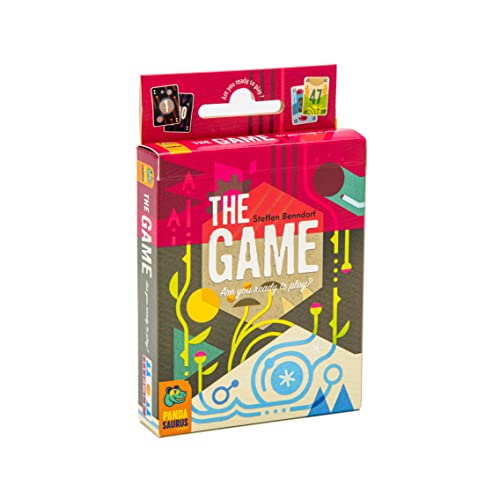
Overview: “The Game” is a globally acclaimed, award-winning cooperative card game where 1-5 players (ages 8+) work together to play all cards from two sequential decks (2-99) in ascending/descending order. With a 20-minute runtime and pure focus on communication and deduction, it’s a streamlined test of collective strategy. What Makes It Stand Out: Its minimalist design—decks, rules, and intense focus on non-verbal communication—is revolutionary. Winning requires deciphering teammates’ unspoken strategies under pressure, creating unparalleled group synergy. Over 1.3 million copies sold and a Spiel Des Jahres nomination underscore its unique appeal as a pure “beat the game” challenge. Value for Money: Exceptional value; a low-cost, pocket-sized game delivering immense replayability and social engagement. It far surpasses similarly priced filler games in depth and awards pedigree, making it a no-brainer for any board game shelf. Strengths and Weaknesses: Strengths: Highly addictive teamwork, quick setup/play, accessible rules, massive replayability, award-winning design. Weaknesses: Lacks thematic depth; communication restrictions can frustrate new players; high randomness can occasionally undermine strategy. Bottom Line: A must-own modern classic that masterfully blends simplicity with profound cooperative tension. Highly recommended for families, casual groups, and veterans seeking a quick, brain-teasing challenge.
9. Everdell Duo – 2-Player Standalone Board Game with Competitive, Co-Op & Campaign Modes – Strategy Game with Woodland Theme, Ages 10+, Fast 30-Minute Gameplay

Overview: Everdell Duo is a streamlined, standalone version of the beloved Everdell universe, crafted exclusively for 1-2 players (ages 10+). It condenses worker placement and card drafting into a 30-minute session, featuring multiple modes: competitive, full co-op, and a 15-chapter campaign, all set in a charming woodland realm. What Makes It Stand Out: The trio of distinct play modes within one compact box is its crowning achievement. Sun/moon tokens and shifting meadow rules introduce fresh, asymmetric decisions. The rich component quality—130+ pieces including critter cards and a double-sided board—delivers Everdell’s signature beauty without the base game’s complexity or player count. Value for Money: Excellent value given the premium components, multiple replay paths, and standalone nature. It’s significantly more affordable than the full Everdell while capturing its essence, offering far more strategic depth per dollar than most dedicated 2-player games. Strengths and Weaknesses: Strengths: Versatile play modes, high-quality components, strategic depth in short sessions, beautiful artwork, strong replayability. Weaknesses: The 30-minute claim is tight for new players; campaign mode requires tracking progress externally; less thematic immersion than the full game. Bottom Line: The definitive 2-player strategy experience, blending Everdell’s magic with innovative mechanics. Essential for couples seeking depth without bloat, and highly recommended for campaign-loving duos.
10. Jekyll & Hyde vs. Scotland Yard by 25th Century Games – Cooperative Trick Taking Board & Card Game for Two Players – Story Based Gameplay – for Ages 10+ & 20 Min Playtime

Overview: Jekyll & Hyde vs. Scotland Yard is a standalone two-player cooperative trick-taking game set in Victorian London. Players embody the dual personalities of Dr. Jekyll/Mr. Hyde, working together to evade Scotland Yard’s pursuit across 20-minute chapters, each with unique story-driven objectives tied to classic trick-taking mechanics. What Makes It Stand Out: It brilliantly reimagines trick-taking as a narrative-driven chase. Balancing Jekyll’s restraint against Hyde’s recklessness creates compelling internal tension, while chapter objectives evolve the strategy. The tight focus on two players ensures every decision feels impactful within its brisk runtime. Value for Money: Offers strong value as a niche, high-quality 2-player experience. While limited in player count, its innovative twist on trick-taking, story depth, and standalone nature justify the price for couples seeking thematic, strategic duels beyond traditional head-to-head games. Strengths and Weaknesses: Strengths: Unique cooperative trick-taking fusion, immersive story progression, perfect for two players, quick setup, thematic cohesion. Weaknesses: Very narrow player count (only 2); 20 minutes may feel too short for narrative payoff; trick-taking familiarity required for optimal enjoyment. Bottom Line: A clever, atmospheric gem for duos who love narrative mechanics and trick-taking. Highly recommended for couples wanting a fresh, story-rich alternative to competitive 2-player games.
Why Two-Player Cooperative Games Stand Out
The Unique Magic of Shared Problem-Solving
There’s an undeniable intimacy in tackling a complex challenge side-by-side. Without the noise of a larger group, communication becomes clearer, strategies more refined, and every decision carries greater weight. You learn to anticipate your partner’s thought process, building a silent language that turns gameplay into a dance of minds. This focused collaboration often leads to deeper cognitive engagement, as both players must actively contribute to overcome the game’s obstacles, avoiding the “alpha gamer” pitfall common in larger co-ops.
Escaping the Competition Trap
Let’s be honest: traditional board games often highlight differences in skill or strategy, sometimes creating tension rather than connection. Cooperative play sidesteps this entirely. When the game itself is the opponent, there’s no room for blame—only shared responsibility. This shift cultivates patience and empathy, turning potential friction into opportunities for mutual support. It’s especially valuable for couples or close friends seeking a low-stress activity where the goal is strengthening the relationship, not proving superiority.
Perfect for Intimate Settings and Scheduling
Life gets busy, and gathering four or more players consistently is a logistical hurdle for many. Two-player co-ops solve this elegantly. They fit seamlessly into smaller living spaces, require minimal setup time, and are far easier to schedule. Whether you have 30 minutes or a full evening, these games adapt to your reality, making meaningful connection achievable without the pressure of coordinating a crowd. They’re the antidote to the “all-or-nothing” demands of larger group gaming.
Key Mechanics That Define Great Two-Player Co-Ops
Asymmetric Roles and Specialized Abilities
The most engaging two-player co-ops often assign distinct roles, each with unique powers or responsibilities. This prevents one player from dominating decisions and forces genuine interdependence. When one partner manages resources while the other navigates threats, it creates natural dialogue and leverages both players’ strengths. Look for designs where roles feel equally vital and balanced—no “sidekick” dynamics allowed.
Dynamic Difficulty and Player-Scaled Challenges
A common pitfall is a game that’s too easy with two players or impossibly hard. The best designs incorporate clever scaling mechanisms. This might mean adjustable threat levels, modular board setups that change based on player count, or a “dummy player” system that introduces intelligent opposition. The goal is a challenge that feels earned, not arbitrary, keeping tension high without tipping into frustration.
Shared Decision-Making with Meaningful Tension
True co-ops thrive on moments where players must debate the best path forward. Does the group risk a dangerous action for a big payoff, or play it safe? These dilemmas shouldn’t have obvious answers. The most satisfying games create “shared tension points”—moments where both players feel the weight of the choice equally, sparking discussion that’s strategic, not contentious.
Streamlined Complexity for Tight Focus
With only two minds at work, rules overhead needs careful calibration. Overly fiddly mechanics can bog down the experience, while oversimplification removes depth. Ideal two-player co-ops distill complexity into intuitive, elegant systems. Think clear action choices, minimal downtime, and components that guide play without constant rulebook checks. Every element should serve the partnership, not distract from it.
Physical and Thematic Immersion
Great two-player co-ops make you feel present in the game world. This comes through thoughtful component design—tactile tokens, evocative art, and boards that draw you in. Theming shouldn’t be wallpaper; it should inform mechanics. A game about surviving a haunted mansion should make you glance over your shoulder, while a space exploration theme might use star charts that feel like authentic mission logs. Immersion deepens the shared narrative.
Choosing the Right Game for Your Partnership
Assessing Your Shared Play Style Preferences
Before diving in, have an honest chat: do you crave intense strategic puzzles, or prefer lighter, narrative-driven adventures? Some partnerships thrive on high-stakes tension, while others enjoy collaborative storytelling with less pressure. If one of you loves meticulous planning and the other prefers creative improvisation, seek games that blend both elements. Ignoring this mismatch is the fastest route to frustration.
Evaluating Time and Space Constraints Realistically
Be brutally honest about how much time you actually have and the space you can dedicate. A game promising “30-minute sessions” but requiring 20 minutes of setup is a non-starter for many. Similarly, if your coffee table is perpetually cluttered, avoid games with sprawling boards or dozens of tiny components. Prioritize designs known for quick setup/teardown and compact footprints if space is tight.
Considering Cognitive Load and Learning Curves
How much mental energy do you want to expend? Some co-ops are intricate brain-burners demanding full concentration, while others offer accessible, almost meditative play. Factor in your typical energy levels—perhaps after work you need something relaxing, but weekend mornings call for a deeper challenge. Also, consider how you handle learning new systems together; some couples enjoy the puzzle of mastering rules, others prefer intuitive starts.
Matching Thematic Resonance to Your Interests
Don’t underestimate the power of theme! Playing a game about restoring a botanical garden will feel worlds apart from thwarting a cyberpunk heist, even with similar mechanics. Choose themes that genuinely excite both of you. Shared enthusiasm for the setting creates instant investment and fuels imaginative play, making the experience feel less like homework and more like an adventure you’ve stepped into.
Prioritizing Replayability Through Variable Setup
Avoid games that play identically every time. Look for strong replayability drivers: modular boards, randomized events, legacy elements (if you enjoy persistent progress), or multiple distinct scenarios. Variable setup ensures that even after multiple plays, you’re not just executing a memorized strategy but genuinely adapting to new challenges—a must for keeping the partnership engaged long-term.
Navigating Common Pitfalls in Two-Player Co-Ops
Avoiding the “Quarterbacking” Problem
This happens when one player consistently directs the other’s moves, reducing them to a passive participant. Combat it by choosing games with simultaneous action selection or hidden information that requires both players to contribute independently. Establish ground rules like “no unsolicited advice” during setup. The goal is partnership, not apprenticeship.
Managing Emotional Responses to Loss
Losing together can be bonding—or divisive—if not handled well. Select games where failure feels instructive, not punishing. Does the game provide clear reasons why you lost? Does it encourage analyzing mistakes constructively? If losses consistently lead to tension, opt for lighter themes or games with “near-win” mechanics that soften the blow of defeat.
Ensuring Balanced Player Contribution
No one wants to feel like dead weight. Watch for games where both roles have moments to shine—critical actions, unique abilities that turn the tide, or phases where each player takes the lead. If one role consistently feels less impactful, the partnership suffers. Playtest thoroughly to ensure neither of you is relegated to “token mover” status.
Frequently Asked Questions
Frequently Asked Questions
What makes a game truly “cooperative” for two players versus semi-cooperative?
True co-ops have no hidden individual goals or competitive elements; victory or defeat is entirely shared. Semi-coops might include personal objectives that could subtly compete with the team goal, which can undermine the pure partnership dynamic many seek.
How important is physical component quality in two-player games?
Extremely—it directly impacts immersion and play frequency. With fewer players, components see more handling. Durable boards, sturdy cards, and satisfying tokens make setup enjoyable and signal respect for your time, encouraging more frequent plays.
Can these games work for long-distance partnerships?
Yes, but choose wisely. Prioritize games with minimal setup/reset time and clear, turn-based structures that translate well to video calls. Avoid games requiring constant simultaneous interaction or fiddly components that are hard to manage remotely.
Do two-player co-ops typically take longer than competitive two-player games?
Not necessarily. Many modern co-ops are designed for tight 30-60 minute sessions, focusing on intense, focused gameplay. Competitive games can drag due to analysis paralysis, while good co-ops often streamline decision-making through shared objectives.
Are there co-op games suitable for vastly different skill levels?
Absolutely. Look for games with adjustable difficulty sliders, role-based asymmetry that lets the stronger player take a support role, or “teaching mode” variants. The key is ensuring both players feel challenged but not overwhelmed.
How do I know if a game avoids the “alpha gamer” problem?
Check for mechanics like simultaneous planning, hidden information each player must act on independently, or phases where one player is temporarily “out of action” requiring the other to make key decisions alone.
What’s the ideal session frequency for maintaining engagement?
This varies, but consistency matters more than frequency. Whether it’s a focused 20-minute session twice a week or a longer monthly deep dive, finding a rhythm that fits your lives prevents the game from becoming a chore.
Can these games help improve real-world communication skills?
Many players report significant benefits. Navigating shared decisions, articulating strategies clearly, and managing disagreements within the safe space of a game directly translate to better communication habits in other areas of partnership.
Do theme and mechanics need to be perfectly aligned?
While not mandatory, strong thematic integration significantly boosts immersion. Mechanics that feel “tacked on” create cognitive dissonance. When actions feel authentic to the setting (e.g., repairing a spaceship using actual engineering logic), the shared fantasy becomes more compelling.
How do I handle it when one partner loses interest faster than the other?
Address it early. Rotate who chooses the game, explore lighter “gateway” co-ops to rebuild enthusiasm, or take a short break. Forcing continued play when one is checked out damages the experience for both—it’s better to pause and return with fresh energy.
See Also
- How Two-Player Cooperative Board Games Redefine Teamwork at the Table in 2026
- The 10 Best Two-Player Cooperative Board Games for Couples in 2026
- 10 Essential Cooperative Board Games Every Two-Player Duo Needs in 2026
- 10 Must-Have Cooperative Board Games for Two-Player Teams in 2026
- 10 Most Durable Cooperative Board Games Based on Real User Reviews in 2026

